This site is supported by our readers. We may earn a commission, at no cost to you, if you purchase through links. This content is for general informational and educational purposes only and is not a substitute for professional medical, dermatological, or nutritional advice.
Sunscreen is the one skincare product dermatologists agree on. And yet, most people who use it daily are still doing it wrong, often applying less than half the needed amount, which can drag effective protection from SPF 30 down to something closer to SPF 3.
The product isn’t the problem. Technique is.
Skipping your ears, blending too aggressively, or missing reapplication after a sweaty commute quietly undoes whatever you put on in the morning. Knowing the right steps makes the difference between sunscreen that looks good on your bathroom shelf and sunscreen that works on your face.
Table Of Contents
- Key Takeaways
- Choose The Right Facial Sunscreen
- Apply Sunscreen Last, Evenly, and Generously
- Protect Often-Missed Facial Areas
- Layer Sunscreen With Makeup Properly
- Reapply Facial Sunscreen at Right Times
- Avoid Common Sunscreen Application Mistakes
- Frequently Asked Questions (FAQs)
- What is the 3-finger rule for sunscreen?
- Do you put sunscreen first or moisturizer?
- Should sunscreen be applied on eyelids?
- Why wait 20 minutes after applying sunscreen?
- Can sunscreen cause breakouts or skin irritation?
- Does sunscreen need reapplying indoors near windows?
- Is sunscreen safe for childrens sensitive skin?
- Can sunscreen pills or supplements replace topical SPF?
- Does diet or nutrition affect sun damage resistance?
- Conclusion
Key Takeaways
- Most people apply less than half the sunscreen they need, which can drop SPF 30 protection to something closer to SPF 3 — so measure a full half teaspoon for your face and neck every time.
- Broad-spectrum protection matters because UVB causes sunburn, but UVA rays quietly drive aging and cancer risk without any visible warning sign.
- Reapply every two hours outdoors — and immediately after swimming, heavy sweating, or towel drying — since all three strip coverage faster than UV exposure alone.
- Commonly skipped spots like ears, eyelids, the nose bridge, lips, and neck accumulate real sun damage over time, so they deserve the same careful coverage as the rest of your face.
Choose The Right Facial Sunscreen
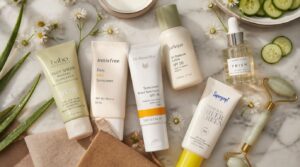
Not every sunscreen belongs on your face — the wrong one can clog pores, irritate skin, or leave you underprotected without you realizing it. Picking the right formula starts with knowing what to look for before you even reach the shelf. Here’s what actually matters when choosing a facial sunscreen.
Your skin type is the real starting point — check out these sun protection tips for your face to match the right formula to your complexion before anything else.
Use SPF 30 or Higher
SPF 30 is the minimum your face needs daily. SPF 15 blocks only 94% of UVB rays; SPF 30 raises that to 97%, a meaningful difference for daily skin protection. For full defense, choose a broad spectrum sunscreen that protects against both UVA and UVB rays.
- SPF 30 blocks ~97% of UVB rays
- SPF 15 only reaches ~94%
- Reapply every 2 hours outside
- Apply generously or SPF effectiveness drops
- Higher SPF helps, but gains shrink fast
Choose Broad-Spectrum Protection
Your SPF 30 blocks most sunburn-causing rays, but UVB is only half the threat. UVA rays penetrate deeper, driving aging and cancer risk without any visible burn. That’s why broad-spectrum protection matters.
Look for zinc oxide or avobenzone on the label — both block UVA and UVB. The word "broad spectrum" on the front confirms full coverage.
Match Your Skin Type
Not every sunscreen formula works for every face. Oily skin sunscreen should be gel-based or alcohol-based, labeled noncomedogenic and fragrance-free.
Dry skin does better with a cream formula that adds moisture.
Combination skin tips: use a lightweight lotion.
For sensitive skin care or acne-prone sunscreen, choose zinc oxide-based, fragrance-free options a dermatologist would recommend.
Consider Water Resistance
If you’ll be swimming or sweating outdoors, pick a sunscreen labeled water resistant with either a 40- or 80-minute rating. That rating tells you how long it holds up in water, not that it’s waterproof.
Even so, you still need to reapply every two hours, and immediately after towel drying, since rubbing removes coverage fast.
Check Expiration and Texture
Before you reach for that bottle, give it a quick check. FDA-mandated shelf life is three years, but heat and humidity can kill effectiveness well before that. A sunscreen stored in a hot car or steamy bathroom may already be compromised.
Squeeze a small amount out. Clumpy, watery, or separated texture means the formula has broken down and won’t apply evenly or protect reliably.
Apply Sunscreen Last, Evenly, and Generously
Getting the application right matters just as much as picking the right sunscreen. There’s a specific order, amount, and technique that makes the difference between real protection and a false sense of security. Here’s how to do it step by step.
Finish Your Morning Skincare
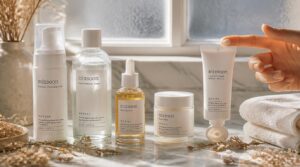
Think of sunscreen as the final seal on your morning routine. Everything else should go on first, ordered from thinnest to thickest consistency:
- Cleanser
- Toner or essence
- Serum
- Moisturizer or ceramide cream
- Sunscreen, last to finish your morning skincare
Don’t rush this last step. Wait until it’s fully dry with no tackiness remaining before moving on or applying any makeup.
Once that dry-touch finish sets, you’re ready for sunscreen — check out these best facial moisturizers for mature skin if you want to streamline the step before SPF.
Measure Half Teaspoon Total

Most people use far too little. For your face, ears, and neck combined, the target is half a teaspoon — exactly 2.5 mL. Use a real measuring spoon, not a kitchen spoon (those vary wildly). Level it off flat.
That consistent volume is what gives your face sunscreen its labeled SPF, not a rough guess.
Dot Across Facial Zones
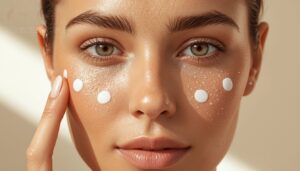
Once you have your half teaspoon ready, don’t just smear it on. The dot-and-blend method starts with placing product at key points across your face before spreading anything.
Put three dots along the forehead, two on each cheek, one at the nose tip, one beside each nostril’s alar fold, and two on the chin. Work outward from the center.
Blend Without Tugging Skin

Blending is where most people go wrong. Use gentle patting motions with your ring and pinky fingers, since these naturally apply the least pressure on your skin.
Work outward from each dot. Around the periorbital area and nose bridge alar folds, press and release rather than rub. Lightweight, water-based formulas melt right in without force, which means less tugging overall.
Let Sunscreen Set Completely

After blending, resist the urge to touch your face right away.
Give it 15 minutes before heading outside so chemical filters can bind and mineral filters can form a continuous film across your skin. That setting window is the difference between labeled SPF and something considerably weaker.
Once dry with no tackiness, you’re protected and ready.
Protect Often-Missed Facial Areas

Even the most careful sunscreen routine can leave a few spots unprotected — and on your face, those gaps add up fast. Certain areas get skipped so consistently that dermatologists have a running list of them. Here’s where most people fall short, and how to fix it.
Cover Ears and Hairline
Your ears and hairline are the two spots most people genuinely forget.
Sweep sunscreen from your forehead’s center toward each temple, pressing lightly along that first row of hair. Then use fingertip application across the ear cap, outer ridge, and behind the fold. Finish with a quick mirror check to catch any dry patches before stepping outside.
Protect Eyelids Carefully
The eyelid is under 0.2 mm thick, making eye area sunscreen easy to skip and costly to ignore.
- When shopping for eyelid sunscreen, pick an ophthalmologist-tested, mineral-based stick
- Pat gently along the orbital bone and avoid eye contact
- Reapply sunscreen over makeup using a mineral stick every two hours
Gentle application in the periorbital area means patting only, never rubbing.
Extend Down Your Neck
The neck is often where sunscreen stops, but sun damage doesn’t. Neck skin is thinner with fewer oil glands and ages faster.
Use one-quarter teaspoon for the neck area. Apply in upward strokes from collarbone to jawline using the dot-and-blend method with two fingers. Extend to the sides and back. Reapply sunscreen every two hours.
| Common Mistake | Better Approach |
|---|---|
| Stopping at the jawline | Stroke upward from collarbone to chin |
| Skipping the sides and back | Cover all three planes of the neck |
| Applying too little | Dedicate one-quarter teaspoon to the neck alone |
| Rubbing aggressively | Pat gently with two fingers |
| Skipping reapplication | Refresh every two hours or after sweating |
Apply Around The Nose
The nose gets more direct sun than nearly anywhere else on your face. Dab, don’t rub sunscreen across the nose bridge, nasal tip, and alar folds using the dot-and-blend method. Glasses wearers: remove them first so nose pads don’t leave gaps. Stick sunscreen helps with precision around creases. Sensitive skin? Go with a mineral zinc oxide formula and wait until it’s fully dry before moving on.
Use SPF Lip Balm
Your lips take a surprising amount of sun damage daily, yet most people treat lip protection as optional.
Pick a SPF 30 lip balm labeled broad-spectrum — that covers both UVA and UVB rays.
Apply it 45–60 minutes before heading out, then reapply every two hours, or sooner after eating, drinking, or swimming.
Chapped lips need it most.
Layer Sunscreen With Makeup Properly
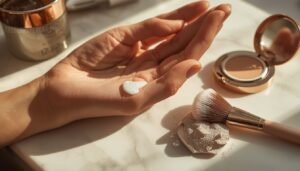
Getting sunscreen and makeup to play nicely together isn’t complicated once you know the right order of operations. A few simple habits — timing, technique, and product compatibility — make the difference between protection that lasts and coverage that crumbles by noon. Here’s what to keep in mind when layering the two.
Apply Sunscreen Before Makeup
Think of sunscreen as your makeup base. It goes on skin first, before any foundation or concealer.
- Cleanse your face thoroughly
- Apply moisturizer if needed
- Layer SPF under foundation, not over it
- Use lightweight water-based formulas for easier blending
- Spread sunscreen evenly across all facial zones
Layering sunscreen first keeps UV protection directly on your skin, not diluted by cosmetics.
Wait Before Adding Cosmetics
Patience pays off here. Wait 15-20 minutes after applying sunscreen before reaching for any makeup. Chemical sunscreens need that time to bond properly with your skin. Mineral formulas are faster, usually just 3-5 minutes. Skip the wait and you risk pilling, which is exactly what happens when products ball up and flake because layers didn’t have time to fully set.
| Sunscreen Type | Wait Time Before Makeup |
|---|---|
| Chemical sunscreen | 15–20 minutes |
| Mineral/physical sunscreen | 3–5 minutes |
| Tinted SPF / SPF primer | 30–60 seconds |
| Gel or lightweight fluid | 1–3 minutes |
Avoid Aggressive Rubbing
Rubbing sunscreen hard into your skin doesn’t improve coverage. It just smears it unevenly and adds friction on skin that’s already handled cleansing and shaving.
The dot-and-blend method is the smarter move: use your fingertips with light pressure, patting in short, friction-free strokes instead of dragging back and forth. Wait until there’s zero tackiness before layering anything else on top.
Choose Compatible Base Products
Your sunscreen’s base type quietly determines whether your makeup holds or falls apart.
- Oil-based sunscreen pairs with oil-based foundation
- Water-based formulas match water-based makeup
- Silicone primers work with silicone foundations
- Mineral sunscreen suits sensitive, acne-prone skin
- Tinted sunscreens double as a sheer base layer
Mismatched combinations cause pilling and patchy wear. Matching your base types keeps everything in place longer.
Reapply Facial Sunscreen at Right Times

Applying sunscreen once in the morning isn’t enough — UV exposure adds up throughout the day, and your protection fades faster than you’d think. Knowing exactly when to reapply makes the difference between real defense and a false sense of security. Here’s when your face needs a fresh layer.
Reapply Every Two Hours
Every two hours is the standard reapplication window for your face, full stop. UV exposure gradually breaks down chemical filters through photodegradation, cutting protection even when you’re not sweating. On overcast days, up to 80% of UV rays still reach your skin. Set a phone alarm and keep sunscreen in your bag. It’s the simplest reapplication reminder you’ll actually follow.
Reapply sunscreen every two hours — UV rays break down your protection whether you feel it or not
| Situation | Reapplication Tip |
|---|---|
| Outdoors, any weather | Every 2 hours; clouds block only 20% of UV |
| Wearing makeup | Pat on mineral powder SPF 30+ |
Reapply After Swimming
Water is a reset button for sunscreen application. Even water-resistant formulas start washing off within 45 to 60 minutes of swimming. Treat every swim as a full Swim Session Reset.
Your post-swim reapplication checklist:
- Pat skin dry for a Towel-Off Refresh
- Reapply to face, ears, and neck
- Wait 30 minutes before re-entering water
- Repeat this Water Exposure Cycle each swim
Reapply After Heavy Sweating
Sweat doesn’t announce itself the way a pool does, but it removes sunscreen just as effectively. Heavy sweating can strip your coverage within minutes, not hours.
If you’re working out, hiking, or just stuck in summer heat, don’t wait for your 2-hour timer. Reapply immediately once you notice heavy perspiration.
A water-resistant formula holds up longer, but it’s never a permanent solution.
Reapply After Towel Drying
That towel you grab after a swim does more than dry you off. Friction can strip up to 80% of your sunscreen from the skin’s surface, even on water-resistant formulas.
Reapply immediately after towel drying. That "80-minute water-resistant" label only applies during water immersion, not after towel contact. Pat sunscreen back on gently, covering your hairline, ears, and neck.
Refresh Sunscreen Over Makeup
Friction strips sunscreen. Makeup wear does, too. Reapplication timing stays the same: every two hours outdoors. Skip it, and foundation becomes a false shield. Use makeup-compatible sunscreen in spray or stick form for clean SPF layering.
- Spritz an SPF mist over makeup
- Use a damp sponge, avoiding smudging
- Choose a mineral sunscreen stick for touch-ups
- Always pick broad-spectrum SPF 30+
Avoid Common Sunscreen Application Mistakes

Even with the best sunscreen on hand, a few small habits can quietly undo all that protection. Most mistakes aren’t obvious — they’re the kind of things that feel fine in the moment but add up over time. Here are the most common ones worth correcting.
Never Use Too Little
Underapplication risks are real. Most people use half the needed amount, dropping actual SPF to about a third.
| What You Apply | Protection You Get |
|---|---|
| Full dose (2 mg/cm²) | Labeled SPF value |
| Half the dose | ~33–50% of labeled SPF |
| Thin or uneven layer | Coverage gaps, burn risk |
For face and neck, target half a teaspoon. The dot-and-blend method fills missed spots.
Do Not Skip Cloudy Days
Clouds don’t block UV rays. Up to 80% of UV radiation still reaches your skin on overcast days, including the UVA rays responsible for aging and long-term skin damage.
- Reapply every two hours even when it’s grey outside
- SPF 30 broad-spectrum remains the minimum on cloudy days
- Indoor windows still let UVA through, so don’t skip before commuting
- Shade reduces exposure but won’t replace sunscreen
Treat cloudy days like sunny ones.
Never Spray Directly Onto Face
Pointing a spray can directly at your face creates real problems. Inhaled particles can irritate your lungs or trigger asthma, and direct facial spraying leaves coverage gaps — some spots overloaded, others barely touched.
Spray into your hands first, then apply using the dot-and-blend method. You get better control, avoid eye and mouth exposure, and actually protect your skin evenly.
Replace Expired Sunscreen
Old sunscreen is a false sense of security. The FDA requires sunscreen to maintain full potency for three years, but once that window closes, effectiveness can drop without warning.
- Check expiration date before each season starts
- Write purchase date on bottles without a printed date
- Discard sunscreen showing color, texture, or smell changes
When in doubt, start fresh.
Combine Sunscreen With Shade
Shade isn’t a substitute for sunscreen. Reflective surfaces like pavement and sand can redirect UV rays underneath an umbrella, which means your face still gets meaningful exposure.
Deep shade positioning gives you more coverage, but look for shade fabrics with a UV effectiveness rating of 95% or higher.
Always pair shade with broad-spectrum SPF 30 sunscreen on exposed areas.
Frequently Asked Questions (FAQs)
What is the 3-finger rule for sunscreen?
The irony of sunscreen is that most people apply barely half of what they need. The three-finger rule means squeezing a strip across your index, middle, and ring fingers, giving you roughly half a teaspoon for your face and neck.
Do you put sunscreen first or moisturizer?
Moisturizer goes first. Let it absorb for about 30 seconds, then apply sunscreen as your final protective layer. Sunscreen needs a clean, settled surface to form an even, uninterrupted film across your skin.
Should sunscreen be applied on eyelids?
Yes, you should apply sunscreen on your eyelids. Skipping them leaves delicate skin exposed — 5 to 10 percent of nonmelanoma skin cancers occur around the eyes. Use a gentle dab technique with a stick or mineral formula.
Why wait 20 minutes after applying sunscreen?
Chemical filters need 15–20 minutes to absorb into skin and bind properly before they can block UV rays. Without that wait, protection isn’t fully active when you step outside.
Can sunscreen cause breakouts or skin irritation?
Sunscreen can cause breakouts, especially if it contains comedogenic ingredients or heavy textures. Fragrance, preservatives, and certain chemical filters trigger irritation in sensitive skin. Look for noncomedogenic, fragrance-free formulas to lower your risk.
Does sunscreen need reapplying indoors near windows?
If you sit by a sunlit window for hours, UVA rays penetrate glass and still reach your skin. Reapply every four hours indoors near windows, focusing on your face, neck, and hands.
Is sunscreen safe for childrens sensitive skin?
For kids with sensitive skin, mineral sunscreens using zinc oxide or titanium dioxide are the safest choice. They’re gentle, non-comedogenic, and haven’t shown bloodstream absorption concerns like some chemical alternatives have.
Can sunscreen pills or supplements replace topical SPF?
No, supplements can’t replace topical SPF. The American Academy of Dermatology confirms oral supplements alone provide no adequate UV protection. Think of them as a possible add-on, never your main shield.
Does diet or nutrition affect sun damage resistance?
Yes, diet plays a real role. Foods rich in carotenoids, vitamin C, and omega-3s help reduce UV-triggered inflammation and oxidative damage, building your skin’s natural resistance from the inside out.
Conclusion
It’s no coincidence that people who age well tend to have one quiet habit in common: they protect their skin consistently, not occasionally.
Learning how to apply sunscreen correctly on face isn’t really about flawlessness. It’s about half a teaspoon, a few extra seconds on your ears, and a midday reapplication you actually follow through on.
Small, repeatable actions add up fast. That’s what separates sunscreen sitting on a shelf from sunscreen that genuinely works.