This site is supported by our readers. We may earn a commission, at no cost to you, if you purchase through links. This content is for general informational and educational purposes only and is not a substitute for professional medical, dermatological, or nutritional advice.
The shower drain can make a normal wash day look alarming: long strands coil around the grate, while short snapped pieces cling to your towel. Yet a full-length hair with a pale bulb may be completing a healthy cycle, whereas a frayed fragment points to damage along the shaft.
Understanding hair shedding vs hair growth phase starts beneath the scalp. Each follicle follows its own timetable, growing for years, resting for months, then releasing a club hair before restarting. Those distinctions help separate normal renewal from changes that warrant a closer look at your hair’s pattern and root biology today.
Table Of Contents
- Key Takeaways
- Hair Shedding Vs Hair Growth: Key Differences
- Where Shedding Fits in Growth Cycle
- Signs Hair is Growing or Shedding
- How Much Daily Shedding is Normal?
- Does Hair Shedding Mean New Growth?
- What Disrupts Shedding and Growth Phases?
- When Should Hair Shedding Be Evaluated?
- Frequently Asked Questions (FAQs)
- Does hair shedding mean regrowth?
- Is shedding 200 hairs a day normal?
- How to tell if hair is in shedding phase?
- How long does a shedding phase of hair last?
- Can certain medications cause increased hair shedding?
- Does washing hair too often worsen shedding?
- Can dandruff contribute to hair loss?
- How does aging affect hair texture and growth?
- Are supplements necessary for healthy hair growth?
- Conclusion
Key Takeaways
- Normal shedding usually involves 50–100 full-length hairs a day with pale club bulbs, while short, frayed strands without bulbs indicate breakage along the hair shaft.
- Hair follicles cycle independently through years of growth, a brief transition, several months of rest, and shedding, so hair loss and new growth can occur at the same time.
- Temporary diffuse shedding often follows stress, illness, hormonal shifts, medication changes, or iron and protein deficiency, typically appearing months after the trigger and improving once it is corrected.
- Seek clinical evaluation if shedding lasts longer than six months, density or part width continues to worsen, loss is sudden or patchy, or the scalp is painful, inflamed, or scaly.
Hair Shedding Vs Hair Growth: Key Differences
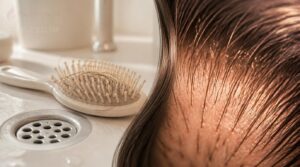
Most people use "shedding" and "hair loss" interchangeably, but they’re describing two very different things happening at the follicle level. Understanding where one ends and the other begins can change how you read what’s happening on your brush or in your drain. Here’s what actually separates the two processes.
For more context, explore how shampoo may support different types of hair loss without addressing breakage at the source.
Shedding Versus Active Growth
What you see in the shower drain and what’s happening at your roots are two different things. Shedding and active growth happen simultaneously. While 85-90% of follicles stay in anagen, growing about 0.5 inches monthly, the rest cycle through rest and release. On average, losing 50-100 hairs daily is normal, but telogen effluvium hair shedding can push that number beyond 300 hairs after physiological stress.
| Phase | Follicle State | Scalp Hair % |
|---|---|---|
| Anagen | Active growth | 85-90% |
| Telogen | Resting | 9-15% |
| Exogen | Shedding | Part of telogen |
Hair Fall Versus Breakage
While your follicles cycle through anagen and telogen, not every strand you pull from your brush is shedding. Hair shedding occurs when a follicle completes its telogen phase and releases a full-length strand, root bulb intact. Hair breakage snaps mid-shaft, producing short, frayed fragments with blunt ends. A strand length comparison and root bulb check tells you which you’re facing.
| Feature | Hair Shedding | Hair Breakage |
|---|---|---|
| Strand tip | White club bulb visible | Blunt or frayed, no bulb |
| Strand length | Near full-length | Short, uneven fragments |
| Distribution | Spread across scalp | Concentrated at damage sites |
Typical Duration of Each
Distinguishing shedding from breakage tells you what you’re dealing with. The phase durations below reveal how long your hair growth cycle actually commits to each stage.
| Phase | Duration |
|---|---|
| Anagen phase | 2-8 years |
| Catagen phase | 2-3 weeks |
| Telogen phase | 2-4 months |
| Exogen (hair shedding) | 2-5 months |
Each strand navigates a complete hair cycle spanning 2 to 7 years.
What Happens Inside Follicles
Those timelines are driven by activity deep inside each hair follicle. The bulge stem cell niche fuels your growth cycle, activated by dermal papilla signaling when the telogen phase ends.
| Structure | Role |
|---|---|
| Bulge region | Stem cell source |
| Dermal papilla | Triggers anagen phase |
| Hair matrix | Matrix cell proliferation hub |
| Follicle bulb | Catagen apoptosis site |
Telogen follicle state keeps the follicle dormant, not broken.
Where Shedding Fits in Growth Cycle
Your hair doesn’t just grow and shed randomly — there’s a precise biological sequence behind every strand you lose or gain. That sequence unfolds across four distinct phases, each with its own role in keeping your hair healthy and renewing itself. Here’s how each phase works and where shedding fits into the bigger picture.
Anagen Active Growth Phase

During anagen, your hair is a construction site running at full capacity. Rapid cell division in the hair bulb pushes keratinized fibers upward at roughly 1 centimeter per month, while melanocytes simultaneously deposit pigment into the forming shaft.
Genetics determine how long your follicles sustain this phase, anywhere from three to seven years, setting your maximum achievable hair length.
Catagen Transitional Phase
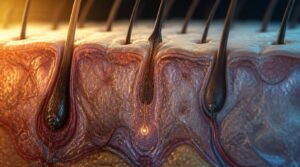
Catagen is where construction stops. Over two to three weeks, hair follicle regression begins: the lower follicle shrinks, severs its blood supply, and detaches from the dermal papilla, halting all dermal papilla activity.
For a fuller overview, this guide to hair growth cycle phases explains how catagen leads into the resting stage.
What’s left is a club hair, anchored briefly while follicle stem cells await restart. Only 1% to 3% of your hairs are in this transitional stage at once.
Telogen Resting Phase
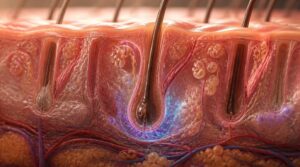
Telogen is rest, not retirement. Your follicle holds the club hair for three months in follicle quiescence, pausing the hair growth cycle.
- Club hair formation anchors the shaft, delaying hair shedding
- 15% of hairs are in telogen at once, supporting hair cycle synchronization
- Molecular brake release restores follicle activity in late telogen
- The telogen-anagen shift triggers when pro-regenerative signals build
[/ORIGINAL TEXT]
Exogen Hair Shedding Phase
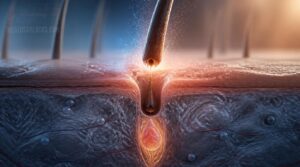
The exogen phase is where your hair finally lets go. Unlike telogen, exogen drives mooring cell separation, a controlled proteolytic shedding process that achieves true hair shaft liberation and resets your hair growth cycle.
| Phase | What’s Happening |
|---|---|
| Telogen | Club hair anchored; follicle at rest |
| Exogen | Mooring cells separate; shaft released |
| Anagen | New growth starts beneath freed follicle |
How Long Shedding Lasts

Shedding doesn’t follow a fixed clock. Normal exogen shedding sits within 50 to 100 hairs daily, but how long it lasts depends on several factors:
- Telogen phase length, averaging 3 months
- Whether stress or illness disrupted your cycle
- How quickly the trigger resolves
- Nutritional or hormonal deficiencies
Once the trigger clears, active shedding usually stops within 3 to 6 months.
Signs Hair is Growing or Shedding
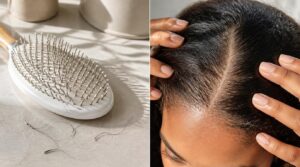
Your scalp is always telling you something — you just need to know what to look for. Whether you’re tracking daily shedding or trying to spot new growth, certain signs make the picture much clearer. Here’s what to watch for.
Short New Growth Hairs
Those fine, wispy strands at your hairline aren’t stray flyaways. They’re short new growth hairs, usually under 1 cm, emerging as follicles re-enter the early anagen phase after telogen.
Their naturally tapered tips and softer texture distinguish them from breakage. You’ll spot them across your temples, crown, and hairline, often lighter in color before darkening over four to eight weeks.
Club Hairs With Bulbs
Those new hairs show anagen actively at work. Club hairs tell you the other half.
When a hair follicle completes its cycle, keratinized cells clump around the hair shaft root during the telogen phase, forming a pale white bulb.
Identify them by:
- A round, pale bulb at the root
- A complete, fully formed, longer strand
- Fifty to 100 shed daily
Changes in Hair Density
Club hairs mark the end of one cycle, but your hair density reveals the cumulative effect. Follicle miniaturization and age-related density change can steadily reduce strand count, especially after 35, even when the hair growth cycle stays active.
When more follicles shift into the telogen phase during hair shedding, scalp visibility rises. Density also fluctuates by scalp region and season.
Widening Parts or Thin Spots
Your part line is a reliable window into what’s happening below the scalp. Part width monitoring can reveal hair follicle miniaturization before density loss becomes dramatic.
Women often lose 30-40% of hair density before noticing visible change. As more follicles exit the anagen phase early, scalp visibility along the part exposes the telogen phase’s cumulative toll on overall hair density.
Simple Shedding Tracking Methods
Once you spot a widening part, you need actual numbers, not vague guesses.
The wash test method skips washing for 5 days, then collects shed hairs through a fine mesh filter for accurate counting. A brush count method, pillow hair check, and drain shedding monitor together give you a full picture of your hair shedding across the hair growth cycle.
How Much Daily Shedding is Normal?

Knowing what’s normal for daily hair shedding can save you a lot of unnecessary worry. The numbers aren’t always straightforward — wash days, seasons, and your overall health all play a role in what you’ll find on your brush or in the shower drain.
Here’s what the range actually looks like and how to tell when something’s worth paying attention to.
Normal Daily Hair Counts
Most healthy adults shed between 50 and 100 hairs per day, a range that reflects normal follicle cycling across a scalp holding roughly 80,000 to 120,000 hairs.
That count sounds significant until you do the math: it’s less than 0.1% of your total stock. Because each follicle cycles independently, daily shedding patterns stay distributed and rarely create any noticeable thinning.
Is 200 Hairs Excessive?
Two hundred hairs sounds alarming, but a single high count doesn’t automatically signal a problem. Clinicians assess shedding by pattern, not isolated tallies.
What matters is whether that elevated count persists consistently for weeks or months. Diffuse shedding across the scalp stays less concerning than concentrated loss in one area, which can indicate a disruption in your hair growth cycle.
Wash-Day Shedding Differences
When you wash every few days, shed telogen-phase hairs accumulate on the scalp before releasing together in the shower. This shedding accumulation effect explains why a 200-300 hair count on wash day can still be normal. Washing doesn’t increase actual shedding; it reveals what was already detached. Wet strands clump visually, making the total look more alarming than it actually is.
Washing reveals accumulated shed hairs, so 200–300 strands on wash day can be normal rather than increased hair loss
Seasonal Shedding Patterns
Daylight, not temperature, drives your seasonal hair shedding. As photoperiod shifts, hair follicles cycle into telogen earlier, mimicking a mild telogen effluvium response.
Your shedding peaks follow two predictable seasonal windows each year:
- Spring peak around March, as winter coat transitions
- Fall peak around October
- Indoor living blurs these seasonal cycles a lot
- Daylight exposure determines your hair growth cycle timing
Persistent Versus Temporary Shedding
Temporary hair shedding, such as telogen effluvium, often resolves within 3 to 6 months once the triggering factor is corrected, with hair follicle cycling returning through the anagen phase and density gradually rebuilding.
Persistent shedding extending beyond this window usually reflects an unresolved cause, whether nutritional deficiency, hormonal imbalance, or progressive androgenetic alopecia shortening your hair growth cycle over time.
Does Hair Shedding Mean New Growth?

Shedding a few dozen hairs a day can feel alarming, but it’s often a sign that your follicles are doing exactly what they’re supposed to do. The relationship between shedding and new growth is more connected than most people realize. Here’s what’s actually happening at each stage of the process.
Normal Hair Renewal
Shedding a hair doesn’t signal permanent loss. When shedding of old hair occurs, follicle regeneration is already underway, with the anagen phase preparing fresh keratinized strands beneath the scalp.
Think of it as your scalp’s renewal system. Each shed hair clears space, allowing the hair growth cycle to reset and deliver new, melanin-rich growth in its place.
Follicle Cycling Independence
Each follicle in your hair growth cycle operates on its own schedule, independently driven by Hair Follicle Autonomy.
Four mechanisms make this work:
- Phase Change Regulation keeps 85-90% of hair follicles in anagen
- Stem Cell Control in the bulge drives each follicle’s reset
- Local Signaling Mechanisms pace catagen phase transitions per follicle
- Individual Cycle Timing prevents synchronized mass shedding events
Regrowth After Telogen Effluvium
When telogen effluvium shifts many follicles into the resting phase at once, the disruption is visible but rarely permanent. Once the triggering stress resolves, follicles re-enter the anagen phase individually, producing short, tapered hairs along your part and hairline.
Regrowth after telogen effluvium often begins within 3 to 6 months, with shed counts gradually decreasing as your hair growth cycle normalizes.
When Regrowth May Slow
Not every follicle rebounds at the same pace. Several factors can slow your hair growth cycle after the initial trigger resolves:
- Iron or protein deficiency limits follicle repair
- Chronic stress prolongs telogen, delaying the anagen phase
- Hormonal shifts from thyroid disease shorten growth windows
- Follicle miniaturization from androgens reduces visible regrowth
- Age and medical conditions slow scalp circulation
Expected Regrowth Timeline
Once those slowing factors are addressed, recovery follows a fairly predictable arc. Most people notice shedding begins slowing around months 4 to 6, with short regrowth hairs appearing by months 6 to 9.
Full density recovery usually takes 6 to 12 months after the trigger resolves, though longer hair may need several additional months before volume feels completely normal again.
What Disrupts Shedding and Growth Phases?

Your hair cycle doesn’t break down randomly — specific triggers pull the process off track. From internal shifts like stress and hormonal changes to everyday habits, the causes are more predictable than you might think. Here’s what’s most likely disrupting your shedding and growth phases.
Physical and Emotional Stress
Stress doesn’t show up in your hair right away. A major physical or emotional stressor can push up to 70% of growing hairs into the telogen phase prematurely, a condition called telogen effluvium. The shedding itself often appears 2 to 3 months later.
Chronically elevated cortisol also shortens the anagen phase, while mindfulness and adequate sleep normalize cortisol, supporting recovery.
Hormonal Changes
When your hormones shift, your follicles notice. Estrogen effects help sustain the anagen phase, so declining estrogen during menopause shortens active growth.
Androgen sensitivity varies across the scalp, meaning some follicles respond more aggressively than others.
Thyroid balance regulates cellular energy, and imbalances disrupt the telogen to anagen shift.
After childbirth, prolactin changes trigger temporary shedding spikes.
Iron and Protein Deficiencies
Nutrient shortfalls hit follicles hard. When your iron and protein intake drops, follicle function falters well before any outward symptom appears.
Low iron limits oxygen delivery support to follicle cells, shortening the anagen phase and triggering telogen effluvium. Watch out for these signs:
- Tissue iron deficits before anemia
- Impaired keratin production
- Reduced iron absorption from food
- Accelerated telogen effluvium onset
Androgenetic Alopecia
Androgenetic alopecia is genetic hair loss driven by androgen sensitivity, not simply excess shedding. Normal DHT (dihydrotestosterone) levels can shorten the anagen phase in susceptible follicles, producing predictable pattern baldness at the temples, vertex, or crown.
The hair follicle miniaturization process converts terminal hairs into finer, shorter strands. Unlike telogen effluvium, regrowth progressively weakens. Early DHT reduction can preserve follicles, but treatment must continue to maintain benefit.
Damaging Hair Care Practices
Your hair care routine can mimic hair shedding when the shaft is breaking, rather than leaving the follicle during its hair growth phase. Control injury:
- Limit heat styling; lower heat and shorter contact protect keratin.
- Loosen tight hairstyles.
- Use wide-tooth combs for rough brushing.
- Space chemical processing.
- Shield sun exposure.
These steps support hair damage repair and hair breakage prevention.
When Should Hair Shedding Be Evaluated?

Most daily shedding reflects normal follicle renewal, but a sustained change in volume, pattern, or scalp comfort change warrants attention. You should consider an evaluation when hair loss no longer follows your usual baseline or appears alongside other symptoms. The following signs help distinguish a temporary shift from shedding that needs clinical assessment.
Shedding Beyond Several Months
Shedding that persists beyond six months warrants evaluation, particularly when it fluctuates without returning to baseline. Chronic telogen effluvium may reflect ongoing stress-related shedding, iron or protein deficiency, thyroid-related hormonal influences, medication effects, or prolonged dietary restriction.
Your clinician can assess whether follicles are failing to complete the telogen-to-anagen shift. Acute recovery commonly restores density within 6–12 months; longer courses require investigation.
Sudden or Patchy Hair Loss
Sudden hair loss in smooth areas requires assessment, especially when patchy hair loss has border demarcation and skin appears normal. Alopecia areata signs include exclamation mark hairs, broken shafts thicker distally and narrow at the base, unlike telogen effluvium.
Patchy hair loss may stop, regrow, or extend; the regrowth timeline may span 6–12 months during the hair growth phase following hair shedding.
Scalp Pain or Inflammation
Pain, burning, tenderness, pustules, redness, or scale alter scalp health and warrant hair shedding evaluation.
Inflammatory scalp conditions can damage hair follicles; psoriasis, folliculitis, tinea, lichen planopilaris, and lupus may scar them.
Nerve-related scalp pain may feel sharp or shooting.
Hairstyle-induced traction from braids, extensions, heat, chemicals, or oils creates mechanical irritation.
Associated patterns differ from telogen effluvium triggers.
Tests a Clinician May Recommend
Persistent shedding, scalp inflammation, or visible thinning may warrant blood tests for anemia, iron studies including ferritin and transferrin saturation, nutrient levels, and thyroid checks; hormone panels may follow when the pattern suggests endocrine influence.
The examination may include a hair pull test, hair density measurement, trichoscopy, or phototrichogram. When scarring disease remains possible, a clinician may recommend a scalp biopsy.
Supporting Healthy Hair Growth
Once testing identifies causes, habits can protect follicle function. Prioritize nutrition for hair: adequate protein, iron, vitamins, hydration, and meals support keratin production and anagen phase.
Use gentle hair care, limit heat and traction, detangle slowly. Scalp massage benefits circulation and relaxation; stress-reduction practices may reduce telogen phase disruption. These measures support hair follicle stem cells, hair growth, and shedding.
Frequently Asked Questions (FAQs)
Does hair shedding mean regrowth?
Like leaves renewing after winter, shedding can accompany regrowth, but does not guarantee it. Hair follicles overlap in activity: telogen hairs release as others enter anagen. Temporary triggers often resolve, allowing density recovery within months.
Is shedding 200 hairs a day normal?
Shedding 200 hairs daily is above normal and warrants monitoring. Stress triggers, nutritional impact, seasonal variation, growth rate factors, and telogen timing can shift hair follicles from anagen phase to telogen phase, slowing hair growth.
How to tell if hair is in shedding phase?
Victorian hairbrush aside, hair bulb examination finds full-length shed hairs with pale roots, indicating telogen phase. Gentle pull testing, daily shed counts, and seasonal shed patterns clarify hair shedding, anagen phase hair growth, and hair loss causes.
How long does a shedding phase of hair last?
The exogen shedding phase usually lasts 2 to 6 months, with most noticeable loss clustering around 2 to 3 months. After a trigger like stress or illness, peak shedding often arrives 3 to 4 months later.
Can certain medications cause increased hair shedding?
Yes, certain medications can trigger diffuse hair shedding. The onset usually falls 6 to 12 weeks after starting the drug, with beta blockers, oral retinoids, anticoagulants, and sodium valproate among the most commonly recognized culprits.
Does washing hair too often worsen shedding?
Frequent washing doesn’t increase actual shedding. It just reveals hairs already in the exogen phase. Loose strands accumulate between washes, so daily washing makes your normal 50 to 100 hair shedding more visible at once.
Can dandruff contribute to hair loss?
Dandruff doesn’t look dangerous, but looks can deceive. Scalp inflammation, fueled by Malassezia overgrowth, disrupts follicle health, and itch-driven scratching accelerates shedding. Untreated seborrheic dermatitis can worsen hair loss, though medicated shampoos often reverse it.
How does aging affect hair texture and growth?
With aging, the anagen phase shortens, causing slower hair growth and density reduction. Pigment loss causes graying, while hair texture changes can make brittle hair more likely. Hair shedding may increase as follicles cycle differently.
Are supplements necessary for healthy hair growth?
A balanced diet usually helps healthy hair growth without hair growth supplements. Use nutrient testing first; consider iron if ferritin is below 40 ng/dL, vitamin D when deficient, and avoid biotin because it can distort laboratory results.
Conclusion
Picture each follicle as a lantern beneath the scalp: some shine through anagen, while others dim, rest, and release a fiber. That pattern is the foundation of hair shedding vs hair growth phase, not a verdict on your hair’s future.
Track density, part width, shedding duration, and scalp symptoms rather than counting every strand. When the pattern changes sharply or persists, clinical evaluation can identify the cause. Healthy follicles renew, one cycle at a time.