This site is supported by our readers. We may earn a commission, at no cost to you, if you purchase through links. This content is for general informational and educational purposes only and is not a substitute for professional medical, dermatological, or nutritional advice.
That satisfying feeling of smooth, hair-free skin after waxing can turn into a nightmare when red, inflamed bumps appear hours later. You followed all the steps, paid for professional service, and yet your skin rebels with itching, tenderness, and those telltale angry bumps that scream irritation.
This reaction—often called razor burn after waxing, though no razor touched your skin—is actually folliculitis, an inflammation of hair follicles that affects countless people after hair removal. The culprits range from bacteria sneaking into damaged follicles to your body’s own sensitivity, friction from clothing, or even genetic predisposition.
Understanding what triggers this uncomfortable condition and how to calm inflamed skin quickly can transform your waxing experience from painful gamble to confident routine.
Table Of Contents
Key Takeaways
- Post-waxing bumps are typically folliculitis—inflammation or infection of hair follicles caused by bacteria like Staphylococcus aureus, friction from tight clothing, or trauma from improper waxing technique rather than true “razor burn.”
- Immediate cooling with cold compresses, application of aloe vera or witch hazel, and wearing loose breathable clothing for 24–48 hours significantly reduces redness, swelling, and discomfort after waxing.
- Exfoliating 2–3 days before waxing clears follicle openings for better hair removal, while resuming gentle exfoliation 24–48 hours post-wax prevents ingrown hairs by keeping dead cells from trapping regrowth beneath the skin.
- Seek medical attention if you develop spreading redness, pus-filled bumps lasting beyond two weeks, fever, or severe pain—these signal bacterial infection or allergic reaction requiring professional treatment rather than simple irritation.
What Causes Razor Burn After Waxing?
That red, bumpy rash you see after waxing isn’t actually razor burn—it’s usually folliculitis, an inflammation or infection of your hair follicles. Several factors can trigger this reaction, from bacteria sneaking into damaged follicles to friction from your clothing rubbing against freshly waxed skin.
Understanding what’s behind your post-wax irritation helps you prevent it next time and treat it more effectively now.
Folliculitis and Hair Follicle Inflammation
Post-waxing folliculitis occurs when hair follicles become inflamed or infected after hair removal. You’re dealing with skin inflammation triggered by follicle damage—waxing strips away hair and disrupts delicate follicular structures, creating openings for bacterial infection.
This condition can stem from infectious causes like Staphylococcus aureus or Malassezia yeast, or from irritant triggers such as mechanical trauma. Genetic factors, including inherited variations in follicle architecture, may increase your susceptibility to recurrent episodes.
Parlor procedures can sometimes lead to skin conditions.
Bacterial and Noninfectious Triggers
Bacterial infection—particularly from Staphylococcus aureus, responsible for 60–80% of folliculitis cases—often follows waxing when salon tools aren’t properly disinfected.
But you can also develop skin irritation without infection: allergic reactions to fragrances or preservatives, microbiome shifts after cleansing, and friction factors like tight clothing all trigger inflammation. A contributing factor can be increased sweating, which exacerbates the condition.
Host conditions such as sensitive skin or atopic dermatitis increase your risk.
Waxing Technique and Skin Sensitivity
Your waxing technique matters just as much as the product itself. Strip wax applies greater shear force on your epidermis, while hard wax adheres to hair more than skin—making it gentler for sensitive areas like your face and bikini line.
Consider these variables:
- Wax temperature control (overheating beyond 48°C causes burns and prolonged redness)
- Multiple passes over one area (increases cumulative barrier damage)
- Skin barrier repair needs (retinoid users face higher irritation risk)
- Post wax care timing (loose clothing reduces friction immediately after hair removal)
Individuals with atopic dermatitis or thin skin experience more intense inflammation from waxing.
Ingrown Hairs and Skin Friction
When hair curls back into your skin after waxing, you’re dealing with more than cosmetic frustration—you’re facing mechanical trauma. Friction hotspots like your inner thighs and bikini line create perfect conditions for ingrown hairs, especially if you have coarse or curly hair curl patterns. Tight clothing occlusion traps sweat around vulnerable hair follicles, turning site vulnerability into inflamed bumps.
Your body’s own movement becomes the enemy. Repeated rubbing—whether from exercise, extended sitting, or synthetic waistbands—compounds the damage waxing already inflicted on your follicular epithelium. Studies confirm that people who exfoliate regularly after hair removal cut their ingrown hair rates considerably. That’s your pathway to preventing ingrown hairs: remove the dead cell barrier before regrowing hair gets trapped. Combine breathable fabrics with consistent skin hygiene, and you’ll minimize the mechanical forces driving skin irritation treatment needs in the first place.
| Friction Factor | Why It Matters | Prevention Strategy |
|---|---|---|
| Coarse hair regrowth | Sharp stubble penetrates sideways into epidermis | Gentle exfoliation methods 48 hours post-wax |
| Clothing pressure | Occlusion blocks follicular openings | Loose cotton garments for 24–48 hours |
| Inner thigh rubbing | Constant mechanical shear inflames follicles | Reduce prolonged sitting and walking immediately after |
| Dead skin buildup | Keratinocytes trap emerging hairs beneath surface | Chemical exfoliants (salicylic acid) prevent blockage |
| Pubic area grooming | Random hair growth angles increase transepidermal deviation | Professional waxing reduces fracture risk |
Common Symptoms of Razor Burn After Waxing
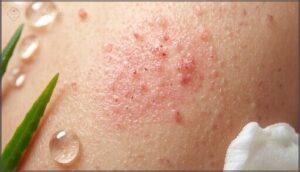
After waxing, your skin might respond with a range of uncomfortable reactions that fall under the umbrella of razor burn or folliculitis. Recognizing what’s happening on your skin helps you respond appropriately and avoid unnecessary worry.
Here’s what you’re likely to notice in the hours and days following your waxing session.
Redness, Bumps, and Pimples
You’ll notice redness and inflammation first—your skin’s immediate SOS after waxing trauma. Within hours to days, several bump types may appear:
- Follicular papules: small, flesh-colored bumps around each follicle
- Pustules: white or yellow pus-filled pimples signaling possible infection
- Erythematous clusters: red, tender patches indicating razor burn
- Ingrown-hair nodules: firm bumps where hairs curve back under skin
Most redness fades within 24–48 hours, but infection signs—spreading warmth, increasing pus, persistent pain—warrant medical evaluation.
Itching, Burning, and Tenderness
Why does your skin feel like it’s on fire after waxing? Histamine reactions trigger acute itching and burning when hair is pulled, while nerve irritation around traumatized follicles sends sharp pain signals. Barrier disruption leaves skin vulnerable to stinging, and inflammatory tenderness from contact reactions or folliculitis amplifies discomfort.
Redness and inflammation often accompany these sensations, peaking within hours then gradually subsiding.
Distinguishing Razor Burn From Other Skin Issues
How do you tell simple irritation from something more serious? Razor burn clears within days as superficial redness and small papules, while infectious folliculitis evolves into follicle-centered pustules over 1–3 days, often with warmth and pain. Key distinctions include:
- Allergic reactions: Intense itching, vesiculation, and widespread patches
- Ingrown hairs: Visible coiled hairs beneath raised bumps
- Contact dermatitis: Swelling, peeling, and erythema beyond follicles
- Infection indicators: Spreading pustules, crusting, fever, persistent inflammation
Chronic symptoms demand evaluation.
How to Soothe Razor Burn Quickly
Once razor burn sets in, your main priority is calming the inflammation and giving your skin room to recover.
The good news is that you have several straightforward options at your disposal, from simple home care to targeted products that address the root of the irritation. What works best often depends on how severe your symptoms are and how quickly you act after waxing.
At-Home Remedies and Cooling Techniques

You don’t need fancy products to calm angry, red skin after waxing. A cold compress applied for 10-15 minutes constricts blood vessels, reducing redness and swelling right away.
Follow up with aloe vera gel up to three times daily for its anti-inflammatory punch. Witch hazel and natural oils like coconut or avocado moisturize without harsh chemicals, while loose clothing prevents friction that worsens itching.
Over-the-Counter Treatments (Tend Skin, PFB Vanish)

When home remedies aren’t enough, over-the-counter products like Tend Skin and PFB Vanish step in with real chemical exfoliation. These formulas rely on salicylic acid, glycolic acid, or lactic acid to clear blocked follicles and reduce ingrown hairs. Here’s what sets them apart:
- Tend Skin combines acetylsalicylic acid with isopropyl alcohol—effective but potentially drying on sensitive skin.
- PFB Vanish blends multiple acids and includes Chromabright to fade dark spots from chronic razor burn.
- Application safety matters: avoid broken skin, use sunscreen daily, and discontinue if burning persists.
When to Avoid Further Waxing or Shaving

Continuing waxing or shaving during active inflammation only drives bacteria deeper and prolongs healing. Symptom severity, not wishful thinking, should guide your next move. If redness, pustules, or tenderness persist beyond three days, your skin is waving a red flag—barrier damage demands a pause.
Here’s when to step back:
| Stop Hair Removal If… | Why It Matters |
|---|---|
| Pustules or pus appear | Indicates bacterial folliculitis; waxing risks deeper infection and scarring |
| Redness lasts over 72 hours | Suggests ongoing skin irritation treatment failure or underlying skin conditions |
| Pain disrupts daily life | Severe discomfort signals clinical red flags requiring medical evaluation |
| Bumps recur after each session | Points to chronic skin sensitivity or improper waxing intervals needing reassessment |
Wait three to five days post-wax before considering shaving—your follicles need that window to close and your epidermal barrier to rebuild. Waxing side effects like widespread erythema or fluid-filled blisters aren’t just cosmetic annoyances; they’re your body’s way of saying “not yet.
Managing Pain, Swelling, and Discomfort

Once inflammation sets in, managing it requires deliberate, evidence-backed moves. Cold compresses bring measurable relief—studies show they cut postoperative pain scores from 5.8 to 4.5 compared to controls. Layer your strategy:
- Apply cold compresses for ten-minute intervals to reduce swelling
- Take oral analgesics like ibuprofen 400 mg every six hours for inflammatory pain
- Use topical anesthetics (lidocaine creams) on intact skin to numb lingering soreness
- Apply anti-inflammatories such as 1% hydrocortisone to calm persistent redness
- Modify activities—skip hot baths, saunas, and tight clothing for forty-eight hours
These waxing side effects respond when you address inflammation, pain, and friction simultaneously.
Preventing Razor Burn and Ingrown Hairs

Prevention is always easier than treatment, especially regarding razor burn and ingrown hairs after waxing. By following a few targeted strategies, you can reduce inflammation, keep follicles clear, and protect your skin from unnecessary irritation.
Let’s walk through the most effective ways to stay ahead of these common post-wax problems.
Exfoliating Before and After Waxing
Removing dead cells two to three days before your session lets wax grip hairs more effectively while clearing follicle openings that can trap regrowth.
After waxing, wait at least 24 to 48 hours before resuming your exfoliation routine—giving freshly treated skin time to calm down reduces irritation risk.
Gentle chemical or mechanical methods, repeated two to three times weekly, then keep pores clear and minimize ingrown hairs.
Proper Waxing Methods and Professional Tips
Professional waxing services prioritize wax temperature control, keeping formulas between 120 and 140°F to prevent burns while ensuring efficient hair removal methods.
Expert advice on waxing stresses applying product with hair growth and removing against it in one swift motion, reducing repeated passes that trigger waxing side effects.
Proper skin preparation, including pre-wax cleansing and sanitation protocols, coupled with correct waxing techniques, dramatically cuts your risk of post-wax irritation.
Skin Hygiene and Moisturizing Routines
Once you’ve mastered waxing technique, your post-wax skin care routine determines how quickly you recover. Cleansing frequency matters—use a gentle cleanser twice daily to maintain hygiene benefits while preventing bacterial buildup. Product selection should favor non-comedogenic formulas, and moisturizing timing starts within 24 hours to restore your skin barrier. Here’s your evidence-based routine:
- Apply a mild antibacterial antiseptic lotion one to two times daily for four days post-wax
- Cleanse with fragrance-free, lukewarm water and pat dry gently
- Wait 48–72 hours before resuming exfoliation timing to allow irritation resolution
- Moisturize daily after showering to replenish lost hydration
- Choose soothing, non-comedogenic products without artificial fragrances
This disciplined skin cleansing and skin moisturizing approach greatly lowers your folliculitis risk while supporting faster healing.
Choosing Clothing and Activities Post-Wax
Your clothing choices after waxing directly affect inflammation and itching. Clothing materials matter—wear loose, breathable fabrics for 24 to 48 hours to reduce redness and friction on sensitized follicles.
Activity timing is critical: postpone intense workouts for at least one day to limit sweating. Water avoidance includes skipping pools and hot tubs.
Heat exposure and sun protection also require attention—avoid saunas and direct sunlight during early healing.
When to Seek Medical Help for Razor Burn

Most cases of razor burn after waxing clear up on their own within a few days with simple home care.
However, certain warning signs signal that your skin needs professional evaluation and treatment. You should contact a healthcare provider if you notice signs of infection, symptoms that don’t improve or get worse, or reactions that suggest an allergy or deeper skin injury.
Signs of Infection or Severe Reaction
Watch for warning signs that your skin is crossing from irritation into infection territory. If you notice pustules leaking fluid, spreading redness beyond the waxed zone, fever or chills, red streaks moving toward lymph nodes, or severe itching with blisters localized to waxed areas, you need medical attention.
These systemic symptoms and allergic dermatitis patterns mean your body’s waving a red flag—don’t ignore it.
Persistent or Worsening Symptoms
When should simple irritation ring alarm bells? If bumps, pustules, or pimples last beyond two weeks, you’re likely dealing with chronic folliculitis or an evolving skin infection rather than typical razor burn. Worsening pain, spreading redness, or symptoms that interfere with daily life—sitting, walking, intimacy—demand medical evaluation to prevent scarring risk and preserve your quality of life.
| Timeline | Normal Healing | Concern Zone |
|---|---|---|
| Days 1–7 | Redness fading, mild bumps resolving | Increasing pain, new pustules forming |
| Days 8–14 | Nearly clear, minor residual marks | No improvement, spreading inflammation |
| Weeks 3–4 | Fully healed | Persistent nodules, drainage, hyperpigmentation |
| Beyond 1 month | Rare recurrence only | Recurrent flares suggesting chronic folliculitis |
Managing Allergic Responses and Skin Damage
Can waxing trigger a true allergic reaction rather than simple irritation? If you develop severe swelling, hives, or spreading redness within hours or days, you may have contact dermatitis to resin, fragrance, or dye in the wax.
Immediate allergen avoidance, antihistamine relief, and barrier repair with emollients are essential. Persistent skin damage or bruising warrants corticosteroid use and patch testing to identify culprits and prevent treating burned skin incorrectly.
Frequently Asked Questions (FAQs)
Can I apply makeup over waxed areas?
Hold off on makeup for at least 12 to 24 hours after waxing. Your skin’s barrier needs time to close, reducing infection risk factors and inflammation from product ingredient safety concerns.
How long does razor burn typically last?
Like a summer sunburn that fades with patience, most razor burn clears within 2–3 days. However, severity impact, complicating factors, skin type, and care practices influence healing—pimples, reddened skin, inflammation, and itching skin may persist longer without proper attention.
Are certain body areas more prone to it?
Yes, areas with coarse, curly hair—like the pubic region, underarms, beard area, and inner thighs—experience more reddened skin, pimples, and itching skin after waxing because inflammation and friction strike harder there.
Can I swim after waxing without complications?
Swimming too soon introduces pool bacteria risk, saltwater irritation, and hot tub dangers. The recommended wait is 24–48 hours, allowing folliculitis and hot tub rash prevention through barrier protection and proper skin care after waxing.
Does hair thickness affect razor burn severity?
Thicker, coarser hair increases razor burn severity—thick shafts create sharper tips that penetrate skin more easily, triggering follicle inflammation and ingrown hairs.
Curly hair compounds this risk, making hair removal methods like waxing more prone to irritation.
Conclusion
Your skin’s reaction after waxing doesn’t have to remain a mystery you dread solving each time. Now that you understand the mechanics behind razor burn after waxing—from follicle inflammation to bacterial triggers—you hold the roadmap to smoother outcomes.
Apply cooling techniques immediately, maintain diligent hygiene, exfoliate consistently, and recognize when professional intervention becomes necessary. These strategies transform post-wax irritation from an inevitable consequence into a manageable, preventable challenge you can confidently navigate.