This site is supported by our readers. We may earn a commission, at no cost to you, if you purchase through links. This content is for general informational and educational purposes only and is not a substitute for professional medical, dermatological, or nutritional advice.
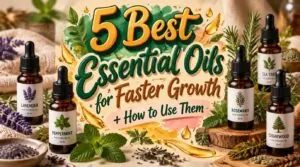
One clinical trial found that rosemary oil matched minoxidil for hair regrowth after six months, and most people reaching for that bottle have no idea the evidence exists. That kind of result shifts essential oils for faster growth from wellness trend to a tool worth understanding properly.
The gap between what works and what most people actually do with these oils is wide. Concentration, carrier selection, and consistency determine whether you see results or just a greasy scalp.
This guide covers the five best-evidenced oils, the dilution ratios that make them safe, and the pairings that match your specific hair type.
Table Of Contents
- Key Takeaways
- 5 Best Essential Oils for Faster Hair Growth
- How Essential Oils May Support Hair Growth
- How to Dilute and Apply Essential Oils Safely
- Best Essential Oil Pairings by Hair Type
- Hair Growth Timeline, Side Effects, and Safety
- Frequently Asked Questions (FAQs)
- What oils stimulate growth?
- Which essential oil is best for fastest hair growth?
- Which oil is best for growth?
- What are the big 3 for hair regrowth?
- How long until I see hair growth results?
- Can essential oils cause hair loss or thinning?
- Are essential oils safe during pregnancy or breastfeeding?
- Whats the best frequency for essential oil treatments?
- Can I use essential oils on color-treated hair?
- Can essential oils replace minoxidil or finasteride?
- Conclusion
Key Takeaways
- Rosemary oil is the only essential oil with direct clinical trial evidence matching minoxidil for hair regrowth, making it your strongest starting point.
- Diluting to 1–2% in a carrier oil isn’t optional—skipping it risks scalp inflammation that can accelerate shedding rather than reduce it.
- Each oil works through a distinct mechanism—circulation, follicle activation, or microbial balance—so matching your choice to your specific scalp issue matters more than stacking multiple oils.
- Results take 12–16 weeks minimum to assess honestly, with reduced shedding typically appearing around week eight and density improvements closer to month three.
5 Best Essential Oils for Faster Hair Growth
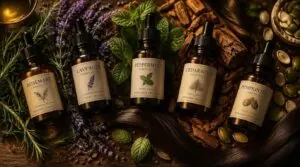
Not every essential oil delivers the goods for hair growth. These five have the research, mechanisms, or clinical results to back up their reputation. Start here if you want to cut straight to what actually works.
If you’re ready to put them to work, this guide on using oil for hair growth walks you through the application methods that actually move the needle.
Rosemary Oil: Strongest Human Evidence
Of all the essential oils for faster growth, rosemary carries the strongest human evidence. One clinical trial showed topical rosemary essential oil matching minoxidil for hair follicle stimulation after six months, while oral extract also improved androgenetic alopecia.
What you’re targeting is pattern hair loss, not guaranteed visible hair growth for everyone. Consistent topical application and product quality both matter.
Peppermint Oil: Circulation Support
Where rosemary targets follicle stimulation directly, peppermint oil promotes growth through a different pathway: scalp circulation support. Menthol activates cold-sensing receptors in your skin, triggering a vascular response that increases blood flow to the scalp. That tingling you feel signals genuine scalp stimulation.
The effect is short-lived, so consistent application matters. Always dilute to 2-3% in a carrier oil first.
Lavender Oil: Alopecia Blend Evidence
Lavender oil is another essential oil staple, but its alopecia mix evidence is indirect. Studies test it within multi-oil formulas rather than alone, making it a supporting player for follicle health. As a natural hair loss remedy, it works best alongside essential oils for faster growth.
In mixes:
- Calms scalp inflammation
- Pairs with rosemary
- Helps the follicle environment
- Reduces irritation risk
Cedarwood Oil: Thinning Hair Support
Cedarwood takes a different angle. Its terpene compounds interact with scalp tissue and may ease inflammation, supporting hair follicle health. It’s better understood as a hair thinning treatment targeting environment over hormones. Cedarwood essential oil found to reduce hair loss has limited proof.
Pairing cedarwood with circulation-boosting herbs may amplify results, as explored in these natural remedies for alopecia and follicle stimulation.
For thin hair, you should at all costs avoid having a thick oil; use lighter carrier oils.
Tea Tree Oil: Dandruff Control
Because dandruff is directly driven by Malassezia overgrowth, you need something with targeted antimicrobial action. Tea tree oil is the staple of essential oils for scalp health precisely because terpinen-4-ol disrupts fungal activity right at the source.
Use it at 5% diluted in shampoo for reliable antifungal dandruff control. Never apply it undiluted; skin irritation will quickly undermine your results.
How Essential Oils May Support Hair Growth
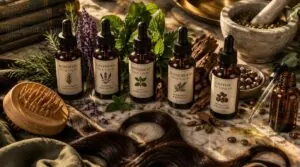
Your scalp is a living system where follicle health, circulation, and microbial balance determine whether your hair grows, thins, or stalls. Essential oils for faster growth work by influencing at least one of these systems, often in ways conventional shampoos simply don’t reach.
Your scalp’s follicle health, circulation, and microbial balance determine whether hair grows—essential oils reach where shampoos can’t
Here’s what’s actually happening beneath the surface:
- Scalp circulation enhancement increases oxygen and nutrient delivery to follicles, waking up underactive growth cycles.
- Follicle activation occurs when certain oil compounds interact with inflammation pathways that suppress the anagen (growth) phase.
- Microbial rebalancing removes scalp conditions like seborrheic dermatitis that quietly block hair growth stimulation before it starts.
Not every oil targets all three. Understanding which mechanism drives your hair loss separates a useful mix from an expensive hobby.
How to Dilute and Apply Essential Oils Safely
Essential oils work only when they’re applied correctly. Dilution, carrier choice, and technique each determine whether you see results or end up with an irritated scalp. Here’s what you need to know to get it right.
Carrier Oils and Dilution Ratios
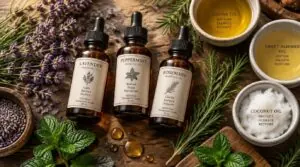
Never apply essential oils directly to your scalp. Carrier oils are used for dilution of essential oils, protecting skin while ensuring even absorption.
| Carrier Oil | Best For |
|---|---|
| Jojoba | All hair types |
| Sweet Almond | Fine or dry hair |
| Coconut | Thick or coarse hair |
Keep dilution ratios between 1-2% for scalp use. That’s roughly 6 drops per tablespoon of any carrier oil.
Scalp Massage and Application
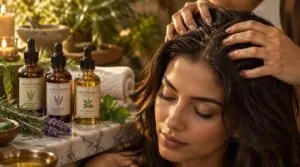
One 2019 trial found daily scalp massage improved hair thickness in under six months.
Apply your diluted mixture to a slightly damp scalp after shampooing. Use fingertip pads, not nails, moving in small circles. Cover each section methodically.
Here’s why this works:
- Boosts local blood flow
- Improves essential oil dilution spread
- Helps the hair growth cycle
- Builds long-term scalp health
Simple DIY Hair Growth Blend
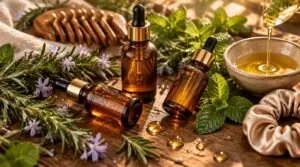
Here’s your DIY hair growth mix.
| Ingredient | Amount | Purpose |
|---|---|---|
| Rosemary oil | 4 drops | Follicle stimulation |
| Peppermint oil | 2 drops | Circulation support |
| Jojoba oil | 2 tbsp | Carrier base |
Massage this into your scalp, wait 30 minutes, then rinse clean. Knowing how to mix essential oils for hair growth keeps your DIY hair care consistent, your results trackable, and follicle stimulation intentional.
Shampoo and Conditioner Use
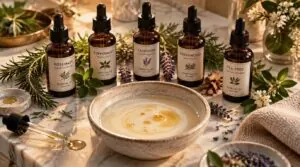
Adding your essential oils for hair growth to a full shampoo bottle creates inconsistent dosing. Instead, mix them into a single-use shampoo portion just before washing. That way, you control the concentration every time.
In conditioner, oils reach hair shafts more than your scalp, so use it mainly for texture. For scalp conditions, your shampoo is the more effective vehicle.
Best Essential Oil Pairings by Hair Type
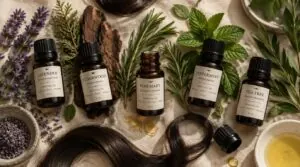
Knowing how to dilute and apply is only half the equation. Choosing the right pairing for your scalp type is what separates a routine that works from one that doesn’t.
Oily scalp: reach for peppermint plus tea tree. Both target oil control and freshness without adding weight.
For a dry or thinning scalp, lavender and cedarwood pair well together, one calming the environment, the other supporting follicle-oriented routines. If flaking is your primary concern, tea tree and lavender is the smarter choice over stacking multiple stimulants, which can overwhelm a reactive scalp.
Fine hair responds consistently well to peppermint-led blends. Coarse or thinning hair calls for cedarwood paired with rosemary, which carries the strongest growth-support evidence of any pairing here.
Hair Growth Timeline, Side Effects, and Safety
Getting the pairing right sets your routine up, but the hair growth timeline will test your patience before it rewards it.
Hair grows roughly 1 centimeter per month, and any topical routine takes 12 to 16 weeks before you can assess results honestly. Don’t measure your progress in days.
Side effects are preventable when you follow basic essential oil safety guidelines: dilute to a 1 to 2 percent dilution rate for scalp use, and patch-test any new mix on your inner arm first. Skipping dilution raises your risk of irritant contact dermatitis, which can increase shedding rather than reduce it. For a deeper look at which oils carry the highest irritation risk and how to layer them safely, essential oil blending guides for scalp health can help you build a routine that works with your scalp, not against it.
Pregnancy and young children call for extra caution. Use gentler oils at lower concentrations and consult a professional before starting.
Frequently Asked Questions (FAQs)
What oils stimulate growth?
Rosemary, peppermint, lavender, cedarwood, and tea tree are the five oils with the strongest case for follicle activation and hair regrowth. Of these five, rosemary currently carries the most direct human evidence for stimulating growth.
Which essential oil is best for fastest hair growth?
If you want the strongest evidence behind a single hair growth oil, choose rosemary. It’s currently the only essential oil with human study data directly supporting faster hair growth, making it your most credible choice.
Which oil is best for growth?
If you’re picking a single hair growth oil backed by actual human data, rosemary wins outright. It’s the only essential oil for hair growth with direct clinical trial evidence consistently showing measurable improvement over placebo.
What are the big 3 for hair regrowth?
The big 3 for natural hair growth are rosemary, peppermint, and lavender. Rosemary essential oil for hair growth leads with the strongest human evidence, peppermint drives scalp circulation, and lavender completes the essential oil mix.
Research suggests that rosemary oil rivals minoxidil for promoting hair growth while causing less scalp itching, making it a compelling natural alternative.
How long until I see hair growth results?
Think of follicles like seeds, not light switches. Consistent use of essential oils for fast hair growth nudges the anagen phase forward. Expect reduced shedding at 8 weeks, then hair density increase by month three.
Can essential oils cause hair loss or thinning?
Picture your scalp as a landscape. Apply essential oils neat and you risk scalp inflammation that disrupts hair follicle vitality, triggering temporary shedding. Always dilute properly, patch-test first, and stop if redness or itching appears.
Black pepper oil is a gentler option for many people, and this guide to black pepper oil for hair growth explains why piperine stays in oleoresin extracts rather than the distilled oil.
Are essential oils safe during pregnancy or breastfeeding?
During pregnancy or breastfeeding, keep dilutions under 1%, avoid large application areas, and skip oral use. Essential oils absorb through your skin, so consult your doctor before adding any hair growth oil to your routine.
Whats the best frequency for essential oil treatments?
Daily use won’t speed your results. Two to three weekly sessions give your essential oils for hair growth consistent scalp contact, while keeping your carrier oil dilution gentle enough to avoid building up cumulative irritation.
Can I use essential oils on color-treated hair?
Color-treated hair walks a chemical tightrope. You can still use essential oils for hair growth, but patch-test first on recently dyed skin, dilute to 1–2% in a carrier oil, and choose safflower to limit fading.
Can essential oils replace minoxidil or finasteride?
Essential oils are the supporting act, not the headliner. No oil can replicate finasteride’s DHT suppression or minoxidil’s follicle signaling, so don’t swap your prescription.
Use minoxidil pairing instead, letting oils improve your scalp environment.
Conclusion
Picture a scalp where circulation runs high, follicles have what they need, and growth actually follows. That’s not a fantasy; it’s what the right approach to essential oils for faster growth makes possible. Rosemary leads, peppermint drives blood flow, and the rest each play a specific role.
Dilution, consistency, and pairing are what separate results from wishful thinking. Start with what’s evidenced, apply it correctly, and let six months tell the story.