This site is supported by our readers. We may earn a commission, at no cost to you, if you purchase through links. This content is for general informational and educational purposes only and is not a substitute for professional medical, dermatological, or nutritional advice.

No one warns you about the sting until it’s too late. You’ve barely finished shaving your inner thighs, and suddenly, the skin feels raw—like you’ve skidded across gravel instead of gliding a razor. Razor burn isn’t just a minor inconvenience; it can hijack your day, spark relentless itching, and leave angry red marks that outlast your workout gear.
The inner thighs are especially vulnerable, thanks to constant friction and tricky hair patterns. If you’re tired of playing defense against razor burn, understanding its causes and knowing how to treat it can make all the difference.
Table Of Contents
Key Takeaways
- Razor burn on inner thighs stems from friction, hair texture (especially curly or coarse), improper shaving technique, and compromised skin barriers—with up to 80% of reactions traced to irritant contact dermatitis.
- Immediate treatment requires cold compresses to reduce redness by 25%, followed by ceramide-rich moisturizers that increase skin hydration by 21% within 48 hours, while hydrocortisone cream (1%, up to 7 days) calms inflammation.
- Prevention hinges on sharp blades changed every 3-5 shaves, shaving with the grain using light pressure, and exfoliating 2-3 times weekly with AHA/BHA products that cut razor bumps by up to 97%.
- Persistent symptoms like pus, spreading redness, or post-inflammatory hyperpigmentation lasting weeks require medical evaluation, as depigmentation treatments with hydroquinone or azelaic acid can reduce dark spots by 40-70% over 8-12 weeks.
What Causes Razor Burn on Inner Thighs?
Razor burn on your inner thighs isn’t just uncomfortable—it can be stubborn and hard to avoid. Several factors work together to trigger irritation in this sensitive area. Here’s what you need to know about the main causes.
Friction From Shaving and Skin Rubbing
Let’s zero in on friction—the main culprit behind razor burn on your inner thighs. Shaving ramps up skin irritation, especially where your thighs rub together or against clothing. Without good Friction Management, you’re inviting chafing and burning.
Prioritizing Inner Thigh Care and Razor Burn Prevention means choosing fabrics wisely and keeping your skin barrier strong to fend off irritation. Understanding the causes of thigh chafing issues is essential for effective prevention and treatment.
Ingrown Hairs and Hair Type
Friction’s only half the story—your Hair Texture and Follicle Shape play a starring role in razor burn. Curly Hair and tightly coiled follicles make ingrown hairs more likely, especially on inner thighs. That’s why Folliculitis hits hardest where hair grows dense and coarse.
- Curved follicles drive hair back into skin
- Coarse hair worsens irritation
- Ingrown prevention matters most. Understanding ingrown hair causes is essential for effective prevention.
Shaving Technique and Tools
Beyond hair type, how you glide the blade makes all the difference. Multi-blade razors pull hair below the skin surface, perfect for razor bumps to form. Shaving against the grain or pressing too hard invites irritation, while dull blades scrape instead of slice.
Guarded razors and electric shavers cause fewer micro-cuts, cutting closer to skin level and reducing razor burn risk instantly.
Skin Sensitivity and Irritant Dermatitis
Your skin’s natural defenses play a huge role here. When your inner thigh’s barrier function breaks down from harsh cleansers or high-pH products, you’re set up for irritant contact dermatitis—that angry redness accounting for up to 80% of shaving-related reactions. Sensitive skin types face even higher risk because:
- Friction and moisture weaken your protective barrier
- Surfactants strip essential lipids, triggering skin inflammation
- Razor burn disrupts skin pH balance, inviting irritant reactions
- Occluded inner thighs trap sweat, amplifying dermatitis
- Multiple products increase your cumulative irritant load
Proper dermatitis management starts with gentler cleansing and barrier repair for lasting skin irritation relief and dermatitis treatment.
Recognizing Razor Burn Symptoms

Razor burn on your inner thighs doesn’t always look the same, and catching the signs early makes treatment easier. You might notice anything from mild redness to painful bumps, depending on how your skin reacts to shaving.
Here’s what to watch for so you can address the irritation before it gets worse.
Redness and Inflammation
Ever notice how freshly shaved inner thighs can flare up like a warning light? That’s your body’s inflammatory response to skin irritation—classic razor burn. Sharp, blotchy patches signal irritant dermatitis, often from friction or shaving products.
For quick skin irritation relief, hydrocortisone cream and cold compresses help manage inflammation, especially if redness causes discomfort or you’re prone to ingrown hairs.
Raised Bumps and Itching
Raised bumps—those tiny, rebellious papules—often show up after shaving, itching like mad and begging for scratch relief. Follicle inflammation from ingrown hairs or razor rash triggers skin irritation, making you want to claw at your thighs. For itch relief and bump prevention, exfoliating before shaving helps keep razor burn and razor bumps from hijacking your confidence.
Keeping skin smooth takes the same confident attention to detail as choosing from a range of precision haircut line designs—both reward prep, patience, and knowing what works for your body.
- Relief from relentless itching
- Frustration with stubborn bumps
- Hope for smoother, calmer skin
Dryness, Burning, and Pain
Discomfort dominates when dryness, burning, and pain flare up after shaving your inner thighs. The culprit? Barrier damage and friction, which drain post-shave hydration and trigger irritant reactions.
If your sensitive skin care routine is lacking, you’ll feel every sting. For razor burn relief, focus on skin barrier repair and friction management to calm irritation and inflammation before it spirals.
Risk of Scarring or Hyperpigmentation
When razor burn lingers, you’re not just battling irritation—you’re facing potential hyperpigmentation and scarring. Dark inner thighs develop as inflammation kicks melanin production up by 40%, especially in darker skin tones. Repeated razor burn and ingrown hairs can trigger keloid formation or permanent skin darkening.
Lingering razor burn can lead to dark inner thighs, scarring, and even permanent skin discoloration, especially for those with deeper skin tones
That’s why postinflammatory care and scarring prevention matter from day one—before hyperpigmentation treatment becomes necessary.
Effective Treatment for Inner Thigh Razor Burn
When razor burn flares up on your inner thighs, quick action makes a real difference in how fast your skin recovers. The right treatment approach combines immediate relief measures with products that rebuild your skin’s protective barrier.
Let’s walk through the most effective steps you can take right now to calm irritation and support healing.
Immediate Steps to Soothe Irritation

When skin irritation and inflammation hit after shaving, you need relief fast. Here’s what works:
- Apply a cold compress for 5 to 10 minutes—this cuts redness by up to 25% and calms that burning sensation quickly.
- Use aloe vera gel or soothing gels to reduce pain and itching while cooling inflamed areas.
- Gentle cleansing with lukewarm water prevents further irritation—skip harsh, fragranced products that worsen razor burn.
Moisturizing and Barrier Repair

Your skin’s barrier is screaming for backup after shaving—and barrier function starts with the right moisturizer. Choose ceramide therapy products that replenish lipid repair and lock in skin hydration, especially formulas with humectants like glycerin. Studies show ceramide-containing moisturizers increase water content by 21% within 48 hours.
Daily moisturizing paired with gentle exfoliating and aloe vera accelerates healing while protecting your skin care routine investment.
Topical Creams and Home Remedies

Beyond ceramides, topical relief comes in many forms. Hydrocortisone cream (1%, used for up to 7 days) quiets inflammation fast, while aloe vera gel soothes burning without alcohol sting.
Oatmeal baths coat irritated skin in a protective film, and witch hazel acts as a gentle astringent.
Tea tree oil and coconut oil bring antimicrobial backup—just dilute them first to avoid worsening razor burn.
When to Avoid Further Shaving
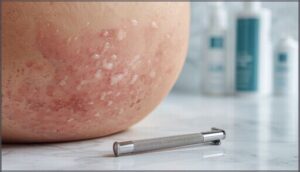
Sometimes the best treatment is doing nothing at all. If you see acute inflammation, pustules, or pus—infection signs that scream “stop”—shaving cessation becomes non-negotiable. Passing a razor over raised bumps drives ingrown hairs deeper, delays wound healing, and risks scarring.
When skin irritation burns intensely or won’t quit after three days, razor bump prevention means stepping back entirely until your barrier rebuilds.
Preventing Razor Burn on Inner Thighs

Prevention starts before you even pick up a razor. The good news is that most inner thigh razor burn is avoidable with a few smart adjustments to your routine.
Here’s how to protect your skin and shave with confidence.
Proper Shaving Techniques
When you dial in your technique, razor burn doesn’t stand a chance. Sharp blades glide cleanly through hair without tugging, while proper shave angle control and skin tension reduction minimize trauma. Here’s how to master your approach:
- Replace cartridges every 3–5 shaves to maintain razor maintenance standards and prevent dull-blade friction
- Shave with the grain using short, controlled strokes to reduce inflammation and support razor bump prevention
- Apply light pressure—your razor’s weight does the work, limiting microtrauma that triggers irritant dermatitis
- Rinse your blade after each stroke to prevent clogging and enhance shaving strokes for smoother glide
- Limit passes to two per area to protect your skin barrier and aid ingrown hair removal efforts
Multi-blade razors with proper blade selection offer efficiency, but avoiding repeat strokes over inflamed skin is paramount for preventing chronic irritation.
Exfoliation and Pre-Shave Prep
Before you pick up your razor, set the stage with smart exfoliation methods and a thorough pre-shave routine. Gentle mechanical scrubs, 2–3 times weekly, reduce ingrown hairs by around 30%, while AHA/BHA exfoliants clear follicular debris and cut bumps by up to 97%.
Cleanse with a mild wash, then shave after a warm shower—hydrated hair softens, minimizing razor drag and inflammation in high-friction zones.
Choosing The Right Razors and Products
Your razor and shave products can make or break your inner-thigh experience. Modern safety razors deliver lower erythema than electrics in sensitive zones, while single sharp blades reduce Razor Bumps by limiting hair re-entry.
For Hypoallergenic Options, seek nickel-free or titanium-coated designs—8–19% of us react to standard metals—and pair them with fragrance-free, aloe-rich Shave Gel Ingredients that soothe instead of sting.
- Blade Sharpness matters: dull edges create micro-tears and inflammation
- Skin Friendly Products (ceramide creams, glycerin balms) restore your barrier after every pass
- Razor Materials like titanium eliminate allergy flare-ups in high-friction areas
Daily Skin Care and Friction Reduction
Consistent Skin Hydration and Friction Management form your daily defense. After cleansing, pat—not rub—your inner thighs dry to prevent microtrauma, then lock in Barrier Repair with petrolatum or ceramide-rich moisturizers twice daily.
Add Gentle Exfoliation two to three times weekly to clear dead cells, and apply silicone balms before activity; they cut friction by 20–30%, shielding your Skin Health from chafing and Razor Burn flare-ups.
Long-Term Skin Care and Recovery

If you’ve dealt with razor burn on your inner thighs, you know the frustration doesn’t always end when the redness fades. Dark spots, recurring irritation, and damaged skin can linger long after the initial burn heals.
Here’s how to support your skin’s recovery, protect against future damage, and know when it’s time to get professional help.
Managing Hyperpigmentation
When razor burn triggers post-inflammatory hyperpigmentation on your inner thighs, you’re looking at weeks or months of visible dark patches—melanin production goes into overdrive after skin trauma.
Depigmentation methods like 4% hydroquinone or 20% azelaic acid can reduce pigmentation by 40–70% over 8–12 weeks. Pair them with niacinamide and sun protection to restore even skin tone and protect shaving and skin health long-term.
Maintaining Skin Barrier Health
Your skin barrier is the frontline defense against razor burn and ingrown hairs—when it’s compromised, you’ll see higher transepidermal water loss and chronic irritation. Strengthen it with these barrier-focused strategies:
- Apply ceramide-rich moisturizers twice daily to restore lipid balance
- Choose fragrance-free formulas that support skin hydration
- Use petrolatum-based products overnight for deep barrier repair
- Monitor skin for dryness or flaking between shaves
- Layer emollients immediately after cleansing to lock moisture in
Preventing Recurrence With Routine Changes
Ever wonder why razor burn keeps coming back? Shaving frequency matters—cut back on aggressive routines and let your skin recover. Switch up blade technology, use proper skin lubrication, and follow post-shave care for friction reduction.
Smart shaving tips like shaving in the direction of hair growth and prepping with exfoliation can make personal grooming safer and help prevent ingrown hair recurrence.
When to Seek Medical Advice
If redness or pain spreads, or you notice pus, fever, or chills, it’s not just routine skin irritation—these are Infection Signs demanding Medical Evaluation. Severe Symptoms like draining bumps or expanding redness can signal Skin Infections needing Emergency Care.
Don’t gamble with your health; persistent Razor Burn, recurring Ingrown Hairs, or unusual Dermatitis and Skin Conditions deserve prompt Razor Burn Treatment.
Frequently Asked Questions (FAQs)
Can razor burn increase risk of skin infections?
Yes—razor burn creates microtrauma that disrupts your skin barrier, allowing bacteria like Staphylococcus aureus to invade hair follicles and trigger folliculitis.
Infection prevention starts with proper technique and immediate post-shave care.
Are certain fabrics better for healing razor burn?
Choose breathable fabrics like cotton or silk to support healing—they reduce friction and irritation.
Avoid synthetic materials that trap moisture and heat, which can worsen razor burn and delay your skin’s recovery.
Does diet affect razor burn recovery time?
Nutrient intake directly influences wound healing speed. Dietary factors like protein, zinc, and vitamin C support skin repair, while adequate hydration and omega-3s reduce inflammation—potentially shortening razor burn recovery time by several days.
Can swimming worsen razor burn on inner thighs?
Pool chemicals strip protective oils and increase skin pH balance, while swimwear friction and water temperature intensify inflammation—transforming minor razor burn into angry red bumps that sting with every stroke through chlorinated water.
Are there specific activities to avoid during healing?
Skip high-friction sports and tight clothing while healing. Hot water exposure and intense exercise worsen razor bumps, and harsh chemicals delay recovery. Rest irritated skin for faster ingrown hair treatment and prevention.
Conclusion
Shaving your inner thighs doesn’t have to feel like walking a razor’s edge. With proper technique, mindful product choices, and consistent post-shave care, you can sidestep razor burn inner thighs and reclaim comfort in your own skin.
Listen to what your body tells you—if irritation flares, adjust your routine. Whether you’re prepping for summer or simply prioritizing self-care, smoother skin starts with understanding your needs and treating them with intention.