This site is supported by our readers. We may earn a commission, at no cost to you, if you purchase through links. This content is for general informational and educational purposes only and is not a substitute for professional medical, dermatological, or nutritional advice.
I’ve seen a client walk into my shop with dripping wet hair, clippers in hand, asking if I could use them for a quick trim. The answer stopped him cold: using standard clippers on wet hair isn’t just ineffective—it’s genuinely dangerous.
Water creates conduction paths through metal components, turning an ordinary grooming tool into a potential shock hazard, while simultaneously forcing your motor to strain against clumped, resistant strands that refuse to cut cleanly. The blades pull and snag instead of gliding smoothly, generating excess heat that damages both the cutting mechanism and your clipper’s longevity.
Whether you’re attempting a home haircut or considering wet trimming for convenience, understanding the critical distinction between standard models and waterproof designs will protect both your safety and your investment.
Table Of Contents
Key Takeaways
- Standard hair clippers on wet hair create electrical shock hazards through metal conduction paths and force motors to strain against clumped strands, causing blade damage and overheating that reduces equipment lifespan.
- Only clippers with certified IPX4 or higher ratings, sealed housings, stainless steel blades, and explicit wet/dry manufacturer approval can safely handle moisture without voiding warranties or compromising performance.
- Wet hair clumps together instead of standing upright, producing uneven blade contact that leads to patchy cuts with inconsistent depth measurements compared to dry hair under identical settings.
- Immediate post-use maintenance—removing debris, thorough drying, and applying clipper oil—prevents the accelerated corrosion and rust that moisture exposure causes, extending blade sharpness and operational reliability.
Can You Use Hair Clippers on Wet Hair?
The short answer is that standard hair clippers aren’t designed for wet hair, and using them on damp or soaking strands can compromise both your safety and the quality of your cut. While some specialized models offer wet/dry functionality, most clippers you’ll find in barbershops or at home work best on completely dry hair.
Understanding how moisture affects clipper performance, what manufacturers actually recommend, and the real differences between wet and dry cutting will help you make safer, smarter decisions with your tools.
How Wet Hair Affects Clipper Performance
Wet hair creates significant resistance against clipper blades, forcing the motor to work harder and reducing blade efficiency. When damp, hair clumps together rather than standing upright, leading to uneven blade contact that causes pulling and snagging during wet cutting. This increased friction generates excess heat, potentially damaging both the motor performance and clipper durability, even with waterproof clippers designed for hair cutting.
Similarly, using clippers on wet hair can lead to methodological flaws in audit trial reviews, affecting the overall quality of the haircut.
Manufacturer Guidelines and Warnings
Beyond performance issues, most user manuals explicitly prohibit operating hair clippers on wet hair or with damp hands, emphasizing electrical safety and blade warranty protection. Standard models lack proper product certifications for moisture exposure, and using them contrary to manufacturer guidelines voids coverage. Professional barbers typically invest in specialized clippers designed for salon use that feature sealed housings and corrosion-resistant components for durability.
You’ll find that only waterproof clippers with specific IP ratings receive approval for wet use, with detailed instructions addressing clipper safety and proper drainage after each session. For a closer look at models that balance power with easy maintenance, check out this guide to hair clippers designed for clean fades.
Comparing Wet Vs. Dry Hair Clipping
Understanding how moisture affects your cutting techniques makes all the difference in results and safety. Here’s what you need to know about each method:
- Dry hair stands away from the scalp, giving you predictable length accuracy with uniform clipper blade contact
- Wet hair clippers produce smoother surface finishes on certain hair texture types as water helps fibers lie flat
- Dry clipping generates more friction and heat, demanding frequent clipper maintenance to prevent blade dulling
- Moisture can reduce strand stiffness, though water increases resistance in some clipper designs without proper safety features
- Professional barbers adjust guard sizes based on desired results rather than solely moisture state
Choose your approach based on the cut you’re after, not convention. Before you buy, check out key features like waterproofing and motor type to make sure your clipper can handle your routine.
Risks of Clipping Wet Hair
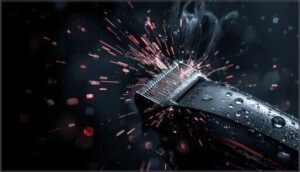
Using clippers on wet hair isn’t just about getting a less-than-perfect cut—it can actually damage your equipment and put your safety at risk. When you ignore the fundamental rule of dry clipping, you’re setting yourself up for problems that range from frustrating to genuinely dangerous. Wet clippers are especially vulnerable to rust and corrosion, which is why proper cleaning and maintenance of electric razors should always include thorough drying after every use.
Let’s break down the three major risks you need to understand before you even think about running clippers through damp hair.
Potential for Uneven or Patchy Cuts
Moisture throws off your entire game when you’re working with hair clippers. Wet hair clumps together unpredictably, making it nearly impossible to maintain consistent tension across different sections of the scalp. Blades also struggle to glide smoothly through damp strands, which is why proper clipper technique always starts with completely dry hair.
Laboratory measurements confirm what I’ve seen countless times—cut depth varies markedly on wet hair versus dry hair under identical settings, leading to patchy results that require extensive uneven length correction and frustrating do-overs.
Blade Dulling and Rust Risks
Corrosion eats away at your investment faster than you’d think. When you run clippers through wet hair, moisture clings to stainless steel blades despite their rust prevention properties, accelerating dulling factors through oxidation that reduces cutting efficiency.
Without proper blade maintenance and corrosion control after wet hair use, you’re inviting rust risks that compromise edge sharpening and turn precision tools into frustrating liabilities.
Electrical Shock and Safety Hazards
When water meets electric clippers, you’re gambling with more than just a bad haircut—electric shock becomes a real threat. Wet environments compromise electrical safety by creating conduction paths through metal components, especially if your cord’s damaged or your outlet lacks ground fault protection.
Using clippers on wet hair risks electric shock through metal components, especially with damaged cords or ungrounded outlets
Water resistance matters critically here, which is why clipper maintenance includes keeping standard models away from damp conditions entirely for shock prevention.
When is It Safe to Use Clippers on Wet Hair?
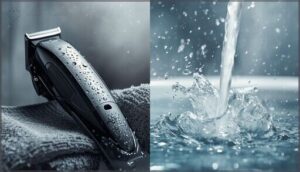
You don’t have to avoid wet hair completely if you’re using the right equipment. The key is understanding which clippers are actually designed to handle moisture safely, and knowing when the situation calls for professional-grade tools versus standard home models.
Let’s break down what makes a clipper safe for wet use and when you should stick to dry hair instead.
Features of Wet/Dry-Compatible Clippers
If you’re shopping for clippers that handle wet hair safely, look for models with certified IP ratings, which confirm genuine water resistance and protection against moisture ingress. These units aren’t just marketing hype—they’re engineered with specific features that set them apart from standard dry-only clippers:
- Sealed switches and blade housings that prevent water from reaching internal components, reducing corrosion and electrical hazards
- Stainless steel blades that resist rust when exposed to humidity, maintaining sharpness and cutting precision over time
- Dual insulation classes in cordless clippers that minimize shock risk during wet use, keeping you protected
- Rubberized grips that provide secure handling on wet surfaces, preventing slips that could cause injury
You’ll find wet/dry-compatible clippers advertised with splash-resistant housings, but don’t assume every “water-resistant” label means the same thing. Professional-grade units often include ground fault protection features and sealed battery compartments in cordless options, which safeguard against moisture exposure to the power cells.
Cordless clippers with proper wet/dry certification offer flexibility without compromising hair clipper safety, though you should verify the IP rating matches your intended use. Remember, specialized lubricants compatible with water-based cleaning are essential for maintaining blade design integrity and preventing corrosion after wet hair sessions. Check the manufacturer’s specifications carefully—some models only tolerate light moisture, while others withstand rinses under running water.
Water-Resistant Clipper Models
Not all water-resistant clippers deliver the protection you need, so understanding specific ratings and features helps you choose wisely. Below, you’ll find how leading models compare across critical specifications that determine clipper durability and wet hair safety:
| Feature | What to Look For |
|---|---|
| Water Resistance Rating | IPX4 or higher for splashing; IPX7 for rinsing |
| Blade Materials | Stainless steel or titanium-coated for corrosion resistance |
| Safety Features | Sealed housings, dual insulation, waterproof battery compartments |
| Cordless Designs | Lithium-ion batteries with moisture-sealed charging ports |
| Warranty Coverage | Explicit wet/dry use protection, not just dry operation |
Professional-grade cordless clippers typically offer premium hair clipper safety with higher ratings and sealed motors, while consumer models may limit wet use to light moisture exposure.
Professional Vs. Home Use Considerations
Your clipper’s duty cycle separates professional blades from home models when cutting wet hair. Commercial devices handle continuous operation with higher horsepower motors and titanium-coated cutting surfaces, demanding rigorous clipper maintenance schedules that extend device durability.
Home clippers prioritize user guidelines focused on grooming safety and portability, offering adequate performance for occasional wet hair cutting techniques while emphasizing home safety features like sealed battery compartments.
Best Practices for Clipping Hair Safely
Getting a clean, professional haircut with clippers starts with proper preparation and technique, not shortcuts. Whether you’re using wet-compatible clippers or sticking to the traditional dry approach, following a few key practices will protect both your equipment and your results.
Let’s walk through the essential steps that separate a smooth, even cut from a patchy disaster.
Proper Hair Preparation (Washing and Drying)
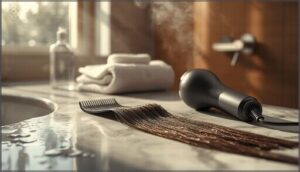
Before you pick up those clippers, proper hair washing tips and scalp preparation make all the difference. Start by pre-roughing your hair with warm water to open the cuticles, then apply a mild, pH-balanced shampoo to minimize irritation. Rinse completely—residue interferes with moisture control.
Condition to restore smoothness, then thoroughly dry your hair. Wet hair creates uneven cuts; dry hair ensures precision every time.
Using Guide Combs and Sectioning Techniques
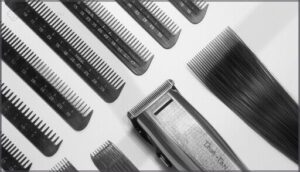
Once your hair is dry, guide comb sizes and sectioning strategies become your blueprint for consistency. Snap standard attachment combs—ranging from 1/8 to 1 inch—onto the clipper blades, aligning the base with your scalp to prevent uneven spots.
Section hair into rectangular subsections using a tail comb, securing each with clips. This hair texture analysis ensures grooming tools deliver uniform length across every pass.
Step-by-Step Guide for Optimal Results
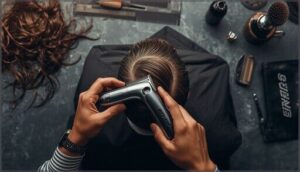
With your sections mapped and guard length chosen, you’re ready to execute the cut itself. Follow this sequence to maintain control and avoid the pitfalls of rushing through wet hair trimming:
- Confirm hair is adequately prepared before clipping – verify complete dryness to prevent blade corrosion and uneven results.
- Set clipper to appropriate guard length for consistent cuts – adjust clipper settings once, then commit to that measurement across each section.
- Clip in small, controlled motions across sections – use overlapping passes with steady hand pressure, applying trimming techniques that follow natural growth patterns.
- Recheck evenness after each major section is completed – stand back, assess symmetry, and correct immediately rather than discovering gaps later.
- Clean and maintain clipper immediately after use – prioritize clipper maintenance by removing trapped hair and applying lubricant while blades are still warm.
This disciplined approach transforms hair sectioning prep into professional-grade outcomes, whether you’re working on wet hair cutting tips or standard dry cuts.
Maintaining and Cleaning Hair Clippers
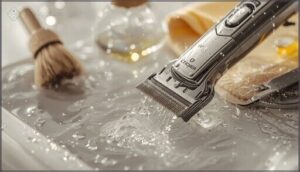
Proper maintenance isn’t optional if you want your clippers to perform consistently and last beyond a few months. Whether you’ve used them on wet or dry hair, the blades collect debris, moisture, and oils that degrade performance and invite rust if left unchecked.
Here’s what you need to do after every cutting session to keep your tools sharp, safe, and ready for the next client.
Cleaning After Wet Hair Use
Moisture left on blades after cutting wet hair accelerates corrosion, so you’ll need to rinse away residue deposits immediately and dry the components thoroughly.
Use a blade brush to remove trapped hair and skin debris that degrades performance, then apply clipper oil to reduce friction.
This routine maintains smooth operation while preventing rust and water damage that can compromise your clippers’ electrical safety and cutting precision.
Lubricating and Storing Blades
After cleaning, apply a drop of clipper oil to the blade drive every 8–20 minutes of professional use to reduce friction and overheating. Wipe the blades dry, reapply oil before storage, and keep them in a sealed container at room temperature.
Use only manufacturer-recommended lubricants—household oils gum the mechanism. This blade maintenance routine protects against rust while preserving cutting precision.
Extending Clipper Lifespan and Performance
Consistent clipper maintenance determines whether your tools last two years or ten. Regular cleaning reduces blade wear and maintains cutting efficiency, while proper oil lubrication minimizes friction during use.
Choosing corrosion-resistant blade materials protects against rust, especially when cutting wet hair. Store your clippers in a dry environment to prevent component degradation, and schedule blade sharpening every 6-12 months for peak performance optimization.
Frequently Asked Questions (FAQs)
Can wet hair clipping cause skin irritation?
Yes, wet hair clipping can irritate sensitive scalps. Moisture increases friction, blade tugging, and skin vulnerability—especially if you have dermatitis or use fragranced products—so always dry thoroughly before clipping.
Do different hair types require specific clippers?
You’d think one clipper handles all, yet hair texture dictates blade geometry, guard sizing, and motor power.
Fine hair demands precision teeth, while coarse types need deeper gullets and stainless steel blades for wet hair durability.
How often should clipper blades be replaced?
You should replace clipper blades every 6 to 12 months with regular use, but heavy daily cutting may require replacement every 6 months to maintain sharpness and prevent pulling or snagging during cuts.
Can you sharpen clipper blades at home?
Like trying to tune a piano with a hammer, home blade sharpening often backfires. Most manufacturers warn against it—improper angles void warranties and damage clippers.
Professional sharpening or blade replacement keeps your tools performing safely.
Conclusion
The difference between a smooth, professional cut and a dangerous mishap often comes down to one decision: respecting your clipper’s design limitations. Knowing when you can use hair clippers on wet hair separates confident home barbers from those risking costly mistakes and potential injury.
You now understand why standard models can’t safely handle wet hair, which waterproof alternatives exist, and how proper preparation protects both your equipment and yourself. Before your next trim, check your clipper’s specifications—because knowing when you can use hair clippers on wet hair separates confident home barbers from those risking costly mistakes and potential injury.