This site is supported by our readers. We may earn a commission, at no cost to you, if you purchase through links. This content is for general informational and educational purposes only and is not a substitute for professional medical, dermatological, or nutritional advice.

Your hair absorbs roughly thirty percent of its weight in water every time you wash it, and that’s when the trouble starts. Wet strands lose nearly half their strength because water swells the fiber, lifts the protective cuticle, and breaks the hydrogen bonds holding everything together.
Most people unknowingly make things worse during drying—vigorous toweling creates friction that snags roughened cuticles, while high heat weakens already fragile strands.
The good news is that a few simple adjustments to how you dry hair without causing damage can dramatically reduce breakage and keep your hair stronger over time. Switching to blotting instead of rubbing, choosing the right tools, and understanding when heat actually helps will transform your routine without adding extra steps.
Table Of Contents
Key Takeaways
- Wet hair loses nearly half its strength because water swells the fiber and lifts the cuticle, making it extremely vulnerable to breakage from friction, heat, and mechanical stress during drying.
- Blotting with a microfiber towel instead of rubbing with regular cotton eliminates the friction that roughens cuticles and causes splits, while cutting drying time significantly.
- Blow drying at low temperatures (140°F-175°F) with a heat protectant and keeping the dryer 6-8 inches away actually causes less damage than letting hair stay wet for hours, which creates hygral fatigue.
- A damage-prevention routine combines microfiber blotting, leave-in treatment application, partial air drying to 60%, and finishing with controlled low-heat blow drying to protect strands without adding extra steps.
Why Wet Hair is Prone to Damage
Your hair is at its most fragile the moment it gets wet. Water doesn’t just make your strands damp—it actually changes the structure in ways that leave them vulnerable to damage you mightn’t even notice.
Here’s what happens beneath the surface when your hair is soaking wet.
Hair Structure and Vulnerability When Wet
Your hair transforms the moment water touches it. When wet, hair absorbs about thirty percent of its weight in moisture, triggering fiber swelling that compromises strength. This creates a perfect storm for damage:
- Hair cuticles lift and roughen, increasing friction between strands
- The hair cortex softens, lowering the force needed for fiber fracture
- Hydrogen bonds break temporarily, weakening structural integrity
- Repeated wetting cycles cause hygral fatigue in porous hair
Understanding hair structure helps you protect it. Preventing hair moisture issues is essential for maintaining healthy hair.
Effects of Water on Cuticle and Cortex
When water penetrates your hair shaft, it triggers two critical changes: cuticle lifting and cortical swelling. Your hair cuticles expand over fifty percent, roughening the surface and exposing the vulnerable cortex beneath. Meanwhile, the inner cortex absorbs moisture and swells, stressing the entire hair structure and composition.
When water enters your hair, cuticles lift and swell by over fifty percent, exposing the vulnerable cortex beneath
Repeated swelling cycles create hygral fatigue, progressively weakening your hair with each wash. Hard water adds another layer of trouble through mineral deposition, which roughens cuticles further and reduces tensile strength.
Protecting your strands from these stressors starts with consistent hair care maintenance tips that address both washing frequency and drying technique.
Understanding the effects of hard water issues is essential for maintaining healthy hair.
Common Causes of Breakage During Drying
Knowing what weakens your strands helps you avoid the biggest culprits. Here’s what causes most hair breakage during hair drying techniques:
- Friction Damage – Rubbing with terry cloth towels roughens cuticles and causes micro-tears that lead to splits
- Heat Exposure – Blow drying above 150°C cracks cuticles and weakens protein bonds
- Mechanical Stress – Combing wet hair stretches fibers past their elastic limit
- Tension Breakage – Tight towel wraps pull vulnerable follicles and snap swollen shafts
- Prolonged Wetness – Staying damp too long creates repeated swelling cycles that accelerate weathering
Always use a heat protectant before blow drying to shield your strands from thermal damage.
Look for formulas that pair heat protection with moisture-boosting ingredients, especially if you’re managing the dryness that often comes with hormonal changes and menopausal hair.
Best Ways to Towel Dry Hair Safely
Your towel routine matters more than you’d think. The towel you reach for and how you use it can either protect your vulnerable strands or set you up for frizz and breakage.
Pairing the right towel with an ionic hair dryer creates a complete system that minimizes damage from root to tip.
Let’s look at three towel-drying essentials that keep your hair intact while you dry.
Choosing Microfiber Vs. Regular Towels

Your towel choice matters more than you think. Microfiber towels absorb markedly more water per square inch than regular cotton options, cutting drying time while reducing friction on vulnerable cuticles. Regular towels can work if you’re gentle, but they often leave lint behind and create more opportunities for breakage.
For even better results, pair your microfiber towel with lightweight styling products designed for fine hair that won’t weigh down delicate strands.
Here’s what you need to know:
| Feature | Microfiber Towels | Regular Cotton Towels |
|---|---|---|
| Absorbency | High water absorption, faster drying | Moderate absorption, slower process |
| Fiber Texture | Softer, finer fibers minimize friction | Coarser fibers can increase breakage risk |
| Cost & Availability | Slightly pricier, specialized purchase | Widely available, budget-friendly |
| Maintenance Needs | Wash separately, air-dry preferred | Standard washing, more durable |
Blotting Vs. Rubbing Techniques
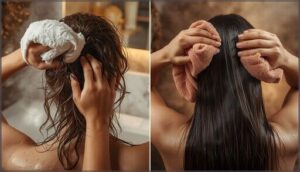
The difference is simple but powerful. Rubbing creates friction that lifts cuticles and invites frizz, while gentle blotting with a microfiber towel absorbs water without the mechanical stress. Think of it as pressing versus scrubbing—one respects your hair’s fragile state, the other fights against it.
If you’re still figuring out the best nighttime routine, check out how to sleep with wet hair for techniques that protect your strands while they dry.
Squeeze sections from scalp to ends, then blot, never rub. This small shift in towel drying dramatically cuts hair damage and breakage.
Detangling With Minimal Damage
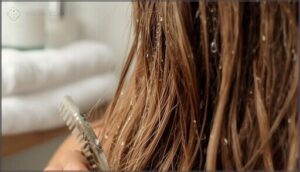
Your best move? Start at the ends with a wide-tooth comb, not the roots. This gentle handling protects vulnerable fibers and prevents the snagging that causes hair breakage.
Work upward in small sections, adding a detangler for slip if needed. The American Academy of Dermatology backs this detangling technique because it distributes force evenly, sparing your hair damage when it’s most fragile.
How to Air Dry Hair Without Harm

Air drying sounds like the gentlest option, but it’s not automatically safer for your hair. When hair stays wet too long, it becomes vulnerable to damage you mightn’t even notice.
Let’s look at how to air dry the right way so you can skip the heat without sacrificing your hair’s health.
Benefits and Drawbacks of Air Drying
You’ve probably heard that air drying is the gentler choice, and it’s true—skipping high heat avoids cuticle damage and preserves your hair’s moisture balance.
But here’s the catch: leaving your hair wet for hours invites hygral fatigue, that sneaky internal stress from constant swelling. Air drying benefits your hair health when you minimize wet time, not when you let strands stay damp all day.
Reducing Wet Time for Healthier Hair
The secret to healthier air drying? Cut down those soaking-wet hours. Microfiber towels absorb water faster than cotton, shortening the window when your hair is most vulnerable to hygral fatigue and scalp issues.
Try these hair drying methods:
- Wrap hair in a microfiber towel for 20–30 minutes to wick excess moisture
- Use plopping techniques to remove water without friction
- Partially dry before bed to prevent overnight scalp dampness
Reducing wet time protects against breakage while preserving microfiber benefits.
Airflow and Root Fluffing Tips
Want lasting root volume without heat tools? Airflow control makes all the difference. Lift sections away from your scalp with your fingers while air drying—this targets roots first and cuts drying time.
Direct airflow downward along your hair direction to smooth the cuticle. These blow dry techniques work even during natural drying, giving you volume enhancement and healthier hair.
Safe and Effective Blow Drying Methods

Blow drying doesn’t have to be your hair’s worst enemy. With the right approach, you can actually dry your hair faster and safer than letting it air dry for hours.
Here’s what you need to know to keep your strands strong while using heat.
Using Heat Protectants and Low Temperatures
Before you blow dry, think of heat protectants as your hair’s personal bodyguard against thermal damage. Spray a silicone-based formula through your damp mid-lengths and ends—it creates a protective film that shields each strand.
Then dial your dryer to low temperature, ideally between 140°F and 175°F. This combo lets you dry efficiently without scorching your cuticles, and ionic hair dryers make the process even gentler.
Proper Blow Dryer Distance and Movement
Once your heat protectant is in place, hold your hair dryer 6 to 8 inches from your scalp—about the length of a dollar bill. Keep it moving in smooth, sweeping motions rather than camping on one spot. Direct airflow downward along each strand to seal the cuticle flat.
Here’s your blow drying game plan:
- Divide hair into sections so you’re not overheating the same strands repeatedly
- Sweep the dryer continuously for 2–3 seconds per area, never pausing
- Point the nozzle down from roots to ends to lock in shine and tame frizz
Ionic Dryers and Modern Tool Benefits
Ionic dryers work smarter by emitting negative ions that break water into smaller droplets, cutting drying time up to 70 percent. That means less heat exposure overall.
Ceramic heating spreads warmth evenly, while tourmaline benefits include infrared penetration that dries from the inside out.
You’ll notice smoother cuticles, better frizz reduction, and real shine—all without cranking the temperature.
Essential Hair Care for Damage Prevention

Drying your hair the right way is just one piece of the puzzle. If you want to prevent damage long-term, you need to support your hair with consistent care habits that keep it strong and resilient.
Here’s what really has an impact in protecting your hair from breakage and keeping it healthy between wash days.
Regular Trims and Deep Conditioning
Consistency is your ally in hair damage prevention. Trim every six to eight weeks to stop split ends from creeping up the shaft—you’ll cut breakage by nearly half and keep moisture balance intact.
Between cuts, add deep conditioning once a week to strengthen fibers and restore hair health. These preventive measures work together, giving you softer strands and fewer tangles over time.
Product Selection for Moisture and Protection
The right products shield your strands from heat and environmental stress. Look for these essentials in your hair care lineup:
- Sulfate-free shampoos that preserve natural moisture without stripping oils
- Leave-in conditioners with heat protectants tested for blow dryers and styling tools
- Silicone-polymer blends that reduce friction and boost shine during drying
- Coconut or argan oils applied to damp hair before styling to lock in hydration
- UV filter sprays with benzophenone compounds that prevent color fade and structural weakening
Match formulas to your texture—lightweight serums for fine hair, richer creams for coarse or curly types.
Building a Gentle Hair Drying Routine
Your best defense against breakage starts with a repeatable sequence: blot with microfiber, apply leave-in treatment, air dry to 60 percent, then finish with low-heat blow drying from six inches away.
Adjust for your hair porosity—fine strands need less heat, coarse textures benefit from controlled warmth.
This gentle drying routine cuts damage prevention guesswork while keeping hair hydration intact and daily hair care simple.
Frequently Asked Questions (FAQs)
Can I sleep with wet hair safely?
You’ve probably heard it’s fine, but wet hair risks real trouble overnight.
Hair loses about 30 percent of its strength when saturated, making sleep damage from friction and breakage more likely than you’d think.
Does hair type affect drying damage risk?
Yes—fine hair snaps more easily when wet because thin fibers lack internal support.
Coily or chemically treated hair faces higher breakage risk from lifted cuticles, increased porosity, and uneven water absorption during drying.
Are hair wraps better than towels?
Microfiber hair wraps win hands down. They’re gentler on your cuticle, cut drying time in half, and weigh less than soggy bath towels—so you won’t stress your roots or wake up with frizz.
How often should I wash my hair?
Your hair type and scalp health determine wash frequency. Fine hair often needs washing every one to two days, while curly or coily types thrive with weekly cleansing to maintain moisture balance and prevent hair damage.
Do diffusers prevent heat damage on curls?
They’re like a heat shield for your curls—diffusers spread airflow and lower temperature intensity at each strand, reducing thermal damage and frizz.
But pair them with low heat settings and protectants for real curl protection.
Conclusion
Treating wet hair like spun silk instead of battle armor changes everything. These aren’t groundbreaking techniques—they’re deliberate choices that respect your hair’s vulnerable state.
When you master how to dry hair without causing damage through gentler toweling, smarter heat use, and patience during air drying, you’re not just preventing breakage. You’re building resilience into every strand, one careful motion at a time. Your hair will show the difference within weeks.
- https://europepmc.org/backend/ptpmcrender.fcgi?accid=PMC3229938&blobtype=pdf
- https://www.researchgate.net/publication/354398355_Evaluation_of_Changes_and_Characteristics_of_Hair_According_to_the_Application_of_the_Hair_Dryer_Plasma_Functional_Module
- https://onlinelibrary.wiley.com/doi/10.1111/ics.12796