This site is supported by our readers. We may earn a commission, at no cost to you, if you purchase through links. This content is for general informational and educational purposes only and is not a substitute for professional medical, dermatological, or nutritional advice.
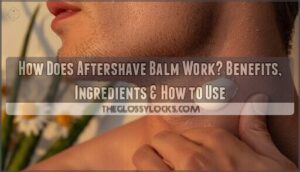
Your face stings, your skin feels tight, and those little red bumps are already forming—sound familiar? That post-shave burn happens because your razor just scraped away more than stubble. It removed a microscopic layer of protective skin cells, leaving your face vulnerable and irritated.
Aftershave balm works by addressing this micro-trauma head-on: it floods the area with hydrating ingredients that prevent moisture loss, delivers anti-inflammatory compounds that calm angry tissue, and forms a protective barrier against environmental irritants. The right formula doesn’t just make your skin feel better—it actively aids your skin’s natural repair process while you go about your day.
Table Of Contents
- Key Takeaways
- What is Aftershave Balm and How Does It Work?
- Key Ingredients That Make Aftershave Balm Effective
- How Aftershave Balm Soothes Irritation and Redness
- Moisturizing and Protective Benefits of Aftershave Balm
- How to Apply Aftershave Balm Correctly
- Aftershave Balm Vs. Gel Vs. Splash
- Top 3 Aftershave Balms for Men
- Choosing The Right Aftershave Balm for Sensitive Skin
- Common Mistakes When Using Aftershave Balm
- Frequently Asked Questions (FAQs)
- Conclusion
Key Takeaways
- Aftershave balm works by flooding freshly shaved skin with hydrating ingredients that prevent moisture loss, delivering anti-inflammatory compounds to calm tissue damage, and forming a protective barrier against environmental irritants while your skin’s natural repair process kicks in.
- The most effective formulations combine humectants like glycerin that pull water into your skin, emollients like shea butter that seal it in, and soothing agents like aloe vera and chamomile that reduce the inflammatory response your razor triggers at a cellular level.
- Application technique matters as much as ingredients—you need to apply balm to damp (not dry) skin using a dime-sized amount warmed between your palms, then massage it in with upward circular motions to maximize absorption and hydration benefits.
- Alcohol-free balms are essential for sensitive or dry skin types because alcohol-based splashes strip your skin’s natural oils and increase transepidermal water loss by up to 25%, while alcohol-free formulas preserve your moisture barrier and prevent the tight, stinging sensation that worsens irritation.
What is Aftershave Balm and How Does It Work?
Aftershave balm is one of those grooming essentials that does more than you might think—it’s formulated to calm your skin down after you’ve dragged a blade across it, while keeping everything hydrated and protected.
If you’re not sure where to start, understanding the best way to apply aftershave can make all the difference in how your skin responds.
Think of it as a targeted treatment that tackles the micro-trauma shaving causes, from tiny nicks to irritation you can’t even see.
For sensitive skin types, pairing this approach with gentle remedies designed for razor bumps helps calm inflammation and prevent scarring before it starts.
Let’s break down what this product actually does for your skin.
Before diving into ingredients, it helps to understand how prepping your skin properly affects how well any product absorbs and performs.
The Primary Functions of Aftershave Balm
Your aftershave balm acts as a targeted repair system right after you shave. Here’s what it does for your skin:
Getting the application technique right makes all the difference in how well your skin absorbs these benefits.
- Moisturizes to prevent water loss and keep your skin from drying out
- Soothes irritation and calms redness through cooling ingredients
- Protects freshly shaved skin by forming a barrier against environmental irritants
- Assists your skin’s natural healing process with nourishing compounds
Key Ingredients That Make Aftershave Balm Effective

The real magic of aftershave balm lives in its ingredient list—not in flashy marketing claims, but in how specific compounds interact with your skin’s barrier function after you’ve dragged a blade across it.
Each ingredient plays a distinct role, from immediate cooling relief to long-term moisture retention and cellular repair.
Let’s break down the five key players that transform a good balm into an essential part of your post-shave routine.
Aloe Vera for Soothing and Cooling
You’ll find aloe vera in nearly every quality balm because its polysaccharides form a protective film that locks moisture into freshly shaved skin. The cooling sensation you feel comes from compounds like acemannan—they don’t just distract from irritation, they actively soothe it.
Plus, aloe’s rich water content delivers instant hydration when applied to damp skin, while promoting collagen synthesis to help minor nicks heal faster.
Vitamin E for Skin Repair and Nourishment
While aloe gets you started, tocopherols—the active forms of Vitamin E—work deeper as antioxidants, shielding cells from oxidative stress that razors inflict on your skin barrier. Here’s what this vitamin brings to aftershave balm:
- Stabilizes lipid membranes to support barrier repair after blade contact
- Reduces transepidermal water loss, helping you retain moisture longer
- Improves texture perception, making skin feel genuinely nourished
That protective action is why vitamin E appears in nearly every quality formulation.
It’s especially valuable in post-shave products, where proper blade technique and skin preparation set the stage for effective recovery.
Chamomile for Reducing Inflammation
Chamomile extracts deliver bisabolol and chamazulene—compounds that genuinely calm redness and minor swelling after razor contact. Clinical studies show these anti-inflammatory agents mitigate erythema and reduce that itchy discomfort you feel post-shave.
That’s why sensitive-skin formulations lean heavily on chamomile: it soothes irritation without harsh additives, making your skin feel genuinely calmer within minutes of application.
Glycerin and Humectants for Hydration
Humectant properties make glycerin a star player in post-shave formulas—it pulls water straight into your stratum corneum, boosting surface hydration the moment you apply it.
That immediate moisture retention reduces tightness and roughness, keeping your skin elastic and comfortable.
Balanced formulations deliver hydration benefits without sticky residue, so you get real moisturizer performance that feels clean and works across different skin types.
Emollients That Lock in Moisture
Lighter oils and esters form a protective barrier on your skin, locking in the hydration that humectants draw in—think of emollients as the seal that prevents transepidermal water loss after your razor passes.
These emollient types smooth rough patches, soften keratin, and shield against environmental irritants while delivering sustained moisturizing effects.
Properly formulated balms combine aloe vera with barrier-supporting emollients, so you get hydration levels that last without greasiness.
How Aftershave Balm Soothes Irritation and Redness

After you shave, your skin doesn’t just feel irritated—it actually is irritated, on a cellular level. The razor blade disrupts your skin’s protective barrier and triggers an inflammatory response that shows up as redness, heat, and that familiar burning sensation.
Here’s how aftershave balm steps in to calm things down and get your skin back to normal.
Calming The Skin After Razor Contact
Your razor doesn’t just cut hair—it also triggers your skin to release inflammatory mediators like prostaglandins, sparking that familiar redness and irritation. Quality aftershave balm with soothing ingredients works quickly, generally calming skin irritation within 5–20 minutes by:
- Delivering hydration to distressed tissue
- Neutralizing inflammatory signals at the surface
- Restoring your skin’s slightly acidic pH
- Reducing visible redness and tenderness
- Supporting barrier repair to prevent razor burn
Reducing Post-Shave Burning and Stinging
That stinging burn hits hardest when nerve fibers in your freshly shaved skin fire off distress signals.
Alcohol-free aftershave balm with humectants like glycerin and soothing agents such as aloe vera or panthenol can knock down that burning sensation within one to three minutes, restoring hydration and forming a protective film that calms irritation and aids your skin’s natural barrier repair.
Anti-Inflammatory Properties at Work
The real magic happens when chamomile, allantoin, and bisabolol—ingredients borrowed from clinical dermatology—dial down the inflammatory cascade your razor just triggered, basically telling your immune system to stand down before redness spirals into full-blown irritation. This process is supported by the skin’s natural response to skin calming agents that help reduce inflammation.
Here’s how anti-inflammatory ingredients soothe razor burn and irritation:
- Chamomile extracts block inflammatory mediators released during shaving, preventing histamine-driven redness relief within minutes.
- Aloe vera polysaccharides penetrate your compromised skin barrier, delivering hydration while suppressing pro-inflammatory cytokines that heighten discomfort.
- Bisabolol molecules inhibit enzymes responsible for tissue breakdown, which means less swelling and faster recovery from micro-trauma.
You’re basically giving your skin pharmaceutical-grade inflammation reduction without prescription strength—these botanical compounds work synergistically to calm reactive nerve endings and restore barrier integrity before chronic sensitivity takes hold.
Moisturizing and Protective Benefits of Aftershave Balm
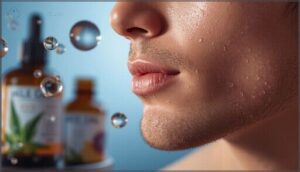
Your skin loses moisture the moment a razor touches it—aftershave balm’s job is to stop that water from escaping and keep your face feeling comfortable instead of tight and dry.
The right formula doesn’t just sit on the surface, it actually reinforces your skin’s natural protective barrier so it can heal faster and stay healthier over time.
Here’s how aftershave balm keeps your skin moisturized and protected long after you’ve finished shaving.
Preventing Transepidermal Water Loss
After you shave, your skin doesn’t just feel tight and uncomfortable—it’s actually losing water through thousands of microscopic openings left behind by the blade. This process, called transepidermal water loss, strips away your skin’s natural hydration balance. Aftershave balm creates a protective seal—think of it as shrink-wrap for your face—using emollients that lock moisture in and prevent dehydration.
Without this protective film, your freshly shaved skin can lose up to 25% more moisture than normal—leaving you vulnerable to that telltale razor burn tightness. Quality balms don’t just moisturize temporarily; they actively hydrate the deeper layers while their emollient barrier keeps that precious water from escaping. You’re basically giving your compromised skin barrier the backup it desperately needs right when it’s most vulnerable.
Without aftershave balm’s protective barrier, freshly shaved skin loses up to 25% more moisture than normal, leaving you vulnerable to razor burn tightness
| Mechanism | How It Works | Key Ingredients |
|---|---|---|
| Water Locking | Forms occlusive barrier on skin surface | Shea butter, caprylic/capric triglyceride |
| Moisture Retention | Prevents evaporation through micro-tears | Glycerin, propylene glycol |
| Emollient Effects | Fills gaps between skin cells | Plant oils, ceramides |
| Hydration Balance | Maintains ideal water content in epidermis | Hyaluronic acid, panthenol |
Supporting The Skin’s Moisture Barrier
Your skin’s moisture barrier isn’t just about preventing water loss—it’s the foundation that keeps irritants out and resilience in. Quality aftershave balm rebuilds this protective layer by delivering barrier-repair ingredients like niacinamide and ceramides, which strengthen the lipid matrix between skin cells.
Humectants like glycerin pull moisture deep into compromised tissue, while emollients seal everything together, giving your freshly shaved face the structural support it needs to bounce back stronger.
Effective use of aftershave balm involves applying it as part of a skin recovery process to help soothe and calm the skin after shaving.
Long-Term Skin Health and Hydration
Consistent balm use doesn’t just calm immediate irritation—it compounds into real skin health improvements. Over two weeks, your hydration levels stay elevated, elasticity improves, and moisture retention gets better even between shaves.
Humectants like glycerin boost water content in your skin’s outer layer, while antioxidants such as vitamin E protect against environmental stress, supporting anti-aging benefits and long-term barrier repair that keeps your face looking healthier.
How to Apply Aftershave Balm Correctly
You can have the best aftershave balm in the world, but if you’re applying it wrong, you’re not getting the full benefit—and that’s something I see patients mess up all the time.
The application process isn’t complicated, but there’s a specific sequence that maximizes how well those soothing and moisturizing ingredients actually penetrate your skin barrier.
Let me walk you through the three key steps that make all the difference between a balm that just sits on your face and one that actually does its job.
Preparing Your Skin Before Application

Before your aftershave balm can do its best work, you’ll want to rinse your face with warm water to remove any leftover shaving cream and debris. Pat—don’t rub—your skin with a clean towel, leaving it slightly damp.
That residual moisture helps the balm’s humectants pull water into your skin, boosting hydration and soothing irritation more effectively than applying to bone-dry skin.
Using The Right Amount of Product
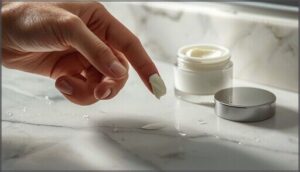
A dime-sized amount—roughly half a teaspoon—is usually all you need to cover your face and neck without leaving your skin greasy or clogging your pores. If you’re overdoing the dose control, you’ll notice a poor absorption rate and a shiny film that won’t sink in.
Start small with your balm application—you can always add more if certain areas feel tight, but excessive product dosage wastes balm and undermines the aftershave benefits you’re aiming for.
Proper Massage Techniques for Maximum Absorption

Warm the balm between your palms first, then massage it into your face using gentle strokes and circular motions—upward from jawline to temples.
Moderate massage pressure on damp skin hydration enhances absorption rates of soothing ingredients like aloe vera without irritating freshly shaved tissue.
Focus facial movement on problem zones, spending about thirty seconds until the aftershave balm disappears to moisturize, hydrate, and soothe effectively.
Aftershave Balm Vs. Gel Vs. Splash
Not all aftershave products work the same way—your choice between balm, gel, or splash changes how your skin feels and heals after you shave. The texture, absorption speed, and ingredient profile of each formula affects everything from immediate comfort to long-term hydration.
Here’s what separates these three options and how to match the right one to your skin’s specific needs.
Texture and Absorption Differences
You’ll feel the difference immediately when you compare these three formulas—balm thickness versus gel vehicles versus splash volatility creates distinct experiences on your skin. Balms deliver rich, creamy emollient effects that moisturize and hydrate deeply, forming a protective film that enhances moisture retention. Gels absorb quickly with a lightweight feel, while splashes evaporate rapidly, leaving minimal residue. Each aftershave balm texture determines how long that soothe-and-hydrate effect lasts after you’ve finished shaving.
| Product Type | Texture & Feel | Absorption Speed | Hydration Duration |
|---|---|---|---|
| Balm | Rich, creamy, substantial | Slow, prolonged cushioning | Long-lasting, deep moisture retention |
| Gel | Lightweight, easily spreadable | Fast, disappears quickly | Moderate, cooling effect ~30 minutes |
| Splash | Watery, thin, nearly weightless | Very rapid evaporation | Minimal, clean matte finish |
Which Formula Works Best for Your Skin Type
Matching formula to your unique physiology determines whether you’ll see improvement or aggravation after every shave. Oily skin thrives with lightweight gels or splashes that control shine and tighten pores, while dry skin demands rich, hydrating balms packed with emollients to prevent flaking. Sensitive skin needs alcohol-free, fragrance-free balms containing aloe vera and chamomile that calm reactivity without triggering inflammation—never gamble with your skin barrier.
| Skin Type | Recommended Formula | Key Ingredients to Seek |
|---|---|---|
| Oily | Gel or splash | Witch hazel, mild astringents |
| Dry | Rich balm | Shea butter, glycerin |
| Sensitive | Alcohol-free balm | Aloe vera, chamomile |
| Combination | Seasonal rotation | Balanced humectants |
| Acne-prone | Non-comedogenic balm | Jojoba, oat proteins |
Combination skin benefits from a seasonal rotation, while acne-prone skin requires non-comedogenic balms with jojoba and oat proteins to avoid clogging pores. Understanding your skin type and selecting the appropriate formula ensures a smoother, healthier shaving experience.
Alcohol-Free Vs. Alcohol-Based Options
The sting you feel from traditional splashes? That’s ethanol—often 50 to 90 percent—delivering antiseptic power but stripping your skin barrier, increasing water loss, and leaving you drier within days. Alcohol-free balms swap that burn for emollients like shea butter and glycerin, soothing irritation without compromising hydration. Your choice hinges on tolerance: sensitive skin demands alcohol-free comfort, while oily types may tolerate astringent splashes.
| Feature | Alcohol-Based Splash | Alcohol-Free Balm |
|---|---|---|
| Antiseptic action | High (50–90% ethanol) | Low to none |
| Skin barrier impact | Increases water loss | Preserves moisture |
| Ideal for | Oily, nick-prone skin | Dry, sensitive skin |
| Moisturizing properties | Minimal | Rich emollients |
| Post-shave feel | Bracing sting | Soothing comfort |
Top 3 Aftershave Balms for Men
After understanding how aftershave balm works and what to look for in a formula, you’re probably wondering which products actually deliver on their promises.
I’ve spent years evaluating formulations in clinical practice and personal use, and three balms consistently stand out for their ingredient quality, skin barrier support, and real-world performance across different skin types. Here’s what I recommend based on efficacy, texture, and how well they prevent post-shave irritation.
1. Nivea Men Sensitive Post Shave Balm
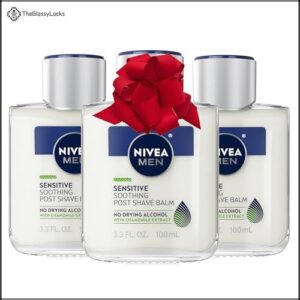
You’ll find that NIVEA MEN Sensitive Post Shave Balm hits all the right marks for reliable post-shave care without breaking the bank. The formula blends Vitamin E, Pro-Vitamin B5, and chamomile extract to tackle five common complaints—burning, micro cuts, dryness, tightness, and stubble itch.
What makes this balm stand out is its fast-absorbing, alcohol-free texture that won’t leave your face feeling greasy. Dermatologically tested on men with sensitive skin, it delivers long-lasting moisturization while calming redness and reducing those pesky ingrown hairs you’ve been dealing with.
| Best For | Men with sensitive skin who need daily post-shave relief from irritation, burning, and dryness without the sting of alcohol-based aftershaves. |
|---|---|
| Formula Type | Alcohol-free |
| Skin Suitability | Sensitive skin |
| Primary Benefit | Soothes irritation |
| Texture | Non-greasy |
| Size | 3.3 Fl Oz |
| Key Ingredients | Vitamin E, Chamomile |
| Additional Features |
|
- Fast-absorbing, lightweight formula with Vitamin E, Pro-Vitamin B5, and chamomile that soothes five types of shave irritation without leaving greasy residue
- Alcohol-free and dermatologically tested on sensitive skin, making it gentle enough for daily use while reducing redness and ingrown hairs
- Affordable three-pack option provides long-lasting value for consistent post-shave care
- Bottle design can dispense too much product at once, leading to waste and frustration during application
- No travel-size or pump bottle option available for users who prefer more controlled dispensing
- Some users may experience minor reactions like redness or bumps despite the sensitive skin formulation
2. Jack Black Post Shave Cooling Gel
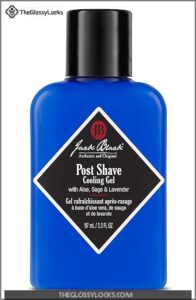
Jack Black’s Post Shave Cooling Gel offers a lighter alternative to traditional aftershave balm if you’re dealing with razor burn or post-shave redness. The gel texture absorbs quickly without leaving residue, delivering a cooling effect through menthol-like compounds that soothe shaving irritation on contact.
What sets this product apart in any product comparison is its alcohol-free, fragrance-free formula—combining aloe vera, sage, and glycerin to provide skin comfort while supporting your moisture barrier.
At $23 for 3.3 ounces, it’s premium-priced but effective for post shave care.
| Best For | Men with sensitive skin who want fast relief from razor burn and redness without the sting of alcohol-based aftershaves. |
|---|---|
| Formula Type | Alcohol-free |
| Skin Suitability | All skin types |
| Primary Benefit | Relieves razor burn |
| Texture | Lightweight gel |
| Size | 3.3 Fl Oz |
| Key Ingredients | Sage, Rosemary, Allantoin |
| Additional Features |
|
- Cooling gel formula absorbs quickly and doesn’t leave greasy residue on your face
- Free from common irritants like alcohol, fragrance, parabens, and sulfates—solid choice for reactive skin
- Works double-duty as a lightweight moisturizer to prevent post-shave dryness and flaking
- Pricey at $23 for 3.3 ounces, especially compared to drugstore alternatives
- Small bottle size means you’ll need to restock fairly often if you shave regularly
- Won’t appeal to users who actually prefer that traditional alcohol bite in their aftershave
3. Baxter After Shave Balm For Men
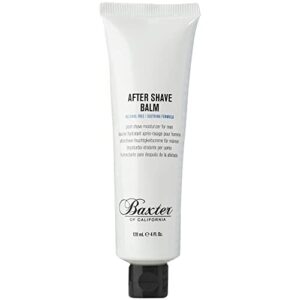
Baxter of California’s After Shave Balm for Men takes a different approach than Jack Black’s gel—here, you’re getting a richer, more conditioning formula at $20 for four ounces. The combination of aloe vera and allantoin soothes post-shave irritation, while glycerin provides the skin hydration your moisture barrier needs after razor contact.
What I appreciate from a dermatologist’s perspective is the alcohol-free formulation and its reported ability to prevent ingrown hairs—a common concern in men’s grooming. It absorbs without greasiness, making it practical for daily shaving routines and solid among aftershave reviews for sensitive skin types.
| Best For | Men with sensitive or irritation-prone skin who want a conditioning, alcohol-free aftershave that helps prevent ingrown hairs without feeling greasy. |
|---|---|
| Formula Type | Alcohol-free |
| Skin Suitability | Sensitive skin |
| Primary Benefit | Soothes and comforts |
| Texture | Non-greasy |
| Size | 4 Fl Oz |
| Key Ingredients | Aloe vera, Allantoin |
| Additional Features |
|
- Alcohol-free formula with aloe vera and allantoin soothes irritation and calms redness after shaving
- Helps prevent ingrown hairs while keeping skin hydrated with glycerin
- Absorbs quickly without leaving an oily or greasy residue
- Higher price point at $20 for 4 oz compared to some competing aftershave products
- Smaller bottle size may require more frequent repurchasing for daily shavers
- May not work for all skin types depending on individual sensitivities
Choosing The Right Aftershave Balm for Sensitive Skin
If your skin reacts to almost everything, choosing the right aftershave balm isn’t about finding the fanciest formula—it’s about knowing which ingredients to seek out and which to avoid. Sensitive skin, especially if you’re dealing with rosacea or chronic irritation, needs a balm that calms rather than aggravates.
Here’s what you should look for to keep your post-shave routine gentle and effective.
Fragrance-Free Options for Irritation-Prone Skin
You need fragrance-free aftershave balm—not just “unscented”—because truly scent-free products skip all perfuming agents that trigger contact dermatitis in irritation-prone skin. Look for hypoallergenic formulas built on natural ingredients like aloe vera and shea butter, which calm sensitive skin without added fragrance.
If you’re managing rosacea or frequent redness, fragrance avoidance isn’t optional—it’s your first line of defense against flare-ups and prolonged inflammation after every shave.
Avoiding Harsh Ingredients Like Alcohol
Alcohol-based splashes strip your skin’s natural oils and drive up water loss through the outer barrier—leaving you tight, red, and stinging right when your skin needs relief most. Check labels for Alcohol Denat or SD Alcohol 40, then skip them entirely. Instead, choose alcohol-free aftershave balm formulas built on gentle ingredients like aloe vera, glycerin, and chamomile that restore moisture balance without triggering skin irritation on sensitive skin.
Five harsh alcohols to avoid in aftershave products:
- Alcohol Denat – strips protective lipids and accelerates surface dehydration
- SD Alcohol 40 – creates burning sensations on freshly shaved, vulnerable skin
- Ethyl Alcohol – increases transepidermal water loss and barrier disruption
- Methyl Alcohol – dissolves natural oils, promoting long-term sensitivities
- Isopropyl Alcohol – aggravates redness and post-shave tightness in reactive skin types
Best Formulations for Rosacea-Prone Skin
When managing rosacea triggers, look for aftershave balm labeled fragrance-free and alcohol-free—these gentle formulas sidestep the main culprits behind flare-ups.
Prioritize soothing ingredients like niacinamide, allantoin, and ceramides that deliver skin hydration and moisturizing support without aggravating sensitive skin.
Products with minimal ingredient lists soothe skin irritation more reliably, and dermatologist-recommended lines offer formulations tested specifically for sensitive skin care needs.
Common Mistakes When Using Aftershave Balm

Even with the best aftershave balm, how you use it matters as much as what’s in the bottle. I’ve watched patients unknowingly sabotage their post-shave routine with a couple of simple mistakes that turn a soothing product into an ineffective one.
Let’s walk through the most common errors so you can get the full benefit from your balm and keep your skin calm, hydrated, and irritation-free.
Applying Too Much Product
More isn’t better regarding aftershave balm—product overuse can backfire fast. If you slather on too much, you’ll deal with greasy residue that clogs pores, triggers skin irritation, and creates absorption issues that leave your face sticky for hours.
For sensitive skin care and real aftershave benefits for men, follow these dosing rules to control shave irritation without excess moisture:
- Start with a pea-sized amount, warming it between your palms first
- Apply only to damp, freshly shaved areas—not your entire face
- Use gentle upward strokes to promote even distribution and faster absorption
- Wait 60 seconds before layering other products or sunscreen
- If tackiness persists after two minutes, you’ve used too much—blot gently with a clean towel
Using Balm on Dry Instead of Damp Skin
Applying aftershave balm to completely dry skin slows absorption and limits skin hydration—humectants like glycerin need surface moisture to pull water into your stratum corneum effectively.
For ideal aftershave benefits for men, especially with sensitive skin or dry skin care needs, pat your face damp after rinsing, then massage balm in circular motions to improve damp application and strengthen moisture barriers.
Frequently Asked Questions (FAQs)
Can aftershave balm prevent ingrown hairs effectively?
Think of ingrown hairs as tiny rebels trapped beneath the surface. Aftershave balm’s soothing ingredients reduce micro-irritations and hydrate your skin, softening the surface to help hairs exit smoothly—offering meaningful razor burn reduction and shave irritation relief.
How long does aftershave balm take to work?
You’ll feel cooling effects and relief within 1–5 minutes as the aftershave balm starts working.
Hydration levels improve noticeably in 5–15 minutes, though absorption rates vary depending on your skin type and the specific post-shave care formula.
Can women use mens aftershave balm products?
Yes, women can absolutely use men’s aftershave balm—skincare products aren’t truly gender-specific.
The key is matching the formula to your skin type and checking for potential irritants like fragrance or alcohol, not the label.
Does aftershave balm expire or lose effectiveness?
Your aftershave balm usually stays fresh for two to three years unopened, but once you crack it open, aim to use it within 12 to 24 months for maximum effectiveness and skincare benefits.
Can aftershave balm replace daily facial moisturizer?
Most balms won’t fully replace your daily moisturizer. They deliver post-shave relief and short-term hydration, but lack the barrier-support ingredients needed for consistent, all-day skin hydration levels between shaves.
Conclusion
Think of aftershave balm as your skin’s first responder—it arrives at the scene of razor damage, stabilizes the barrier, and sets healing in motion.
Now that you understand how aftershave balm works at the cellular level, you can choose formulas that match your skin’s specific needs rather than grabbing whatever’s on the shelf.
Your face deserves more than generic relief; it deserves targeted repair that turns post-shave discomfort into lasting comfort.