This site is supported by our readers. We may earn a commission, at no cost to you, if you purchase through links. This content is for general informational and educational purposes only and is not a substitute for professional medical, dermatological, or nutritional advice.
Splash on the wrong stuff after a shave and you’ll feel like you rubbed sandpaper across your neck. That sting isn’t "working." It’s your skin barrier taking a hit it didn’t need to take.
Here’s the thing: razor burn, tight cheeks, red patches near your jaw, none of that is random bad luck. It usually comes down to what you put on your face in the 60 seconds after you rinse, and how you put it on.
Knowing how to apply aftershave balm the right way turns that post-shave sting into calm, smooth skin instead. Get the timing and technique down, and your face will thank you every single morning.
Table Of Contents
- Key Takeaways
- What Does Aftershave Balm Do?
- How Do You Apply Aftershave Balm?
- Where and When to Apply Aftershave Balm
- Choosing Aftershave Balm by Skin Type
- Common Aftershave Balm Mistakes to Avoid
- Frequently Asked Questions (FAQs)
- Are you supposed to rinse off after shave balm?
- What is the point of after shave balm?
- When should I use aftershave balm?
- Is after shave balm better than lotion?
- How long does aftershave balm take to absorb?
- Can aftershave balm expire or go bad?
- Should you use aftershave balm every day?
- Can women use mens aftershave balm products?
- What happens if you use too much balm?
- How often should you replace aftershave balm bottles?
- Conclusion
Key Takeaways
- Apply balm right after shaving while your skin’s still damp and warm, since open pores soak up hydration fast and waiting too long wastes the window.
- Stick to a dime-sized amount warmed between your palms first, then massage it in with gentle circular motions for about 30 seconds so it actually absorbs instead of just sitting on top.
- Let the balm fully absorb (about 2-5 minutes) before layering on moisturizer, since balm handles the immediate repair and moisturizer builds on top of that hydration base.
- Pick your formula based on your skin type, and always choose alcohol-free, fragrance-free options for sensitive skin since high-alcohol products strip your skin’s barrier instead of protecting it.
What Does Aftershave Balm Do?
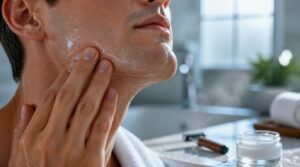
Here’s the thing: aftershave balm isn’t just a nice-smelling splash you slap on and forget about. It’s doing real work under the surface, calming your skin and helping it bounce back after a blade’s been dragging across it. Let’s break down exactly what that work looks like.
If you’re curious how this balm-based repair differs from a lighter splash, this breakdown of aftershave lotion versus cologne differences makes the distinction clear.
Balm Versus Splash, Lotion, and Gel
Walk down any grooming aisle and you’ll see balm, splash, lotion, and gel fighting for your attention. Here’s the difference: splash evaporates fast with little residue, lotion spreads thin and light, gel dries down quick, and balm sinks in slow, leaving lasting moisture behind. Balm’s oils and waxes give it real skin barrier support splash just can’t match.
For best results, many grooming experts recommend layering splash and balm together, applying splash first to disinfect and letting it evaporate before following with balm to repair and hydrate the skin.
Redness and Irritation Relief
Now that balm’s soaking in, let’s talk about what it’s actually fixing. Razor burn and skin irritation happen from friction, plain and simple.
Balm calms things down fast:
- Aloe vera cools flare-ups instantly
- Chamomile eases redness and itchy follicles
- Anti-inflammatory ingredients protect sensitive skin
Consistent use cuts post-shave redness by up to 27%, turning your postshave routine into real relief, not just a smell-good step.
Hydration and Barrier Repair
Here’s the thing, calming redness is only half the job.
Aftershave balm also pulls water into skin like a sponge, then locks it in with an occlusive barrier that slows moisture loss.
That’s true hydration and barrier repair working together, boosting skin hydration by 40% versus alcohol splashes and supporting your skin’s natural moisturizing factor for lasting moisture retention.
Key Skin-Soothing Ingredients
So what’s actually doing the soothing work in that balm? Aloe vera cools skin fast and fights inflammation. Vitamin E locks in moisture for repair. Chamomile calms angry follicles. Peptides nudge collagen production for bounce. Hyaluronic acid holds hydration for up to 72 hours.
- Aloe vera: instant cooling, anti-inflammatory
- Vitamin E: moisture retention, cellular repair
- Chamomile: reduces redness, soothes follicles
- Peptides: collagen support, elasticity
- Hyaluronic acid: 72-hour hydration
Alcohol-Free Formula Benefits
Here’s the thing: alcohol strips your skin like a power washer on old paint, fast but rough. Alcohol-free formulas skip that damage, delivering real skin barrier repair in 2-3 weeks.
| Benefit | Traditional | Alcohol-Free |
|---|---|---|
| Hydration | Strips oils | Locks in moisture |
| Irritation | Stings, burns | Calms within minutes |
| Barrier | Weakens | Rebuilds naturally |
How Do You Apply Aftershave Balm?
Here’s the thing: technique matters just as much as the balm itself. Slap it on wrong, and you’re wasting half its benefits before it even gets to work. Let’s break it down step by step, starting with what your skin should look like before the balm ever touches it.
Before applying any balm, make sure you’ve properly cleared away excess oil and buildup, since mastering the right technique for cleansing oily skin sets the stage for everything that follows.
Rinse and Leave Skin Damp

Here’s the thing: skin fresh out of the shower isn’t ready for balm yet. Rinse with cool water to close pores, then gently pat dry, don’t rub. You want skin damp, like a wrung-out sponge, not dripping. That damp layer helps the balm sink in fast, boosting skin hydration right when your skin needs it most.
Use a Dime-Sized Amount
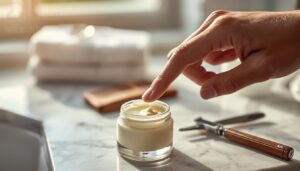
More isn’t better here. A dime-sized amount covers your whole face and neck without waste.
- Shaving just the neck? Use a pea-sized dab
- Oily skin: stick to pea-sized to avoid clogged pores
- Dry skin: go nickel-sized for extra moisture
- Hot climate: pea-sized keeps things light
Sensitive skin sticks with dime-sized, fragrance-free formulas for gentle relief.
Warm Balm Between Your Palms

Cold balm straight from the jar just sits on skin. Rub that dime-sized dab between your palms for 5-10 seconds first, this warms it to about 35°C, melting shea butter and activating fragrance oils for better absorption.
| Cold Application | Warmed Application |
|---|---|
| Sits on damp skin | Spreads evenly |
| Slower absorption | Faster, deeper absorption |
| Harsh, cooling shock | Comfortable, soothing feel |
Massage Gently for 30 Seconds
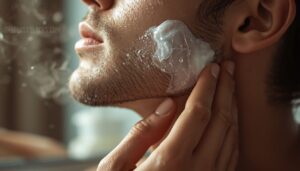
Now the real work starts. Massage that warmed balm into damp skin using upward circular motions, small figure-eight patterns about 1-2 inches wide, from jawline to cheeks. Keep pressure fingertip-light, like petting a cat, never rubbing.
- Circular motion boosts microcirculation
- Light pressure prevents irritation
- 30 seconds lets absorption begin
Sensitive spots (Adam’s apple) get gentle patting, not rubbing.
Let The Balm Absorb
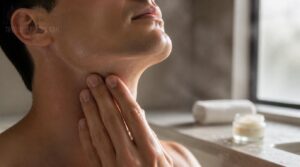
Here’s the thing: patience pays off. Give the balm 1-2 minutes to fully absorb, no residue, no greasy film. That damp skin you started with speeds things up too, cutting absorption time way down. Once it disappears completely, you’re good to layer serums or moisturizer. Rushing this step just wastes product and blocks proper skin absorption.
Where and When to Apply Aftershave Balm

Timing and placement matter just as much as technique for aftershave balm. Put it on the wrong spot, or wait too long, and you’re leaving relief on the table. Here’s exactly where and when to apply it for the best results.
Apply Immediately After Shaving
Once you rinse the blade, your window is already closing. Freshly shaved areas need balm within minutes, while skin’s still warm and damp, since open pores soak up hydration fast. Pat dont rub, just gentle patting, to protect against irritation.
- Warmth boosts absorption
- Damp skin spreads balm evenly
- Timing prevents razor burn
- Protection starts immediately
- Moisture locks in before pores close
Cover Your Face and Neck
A dime-sized amount works for your whole face and neck, no need to go bigger. Spread it with upward circular motions, covering every freshly shaved area evenly.
Don’t skip patches near your ears or collar. Even coverage means even skin moisturization, setting you up for the targeted work coming next.
Target Neck and Jawline
Even coverage sets the stage, but your neck and jawline need extra love. That skin’s only 1-2 millimeters thick, way thinner than your face, so it soaks up product up to 50% faster.
Jawline hair grows every which way, which means razor bumps love to hide there. Massage balm in with upward circular motions and give ingrown-prone spots a little extra time.
Use Balm Before Moisturizer
Order matters here. Balm goes on first because your skin just took a beating from the razor, and it needs barrier repair before anything else. Think of balm as the paramedic and moisturizer as physical therapy, one calms the emergency, the other builds long-term strength.
Balm is the paramedic calming the emergency; moisturizer is the physical therapy building long-term strength
That sequence creates a hydration base moisturizer can actually lock in.
Wait Before Layering Products
Once the balm sinks in, give it a beat before adding anything else. A 23 minute absorption window lets balm settle into freshly shaved areas without sliding around.
Rushing causes product slip and tacky residue on damp skin. This short layering pause protects your skin barrier and preps skin properly for moisturizer layering.
Choosing Aftershave Balm by Skin Type
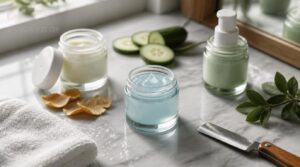
Here’s the thing: not every balm works for every face. Your skin type basically decides which formula actually helps instead of just sitting there. So let’s break down what to grab depending on what you’re working with.
Lightweight Balm for Oily Skin
Oily skin needs balance, not more shine. Look for a lightweight balm with oil control hydration, like hyaluronic acid, which hydrates without adding grease.
Choose non-comedogenic, alcohol free formulas so pores stay clear and breakouts stay away.
Good oily skin care means absorption you can’t feel, just noticeable shine reduction and moisture retention that layers clean under sunscreen or makeup.
Rich Balm for Dry Skin
Dry skin acts like a sponge that’s been left out too long, cracked and thirsty. Reach for a rich, ointment-based balm with hyaluronic acid for humectant hydration and a light occlusive layer to lock moisture in.
This barrier repair combo fights winter dryness, cuts tightness and flaking, and keeps your skin’s moisture retention strong all day long.
Fragrance-Free Sensitive Skin Formulas
Sensitive skin needs a gentler touch, think of it like handling a bruise instead of tough hide. Go fragrance-free and alcohol-free, since 68% of skincare carries fragrance allergens. Look for chamomile, witch hazel, and allantoin for calming, hypoallergenic results.
Clinical testing backs these formulas, showing real skin barrier protection and lasting hydration benefits without the sting.
Balm for Combination Skin
Two different zones, one face, that’s the puzzle combination skin throws at you. Your T-zone runs oily while cheeks stay dry, so texture balance matters more than ingredient hunting.
- Lightweight gel-cream everywhere
- Zinc PCA for shine control
- Ceramides on dry cheeks
- Niacinamide before your balm
- Optional richer cream, cheeks only
Layer light to heavy for real hydration zones without greasy patches.
Patch-Test Every New Balm
New balm, new rules. Patch test behind your ear or along the jawline, clean skin only, and give it 24 to 48 hours before judging anything.
Watch for redness, itching, or bumps, since delayed allergy signs can creep in late. If skin stays calm, you’ve dodged fragrance allergens and found safe irritation relief.
Common Aftershave Balm Mistakes to Avoid

Here’s the thing: even guys who’ve been shaving for years mess this part up. A good balm can’t fix bad technique, and small habits quietly undo all its benefits. Let’s break down the five slip-ups that trip people up most.
Applying Too Much Product
More isn’t better here. A dime-sized amount covers your whole face and neck, so slathering on extra just sits there. You’ll get sticky residue, greasy feel, and pore blockage instead of absorption.
Overuse consequences pile up fast: wasted product, product waste, even barrier disruption for guys with skin sensitivity. Your skin’s not a sponge you can overload.
Rubbing Balm Into Dry Skin
Amount’s only half the battle. How you put it on matters too.
Rubbing balm into dry skin creates friction your face doesn’t need. Skin absorbs better damp, right after rinsing, while it still holds moisture. Warm balm between your palms first, then use a gentle circular motion with light pressure. Smooth spreading beats scrubbing every time, especially on already irritated patches.
Choosing High-Alcohol Formulas
That stinging splash isn’t proof it’s working, it’s just skin irritation.
Traditional aftershaves pack 40-75% alcohol, way past the 70% needed for real antiseptic effect anyway. It strips your skin’s barrier, causes dehydration, and irritates sensitive skin fast. Alcohol’s real job is acting as a fragrance carrier, nothing more.
Stick with balms under 5% alcohol.
Layering Products Too Quickly
Skipping alcohol is one win, but rushing your moisturizer right after balm causes product interference too. Give it 2-3 minutes absorption. Layer too fast and you get greasy residue, pore congestion, and a diluted balm.
- Wait for full absorption
- Apply to damp skin
- Massage in circular motions first
Patience beats a greasy film every time.
Ignoring Expiration and Storage
Neglect is sneaky. That little jar in your bathroom cabinet is baking in heat and steam, and once it’s opened, check the PAO symbol (that little jar icon with "12M" or "24M"). Watch for color changes, weird texture, or a rancid smell, all warning signs of chemical breakdown.
Store balm sealed, cool, and dark, not on your steamy sink ledge.
Frequently Asked Questions (FAQs)
Are you supposed to rinse off after shave balm?
No rinsing needed, that balm is here to stay, not sway. Leave it on damp skin so it can soak in fully. Rinsing early cuts absorption short, wasting product before it repairs and hydrates your freshly shaved skin.
What is the point of after shave balm?
Think of it as first aid for your face. Aftershave balm calms razor burn, cuts redness, and locks in hydration, supporting barrier repair so skin feels refreshed instead of raw or tight after shaving.
When should I use aftershave balm?
Like a paramedic treating a wound on the spot, timing matters. Apply after shaving, right on damp skin, before moisturizer. This post-shave routine window is when your skin absorbs relief and comfort fastest for real irritation relief.
Is after shave balm better than lotion?
For sensitive skin, yes. Balm beats lotion on hydration (8 hours versus 2-3), carries way less alcohol, and calms redness faster. Lotion suits oily skin better, but balm’s soothing ingredients make it the safer everyday pick.
How long does aftershave balm take to absorb?
Good things come to those who wait, and here that wait is short: 2 to 5 minutes on damp skin. A dime-sized amount, massaged in, speeds skin absorption; cold weather or oily skin can stretch it out.
Can aftershave balm expire or go bad?
Yes, it can. Unopened, balm lasts 3-5 years; once opened, expect 12-24 months. Check the PAO symbol (like "12M"), store it cool and sealed, and toss it if scent, color, or texture seems off.
Should you use aftershave balm every day?
If you shave daily, then daily balm makes sense, matching your skin’s needs to shaving frequency. It offers skin irritation relief, helps moisturizing, and fits sensitive skin into any daily grooming routine without overloading your pores.
Can women use mens aftershave balm products?
Boundaries don’t belong on ingredient labels. Skin type matching matters more than gender marketing, so fragrance-free, soothing formulas with panthenol or allantoin work fine for anyone. Just patch-test first, since men’s products sometimes pack stronger actives.
What happens if you use too much balm?
Overdoing it backfires fast. More than a dime-sized amount causes greasy residue buildup, pore congestion, trapped heat, and disrupted oil balance, slowing skin absorption rate and dragging out irritation instead of calming it.
How often should you replace aftershave balm bottles?
Think of your balm like milk, fine for a while, then it turns. Check the PAO label: most last 12 to 36 months opened, 3 to 5 years sealed. Toss it if color, scent, or texture shifts.
Conclusion
The gentlest touch does the toughest job, and that’s the paradox of great grooming.
Learning how to apply aftershave balm isn’t about fancy products, it’s about patience, timing, and a little warmth from your palms.
Thirty seconds of care can undo minutes of razor damage. Skip a step and your skin pays for it later.
Master the routine, and smooth skin becomes your everyday normal, not a lucky exception.