This site is supported by our readers. We may earn a commission, at no cost to you, if you purchase through links. This content is for general informational and educational purposes only and is not a substitute for professional medical, dermatological, or nutritional advice.
Skin that cracks isn’t just uncomfortable—it’s a barrier that’s lost the fight. Your skin’s outer layer depends on a precise balance of lipids, moisture, and proteins, and when indoor heating drops humidity below 30%, that balance collapses fast.
What surprises most people is that cracked skin rarely comes from one cause. Cold air, a missed vitamin, uncontrolled blood sugar, or even your soap can each quietly chip away at the same protective layer.
Healing it means addressing the right layer at the right time—with the right tools.
Table Of Contents
- Key Takeaways
- What Causes Cracked Dry Skin?
- How Does Nutrition Support Skin Healing?
- What Are Effective Home Treatments for Cracked Skin?
- Which Medical Treatments Help Severe Dry Skin?
- How Can You Prevent Cracked Dry Skin Recurrence?
- Frequently Asked Questions (FAQs)
- What heals dry cracked skin the fastest?
- Can vaseline heal dry cracked skin?
- What is dry cracked skin a symptom of?
- Can cracked skin leave permanent scars?
- How long does healing typically take?
- Is cracked skin contagious to others?
- What ingredients should I avoid completely?
- Can children use adult dry skin treatments?
- Can cracked skin spread to other body areas?
- Does exercise improve circulation and skin repair?
- Conclusion
Key Takeaways
- Cracked skin usually has multiple causes working together — weather, diet, health conditions, and daily habits can all chip away at your barrier at the same time.
- Apply a ceramide-rich, fragrance-free moisturizer within three minutes of bathing to lock in moisture before your skin dries out.
- What you eat directly affects how fast your skin heals — zinc, vitamins C and D, protein, and omega-3s are the nutrients that matter most.
- If you see pus, spreading redness, or no improvement after two weeks of consistent care, it’s time to see a dermatologist.
What Causes Cracked Dry Skin?

Cracked skin rarely happens for just one reason. Several factors work against your skin’s ability to stay intact — from the air in your home to what’s happening inside your body.
Healing takes more than a quick fix — moisturizing and protecting dry, cracked skin works best when you address both the surface and the underlying causes together.
Here’s what’s actually breaking down your skin barrier.
Environmental Triggers (Weather, Humidity)
Your skin doesn’t stand a chance when the environment turns against it. Cold air dehydration is one of the most overlooked culprits — cold weather strips your skin’s natural oils faster than they can be replenished, leaving the barrier thin and vulnerable. Indoor heating dryness makes things worse, pushing relative humidity well below 30%, which is where transepidermal water loss accelerates sharply. Air conditioner dryness follows the same pattern, quietly pulling moisture from your skin overnight. Studies indicate that low humidity and cold temperatures together exacerbate skin barrier dysfunction, a known trigger for atopic dermatitis climate‑related skin risk.
Two triggers that hit hardest:
- Wind dryness — moving air speeds evaporation from exposed skin, especially cheeks and hands, often causing tightness within hours.
- Humidity fluctuation impact — rapid swings between humid outdoor air and dry indoor air repeatedly stress the skin barrier.
Humidity control is your first line of defense against these environmental factors.
Underlying Health Conditions (Eczema, Psoriasis, Diabetes)
Sometimes the problem runs deeper than weather or dry air. When your immune system misfires, your skin pays the price.
Conditions like eczema or psoriasis are classic culprits, and understanding why your legs itch when walking can reveal whether an immune response—not just the elements—is behind your discomfort.
Eczema affects 31.6 million Americans and is driven by immune dysregulation and barrier dysfunction — meaning your skin can’t hold moisture in or keep irritants out.
Psoriasis, an inflammatory condition affecting over 40 million people worldwide, floods the skin with inflammatory cytokines that speed up cell turnover, creating thick plaques that crack and split.
Diabetes adds another layer of complexity: poor glycemic control pulls moisture from skin cells and slows circulation, making healing sluggish. When metabolic syndrome enters the picture, these conditions often overlap, compounding skin barrier damage. Skin barrier repair strategies become harder when the body is fighting on multiple fronts.
Lifestyle and Hygiene Factors
Your daily habits may be quietly undermining your skin barrier. Hot showers feel relaxing, but high shower temperature strips away the lipids your skin needs to stay intact. Keep bathing duration under ten minutes and use lukewarm water instead.
Handwashing frequency matters too — washing more than necessary, especially without moisturizing after, accelerates dryness.
Lifestyle factors affecting skin barrier function include:
- Using harsh soaps with fragrance or alcohol
- Skipping glove use during dishwashing or wet work
- Wearing rough fabrics that create friction on sensitive areas
- Neglecting gentle cleansing practices for sensitive skin
- Forgetting to reapply moisturizer after hand washing
Small adjustments here add up fast.
Nutritional Deficiencies Affecting Skin Health
What you eat shows up on your skin. Protein deficiency slows tissue repair, while essential fatty acid deficiency leaves skin scaly and prone to splitting. Vitamin A deficiency disrupts keratinization; vitamin C deficiency impairs collagen formation. Zinc deficiency delays wound closure noticeably.
nutritional deficiencies aren’t rare — they’re often overlooked.
Nutritional support for skin healing, including vitamin supplementation with protein and vitamin D, plus omega-3 fatty acids, can quietly transform your skin’s recovery.
How Does Nutrition Support Skin Healing?

Your skin is fundamentally rebuilding itself from the inside out — and that process needs the right raw materials. What you eat directly affects how fast those cracks close and how strong your skin barrier becomes.
Here’s what your body actually needs to get the job done.
Role of Calories and Protein in Recovery
Your skin can’t repair itself on an empty tank.
Calories fuel the entire healing process — cut them too low, and your body starts breaking down tissue instead of rebuilding it.
Protein is just as critical.
It provides the amino acids that drive protein synthesis and patch damaged skin.
Aim for 0.8 to 1.6 grams per kilogram daily, spread across meals to support protein timing and hit the leucine threshold your cells need.
Importance of Vitamins and Minerals (A, C, D, E, Zinc)
Think of micronutrients as the construction crew your skin depends on. Without them, repairs stall.
Here’s what each one does:
- Vitamin A barrier function keeps cells renewing — deficiency causes roughly 25% of dry skin cases in children.
- Vitamin C collagen synthesis is essential; about 75% of people with chronic wounds are deficient.
- Vitamin D immunity support helps skin recover from irritation and stress.
- Vitamin E antioxidant protection shields cell membranes from damage that worsens dryness.
- Zinc wound healing accelerates repair — deficiency appears in 40% of childhood eczema cases.
Managing Blood Sugar for Optimal Skin Health
Blood sugar quietly shapes how well your skin heals. When glucose runs high, it damages collagen and slows barrier repair — a real problem for anyone managing diabetes.
Consistent Meal Timing, Fiber‑Rich Foods, and Glycemic Index Choices all support Blood Glucose Monitoring goals. Insulin Sensitivity Exercise improves circulation, delivering nutrients to your skin needs.
| Habit | Skin Benefit | Example |
|---|---|---|
| Glycemic Index Choices | Reduces inflammation | Oats over white bread |
| Insulin Sensitivity Exercise | Boosts skin circulation | 30‑min daily walk |
| Consistent Meal Timing | Stabilizes glucose swings | Same meal windows daily |
| Fiber‑Rich Foods | Slows glucose absorption | Lentils, leafy greens |
| Blood Glucose Monitoring | Catches harmful spikes early | Daily fasting checks |
Staying Hydrated for Skin Healing
Your skin is about 64% water — so when you’re chronically under‑hydrated, healing slows down noticeably. Consistent fluid intake keeps circulation moving, which delivers nutrients directly to repairing skin cells. Think of it as keeping your internal delivery routes open.
- Aim for steady sips throughout the day — Effective Fluid Timing matters more than chugging water all at once.
- Add Water‑Rich Foods like cucumber, watermelon, and celery to support hydration therapy without extra effort.
- Make Seasonal Hydration Adjustments in winter when indoor heat drops humidity and accelerates skin water loss.
- Use Hydration Monitoring Apps to spot intake gaps before your skin tightens.
- After heavy sweating, prioritize Electrolyte Replenishment to restore fluid balance and support moisture retention.
What Are Effective Home Treatments for Cracked Skin?
Most cracked skin responds well to simple, consistent care at home. You don’t always need a prescription to start seeing real improvement. Here’s what actually works.
Choosing The Right Moisturizer
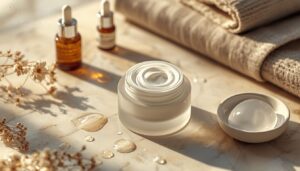
Not every moisturizer earns its place on cracked skin. For real barrier repair ingredients, look for ceramide moisturizer formulas paired with glycerin or hyaluronic acid — both humectants that pull water into damaged layers. Emollient texture matters too; thick creams beat thin lotions every time.
Always go fragrance-free to avoid irritation. Application timing is critical — moisturize within three minutes of bathing for best results.
Gentle Cleansing and Skin Care Routines

How you wash matters just as much as what you put on afterward. Harsh soaps and hot water strip your barrier fast.
Build a simple skin care routine around these four rules:
- Use lukewarm water — never hot
- Apply fragrance-free cleansers with a gentle circular massage
- Practice minimal cleansing frequency — once daily for body skin
- Always use the pat dry technique after rinsing
Home Remedies (Oatmeal Baths, Natural Oils)

Two of the most accessible home remedies for cracked skin are colloidal oatmeal baths and natural oils.
For your oatmeal soak, Warm Bath Temperature matters — lukewarm water only. Aim for 15 minutes of Oatmeal Soak Timing to let the finely ground oats calm inflammation and support your skin barrier.
Afterward, apply a Natural Oil Blend like jojoba or coconut oil. That Oil Occlusion Layer seals moisture in.
Always do an Oil Patch Test first on sensitive skin.
Using Humidifiers for Moisture Control

Sealing moisture in with oils helps, but what about the air around you? That matters just as much. When indoor humidity drops below 30%, your skin barrier loses water faster than you can replace it — a real problem during heating season. A humidifier gives you direct humidity control over your environment.
Here’s a practical setup guide:
- Ideal Humidity Range — Keep levels between 30–50% to support dry skin without encouraging mold growth.
- Humidifier Placement — Bedrooms work best; you’ll absorb eight hours of moisturized air overnight.
- Humidifier Type Comparison — Ultrasonic models are quieter; evaporative types self-regulate better in larger rooms.
- Sensor Safety Features — Choose units with a built-in humidistat and auto-shutoff for consistent, safe output.
- Water Quality Selection — Use distilled water to reduce mineral dust and keep your air clean.
Monitor levels with a hygrometer. The impact of humidity on skin health is real — using humidifiers to control indoor moisture is one of the simplest tools you have.
Avoiding Irritants and Allergens
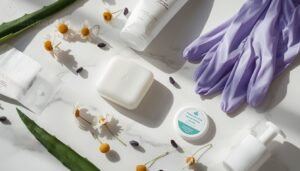
A humidifier manages the air — but what about everything your skin actually touches? That’s where irritants do the most damage.
Fragrance ingredients in soaps, detergents, and lotions are among the top contact dermatitis triggers. Once a fragrance allergy develops, it’s lifelong. So switching to fragrance-free products isn’t optional — it’s protective.
| Category | Common Irritants | Smarter Swap |
|---|---|---|
| Cleansers | Harsh soaps, sulfates | Fragrance-free, pH-balanced wash |
| Laundry | Fabric softeners, dryer sheets | Gentle laundry detergents, no softener |
| Gloves & Gear | Latex rubber gloves | Rubber-free gloves, nitrile alternatives |
Pet dander management matters too — keeping pets out of your bedroom reduces overnight skin exposure. Air purifier use helps filter both dander and indoor allergens. And always read labels: "unscented" can still contain masking fragrances. "Fragrance-free" is the label you want.
Which Medical Treatments Help Severe Dry Skin?

Sometimes home remedies just aren’t enough, and your skin needs stronger backup. When dryness turns severe, a few targeted medical treatments can make a real difference.
Here’s actually worth knowing.
Topical Corticosteroids and Prescription Creams
When moisturizers stop working, topical corticosteroids are often the next step. Steroid potency selection matters — low-potency corticosteroid creams suit facial fissures, while medium-strength options handle stubborn limb patches.
Vehicle formulation choice also counts: ointments penetrate thick, scaly skin better than creams.
Fingertip unit dosing helps you apply just enough — one unit covers roughly 2% of your body surface.
Treatment duration limits are real; most medium-potency options are safe for up to 12 weeks. Side effect management means avoiding prolonged use on thin-skin areas.
Your dermatologist tailors prescription barrier creams and skin moisturizer combinations to rebuild your skin barrier safely.
- Low-potency steroids work best on the face
- Ointments outperform creams on thick, dry patches
- Fingertip unit covers about 2% body surface
- Medium-potency steroids are generally safe up to 12 weeks
- Thin-skin areas need extra caution to prevent atrophy
Barrier Repair Creams and Ceramide-Rich Products
Your skin barrier is like a brick wall — ceramides are the mortar. cracking follows fast.
Barrier repair creams rebuild it using specific ceramide types like Ceramide NP and AP, paired with cholesterol for lipid pairing support. Humectant synergy from glycerin or sodium hyaluronate locks in moisture.
Texture occlusiveness matters too — thicker ceramide-rich formulations for barrier restoration absorb without greasiness, and ingredient stability keeps emollients effective long after application.
Nonsteroidal Moisturizers and Clinical Research
Clinical evidence for nonsteroidal moisturizers is stronger than most people realize. Glycerol-based formulations at 10–20% concentrations measurably improve skin barrier repair within four weeks, confirmed through barrier biomarkers like transepidermal water loss and corneometry outcomes.
Split-body design trials compare treated versus untreated skin on the same person — removing guesswork. Long-term safety data also holds up well, with minimal side effects reported.
- Ceramide-rich formulations for barrier restoration reduce transepidermal water loss substantially
- Moisture retention improves with consistent twice-daily application
- Corneometry outcomes show measurable hydration gains within weeks
When to Seek Medical Advice
Most cracked skin responds well to home care — but not always. Watch for infection indicators like pus, spreading redness, or red streaks, which signal it’s time for a dermatology consultation.
Intense pain that disrupts walking or sleep, or no improvement after two weeks of moisturizing, also warrants a visit.
High-risk health conditions like diabetes demand even faster action.
Don’t ignore sensitive area alerts — feet, eyelids, and fingertips need prompt evaluation.
How Can You Prevent Cracked Dry Skin Recurrence?

Healing cracked skin is only half the battle — keeping it from coming back is where the real work happens. Prevention isn’t complicated, but it does require a few consistent habits working together.
Here’s what actually matters long-term.
Daily Skin Moisturizing Techniques
Your routine is the real treatment — not just the product. Timing Application is everything: apply your daily moisturizer within three minutes post-shower while skin is still damp.
- Layering Order — Apply humectants like glycerin first, then seal with occlusive moisturizers for Occlusive Sealing.
- Hand Reapplication — Reapply after every wash.
- Targeted Spot Treatment — Use thicker creams on heels and elbows.
- Stick to your Moisturizing Routine for Dry Skin daily to keep your skin barrier intact.
Protective Clothing and Environmental Control
What you wear acts like a second skin — and it either protects or punishes.
Barrier Fabric Selection matters: choose breathable fabrics with tight weaves that block irritants without trapping heat. Moisture-Wicking Layers pull sweat away before it softens fragile skin. Windproof Outer Shells cut evaporative loss in cold air. Glove Fit Optimization reduces seam friction on cracked hands. Ventilation Zipper Design prevents heat buildup during long wear.
- Use protective footwear with moisture-managing socks to protect heels
- Keep humidity control between 30–50% indoors year-round
- Address environmental factors like wind and cold with layering
- Switch to fragrance-free detergents for washing protective gear
- Prioritize winter skin care by sealing cuffs and necklines against drafts
Diet and Lifestyle Adjustments
Your skin reflects what you eat — it’s that straightforward. Nutritional deficiencies in zinc, vitamin C, and vitamin D quietly stall healing. Spread protein across meals; Meal Timing keeps amino acids available all day. Add omega‑3 fatty acids through salmon or chia seeds to strengthen barrier lipids. Plant-Based Fats and Fermented Foods support both skin immunity and hydration and skin moisture balance. Cutting alcohol and smoking improves circulation, delivering nutrients directly to damaged tissue.
| Nutrient | Best Sources | Skin Benefit |
|---|---|---|
| Vitamin C | Citrus, bell peppers, kiwi | Collagen synthesis |
| Zinc | Shellfish, beans, nuts | Wound healing |
| Omega-3 Fatty Acids | Salmon, chia seeds, walnuts | Barrier lipid support |
| Vitamin D | Fatty fish, fortified foods | Barrier integrity |
| Protein | Lean meat, legumes, eggs | Tissue repair |
Lifestyle Factors Contributing to Cracked Skin — like smoking and poor diet — are controllable. Nutritional support for skin healing works best when paired with consistent daily habits.
Managing Stress and Sleep for Skin Health
Nutrition sets the stage, but stress and poor sleep quality can quietly undo all of it. Elevated cortisol from chronic stress strips your skin barrier of lipids and drives up transepidermal water loss — exactly what keeps cracked skin from closing.
Chronic stress floods your body with cortisol, silently stripping your skin barrier and unraveling every healing effort you’ve made
A consistent bedtime routine promotes circadian alignment and a natural melatonin boost, signaling your body to shift into cellular repair mode. Simple stress relief practices like 10 minutes of evening meditation lower cortisol and make your cortisol management more effective overnight.
Frequently Asked Questions (FAQs)
What heals dry cracked skin the fastest?
Healing fastest sounds simple, but slowing down is the real trick. Apply ceramide-rich formulations for barrier restoration within three minutes of bathing.
Petrolatum occlusion seals moisture in. That combination works faster than anything else.
Can vaseline heal dry cracked skin?
Vaseline works as an occlusive barrier, locking in moisture rather than adding it.
It softens cracked skin and protects the skin barrier — but it won’t fix the root cause of dry skin.
What is dry cracked skin a symptom of?
skin looks fine on the surface, yet it’s quietly signaling deeper trouble.
Dry cracked skin can be a symptom of eczema, psoriasis, diabetes, thyroid disorders, autoimmune diseases, fungal infections, hormonal fluctuations, medication side effects, skin barrier dysfunction, or low humidity.
Can cracked skin leave permanent scars?
Most cracked skin heals without permanent scars.
But deep fissure healing gets complicated when infection, chronic inflammation impact, or mechanical stress scarring enters the picture — those factors raise fibrosis development risk substantially.
How long does healing typically take?
Your skin usually starts healing within 24–48 hours. Minor cracks close in 3–7 days, while deeper fissures need 2–4 weeks for full barrier restoration, depending on treatment consistency and your overall health.
Is cracked skin contagious to others?
Here’s a surprise: dry, cracked skin itself isn’t contagious.
The real risk is what moves in afterward — bacterial infection or fungal infection spread through open wound contamination or shared personal items like towels.
What ingredients should I avoid completely?
Even "natural" labels can fool you. Fragrance additives, essential oil blends, denatured alcohol, sodium lauryl sulfate, and harsh exfoliants all damage cracked skin further.
Choose fragrance-free, sulfate-free formulas, and skip hot water, harsh soaps, and chemical irritants entirely.
Can children use adult dry skin treatments?
Think of a child’s skin as new paint — it absorbs everything faster.
Most adult dry skin creams contain fragrances, retinoids, or salicylic acid that can irritate developing skin barriers.
Stick to fragrance-free, occlusive nonsteroidal moisturizers with petrolatum or glycerin instead.
Can cracked skin spread to other body areas?
Yes, cracked skin can spread. Open skin fissures create infection pathways for bacteria and fungi.
Contact transmission, adjacent inflammation, and eczema flares can push the problem beyond its original risk zone into new areas.
Does exercise improve circulation and skin repair?
Exercise truly gets your blood moving — and that’s good news for your skin.
Better blood circulation means more oxygen and nutrients reaching damaged tissue, which aids wound healing and barrier repair.
Conclusion
Cracked skin is a slow leak—small gaps that widen until the whole system struggles. Now you know how to seal them.
Learning how to heal cracked dry skin means treating the cause, not just the surface.
Lock in moisture within three minutes of washing. Eat for your skin barrier. Control your environment.
These aren’t temporary fixes—they’re habits that keep your skin functional, resilient, and intact through every season.