This site is supported by our readers. We may earn a commission, at no cost to you, if you purchase through links. This content is for general informational and educational purposes only and is not a substitute for professional medical, dermatological, or nutritional advice.
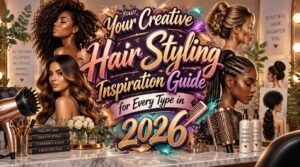
Hair doesn’t just change how you look, it changes how you carry yourself out the door. A blunt bob with a glassy finish hits differently than a diffused wave set, and both require a completely different toolkit, technique, and mindset to pull off.
2026 is rewarding intentionality. Cool ash glazes, sculptural braided updos wrapped in metallic thread, and stacked graduation cuts are all moving in the same direction: hair that looks considered, not accidental.
Whether you’re working with coily 4C texture or fine straight strands, this creative hair styling inspiration guide cuts through the noise and gets to what actually works for your hair.
Table Of Contents
- Key Takeaways
- Creative Hairstyles for Every Hair Length
- Match Styles to Your Hair Type
- Top Hair Trends Shaping 2026
- Creative Styling Tools and Heat Techniques
- Finish With Accessories and Healthy Care
- Frequently Asked Questions (FAQs)
- What is the 3:2:1 rule for haircuts?
- What are the hair trends for 2026?
- What is the 25 rule for hair?
- Is there a free app that lets you try different hairstyles?
- How much should professional hair styling cost?
- What hair types work best with extensions?
- How often should you wash styled hair?
- Can heat styling cause permanent hair damage?
- Whats the difference between salon and drugstore products?
- How does hair color affect styling results?
- Conclusion
Key Takeaways
- Your hair type isn’t a limitation — it’s your starting point, and every texture from fine straight strands to coily 4C has specific techniques that work with it rather than against it.
- 2026 styling is defined by intentionality: glassy blowouts, sculptural braided updos with metallic thread, and cool ash glazes all share the same underlying logic — hair that looks considered, not accidental.
- Your tools shape your results more than your technique does, so ceramic or infrared heat tools, the right barrel size, and a proper heat protectant at 350°F are non-negotiable before you touch a strand.
- Scalp care, bond-repair products, and protective sleep habits aren’t add-ons to your routine — they’re the foundation that keeps your style intact and your hair healthy long-term.
Creative Hairstyles for Every Hair Length
Length shapes everything before product or technique even enters the picture. Whether you’re working with a fresh crop, mid-length texture, or long strands to play with, there’s a current style worth trying. Here’s what’s working right now across every length.
Short Crops and Bobs

Among the boldest moves you can make, short crops and bobs deliver instant personality with minimal effort or upkeep.
Shorter styles also mean less surface area for oil and moisture to linger, so pairing a fresh cut with proper scalp-care habits that prevent wet dog smell keeps you looking and smelling effortlessly put-together.
- Chin-length bob shapes stabilize with straight or angled nape hems
- Choppy, point-cut ends add visible texture and real movement
- Stacked graduation builds interior volume without bulk
- Root shadow with lighter ends sharpens your silhouette
- Face-framing highlights flatter your jawline and bangs
Medium Waves and Layers

If bobs are about precision, wavy mid-length hair is about controlled looseness. Face-framing layers at cheekbone or chin give definition without heaviness. Ask your stylist for 45-60 degree angle cuts to encourage real movement.
For even more definition, a diffuser paired with a curl-enhancing cream can amplify those layers—explore frizzy hair texture tips for wavy styles to keep movement smooth without the frizz.
At home, mix a light-hold cream with sea-salt spray on damp hair, then diffuse. Once they’ve set, comb through quickly to keep them separated, not bunched.
Long Braids and Updos
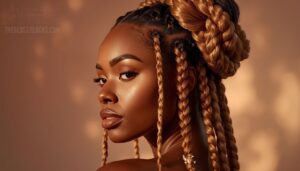
Long hair gives you options waves can’t touch. Box braids with extensions anchor low buns and garter-strap updos that actually hold. Before braiding, massage your scalp with lightweight oil to cut breakage.
For height, try a banana-roll wrap around the crown. It gives dramatic lift with no visible pins. Finish with UV-protective spray on color-treated hair, and sleep in satin.
Match Styles to Your Hair Type
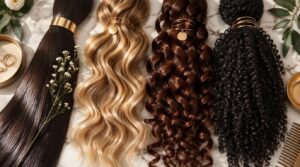
Not every style works for every texture, and that’s not a flaw — it’s just how hair works. Knowing your type means you can stop fighting your strands and start working with them. What your hair actually needs depends on whether it’s straight, wavy, curly, or coily.
Straight Hair Volume
Straight hair is a blank canvas, flat by default.
Blow drying techniques are how you add volume. Apply mousse to damp roots, then lift with a round brush pointing upward.
For even more lift, experiment with volumizing mousse application tips for flat hair to find the right amount and placement for your hair type.
- Use root-lift spray before drying
- Angle airflow upward at the crown
- Finish with a cool shot to lock lift
Hair volume boosting keeps your sleek hairstyle full all day long.
Wavy Hair Definition
How you dry your wavy hair matters more than any product.
Ditch the towel-rub, scrunch in a lightweight curl cream while it’s still wet, and let the wave pattern set naturally. Air-dry or diffuse on low heat, stopping at 70-80% dry to lock in curl definition.
A quick water mist and light product between washes keeps your waves looking deliberate.
Curly Hair Shaping
For curly hair, styling techniques start with your hands.
Section damp strands, wrap small sections around your finger to form finger coils, then diffuse on low heat. This locks in curl definition and preserves hair texture enhancement so frizz doesn’t steal your whole pattern.
Graduated layers within two inches of your face reduce bulk and let those bouncy curls breathe.
Coily Protective Styles
Think of coily protective styles as your hair’s off-season training, keeping length and moisture intact while still looking intentional.
For 4A–4C textures, use moisturized 2–3 strand braids so shrinkage doesn’t make installs look sparse. Keep 0.5–1 cm gap spacing for scalp airflow. Sleep under a satin cover, re-moisturize every 3–4 days, and skip heat for two full weeks after installation.
Top Hair Trends Shaping 2026
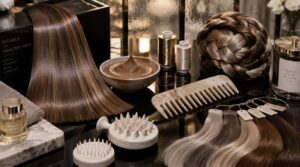
Picture a lacquered surface catching light without trying too hard. That’s the aesthetic running through 2026, and it’s quieter than you’d expect.
Blunt bobs with glassy finishes are leading the conversation. Paired with low-contrast highlights, they read as polished rather than processed. The goal isn’t drama; it’s dimension you feel before you see it.
For color, cool ash tones and soft caramel glazes applied with a root smudge extend longevity while keeping grow-out smooth. Braids are also upgrading into sculptural updos wrapped with metallic threads, turning a protective style into a statement.
Scalp-care rituals are now pre-styling essentials, not afterthoughts. Exfoliate, hydrate, and balance pH 24 to 48 hours before you style. Your hair performs better when the foundation’s right.
Creative Styling Tools and Heat Techniques
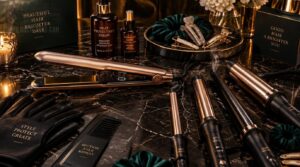
Your tools matter more than your talent. That’s not cynicism, it’s physics.
Your tools matter more than your talent — not cynicism, just physics
Ceramic and tourmaline plates distribute heat evenly, so you’re not scorching one section while barely warming another. Infrared flat irons go further, penetrating the hair shaft rather than cooking the surface. The difference shows in shine, not just in theory.
For waves and curls, it’s all about the right barrel size: smaller barrels create tighter coils, larger ones give loose, editorial bends. Section your hair before you start. Even heat means even results.
Heat protectants with silicones or polymers create a barrier that delays thermal transfer, buying your strands precious seconds. 350°F is the sweet spot for most hair. Go higher only when you have a real reason.
Finish With Accessories and Healthy Care
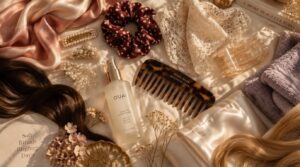
Accessories can rescue a bad hair day faster than any styling technique. In 2026, silk scarves, polka-dot scrunchies, and bejeweled headpieces are doing serious work. Summer 2026 is also seeing a rise in nostalgic hair accessory trends, from jelly claw clips to lace bandanas rooted in ’90s and Victorian-era aesthetics.
Your hair care routine needs these five things:
- Apply a heat protectant spray with silicone or keratin before any heated tool touches your hair.
- Bond-repair products with amino acids rebuild protein that styling takes out.
- Sleep on a silk pillowcase to cut friction and preserve moisture overnight.
- If you’re curious how these soft, wispy strands frame your face, see how baby bangs can make a small forehead look before committing to a cut.
- Dry with a microfiber towel to shorten blow-dryer time and seal the cuticle.
- Detangle with a wide-tooth comb, always working from ends up to stop breakage.
Once your products are ready, learn how to style curls so every wave and coil stays defined, bouncy, and frizz-free all day. Since rough handling, tight styles, and heat are what drive most damage, this guide on preventing hair breakage and split ends shows how to stop it at the source.
A bandana over a ponytail doubles as a humidity-control tool on warm days. Your healthy hairstyling routine and accessories aren’t separate steps.
Frequently Asked Questions (FAQs)
What is the 3:2:1 rule for haircuts?
Like a staircase built right into your hair, the 3:2:1 rule cuts your bottom layer at 3 inches, your mid section at 2, and your fringe at 1, giving you balanced, clean face-framing layers consistently.
What are the hair trends for 2026?
Hair always mirrors cultural mood.
Cool brunettes, ash-blonde accents, and silver tones are your defining 2026 color palette. Pair them with glassy high-shine finishes from smooth blowouts and serums, then add bold accessories to finish.
What is the 25 rule for hair?
Think of a client with a shoulder-length bob that needs more lift. The 25 rule measures 25 inches from the scalp to pinpoint where your face-framing layers begin, creating volume and natural movement without bulk.
Is there a free app that lets you try different hairstyles?
Ever wonder if that bob will actually suit you before the scissors even come out? Free AR apps overlay hairstyles on your live camera feed for straight hair, wavy hair, and curly hair types instantly.
How much should professional hair styling cost?
Nobody’s handing you a free blowout, but you’re definitely not paying rent either. Expect $40 to $200 for most sessions. Braids, updos, and keratin treatments push much higher. Budget 15 to 20 percent for tips.
What hair types work best with extensions?
Say a client comes in with fine, straight hair wanting added length. Micro-links and tape-ins are her move.
Wavy textures pair well with mid-weight wefts. Coily hair benefits most from braided or sewn-in protective methods.
How often should you wash styled hair?
Your blowout looks perfect on day two, but by day three your scalp feels oily and the style’s already losing its shape fast.
Scalp oil and sweat set the real wash schedule, not the calendar.
Can heat styling cause permanent hair damage?
Yes, it can. Repeated high heat without thermal protection gradually destroys your cuticle, leaving texture permanently rough. Fine or chemically treated hair breaks faster. New regrowth comes in healthy, but your damaged ends won’t recover.
Whats the difference between salon and drugstore products?
Take a client who’s switched from drugstore shampoo to a salon line and noticed less breakage in two weeks. Higher active concentrations mean faster, stronger results. Drugstore options trade raw performance for accessibility and safety.
How does hair color affect styling results?
Semi-permanent color fades in just 4 to 6 weeks, narrowing your styling window surprisingly fast. Warm tones make natural frizz worse, while cool blondes reduce visible texture, making straight styles noticeably easier with less heat styling.
Conclusion
The right cut catching light on a good morning is one of those small wins that compounds. Your hair, your rules, your results.
This creative hair styling inspiration guide exists to make that feeling repeatable. Trends shift, products get reformulated, and techniques change, but the principle stays the same: intentional choices outperform accidental ones every time.
Know your texture, trust your tools, and let the style follow. That’s not a formula. That’s just how good hair works.