This site is supported by our readers. We may earn a commission, at no cost to you, if you purchase through links. This content is for general informational and educational purposes only and is not a substitute for professional medical, dermatological, or nutritional advice.
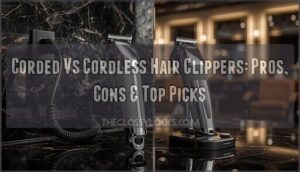
Most barbers work through 300-500 haircuts before their clipper preference crystallizes into non-negotiable territory. The cord becomes either a lifeline or a leash: consistent electromagnetic power that never dies mid-fade versus the freedom to pivot around a chair without yanking your station setup across the floor.
Corded models deliver unparalleled reliability—some Oster Fast Feeds clock 15+ years in high-volume shops—while cordless units grant mobility that changes how you approach detail work and house calls. Your choice isn’t about which technology wins; it’s about matching power delivery to your specific cutting environment, client volume, and whether you value runtime predictability over untethered movement.
Table Of Contents
- Key Takeaways
- Corded Hair Clippers: Pros and Cons
- Cordless Hair Clippers: Pros and Cons
- Key Differences: Corded Vs Cordless Clippers
- Top Corded and Cordless Hair Clippers
- Frequently Asked Questions (FAQs)
- Should I get corded or cordless hair clippers?
- Do barbers still use corded clippers?
- Is corded better than cordless?
- What is the difference between cordless and corded shavers?
- Can you use cordless clippers while charging?
- How do I know when to replace clipper blades?
- Are corded clippers safe for wet hair cutting?
- Do cordless clippers work well for thick beards?
- Whats the average lifespan of quality hair clippers?
- Conclusion
Key Takeaways
- Corded clippers deliver constant electromagnetic power that never dies mid-fade and can last 10+ years in high-volume shops, but they chain you to one outlet and create cord management headaches that kill mobility around the chair.
- Cordless clippers grant complete freedom of movement and work anywhere without outlet hunting, but their lithium-ion batteries fade after 90-120 minutes, lose torque as voltage drops, and require replacement every 3-5 years at $20-40 per swap.
- Professional barbers running 15-25 cuts daily need corded models for bulk removal paired with cordless units for detail work, while home users cutting every 2-4 weeks can get away with single-charge cordless runs or fixed corded setups.
- Your choice isn’t about which technology wins—it’s about matching power delivery to your physical workspace: high-volume shops demand corded reliability, mobile barbers require cordless freedom, and trying to split the difference with hybrid models compromises both strengths.
Corded Hair Clippers: Pros and Cons
Corded clippers plug straight into the wall and deliver uninterrupted power supply from start to finish. They’ve been the backbone of professional barbershops for decades because they don’t quit mid-fade.
Here’s what you need to know about their strengths and limitations.
Consistent Power and Performance
Corded hair clippers deliver unwavering power stability: your motor pulls constant voltage from the wall, so blade speed never sags mid-fade. That energy output stays locked whether you’re pushing through dense curls or finishing your tenth client.
When why your hair takes so long to dry becomes a regular frustration, that same cuticle resistance can make corded clippers essential for cutting through stubborn texture without stalling.
Performance metrics don’t drift because there’s no battery life curve—just full torque from plug-in to shutdown, giving you cutting precision and motor efficiency that won’t quit. You can learn more about the advantages of a continuous flow of power for professional clipper performance.
Limitations in Mobility and Flexibility
That consistent power comes with cord restrictions: most cables run 8–10 feet, anchoring you to one outlet and forcing clients to sit close to the wall. Cable management becomes a game of untangling, dodging neck snags, and watching for floor trips.
Outlet access kills travel limitations—no power means no cut. Ergonomic challenges pile up fast when you’re wrestling tension instead of flowing around the chair.
Mobility separates corded vs cordless clippers, and wireless clippers win that fight every time. To minimize workplace accidents and protect your tools, practicing proper safe handling and storage is vital.
Maintenance and Longevity
Beyond outlet dependency, you’ll see real longevity gains with corded units. Blade sharpness on titanium models lasts 1,000–3,000 hours versus 200–500 for standard steel—proper clipper cleaning and motor care push professional clippers past a decade of shop use. No battery life worries, no lithium-ion batteries dying mid-fade, no charging time killing your flow.
| Maintenance Task | Frequency |
|---|---|
| Blade oiling | Every 5–10 minutes |
| Deep clipper maintenance | Weekly (daily use) |
| Blade replacement | 200–3,000 hours |
| Motor durability | 10+ years |
Durability tests prove rechargeable battery units introduce multiple failure points—chargers, contacts, cells—while corded designs stay simple and reliable.
Keeping grooming tools clean matters just as much, since poor maintenance can lead to hair follicle inflammation remedies becoming necessary down the line.
Cost Considerations
Price comparison shows you why shop owners stick with direct-plug models: entry corded clippers run $25–$60 for home use, $70–$130 for pro gear like the Wahl Magic Clip at $82.99. Cordless hair clippers cost $40–$80 more in the same line due to battery tech. Budget analysis over years reveals lower ownership costs—no replacement cells, minimal maintenance expenses, just consistent cost savings and zero charging downtime.
Corded vs cordless price breakdown:
- Upfront investment: Corded models undercut cordless equivalents by $40–$80
- Long-term ownership costs: No battery replacements ($20–$60 every few years)
- Operating expenses: 9-watt draw equals pennies per hour at standard rates
- Replacement parts: Generic cords beat proprietary charging docks and adapters
- Professional bulk savings: Multiple $80 corded units versus $150+ cordless tools
Cordless Hair Clippers: Pros and Cons
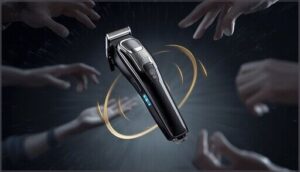
Cordless clippers give you freedom that corded models can’t match: no outlet restrictions, full range of motion, and the ability to work anywhere.
But that mobility comes with trade-offs you need to understand before you commit. Here’s what separates the winners from the paperweights when batteries enter the picture.
Enhanced Mobility and Convenience
Freedom is the whole point of going cordless. You won’t trip over cables or fight a tether when you’re lining up fades or moving around the chair. Cordless clippers let you groom anywhere—hotel rooms, gym bags, tight bathrooms—without hunting for an outlet. Many models carry IPX6 ratings for wet area use and feature ergonomic design that reduces wrist strain during long sessions.
Just as parents research safe hair dryers for kids to avoid overheating, you’ll want to check motor wattage, blade material, and battery life before choosing cordless clippers.
| Cordless Freedom Feature | Practical Benefit |
|---|---|
| Tangle-free movement | Work smoothly around ears and neck without cable snags |
| Portable grooming capability | Cut hair in RVs, campsites, or backstage areas |
| Travel clippers design | Pack under 300 grams with USB charging options |
| Wet area use (IPX6/IPX7) | Rinse safely under running water after cuts |
Battery Life and Power Consistency
Most cordless clippers deliver 90 to 120 minutes on lithium-ion batteries—enough for two to four full cuts before you need to recharge. Watch for power fade near empty: cheaper rotary motors stall under load, while newer regulated designs hold speed until they shut off completely.
Here’s what separates strong battery life from weak:
- Runtime tests: Lithium-ion packs reach 90 minutes from a one-hour charge; older NiMH designs give 75 minutes but need eight hours plugged in.
- Charge cycles: Expect 200 to 300 full cycles at high voltage before capacity drops noticeably.
- Power fade behavior: Budget cordless hair clippers lose blade speed as voltage sags; premium models regulate motor output until the battery dies.
- Energy efficiency: Dual-mode clippers run at full strength on the cord even when the internal cell is nearly dead.
In the corded vs cordless debate, battery health determines whether you finish strong or fight halfway through a fade.
Maintenance and Battery Replacement
Regularly brushing blade teeth after every cut and running three drops of oil across the top plate keeps your cordless hair clippers sharp and quiet.
Lithium-ion batteries last three to five years before you notice runtime fade—charge between 20 and 80 percent, never drain fully. When the cell dies, recycle it properly and swap in a fresh pack to extend the clipper body another decade.
Pricing and Value
You’ll pay more upfront for cordless hair clippers—expect 35 to 60 USD for home models versus 20 to 40 USD corded. Budget options sacrifice runtime and power, while pro units hit 120 to 200 USD.
Your cost analysis should factor battery replacement every three to seven years, adding 20 to 40 USD per swap. Clipper durability and long-term savings favor corded, but grooming tool selection depends on your workflow and value of mobility in daily clippers comparison.
Key Differences: Corded Vs Cordless Clippers
Choosing between corded and cordless clippers comes down to understanding how each performs under real working conditions.
The differences go beyond just having a cord or not: they affect power delivery, how you move around your client, and which scenarios each excels in. Here’s what separates them in the shop and at home.
Power Source and Reliability
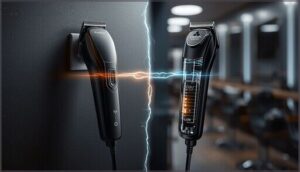
Your clipper’s power source determines whether you’ll finish the cut or stall mid-fade. Corded hair clippers pull electricity directly from the wall, delivering constant motor speed and power consistency throughout marathon shop shifts. Cordless hair clippers run on lithium-ion batteries, which provide 80–120 minutes of runtime but lose torque as voltage drops—especially in the final 10–20 percent of charge.
Corded clippers deliver unwavering power from the wall, while cordless models sacrifice torque as their batteries drain
| Feature | Corded | Cordless |
|---|---|---|
| Power Consistency | Stable throughout use | Drops as battery drains |
| Motor Durability | Pivot motors withstand heavy loads | Rotary motors balance efficiency |
| Energy Efficiency | Draws continuous AC power | Optimized for battery longevity |
| Battery Life | No battery concerns | 300–500 charge cycles typical |
| Charging Systems | Plug-and-go operation | Quick-charge options available |
Corded vs cordless boils down to reliability trade-offs: corded units maintain full power for years with fewer failure points, while cordless models add batteries and charging circuits that can fail even when the motor runs fine.
Maneuverability and Usage Scenarios
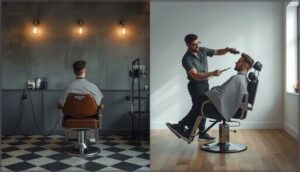
Your workspace dictates which tool wins. Corded hair clippers anchor you to the salon station—reliable for high-volume chairs where you circle clients who can’t wander. Cordless hair clippers break that tether: home grooming happens in any room, travel clippers slide into gym bags, and detail work flows freely around ears without a cord snagging your fade lines.
| Scenario | Corded | Cordless |
|---|---|---|
| Salon Station | Fixed workstation efficiency | 360-degree client access |
| Home Grooming | Bathroom-only setup | Bedroom, patio, anywhere |
| Travel Clippers | Adapters and outlet hunts | USB charging, hotel-ready |
| Detail Work | Cord repositioning required | Unrestricted precision angles |
| Space Management | Trip hazards on shop floors | Clean, cord-free movement |
Cordless vs corded mobility comes down to control: corded keeps power consistent but chains you to outlets, while cordless trades runtime for freedom.
Weight, Noise, and Ergonomics
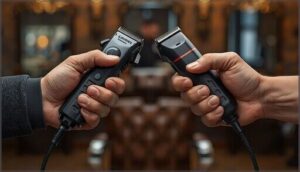
Beyond reach and runtime, how a clipper sits in your hand shapes every cut. Corded hair clippers—16 to 20 ounces—feel stable on straight passes but fatigue wrists faster than 10 to 14 ounce cordless clippers that let you hold awkward angles longer. Noise reduction and vibration control matter: mid-60 to low-70 decibel corded models stay quieter than harsh-sounding cordless alternatives, while ergonomic design—contoured grips, rubberized sleeves, balanced weight—keeps your hands steady through back-to-back fades.
| Factor | Corded Hair Clippers | Cordless Clippers |
|---|---|---|
| Weight Range | 16–20 oz (stable bulk cuts) | 10–14 oz (agile detailing) |
| Noise Level | Mid-60 to low-70 dB (quieter) | Higher-pitched motor whine |
| Vibration | Rubber sleeves absorb motor shake | Compact motors add hand fatigue |
| Grip Comfort | Boxier profiles, cord drag strain | Slimmer tapers, zero cable pull |
Clipper balance centers mass over your grip so torque doesn’t wreck your wrist. Electric grooming tools without proper ergonomic design turn marathon sessions into hand cramps—corded vs cordless tools both need textured grips and strain relief to keep you cutting comfortably. Wahl Magic Clip and similar models prove lighter cordless builds reduce shoulder effort when you rotate around ears, while heavier corded workhorses anchor bulk removal without wandering. Vibration control separates pro-grade from cheap: excessive shake derails precision outlining, so look for dampened housings that absorb gear noise before it hits your fingers.
Best Use Cases: Professional Vs Home

Your workload dictates your weapon choice. Professional settings demand corded hair clippers: 15 to 25 cuts daily exhaust cordless batteries, so salon workflows pair corded models for bulk removal with cordless clippers for fade detailing.
Home grooming—every 2 to 4 weeks—fits single-charge cordless runs perfectly. Mobile barbers need cordless freedom; home use favors corded reliability when you carve out a fixed cutting zone.
| Setting | Best Choice | Why It Works |
|---|---|---|
| Professional barbering | Corded + cordless hybrid | Uninterrupted power, cordless finishing |
| Home grooming | Cordless or corded | Personal preferences shape setup |
| Mobile services | Cordless dominant | Outlet-free flexibility |
| High-volume shops | Corded primary | Non-stop runtime, no battery swaps |
Top Corded and Cordless Hair Clippers
You’ve compared the specs, weighed the trade-offs, and now you need actual recommendations.
The clippers below represent proven performers in both categories: corded workhorses that never quit and cordless models that deliver professional results without the tether. These aren’t random picks—they’re the tools that consistently show up in barbershops and home setups because they work.
1. Wahl Magic Clip Hair Clippers
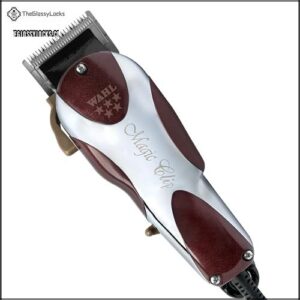
Professional barbering demands tools that don’t quit mid-fade. The Wahl 5 Star Cordless Magic Clip delivers 100+ minutes of runtime and a rotary motor hitting 5,700 strokes per minute—enough power for any hair texture without snagging.
Its 2161 Stagger-Tooth blade adjusts 0.5 mm to 1.2 mm via taper lever, giving you precise control for cutting techniques from skin fades to blends. Zero-gap the blade for tighter work.
Lithium-ion battery charges in 60 minutes. Cordless clippers like this eliminate cord drag while maintaining professional-grade performance. Regular clipper maintenance and blade sharpening keep it cutting clean. Grooming tips: oil after every use.
| Best For | Professional barbers and serious home users who need reliable cordless power for precision fades and blends on all hair types. |
|---|---|
| Power Source | Corded Electric |
| Brand | Wahl Professional |
| Weight | 11.2 Ounces |
| Blade Type | Adjustable Razor Blades |
| Motor Type | V9000 Motor |
| Use Case | Professional/Home |
| Additional Features |
|
- 100 minutes of runtime with fast 60-minute charging means you can finish multiple cuts without plugging in
- Stagger-tooth blade with adjustable taper lever (0.5–1.2 mm) gives you smooth blends and tight fades without swapping guards
- Rotary motor at 5,700 strokes per minute handles thick or textured hair without snagging or bogging down
- Cordless convenience comes at a higher price point than basic corded clippers
- Battery eventually degrades over time and may need replacement after heavy professional use
- Some kits don’t include specialty guards like ear tapers, so you might need to buy extras separately
2. Andis Cordless Hair Clipper
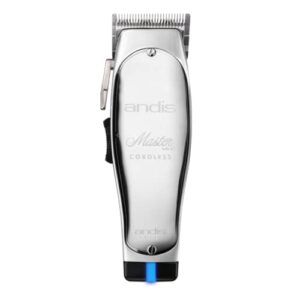
The Andis Master Cordless packs a rotary motor running over 7,200 strokes per minute—faster than the Magic Clip—so you’ll power through thick hair without stalling. Its battery delivers 90+ minutes runtime and recharges in 60 minutes flat.
Adjustable carbon-steel blade moves from size 000 to 1 via side lever, handling tight tapers and blends without swapping blades. Aluminum housing keeps weight down while surviving shop wear. Cordless design means zero cord drag during fades. Oil regularly for sharp performance.
| Best For | Professional barbers who need a powerful cordless clipper for all-day fading and tapering without dealing with cord drag. |
|---|---|
| Power Source | Battery Powered |
| Brand | Andis |
| Weight | 1.4 Pounds |
| Blade Type | Adjustable Carbon-Steel |
| Motor Type | High-Speed Rotary |
| Use Case | Professional |
| Additional Features |
|
- Rotary motor with 7,200 SPM cuts through thick hair without stalling or losing power
- 90 minute battery lasts through multiple clients and recharges in just 60 minutes
- Adjustable blade (000 to 1) lets you fade and taper without swapping blades mid-cut
- Louder than the corded Master version according to some users
- Quality control issues reported—misaligned guards and occasional motor problems after heavy use
- Doesn’t include extra combs or a carry case in the standard package
3. Oster Fast Feed Adjustable Clipper
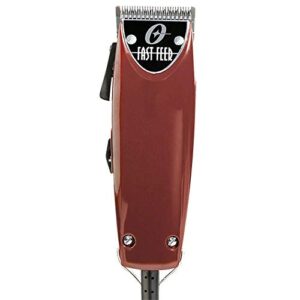
The Oster Fast Feed runs a Whisper Quiet pivot motor at 9 watts—delivering steady torque through dense sections without the harsh vibration you’ll feel in cheaper corded clippers.
Its adjustable blade slides from 000 to 1 for quick fade transitions, and the 8‑foot cord gives you shop-floor reach without battery anxiety.
Blade lubrication after every few cuts keeps performance sharp: oil reduces friction, extends motor life, and prevents snagging.
At 1.16 pounds, it balances durability with comfort during back-to-back haircuts. Brush, disinfect, oil—repeat.
| Best For | Barbers and serious home users who want a reliable workhorse clipper that handles thick hair and fade work without the noise and vibration of high-speed motors. |
|---|---|
| Power Source | Corded Electric |
| Brand | Oster |
| Weight | 1.16 Pounds |
| Blade Type | Variable Length Adjustment |
| Motor Type | 12 Amp Pivot |
| Use Case | Professional |
| Additional Features |
|
- Adjustable blade (000 to 1) lets you transition through fade steps without swapping attachments mid-cut
- Whisper Quiet pivot motor delivers strong torque on coarse hair while staying noticeably softer than most clippers
- Built tough for daily professional use with an 8-foot cord that gives you plenty of reach around a chair
- Blades don’t hit true zero-overlap closeness, so skin fades may need a finishing tool
- No hard travel case included, leaving the clipper exposed to dings during transport
- 110V design limits use to North America unless you run it through a converter
4. Wahl Cordless Hair Clipper
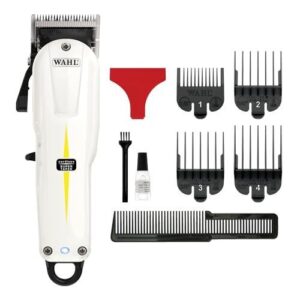
The Wahl 5 Star Cordless Magic Clip delivers 90 minutes of cordless runtime on lithium ion power—enough for multiple full haircut style variations without recharging mid-session. Its 5,700 RPM rotary motor maintains clipper motor efficiency through thick hair, and the thumb‑adjustable taper lever shifts cutting lengths without guard swaps.
Battery charging best practices include full cycles and proper storage between 40–60% for longevity. At 10.2 ounces, it’s lighter than most corded clippers. Cordless hair clippers demand disciplined clipper blade care: oil after every cut, brush debris, replace batteries every two to four years.
| Best For | Professional barbers and home users who want the freedom of cordless cutting with enough battery life to handle multiple haircuts and the precision to create smooth fades without switching blades constantly. |
|---|---|
| Power Source | Cordless/Corded |
| Brand | Wahl |
| Weight | 10.12 Ounces |
| Blade Type | Thumb Adjustable Taper |
| Motor Type | V500 Motor |
| Use Case | Professional/Home |
| Additional Features |
|
- 90-minute lithium ion battery gives you enough juice for several full cuts on one charge, and you can use it plugged in if you run low mid-session
- The 5,700 RPM rotary motor pushes through thick, textured hair without bogging down, and the stagger tooth blade design reduces snagging during bulk removal
- Weighs only 10.2 ounces so your hand won’t cramp up during long sessions, plus the thumb lever lets you adjust taper on the fly without fumbling with guards
- Some users report quality control issues and batteries that don’t hold a charge as long as advertised over time
- Takes 2 hours to fully charge, which is longer than some competing cordless clippers that top up in under an hour
- Requires regular maintenance—you need to oil after every cut and replace the battery every few years to keep performance consistent
5. Wahl Professional Balding Clipper
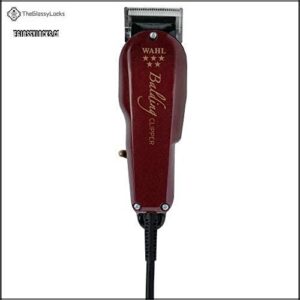
Raw power separates the Wahl Professional Balding Clipper from general-purpose barber tools. Its V5000 electromagnetic motor hits 6,000 strokes per minute—double the speed of standard pivot designs—making it ideal for full head balding and skin fades on any hair texture.
The 2105 surgical blade cuts 0.5 mm without guards, demanding precise grooming safety technique to avoid irritation. At 8 feet, the chemical-resistant cord accommodates all-day professional use.
Oil blades before every session: proper clipper maintenance extends blade life and prevents heat buildup during aggressive corded clippers work.
| Best For | Professional barbers and stylists who need ultra-close cuts for full head balding, skin fades, and precise outline work on multiple clients daily. |
|---|---|
| Power Source | Corded Electric |
| Brand | Wahl Professional |
| Weight | 610 Grams |
| Blade Type | Professional Precision Blades |
| Motor Type | V5000 Electromagnetic |
| Use Case | Professional |
| Additional Features |
|
- V5000 electromagnetic motor runs at 6,000 strokes per minute—twice as fast as standard pivot clippers—making quick work of thick hair and full head shaves.
- Surgical-grade 2105 blade cuts down to 0.5 mm for razor-level closeness without guards, perfect for bald fades and clean lineups.
- 8-foot chemical-resistant cord and durable construction handle all-day professional use without the limitations of battery life.
- Corded-only design limits mobility compared to cordless models, which can be awkward in busy shop environments.
- High-speed motor generates noticeable vibration and noise that some barbers and clients find uncomfortable during longer sessions.
- Ultra-close blade requires careful technique and regular oiling—improper angle or pressure can cause cuts, irritation, or overheating on sensitive skin.
Frequently Asked Questions (FAQs)
Should I get corded or cordless hair clippers?
Your choice depends on where you cut hair and how often.
Corded clippers deliver relentless power for grooming sessions with thick hair; cordless clippers give you freedom to move without tripping over cords.
Do barbers still use corded clippers?
Yes—corded clippers remain shop staples for their uninterrupted power and durability.
Barbers trust them for bulk work and thick hair, while cordless models handle detail and mobility during sophisticated haircut techniques.
Is corded better than cordless?
Neither clipper style beats the other outright. Your choice hinges on power efficiency needs and grooming techniques.
Corded clippers deliver unparalleled cord durability and motor consistency, while cordless clippers using lithium-ion batteries prioritize clipper safety and freedom.
What is the difference between cordless and corded shavers?
Cordless clippers run on rechargeable battery technology offering mobility, while corded clippers draw power straight from outlets for unlimited runtime.
The core difference reshaping grooming techniques, battery life expectations, and clipper durability across electric grooming tools.
Can you use cordless clippers while charging?
It depends on the model: some cord/cordless clippers let you cut while plugged in, but many block operation during charging or warn against it for battery life and heat management concerns.
How do I know when to replace clipper blades?
Replace your clipper blades when you notice pulling, snagging, or uneven cuts that require multiple passes.
Visible nicks, rust, excessive heat, or skin irritation signal worn blades need immediate replacement for peak performance.
Are corded clippers safe for wet hair cutting?
Electrical shock risk makes corded clippers unsuitable for wet hair cutting.
Water resistance isn’t standard: most units lack IPX ratings, invite corrosion, and deliver poor cutting performance when moisture clogs blades.
Safety precautions demand dry-use clipper maintenance only.
Do cordless clippers work well for thick beards?
Modern battery technology drives premium cordless clippers like the Philips Norelco Multigroom 9000 through thick hair without bogging down.
High-torque clipper motors maintain cutting efficiency on dense beard texture where cheaper models stall.
Whats the average lifespan of quality hair clippers?
Quality hair clippers last 5 to 15 years with proper maintenance. Clipper durability depends on usage frequency, motor performance, blade longevity, and maintenance tips.
Cordless clippers average shorter lifespans due to lithium-ion batteries degrading after 2–4 years.
Conclusion
Your station setup will outlast trends, but only if you choose tools that match your actual workflow, not aspirational Instagram setups.
The corded vs cordless hair clippers pros and cons breakdown reveals one truth: high-volume barbers need electromagnetic consistency; mobile cutters need battery freedom. Don’t hedge with hybrid models that compromise both strengths. Pick your power delivery system based on where you physically stand when blades hit hair, then commit completely.