This site is supported by our readers. We may earn a commission, at no cost to you, if you purchase through links. This content is for general informational and educational purposes only and is not a substitute for professional medical, dermatological, or nutritional advice.
Oily skin doesn’t need less moisture—it needs the right kind. That seems counterintuitive until you understand what’s actually happening: when your skin gets dehydrated, it overcompensates by producing more sebum, the natural oil that leaves you shiny by noon. Skipping moisturizer makes the problem worse, not better.
The good news is that formulation science has come a long way. Ingredients like niacinamide, hyaluronic acid, and ceramides now work together to hydrate without adding oil or clogging pores. Knowing moisturizers for oily skin actually deliver on that promise—and which ones just sound good on the label—saves you from a lot of wasted money and breakouts.
Table Of Contents
- Key Takeaways
- Top 10 Moisturizers for Oily Skin
- 1. Neutrogena Hydro Boost Gel Cream
- 2. SkinMedica Ultra Sheer Face Moisturizer
- 3. CeraVe Hyaluronic Acid Face Serum
- 4. Peter Thomas Roth Hyaluronic Cloud Cream
- 5. First Aid Beauty Oil Control Moisturizer
- 6. La Roche Posay Oil Control Moisturizer
- 7. Vichy Mineral Hydrating Skin Booster Serum
- 8. Differin Oil Absorbing Moisturizer SPF 30
- 9. Naturium Niacinamide Face Moisturizer
- 10. EltaMD UV Clear Face Sunscreen Oil Free
- What Oily Skin Moisturizers Need
- Key Ingredients for Oily Skin
- How to Choose The Right Formula
- Using Moisturizer Without Extra Shine
- Frequently Asked Questions (FAQs)
- Does moisturizer reduce inflammation?
- Can I skip moisturizer if my skin feels oily?
- Should I moisturize before or after sunscreen application?
- How often should I reapply moisturizer throughout the day?
- Can moisturizer worsen acne or cause more breakouts?
- Do seasonal changes require different moisturizer formulations?
- Can oily skin become dehydrated over time?
- Does moisturizer worsen sebum production at night?
- How often should oily skin be moisturized daily?
- Can diet or stress affect oily skin hydration?
- Conclusion
Key Takeaways
- Skipping moisturizer actually makes oily skin worse — dehydrated skin overproduces sebum to compensate, so the right lightweight formula is essential, not optional.
- Ingredients like niacinamide (for oil regulation), hyaluronic acid (for water-based hydration), and ceramides (for barrier repair) are clinically supported choices that hydrate without clogging pores.
- Texture matters as much as ingredients — gel, gel-cream, and water-based formulas absorb quickly, layer well under SPF, and won’t leave your skin greasy or shiny.
- You don’t need to spend a lot to get results — budget-friendly options like Neutrogena Hydro Boost and CeraVe deliver the same key actives as premium picks at a fraction of the cost.
Top 10 Moisturizers for Oily Skin
Finding the right moisturizer for oily skin isn’t guesswork — it’s about knowing what actually works.
Timing matters too — knowing when to apply moisturizer in your skincare routine can make even the best formula work harder for oily skin.
These ten options were selected based on formulation quality, key active ingredients, and real-world performance for oily and acne-prone skin types.
Here’s what made the cut.
1. Neutrogena Hydro Boost Gel Cream
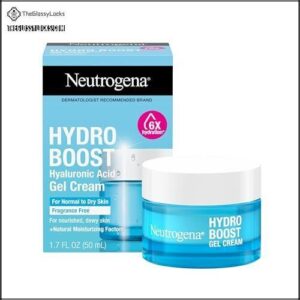
The Neutrogena Hydro Boost Gel Cream is a reliable workhorse for oily skin. Its star ingredient, hyaluronic acid, pulls moisture into your skin without adding any oil or heaviness — so your face stays hydrated, not slick.
The gel-cream texture absorbs almost instantly and sits comfortably under sunscreen or makeup.
If your skin runs dry or sensitive, this roundup of the best Korean moisturizers can help you find a lightweight formula that fits your routine.
Its lightweight finish also makes it an ideal pairing with active ingredients, especially if you’re working in a gentle exfoliation routine for sensitive or beginner skin.
It’s fragrance-free, non-comedogenic, and dermatologist-recommended, making it a safe choice for acne-prone or sensitive skin.
At roughly $22 for nearly 12 oz, the value is genuinely hard to beat.
| Best For | Anyone with oily, combination, or sensitive skin who wants solid all-day hydration without the greasy feel. |
|---|---|
| Price | $22.35 |
| Net Weight | 11.84 oz |
| Skin Type | All types |
| Non-Comedogenic | Yes |
| Fragrance-Free | Yes |
| Key Active | Hyaluronic Acid |
| Additional Features |
|
- Hyaluronic acid locks in moisture for up to 48 hours without clogging pores
- Lightweight, fast-absorbing formula sits well under makeup or SPF
- Fragrance-free and non-comedogenic — friendly for acne-prone and sensitive skin
- The watery texture might not cut it for very dry skin, especially in winter
- You only get one size option; the cleanser is just a small trial bonus
- Hydration results can vary depending on your skin and environment
2. SkinMedica Ultra Sheer Face Moisturizer
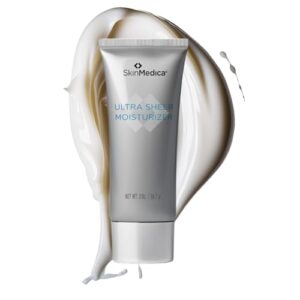
If budget isn’t a barrier, the SkinMedica Ultra Sheer Face Moisturizer is worth a serious look. At $60 for 2.47 oz, it sits firmly in the premium tier — but the formula earns it.
Hyaluronic acid, glycerin, and panthenol (pro-vitamin B5) work together to pull moisture in and keep it there, without leaving any grease behind.
It’s fragrance-free, non-comedogenic, and layers cleanly under sunscreen.
Sensitive to shea or coconut? This skips both. The result is soft, balanced skin that doesn’t fight your foundation.
| Best For | People with normal to oily or sensitive skin who want a lightweight, grease-free moisturizer and don’t mind spending a little more for a clean, no-fuss formula. |
|---|---|
| Price | $60.00 |
| Net Weight | 2.47 oz |
| Skin Type | Normal to oily |
| Non-Comedogenic | Yes |
| Fragrance-Free | No |
| Key Active | Hyaluronic Acid |
| Additional Features |
|
- Hyaluronic acid and glycerin pull in moisture without any heavy or greasy feel
- Skips common irritants like shea, coconut, lanolin, and fragrance — great for sensitive skin
- Layers well under sunscreen and foundation without pilling or adding shine
- At $60 for 2.47 oz, it’s a real investment that won’t fit every budget
- No SPF built in, so you’ll need a separate sunscreen step
- May not deliver enough hydration for very dry skin types
3. CeraVe Hyaluronic Acid Face Serum
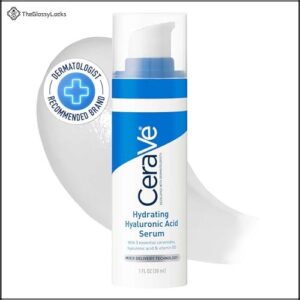
Not every effective product comes with a hefty price tag. CeraVe’s Hyaluronic Acid Face Serum proves that point quietly but convincingly.
It layers hyaluronic acid with three essential ceramides — lipids that reinforce your skin’s natural barrier — plus niacinamide to calm redness and balance oil.
The lightweight, water-based texture absorbs quickly and dries to a velvety finish that sits comfortably under sunscreen or makeup.
It’s fragrance-free, non-comedogenic, and built for daily use.
Simple, dermatologist-developed, and genuinely reliable.
| Best For | Anyone who wants a simple, no-fuss hydration boost — especially those with dry, sensitive, oily, or acne-prone skin who need a lightweight serum that plays nicely with the rest of their routine. |
|---|---|
| Price | N/A |
| Net Weight | 1.06 oz |
| Skin Type | All types |
| Non-Comedogenic | Yes |
| Fragrance-Free | Yes |
| Key Active | Ceramides + HA |
| Additional Features |
|
- Hyaluronic acid plus ceramides work together to hydrate and reinforce your skin barrier at the same time
- The gel-cream texture absorbs fast, leaves no sticky residue, and layers easily under makeup or sunscreen
- Fragrance-free, non-comedogenic, and dermatologist-developed — safe for daily use on even the most sensitive skin
- No SPF, so you’ll need a separate sunscreen during the day
- Results can be subtle — if you’re dealing with deep lines or serious dehydration, you’ll likely need more than this alone
- A small number of users don’t notice much difference, so effectiveness can vary from person to person
4. Peter Thomas Roth Hyaluronic Cloud Cream
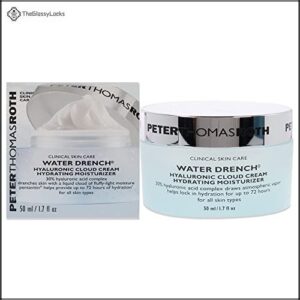
If your skin needs more than just the basics, Peter Thomas Roth Hyaluronic Cloud Cream steps things up a notch. It combines a 30 percent hyaluronic acid complex — using three molecular sizes to hydrate both surface and deeper skin layers — with ceramides and glycerin.
That layered approach means longer‑lasting plumpness, not just temporary relief.
It’s oil‑free, fragrance‑free, and absorbs into a smooth, lightweight finish.
At $46.75 for 1.76 oz, it’s a premium pick, but the hydration payoff is real.
| Best For | Anyone who wants serious, long-lasting hydration without the greasy feel — especially those with sensitive skin or anyone who wears makeup daily. |
|---|---|
| Price | $46.75 |
| Net Weight | 1.76 oz |
| Skin Type | All types |
| Non-Comedogenic | Yes |
| Fragrance-Free | No |
| Key Active | Hydrating blend |
| Additional Features |
|
- Absorbs fast and leaves skin feeling plump and dewy all day, not just for an hour or two
- Plays nicely under makeup — no pilling, no sliding, just a smooth base
- Fragrance-free and gentle enough for sensitive or easily irritated skin
- At $46.75 for under 2 oz, it’s a real investment — especially if you apply it generously
- The small container runs out faster than you’d expect with daily use
- Don’t count on it for wrinkle reduction — hydration is its thing, not anti-aging
5. First Aid Beauty Oil Control Moisturizer
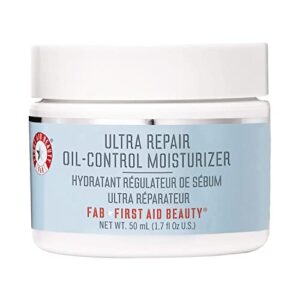
First Aid Beauty Oil Control Moisturizer takes a straightforward approach: hydrate without the shine. It pairs hyaluronic acid and glycerin with oil-absorbing microspheres and niacinamide — a combination that addresses both dehydration and excess sebum at once.
Clinically, 97% of users reported hydrated, non-greasy skin after just one use.
It’s fragrance-free, noncomedogenic, and gentle enough for sensitive skin.
The jar packaging is a minor inconvenience, and at 1.76 oz, it runs out faster than you’d like — but the formula itself delivers.
| Best For | People with oily or combination skin who want real hydration without any greasy residue or shine. |
|---|---|
| Price | N/A |
| Net Weight | 1.76 oz |
| Skin Type | Normal/combo/oily |
| Non-Comedogenic | Yes |
| Fragrance-Free | Yes |
| Key Active | Niacinamide + HA |
| Additional Features |
|
- Hyaluronic acid and niacinamide work together to hydrate and control oil at the same time
- Clinically tested — 97% of users felt hydrated without greasiness after just one use
- Fragrance-free, noncomedogenic, and gentle enough for sensitive skin
- Jar packaging makes it less hygienic and harder to dispense than a pump
- At 1.76 oz, the bottle doesn’t last long for the price
- Discontinued by the manufacturer, so stock is limited and replacements won’t be easy to find
6. La Roche Posay Oil Control Moisturizer
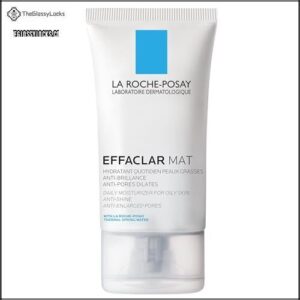
La Roche-Posay Effaclar Mat is built for one job: keeping oily skin balanced without stripping it bare. Its Sebulyse technology targets excess sebum and visibly tightens pores, while perlite and silica absorb surface oil throughout the day.
Lipo-hydroxy acid (LHA) — a gentler cousin of salicylic acid — quietly unclogs pores without irritation. Glycerin keeps hydration in check so your skin doesn’t overcorrect with more oil.
At $39.99 for 2.12 oz, it’s a premium pick, but the matte results speak for themselves.
| Best For | People with oily, combination, or acne-prone skin who want a lightweight daily moisturizer that controls shine and minimizes pores — especially great as a makeup base. |
|---|---|
| Price | $39.99 |
| Net Weight | 2.12 oz |
| Skin Type | Oily/combination |
| Non-Comedogenic | Yes |
| Fragrance-Free | No |
| Key Active | LHA + Salicylic Acid |
| Additional Features |
|
- Sebulyse technology and perlite/silica combo actually keep oil at bay all day, not just for an hour
- LHA and salicylic acid work together to clear pores and smooth texture without being harsh
- Dermatologist-tested, non-comedogenic, and paraben-free — solid for sensitive skin types
- $39.99 for 2.12 oz is a bit steep, and the tube goes fast with daily use
- Contains alcohol denat. and fragrance, which can be irritating if your skin is on the reactive side
- Won’t cut it as a standalone moisturizer for dry or dehydrated skin — it’s built for oil control, not deep hydration
7. Vichy Mineral Hydrating Skin Booster Serum
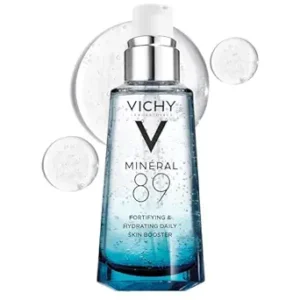
Vichy Mineral 89 Skin Booster earns its spot here for a reason. Powered by 89% volcanic mineral water and hyaluronic acid, it floods skin with lightweight hydration without leaving any greasiness behind.
The gel texture absorbs fast, making it a smart base before your moisturizer or SPF.
It’s fragrance-free, dermatologist-tested by over 325 clinicians, and approved by the National Eczema Association — so even reactive skin can handle it.
At $29.99, it’s a solid mid-range investment for consistently hydrated, balanced skin.
| Best For | Anyone with sensitive, dry, or eczema-prone skin who wants a lightweight, fragrance-free serum that delivers real hydration without irritation. |
|---|---|
| Price | $29.99 |
| Net Weight | 7.05 oz |
| Skin Type | All types |
| Non-Comedogenic | Yes |
| Fragrance-Free | Yes |
| Key Active | HA + Polyglutamic Acid |
| Additional Features |
|
- Hyaluronic acid and polyglutamic acid work together to pull in moisture and actually keep it there
- Fragrance-free and NEA-approved, so even reactive skin tends to tolerate it well
- Fast-absorbing gel texture layers nicely under moisturizer or SPF without pilling
- At $29.99, it’s pricier than a lot of basic hydrating serums for what’s essentially a one-step boost
- Works best layered with a cream — on its own it may not feel like enough, especially in dry climates
- Results take consistent use to show up, and some people don’t notice a difference at all
8. Differin Oil Absorbing Moisturizer SPF 30
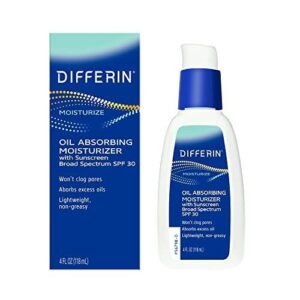
Differin’s Oil Absorbing Moisturizer SPF 30 pulls double duty — and it does both jobs well. At just $9.51 for 6.4 oz, you’re getting broad-spectrum SPF 30 plus real oil control in one step.
Micropearl technology and silica absorb surface shine throughout the day, while glycerin and panthenol keep your skin from feeling stripped.
It’s fragrance-free, non-comedogenic, and designed to pair with acne treatments like adapalene. If your morning routine feels overcrowded, this one earns its spot.
| Best For | People with oily or acne-prone skin who want to simplify their morning routine — especially anyone already using Differin or other retinoid treatments. |
|---|---|
| Price | $9.51 |
| Net Weight | 6.4 oz |
| Skin Type | Oily/acne-prone |
| Non-Comedogenic | Yes |
| Fragrance-Free | Yes |
| Key Active | SPF 30 + HA |
| Additional Features |
|
- Combines SPF 30 sun protection and oil control in one step, cutting down your routine
- Fragrance-free and non-comedogenic, so it plays nice with sensitive or acne-prone skin
- Genuinely affordable at under $10 for a generous 6.4 oz bottle
- Contains oxybenzone, which isn’t great if you care about reef safety
- Some users report mild eye irritation, so you’ll want to keep it away from that area
- Occasional pilling or minor breakouts when layered under makeup on very oily skin
9. Naturium Niacinamide Face Moisturizer
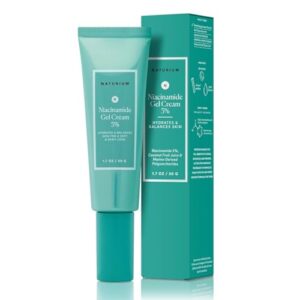
Niacinamide is one of those ingredients that earns its spot in almost every oily skin routine — and Naturium builds an entire moisturizer around it. The 5% niacinamide formula helps regulate sebum production and visibly tighten pores over time.
Pair that with glycerin, ceramides, and squalane, and you’ve got lightweight hydration that doesn’t compromise your skin’s barrier.
The gel-cream texture absorbs fast, sits comfortably under sunscreen, and won’t budge in humidity.
At $18.99 for 1.7 oz, it’s a smart, no-fuss daily option.
| Best For | Anyone with oily, combination, or blemish-prone skin who wants a lightweight daily moisturizer that targets pores without feeling heavy. |
|---|---|
| Price | $18.99 |
| Net Weight | 1.7 oz |
| Skin Type | All types |
| Non-Comedogenic | Yes |
| Fragrance-Free | Yes |
| Key Active | Niacinamide |
| Additional Features |
|
- Niacinamide works overtime here — helps regulate oil, tighten pores, and smooth out uneven skin tone over time.
- The gel-cream texture is genuinely weightless, absorbs fast, and plays well under sunscreen.
- Clean, no-nonsense formula — vegan, fragrance-free, and kind to sensitive skin too.
- If your skin runs seriously dry, this probably won’t cut it on its own.
- A small number of users hit a rough patch early on — some breakouts or mild irritation in the first few weeks.
- The hyperpigmentation buzz around niacinamide is real, but the brand doesn’t back it up with clinical data.
10. EltaMD UV Clear Face Sunscreen Oil Free
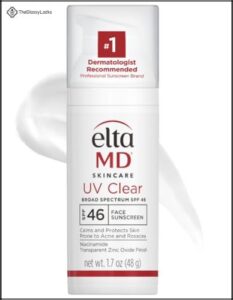
Most moisturizers stop at hydration — EltaMD UV Clear SPF 46 goes further. It layers transparent zinc oxide with 5% niacinamide, so you’re getting broad-spectrum UV protection and active oil regulation in one step.
The oil‑free, non‑comedogenic formula absorbs cleanly, won’t clog pores, and sits under makeup without pilling.
It’s genuinely fragrance‑free — a rare find at this level.
At $45 for 1.7 oz, it’s a premium pick, but dermatologists consistently recommend it for acne‑prone and rosacea‑prone skin.
| Best For | People with oily, acne-prone, rosacea-prone, or sensitive skin who want daily UV protection that doubles as a skin-tone treatment. |
|---|---|
| Price | $45.00 |
| Net Weight | 1.7 oz |
| Skin Type | Oily/sensitive |
| Non-Comedogenic | Yes |
| Fragrance-Free | Yes |
| Key Active | SPF 46 + Niacinamide |
| Additional Features |
|
- Zinc oxide sunscreen that actually plays nice with makeup — no pilling, no greasy finish
- Niacinamide helps fade dark spots and calm redness over time, so you’re treating while you protect
- Fragrance-free and non-comedogenic, making it a safe bet for reactive or breakout-prone skin
- $45 for 1.7 oz is a tough sell if you’re applying it generously every day
- Can leave a faint white cast on deeper skin tones
- Has a subtle almond scent that might bother people who are seriously fragrance-sensitive
What Oily Skin Moisturizers Need
Not every moisturizer works for oily skin — the wrong formula can leave you shiny, congested, or breaking out by noon. The good news is that a few specific features separate the ones that actually work from those that don’t.
Here’s what to look for.
Noncomedogenic and Oil-free Formulas
When shopping for oily skin, "noncomedogenic" and "oil-free" aren’t the same thing — and that distinction matters. Noncomedogenic means pore-friendly testing confirms low clog risk across the whole formula, not just one ingredient. Oil-free simply means no added oils.
Dermatologist recommendations lean on ingredient synergy — think niacinamide plus hyaluronic acid — plus label verification to confirm both claims appear together for true oily skin compatibility.
Regulatory bodies haven’t standardized the term, so low comedogenic risk remains a consumer guideline.
Lightweight Gel, Gel-cream, or Water-based Textures
Texture is where oily skin can be picky. A lightweight gel or gel cream relies on a Hydrating Gel Matrix — polymer-thickened water that spreads easily and leaves a Lightweight Film behind.
Water-First Formulation prioritizes water as the first ingredient, ensuring low oil content. This approach maintains hydration while minimizing excess oils.
The Quick Drying Feel and Non-Sticky Texture simplify skincare routines. Layering an oil-free formula under SPF becomes effortless — no pilling, no grease.
Fragrance-free Options for Sensitive, Acne-prone Skin
If you’ve got sensitive or acne-prone skin, fragrance-free isn’t just a preference — it’s protection. Added scent is one of the most common irritants hiding in otherwise solid formulas.
For sensitive or acne-prone skin, fragrance-free isn’t a preference — it’s protection
Look for these markers when scanning labels:
- Allergy-Free Labeling confirms no intentionally added fragrance compounds
- Minimalist Ingredient List reduces exposure to potential triggers
- pH Balanced Formulas (4.5–5.5) support your acid mantle
- Thoughtful Preservative Choice keeps formulas stable without extra irritation
- Patch Test Protocol before full-face use catches reactions early
Dermatologist-recommended picks commonly pair fragrance-free, noncomedogenic bases with barrier-supporting actives — no unnecessary extras.
Matte Finish and Shine Control
Avoiding shine isn’t just cosmetic — it’s about comfort. Matte finish moisturizers for oily skin use Silica Micro-Particles and Matting Powders to scatter light and absorb excess sebum throughout the day.
Film Former Tech locks hydration in place without leaving a slick layer, while Oil Absorbing Polymers stay humidity resistant during warmer months. These oilabsorbing technologies in moisturizers keep skin balanced without that midday gloss.
Barrier-supporting Hydration Without Heaviness
Your skin barrier works like a protective seal — break it, and oily skin overcompensates with even more shine. That’s why pH Optimized Formulas and Microbiome Friendly Actives matter so much here.
Look for:
- Dual-Phase Emulsions that hydrate without greasiness
- Thermo-Responsive Gels that adjust to skin temperature
- Lightweight Lipid Boosters with ceramides for skin barrier repair
- Hyaluronic acid in a lightweight gel-cream base
- Noncomedogenic formulations and oil-free formula options
Key Ingredients for Oily Skin

Not all moisturizer ingredients play well with oily skin — some hydrate without triggering extra shine, while others quietly regulate what’s happening underneath.
Knowing which ones to look for makes the difference between a product that works and one that clogs your pores by noon. Here’s what to keep an eye out for.
Hyaluronic Acid for Lightweight Hydration
Hyaluronic acid is one of those rare ingredients that oily skin actually welcomes.
As a lightweight humectant, it pulls water into the skin without adding oil or residue. Products using molecular weight variants — from surface film formation to deeper delivery — boost the hydration plumping effect.
Look for pH optimized formulas with cross-linked hyaluronic for lasting results. Dermatologist recommended and consistently noncomedogenic, it’s oil-free hydration done right.
Glycerin for Moisture Retention
Glycerin works quietly behind the scenes — and oily skin benefits more than you’d think. As a humectant, its binding action draws water into the stratum corneum, delivering hydration without greasiness. Formulas with a 2–10% concentration range hit the sweet spot for noncomedogenic moisturizers.
Apply to damp skin for a noticeable damp skin boost, and in dry climates, pair it with a light occlusive for smart humidity adaptation.
Niacinamide for Oil Regulation and Redness
Niacinamide might be the most hardworking ingredient in your routine. This vitamin B3 derivative targets sebum regulation and redness relief simultaneously — a rare combination.
At a gentle dosage of around 4%, it calms inflammation, strengthens skin resilience, and helps balance oil without stripping. If you’re managing acne-prone skin, look for it in noncomedogenic moisturizers for steady, visible oil control.
Ceramides for Barrier Repair
Think of ceramides as the mortar between your skin’s bricks — without them, everything falls apart. These lipids form dense lipid lamellae structures alongside cholesterol and fatty acids, and the ceramide ratios in that equimolar lipid mix genuinely matter for barrier repair.
For oily, flaky skin, choose products with multiple ceramide types at varied depths to restore function and prevent acne-triggering dehydration.
Salicylic Acid for Clogged Pores
Salicylic acid earns its place in oily-skin routines because it actually gets inside the pore — oil-soluble exfoliation makes that possible where water-based actives can’t reach.
- Pore penetration: Dissolves excess sebum and loosens debris below the surface
- Anti-inflammatory benefits: Calms redness around active breakouts
- Leave-on formulations: Serums and gels work better than rinse-offs for consistent results
- Gradual introduction tips: Start two to three times weekly to avoid irritation
Zinc Oxide for SPF and Oil Control
Where salicylic acid works beneath the surface, zinc oxide protects what’s above it. As a photostable UV protection agent, it reflects UVA and UVB rays without breaking down in sunlight. Zinc particle dispersion creates an oil-absorbing film that doubles as a non-comedogenic shield — leaving a matte finish rather than grease.
It’s genuinely safe for sensitive skin, making it a smart pick in SPF moisturizers for oily skin.
| Benefit | How It Works | Best For |
|---|---|---|
| Photostable UV Protection | Reflects rays without degrading | Daily oilfree sunscreen wear |
| Oil-Absorbing Film | Creates dry, matte finish on skin | Midday shine control |
| Non-Comedogenic Shield | Won’t clog pores or trigger breakouts | Acne-prone, oilabsorbing routines |
How to Choose The Right Formula
Not every moisturizer works the same way for oily skin, and the wrong formula can make things worse fast. A few key factors — texture, timing, and your specific skin concerns — can help you cut through the noise.
Here’s what to look for before you commit to anything.
For a gentler approach, this guide to non-irritating acne treatment options breaks down which ingredients calm the skin barrier instead of stripping it.
Match Moisturizer Type to Your Skin Concerns

Your skin concern should steer your moisturizer choice.
Dealing with breakouts? Acne-Focused Gels with niacinamide help regulate oil without clogging pores — look for noncomedogenic moisturizers with a matte finish.
Reactive skin does better with Sensitive Skin Emulsions in an oil-free formula.
Targeting fine lines? Anti-Aging Serums fit naturally into oily routines.
Post-Workout Hydration and Seasonal Texture Adjustments also matter — a lightweight gel-cream suits both well.
Choose Gel Cream, Lotion, or Serum Textures
Once you’ve matched your concern, texture makes all the difference. A gelcream or lightweight gel texture absorbs fast — ideal if texture absorption rate and layering compatibility matter to you.
Lotions offer a middle ground, while serums go on the thinnest. For matte finish preference and seasonal texture preference, oilfree formula options in noncomedogenic moisturizer formats work beautifully without weighing down sensitive or acne-prone skin.
Compare Daytime and Nighttime Needs
Texture isn’t the only factor — timing matters too. Your daytime routine calls for oil-free, noncomedogenic moisturizers guide-worthy picks with Daytime Light Texture and fast Absorption Speed, since you’re layering under SPF.
Dermatologist recommendations for oily skin care consistently separate these roles:
- Daytime: best with SPF for Sun Shielding
- Nighttime: best for nighttime Nighttime Skin Recovery with richer barrier support
- Layering Strategy shifts completely between AM and PM
Balance Acne Care With Hydration
Balancing acne actives with hydration is simpler than it sounds. Strong treatments like salicylic acid strip moisture fast, so Acne-Active Pairing with oilfree, noncomedogenic moisturizers guides your skin back to comfort.
Humectant Timing matters — apply hyaluronic acid and niacinamide while skin is slightly damp for a Lightweight Barrier Boost.
pH-Optimized Formulas and Oil-Control Layering keep breakouts in check without sacrificing hydration, exactly what dermatologist recommendations for oily skin moisturizers consistently emphasize.
Weigh Budget-friendly Vs Premium Options

Budget-friendly picks — think drugstores carrying CeraVe or Neutrogena at roughly $4–$11 per ounce — deliver solid Active Concentration of glycerin and hyaluronic acid without the markup.
Premium options improve Texture Longevity and Packaging Value, but price per ounce can jump 2–4x with diminishing returns.
For most patients, Dermatologist recommendations for oily skin care consistently favor mid-range budget vs premium moisturizers for oily skin.
Using Moisturizer Without Extra Shine
Even the best best moisturizer can betray you if you apply it incorrectly. How you use it matters just as much as what’s in it.
simple habits will keep your skin hydrated without turning your face into a highlight reel.
Apply to Slightly Damp Skin
Timing matters more than most people realize. After cleansing, your patting technique sets everything up — gently blot with a towel, but leave just enough surface moisture on your skin before reaching for your moisturizer.
That short timing window, roughly one to three minutes, gives humectants like hyaluronic acid their absorption boost. Better product distribution, less drag, and no extra shine.
Use a Thin Layer Before Sunscreen
Less is genuinely more here. A thin layer of your lightweight, noncomedogenic moisturizer — just enough to cover evenly — gives sunscreen something stable to grip without sliding.
Apply using an even distribution technique, wait about 30 seconds for absorption, then add SPF.
Skipping that layering timing strategy is what causes pilling. Dermatologist recommendations for oily skin consistently emphasize minimal product quantity to maintain a matte finish throughout the day.
Adjust for Summer Heat and Humidity
Summer heat changes everything for oily skin. When humidity rises, sweat carries moisturizer across your face, making shine look worse.
Humidity-optimized textures — think lightweight gel-cream textures for oily skin — absorb fast and won’t feel tacky when evaporation slows.
Thin layer application matters even more here.
Sweat-resistant formulas with oil-absorbing technologies in moisturizers and a matte finish boost, help you stay calm-looking despite the heat.
Add Extra Hydration in Dry Weather
Dry air pulls moisture out faster than you’d think — even oily skin can feel parched. Hydrating Mist Boost before your lightweight formula gives humectants like hyaluronic acid something to grip. Damp Skin Application locks that hydration in.
At night, Lightweight Occlusive Gel with a Nighttime Moisture Seal prevents water loss without clogging pores. Electrolyte Hydration helps everything from the inside out.
Layer Carefully Under Makeup and SPF
Once your skin drinks in that extra hydration, the layering order really matters. Think of it like building a house — each layer needs to set before the next goes on.
- Apply a thin moisturizer layer and wait 60 seconds for full absorption wait time
- Use patting application — never rubbing — to keep the film intact
- Allow sunscreen set time of 1–2 minutes before foundation
- Choose a makeup-friendly SPF with noncomedogenic and oil-free moisturizer options for a matte finish
- Follow dermatologist recommendations for oily skin care: lightweight first, SPF second, makeup last
Frequently Asked Questions (FAQs)
Does moisturizer reduce inflammation?
Yes — but not all moisturizers are created equal.
Those with anti-inflammatory actives like niacinamide and salicylic acid support barrier restoration and help calm inflammation biomarkers, making clinical efficacy more than just a hydration claim.
Can I skip moisturizer if my skin feels oily?
Skipping moisturizer actually backfires. When your skin loses water, it compensates by producing more oil. Keeping barrier integrity intact with a lightweight, noncomedogenic formula prevents that feedback loop entirely.
Should I moisturize before or after sunscreen application?
Moisturizer first, always.
Let it absorb for a minute or two, then apply sunscreen on top — layering order matters for both pilling prevention and sunscreen compatibility, especially with lightweight, noncomedogenic formulas on oily skin.
How often should I reapply moisturizer throughout the day?
For most people, twice daily covers it — once in the morning and once at night. After cleansing, reapply immediately.
If dryness hits midday, a quick refresh every four to six hours works well.
Can moisturizer worsen acne or cause more breakouts?
It can — but usually because of the wrong formula, not moisturizer itself. Heavy Creams, excess application, or pH mismatch can clog pores and disrupt your skin microbiome, worsening acne-prone skin.
Do seasonal changes require different moisturizer formulations?
Yes — seasonal changes genuinely shift your skin’s needs.
Summer heat increases shine and sebum output, while winter moisture loss and cold air demand stronger barrier lipid support, making one formula rarely enough year-round.
Can oily skin become dehydrated over time?
Absolutely — oily skin can become dehydrated over time. Overcleansing effects, barrier weakening, and humidity impact all drive moisture loss, even when skin looks shiny.
Misreading oil as hydration means you’re skipping what your skin actually needs.
Does moisturizer worsen sebum production at night?
Oil and water don’t fight at night — they negotiate.
A lightweight, noncomedogenic nighttime moisturizer actually helps reduce sebum production by reinforcing your skin’s barrier, keeping hydration-oil balance stable while you sleep.
How often should oily skin be moisturized daily?
Twice daily — morning and night. Apply right after cleansing while skin is still slightly damp to lock in hydration.
A thin, nickel-sized amount keeps your barrier balanced without triggering extra shine.
Can diet or stress affect oily skin hydration?
Both diet and stress genuinely shift how oily your skin behaves. Refined carbs and dairy intake spike insulin, ramping up sebum.
Cortisol spikes worsen shine.
Omega-3 intake and steady hydration help balance oil production naturally.
Conclusion
Think of your skin as a feedback loop: the signals you send it shape the signals it sends back. The right moisturizers for oily skin don’t suppress what your skin does naturally—they give it less reason to overreact.
Niacinamide, hyaluronic acid, ceramides—these aren’t trends. They’re clinically supported tools that work when matched to your specific concerns.
Consistent, informed choices quiet the cycle. Your skin won’t need to compensate if you stop leaving it without what it actually needs.