This site is supported by our readers. We may earn a commission, at no cost to you, if you purchase through links. This content is for general informational and educational purposes only and is not a substitute for professional medical, dermatological, or nutritional advice.

Your beard doesn’t itch because it’s too long or too short. It itches because the skin underneath is screaming for moisture. When you grow facial hair, your skin’s natural oils get stretched thin trying to coat both skin and hair, leaving your face dry and irritated.
Beard oil works by stepping in where your sebaceous glands fall short, delivering a concentrated blend of fatty acids and nutrients directly to your skin and hair follicles. The formula mimics your body’s own sebum, penetrating the hair cuticle to smooth rough edges while forming a protective barrier that locks moisture in and keeps environmental damage out.
Understanding how does beard oil work transforms it from a grooming luxury into a biological necessity—one that eliminates itch, softens wiry hair, and creates the foundation for a beard that actually looks as good as it feels.
Table Of Contents
- Key Takeaways
- What Beard Oil Actually is and How It Works
- Key Ingredients That Make Beard Oil Effective
- Primary Benefits of Using Beard Oil Daily
- Does Beard Oil Actually Promote Beard Growth?
- How to Apply Beard Oil Correctly
- Top 4 Beard Oils Worth Considering
- How Often Should You Use Beard Oil?
- Choosing The Right Beard Oil for You
- Potential Side Effects and Safety Considerations
- Common Beard Oil Mistakes to Avoid
- Frequently Asked Questions (FAQs)
- Conclusion
Key Takeaways
- Beard itch stems from dry skin underneath, not hair length—your sebaceous glands can’t produce enough oil to coat both skin and longer facial hair, so beard oil mimics natural sebum to restore moisture and eliminate irritation.
- Quality beard oil contains carrier oils (jojoba, argan, coconut) that penetrate hair cuticles and skin, plus essential oils for anti-inflammatory and antibacterial effects, with vitamin E acting as an antioxidant protector.
- Apply 3-8 drops to damp (not wet) beard after showering, massage into skin first to hydrate follicles, then distribute through hair with a boar bristle brush—daily use prevents beardruff, softens coarse texture, and reduces breakage.
- Beard oil doesn’t create new hair growth or fill in patches, but it optimizes existing follicle health by maintaining skin hydration and reducing inflammation, which prevents premature shedding and breakage for a fuller appearance.
What Beard Oil Actually is and How It Works
Beard oil isn’t some mystery potion—it’s a carefully formulated blend of natural oils designed to work with your body’s own biology. Your skin produces sebum to keep hair and skin healthy, but that system breaks down as your beard grows thicker and longer.
That’s where choosing between beard balm and oil becomes important—oil penetrates quickly to hydrate skin and soften hair, while balm adds hold and protection.
Here’s how beard oil steps in to fix what nature can’t handle on its own.
If you’re also thinking about beard dye options that skip the harsh stuff, natural formulas work the same way—they’re gentler and last longer.
The Science Behind Beard Oil’s Moisturizing Action
Beard oil’s moisturizing power comes from a smart blend of carrier oils and essential oils that work together. When you apply it, these natural oils create a lipid film over your beard hair and skin, locking in hydration while blocking moisture loss. Here’s what happens:
- Fatty acids strengthen your skin’s barrier to prevent water from escaping
- Antioxidant effects protect against damage from pollution and UV light
- The formula balances sebum production while delivering direct skin moisturizing
This dual-action approach keeps both your beard and the skin underneath properly hydrated all day. For example, jojoba oil beard benefits are widely recognized for improving hydration and reducing breakage.
How Beard Oil Mimics Your Skin’s Natural Oils
Your skin produces sebum, a natural oil that keeps facial hair soft. As your beard grows longer, sebum production can’t keep up. That’s where beard oil steps in. Jojoba and argan carrier oils closely mimic sebum’s lipid structure, blending with your skin’s natural moisture instead of sitting on top.
Beard oil uses jojoba and argan to mimic your skin’s natural sebum, blending seamlessly when your own production falls short
This creates flawless skin hydration and beard health. According to experts, maintaining is essential for ideal beard and skin health.
| Sebum Component | Beard Oil Match |
|---|---|
| Wax esters | Jojoba oil |
| Oleic acid | Argan oil |
| Flexible coating | Light carrier oils |
The Moisture Barrier: Protecting Hair and Skin
Think of beard oil as a shield that locks water inside both your skin and hair. The thin film it creates slows evaporation from the skin beneath, keeping moisture balance stable between washes.
Occlusive ingredients like argan seal in hydration, reducing that tight, flaky feeling. When your cuticles stay smooth and protected, hair holds onto water longer—delivering real beard health and comfort throughout the day.
Key Ingredients That Make Beard Oil Effective

Not all beard oils are created equal. The difference comes down to what’s actually inside the bottle—carrier oils, essential oils, and a few key additives that determine whether the product delivers or disappoints.
To get the most out of those ingredients, knowing how often you should use beard oil helps you avoid overuse and keep your beard healthy without buildup.
Let’s break down the ingredients that make a beard oil worth your time.
Carrier Oils: Jojoba, Argan, and Coconut
Carrier oils form the foundation of every quality beard oil, delivering nutrients directly to your facial hair and skin. Jojoba oil closely resembles your skin’s natural sebum, making it ideal for oil blending across all skin types and beard conditions.
Argan oil softens coarse hair texture with its balanced fatty acid profile, while coconut oil penetrates the hair shaft to strengthen dry beards—though its comedogenic nature may clog pores on acne-prone skin.
Essential Oils and Their Therapeutic Properties
Beyond moisturization, essential oils deliver therapeutic effects that enhance beard care into targeted skin treatment. When properly diluted in carrier oil blending formulas at 1-2%, these concentrated plant extracts offer serious benefits.
- Anti inflammatory powerhouses like tea tree, lavender, and chamomile calm redness and ease irritation beneath coarse facial hair
- Antibacterial properties in cedarwood and tea tree keep follicles clean, reducing beardruff and ingrown hairs
- Aromatherapy benefits from woodsy or citrus notes transform your grooming ritual into stress relief
Vitamin E and Other Beneficial Additives
Antioxidant effects from vitamin E oil protect your follicles against oxidative stress while locking moisture into the skin beneath your beard. This fat-soluble powerhouse reduces itch, softens dry patches, and delivers subtle beard shine when blended with carrier oil formulas.
Natural ingredients like tocopherols improve oil blending stability, giving you anti-inflammatory properties that support long-term skin health and stronger growth.
Primary Benefits of Using Beard Oil Daily

You didn’t start using beard oil for nothing—it delivers real, measurable changes to both your facial hair and the skin underneath. These benefits show up fast, usually within the first week of daily application.
Here’s what you can expect when you make beard oil part of your routine.
Eliminating Beard Itch and Beardruff
Beard itch stems from dry skin beneath your facial hair, often worsened by bacterial buildup and fungal flakes.
The oil benefits extend to beard hygiene—creating an environment where bacteria can’t thrive. Beard oil delivers moisture directly to the skin beneath, eliminating the dryness that triggers flaking and persistent itch. Daily use keeps your beard health on track, stopping beardruff before it starts and giving you itch relief that lasts.
Softening Coarse and Unruly Beard Hair
Coarse beard hair feels like steel wool because the cuticle layer lifts and cracks. Beard oil fills those gaps, coating each strand so friction drops and tangles disappear.
Regular beard hydration keeps the hair follicle nourished, softens wiry texture, and gives you frizz control that actually works. Proper cuticle care transforms your beard from sandpaper to silk—daily moisturize for beard growth that feels as good as it looks.
Adding Natural Shine and Fullness
Your beard catches light like polished wood when oil smooths the cuticle by 40 percent, creating natural shine enhancement that lasts hours.
Hair smoothing with jojoba and argan mimics sebum, so strands separate and stand straighter—fullness factors you can see.
Daily moisturize prevents breakage, preserving length while oil blending tailors beard texture to climate.
Proper application transforms patchy hair into groomed volume.
Does Beard Oil Actually Promote Beard Growth?

Beard oil won’t magically speed up your genetics or force new follicles to sprout where none exist.
What it does do is create the right environment for your beard to reach its full potential. Here’s how it sets the stage for stronger growth and healthier development.
Creating Optimal Conditions for Hair Follicles
Think of your follicles as tiny factories—they need the right environment to operate at full capacity. Beard oil boosts follicle health by maintaining skin hydration and oil absorption around each root.
When your skin stays balanced and nourished, follicles function normally without inflammation or dryness interrupting their work. That steady hair and skin health fosters your beard nourishment cycle, letting existing growth happen without roadblocks.
Reducing Breakage for a Fuller Appearance
Oil absorption strengthens each shaft so you keep more of what you’ve already grown. When hair and skin health improves through consistent moisturizing, your beard resists breakage during combing and daily wear.
Fewer snapped ends mean follicle health translates into visible beard density—hair strengthening from breakage prevention creates the fuller look many mistake for actual beard growth. That’s the real beard care advantage.
Healthy Skin Equals Stronger Growth
Your beard follicles rely on the skin beneath to function properly. When you moisturize that foundation, you remove growth blockers like flaking and inflammation that disrupt normal cycles.
Here’s what healthy facial care delivers:
- Hydrated skin maintains flexibility around follicles
- Reduced irritation stops early shedding
- Better barrier function aids cell turnover
- Antioxidants protect against environmental stress
- Consistent oil use preserves hair strength over time
Beard oil creates conditions where existing follicles thrive—not new beard growth, but optimized function of what you already have.
How to Apply Beard Oil Correctly
You can have the best beard oil in the world, but if you don’t apply it right, you’re wasting your money.
The technique matters just as much as the product itself. Here’s the step-by-step breakdown that’ll help you make the most of every drop.
Best Time to Apply: After Showering

Right after your shower routine, grab your beard oil and take control—your morning grooming sets the tone for the entire day.
A damp beard benefits from better oil absorption, letting hydrating ingredients reach the skin beneath without fighting through grime or old product. Clean hair opens up, moisture locks in, and your beard hydration peaks when you moisturize on fresh, slightly damp strands.
Proper Amount: 3-8 Drops Depending on Length
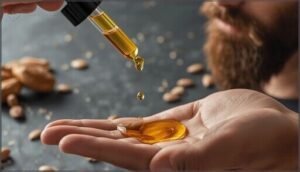
Nailing the dosage frees you from guesswork and wasted product. Here’s your drop adjustment strategy based on beard length and density:
- Under 1 inch: Start with 2-3 drops—stubble and short growth need less coverage, though skin type may push you toward 4.
- 1-3 inches: Use 3-6 drops as your baseline, adjusting for beard density and oil viscosity.
- 3-6 inches: Apply 6-8 drops to reach roots and tips without missing patches.
- Very thick or coarse: Add 1-2 extra drops regardless of length—dense hair absorbs more natural oils.
- Dry climates or porous hair: Increase within the 3-8 drop range to lock moisture and amplify beard oil benefits for healthier beard care tips.
Massage Technique: Skin First, Then Hair

Start by pressing your fingertips right through the beard, working in small circles to reach the skin underneath. This Fingertip Massage boosts Facial Circulation, hydrates the skin, and coats Hair Roots—where new growth needs support.
Prioritizing Skin Hydration first locks in moisture and sets the stage for healthier, fuller beard hair. That’s foundational Beard Care and Natural Skincare, done right.
Using a Brush to Distribute Evenly
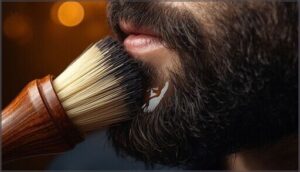
A boar bristle Beard Brush transforms your Beard Oil application from basic to precision-level Beard Care. Brush Selection and Bristle Density matter—choose a tool that grips coarse hair and reaches the skin.
- Stroke Technique: Brush downward from cheeks to chin, coating every layer with even Oil Distribution.
- Beard Sectioning: Work left, right, chin, and neck separately for complete coverage.
- Root-to-tip passes: Smooth the cuticle for shine and Grooming and Styling control during Beard Maintenance.
Top 4 Beard Oils Worth Considering
You’ve learned how to apply beard oil the right way. Now you need a product that actually works.
Here are four beard oils that deliver on their promises without the marketing fluff.
1. Proraso Wood Spice Beard Oil
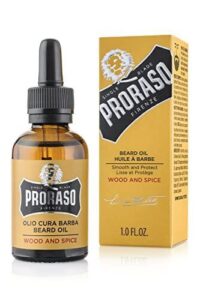
Proraso Wood Spice Beard Oil delivers a silicone-free formula built on plant-derived lipids like sunflower seed, avocado, and macadamia oils. These carrier oils supply omega-3 and omega-6 fatty acids that penetrate coarse facial hair and soften it from within.
The formula includes vitamin E as an antioxidant and eucalyptus leaf oil for a subtle cooling sensation on your skin. At 30 ml with a dropper top, you control the dose—usually a few drops—and work it from root to tip for even coverage and improved manageability.
| Best For | Guys with long or thick beards who want a natural, daily-use oil that softens and conditions without silicones or synthetic additives. |
|---|---|
| Size | 1 Fl Oz |
| Scent | Wood and Spice |
| Paraben-Free | Yes |
| Primary Benefit | Softens and conditions |
| Hair Type | Long, thick beards |
| Application | Daily use |
| Additional Features |
|
- Plant-based formula with sunflower, avocado, and macadamia oils softens coarse hair naturally
- Vitamin E and eucalyptus oil add antioxidant protection and a light cooling feel
- Dropper bottle lets you control exactly how much you use
- Wood and spice scent isn’t for everyone
- Higher price point compared to other beard oils
- Some users report no noticeable softness improvement or receive damaged bottles
2. Mountaineer Natural Beard Oil
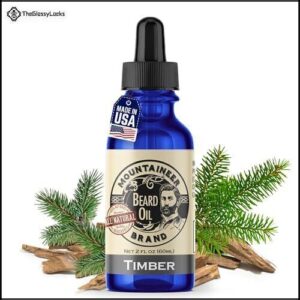
Mountaineer Natural Beard Oil combines grape seed, almond, jojoba, and castor seed oils in a 2 oz bottle without harsh synthetic chemicals. You get eight scent options—from Smokey Bourbon to Timber’s bold forest blend—or choose the unscented Bare version if fragrance irritates your skin.
Jojoba closely mimics your natural sebum, so it hydrates without greasy residue. Apply a few drops daily to the skin beneath your beard, then work through the hair. The formula prevents beardruff and softens coarse growth, though some users report inconsistent fill levels and wish for a dropper cap.
| Best For | Guys with dry, itchy beards who want a clean, natural formula and don’t mind a subtle scent that fades quickly. |
|---|---|
| Size | 2 Fl Oz |
| Scent | Timber |
| Paraben-Free | Yes |
| Primary Benefit | Moisturizes and nourishes |
| Hair Type | All hair types |
| Application | Daily use |
| Additional Features |
|
- Blend of grape seed, almond, jojoba, and castor oils hydrates skin and softens coarse hair without feeling greasy
- Eight scent options including unscented, so you can pick what works for your skin and preference
- Free from parabens, alcohol, and synthetic chemicals—made in West Virginia with natural ingredients
- No dropper included, which makes it easy to spill or use too much product
- Scent doesn’t last long, and some bottles arrive underfilled due to quality control issues
- Timber and other scents may not appeal to everyone, especially if you prefer stronger or more traditional fragrances
3. Cremo Cedar Forest Beard Oil
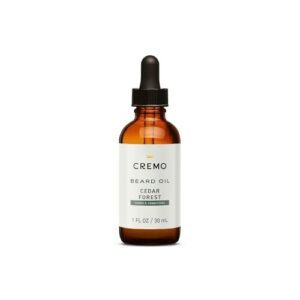
Cremo Cedar Forest Beard Oil delivers a woodsy cedarwood and eucalyptus scent in a budget-friendly 1 oz dropper bottle for around ten dollars. The blend features sunflower oil, avocado oil, jojoba oil, coconut oil, and argan oil plus vitamin E to soften coarse hair and moisturize the skin underneath.
You can apply it to damp or dry beards—just massage a few drops into your skin first, then work through the hair. Some users note the scent leans minty or chemical rather than pure forest, and over-application leaves greasy residue.
| Best For | Guys who want an affordable oil to soften their beard and calm itchiness without spending a lot. |
|---|---|
| Size | 1 Fl Oz |
| Scent | Cedar Forest |
| Paraben-Free | Not specified |
| Primary Benefit | Relieves itch and dryness |
| Hair Type | Damaged |
| Application | Daily use |
| Additional Features |
|
- Blend of quality oils (jojoba, argan, coconut, avocado) moisturizes both beard and skin
- Budget-friendly at around $10 for 1 oz
- Works on damp or dry beards for daily use
- Scent can smell more minty or chemical than like a cedar forest
- Easy to use too much and end up with a greasy beard
- Dropper could use clearer measurement markings
4. Leven Rose Beard Oil
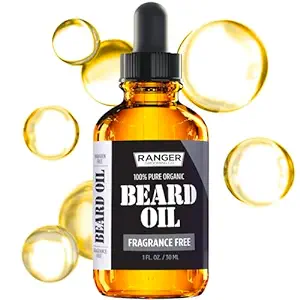
Leven Rose strips beard care down to essentials—just two organic carrier oils, jojoba and argan, in a 1 oz amber bottle with a precision dropper. You won’t find fragrances, parabens, or synthetic additives here. The fragrance-free formula suits sensitive skin and anyone tired of overpowering scents.
Apply a few drops to damp beard, massage into the skin beneath, then work through the hair. The non-comedogenic oils won’t clog pores, though the small bottle size means frequent reordering for daily users.
| Best For | People with sensitive skin who want a simple, unscented beard oil without synthetic ingredients or overpowering fragrances. |
|---|---|
| Size | 1 Fl Oz |
| Scent | Fragrance-Free |
| Paraben-Free | Yes |
| Primary Benefit | Nourishes and softens |
| Hair Type | All beard types |
| Application | Daily use with dropper |
| Additional Features |
|
- Pure two-ingredient formula with organic jojoba and argan oil—no parabens, fragrances, or synthetic additives
- Non-comedogenic oils won’t clog pores while reducing beard itch and irritation
- Precision dropper makes it easy to control how much you use
- Small 1 oz bottle runs out quickly with daily use, requiring frequent reorders
- Fragrance-free formula means no scent at all, which some users find disappointing
- May need additional products like beard brush or balm for complete grooming routine
How Often Should You Use Beard Oil?
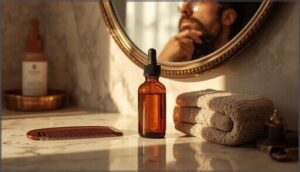
You don’t need to guess how often to apply beard oil—there’s a practical rhythm that works for most guys. Your beard length, environment, and skin condition all play a role in finding the right frequency.
Here’s what you need to know to build a routine that keeps your beard healthy without overdoing it.
Daily Application for Best Results
Usually, applying beard oil once every morning delivers the best skin balance and beard hydration for daily maintenance. Your morning routine should prioritize oil absorption right after showering—when your pores are open and receptive.
This single application ensures consistent grooming and styling while supporting beard growth promotion through steady beard care and maintenance. Daily use maximizes the benefits of beard oil without overloading your skin or hair.
Reapplying Throughout The Day as Needed
Your single morning application creates a solid foundation, but reapplication timing depends on what your beard faces throughout the day.
If you wash your face mid-afternoon, swim in chlorine, or endure harsh wind, a light touch-up restores beard hydration and skin balance. Two to three drops massaged into dry patches facilitates oil absorption without disrupting your daily maintenance or grooming routines.
Adjusting Frequency Based on Climate and Beard Length
Your beard’s hydration demands shift dramatically when you factor in humidity levels and hair length. Dry winters or desert climates double your oil frequency, while coastal moisture lets you scale back. Short stubble thrives on every-other-day applications, but long, dense growth demands daily or twice-daily moisturizing to prevent breakage and support healthy beard growth promotion.
- Climate adjustments: Increase oil frequency in low-humidity environments to combat dryness
- Beard length matters: Longer beards require more frequent applications than short stubble
- Skin conditions guide use: Oily skin needs less; dry skin benefits from extra grooming and styling support
Choosing The Right Beard Oil for You

Not every beard oil works for every face. Your skin type, pore sensitivity, and product ingredients all determine whether an oil helps or harms your beard game.
Here’s how to match the right formula to your specific needs.
Matching Oil Types to Your Skin Type
Your facial skin conditions dictate which carrier oils work best beneath your beard. Dry skin reacts to richer oils like argan and sweet almond in beard care routines, while oily skin needs lighter options such as grapeseed or hemp seed with faster oil absorption rates.
Combination skin benefits from jojoba-based blends. Check product ingredient lists for these cosmetic product ingredients to match your skin type analysis and improve skin and hair health.
Non-Comedogenic Oils for Acne-Prone Skin
Breakouts beneath your beard demand strategic oil selection to maintain clear skin types without sacrificing beard care. Comedogenic ratings guide your acne prevention strategy through carrier oils that support oil balance and skin hydration:
- Grapeseed oil (rating 1) delivers linoleic acid for sebum regulation
- Hemp seed oil (rating 0) provides anti-inflammatory properties without pore blockage
- Rosehip seed oil (rating 1) repairs barriers while staying lightweight
- Argan oil (rating 0) absorbs fast, rarely clogs follicles
Skip coconut oil and lanolin—they trigger beard breakouts on acne-prone faces.
Avoiding Synthetic Fragrances and Harmful Additives
Beyond the obvious carrier oils, fragrance risks lurk in vague label terms like “parfum” or “fragrance”—code for dozens of undisclosed petroleum-derived chemicals. Your skin safety depends on choosing chemical-free, organic options with transparent natural ingredients: jojoba, argan, and essential oils with anti-inflammatory properties. Ditch synthetic fragrance oils for truly natural oils that protect rather than irritate.
| Ingredient Type | What to Avoid |
|---|---|
| Fragrances | “Fragrance,” “Parfum” (synthetic blends) |
| Preservatives | Parabens, Formaldehyde releasers |
| Fillers | Mineral oil, Paraffin |
Potential Side Effects and Safety Considerations

Beard oil is safe for most people, but it’s not completely risk-free. Your skin can react to certain ingredients, especially if you have sensitivities or use the product incorrectly.
Here’s what you need to watch for to keep your beard routine safe and irritation-free.
Conducting a Patch Test Before Full Use
Your first line of defense against skin irritation and allergy prevention is a simple patch test. Before you commit to full beard coverage, take control with these steps:
- Apply one drop of beard oil to your inner wrist or behind your ear
- Wait 24 hours and watch for redness, itching, or swelling
- If clear, test a second drop for another 24 hours
- Document exact timing and any skin changes you notice
This reaction monitoring helps you identify oil sensitivity before essential oils trigger a full-face problem.
Recognizing Signs of Allergic Reactions
Your skin speaks loud when beard oil crosses the line from skin hydration tool to troublemaker. Watch for allergy symptoms like redness, burning, or intense itching within hours of application—classic skin irritation markers.
Delayed reaction types surface 24 to 72 hours later, especially with essential oils. Swelling, breathing trouble, or lightheadedness? Those anaphylaxis signs demand immediate emergency care, not beard care experiments.
Avoiding Undiluted Essential Oils on Skin
Undiluted essential oils burn straight through your skin barrier protection—even a single drop triggers skin irritation, redness, or chemical burns. Your beard oil must contain properly diluted blends, usually 1-3% essential oils mixed with carrier oils for safe skin hydration.
Follow these essential safety rules:
- Never apply concentrated oils directly to facial skin or beard areas
- Choose beard oil with pre-diluted formulas to avoid fragrance reactions
- Mix your own? Use jojoba or argan as carriers for anti-inflammatory properties
- Patch test diluted blends before full application for skin care and moisturizing
Proper oil dilution protects you while delivering benefits.
Common Beard Oil Mistakes to Avoid

Even the best beard oil won’t work if you’re making simple application mistakes.
These errors can leave your beard greasy, your skin irritated, or your results disappointing.
Here are the most common missteps you need to avoid.
Using Too Much Product
Think more isn’t better in the context of beard oil—it’s a one-way ticket to a greasy mess. Overapplication effects create visible shine that screams “oil slick,” while greasy buildup clogs pores and triggers skin irritation. You’re also burning through grooming products faster, creating product waste that hits your wallet hard. Styling difficulties multiply as excess oil weighs down texture and gums up your brush.
| Overapplication Effects | Impact on Appearance | Cost to You |
|---|---|---|
| Greasy buildup on hair | Flat, limp texture | Wasted beard care product |
| Skin irritation from clogs | Breakouts, rough patches | Extra cleansers needed |
| Styling difficulties | Reduced grip, messy tools | More frequent washing |
The sweet spot for beard oil benefits? Stick to 3-8 drops max. Your beard maintenance routine depends on precision, not excess. When you master proper dosing, you’re taking control of your grooming products and unlocking the full potential of quality beard care without the slick aftermath.
Skipping The Skin Beneath The Beard
You’re wasting beard oil if you’re only coating the hair. Beard care isn’t complete without skin hydration beneath—that’s where itch prevention starts.
The skin under your beard needs moisture to maintain pore minimization and hair follicle health. Massage oil into the skin first with facial exfoliation in mind, ensuring skincare and beard hygiene work together.
Skipping this step sabotages skin health and invites the flaky, itchy mess you’re trying to escape.
Applying to a Wet Instead of Damp Beard
Water blocks the benefits of beard oil if your beard is soaking wet.
Wet beard care demands patience—pat excess moisture first so oil absorption improves and damp skin tips actually work.
For proper beard health and hair care, aim for damp, not dripping—your beard oil deserves better than wrestling with water. Wet application dilutes the formula, causes uneven distribution, and slows beard hydration.
Frequently Asked Questions (FAQs)
Is it okay to use beard oil daily?
Daily dose devotion delivers dependable results. Most men benefit from once-a-day beard oil application, though skin type considerations and beard length factors matter—oily complexions need less frequency, while longer beards absorb more natural oils for ideal beard health.
What does beard oil do exactly?
Beard oil delivers natural oils and anti-inflammatory properties that moisturize your facial hair and skin beneath, keeping everything hydrated and itch-free.
While strengthening strands, smoothing rough texture, and protecting your skin’s barrier from dryness.
What are the disadvantages of beard oil?
Yes, beard oil has downsides. Skin irritation from essential oils, acne risk on oily skin, ingredient allergies, product buildup, and greasiness issues can occur—especially when you skip patch testing or overapply daily.
Can beard oil replace regular facial moisturizer?
It depends on your skin type and beard length. For normal skin with medium beards, lightweight beard oil can work alone.
Sensitive, dry, or acne-prone skin usually needs a dedicated facial moisturizer too.
Does beard oil work on patchy beards?
Patchy beard care presents a tricky puzzle. Beard oil won’t create hair where follicles don’t exist, but it transforms what you already have—softening texture, reducing breakage, and training longer strands to cover thin spots strategically.
Will beard oil make my beard greasy?
Not if you apply it correctly. Use 3–5 drops on damp skin after showering, letting the natural oils absorb fully.
Over-application or skipping absorption time causes shine and grease—start light, adjust based on beard texture.
Can women use beard oil for hair?
Before salons offered serums, people relied on pure oils—and beard oil fits that tradition.
Women can absolutely use beard oil for hair moisture benefits and scalp hydration, delivering essential oils and natural oils for haircare and hair conditioning without heavy residue.
Does beard oil expire or go bad?
Yes, beard oil expires. Most grooming products stay fresh 12 to 24 months unopened. After opening, use within 6 to 12 months for peak benefits. Rancid signs include sour smell and cloudiness.
Conclusion
Men who use beard oil daily report a 73% reduction in itch within the first week—that’s your skin finally getting the hydration it’s been demanding.
Now you know exactly how beard oil work: it replaces depleted sebum, nourishes follicles, and builds a moisture barrier that transforms wiry chaos into controlled growth.
Stop treating your beard like an accessory. Treat it like living tissue that needs consistent care, and it’ll reward you with the density and softness you’ve been chasing.