This site is supported by our readers. We may earn a commission, at no cost to you, if you purchase through links.
Walk into any barbershop worth its salt and you’ll notice something: the taper fade sits on more heads than any other cut. Not because it’s trendy—it’s been a staple since the 1950s—but because it works on almost every face shape, hair type, and lifestyle. A sharp fade can change how a man carries himself.
That’s not an exaggeration; it’s something barbers see daily. Whether you want something low-key for the office or high contrast that turns heads, the variation you choose makes all the difference. From fade height to hair type to face shape, here’s everything you need to get it right.
Table Of Contents
- Key Takeaways
- What is a Taper Fade?
- Low, Mid, and High Fades
- Popular Taper Fade Variations
- Best Taper Fades by Hair Type
- Best Taper Fades by Face Shape
- Top 6 Products for Taper Fades
- Barber Tips and Maintenance
- Frequently Asked Questions (FAQs)
- What Hair Length Do I Need?
- How to Get the Taper Fade Haircut?
- How to Style the Taper Fade?
- What hair ages you?
- What are the types of taper fades?
- What is the 3 2 1 buzzcut rule?
- What is the difference between taper and fade?
- How much does a taper fade haircut cost?
- Can women get taper fade haircuts too?
- How long does hair need to be for a taper fade?
- Conclusion
Key Takeaways
- Your face shape, hair type, and how often you’re willing to sit in the barber’s chair should drive every decision about fade height — not just what looks cool on someone else.
- The difference between a taper and a fade comes down to one thing: how far down the blend goes, with tapers staying softer and fades pushing all the way to the skin.
- Walk in with a reference photo and know your fade height before you open your mouth — it saves time, cuts confusion, and gets you a sharper result every single time.
- No matter how good the cut is, the wrong product kills it — match your hold and finish to your hair type, and a little usually goes a lot further than you think.
What is a Taper Fade?
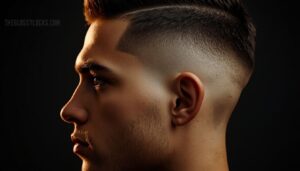
The taper fade is one of those cuts that works on almost everyone — and once you understand why, it’s hard to unsee it. It’s not just a style choice; it’s a structural decision that shapes how your whole head looks.
Understanding the difference between cut styles — like in this taper fade vs. drop fade breakdown — makes it easier to walk into the barbershop knowing exactly what you want.
The taper fade isn’t just a style choice — it’s a structural decision that shapes how your whole head looks
what you need to know before you sit in the chair.
Taper Fade Haircut Definition
A taper fade haircut is all about gradual length change — longer on top, shorter as you move down the sides and back. The blend technique creates a smooth skin integration that follows your hairline contour without a hard stop.
No blocky edges, no awkward lines. Just clean edge detailing that connects everything smoothly, right down to the blend point where hair meets skin.
This style offers low maintenance compared with fades over skin fades.
Taper Vs. Fade Haircut Difference
Here’s where things get specific. The difference between taper and a fade comes down to skin exposure and contrast sharpness.
A taper keeps little hair at the bottom — softer, more subtle blend. full fade pushes down to skin.
That changes your maintenance schedule too. Fades need touching up every two to three weeks. Tapers grow out more naturally, buying you extra time.
Core Structure of The Cut
Every great taper fade is built on five technical zones working together.
- Guard line start — longer hair up top blends into shorter lengths below
- Sideburn integration — fades into your jawline instead of stopping abruptly
- Neckline fade drop — clean line at the back, no shelf
- Crown blend seam — gradual shift where top length meets faded sides
- Parting border cleanliness — crisp edges around temples and ears
Why Taper Fades Look Clean
Those five zones only matter if the execution behind them is tight. A taper fade looks sharp because gradual blending removes bulk without leaving a visible drop-off.
Clean perimeter edges control where the fade stops. Scalp uniformity keeps the gradient from looking patchy. Light product use stops buildup from blurring your clean line. And fresh growth control between visits keeps it all reading sharp.
Low, Mid, and High Fades
Where the fade starts on your head changes everything about how the cut looks and how long it stays sharp. There’s no single right answer — it all comes down to how bold you want to go and how often you’re willing to sit in the barber’s chair.
Here are the five main fade heights worth knowing.
Low Taper Fade
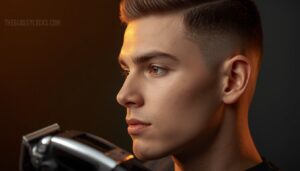
The low taper fade is the most forgiving cut in the shop. It starts just above the ear — that low fade point keeps things subtle, not dramatic. Here’s why it works:
- The earline blend sits tight, so your Sideburn Edge stays clean without screaming "fresh cut"
- Barbers use a guard ladder — stepping down gradually — so there’s no choppy jump between lengths
- grow-out behavior is slower and cleaner than higher fades
- Your maintenance routine is lighter — touch up every 3–4 weeks
- It pairs with almost any top style, making it a genuinely low maintenance haircut
Mid Taper Fade
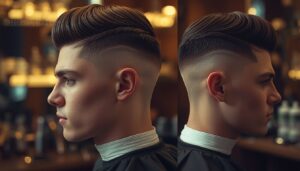
The mid taper fade hits the sweet spot — not too subtle, not too bold. Your fade point lands around the middle of the head, and the gradual shift from there creates natural mid fade symmetry on both sides.
| Feature | Mid Taper Fade |
|---|---|
| Scalp Exposure Level | Moderate |
| Fade Angle Control | Medium pitch |
| Styling Versatility Options | High |
| Seasonal Adaptation Tips | Works year-round |
| Hair Texture Compatibility | All types |
High Taper Fade
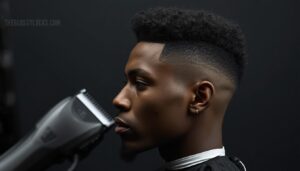
The high taper fade is where things get serious. Your fade haircut techniques shift up near the temples — roughly 2 to 3 inches above the ear — creating a high fade point that demands edge detailing precision.
Guard blending steps usually run 0, 0.5, 1, then 1.5, building a skin fade progression that delivers a strong contrast visual effect.
Keep top length balance at 2–4 inches.
Skin Taper Fade
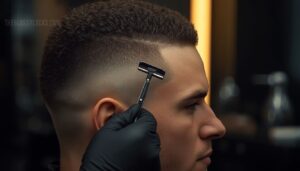
The skin taper fade takes things all the way down — bare skin at the base, no exceptions. Barbers use a blade technique that works progressively from the fade point upward, building a smooth fade gradient with no visible steps.
Skin exposure at the neckline demands neckline sharpness and a clean sideburn blend. For a refined skin fade taper, that shift from skin to length needs to be smooth.
Drop Taper Fade
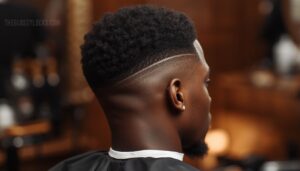
The drop taper fade curves downward behind the ear instead of wrapping level around the head — and that curve changes everything about the back profile.
- Drop Curve Shape angles in a V or U toward the nape
- Ear-Nape Connection tightens progressively for a structured silhouette
- Neckline Stop needs precise finish for clean upkeep
Tell your barber you want a drop curve, and bring a photo.
Popular Taper Fade Variations
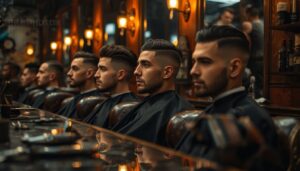
Once you’ve got your fade height sorted, the next step is figuring out which style actually suits you. There’s no shortage of directions you can take a taper fade — from clean and classic to bold and detailed.
Here are eight popular variations worth knowing about.
Classic Taper Fade
The classic taper fade is the blueprint, everything else is built on. Longer on top, gradually shorter down the sides, clean at the neckline — that gradual shift is what gives this taper fade haircut its staying power.
From a barber perspective on fade techniques, it’s controlled precision.
Celebrity influence kept it mainstream for decades, and honestly, it still earns its place in any chair.
Temple Taper Fade
Where the classic taper spreads evenly around the head, the temple taper fade zeroes in — targeting just the temple line and sideburn gradient. Your barber concentrates the blend where the sideburn meets the upper temple, creating a clean visual frame without touching crown continuity.
That focused precision makes styling versatility easy and growth management more forgiving between appointments.
Burst Taper Fade
The burst taper fade takes a different approach than the temple cut — instead of a straight vertical line, your barber carves a curved burst arc that wraps around the ear. That ear-line shift creates a semicircle effect with serious dimension.
- The curved arc wraps around the ear, not straight up.
- Top volume emphasis balances the short ear zone.
- Nape blend smoothness keeps the back clean.
- Styling wax application shapes the burst zone after cutting.
- Regular trims preserve the arc before it blurs out.
Taper Fade With Designs
Want to push your cut further? A taper fade with design does exactly that.
Design placement zones matter — temple lines, side partings, and the nape all create different focal points.
Geometric pattern choices like razor lines or angles pop hardest on high-contrast fades.
Razor line crispness fades fast, though, so design grow‑out care means returning every two weeks minimum.
Slick-back Taper Fade
If razor designs are about standing out, the slick-back taper fade is about looking quietly untouchable. Comb your top straight back, keep it flat at the roots, and let the taper do the heavy lifting on the sides.
Matte vs shine is your main call here — matte clay for a natural finish, high-shine pomade when you want that sharp, polished look.
Hair density balance matters too. Thicker hair needs more product application amount, and extra styling time management to stay smooth. Less density? Keep your scalp exposure in check by not going too high on the taper fade.
Faux Hawk Taper Fade
The faux hawk taper fade works because the length ratio is everything — keep the center long enough to spike, taper the sides tight, and that hawk silhouette lands.
Use texture clay to get spiky top separation without crunch.
Lifted roots give the shape height and hold.
Edge cleanliness on the sides frames the whole taper fade and makes the style look intentional.
Quiff Taper Fade
The quiff taper fade has volume with direction — controlled height that actually holds.
Your barber’s blend guard sequence builds the foundation: tight at the sideburn edge cleanup, graduating upward to meet the quiff length guidelines on top. From there, it’s about root lift techniques and volume building with a blow dryer and matte clay.
- Roots lifted first, not last
- Top layers cut for movement
- Blow dry upward and backward
- Matte clay locks without gloss
Taper Fade With Beard
When you add a beard into the mix, the taper fade with beard becomes less of a haircut and more of a full face frame. Your barber performs Sideburn Shift Shaping and Beard Blend Gradient, so everything flows — no awkward gaps.
Beard Density Contrast determines how bold that fade looks.
Finish with a Grooming Oil Finish and follow a Beard Maintenance Schedule to keep it sharp.
Best Taper Fades by Hair Type
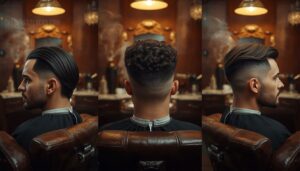
Your hair type changes everything about how a taper fade sits, blends, and holds its shape over time. A cut that looks sharp on straight hair might need a completely different approach on curly or thick hair.
Here’s how the taper fade works across every major hair type.
Taper Fade for Straight Hair
Straight hair makes every clipper line visible — which is a gift if your barber knows what they’re doing. With a straight hair taper fade, the Guard Overlap Strategy matters more than with any other texture. Here’s what defines the look:
- Crisp Edge Lineup — clean temple and neckline edges with zero blur
- Contrast Control Levels — calibrated fade height keeps scalp exposure intentional
- Top Side Blend — longer top connects seamlessly into the upper fade
- Matte Finish Choice — matte clay kills flyaways along the changeover zone
Taper Fade for Wavy Hair
trickiest texture is the trickiest texture to fade well — not because it’s difficult, but because it lies to you. natural wave shadows can make an uneven blend invisible until you step outside.
| Factor | What It Affects | Barber’s Approach |
|---|---|---|
| Wave-aware layering | Fade silhouette symmetry | Blend higher to balance volume |
| Guard length shift | Shadow visibility in waves | Switch guards gradually, no jumps |
| Product hold balance | Wave definition vs. frizz | Medium-hold cream on damp hair |
| Hair growth timing | Fade refresh schedule | Touch up every 2–3 weeks |
| Top length (3–6 inches) | Wave shape and control | Keep weight to reduce puffiness |
For a wavy hair taper fade, your barber should switch between clipper and scissor-over-comb work as the cut moves upward. Sea salt spray or matte clay keeps hair texture defined without flattening the wave — that’s the styling products and methods for the taper fade’s sweet spot.
Taper Fade for Curly Hair
Curly hair doesn’t just grow out — it expands. That’s what makes the curly hair taper fade different from every other hair texture specific fade style. Your barber needs to nail the Curl Shift so curls don’t look abruptly chopped at the sides.
Three things that make it work:
- Guard Calibration — tighter guards on the sides prevent puffiness
- Moisturizer Timing — apply before styling so curls clump cleanly
- Edge Definition — crisp necklines stop curls from blurring the fade
Volume Balance is the goal.
Taper Fade for Thick Hair
Thick hair holds volume like a sponge holds water — great for the top, problematic on the sides. Bulk reduction is where this cut starts. Your barber uses guard layering to pull down density gradually, skipping abrupt transitions that dense hair exposes quickly.
| Factor | Thick Hair Challenge | Barber Fix |
|---|---|---|
| Sides | Blocky volume | Mid-fade with layered guards |
| Texture | Stiff, resistant | Texture thinning with shears |
| Sideburns | Overgrown edges | Precise sideburn cleanup |
| Overall shape | Top-heavy silhouette | Volume control through scissor blend |
Hair density makes every guard choice count.
Taper Fade for Thin Hair
Thin hair needs a softer approach. Higher guard settings on the sides keep density intact, while a soft edge blend avoids that hollow contrast that exposes scalp.
textured top volume — think messy crop or side-swept length — draws the eye up, not through.
matte finish products to kill shine. Growth gap control matters too; thin hair fades fast, so book every two weeks.
Afro Taper Fade
Afro hair works differently. The goal with an afro taper isn’t to minimize volume — it’s to structure it.
Barbers focus on blend line graduation along the sides and back, leaving the top dominant while refining sideburn clean-up and hairline shaping for a sharp frame. Afro volume preservation is the priority.
Light hold products handle texture integration without flattening your coils. The afro taper fade rewards restraint, not aggression.
Best Taper Fades by Face Shape
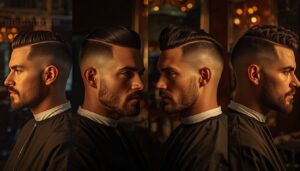
Your face shape is one of the most overlooked factors when choosing a fade — but it makes a bigger difference than most people realize. The right fade height can sharpen your features, balance your proportions, and pull the whole look together.
Here’s what works best for each face shape.
Taper Fades for Oval Faces
Oval faces are the lucky ones — nearly every taper fade works here. Your proportions are naturally balanced, so you’re not fighting the cut. Focus on getting the length ratio right: two to three inches on top keeps texture balance solid. Sideburn tapering and neckline softening frame the face cleanly without adding width.
- Low fade for understated, everyday confidence
- Mid fade for defined temple framing that draws eyes upward
- High fade for bold, sharp contrast
- Textured crop or quiff for movement and personality
- Skin fade for a clean, high-impact finish
Taper Fades for Round Faces
Round faces need vertical emphasis, and that’s exactly what a mid to high fade delivers. The High Fade Strategy works by shortening the sides for cheek slimming while a Textured Top pulls attention upward.
Pair it with a quiff or spiky crop for maximum contrast.
Beard Balance matters too — keep it tight and tapered, never wide.
Taper Fades for Square Faces
Square faces carry strong angles — and the right taper fade works with that structure, not against it. Moderate Fade Height is your best move here.
low to mid fade addresses Jawline Softening without making the face look boxy. Keep the Neckline Taper gradual, the Sideburn Blend smooth, and add Top Texture with a side part or textured fringe to balance things out.
Taper Fades for Oblong Faces
Oblong faces run long and narrow, so your goal is width — not height. Stick to a low or mid taper fade and keep the blend gradual for proper face shape suitability.
Side-swept texture and horizontal volume near the temples are your tools here.
Use matte styling products to avoid drawing the eye upward.
controlled fringe length and clean taper fade with line up finish the look perfectly.
Taper Fades for Heart-shaped Faces
Heart-shaped faces carry width up top and taper to a narrower chin — your cut needs to balance that equation. A low-to-mid taper fade is your best call for face shape compatibility.
- Forehead Softening: Use a textured top with a parting angle that sweeps across rather than sitting flat.
- Cheek Emphasis: Mid fade height draws attention to the middle of your face.
- Sideburn Length: Keep sideburns tapered naturally to the lower ear for a softer frame.
- Texture Top: Avoid bulky roots — light movement works better than rigid volume.
- Hairline Shaping: Clean temple edges without harsh corners keep the blend smooth.
For even more guidance, this visual breakdown of beard shaping techniques for round faces shows exactly how sideburn tapering ties the whole look together.
Taper Fades for Diamond Faces
Diamond faces are built around the cheekbones — strong in the middle, narrower at the forehead and chin. That structure actually works in your favor with the right taper fade.
Go mid-to-high for face shape compatibility, and focus on top lift with textured styling products. Keep the sideburn blend gradual, and nail the neckline definition.
Texture balance on top ties the whole shape together.
Top 6 Products for Taper Fades
The right product can make or break your taper fade — even a great cut falls flat without something holding it together. What you reach for depends on your hair type, the style you’re going for, and how much hold you actually need.
Here are six products worth keeping on your shelf.
1. Crazy Bull Space Dust Hair Texture Powder
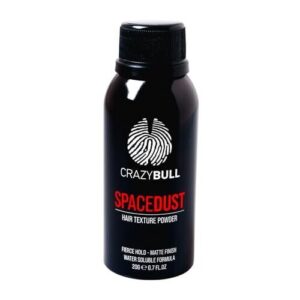
Crazy Bull Space Dust is one of those products that sounds gimmicky until you actually use it. Sprinkle a small amount onto dry hair, work it in with your fingers, and you’ll get instant lift and a natural matte finish — no shine, no grease.
It’s vegan, cruelty-free, and made in England, which ticks boxes for a lot of guys these days.
Best on short to medium lengths, it pairs well with a taper fade to keep your top looking full and textured all day.
| Best For | Guys with short to medium hair who want effortless volume and a natural matte finish that holds up all day. |
|---|---|
| Hold Strength | Strong |
| Finish Type | Matte |
| Hair Length | Short to Medium |
| Product Type | Texture Powder |
| Ease of Use | Sprinkle & Go |
| Washout Ease | Difficult |
| Additional Features |
|
- Instant lift and texture with just a sprinkle — no complicated styling needed
- Long-lasting hold that survives wind, sweat, and wearing hats or helmets
- Vegan and cruelty-free, made in England with a light, subtle scent
- Can leave fingers feeling slightly sticky during application
- The water content may give some hair a greasy or wet look
- Harder to fully wash out than most dry powders — might need an extra shampoo
2. Verb Sculpting Hair Clay
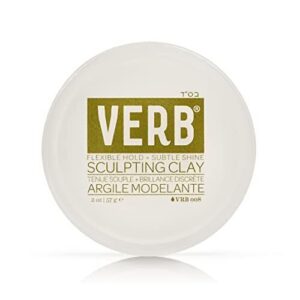
If texture powder is more lift and forget, Verb Sculpting Clay is the workhorse for guys who actually style their hair.
It’s a medium-hold clay enriched with argan oil and avocado oil, so it works with your hair instead of fighting it.
No stiffness, no helmet head.
A pea-sized amount is genuinely enough — warm it between your palms and work it through.
Great for quiffs, textured crops, and any taper fade where you want shape that moves.
| Best For | Guys with short to medium hair who want flexible, natural-looking styles that hold without going stiff or greasy. |
|---|---|
| Hold Strength | Medium |
| Finish Type | Natural Matte |
| Hair Length | Short to Medium |
| Product Type | Styling Clay |
| Ease of Use | Warm & Apply |
| Washout Ease | Easy |
| Additional Features |
|
- Medium hold with real flexibility — you can restyle throughout the day without it cracking or flaking
- Argan and avocado oil nourish your hair while you style, so it’s not just holding, it’s actually helping
- A little goes a long way — pea-sized amount is genuinely all you need
- Not the move if you want a high-hold or super structured look
- $22 for 1 oz feels steep, especially if you’re styling daily
- The scent fades pretty fast after it dries, so don’t count on it lasting
3. Revlon Compact Hair Dryer
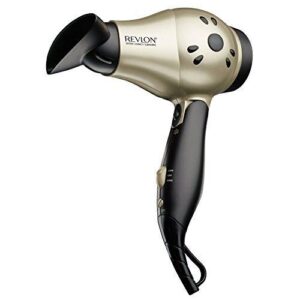
Clay manages the shape — but sometimes you need to actually dry your hair first.
That’s where the Revlon Compact Hair Dryer earns its spot in the kit.
At 1875 watts, it moves serious air for something that weighs barely over an ounce.
The fold-flat handle means it disappears into a gym bag without drama.
Dual voltage works worldwide, so it travels with you.
Ionic and ceramic tech keeps frizz down while you’re blasting through a blowout before styling.
| Best For | Travelers, gym-goers, and anyone who needs a lightweight, compact dryer that works anywhere in the world. |
|---|---|
| Hold Strength | N/A |
| Finish Type | N/A |
| Hair Length | All Lengths |
| Product Type | Hair Dryer |
| Ease of Use | Plug & Dry |
| Washout Ease | N/A |
| Additional Features |
|
- Fold-flat handle makes it genuinely easy to pack — no awkward bulge in your bag
- Dual voltage means you can plug it in from New York to Tokyo without a second thought
- Ionic and ceramic tech actually helps cut down frizz, so your hair doesn’t look wrecked after a quick dry
- Some users hit motor issues or weak airflow after just a few months of regular use
- Only two heat/speed settings — not much wiggle room if you like more control
- The plastic build feels a little cheap, and the setting button can be annoyingly stiff to push
4. L3 Natural Look Styling Powder
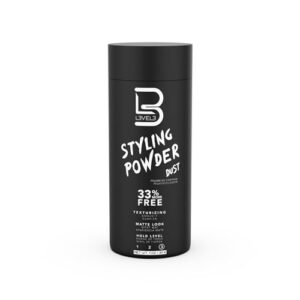
Sometimes you don’t need heat — you need grip.
The L3 Natural Look Styling Powder gives you that without the weight.
Sprinkle a little into dry hair, work it through with your fingers, and you’ve got instant texture and lift at the roots.
It’s matte, it’s light, and it won’t leave your taper fade looking greasy.
At under ten bucks for an ounce, it punches well above its price tag — especially for fine or straight hair that needs body fast.
| Best For | Teenagers, kids, and adults with short, fine, or textured hair who want quick, low-maintenance volume and hold without any greasiness. |
|---|---|
| Hold Strength | Moderate |
| Finish Type | Matte |
| Hair Length | Short |
| Product Type | Styling Powder |
| Ease of Use | Sprinkle & Go |
| Washout Ease | Easy |
| Additional Features |
|
- Adds real lift and texture fast — just sprinkle and work it in with your fingers
- Matte finish keeps things looking natural, not shiny or weighed down
- Easy to wash out, and a little goes a long way for the price
- Can feel tacky on your hands and leave a slight sticky residue in your hair
- The powder can clump or spill when you pop the cap open
- Hold is only moderate — thick or coarse hair might not stay put all day
5. Charlemagne Sea Salt Hair Spray
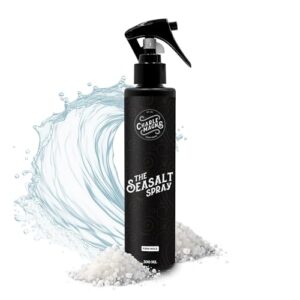
If grip without weight is what you wanted from the L3, the Charlemagne Sea Salt Spray takes things in a different direction — lighter, fresher, and built for texture.
Spray it onto damp hair before you blow-dry, and it adds body and separation without crunch. Real sea salt in the formula gives you that relaxed, natural finish that works well with a taper fade — not stiff, just lived-in. Fine or wavy hair especially benefits here.
At around $19.99 for 200ml, it’s solid value.
| Best For | Anyone with fine, wavy, or straight hair who wants that effortless, just-left-the-beach texture without stiffness or buildup. |
|---|---|
| Hold Strength | Light |
| Finish Type | Natural Matte |
| Hair Length | Short to Medium |
| Product Type | Sea Salt Spray |
| Ease of Use | Spray & Style |
| Washout Ease | Easy |
| Additional Features |
|
- Adds real body and separation without leaving hair crunchy or greasy
- Clean formula — no alcohol, parabens, or sulfates — plus built-in heat protection
- Great value at $19.99 for 200ml, and it pulls double duty as a pre-styler
- Too many sprays and it gets greasy fast — less is definitely more here
- Not strong enough for thick or coily hair that needs serious hold
- The scent is subjective — if you’re sensitive to fragrance, it might not be your thing
6. Fix Your Lid Styling Fiber
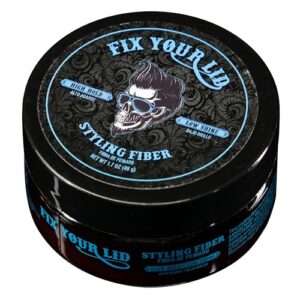
Fix Your Lid Styling Fiber is the one to reach for when you need serious hold without the shine.
Work a pea-sized amount between your fingers, apply it to dry hair, and you get strong structure with a completely matte finish — ideal for short, choppy taper fades.
It lasts 8+ hours, washes out clean, and won’t leave your hair looking greasy or overdone.
At under $10, it punches well above its price point.
| Best For | Guys with short, choppy cuts who want a strong matte hold that lasts all day without looking greasy. |
|---|---|
| Hold Strength | Medium-Strong |
| Finish Type | Matte |
| Hair Length | Short |
| Product Type | Styling Fiber |
| Ease of Use | Apply & Go |
| Washout Ease | Easy |
| Additional Features |
|
- Matte finish that keeps hair looking natural, not stiff or shiny
- Holds for 8 hours and rinses out easily with just water
- Travel-friendly size at a price that won’t break the bank
- Hold can feel more medium than strong on thicker or longer hair
- Sweat and rain can wear it down faster than expected
- Rubbing it between your hands may leave a temporary white residue
Barber Tips and Maintenance
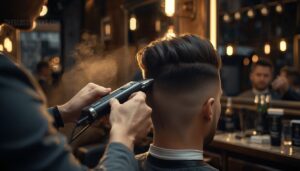
Getting a great taper fade is only half the battle — keeping it sharp is where most guys drop the ball. Everything from how you talk to your barber to how often you’re sitting in the chair makes a real difference.
Here’s what you actually need to know.
How to Ask for a Taper Fade
Walk in knowing what you want.
Tell your barber the guard number specification for the bottom of the blend, then describe the baseline starting point — low, mid, or high.
Request your desired neckline shape: squared, rounded, or tapered.
Mention sideburn length sync so nothing looks disconnected.
And don’t stay quiet mid-cut — use an in-cut adjustment prompt if something feels off.
Bring Reference Photos
A sharp reference photo saves more time than any description you can give. Barbers work from what they can see — not what they imagine.
When building your haircut gallery of taper fades, focus on these five things:
- Photo Clarity — Details must be crisp enough to show the exact blend
- Angles Coverage — Front, side, and back views eliminate guesswork
- Lighting Consistency — Even light reveals contrast between lengths
- Texture Matching — Match references to your actual hair type
- Background Neutrality — Clean backgrounds keep the silhouette readable
Choosing Fade Height
Fade height controls everything — contrast level, growth out timeline, bulk removal, and shape framing all shift depending on where the blend starts.
Low fades stay subtle and last longer between cuts. Mid fades balance boldness with maintenance frequency. High fades make a statement, but need more upkeep.
When choosing fade height for different face shapes or fade haircut styles and variations, let your lifestyle lead.
Guard Sizes and Blend Technique
Guard increment steps are everything in a clean taper fade. Your barber uses clipper guard progression — moving from a longer guard on top to shorter guards near the neckline — building a gradual shift in small jumps.
Half-guard precision smooths what full-size jumps can’t.
blend overlap method and flick angle control break up harsh guidelines, while the guideline removal process finishes that smooth hair blending technique.
How Often to Trim a Taper Fade
Most guys wait too long. A taper fade has a short window — roughly 2 to 4 weeks — before the blend starts looking soft. Your Growth Rate Impact and hair texture determine where in that range you land.
- High fades: trim every 2 weeks
- Low fades: every 3–4 weeks
- Skin fades: most demanding touch‑up cadence
- Thick hair: schedule sooner due to faster visible regrowth
- Summer/Seasonal Maintenance: heat and sun speed deterioration — shorten your trim schedule accordingly
Professional Scheduling keeps the contrast crisp.
Touch-up Tips for Neckline and Sideburns
Between cuts, your neckline and sideburns do the heavy lifting.
Damp Hair Prep makes trimming easier — damp hair lays flat and cuts cleaner.
Use Angle Control when shaping sideburns: invert the trimmer and work downward.
Always do a Symmetry Check from multiple angles.
Finish with cool water and moisturizer for Irritation Prevention.
| Step | Tip |
|---|---|
| Damp Hair Prep | Dampen nape and sideburns before trimming |
| Angle Control | Invert trimmer for precise sideburn shaping |
| Clean Edge Finish | Work center-outward for a continuous neckline curve |
| Symmetry Check | Mirror-check both sides before finishing |
Common Taper Fade Mistakes
Even a sharp cut falls apart fast if these mistakes creep in. Uneven Guard Progression leaves patchy jumps instead of smooth blends.
Choppy Mid Blend happens when strokes don’t feather properly. Wrong Fade Height throws off your whole head shape. Dry Hair Styling makes the line read uneven once it sets.
Over Tapering kills the contrast before it has room to breathe.
Frequently Asked Questions (FAQs)
What Hair Length Do I Need?
You need at least 2 to 3 inches on top. Less than that, and the side-to-top ratio falls apart — there’s simply nothing left to blend into.
How to Get the Taper Fade Haircut?
Getting a taper fade starts with a pre‑cut consultation. Tell your barber your fade height, top length, and hair texture. That’s all the direction they need.
How to Style the Taper Fade?
top does the talking.
matte paste for texture and movement, high-shine pomade for a taper fade slick back, or styling gel when you need side part precision all day.
What hair ages you?
Heavy bangs, low volume, clashing color, aging texture, and sparse trims can all add years to your look.
Hair thinning solutions, hair health maintenance, and smart hairline considerations make a bigger difference than most realize.
What are the types of taper fades?
There are five main types: low taper fade, mid taper fade, high taper fade, skin fade, and drop taper fade.
Variations like burst taper, afro taper, and hairline taper fade expand your options further.
What is the 3 2 1 buzzcut rule?
The 3 2 1 buzzcut rule is a simple Step Placement Logic: clipper guard number 3 on top, number 2 on sides, number 1 at the neckline.
Hair Length Change creates a clean Visual Sharpness Effect and Symmetry Balance.
What is the difference between taper and fade?
A taper reduces length gradually toward the neckline. A fade pushes that Length Shift Gradient further, blending down to Skin-Level Contrast.
The difference between a taper and a fade is mostly Blend Sharpness and how low it goes.
How much does a taper fade haircut cost?
Cuts cost between $25 and $85 — your barber skill premium, fade height, and add‑on services all shift the final number. Basic vs premium tier makes a real difference.
Can women get taper fade haircuts too?
Absolutely. A taper fade is gender-neutral by design — it’s about technique, not identity. Women rock pixie taper fades, natural styles, and short cuts with faded sides all the time.
How long does hair need to be for a taper fade?
Think of it like a gradient — you need enough length on top (around 2–4 inches) and sufficient sides to blend cleanly into the fade, or the whole thing falls apart.
Conclusion
Finding the right taper fade haircut styles doesn’t require perfect hair or a specific face shape—it requires knowing what you’re working with. Your hair type, your face structure, your lifestyle: those are the variables that turn a good cut into the right cut.
A skilled barber works with what you bring through the door. Show up with a reference photo, know your fade height, and you’ll leave looking sharper than you walked in.
- https://barber.style/taper-fade/
- https://www.schedulicity.com/essentials/blog/taper-vs-fade-difference/
- https://www.ebc.edu/blog/how-to-do-a-taper-fade-haircut/
- https://therapeuticcuts.com/blog/taper-fade-haircut-complete-guide-queens-nyc
- https://www.hairstyleclub.com/blog/ultimate-taper-fade-haircut-guide