This site is supported by our readers. We may earn a commission, at no cost to you, if you purchase through links.
You slather on moisturizer and expect soft, hydrated skin. Instead, your face feels tight, uncomfortable, or somehow drier than before. This frustrating paradox affects up to 40% of people who use daily moisturizers, and it’s not just in your head.
The problem often lies in a disconnect between what your skin needs and what your product delivers. Lightweight lotions can’t repair a compromised skin barrier, while applying cream to soaking-wet skin dilutes active ingredients before they penetrate. Even factors like low humidity, certain medications, or scrubbing with hot water sabotage your moisturizer’s effectiveness.
Understanding why this happens—and what actually works—can transform your skin from parched to properly hydrated.
Table Of Contents
Key Takeaways
- Your moisturizer might be too lightweight for your skin type—if you feel tight within an hour, switch to a heavier cream with ceramides and occlusives that actually seal in moisture instead of evaporating.
- Timing matters more than you think: apply moisturizer to lightly damp (not soaking wet) skin within 60 seconds of cleansing to lock in hydration before transepidermal water loss kicks in.
- Environmental factors like low humidity below 30%, hot showers, and harsh ingredients (fragrance, alcohol, SLS) can sabotage even the best moisturizer by stripping your skin barrier faster than products can repair it.
- Persistent dryness despite proper moisturizing often signals internal issues—dehydration, medical conditions like eczema, certain medications (diuretics, retinoids), or nutritional deficiencies in vitamins A, B, C, and omega-3 fatty acids.
Why Does My Skin Feel Dry After Moisturizing?
You slather on moisturizer expecting relief, but your skin still feels tight and uncomfortable. This frustrating problem happens more often than you’d think, and it’s usually not the moisturizer’s fault—it’s how you’re using it or what’s working against it.
The good news is that switching to the right moisturizer for dry skin can fix the problem once you understand what your skin actually needs.
Let’s look at the most common reasons your skin stays dry even after moisturizing.
Your Moisturizer is Too Light for Your Skin
Not all moisturizers deliver enough hydration for very dry skin. A lightweight formula may lack occlusives—barrier-forming ingredients that prevent water loss.
If your skin feels tight within an hour after moisturizing, your product probably doesn’t contain sufficient ceramides or emollients to seal in moisture. For effective skin barrier repair, switch to a heavier cream or ointment with ingredients that support dry skin types.
Understanding your skin hydration needs can help guide your moisturizer selection for better results.
You’re Applying Moisturizer to Damp Skin Incorrectly
Damp skin benefits are real, but only if you time moisturizer application correctly. If your skin is dripping wet, excess water dilutes active ingredients and prevents occlusives from forming a protective seal.
Pat your face until it’s lightly damp—not soaked—then apply your cream within 30 to 60 seconds. This absorption dynamics sweet spot lets humectants like glycerin pull moisture in while your barrier stays intact.
Apply moisturizer to lightly damp skin within 60 seconds to lock in hydration at the optimal absorption point
Applying products on properly damp skin surfaces can help your moisturizer work more effectively by sealing in hydration.
Hot Water Has Damaged Your Skin Barrier
Hot showers feel soothing, but they strip lipids from your skin barrier and accelerate moisture loss through increased transepidermal water loss.
Heat sensitivity makes your barrier more vulnerable to irritants while temporarily lowering skin pH, which delays barrier repair. If you notice tightness or flaking within hours of bathing, switch to lukewarm water and limit shower time to preserve moisture retention and prevent xerosis.
Your Product Contains Irritating Ingredients
Even high-quality moisturizer won’t help if it contains ingredients that trigger inflammation or disrupt your skin barrier. Fragrance allergies, sulfate effects, and preservative issues can all cause redness, itching, and moisture loss that undermines your skin care routine.
- Fragrance and parfum trigger allergic reactions and burning sensations in sensitive skin
- Ethanol and denatured alcohol strip moisture through alcohol irritation and barrier disruption
- Sodium lauryl sulfate (SLS) acts as a harsh cleanser removing natural oils with each use
- Methylisothiazolinone and formaldehyde-releasers cause contact dermatitis in susceptible individuals
- Synthetic dyes and undisclosed fragrance compounds increase ingredient sensitivity and exfoliating damage
You’re Not Waiting Long Enough for Absorption
You might be rubbing your face too soon. Water-based serums usually absorb faster than oils or heavy creams, but most products require 3 to 5 minutes to fully penetrate your skin barrier.
If you’re growing facial hair like a ducktail beard, wait the full absorption time before applying beard oil to avoid product interference on your face.
If you touch your skin before proper absorption occurs, you’ll disrupt product penetration and reduce moisture levels. Wait briefly between moisturizing techniques to let hydration timing work in your favor.
Common Moisturizer Mistakes That Cause Dryness

Even the best moisturizer won’t work if you’re making simple application errors.
Your routine might be sabotaging your skin’s ability to stay hydrated throughout the day.
Here are the most common mistakes that leave your skin feeling tight and dry despite your efforts.
Using The Wrong Product Type for Your Skin
You might be using a lotion when your skin really needs a cream. Gel and lotion formulas work well for oily skin types, but they don’t pack enough emollients to seal in moisture if you have truly dry skin.
That’s why switching to a richer cream with ceramides or an ointment like petroleum jelly often solves the problem immediately.
Skipping Moisturizer After Cleansing Too Quickly
Post cleanse timing directly affects moisture retention strategies. When you cleanse and then delay moisturizing for even five minutes, transepidermal water loss increases. Your skin barrier repair processes slow down, leaving your surface vulnerable to overwashing damage and dehydration.
Hydration routines work best when you apply moisturizer within 60 seconds of cleansing, especially if you have dry skin. That immediate step restores your skin health by sealing in moisture when your barrier needs it most.
Applying Too Little Product
A nickel-sized dollop won’t cover your entire face if you have dry skin. When you skimp on product amount, you leave dry patches under-nourished and compromise moisturizer effectiveness.
Your skin type determines how much you need—mature or very dry complexions require more to restore moisture levels. Moisturizing routines work best when you apply enough to form a thin, continuous layer that helps skin hydration across every zone.
Overwashing and Stripping Natural Oils
Cleansing more than twice daily strips your skin’s protective lipid balance, leaving it tight even after applying moisturizer. Harsh soaps and hot water dissolve natural moisture faster than your body can replace it, compromising your skin barrier.
Overwashing accelerates transepidermal water loss and worsens dry skin conditions. Switch to gentle cleansing with lukewarm water morning and evening to preserve your skin’s natural oils.
Using Fragranced or Harsh Formulas
Fragranced moisturizers contain dozens of synthetic compounds—aldehydes, musks, limonene—that trigger skin irritation and compromise your barrier. These ingredients increase dryness and cause stinging, especially if you have sensitive skin or eczema.
These ingredients increase dryness and cause stinging, especially if you have sensitive skin or eczema. Fragrance allergies develop with repeated exposure, worsening dry skin over time. Switch to fragrance-free formulas with ceramides to support barrier recovery and reduce irritation risk.
External Factors That Counteract Your Moisturizer

Even the best moisturizer can’t do its job if your environment is working against it.
Your surroundings play a bigger role in skin hydration than you might think. Here’s what might be sabotaging your skincare routine from the outside in.
Low Humidity and Dry Air
During winter, heated indoor spaces often drop below 30 percent humidity, which strips moisture from your skin faster than most moisturizers can replace it.
Dry air weakens the skin barrier, allowing water to evaporate even after you’ve applied product. A humidifier maintaining 40 to 60 percent humidity helps your moisturizer work properly and aids moisture retention throughout the day.
Cold Weather and Wind Exposure
Cold air holds less moisture than heated indoor air, pulling hydration directly from your skin surface. Wind compounds the problem—gusts can boost moisture evaporation by up to 30 percent, leaving your face tight and flaky even after moisturizer.
To protect against wind chill effects and support frostbite prevention:
- Cover exposed skin with scarves or balaclavas
- Layer an occlusive barrier cream under your regular moisturizer
- Reapply product after prolonged outdoor exposure
Excessive Heat and Air Conditioning
Heat exposure works differently than cold—it ramps up trans-epidermal water loss while air conditioning strips humidity from indoor air.
Set your temperature control around 72°F and keep humidity levels between 40 and 60 percent to prevent dehydration.
Direct ventilation systems can blast dry air onto your face, so adjust vents away from skin. Layer a heavier moisturizer before bed if you’re sleeping in AC.
Sun Damage and Environmental Stressors
Beyond temperature, UV radiation and air pollution create oxidative stress that breaks down your skin barrier. Ultraviolet A rays accelerate collagen degradation, while particulate matter carries chemicals that trigger inflammation and reduce ceramides.
Climate change intensifies heat stress and dehydration, making moisturizer less effective. Apply broad-spectrum sunscreen daily and consider antioxidant serums to neutralize free radicals from environmental stressors.
Internal Factors That Prevent Skin Hydration

Sometimes the problem isn’t your moisturizer—it’s what’s happening inside your body. Your skin’s hydration depends on more than what you put on the surface.
Let’s look at the internal factors that can sabotage even the best skincare routine.
Dehydration and Inadequate Water Intake
Your skin won’t retain moisture if you’re chronically dehydrated. When water intake falls short—usually less than 2.7 to 3.7 liters daily for adults—fluid balance shifts, and skin moisture suffers despite moisturizer use.
Dehydration reduces skin turgor and barrier function, causing persistent dryness. Check your urine color; darker than pale straw signals inadequate hydration levels affecting skin hydration from within.
Medical Conditions Like Eczema and Psoriasis
Chronic conditions often sabotage your best skincare efforts. Eczema symptoms include persistent itching and rashes in skin folds, while psoriasis treatment targets thick, scaly patches on elbows and knees.
Both autoimmune diseases cause skin inflammation that persists despite moisturizers. If you’re dealing with these dermatological care challenges, your dry skin likely stems from the underlying condition itself, not your product choice.
Medications That Cause Dry Skin
Medication interactions often undermine even the best moisturizer. Certain prescriptions interfere with your skin’s ability to retain moisture, creating persistent dryness:
- Diuretic effects from water pills increase fluid loss throughout your body, including your skin
- Retinoid side effects like isotretinoin commonly cause flaky, tight skin and chapped lips
- Antihistamine dryness affects skin and mucous membranes, especially with chronic use
Hormonal changes from birth control can also alter oil production and hydration levels.
Nutritional Deficiencies Affecting Skin Health
What you eat matters more than you might realize. Vitamin deficits, especially vitamins A, B2, B3, and C, compromise your skin’s moisture barrier and reduce collagen production.
Mineral imbalance, particularly low zinc, impairs healing and barrier function. Fatty acid needs go unmet when omega-3s and omega-6s are insufficient, leading to flaky, itchy skin.
Even mild malnutrition affects nutrient absorption and hydration levels from within.
How to Fix Persistently Dry Skin
If you’ve tried everything and your skin still feels dry, it’s time to shift your approach.
The good news is that most persistent dryness responds well to targeted changes in your routine and environment.
Here’s what actually works when standard moisturizing isn’t enough.
Switch to Heavier Creams or Ointments
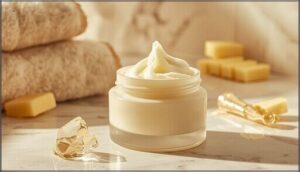
If light lotions aren’t cutting it, you need something with more heft. Heavier creams contain a higher ratio of oils and fats—usually 40 percent or more—which form a stronger skin barrier and lock moisture in for 12 hours or longer.
Look for ceramides, glycerin, and petrolatum in the ingredient list. For severely dry skin, ointments like petroleum jelly seal hydration even more aggressively.
Apply Moisturizer Within Five Minutes of Bathing

The five-minute window after you step out of the shower isn’t random—your stratum corneum stays plump with water for a brief period before evaporation kicks in. Pat your skin lightly with a towel, leaving it damp, then apply your moisturizer right away.
Humectants like glycerin pull that surface moisture inward, while occlusives seal it in, maximizing hydration and supporting your skin barrier.
Layer Products Correctly for Maximum Benefit
Timing and layering order can make or break your moisturizer effectiveness. The sequence matters—start with water-based toners, follow with serums targeting dry skin, then seal everything with a richer cream. Wait 30 to 60 seconds between each layer for proper absorption.
- Apply lightweight, water-based products first for quick penetration
- Use serums with hyaluronic acid while your skin is still damp
- Follow with a heavier moisturizer to lock in hydration
- Avoid layering exfoliating acids with retinoids in the same routine
- Pat products gently into your skin instead of rubbing vigorously
Use a Humidifier in Dry Environments

Your moisturizer can’t compete with bone-dry air pulling moisture from your skin constantly. Indoor humidity below 30 percent sabotages even the best creams.
A humidifier adds moisture balance strategies back into your environment, raising relative humidity toward 40 to 60 percent—the sweet spot for skin hydration tips. Place one in your bedroom overnight, clean it weekly, and you’ll notice your dry skin finally holding onto that moisturizer.
When to See a Dermatologist

Sometimes dry skin signals deeper dermatological conditions requiring professional care.
Schedule a dermatologist visit if:
- Your rash persists beyond four weeks despite treatment
- You notice new lesions or wounds that won’t heal
- Severe acne is causing acne scarring or emotional distress
- Suspicious growths appear that could indicate skin cancer
Your dermatologist can diagnose underlying issues like eczema or prescribe targeted therapies for stubborn dry skin.
Frequently Asked Questions (FAQs)
Why does my skin feel dry after moisturizing?
Several factors can disrupt your skin barrier and drain moisture levels even after applying product.
Light formulas, irritating ingredients, environmental conditions, or mismatched hydration techniques often cause persistent dryness despite regular moisturizing routines.
Can drinking more water cure chronically dry skin?
While boosting hydration benefits skin health and enhances moisture retention, water intake alone won’t fix chronically dry skin.
You’ll still need a solid moisturizer to repair your skin barrier and prevent transepidermal water loss.
Do certain fabrics make skin dryness worse?
Yes, certain fabrics worsen dry skin. Rough wool and synthetic polyester increase friction and irritation, while breathable materials like cotton and silk minimize chemical sensitivity and textile allergens, helping your skin care routine work better.
How often should I exfoliate very dry skin?
For very dry skin, exfoliate no more than once a week using gentle chemical exfoliants like lactic acid.
Always follow with a rich ceramide moisturizer to support skin barrier repair and prevent increased dryness.
Are natural oils better than commercial moisturizers?
Neither option wins across the board—it depends on your skin type and needs.
Natural oils excel at barrier repair and offer transparent ingredients, while commercial moisturizers combine water and occlusives for balanced hydration.
Does stress directly impact skin moisture levels?
Stress hormones like cortisol directly weaken your skin barrier, increasing moisture loss and triggering inflammation response.
This barrier damage reduces moisture retention, often worsening dry skin conditions despite regular skin care and hydration efforts.
Conclusion
Think of your skin like a sponge left in the desert—moisture evaporates faster than it absorbs. When you wonder why does my skin feel dry after using moisturizer, you’re often dealing with a barrier that can’t hold water, not a lack of product.
Fix the foundation first: repair that barrier with ceramides and occlusive ingredients, time your application right, and address environmental factors. Your skin will finally retain what you’re giving it.