This site is supported by our readers. We may earn a commission, at no cost to you, if you purchase through links. This content is for general informational and educational purposes only and is not a substitute for professional medical, dermatological, or nutritional advice.

The difference between a mediocre high fade and one that turns heads comes down to what happens after you leave the barber chair. Your barber can carve out the sharpest fade on the planet, but without proper styling technique, that top section loses its edge within hours, and the whole cut falls flat.
Most guys think styling a high fade haircut means slapping on some product and hoping for the best, but the reality involves understanding your hair’s natural movement, choosing tools that work with your texture instead of against it, and building a daily routine that maintains both the shape and the attitude this cut demands. The high fade gives you a canvas that can shift from boardroom polish to street-level rebellion depending on how you manipulate the length up top, which means your styling approach needs to match the statement you’re making.
Once you nail the fundamentals of blow-drying direction, product application timing, and texture creation, you’ll maintain that fresh-from-the-chair look for days instead of hours.
Table Of Contents
- Key Takeaways
- What is a High Fade Haircut?
- Best High Fade Styles to Try
- How to Style Your High Fade
- Choosing The Right High Fade Style
- Maintaining Your High Fade Haircut
- Frequently Asked Questions (FAQs)
- What goes well with a high fade?
- What is the 3 2 1 rule for haircuts?
- What is the 3 2 1 buzzcut rule?
- Can I do a high fade at home myself?
- How much does a high fade haircut typically cost?
- Will a high fade work with my hair texture?
- What should I tell my barber for a high fade?
- How long does a high fade haircut appointment take?
- Conclusion
Key Takeaways
- Your barber gives you the canvas, but how you blow-dry, apply product, and work the top section determines whether your high fade stays sharp for days or falls flat within hours.
- Matching your fade variation—skin, bald, burst, or drop—to your face shape, hair texture, and lifestyle commitment is what separates a cut that works for you from one that fights against you.
- Maintenance isn’t optional: skin-close fades need a barber visit every one to two weeks, while standard high fades demand touch-ups every two to three weeks to keep that contrast from dissolving into regrowth.
- The top section is where all the real power lives—directional blow-drying, the right product weight for your hair type, and intentional texture creation are the three moves that transform a basic high fade into something that commands a room.
What is a High Fade Haircut?
Before you can master styling a high fade, you need to understand what makes this cut different from the rest. The high fade isn’t just one specific look—it’s a technique that creates a bold shift from short to long, starting high up on your head and offering more contrast than mid or low fades.
If you want something more subtle with gradual blending, check out low taper fade variations that work across different hair types.
Let’s break down the fundamentals, compare it to other fade types, and explore the popular variations that give you complete control over your style.
Defining The High Fade
A high fade haircut launches its blend at your temples or higher, usually 2 to 3 inches above the ear, creating a bold, sharp separation between longer top hair and shaved sides.
This fade technique maximizes contrast through smooth transitions rather than hard lines, giving you a modern edge that draws notice while adapting to hair texture and scalp care needs for ongoing style evolution.
You’ll find that classic and modern high fades each offer distinct takes on this adaptable style.
High Fade Vs. Mid Fade Vs. Low Fade
Understanding fade techniques means knowing where each style starts and how that placement shapes hair contrast. A high fade haircut kicks off near your temples for maximum drama, while a mid fade begins around mid-ear for balanced transitions, and a low fade starts lower to keep more scalp coverage.
Each style comparison affects facial structure differently, and maintenance tips vary—high fades demand touch-ups every 2 to 4 weeks to preserve that sharp edge.
For more inspiration and detailed guidance, check out these high fade haircut styles.
Popular High Fade Variations
Once you’ve picked your fade level, exploring high fade styles lets you match hair texture and face shapes to your edge. Different fade techniques create signature looks that work with varied styling tools and maintenance schedules.
- High skin fade – Scalp-close shave with dramatic contrast
- High bald fade – Ultra-tight blend emphasizing top length
- High burst fade – Curved radius around ears for angular pop
- High drop fade – Descending shadow line toward the nape
Best High Fade Styles to Try
The high fade isn’t a one-size-fits-all cut—it’s a foundation you can build on with different variations that completely change the look and feel of your style. Each version brings its own edge, whether you’re after something clean and sharp or textured and bold, and choosing the right one depends on your hair type, face shape, and how much attitude you want your cut to carry.
The high fade is a versatile foundation you customize with variations that reflect your hair type, face shape, and personal edge
Here are the most popular high fade styles you can walk into your barber’s chair and confidently request.
High Skin Fade
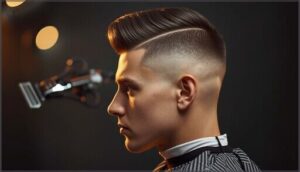
You’ll command attention with a high skin fade, the boldest expression of fade haircut artistry where the fade begins very high and all side hair vanishes down to smooth skin.
This dramatic contrast creates a striking silhouette that screams control and precision, perfect for high fade trends that demand sharp lines and fastidious scalp care. Your fade maintenance schedule determines whether this look stays razor-crisp or loses its revolutionary edge.
High Bald Fade
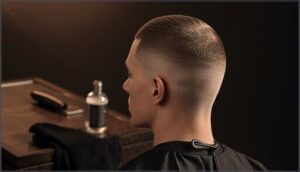
You seize dominance with a high bald fade, a fade haircut where the sides and back appear completely bald, creating extreme contrast against your textured top.
If you want a slightly softer transition, you can explore high taper fade options that blend gradually instead of dropping to skin.
This high fade haircut requires dedicated fade maintenance every two weeks and skin care routines to prevent irritation, making it ideal for balding solutions that embrace your natural hairline.
Bald fade tips center on moisturizer and proper aftercare for healthy scalp transformation.
High Burst Fade
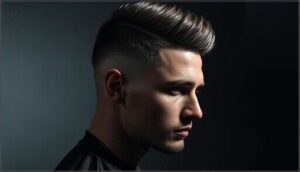
You introduce bold face framing with a high burst fade, one of the most commanding high fade haircut styles that uses curved lines around your ears to create a semi-circular reveal.
This high fade haircut trends toward dramatic hair texture and requires specific fade techniques to nail the burst shape, with styling tips including medium hold products, clean hard parts, and textured tops that enhance your rebellious edge.
High Drop Fade
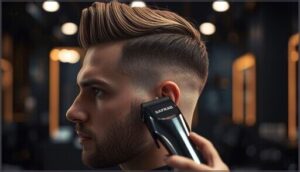
You reclaim control with a high drop fade, a high fade haircut style that uses backward diagonal sides fading methods to lower the fade line behind your ears, creating depth and dimension where standard high fade haircut trends fall flat.
This fade haircut demands precision in its execution.
| Drop Fade Techniques | Fade Line Maintenance | High Drop Styling |
|---|---|---|
| Razor sharp edge | Trims every 3-6 weeks | Medium to long fringe |
| Soft blended progression | Clean diagonal line | Textured top portion |
| Curved temple start | Regular edge sharpening | Pomade or clay finish |
High Top Fade
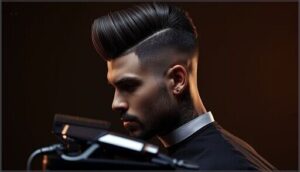
You command attention with a high top fade, a fade haircut that pushes vertical dominance while keeping your sides precision-faded to enhance contrast.
This high fade haircut technique starts the taper fade exceptionally high, allowing you to build serious height on top through hair texture manipulation with lightweight styling products, transforming your silhouette into a bold statement that works best for square, oval, and diamond face shape analysis.
High Fade With Messy Fringe

Messy texture on top fuses rebellious energy with sharp fade techniques, giving you a high fade haircut that balances structured sides with untamed fringe styling that defies conformity and commands instant visual impact.
- Hair layering creates controlled chaos that transforms basic men’s haircut styles into dimensional statements
- Styling products like sea salt spray or texturizing clay enhance messy texture without weighing down movement
- High fade haircut ideas expand when you pair clean fade haircut precision with deliberately disheveled top sections
High Fade With Textured Angular Fringe
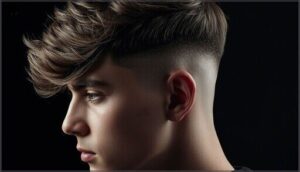
Angular layers slice across your forehead in deliberate diagonals, transforming the high fade haircut into a geometric statement that merges fade techniques with architectural fringe styling for a cut that draws notice and redefines modern men’s haircut styles.
| Element | Technique | Impact |
|---|---|---|
| Angular cut | Diagonal scissor work creates sharp forward motion | Frames face with bold asymmetry |
| Textured layers | Point cutting adds dimension to hair layering | Prevents flat appearance |
| High fade contrast | Skin-tight sides meet textured cuts on top | Amplifies visual drama |
| Fringe direction | Forward sweep with lateral angle | Balances square or round faces |
| Styling flexibility | Accommodates haircut trends with product manipulation | Transforms casual to polished instantly |
- Texturizing paste defines angular layers without stiffness or unnatural hold
- The fade haircut foundation lets fringe styling become the focal power point
- This high fade variation suits those who crave controlled rebellion in their aesthetic
How to Style Your High Fade
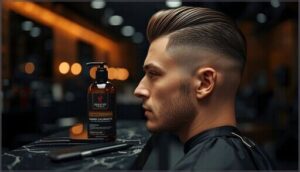
Getting the cut is just the beginning—styling your high fade is where you take control and make the look your own. The way you handle the top, build texture, and maintain that crisp fade will determine whether your haircut grabs the spotlight or fades into the background.
Here’s everything you need to transform your high fade from fresh out of the chair to a style that reflects your edge and confidence.
Essential Styling Tools You’ll Need
You need the right barbering tools to master your high fade and keep it sharp between barber visits. Professional clipper guards ranging from 1/8 inch to 1 inch blend different hair lengths cleanly, while quality barber shears and styling combs shape the crown with precision.
Here’s your essential toolkit:
- Clippers with multiple guards – Create smooth transitions and maintain clean fades
- Heat styling tools – Blow dryers and flat irons sculpt the top portion
- Trimming tools and fine-tooth combs – Define edges and add texture to mens haircut styles
Daily Styling Routine
Your daily styling routine starts with morning prep that sets the foundation for control. Towel dry your hair to 60 percent moisture, apply leave-in conditioner for manageability, then work a matte styling paste through the top using your fingers for natural texture.
Daily products like sea salt spray create movement, while quick five-minute touch-ups throughout the day keep your high fade haircut sharp without heavy reapplication.
Product Recommendations for Different Hair Types
Your hair texture determines which products deliver the control you’re after. Fine hair thrives with lightweight foams that build volume without collapse, while thick coarse hair reacts to clay-based pomades offering matte texture and strong hold.
For curly types, moisture-rich leave-in conditioners define curls and reduce frizz, and water-based formulas wash clean without flaking across all hair types.
Styling The Top Hair
Once you’ve locked in the right product, the real command starts at the Top Layer—this is where your High Fade Haircut transforms from clean to completely untamed.
Using Top Layer Styling techniques and Fade Blending Techniques, you shape the crown with directional combs, lift roots with strategic blow-drying, and apply matte paste sparingly to preserve movement while controlling chaos, turning Mens Hairstyle Trends into your personal statement of rebellion.
Creating Volume and Texture
Mastery over Volume Techniques begins with texturizing scissors and point cutting to build Hair Layering at the crown, then you lock lift with round brushing and sea salt spray for Texture Enhancement that defies gravity.
Combine lightweight Styling Products with proper Scalp Health routines, and your High Fade Haircut becomes a bold canvas for Mens Hairstyle Trends, delivering Haircut Advice that transforms ordinary Haircare and Styling into rebellion.
Choosing The Right High Fade Style
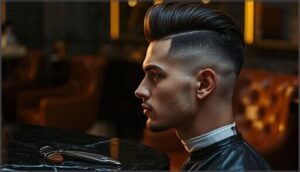
Selecting the right high fade isn’t just about picking what looks cool—you need to match the cut to your face shape, hair type, and how much time you’re willing to invest in upkeep.
The wrong variation can work against your natural features, while the right one transforms your entire look and gives you that sharp, commanding presence you’re after. Let’s break down how to choose a high fade that actually works for you, covering face shapes, hair textures, lifestyle considerations, and celebrity-inspired options that deliver real impact.
Best High Fades for Your Face Shape
Your face shape dictates which high fade haircut styles work best, so understanding this connection gives you control over the final look. Oval faces benefit from pompadours and textured tops that maintain balance.
While round faces need vertical volume to elongate your silhouette. Square jaws pair with tall quiffs for angular emphasis, and heart-shaped faces require medium-length tops with side parts for proportion.
High Fade for Different Hair Types
Your hair texture dictates which fade techniques and styling products deliver the best results, so straight hair demands matte pomade for volume without shine, while wavy strands benefit from light hold formulas that define natural movement.
Curly and coarse hair types require hydrating products and stronger hold to maintain height on top, and every men’s hair variation needs cut maintenance every 2–4 weeks to preserve sharp fade haircut styles.
Matching Your Lifestyle and Maintenance Level
You control the look by aligning your high fade with how you live and how much upkeep you’re willing to commit to, because your daily routine and hair growth rate determine whether you need barber visits every two weeks or can stretch to four.
Consider these lifestyle needs before you commit:
- Active schedules demand low-maintenance fades – shorter top styling cuts morning prep time while keeping edges sharp between trims
- Corporate environments pair well with clean line-ups – precise fade haircut maintenance projects authority without extra daily effort
- Fast growers require tighter schedules – matching maintenance tips to your hair growth prevents visible regrowth that dulls your edge
Celebrity-Inspired High Fade Looks
You access red carpet-level transformation when you study celebrity styles like Zayn Malik’s textured crown paired with razor-sharp sides, or the high burst fade that wraps around the ear for dramatic silhouette.
Bringing multiple angle reference photos to your barber ensures precision in fade techniques, capturing the exact lineup, hair texture contrast, and top styling that defines these high fade trends in men’s fashion inspiration.
Maintaining Your High Fade Haircut
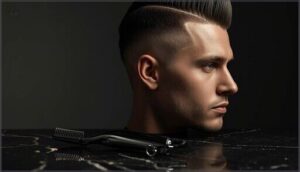
Your high fade isn’t a one-and-done situation—it demands consistent upkeep to maintain that sharp, commanding look you walked out of the chair with. Without regular attention, the clean lines blur, the fade loses its gradient precision, and the entire cut starts working against you instead of showcasing your style.
Here’s how to take control of your maintenance routine and keep your fade looking fresh, powerful, and intentional between salon visits.
How Often to Get Trims
Your high fade demands commitment—skip a couple of weeks and that crisp line dissolves into a fuzzy memory. Most people schedule trims every 2 to 3 weeks to lock in sharpness, though hair growth and fade depth can shift timing. Regular fade maintenance keeps regrowth prevention solid and styling consistency intact, so you stay in control.
- Skin-close fades: Return every 1 to 2 weeks to beat visible gaps.
- Standard high fades: Book appointments every 2 to 3 weeks for clean edges.
- Growing out the top: Stretch to 3 to 6 weeks while maintaining sides.
- Coarse or thick hair: Expect faster regrowth, tightening your trim frequency.
Consistent fade haircut appointments preserve that rebellious contrast between sleek sides and commanding volume, keeping your men’s grooming tips sharp and your haircut maintenance advice dialed in.
At-Home Touch-Up Tips
Between barber visits, you can protect your high fade with smart touch-up moves that keep edge refining and fade maintenance on point. Carry matte powder matching your hairline to blot shine, pack small clippers with guard sizes for stray hairs, and use a fine-tooth comb to reblend the fade—these men’s grooming tips deliver haircut sharpness without the chair.
| Touch Up Essential | Purpose |
|---|---|
| Matte powder compact | Blots shine around hairline and sides |
| Small clippers with guards | Tidies stray hairs near the edge |
| Fine-tooth comb | Reblends the fade for crisp lines |
| Travel setting spray | Locks in the look without heaviness |
Caring for Faded Skin
After you’ve sharpened those edges, protecting the exposed skin on your high fade or skin fade becomes your next power move for mens grooming superiority. Faded zones need sun protection with SPF 30 daily, gentle exfoliation once weekly to sweep away dead cells, and barrier repair moisturizers containing ceramides to lock in skin hydration and shield sensitive skin from razor burn and dryness.
- Apply broad-spectrum sunscreen to exposed scalp areas every morning to prevent dark spots and sun damage
- Use fragrance-free moisturizers within two minutes after showering to trap water and support your skin barrier
- Exfoliate faded skin 1-2 times weekly with lactic acid to remove dull surface buildup without harsh scrubbing
Line-Up and Edge Maintenance
Once your faded skin is protected, keeping those crisp edges demands precision barber tools and a steady hand for line up maintenance.
You’ll need a zero-gap trimmer or straight razor to cut a sharp 90-degree edge along your temple and forehead, resetting the line every 1-3 weeks as hair growth blurs that rebellious contrast you’ve claimed with your high fade.
Products for Scalp and Hair Health
Beyond the blade work, your scalp and strands need nourishment to support that commanding high fade.
Reach for scalp serums packed with caffeine or tea tree oil to stimulate follicles, pair them with moisturizing conditioners and gentle shampoos that won’t strip natural oils, and layer in hair masks weekly—this mens haircare routine transforms grooming tips into visible power.
Frequently Asked Questions (FAQs)
What goes well with a high fade?
A clean cut demands the right backup—think angular sunglasses, minimal leather accessories, and slim jackets that echo your fade’s sharp contrast, while texture on top plays perfectly with matte styling products and strategic maintenance every few weeks.
What is the 3 2 1 rule for haircuts?
The 3 2 1 rule uses clipper guards in descending order—three on top, two on sides, one around ears—to create a natural hair gradient with symmetry and smooth fade techniques that barbers rely on for consistent high fade haircuts.
What is the 3 2 1 buzzcut rule?
The 3 2 1 buzz cut rule defines clipper guard sizes in a descending sequence—three millimeters on the crown, two on the sides, and one at the back—creating a stepped, uniform fade haircut that barbers replicate easily.
Can I do a high fade at home myself?
You can pull off a high fade at home with quality clippers, multiple guards, and steady hands, though practicing on a friend first prevents uneven lines and helps you master fading techniques before tackling your own head.
How much does a high fade haircut typically cost?
You’ll usually pay between $20 and $60 for a high fade at most barber shops, though price factors like location, salon fees, and style complexity can push maintenance costs higher in premium establishments or add discount options elsewhere.
Will a high fade work with my hair texture?
No matter your hair texture, a high fade works in your favor — straight, wavy, curly, or thick.
The right fade techniques and texture management simply shift based on your hair type analysis and natural pattern.
What should I tell my barber for a high fade?
Walk into your barber shop armed with reference photos and clear words: request a high fade starting at the temples, specify your preferred fade technique and haircut length, and share your personal preference for the top style during your style consultation.
How long does a high fade haircut appointment take?
Shorter than you’d expect, yet demanding more precision than most cuts—a high fade appointment runs 20 to 40 minutes, shaped by haircut complexity, barber experience, salon workflow, and client preparation.
Conclusion
Like a skilled DJ blending tracks, the art of styling a high fade haircut relies on fluid transitions and knowing when to turn up the texture or smooth things out.
You hold the volume, direction, and attitude at your fingertips, with every technique and tool working in sync to reflect your intent. Mastering this routine is more than upkeep—it’s self-expression, a visual manifesto that follows you out of the barber chair and into every room you enter.