This site is supported by our readers. We may earn a commission, at no cost to you, if you purchase through links. This content is for general informational and educational purposes only and is not a substitute for professional medical, dermatological, or nutritional advice.

Your shower head works harder than almost any fixture in your home, blasting water through dozens of tiny nozzles several times a day while battling mineral deposits, temperature swings, and lurking bacteria. Most homeowners don’t give it a second thought until the water pressure drops to a trickle or suspicious black spots appear around the spray face.
The truth is, that fixture you trust for your daily clean might be harboring more problems than you realize—and replacement timelines vary dramatically based on your water quality, usage patterns, and the materials in your current model. Understanding when to swap out your shower head isn’t just about maintaining water pressure; it’s about protecting your health and keeping your bathroom running efficiently.
Table Of Contents
- Key Takeaways
- How Often Should You Replace Your Shower Head?
- What Shortens a Shower Head’s Lifespan?
- Signs Your Shower Head Needs Replacing
- Health Risks of an Old Shower Head
- Maintenance Tips to Extend Shower Head Life
- How Water Quality Impacts Shower Head Longevity
- Choosing a Durable Replacement Shower Head
- When Repairs Aren’t Enough: Replace or Fix?
- Improving Water Efficiency With New Shower Heads
- Safe Disposal and Recycling of Old Shower Heads
- Frequently Asked Questions (FAQs)
- Conclusion
Key Takeaways
- Replace your shower head every six to twelve months to prevent mineral buildup, bacterial growth, and declining water pressure—metal models last longer than plastic, but both require regular maintenance to extend their lifespan.
- Hard water accelerates mineral deposits that clog nozzles and corrode fixtures, so installing a water softener or filter can dramatically reduce replacement frequency while protecting your investment.
- Persistent leaks, visible mold, musty odors, or irreparable mineral buildup signal it’s time for immediate replacement since these issues pose health risks including respiratory problems and exposure to harmful bacteria.
- Monthly vinegar soaks, weekly wipe-downs, and proper drying after each use prevent most common shower head problems, keeping your fixture functioning efficiently between replacements.
How Often Should You Replace Your Shower Head?
Most homeowners don’t think about their shower head until something goes wrong, but understanding when to replace it can save you from health risks and poor water pressure.
If you’ve noticed your shower head continuing to drip long after you’ve shut off the water, understanding why your shower head drips after turning off can help you identify whether it’s a simple fix or a sign you need a replacement.
The answer isn’t one-size-fits-all, as it depends on your shower head’s material, your water quality, and how well you maintain it. Let’s break down the key factors that determine when it’s time for a replacement.
Recommended Replacement Frequency
Generally, you’ll want to replace your shower head every six to twelve months, though low-use handheld models may need replacement sooner—around two to three months—to prevent mineral buildup.
Metal shower heads resist corrosion longer and can last twelve to thirty-six months with proper maintenance, while plastic models usually require replacement within two to five years depending on water quality and cleaning frequency.
According to equipment replacement frequency guidelines, keeping track of when to replace fixtures can help maintain water quality and shower efficiency.
Factors Affecting Replacement Interval
Your shower head replacement schedule depends on several key factors. Water temperature extremes accelerate corrosion rates in metal components, while hard water speeds mineral buildup in nozzles.
Daily usage patterns wear seals faster than occasional use, and low water pressure can signal internal corrosion or leaks before visible damage appears. Sticking to consistent maintenance schedules based on material durability helps you catch problems early. It’s beneficial to review to confirm timely and cost-effective shower head updates.
Manufacturer Guidelines
Most manufacturers back their shower heads with warranties covering defects in materials or workmanship for a defined period, but you’ll void that coverage if you skip proper installation standards. Check your model’s documentation for cleaning protocols, replacement criteria, and material specifications—especially thread size, seal compatibility, and approved descaling agents.
Following these guidelines keeps your warranty valid and ensures you’re meeting installation standards that prevent leaks and premature wear.
- Standard ½ inch NPT or BSP threads fit most domestic showers
- Replace washers and seals during service to maintain performance
- Use only approved cleaners at specified concentrations
- Document model numbers and purchase dates for warranty claims
- Incompatible fixtures require threading or valve adapters
What Shortens a Shower Head’s Lifespan?
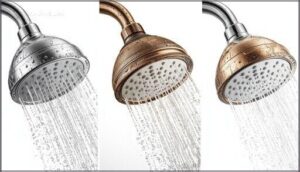
Not all shower heads are built to last the same length of time, and understanding what cuts their life short helps you make smarter choices.
The material it’s made from, your water quality, and how often you use it all play a role in how long your shower head holds up. Let’s break down the three main factors that determine whether your shower head lasts a few years or a few decades.
Material Quality (Metal Vs. Plastic)
Your shower head’s material plays a huge role in how long it lasts. Metal options like brass and stainless steel resist corrosion and can easily outlast plastic alternatives by decades, withstanding high pressure without deforming.
Plastic heads weigh less and cost less upfront, but they’re more prone to cracks, leaks, and mineral buildup that shorten their lifespan substantially.
Water Quality and Hardness
If your local supply carries heavy calcium and magnesium loads, you’ll see mineral deposits accumulate faster. Water hardness directly accelerates scale formation, and those crusty layers clog nozzles and reduce pressure within months.
Consider these steps:
- Test your water quality with home kits or municipal reports to understand hardness levels.
- Install filtration systems or a water softener to minimize mineral buildup.
- Schedule regular scale removal sessions with vinegar soaks.
- Monitor spray patterns for early signs of blockage.
Frequency of Use
High-traffic households with multiple daily showers put serious stress on your shower head. Daily wear from constant water flow accelerates seal degradation and mineral buildup, which explains why busy families often face leaks and dropping water pressure within two to three years.
Your shower habits and usage patterns directly dictate replacement frequency, so frequent use shortens intervals while guest bathrooms may coast past seven years with proper maintenance.
Signs Your Shower Head Needs Replacing
Your shower head won’t last forever, and waiting too long to replace it can affect both your water pressure and your health.
Knowing when to swap out an old unit isn’t always obvious, especially if you’re used to its gradual decline. Here are the most common warning signs that it’s time for a replacement.
If you’re replacing an old razor, consider safe and eco-friendly blade disposal methods instead of tossing them in the trash.
Low Water Pressure
When your morning rinse feels more like a trickle than a cascade, low water pressure is often the first warning sign your shower head needs attention.
Pipe restrictions from mineral buildup inside the nozzles reduce flow rates dramatically, explains plumbing specialist Maria Chen, who notes that sediment and scale create shower head clogs that pressure valves can’t overcome.
Before you blame water quality issues elsewhere in your home, inspect the shower head itself—cleaning or replacement usually restores proper flow rate and water pressure.
Persistent Leaks or Drips
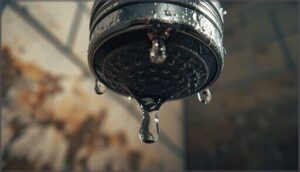
A steady drip from your shower head, even when the faucet is fully closed, signals worn seals or corroded connections that won’t fix themselves.
Leak detection starts with simple observation:
- Drips that worsen with temperature changes point to failing gaskets or valve seats
- Water pooling at the shower arm joint indicates corrosion where threads meet the wall
- Steady seepage from the face plate means internal washers have degraded beyond drip repair
- Leaks during pressure spikes suggest cracked plastic or loose fittings needing shower head replacement
Ignoring persistent leaking invites water damage, higher bills, and worsening pipe corrosion—replace faulty units promptly to avoid faucet maintenance headaches and water pressure issues down the line.
Visible Mold or Discoloration
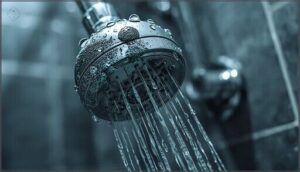
Dark patches and fuzzy discoloration on your shower head aren’t just cosmetic flaws—they’re warning signs of fungal growth that won’t vanish with a quick rinse. Mold detection begins when you spot these telltale indicators:
| Mold Type | Appearance | Health Concern |
|---|---|---|
| Black mold | Dark patches near nozzles | Triggers respiratory issues |
| Green/blue-green | Powdery spots on plastic | Allergies and irritation |
| White film | Cloudy coating on metal | Mild respiratory symptoms |
| Mixed colonies | Variegated blotches | Multiple exposure risks |
Discoloration causes often blend mineral stains with mold and bacteria growth, creating layers that resist routine cleaning. When you detect a musty odor alongside visible spots, it’s time for shower head sanitizing—or outright replacement. Mold prevention requires more than occasional scrubbing; persistent fungal growth demands removing the source entirely to safeguard your family’s respiratory health.
Irreparable Mineral Buildup
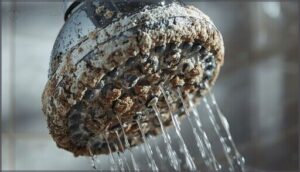
When limescale and mineral scale from hard water fuse into a thick, crusty layer, standard buildup removal tactics won’t work. You’ll notice:
- White or brownish corrosion bonded to rough metal surfaces
- Sediment buildup clogging nozzles even after vinegar soaks
- Scale formation so dense that citric acid can’t penetrate
- Mineral deposits creating uneven spray patterns despite repeated cleaning
At this point, replacement beats endless scrubbing.
Cracks or Physical Damage
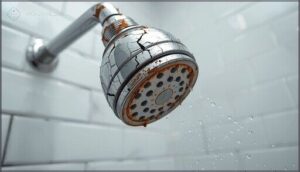
Beyond mineral crust, physical wear tells you it’s time to swap your shower head. Cracks from impact or dropping create visible fissures that leak water through the outer shell, explains damage assessment experts.
Rust and corrosion weaken metal thickness, while brittle plastic housings snap during cleaning. Check threaded connectors for microcracks—over-tightening often starts leak prevention failures that widen with each use.
Health Risks of an Old Shower Head
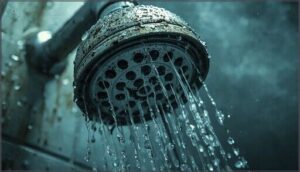
That grimy buildup on your shower head isn’t just unpleasant to look at—it can actually make you sick. When water sits in older fixtures, bacteria and mold thrive in the warm, moist environment, turning your daily shower into a potential health hazard.
Grimy buildup on an old shower head can harbor bacteria and mold, turning your daily rinse into a health risk
Here’s what you need to know about the risks lurking in an aging shower head.
Bacterial and Mold Growth
Warm, damp shower heads often become breeding grounds for mold and bacterial colonies within just a few days. Biofilms can form on mineral deposits, shielding microbes from standard cleaners and compromising bathroom hygiene.
If you notice black spots, slime, or persistent musty odors, those are clear signs of fungal growth and poor shower sanitation. Regular microbe control through proper cleanliness routines protects your health and maintains a safer bathing environment.
Allergies and Respiratory Issues
Mold and bacteria living in your shower head can worsen asthma triggers and respiratory health for anyone with allergies or weakened immunity.
Exposure to black mold spores and other contaminants increases your risk of breathing difficulties, sneezing, and chest tightness. Replacing a grimy fixture is a simple step toward better allergy prevention and reducing daily health risks linked to mold exposure.
Unpleasant Odors and Water Discoloration
Beyond allergies, a musty smell or discolored shower water signals deeper water quality issues. Hydrogen sulfide gas from corroding plumbing creates that rotten egg odor, while iron and manganese cause rusty or brown mineral stains.
These odor sources and buildup point to corrosion inside your pipes or water heater. Regular maintenance and water testing help identify problems early, protecting both cleanliness and your health.
Maintenance Tips to Extend Shower Head Life
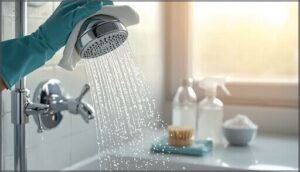
You don’t have to replace your shower head every six months if you take care of it properly. A few simple habits can keep mineral buildup, mold, and corrosion at bay for years.
Here’s what plumbing pros recommend to get the most life out of your fixture.
Regular Cleaning Methods
Keeping your shower head clean doesn’t require fancy solutions or hours of scrubbing. Regular cleaning methods focus on removing soap scum, mineral deposits, and bacteria using simple household tools and non-abrasive techniques that protect your fixture’s finish.
Here’s how to maintain your shower head between deeper descaling methods:
- Wipe down weekly with a soft sponge and mild detergent, focusing on the nozzle area where buildup concentrates most
- Rinse thoroughly after each cleaning to prevent soap residue that attracts more grime
- Dry with a microfiber cloth to stop water spots and mineral deposits from forming immediately
- Scrub gently using a soft brush in circular motions, letting dish soap sit for 2 to 5 minutes first
- Clean every two weeks for most households, adjusting based on your water quality and usage patterns
Monthly Vinegar Soaks
Once a month, you’ll want to give your shower head a vinegar soak to break down stubborn mineral buildup that regular wiping can’t reach. Mix a diluted solution of white vinegar and water in a plastic bag, secure it around the head with a rubber band, and let it sit for 10 to 20 minutes before rinsing thoroughly with clean water.
| Soak Frequency | Vinegar Dilution | Soak Duration |
|---|---|---|
| Monthly (standard water) | 1 part vinegar: 2 parts water | 10–15 minutes |
| Bi-weekly (hard water) | 1 part vinegar: 2 parts water | 15–20 minutes |
| Every 6 weeks (soft water) | 1 part vinegar: 3 parts water | 10 minutes |
| Weekly (severe buildup) | 1 part vinegar: 1 part water | 20 minutes |
Proper Drying After Use
After every shower, you’ll stop mold and mineral buildup by drying your shower head with a clean towel. Moisture control is critical for bathroom hygiene and long-term shower maintenance, so make drying part of your routine.
To maintain your shower and bathroom, follow these steps:
- Wipe down the shower head face and nozzles within 2 minutes of finishing
- Open a window or run exhaust ventilation systems for at least 5 minutes
- Squeegee surrounding tiles to reduce overall bathroom moisture
- Keep the shower curtain open to promote air circulation
How Water Quality Impacts Shower Head Longevity
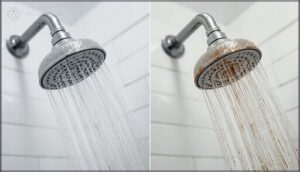
Your water quality plays a bigger role in your shower head’s lifespan than you might think. Hard water, corrosion, and mineral-heavy supplies can shorten even the toughest metal fixtures by years, while cleaner water keeps things running smoothly much longer.
Here’s how different water conditions affect your shower head and what you can do about it.
Effects of Hard Water
Hard water acts like sandpaper on your shower head, quietly depositing calcium and magnesium that cause scale formation and mineral buildup. Over time, water hardness leads to clogged nozzles, reduced water pressure, and accelerated corrosion risk.
These mineral deposits also create breeding grounds for bacteria, raising potential health impacts. Installing a water softener can dramatically improve water quality and extend your fixture’s life.
Rust and Corrosion
Rust forms when iron oxide spreads from microscopic pits outward, as iron and steel in your shower head react with oxygen and water.
Chloride ions from salt accelerate this metal degradation by breaking down protective oxide layers.
High humidity and temperatures between 20 and 40 degrees Celsius speed corrosion rates, making regular maintenance essential to prevent irreversible buildup and the need for shower head replacement.
Benefits of Water Softeners and Filters
Installing water softeners and filters addresses mineral buildup at the source, removing calcium and magnesium that clogs nozzles and shortens shower head life. Softening systems prevent scale formation in pipes and fixtures, while whole-house filtration reduces chlorine, sediment, and heavy metals.
A dedicated shower head filter offers cost-effective water purification, improving water quality and extending replacement intervals through better mineral removal and filter efficiency.
Choosing a Durable Replacement Shower Head
When it’s time to upgrade your shower head, choosing the right replacement can save you money and frustration down the road. The best models combine durability with features that resist the buildup and wear that shortened your old one’s life.
Focus on three key factors: construction material, nozzle design, and water efficiency.
Metal Vs. Plastic Construction
When you’re shopping for a new shower head replacement, material comparison matters more than you might think. Here’s what durability tests reveal about metal versus plastic construction:
- Corrosion resistance: Stainless steel and brass resist rust better in humid bathrooms, extending service life substantially.
- Weight factors: Metal shower heads feel sturdier but add wall stress during installation.
- Heat tolerance: Metal maintains shape under high temperatures, while plastic can warp.
- Finish options: Chrome-plated metals require polishing; plastics resist staining with proper shower head maintenance.
- Lifespan: Quality metal models last longer despite higher upfront costs, making replacement less frequent.
Self-Cleaning Nozzle Designs
Beyond material choice, you’ll find self-cleaning nozzle designs that tackle mineral buildup before it becomes a problem. Look for features like porous surface tech, which uses low-velocity fluid discharge to flush debris from the spray outlet, or grooved piston mechanisms that temporarily widen the bore to dislodge blockages.
Some models offer hollow cone spray patterns with separable halves that open during cleaning cycles, while annular gas flow channels and radiused nozzles help prevent clogs from forming in the first place.
Water-Efficient Models
When you’re ready for shower head replacement, water-efficient models deliver serious water savings without sacrificing comfort. Look for WaterSense-certified heads that use around 1.5 gallons per minute—cutting consumption by 30 to 40 percent compared to standard 2.5 gpm units.
Key features in eco-friendly designs include:
- Adjustable spray patterns that maintain water pressure while conserving water
- Built-in flow restrictors for consistent low flow performance
- Pause settings to stop water flow during lathering
- Self-cleaning nozzles that resist mineral buildup
- Optional shower filters to reduce sediment and extend lifespan
These water conservation upgrades pay off in lower bills and extended durability.
When Repairs Aren’t Enough: Replace or Fix?
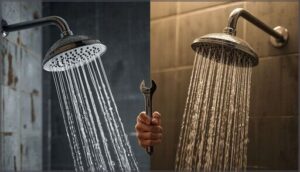
Not every shower head problem needs a trip to the hardware store, but knowing when to replace rather than repair can save you time and money. Some issues, like clogged nozzles or loose connections, are easy fixes you can handle yourself with basic tools and cleaning supplies.
However, certain signs point to the end of your shower head’s useful life, and continuing to patch up a failing fixture won’t give you the performance or safety you need.
Repairable Issues Vs. Replacement
Not every shower head problem means you need a new one. You can fix clogged nozzles, low pressure, or loose connections with basic cleaning and tightening, says plumbing experts.
But when repair costs climb past 20 to 40 percent of a new unit’s price, or when leaks keep coming back despite maintenance, replacement timing becomes the smarter call for your budget and peace of mind.
When to Call a Plumber
Sometimes you’ll need a plumber’s skills for shower head replacement, especially when leaking stems from damaged pipe threads, corroded fittings, or wall-mounted arms requiring pipe inspections and leak detection expertise.
Call immediately for burst pipe response scenarios, persistent water damage behind walls, or when water pressure problems suggest bigger plumbing repair needs—professional emergency repairs prevent costly flooding and guarantee safe, code-compliant installations that protect your home.
Cost Considerations
When weighing shower head replacement against plumbing repair, budget analysis matters—you’ll spend 10 to 30 dollars on a quality fixture versus 60 to 120 dollars for labor if a plumber undertakes straightforward installation.
Upfront expenses for water conservation models run higher, but fixture replacement delivers cost savings through reduced maintenance costs and lower monthly bills, making home maintenance investments pay off within one to three years.
Improving Water Efficiency With New Shower Heads
Upgrading your shower head isn’t just about fixing problems—it’s also a chance to cut down on water use without sacrificing comfort.
Federal regulations and modern engineering have made today’s models more efficient than ever, says the EPA’s WaterSense program. Here’s what you need to know about flow rates, eco-friendly designs, and spray technology that saves water while keeping your shower enjoyable.
Flow Rate Regulations
Most new shower heads sold in the United States must meet flow rate limits of 2.5 gallons per minute, ensuring water conservation without sacrificing your daily comfort.
Regulatory compliance involves efficiency testing that verifies shower head standards across multiple spray settings, so you can trust that certified products balance performance with water quality. Look for certification marks on packaging to confirm your new shower head meets these requirements.
Eco-Friendly and Water-Saving Options
If you’re ready to cut your water use in half without losing comfort, low flow systems and eco showerheads offer real water conservation tips through air entrapment technology.
WaterSense-labeled sustainable fixtures meet green plumbing standards, delivering water efficiency while maintaining shower quality. These water quality improvement tools support shower head replacement decisions that benefit both your wallet and the environment, making water conservation practical and effective.
Enhanced Spray Patterns
Modern spray pattern varieties transform water distribution beyond basic shower system designs.
Air assisted nozzles boost coverage and penetration on tile and grout, while misting systems deliver fine droplets that rinse without wasting water.
When you’re weighing shower head replacement, nozzle designs with hollow cone or fan patterns target specific zones, improving water flow efficiency and turning every shower replacement into a comfort upgrade.
Safe Disposal and Recycling of Old Shower Heads
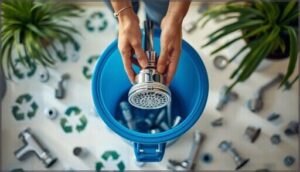
Once you’ve upgraded to a new shower head, you might wonder what to do with the old one.
Tossing it in the trash isn’t your only option, and depending on the materials and condition, there are smarter ways to handle disposal.
Here’s how to responsibly recycle, handle, or even repurpose your old fixture.
Recycling Metal and Plastic Components
Metal shower heads can often be recycled through your local scrap metal program, while plastic components face tougher sorting challenges.
Here’s how to handle your old fixture:
- Separate metal parts from plastic housings to improve recycling efficiency and support closed loop material reuse
- Check if your community accepts mixed-metal fixtures or requires pre-sorting before drop-off
- Remove rubber gaskets and silicone nozzles, as these contaminants lower recycled plastic quality
- Consider manufacturer take-back programs that support a circular economy through proper shower head replacement processing
Proper Handling of Moldy Fixtures
When your old shower head shows black mold or persistent discoloration, you’ll need to sanitize it before disposal to protect yourself and anyone handling the fixture. Wear gloves and an N95 respirator during mold removal, explains bathroom maintenance guidance, then scrub nonporous surfaces with detergent and water.
Wrap moldy fixtures in sealed plastic bags to prevent spore release during bathroom maintenance and transport to disposal sites.
Donation and Reuse Options
If you’ve sanitized your shower head and it’s still in working order, local charity networks like Habitat for Humanity ReStore will accept it for reuse.
Wipe down the fixture, include all washers and nozzles, and check donation tips online to confirm acceptance.
Following recycling guidelines and choosing eco-friendly options keeps bathroom fixtures out of landfills while supporting community housing projects.
Frequently Asked Questions (FAQs)
How do you know when you need a new shower head?
Your shower head screams for attention when water pressure plummets, persistent drips won’t stop, or visible mold appears on nozzles—each sign points to worn seals, clogged mineral deposits, or bacterial growth requiring prompt replacement.
What happens if you don’t change your shower head?
Neglecting replacement allows mineral buildup to clog nozzles, reducing water pressure and efficiency.
Bacterial growth and mold thrive in corroded heads, posing health consequences through water contamination. Proper maintenance or timely shower head replacement prevents these risks.
Can I replace just the shower head nozzle?
Yes, you can replace just the nozzle if your shower head has a threaded or snap-in design. Check the manufacturer’s guidance first, as not all models support independent nozzle replacement.
Do handheld shower heads last as long?
Handheld shower heads hold up just as well as fixed models when built with brass or stainless steel components, explains plumbing specialists, but plastic bodies and cheap hoses often fail sooner with daily use.
Will a new shower head fit my arm?
Most new shower heads fit standard 1/2 inch NPT threads, ensuring broad compatibility.
However, verify your arm’s thread size and material first—metal arms handle heavier heads better than plastic ones, preventing future connection issues.
How do I remove a stuck shower head?
Apply penetrating oil around the threads and wait ten minutes, then use a strap wrench with rubber grip for leverage.
Afterward, clean the shower arm threads with CLR for proper shower head replacement.
Are expensive shower heads worth the investment?
Higher-end models often justify their cost through high-quality shower head materials, better water conservation features, and enhanced durability tests.
A luxury shower with solid construction and a quality shower filter can deliver long-term cost benefit.
Conclusion
Your shower head might seem insignificant compared to major appliances, yet it directly impacts your health and home efficiency every single day. Knowing how often you should replace your shower head—usually every six to eight months, or sooner with hard water—puts you ahead of hidden problems like bacteria buildup and pressure loss.
Don’t wait for visible mold or failing streams. Swap it out proactively, and you’ll protect both your wellness and your water bills.