This site is supported by our readers. We may earn a commission, at no cost to you, if you purchase through links. This content is for general informational and educational purposes only and is not a substitute for professional medical, dermatological, or nutritional advice.

Your shower head runs about 8 minutes a day, and in that time it quietly collects minerals, chlorine damage, and heat stress. Most people never think about it until the spray goes sideways or a drip starts at the arm.
So how often should you replace your shower head? Budget plastic may crack in two to five years. Solid brass or stainless steel can last 15 years or more. Hard water above 180 mg/L shortens both.
Age is only part of the answer. Some problems need a vinegar soak and a new washer. Others mean it’s time to buy a new one.
Table Of Contents
Key Takeaways
- Your shower head’s lifespan depends mostly on its material, since budget plastic may last only two to five years while solid brass or stainless steel can often last 15 years or more.
- Hard water above about 180 mg/L is the biggest threat, because mineral buildup clogs nozzles, may cause leaks, and shortens the life of any shower head.
- Uneven spray or a leak at the connection can often be fixed with a vinegar soak (30 minutes max on brass or nickel finishes) or a new washer, but a cracked body, stripped threads, or heavy corrosion means it’s time to replace it.
- When you replace it, choose solid brass or stainless steel over plastic or "brass finish" labels, and let its condition decide the timing rather than the calendar.
When Should You Replace Your Shower Head?

How long a shower head lasts depends on its materials. The typical replacement timeline is 5 to 10 years. Budget plastic may fail in 2 to 5, while brass or stainless steel can last up to 25.
If you’re weighing materials against budget, this breakdown of rain versus regular shower head costs and upkeep shows how durability affects what you’ll really spend over the years.
Filtered models work differently. The outer fixture may last for years, but you’ll need to swap the filter cartridge every 3 to 6 months.
Leaks, mold, or lasting water pressure issues are signs it needs to be replaced, whatever its shower head lifespan. Hard water can leave mineral deposits that clog a shower head and harbor bacteria, so if cleaning doesn’t restore performance, replacement is the better option.
Factors That Shorten Shower Head Lifespan
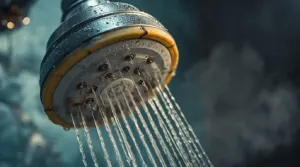
Several things wear a shower head down faster than age alone. Water hardness is the biggest one. Above about 180 mg/L, mineral deposits build up in the nozzles and may eventually cause leaks.
Material matters too. Cheap ABS plastic often cracks from heat swings and chlorine exposure.
Here’s what to watch:
- Hard water clogs nozzles and raises internal pressure.
- Harsh cleaners fade plastic and break down gaskets.
- Overtightening can shear seals or crack nuts.
- High pressure strains internal parts.
Signs Your Shower Head Needs Replacing
Not every shower head problem means it’s time for a new one. Some issues clear up with a good cleaning or a small repair, while others mean the unit is past saving. The two groups below will help you tell which one you’re dealing with.
If cleaning looks like the right fix, this step-by-step guide to cleaning your shower head walks you through the process safely.
Problems Cleaning or Repairs Can Fix
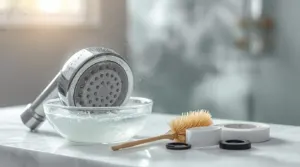
Say your shower head sprays unevenly, with one jet shooting sideways and a few holes dry. That’s often just mineral buildup, not a dead fixture.
Keeping that buildup from returning is easier than clearing it, and these tips for preventing hard water stains on your shower head can help.
Soak it in white vinegar for 15 to 30 minutes for a minor clog. Heavy scaling may need six to 24 hours. If the finish is brass, gold, or nickel, limit vinegar to 30 minutes so the plating isn’t damaged. Then clear each hole with a toothpick or soft brush.
A leak at the connection usually means a worn rubber washer. Replace it and rewrap the threads with tape.
Damage That Requires Replacement

Some problems don’t respond to vinegar or a new washer. If water seeps through a crack in the housing, the head is done. Cracks can’t be sealed, and they often widen with each use.
A cracked shower head can’t be mended, so once water leaks through its body, it’s time to replace it
Check the threads too. If a leak continues after you’ve swapped the gasket and rewrapped the tape, stripped or corroded threads are usually the cause.
Replace the unit if you see green corrosion at the fitting, pitting in the finish, or scale so dense that vinegar can’t soften it. Misfiring spray that returns after cleaning points to internal damage.
Maintenance That Helps Shower Heads Last Longer
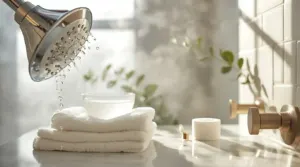
A little routine care can add years to a shower head. Start with the basics.
- Wipe the fixture dry with a microfiber cloth after each use. This keeps dissolved minerals from hardening into scale.
- Soak it in white vinegar for 20 to 30 minutes if buildup is light. Brass or nickel finishes need no more than 30 minutes.
- Flush with hot water, then scrub gently with a soft toothbrush.
- Wrap the arm threads with 6 to 10 turns of Teflon tape and tighten by hand only.
Skip bleach and abrasive cleaners. They often damage the finish.
Choosing a Durable Replacement Shower Head
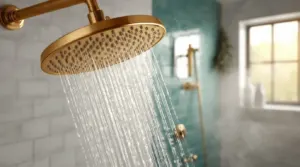
A sturdy replacement starts with the body material. Metal vs plastic fixtures is the biggest divide. Brass often lasts 15 years or more, plastic three to seven.
- Choose solid brass or a stainless steel shower head.
- Skip "brass finish" labels, which often hide zinc.
- Check the weight, since under one pound often means plastic.
- Pick silicone nozzles you can rub clean.
- Look for WaterSense and pressure compensation.
Chrome-plated models over plastic may flake, and good corrosion prevention helps bathroom hygiene.
Frequently Asked Questions (FAQs)
Will a new shower head fit my arm?
Picture the threads on your shower arm, small and worn, waiting for a new head to twist on. Most will fit, since ½-inch threads are standard in North America. Check for NPT or BSP stamps first.
How much will a plumber charge to replace a shower head?
Most plumbers charge between $150 and $220 for a standard job, labor and parts included. Rates run $80 to $130 an hour, and the work usually takes about two hours. Emergency calls cost far more.
How do I remove a stuck shower head?
Grip the connecting nut, not the head, and turn it counterclockwise. Spray penetrating oil and wait 10 to 15 minutes. Hold the shower arm steady with a rag and wrench. Stop if the pipe spins.
Can old shower heads really make you sick?
Yes, they can, though it’s uncommon. Old shower heads collect bacteria buildup inside, and the spray can carry it into your lungs as mist. Healthy people rarely get ill, but vulnerable people face real risks.
Should you replace your shower head after moving?
Why trust a fixture you know nothing about? Moving in is a smart time to replace the shower head. You can’t tell its age, how it was cleaned, or whether mold hides inside.
Do filtered shower heads need replacing more often?
Not the shower head itself. The housing often lasts for years. What you replace more often are the filter cartridges, usually every three to six months, or sooner with hard water or several daily users.
Conclusion
Clean it when the spray sputters. Replace it when the damage stays. Still wondering how often should you replace your shower head? Let its condition decide, not the calendar.
Plastic may need a swap every few years, while brass or stainless steel often lasts far longer. Hard water can shorten both. Cracks, corrosion, and stubborn leaks usually mean it’s done. Give yours a check this week, and you’ll catch trouble before it reaches the spray.