This site is supported by our readers. We may earn a commission, at no cost to you, if you purchase through links. This content is for general informational and educational purposes only and is not a substitute for professional medical, dermatological, or nutritional advice.
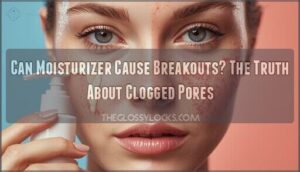
Switching to a new moisturizer and waking up to a fresh crop of breakouts feels like a cruel joke—especially when you did everything right. You read the label, chose something marketed for sensitive skin, and still ended up worse off than before.
Here’s the thing: your moisturizer might genuinely be the culprit, but not for the reasons most people assume. Certain ingredients, textures, and application habits can tip acne-prone skin over the edge, and the line between helpful hydration and pore-clogging trouble is thinner than most product labels let on.
Knowing where that line sits changes everything about how you shop, apply, and troubleshoot your routine.
Table Of Contents
- Key Takeaways
- Can Moisturizer Cause Breakouts or Clogged Pores?
- Signs Your Moisturizer is Clogging Pores
- Ingredient Triggers: What to Watch Out For
- Choosing The Right Moisturizer for Acne-Prone Skin
- Top 5 Moisturizers That Won’t Clog Pores
- Preventing Breakouts: Moisturizer Best Practices
- Frequently Asked Questions (FAQs)
- Is my moisturizer causing clogged pores?
- Why does moisturizer make my face break out?
- Can diet affect how moisturizer interacts with skin?
- Does skin age change moisturizer compatibility over time?
- How does stress influence skins response to moisturizers?
- Can layering skincare products increase breakout risk?
- Does water quality impact how moisturizers perform?
- Conclusion
Key Takeaways
- Moisturizer can trigger breakouts and clogged pores if it contains comedogenic ingredients or has a texture too heavy for your skin type.
- Even oily or acne-prone skin needs hydration—skipping moisturizer can actually make breakouts worse by pushing your oil glands into overdrive.
- Signs your moisturizer is causing trouble include new bumps, persistent shine, or breakouts where you apply the most product.
- Choosing non-comedogenic, lightweight formulas and patch testing before full use helps prevent pore congestion and irritation.
Can Moisturizer Cause Breakouts or Clogged Pores?
Yes, your moisturizer could be behind those breakouts — but it’s not quite that simple. A few key factors determine whether your moisturizer helps or hurts your skin.
Getting the timing and amount right makes a real difference, and these moisturizer tips for oily, acne-prone skin can help you dial in both.
Here’s what’s actually going on.
Common Myths About Moisturizer and Acne
Most moisturizer myths come down to fear, not facts. Yes, the wrong formula can trigger breakouts on acne-prone skin — but moisturizer itself isn’t the villain.
Comedogenic risks vary by ingredient, not by the act of moisturizing. Even oily skin needs hydration. Skipping it entirely can push your oil glands into overdrive, making clogged pores and breakouts worse, not better.
For further clarification on moisturizer myths and facts, you can review detailed expert insights.
How Moisturizers Interact With Skin and Pores
Think of your skin barrier as a gatekeeper. The right moisturizer aids it — pulling water into the surface, reducing water loss, and keeping dead cells shedding evenly. That matters for pore hydration and minimization.
But moisturizer types behave differently depending on your skin type. Heavier formulas can disrupt oil regulation on sebum-rich zones, nudging clogged pores and sluggish follicles into view. For more details on how your skin’s moisture defenses work, see this thorough overview of the.
Scientific Evidence Linking Moisturizers to Breakouts
The research here is pretty clear. Studies show that people with acne are markedly more likely to use moisturizers with pore-clogging ingredients — nearly 43% compared to 27% of those without acne. That’s not coincidence.
People with acne are 43% more likely to use pore-clogging moisturizers — and that is no coincidence
Here’s what the evidence tells us about breakout triggers:
- Comedogenic ratings predict pore congestion risk in acne-prone skin
- Heavy moisturizer formulations worsen clogged pores within 28 days
- Skin barrier disruption increases sebum and inflammatory breakouts
- Noncomedogenic labels reduce — but don’t eliminate — acne risk
- Frequent reapplication of comedogenic products compounds congestion over time
Signs Your Moisturizer is Clogging Pores
Your moisturizer might be the last thing you’d suspect — but your skin often tells you exactly what’s wrong. A few key patterns tend to show up when a product isn’t working with your skin. Here’s what to watch for.
New Bumps or Breakouts After Starting a Moisturizer
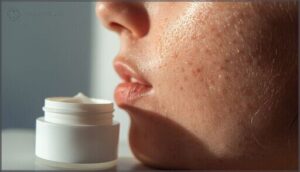
New bumps showing up days after switching moisturizers aren’t a coincidence. Moisturizer reactions on acne-prone skin tend to follow a clear pattern—small, rough, skin-colored bumps clustering where you apply product most.
| What You Notice | What It Likely Means |
|---|---|
| Bumps within 1–2 weeks | Possible pore congestion from ingredients |
| Breakouts after 4–6 weeks | Formula doesn’t suit your skin barrier |
| Bumps clear after stopping | Moisturizer ingredients were the trigger |
| Itchy, red bumps | Irritant or allergic reaction, not clogged pores |
Breakout patterns tied to noncomedogenic claims aren’t always reliable—your skin writes the final verdict.
Enlarged or More Visible Pores
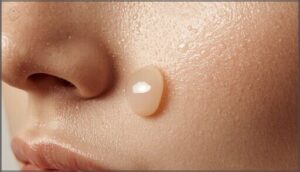
Pore minimization isn’t just about genetics—your moisturizer plays a bigger role than you’d think. When a heavy formula sits on facial skin instead of absorbing, it mixes with oil and debris, stretching pore openings and roughening skin texture. Facial mapping often reveals the pattern clearly.
Clogged follicles follow the same logic—natural exfoliation and hair removal techniques can reduce the debris buildup that stretches pores over time.
Watch for these signs:
- Pores look larger along the nose and chin after moisturizing
- Skin texture feels coated, not smooth
- Oil regulation feels off—shinier but somehow still tight
Breakouts in Areas With Heavy Moisturizer Application
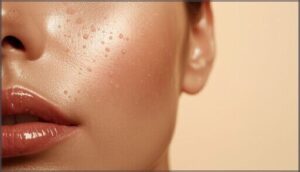
Location is everything. If breakouts keep clustering in the same spots—your cheeks, jawline, or forehead—take a hard look at where you’re applying the most product.
Heavy moisturizer application creates skin occlusion, trapping heat, sebum, and dead cells beneath a warm, sealed microclimate. That’s ideal territory for pore congestion and follicle issues. Acne-prone skin is especially unforgiving here.
How Over-moisturizing Manifests on Skin
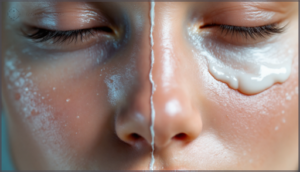
Over-moisturizing doesn’t always announce itself with obvious breakouts. Sometimes it’s subtler—a persistent greasy shine that won’t quit, tiny bumps altering your skin texture, or a dull, waxy look that no amount of hydration fixes.
For acne-prone skin, disrupted oil regulation and weakened barrier function let pore congestion quietly build. That moisture balance you’re chasing? Too much product works against it.
Ingredient Triggers: What to Watch Out For
Not all moisturizers are created equal—and sometimes, the culprit behind your breakouts is hiding right on the ingredient label. Knowing what to look for makes a real difference, especially if your skin is already prone to congestion.
Here are the key ingredient triggers worth watching out for.
Comedogenic Ingredients and Their Effects
Some ingredients are inherently pore-clogging by design. Comedogenic ratings help flag them—coconut oil scores a 4, wheat germ oil hits 5, and isopropyl myristate is also a 5.
These trigger comedone formation by trapping sebum and dead skin cells, blocking airflow and feeding acne-prone skin bacteria. On acne-prone skin, ingredient interactions like these quietly drive pore congestion and recurring breakouts.
The Role of Occlusive Agents in Pore Congestion
Think of occlusive agents as a plastic wrap over your skin—useful for sealing in moisture, but potentially trapping everything underneath. That occlusive film mixes with sebum, creating a humid microenvironment where dead cells and oil accumulate at the follicle opening.
On oily or acne-prone skin, this can accelerate congestion, breakouts, and even milia formation around the eyes.
Differences Between Non-comedogenic and Comedogenic Formulas
Non-comedogenic and comedogenic formulas differ in more than just marketing language—it comes down to core definitions, texture profiles, and ingredient choices. Non-comedogenic options favor lightweight humectants like glycerin and squalane that hydrate without clogging pores. Comedogenic formulas lean on richer occlusives that suit dry skin but can trigger breakouts in acne-prone types.
Label reliability? Tricky—the FDA doesn’t regulate the claim.
How to Spot Problematic Ingredients on Labels
Labels list ingredients in descending order—so ingredient order actually matters. Anything appearing in the top five is a major player. Spot “isopropyl-” prefixes early (isopropyl myristate rates a 5 on the comedogenic scale), and flag sodium chloride or sodium lauryl sulfate hiding in cleansers and creams.
A quick skincare ingredient analysis before buying beats troubleshooting a breakout after.
Choosing The Right Moisturizer for Acne-Prone Skin
Finding the right moisturizer for acne-prone skin isn’t about luck — it’s about knowing what to look for. A few key factors make all the difference between a product that works and one that quietly clogs your pores.
Here’s what to keep in mind before you commit to anything.
Matching Moisturizer Texture to Skin Type
Texture matters more than most people realize. Match your moisturizer to your skin type, and half the breakout battle is already won. For acne-prone skin, here’s a quick guide:
- Oily skin: Gel or water-based, oil-free formulas absorb fast without adding shine
- Combination skin: Lightweight combination lotions balance dry patches without overloading oily zones
- Dry skin: Dry skin creams offer richer hydration without suffocating pores
Hydrating Ingredients That Won’t Clog Pores
Once you’ve matched the right texture, the next step is checking what’s actually inside the bottle. Ingredients do the heavy lifting—and some are genuinely skin-friendly.
Glycerin benefits your skin by pulling moisture in without comedogenic potential. Hyaluronic acid hydrates without oil. Squalane hydration absorbs cleanly, leaving no residue. Ceramide function focuses on repairing your barrier.
Together, they make an oil-free moisturizer worth trusting.
The Importance of Patch Testing
Even the cleanest ingredient list can surprise sensitive skin. That’s where a patch test earns its place. Apply a pea-sized amount to your jawline for seven to ten days—this allergy screening catches irritation and comedogenic potential before clogged pores spread across your face.
Testing steps this simple genuinely prevent breakouts. Skin sensitivity varies person to person, so don’t skip it.
Adjusting Moisturizer Use by Season and Climate
Your skin doesn’t run on a fixed schedule—and neither should your moisturizer. Winter Skincare Needs call for richer creams; ceramides and squalane hold up better when cold air drops humidity below 30 percent.
Come summer, swap to Summer Light Formulas—lightweight, oil-free moisturizer options that won’t mix with sweat and spike sebum production.
Arid Climate Care follows the same logic: choosing the right moisturizer means matching texture to what your skin type actually faces outside.
Top 5 Moisturizers That Won’t Clog Pores
Finding a moisturizer that hydrates without feeding breakouts can feel like searching for a needle in a haystack. The good news is that a handful of products have earned real trust from dermatologists and acne-prone skin alike.
Here are five that actually deliver.
1. Tatcha Water Cream Moisturizer
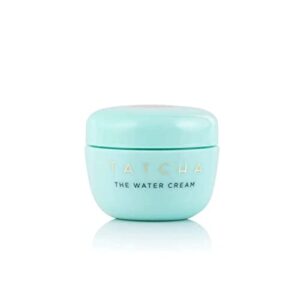
If you have oily or combination skin, the Tatcha Water Cream is worth a serious look. It’s an oil-free, water-based gel-creme that absorbs fast and leaves zero greasiness behind.
Japanese wild rose helps tighten pores, leopard lily controls excess shine, and sodium hyaluronate pulls in deep hydration—without suffocating your skin. Green tea, rice, and algae add antioxidant support.
It’s dermatologist-tested, non-comedogenic, and free of mineral oil, parabens, and synthetic fragrance. Clean formula, real results.
| Best For | People with oily or combination skin who want deep hydration without any greasiness or clogged pores. |
|---|---|
| Skin Type | Oily/Combination |
| Oil-Free | Yes |
| Non-Comedogenic | Yes |
| Pore Minimizing | Yes |
| Fragrance-Free | No |
| Makeup Compatible | Yes |
| Additional Features |
|
- Oil-free and water-based, so it absorbs fast and never feels heavy or sticky
- Packed with Japanese superfoods like green tea, rice, and algae that help with radiance and texture
- Visibly tightens pores and works great as a makeup base
- Pricey for what you get, especially in the 10ml travel size
- That small size won’t last long if you use it daily
- A few buyers have reported air pockets or missing safety seals, which is frustrating at this price point
2. La Roche Posay Matte Face Moisturizer
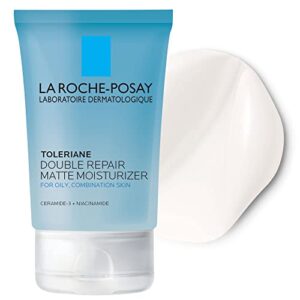
La Roche-Posay Effaclar Mat is a solid pick if your skin is prone to run oily and you’re tired of that midday shine. It’s lightweight, oil-free, and non-comedogenic—so it hydrates without loading your pores.
Niacinamide calms inflammation and fades discoloration, glycerin keeps moisture balanced, and ceramide-3 strengthens your barrier.
What makes it stand out is the lipo hydroxy acid—a gentler salicylic acid derivative that quietly exfoliates inside pores over time. Clean skin, less congestion, no grease.
| Best For | Anyone with oily or combination skin who wants all-day hydration without the greasy look or clogged pores. |
|---|---|
| Skin Type | Oily |
| Oil-Free | Yes |
| Non-Comedogenic | Yes |
| Pore Minimizing | Yes |
| Fragrance-Free | No |
| Makeup Compatible | Yes |
| Additional Features |
|
- Lightweight gel formula hydrates without any shine or heaviness
- Niacinamide soothes skin and helps fade discoloration over time
- Works great as a makeup base and keeps oil in check all day
- Probably too drying for anyone with dry or sensitive skin
- A bit pricey for a 2.5 oz bottle
- The scent is noticeable and might bother those sensitive to fragrance
3. First Aid Beauty Oil Control Moisturizer
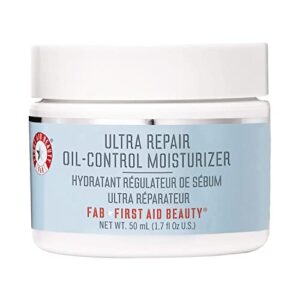
First Aid Beauty Ultra Repair Oil-Control Moisturizer is a smart option if your skin sits in that frustrating middle ground—not quite dry, but definitely not happy with heavy creams.
It’s ultra-light, absorbs fast, and leaves a powder-soft finish that actually stays matte. Niacinamide regulates sebum, hyaluronic acid keeps things hydrated without grease, and oil-absorbing microspheres handle midday shine.
It’s non-comedogenic, fragrance-free, and dermatologist tested—97% of users reported hydration without that greasy feeling. Sensitive and acne-prone skin, this one’s worth trying.
| Best For | People with oily, combination, or sensitive skin who want real hydration without the greasy aftermath. |
|---|---|
| Skin Type | Normal/Combination/Oily |
| Oil-Free | Yes |
| Non-Comedogenic | Yes |
| Pore Minimizing | Yes |
| Fragrance-Free | Yes |
| Makeup Compatible | Yes |
| Additional Features |
|
- Lightweight, fast-absorbing formula that keeps skin matte without feeling tight or dry
- Packed with skin-friendly ingredients—niacinamide, hyaluronic acid, no fragrance, no parabens
- Non-comedogenic and dermatologist tested, so it plays nice with sensitive and acne-prone skin
- Won’t cut it for dry or very dry skin types that need deeper moisture
- No pump on the packaging, which makes dispensing a little annoying
- Doesn’t target specific concerns like acne or hyperpigmentation
4. Paula’s Choice Oil Free Moisturizer
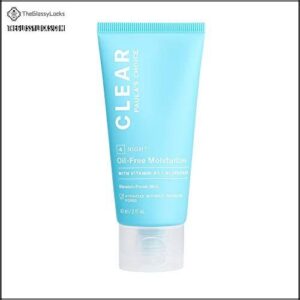
Paula’s Choice CLEAR Oil-Free Moisturizer was built for one specific person: you, if you’ve ever skipped moisturizer because you were afraid of breaking out. The gel-cream formula absorbs fast, finishes matte, and layers cleanly under sunscreen without pilling.
Ceramides and niacinamide quietly do the heavy lifting—repairing your barrier and regulating oil over time. No fragrance, no traditional occlusive oils. Just steady, balanced hydration.
At EUR33, it’s not the cheapest option, but it’s one of the more thoughtfully formulated ones.
| Best For | Anyone with acne-prone or oily skin who’s been skipping moisturizer out of fear it’ll cause breakouts. |
|---|---|
| Skin Type | Acne-Prone/Sensitive |
| Oil-Free | Yes |
| Non-Comedogenic | Yes |
| Pore Minimizing | Yes |
| Fragrance-Free | Yes |
| Makeup Compatible | Yes |
| Additional Features |
|
- Oil-free and lightweight—absorbs fast with no greasy residue
- Niacinamide and ceramides help calm redness and strengthen your skin barrier
- Fragrance-free and gentle enough for sensitive skin
- At EUR33, it’s pricier than a lot of comparable options
- May not cut it if your skin gets seriously dry—it’s built for balance, not deep moisture
- You need to use it consistently to really see results
5. Augustinus Bader Lightweight Face Cream
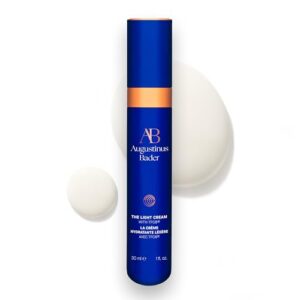
Augustinus Bader’s Lightweight Face Cream sits at the luxury end of the spectrum—and it earns some of that price tag. Powered by TFC8 technology, a peptide-and-vitamin complex built from 35 years of skin biology research, it’s designed to support how your skin actually repairs itself.
The formula includes squalane and Baobab Leaf Extract for hydration without pore congestion. Clinical data shows 96% of users experienced immediate oil control.
It’s fragrance-free, vegan, and genuinely lightweight. Expensive? Yes. But thoughtfully formulated.
| Best For | Anyone with oily or combination skin who wants a high-performance daily moisturizer and doesn’t mind paying a premium for science-backed ingredients. |
|---|---|
| Skin Type | All Skin Types |
| Oil-Free | Yes |
| Non-Comedogenic | Yes |
| Pore Minimizing | Yes |
| Fragrance-Free | Yes |
| Makeup Compatible | Yes |
| Additional Features |
|
- Lightweight and breathable—great for layering under makeup or SPF
- Fragrance-free, vegan, and cruelty-free, so it works for sensitive skin too
- TFC8 technology is rooted in decades of skin biology research, not just marketing
- The price tag is steep and hard to justify if your skin doesn’t respond to it
- Results vary—some users notice real improvements, others not so much
- 50ml doesn’t go far when you’re spending this much per jar
Preventing Breakouts: Moisturizer Best Practices
Getting your moisturizer routine right doesn’t have to be complicated. A few small shifts in how you apply and monitor your products can make a real difference in keeping breakouts at bay. Here’s what actually works.
Optimal Usage and Application Techniques
How you apply your moisturizer matters just as much as choosing the right moisturizer. For routine placement, use it after serums and before sunscreen.
A pea-sized amount is enough—more just sits on the surface. Prep skin while it’s slightly damp, then gently press product in with fingertips.
Focus heavier layers on dry zones, lighter on oily areas, and always wait a minute before layering sunscreen.
Avoiding Over-moisturizing and Its Effects
If your skin feels heavy, looks shiny, or shows new bumps, you’re likely overmoisturising. That film-like layer signals clogged pores and breakouts—especially if thick product textures linger.
Let your skin barrier breathe; use lighter formulas and stick to practical avoidance: twice daily, pea-sized amounts, and pause if you notice visible signs of overmoisturizing effects on skin or microbiome risks.
Balancing Hydration and Oil Control
Once you’ve dialed back the heavy layers, the real goal becomes balance—not zero oil, just the right kind of hydration. Humectant benefits like glycerin and hyaluronic acid pull water in without suffocating pores. That aids sebum regulation naturally.
Texture choices matter too: gel moisturizers handle oil control well without clogging. Skin barrier balance improves, acne settles, and hydration stays where it belongs.
Monitoring Skin Changes and Adjusting Routines
Once balance is working, keep an eye on how your skin responds week to week. A simple daily skin log—notes on oiliness, new bumps, or tightness—makes identifying skincare issues much easier:
- Track morning skin texture before applying anything
- Note purging vs breakouts patterns by location and timing
- Try routine simplification when congestion spikes
For acne-prone skin, choosing the right moisturizer means staying curious about what changes.
Frequently Asked Questions (FAQs)
Is my moisturizer causing clogged pores?
Yes — and reaction timing is your first clue. New bumps within 5–10 days of use, clearing up after you stop, usually confirm the culprit. Comedogenic ingredients and pore-clogging formulas are often to blame.
Why does moisturizer make my face break out?
Your moisturizer could be breaking you out due to skin type mismatch, comedogenic ingredients, or over-application effects that clog pores — especially if you have acne-prone skin with a compromised barrier function.
Can diet affect how moisturizer interacts with skin?
Absolutely. Your diet shapes your skin from the inside out. Dietary fats, hydration levels, and nutrients all influence sebum production, skin barrier function, and skin sensitivity — directly affecting how well any moisturizer actually works for you.
Does skin age change moisturizer compatibility over time?
Your skin in your 20s and your skin at 50 are practically different organs. Barrier weakening, sebum shifts, and hormonal impact all reshape hydration needs and sensitivity — so yes, your moisturizer needs to evolve too.
How does stress influence skins response to moisturizers?
Stress triggers barrier disruption, sebum increase, and hydration loss simultaneously. Elevated cortisol overstimulates sebaceous glands, fueling inflammation and hormonal imbalance — turning clogged pores and inflamed sensitivity into near-constant battles your skin simply can’t win alone.
Can layering skincare products increase breakout risk?
Yes — product layering absolutely raises breakout risk. Too many layers mean occlusive trapping, active irritation, and product buildup that clogs pores. Keep it simple: fewer skincare products, less congestion.
Does water quality impact how moisturizers perform?
Funny enough, water meant to cleanse can actually sabotage your moisturizer. Hard water effects leave mineral residue, chlorine impact weakens your skin barrier, and shifts in skin pH or using demineralized benefits change how hydration and product buildup behave.
Conclusion
If you’re thinking, “But my skin needs moisture—won’t skipping it make things worse?”—you’re right. Hydration matters, but not all moisturizers are created equal.
Yes, moisturizer can cause breakouts and clogged pores if you’re not careful about ingredients and texture. By reading labels, patch testing, and paying attention to how your skin responds, you’re not just avoiding trouble—you’re building a routine that truly nurtures your skin’s health. The right moisturizer should feel like relief, not a gamble.