This site is supported by our readers. We may earn a commission, at no cost to you, if you purchase through links. This content is for general informational and educational purposes only and is not a substitute for professional medical, dermatological, or nutritional advice.
Your showerhead works like a hidden metronome for your water use. Every minute, it delivers a set amount of water, and that number quietly shapes how your showers feel, how much you pay, and how much you waste. That number is GPM, or gallons per minute, and it tells you exactly how much water flows through your shower head each minute at a given pressure.
Once you understand what is GPM in shower heads, you can read a spec sheet the way an electrician reads a wiring diagram. You’ll see why some showers feel weak, why others spike your bill, and how a small change in flow rate can balance comfort with efficiency.
Table Of Contents
- Key Takeaways
- What GPM Means in Shower Heads
- Standard GPM Ratings and Regulations
- Typical GPM Options for Shower Heads
- Impact of GPM on Shower Experience
- GPM and Water Conservation Benefits
- Factors Affecting Actual Shower Head GPM
- Comparing High Flow Vs. Low Flow Shower Heads
- How to Determine Your Shower Head’s GPM
- Choosing The Right GPM for Your Needs
- Top Shower Heads by GPM Performance
- Frequently Asked Questions (FAQs)
- Conclusion
Key Takeaways
- GPM is the gallons of water your shower head delivers each minute, and it controls how strong the spray feels and how much water you use.
- U.S. federal rules cap new shower heads at 2.5 GPM, while WaterSense models are 2.0 GPM or less and some states go down to about 1.5–1.8 GPM.
- Typical options range from 2.5 GPM high-flow heads to 1.25 GPM or lower ultra-low-flow models, trading stronger, faster rinses for lower water and energy use.
- The “right” GPM for you depends on your home’s water pressure, local regulations, and comfort vs. conservation goals, and you can confirm it from labels or by timing how fast a container fills.
What GPM Means in Shower Heads
When you hear “GPM” on a shower head box, it’s talking about how much water comes out every minute. This number helps you understand both the strength of your shower and how much water you’re using.
If you want help choosing between flow rates, this guide to high-pressure shower heads breaks down which options balance comfort and efficiency best.
Here’s what it actually means and why it matters for your bathroom setup.
Definition of GPM
GPM Basics start with one simple idea—how much water passes through your shower head each minute. Measured in Gallons Per Minute, it defines your shower’s Flow Rate and comfort.
In many regions, regulations limit standard shower heads to about 2.5 GPM to encourage water and energy conservation. Think of it as your shower’s “speedometer” for Water Flow:
- One gallon equals 3.785 liters.
- Higher GPM means stronger flow.
- Lower GPM saves water and energy.
How GPM Measures Water Flow
To measure how much water flows through your shower, technicians run it under set Water Pressure—usually 80 psi—and record how many Gallons Per Minute it delivers. That’s your Shower Head GPM. Lab tests use this standard pressure, so Flow Rate Basics stay consistent even though real homes vary by plumbing, Flow Restrictors, and Shower Head Design.
For a hands-on guide to practical flow rate measurement, you can time how much water a fixture delivers and convert it to GPM.
Why GPM Matters for Showers
Once you know your Shower Head GPM, you can see why it matters: it shapes comfort, Water Consumption, and Water Savings every time you turn the handle.
Higher Gallons Per Minute feel stronger and rinse faster, but use more water and energy.
Lower Flow Rate models use Flow Control and nozzle design to keep Pressure Impact comfortable while boosting Shower Efficiency, Water Efficiency, and long-term Conservation Benefits.
Standard GPM Ratings and Regulations

Before you pick a shower head, it helps to know what flow rates are actually allowed. Federal rules set the baseline, but some states take it even further.
Here’s a quick look at the main standards that determine how much water your shower can use.
Federal GPM Limits for Shower Heads
Ever wonder why your shower can’t legally blast out more water? Federal GPM Limits are set by the Energy Policy Act of 1992, which caps Shower Head GPM at a 2.5 GPM Flow Rate under Federal Guidelines for Shower Head Testing and Regulatory Compliance at 80 psi. These Flow Rate Standards apply nationwide and form the baseline Water Efficiency target that WaterSense showerheads must beat, using no more than 2.0 GPM for better Water Efficiency under Federal GPM Limits and related Flow Rate rules for Shower Head GPM and overall Flow Rate Standards.
- You get a clear ceiling on Flow Rate, so any compliant showerhead you buy meets the same Federal Guidelines and Shower Head Testing standards for maximum GPM.
- You can spot WaterSense models knowing they cut Flow Rate below that federal cap for extra Water Efficiency without breaking Regulatory Compliance rules.
- You stay on the right side of Federal GPM Limits even with multi-nozzle systems, since DOE now treats all outlets together as one Shower Head GPM total during Shower Head Testing.
State and Local GPM Requirements
Across the country, local codes often set stricter GPM Compliance standards than federal rules. For example, California, Washington, Oregon, and Hawaii cap shower head Flow Rate at 1.8 GPM, while cities like Miami Dade and West Hollywood go down to 1.5 GPM.
These Water Conservation Regulations come with real Enforcement Measures, so checking local Water Restrictions is key before you buy.
WaterSense Certification Standards
The WaterSense Certification Process ensures every shower head meets strict Flow Rate Limits and Efficiency Testing standards. Each model must deliver consistent Spray Performance, not exceeding 2.0 GPM at 80 psi.
Independent labs verify Water Efficiency, while clear Labeling Requirements help you identify compliant products designed to save water and support long-term Water Conservation goals.
Typical GPM Options for Shower Heads

When you shop for a shower head, you’ll see a few common GPM ranges come up again and again. Each one offers a different balance of water strength, comfort, and efficiency.
Here’s how those typical flow rate options break down so you know what you’re looking at next.
2.5 GPM Standard Shower Heads
A 2.5 GPM shower head is the U.S. federal standard, offering strong water pressure and full-body coverage that feels satisfying without wasting excess water. Under Flow Rate Testing at 80 psi, it meets strict GPM Restrictions and Efficiency Standards. Most use durable Shower Head Materials and include pressure-boosting features for consistent, dependable flow.
- Balanced flow rate
- Strong Water Pressure Boost
- Reliable performance durability
2.0 GPM WaterSense Shower Heads
A 2.0 GPM WaterSense shower head hits the sweet spot between Shower Comfort and Water Efficiency. It uses built-in Flow Regulation and Pressure Compensation to hold steady spray strength while cutting water and Energy Savings costs by roughly 20 percent.
This Low Flow design keeps performance high, proving smart efficiency doesn’t mean weaker flow.
1.25–1.8 GPM Low-Flow Models
Looking for more Water Savings without wrecking Shower Comfort? Low Flow shower heads in the 1.25–1.8 GPM range cut Flow Rate well below older 2.5 GPM models while smart Flow Control keeps the spray feeling dense and effective. You get real Water Conservation and practical Efficiency Tips built into the design, so your Shower Head GPM works harder without you doing more.
- 1.25–1.8 GPM offers strong Low Flow performance.
- 1.5 GPM can reduce water use by roughly 40% versus 2.5 GPM.
- 1.8 GPM is a common “comfort plus savings” middle ground.
- Best for homes that want lower bills without a flat, drizzly shower.
Ultra-Low Flow Shower Heads
Ultra-Low Flow Shower Heads push Flow Restrictions to the extreme, using a Flow Rate under about 1.25 GPM to boost Water Savings and Eco Benefits while still aiming for basic Shower Comfort.
With this kind of Low Flow Tech, your Shower Head GPM can drop near 0.5–1.0 GPM, so they’re best when Water Conservation matters more than a “luxury” feel.
Impact of GPM on Shower Experience

Your shower’s GPM has a direct impact on how the water feels on your skin and how quickly it covers you. It shapes everything from spray strength to how easily shampoo and soap rinse away.
In the next section, you’ll see how GPM affects pressure, rinsing performance, and overall comfort so you can match your shower to your preferences.
Water Pressure and Spray Strength
With shower heads, you feel Initial Pressure as spray strength, not as a number on a gauge. Water Pressure and GPM work together: higher Flow Rate per minute can boost Spray Intensity, but Nozzle Impact, Spray Patterns, Flow Regulators, and Air Injection often matter more than the rating printed on the box.
- Higher Water Pressure sharpens jet feel and increases Nozzle Impact at the same GPM.
- Flow Regulators and internal passages can flatten pressure spikes and steady Spray Intensity.
- Air Injection and smart Spray Patterns make low-GPM heads feel fuller without raising Flow Rate.
Rinsing Effectiveness
When you care about rinsing, you’re really asking how quickly a given Shower Head GPM can move shampoo and soap off your skin and hair. Higher Flow Rate cuts Rinsing Time because more water hits you each minute, but Spray Patterns, Droplet Size, and Flow Density decide how effective that Water Pressure feels.
Dense, larger droplets with fewer gaps in the spray clear product faster than a misty pattern, even on a low-flow head with strict Flow Restrictors, so your real Shower Experience depends on design as much as the number on the box.
Comfort and User Preferences
A smooth rinse is only half the story—Comfort finishes it. Your ideal Shower Experience depends on Spray Feel, Temperature Stability, and even Shower Noise. Some prefer a quiet rainfall, others a brisk jet. Custom Controls make Flow Rate Optimization easier, letting you fine‑tune Water Pressure and Spray Patterns to match your morning mood.
- Warm, steady spray you can trust
- Softer sound for peaceful mornings
- Adjustable modes for shared bathrooms
- Balanced GPM for comfort and savings
GPM and Water Conservation Benefits

When you look at GPM through a conservation lens, it’s really about how much water you send down the drain every minute. A small change in flow rate can add up to big differences in your usage, costs, and footprint over time.
In the next section, you’ll see how GPM choices affect your water use, monthly bills, and the environment.
Reducing Water Usage
Want to cut your shower’s water usage without feeling deprived? Focus on three levers: Shorter Showers, Efficient Heads, and simple Water Saving Habits like Pause Valves. A Low Flow Shower Head with a lower Shower Head GPM means every minute under the spray costs you less water, so small changes stack up fast for real Water Conservation and better overall Water Efficiency.
| Action | Typical Tool | Primary Effect |
|---|---|---|
| Shorter Showers | Timer or playlist | Less water per day |
| Efficient Heads | Low Flow Shower Heads | Lower GPM |
| Pause While Soaping | In-line Pause Valves | Reduced running time |
Lowering Utility and Energy Bills
Often, the easiest place to spot GPM working for you is on your Utility Bills. Lower flow means less water to buy, less Energy Consumption to heat, and steady Bill Reduction over time. Because water heating can eat 15–30% of home energy, efficient 2.0 GPM heads deliver real Energy Savings, Cost Cutting, and better overall Utility Optimization through simple Water Conservation and Water Efficiency.
- Cut hot water volume, so your heater runs fewer minutes each day.
- Trim both water and wastewater charges with every shorter, lower‑flow shower.
- Reduce electricity or gas use by needing fewer kilowatt hours for heating.
- Stack small daily savings into long‑term drops in annual Utility Bills.
Environmental Impact of GPM Choices
Every drop counts in the Environmental Impact of Water Usage. Lower‑GPM shower heads improve Water Efficiency Measures, shrinking hot water demand and Energy Savings over time. They also cut Greenhouse Emissions and ease pressure on Municipal Infrastructure.
For lasting performance, pairing your fixture with a durable, high-pressure design like this best high-pressure shower head guide ensures efficiency doesn’t come at the cost of everyday comfort.
Designs that limit Aerosol Formation support Sustainable Living Practices, making Water Conservation part of everyday efficiency.
Factors Affecting Actual Shower Head GPM
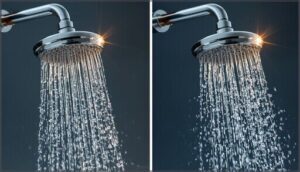
Even if two shower heads are rated the same, they don’t always deliver water the same way. Real-world factors can affect how much water actually comes out. Here’s what can change your shower’s true GPM.
Home Water Pressure Variations
Strong Shower Head GPM starts with steady Water Pressure, but real homes live with constant Pressure Fluctuations from the Municipal Supply, household demand, and Elevation Effects, so your actual gallons per minute flow rate keeps shifting.
When pressure runs low at upper floors or peak times, Booster Pumps and smart Water Efficiency Measures help stabilize performance without wasting water.
Plumbing and Flow Restrictors
Think of your plumbing as traffic lanes and Flow Restrictors as speed limits for water. Inside the shower arm, Restrictor Design and Pressure Regulation work together to cap Shower Head GPM at a target GPM based on Plumbing Regulations and Water Pressure.
That Flow Control facilitates Water Savings, keeps pipe sizing and peak demand in check, and helps your system share flow fairly between fixtures.
Shower Head Design and Technology
Ever wonder how Shower Head Technology transforms a trickle into a powerful spray? Your Shower Head Design directly affects GPM and flow rate. Here’s how:
- Nozzle Technology boosts spray force.
- Spray Patterns adjust coverage and comfort.
- Water Sculpting shapes droplet size.
- Self Cleaning keeps jets clear.
- Durable Materials maintain consistent performance.
Each detail matters for your shower experience.
Comparing High Flow Vs. Low Flow Shower Heads
Regarding shower heads, flow rate makes a noticeable difference in how your shower feels and how much water you use. High-flow and low-flow models each have their own advantages depending on what matters most to you.
Here’s how they compare in performance, efficiency, and everyday practicality.
Differences in Shower Performance
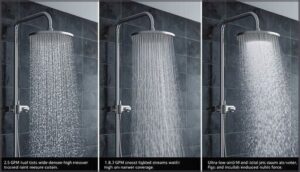
In a Shower Head Comparison, the main performance gap comes from Water Flow Dynamics and Spray Pattern Effects. High-flow 2.5 GPM heads hit harder, rinse faster, and cover more skin at once, while low-flow models stretch less water further with air‑mixing and tighter sprays. That’s where Rinsing Efficiency, Pressure Variations, and overall Shower Experience really start to feel different.
| Flow Rate / GPM | Spray Pattern Effects | Rinsing Efficiency |
|---|---|---|
| 2.5 GPM high flow | Wide, strong coverage | Fast shampoo and soap removal |
| 1.8–2.0 GPM low flow | Tighter, more focused spray | Slightly longer rinse times |
| ≤1.5 GPM ultra‑low | Engineered, air‑rich jets | Acceptable if you’re patient. |
Pros and Cons of Each Type
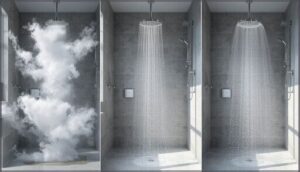
That Flow Rate Comparison matters most once you feel the trade-offs. High-flow shower heads win on instant pressure effects and speed but waste more water and energy. Low-flow shower heads emphasize conservation benefits and water efficiency, though rinse strength drops slightly. Here’s how each performs by GPM:
| Type | Pros / Cons |
|---|---|
| 2.5 GPM High‑Flow | Powerful pressure, faster rinsing; higher water bills |
| 1.8–2.0 GPM Low‑Flow | Balanced flow, good water efficiency; moderate pressure |
| ≤1.5 GPM Ultra‑Low | Maximum conservation benefits; limited coverage |
Suitability for Different Households

If your family needs strong rinses, a 2.5 GPM head fits busy mornings, but higher water usage impacts your household budget. For smaller homes or strict water restrictions, low-flow heads support conservation goals and energy efficiency tips. Preferences shift with household size—see how options match up:
| Household Size | Best GPM Choice |
|---|---|
| Large Family | 1.8–2.0 GPM |
| Small Household | 2.0 GPM |
| Eco-Focused | 1.5–1.8 GPM |
| Drought Area | ≤1.8 GPM |
| Budget Conscious | 2.0 GPM or lower |
How to Determine Your Shower Head’s GPM

If you’re not sure how much water your shower head actually uses, there are a few easy ways to find out. You can check the packaging, look for efficiency labels, or measure it yourself at home.
Here’s how to figure out your shower head’s GPM step by step.
Checking Product Labels and Documentation
You’ll usually find the Shower Head GPM printed right on the product or box. Look for the flow rate near the neck or spray face—it’s part of label verification under documentation standards.
Check product specs for matching certification marks and test pressure details to confirm the listed GPM meets WaterSense and flow rate guidelines.
Identifying WaterSense or Efficiency Marks
Beyond the flow rate stamp, you’ll also want to scan for WaterSense Labels and other Efficiency Marks that point to real Flow Rate Testing and a defined Certification Process. Look for the blue-and-green WaterSense droplet with EPA wording, plus a clear Shower Head GPM like 2.0 gpm and its liter equivalent.
Those marks help you sort genuine Eco Friendly Options that support Water Conservation and Energy Efficiency from vague “low-flow” claims.
Measuring GPM Manually at Home
Curiosity and a bucket are really all you need for Water Testing at home. To nail your Shower Head GPM, you’ll use simple Home Measurements, GPM Calculations, and basic flow rate math so you know your true gallons per minute and can start Understanding Shower Head Flow Rate instead of guessing.
- Use the Bucket Method for easy Flow Rate Water Testing and Calculating Shower Head GPM.
- Time how long your container takes to fill, then convert that into gallons per minute.
- Compare your Home Measurements with the labeled Shower Head GPM to see how your plumbing and pressure affect real-world flow rate.
Choosing The Right GPM for Your Needs

When you know your shower head’s GPM, the next step is picking a flow that actually fits how you like to shower. You’re basically balancing comfort, water savings, and what your home’s plumbing can handle.
In the next section, you’ll see how different GPM ranges line up with those priorities so you can choose what makes sense for you.
Balancing Comfort and Conservation
You don’t have to pick between Shower Comfort and Water Savings; your goal is smart Flow Control, not punishment.
A practical range for Shower Head GPM is about 1.75–2.0, which keeps good Pressure Balance, promotes Water Conservation and Eco Benefits, and still feels strong enough that Low Flow Shower Heads don’t drag out shower time.
Considering Household Water Pressure
When choosing your Shower Head GPM, start by checking your home’s Water Pressure. Most homes run between 40–80 psi, but anything below 40 can weaken Flow Rates. Adjusting Pressure Regulators or fixing Household Plumbing restrictions often improves Shower Performance and Water Conservation. Remember, Flow Rate in gallons per minute only matches ratings under proper pressure.
- Low pressure weakens spray strength
- Mid-range offers balanced comfort
- High pressure risks pipe wear
Meeting Local Regulations
Ever wonder why some shower heads can’t be sold everywhere? Local ordinances set strict regulatory limits on GPM, sometimes tighter than federal rules.
Compliance checks verify code enforcement aligns with water efficiency and conservation goals. To stay safe, confirm federal vs state GPM requirements—WaterSense models usually meet most local regulations without added hassle.
Top Shower Heads by GPM Performance
If you’re comparing GPM options, it helps to see how real shower heads perform in different flow ranges. Each model shows how design and pressure balance can shape the shower experience.
Here are a few top-rated options that stand out for their GPM performance.
1. Speakman Anystream Adjustable Shower Head
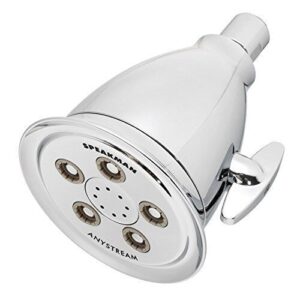
If you want strong water pressure without wasting gallons, the Speakman Anystream Adjustable Shower Head strikes a smart balance. Its 2.0 GPM flow rate meets water-saving standards while still delivering a powerful spray.
The 360° T-handle lets you shift smoothly between Intense, Massage, and Combination settings, and self-clean plungers keep buildup away.
Built with durable plastic and polished chrome, it’s easy to install, reliable, and designed to hold consistent pressure in homes or hotels alike.
| Best For | People who want a powerful, spa-like shower without wasting water or dealing with high-maintenance cleaning. |
|---|---|
| Material | Plastic |
| Color | Polished Chrome |
| Flow Rate | 2.0 GPM |
| Easy Installation | Yes |
| Adjustable Settings | Intense/Massage/Combination |
| Easy Cleaning | Self-clean plungers |
| Additional Features |
|
- Strong, consistent water pressure with water-saving 2.0 GPM design.
- Easy to adjust between Intense, Massage, and Combination settings.
- Self-clean plungers prevent buildup for low maintenance.
- Can make a humming noise in jet-stream mode.
- Slightly larger and heavier than some compact heads.
- May need moderate water pressure to perform at its best.
2. SparkPod High Pressure Rain Shower Head
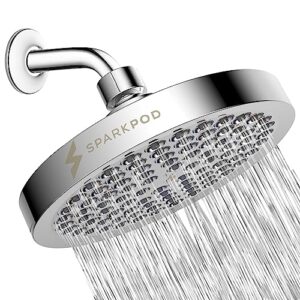
For a shower that feels bold without guzzling water, the SparkPod High Pressure Rain Shower Head hits a sweet spot. It moves water at 1.8 GPM, blending efficiency with that full-body rainfall effect people love.
Ninety rubber jets spread the spray evenly, while the self-cleaning nozzles fight limescale buildup. The ABS body with a polished chrome finish looks sleek and installs in minutes.
Even in homes with lower pressure, it delivers a strong, spa-like shower every time.
| Best For | Anyone who wants a powerful, spa-style shower that still saves water and installs easily. |
|---|---|
| Material | ABS |
| Color | Luxury Polished Chrome |
| Flow Rate | 1.8 GPM |
| Easy Installation | Yes |
| Adjustable Settings | Rainfall |
| Easy Cleaning | 90 rubber jets |
| Additional Features |
|
- Boosts water pressure for a fuller, more relaxing shower.
- Simple, tool-free installation and easy cleaning nozzles.
- Energy-efficient flow rate helps cut water and heating costs.
- High pressure may feel too strong for some users.
- Can drip briefly after turning off the water.
- Only fits standard 1/2″ IPS shower arms.
3. Kohler Awaken Multifunction Showerhead
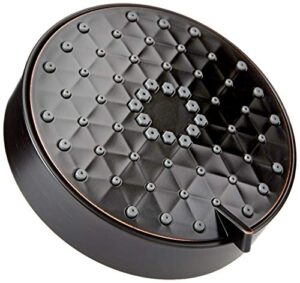
If the SparkPod brings rainfall luxury, the Kohler Awaken Multifunction Showerhead adds control to the mix. It runs at 2.0 GPM, giving you plenty of power while still meeting WaterSense standards. You can switch between wide coverage, intense drenching, and a targeted spray using a simple thumb tab.
Its MasterClean sprayface keeps mineral buildup in check, so the flow stays consistent. Lightweight, easy to install, and backed by Kohler’s reliability, it blends performance with everyday practicality.
| Best For | Anyone who wants a stylish, versatile showerhead that offers strong water pressure and easy switching between spray modes. |
|---|---|
| Material | Plastic |
| Color | Oil Rubbed Bronze |
| Flow Rate | 2.0 gpm |
| Easy Installation | Yes |
| Adjustable Settings | 3-spray modes |
| Easy Cleaning | MasterClean sprayface |
| Additional Features |
|
- Three spray options for customized comfort and performance.
- MasterClean sprayface prevents mineral buildup for lasting flow.
- Lightweight design makes installation quick and simple.
- Shower arm and flange must be purchased separately.
- Plastic construction may feel less durable than metal options.
- Some users may find the spray selector a bit stiff to adjust.
Frequently Asked Questions (FAQs)
Is a higher or lower GPM shower head better?
Neither is “better” on its own; it depends on what you want. Higher GPM gives you a fuller, stronger spray and slightly faster rinsing.
Lower GPM cuts water and energy use by up to about 40%, saving money over time.
Are all shower heads 75 gpm?
As the saying goes, “Not all things are created equal,” and that’s definitely true for shower heads. No, they aren’t all 75 gpm.
You’ll see many options, including 25, 5, 75, 8, 0, and 5 gpm models, each designed for different comfort and efficiency goals.
How does GPM affect tankless water heater performance?
Your shower head’s GPM directly determines how hard your tankless heater works. Higher GPM means more water to heat at once, so an undersized unit can’t keep up and you’ll get lukewarm water fast.
Does changing GPM require plumbing modifications?
Most of the time, you can change GPM just by swapping the shower head on the existing 1/2‑inch arm, with no pipe changes at all.
Plumbing modifications usually only come into play when you add extra heads, move the location, or design a high‑flow multi‑outlet system.
How do multi-shower setups impact total GPM?
When you run more than one shower head, their GPM adds together only if each is on its own valve and your plumbing and heater can supply the flow. Two 0 GPM heads can reach 0 GPM, while three 8 GPM heads can pull about 4 GPM total.
However, if your main line or a shared valve tops out around 6–8 GPM, each head just gets a smaller share, and the sprays feel weaker instead of “strong plus strong.”
What maintenance helps maintain consistent GPM flow?
When you want your shower to run like clockwork, focus on simple, regular upkeep: descale the head with vinegar every few months, clean the inlet screen, keep the flow restrictor clear, and check your home’s pressure regulator.
Conclusion
Sharp contrast defines your choice: long, wasteful showers or shorter, efficient ones that still feel satisfying. Now that you know what’s gpm in shower heads, you can read labels like a blueprint instead of a guess.
Match flow rate to your pressure, household size, and comfort needs. Check regulations, note certifications, and test performance, not just marketing claims.
When you twist the handle tomorrow, you’ll know exactly what that steady stream is costing you.