This site is supported by our readers. We may earn a commission, at no cost to you, if you purchase through links. This content is for general informational and educational purposes only and is not a substitute for professional medical, dermatological, or nutritional advice.

You turn the handle, wait for the heat to kick in, and still—something feels off. The water should be hot, but it loses warmth before it hits your skin. It’s not your imagination. The design of your shower head does more than shape the spray pattern—it can change how warm the water feels.
Flow rate, material, and even nozzle shape all influence how heat transfers and escapes. Understanding how these factors work together explains why some showers feel instantly comfortable while others fade too fast, and how the right design can make every degree of heat count.
Table Of Contents
- Key Takeaways
- Do Shower Heads Affect Water Temperature?
- How Shower Head Design Influences Temperature
- Water Pressure, Flow Rate, and Temperature Stability
- Low-Flow Shower Heads and Energy Efficiency
- Thermostatic Controls and Temperature Regulation
- Maintenance Tips for Consistent Shower Temperature
- Frequently Asked Questions (FAQs)
- Conclusion
Key Takeaways
- Shower heads don’t heat water directly but shape how warm it feels through spray pattern, flow rate, and material design.
- Flow rate strongly influences perceived warmth by controlling how quickly hot water moves through pipes and onto your skin.
- Materials, pressure stability, and insulation determine how well heat is retained and how consistently temperature stays balanced.
- Regular maintenance, proper installation, and thermostatic controls prevent temperature swings, pressure drops, and scald risks for steady comfort.
Do Shower Heads Affect Water Temperature?
It might seem like your shower head just sprays water, but its design actually influences how warm that water feels. Different features can change how heat travels and how your body senses temperature.
For a deeper look at how spray patterns and pressure affect that warmth, check out this guide on what affects shower head water flow.
Let’s look at what really shapes that experience.
Direct Vs. Indirect Temperature Effects
You might assume shower heads change actual water temperature, but their influence is mostly indirect. Design, spray pattern, and Plumbing Influence all affect Perceived Warmth and Heat Loss before droplets reach your skin.
The Shower Head Influence on Water Temperature comes from how it shapes Skin Sensation, not heating itself—true Temperature Control depends on Thermostatic Controls and consistent Temperature Regulation.
Flow Rate’s Role in Water Temperature
Flow rate does more than control water volume—it directly shapes how hot your water feels when it hits you. A higher flow rate moves water faster through the pipes, cutting pipe cooling and delivering heat closer to your heater output limits. Drop below your mixing valve range, and temperature control becomes unpredictable.
Shower head design and functionality determine that flow rate balance. That balance also depends on sizing your system to handle peak hot water demand across all fixtures running at once.
Sensation of Warmth and Perceived Temperature
That same flow affects how warm your skin actually feels. Thermal perception depends less on the reading at the mixer and more on how heat transfers through air and water droplets.
Your shower experience changes with:
- Spray coverage and air mixing,
- Skin sensitivity and heat retention,
- Temperature regulation and overall thermal comfort.
Research on shower spray heat transfer shows that different spray patterns change how efficiently heat moves from water to your skin, influencing both thermal sensation and energy consumption.
How Shower Head Design Influences Temperature
The design of a shower head does more than shape how the water feels—it also affects how warm it stays by the time it reaches you. Everything from the spray pattern to the materials used can influence that temperature balance.
Here’s how different design choices come into play.
Spray Pattern and Coverage
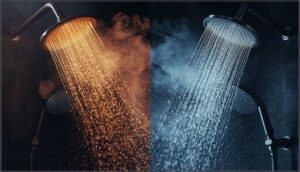
Ever notice how some showers feel hotter even at the same water temperature? That comes down to spray pattern and coverage. A narrow spray angle or strong spray force concentrates heat, while wider sprays spread it thin.
For a deeper look at how different nozzles and spray patterns affect warmth and rinsing comfort, check out this guide on the best shower heads for long hair.
The table below shows how specific design features shape your warmth perception and overall shower experience.
| Spray Angle | Droplet Size | Coverage Perception |
|---|---|---|
| Narrow jet | Large | Feels warmer, focused heat |
| Wide rain | Fine mist | Feels cooler, broad coverage |
| Adjustable | Mixed | Balanced warmth and comfort |
Material and Heat Retention
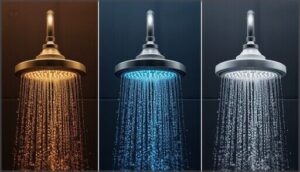
Material construction shapes how your shower feels before the first drop hits. Brass, stainless steel, or plastic each changes Heat Retention and Thermal Comfort through unique Thermal Conductivity and Heat Capacity.
For comparison:
- Brass warms quickly, high Thermal Mass
- Stainless responds fast
- Plastic insulates
- Metal retains warmth
- Balanced Material Selection improves Temperature Control and Shower Experience.
Insulation and Heat Loss

Insulation is your quiet partner in Temperature Control, sitting between hot water, cold bathroom air, and constant droplet cooling and evaporation effects.
When you add Pipe Insulation or an insulated hose, you slow heat loss along the line, so more Heat Retention is left for thermal comfort and shower experience.
That’s basic Thermal Dynamics working in your favor, supporting steadier temperature regulation even before the spray hits you, especially if you’re a User Pro tuning details.
Water Pressure, Flow Rate, and Temperature Stability
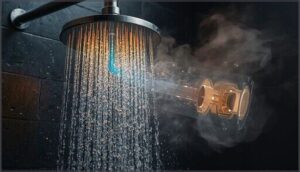
Water pressure and flow rate work together to shape how steady your shower temperature feels. When either one shifts, the warmth you expect can suddenly change.
Here’s how each factor plays a role in keeping your shower temperature consistent.
Impact of High Vs. Low Water Pressure
High or low, water pressure can make or break your shower’s comfort. When it dips too low, pressure fluctuations upset temperature regulation, causing sudden chills or spikes. Strong, steady flow helps maintain consistent valve response and heater performance for smoother warmth.
- Improves comfort sensation
- Stabilizes water temperature
- Reduces scald risk
- Enhances shower head design efficiency
- Facilitates balanced flow rate
Flow Rate Compatibility With Mixing Valves
Strong Valve Compatibility starts with simple math: your shower head’s Flow Rate has to sit inside the Mixing Valve’s minimum and maximum control window, or Temperature Control will suffer.
Many Mixing Valves and Thermostatic Controls are rated around 2.5 gpm, so if you install an ultra‑efficient head below that, Temperature Regulation and Control can drift, leaving Water Temperature lukewarm or cycling instead of stable.
Pressure Fluctuations and Temperature Consistency
Ever notice your shower suddenly run hot when someone flushes a toilet? That’s a classic case of shifting Water Pressure. A good Balancing Valve and efficient Thermostatic Response stabilize Flow Rate, preserving Water Temperature.
Poor Plumbing Layout or high Household Demand disrupts Temperature Regulation and Safety, making Thermostatic Controls essential for steady comfort.
Low-Flow Shower Heads and Energy Efficiency
Low-flow shower heads are designed to use less water, but that change affects more than just your bill. They can influence how heat moves and how quickly hot water reaches you.
Here’s what you should keep in mind regarding energy use, wait times, and overall comfort.
Water and Energy Savings Explained
Think of low-flow shower heads as a built-in Flow Rate Savings tool that quietly works every time you turn the tap. By cutting the volume from older 12–15 liters per minute heads down to roughly 6 liters per minute or less, you get immediate Water Conservation and Efficiency, lower energy use to heat that water, and real Cost Reduction on your bills through better Water Efficiency and overall Energy Savings.
Because these Eco Friendly LowFlow Shower Heads send less hot water down the drain at the same Water Temperature, they improve practical Water Conservation and long-term Energy Efficiency without asking you to change your routine.
Effects on Hot Water Delivery and Wait Times
While lower flow rates support Shower Head Efficiency, they also slow how fast hot water clears cooled pipes. That longer flush time means waiting as the colder water moves out.
Good Pipe Insulation, stable water pressure, or Hot Water Recirculation systems counter this delay, improving water temperature consistency through better Thermal Dynamics despite Flow Restrictions.
User Experience With Low-Flow Models
That slower flush time also changes your Shower Experience. Many users find a LowFlow Showerhead feels cooler at first, yet Perceived Comfort improves as they adapt.
Spray Patterns, Sensory Feedback, and Flow Preferences shape User Adaptation—some prefer denser sprays for warmth, others value Water Conservation and quieter operation, proving Shower Head Design balances feel with Water Temperature.
Thermostatic Controls and Temperature Regulation

Regarding maintaining a steady shower temperature, thermostatic controls do most of the heavy lifting. They sense small changes in water mix and adjust automatically to maintain the heat you set.
Here’s how these systems keep your shower safe and comfortable.
How Thermostatic Shower Heads Work
At the heart of thermostatic shower technology and innovation is a precise sensing element that drives accurate water temperature control. This element works with a mixing mechanism to manage thermostatic mixing, adjusting flow through pressure response for temperature stability.
Reliable shower head design ensures standards compliance, keeping temperature control consistent even when supply conditions shift.
Safety Features to Prevent Scalding
While thermostatic mixing gives you steady control, the real scald protection comes from built-in safety features that limit how hot the water can actually get. Modern anti-scald devices combine thermal regulation, temperature limits, and rapid shutoff safety valves so water temperature control stays within safe bands, often under 120°F, even when pressures swing and shower head performance or thermostatic mixing conditions change suddenly.
Thermostatic showers guard against scalding by capping heat and reacting instantly to temperature or pressure changes
| Feature Type | What It Does for You | Role in Temperature Control |
|---|---|---|
| Temperature Limits | Caps maximum water temperature at the outlet | Keeps mixed water below scald thresholds |
| Anti Scald Devices | React to pressure or temperature spikes | Trim hot flow to stabilize temperature control |
| Scald Protection Valves | Shut or throttle flow during cold-supply failures | Maintain safe shower head performance during faults |
Personalized Temperature Settings
Precision meets comfort when Digital Controls let you tailor your shower’s Thermal Comfort through User Presets and Temperature Memory. Smart Showers store Custom Settings—exact water temperature, flow, and outlets—so your preferred warmth appears instantly.
Sophisticated Shower Technology ensures consistent Temperature Control, making every Shower Head deliver a perfect, repeatable balance of comfort and efficiency.
Maintenance Tips for Consistent Shower Temperature
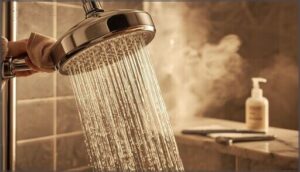
Keeping your shower temperature steady isn’t just about the hardware—it’s also about how well you maintain it. Small issues like buildup or loose fittings can throw your system off balance. Here’s what to keep an eye on to make sure everything stays consistent.
Preventing Mineral Buildup in Shower Heads
Mineral buildup is the quiet culprit behind temperature swings, reduced flow rate, and annoying changes in water pressure and spray. You keep Water Temperature steadier by focusing on simple Shower Head Maintenance and Upkeep:
- Use Vinegar Descaling or Citric Acid Cleaning regularly to dissolve limescale before it chokes the Shower Head.
- Choose Anti Limescale Design models, often with flexible silicone jets, to shed deposits quickly and protect flow.
- Consider Water Softening Systems or Point Of Use Filters in hard water areas, so scale forms more slowly and your Flow Rate stays within the mixer’s comfort zone.
Importance of Regular Cleaning and Inspection
Regular cleaning and inspection keep your shower head performing within its design range, protecting water temperature stability and pressure balance. Consistent Shower System Maintenance prevents blockages that strain Plumbing and Hydraulic Systems, saving long-term Maintenance Costs and extending Shower Head Lifespan.
| Cleaning Schedules | Inspection Tools |
|---|---|
| Monthly in soft water areas | Adjustable wrench |
| Biweekly in hard water zones | Flashlight or mirror |
| Quarterly for low-use showers | Vinegar solution |
| After every descaling cycle | Replacement washers |
Proper Installation for Optimal Performance
Solid Shower Head Installation does more for Water Temperature than you might think, because small mistakes quietly steal pressure and heat. To keep your Plumbing Systems stable, focus on:
- Checking Shower Head Mounting height so spray hits your body, not the walls, preserving warmth and comfort.
- Using Arm Angle Adjustment to keep the stream dense and close, instead of throwing water too far where it cools.
- Applying proper Thread Sealing on tapered pipe threads to prevent leaks that drop Water Pressure at the Shower Head.
- Leaving the Flow Restrictor and Valve Compatibility as designed, unless a plumber confirms your mixing valve can handle a different flow.
- Testing the Shower Head Installation for several minutes, watching for drips and pressure changes that signal hidden problems with temperature stability.
Frequently Asked Questions (FAQs)
Can changing your shower head change water temperature?
Think of your shower head like a lens—it shapes, not creates, the experience. Changing it doesn’t alter actual water temperature, but Flow Rate Effects, Heat Transfer, and Water Pressure Impact can shift your Temperature Perception.
Can a bad shower head cause cold water?
Yes, a bad shower head can cause cold water when flow restriction or blockage drops the flow rate below your water heater’s activation level, creating temperature fluctuation from insufficient water pressure and unstable water temperature.
Why is my shower going hot then cold?
Sudden surges and chilling changes often stem from pressure imbalance, limescale buildup, or thermostatic failures.
When flow restrictions disrupt water pressure or flow rate, temperature fluctuations follow, throwing your shower temperature and control completely off balance.
Can different shower filters change water temperature?
Different shower filters can change water temperature by restricting flow, which lowers pressure and alters heat transfer. Filter media effects, housing materials, and shower filter maintenance all influence water temperature stability and overall heat loss prevention.
Do detachable shower heads affect heat consistency?
Detachable designs can definitely affect heat consistency, because the Shower Head often uses tighter Flow Restrictors, lowering Flow Rate and making the Water Heater cycle, which leads to noticeable Temperature Fluctuations and extra Heat Loss Factors through long Hose Materials.
How does pipe length influence shower temperature drop?
Think of a long hot-water line like a cooling runway: the more length you add, the more Heat Loss and Water Cooling you get, so Temperature Drop increases, especially at low Flow Rate or with Flow Restrictions, weak Water Pressure, poor Pipe Insulation, and distant Shower Head locations.
All these factors manifest as Plumbing System Issues and lower Water Temperature at the outlet.
Conclusion
Like adjusting the lens on a camera, refining your shower setup sharpens how warm the water actually feels. By understanding flow rate, spray pattern, materials, and controls, you can predict how each choice shifts comfort, waste, and stability.
Instead of asking broadly, do shower heads affect water temperature, you now know which design details matter and why. Treat those details as tools, and you’ll build a shower that works with heat, not against it daily.
- https://beawaterhawk.com/can-a-shower-head-affect-water-temperature/
- https://www.iccsafe.org/building-safety-journal/bsj-technical/significant-changes-to-shower-control-valves-to-be-rated-for-the-installed-shower-head-in-the-2021-international-plumbing-code/
- https://www.thinkevolve.com/blogs/showerstart-water-energy-efficiency-blog/low-flow-shower-heads-increase-hot-water-waits