This site is supported by our readers. We may earn a commission, at no cost to you, if you purchase through links. This content is for general informational and educational purposes only and is not a substitute for professional medical, dermatological, or nutritional advice.

Most guys think growing a beard means putting the scissors down. That’s the mistake that turns a promising beard into a patchy, scraggly mess.
Trimming while you grow isn’t a contradiction—it’s the whole strategy. Dead ends split and travel up the hair shaft; uneven zones fall further behind, and skin buried under untamed growth gets irritated and flaky.
A few smart snips every few weeks keep your beard moving forward instead of just getting longer.
What follows is the exact approach barbers use to build a clean, full beard without losing a single week of growth.
Table Of Contents
- Key Takeaways
- Why Trim Your Beard While Growing It Out
- Essential Tools for Trimming a Growing Beard
- Step-by-Step Guide to Trimming While Growing
- Trimming Frequency and Maintenance Tips
- Common Mistakes When Trimming a Growing Beard
- Frequently Asked Questions (FAQs)
- Should I trim my beard if I’m growing it out?
- Can a beard cause sinus problems?
- How do diet and nutrition affect beard growth?
- Can stress slow down or stop beard growth?
- What beard styles suit different face shapes?
- How do you handle patchy or thin beard areas?
- Does age impact beard thickness and growth rate?
- Conclusion
Key Takeaways
- Trimming while growing isn’t counterproductive — it’s what keeps your beard looking intentional instead of just long and messy.
- Dead ends, uneven patches, and skin irritation all get worse without regular light trims every few weeks, so don’t skip them.
- Always trim a dry beard, start with a longer guard than you think you need, and shape your neckline two fingers above your Adam’s apple.
- Your trim schedule should match your growth stage — stubble needs edge cleanups every week, while a long beard only needs a full trim every four to eight weeks.
Why Trim Your Beard While Growing It Out
Trimming while growing might sound backwards, but it’s actually what separates a sharp beard from a scraggly one.
Regular shaping keeps the outline clean and intentional — these daily beard styling tips for growing it out show exactly how to do it without losing length.
little maintenance goes a long way toward keeping things on track. Here’s why it matters.
Benefits for Beard Health
Consistency is the backbone of real beard health. Regular trimming keeps tangles from forming, makes beard oil penetration easier, and gives your skin a fighting chance against flakiness and irritation. It also helps with ingrown hair prevention, which nobody wants to deal with. Better tangle reduction means better combing, better beard moisturizing, and an overall cleaner feel every single day.
Regular trimming also involves removing dead hairs, which promotes a healthier beard.
Preventing Split Ends and Breakage
Split ends don’t wait. They creep up the shaft and break off length you’ve worked hard to keep.
Trim ends every four to six weeks using point cutting — it softens edges and slows the fraying. Daily oil massage targets those vulnerable tips first. Pair that with a wide-tooth comb for beard detangling and moisturizing, and guarded trimming keeps your beard care routine solid. Regularly checking for beard split ends can prevent damage.
Maintaining a Polished Appearance
A clean beard signals you’ve got it together — even mid‑growth. That’s where beard trimming techniques and edge fading techniques matter most. Keep these beard grooming essentials locked in:
- Apply beard oil daily for a glossy finish.
- Practice beard symmetry with cheek line definition.
- Use hair texture management through boar bristle brushing.
- Follow a beard maintenance routine every three to five days.
- Master beard shaping with professional styling secrets.
Managing Uneven Growth
Not every patch grows at the same pace — that’s just how it goes. Guard Size Adjustment helps here.
Drop to a shorter guard on fuller zones so thinner spots can catch up. Brush Alignment Techniques to train stray hairs over sparse patches.
Targeted Nutrient Boost through biotin and B vitamins, and Skin Stimulation Methods like daily beard oil massage to wake up slower follicles.
Essential Tools for Trimming a Growing Beard

The right tools make all the difference when you’re growing and trimming at the same time.
Without them, you’re just guessing — and that’s how good beards go bad.
Here’s what you actually need in your kit.
Choosing The Right Beard Trimmer
The right beard trimmer is the foundation of every solid grooming routine. Look for these key features before buying:
A good trimmer pairs well with the right care habits — check out these healthy beard maintenance tips to get the most out of your routine.
- Blade Material – Titanium or stainless steel manages coarse hair without pulling
- Motor Power – Aim for 6000+ RPM to power through thick growth
- Guard Sizes – Adjustable guards from 0.5mm to 25mm give you real control
- Waterproof Rating – IPX7 means easy rinsing and shower-ready trimming
Scissors Vs. Trimmers
Both tools earn their place in your grooming kit — it just depends on what you’re doing.
A beard trimmer wins on Speed Efficiency for bulk work and short styles under 15mm.
Beard scissors offer Precision Control for fine detailing and longer growth.
Master both beard trimming tools and your Skill Learning Curve shortens quickly.
That’s how pros stay sharp.
Importance of Combs and Brushes
Grabbing the right beard grooming tools goes beyond trimmers and scissors. A beard comb and beard brush are your daily workhorses.
- Detangling Efficiency: Beard detangling with a wide-tooth comb prevents breakage and keeps growth even
- Oil Distribution: A beard brush spreads product evenly, and no dry patches
- Exfoliation Benefits: Brushing clears dead skin, reducing itch
Both support Growth Training, Trim Precision, and smarter beard care overall.
Step-by-Step Guide to Trimming While Growing
Getting your trim right comes down to doing each step in the right order.
Skip one, and you’ll end up with uneven patches or a shape that’s off.
Here’s exactly how to handle it.
Washing and Drying Your Beard

Start with a lukewarm rinse to open your pores without stripping your beard’s natural oils.
Work a sulfate-free shampoo into your skin and hair using circular motions for about 30 seconds.
Rinse until the water runs completely clear.
Then use the pat dry technique — blot gently, never rub.
Apply beard oil to your damp beard immediately, locking moisture in while the hair shaft is still open.
Detangling and Combing Techniques
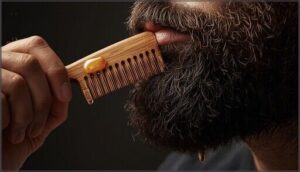
Your beard oil is still fresh — now’s the perfect time to detangle.
Use Wide-Tooth Detangling strokes with your beard comb, working end-to-combing from the tips upward. This Sectional Knot Release approach prevents painful root-pulling. Oil-Enhanced Slip makes stubborn beard tangles surrender fast. Follow a Directional Grooming Pattern — cheek to chin — then finish with beard brushing to smooth everything down.
Evenly Trimming Bulk and Length

Now the real work begins. Pick a guard longer than your target length — Guard Gradation is your best friend here.
Use Bulk Reduction first, trimming chin and jaw where hair grows thickest. Switch Grain Direction: against the grain to even length, then with it to soften. Do quick Symmetry Checks between passes. Mind your Change Zones so nothing looks blocky.
Shaping Neckline and Cheek Line

Once your length is even, it’s time to define your shape. Neckline Height makes or breaks a beard — place it about two fingers above your Adam’s apple. Jawline Definition using a soft U-curve ear to ear. For Cheek Line Curvature, adapt to your Face Shape Adaptation needs.
- Edging Techniques: outline first, then razor outside the lines
- Tilt your head back for cleaner neckline trimming
- Keep cheek line shaping conservative — overcutting takes weeks to recover
Maintaining The Mustache

Once your cheek line is set, don’t ignore what’s sitting right above your lip.
The mustache needs weekly attention — trim it dry, never damp. Wet hair looks longer and you’ll overcut.
Use a Fine-tooth Comb to align hairs straight down, then apply Symmetrical Edge Snipping from center outward.
Finish with Weekly Mustache Oil and a touch of Mustache Wax Application for clean hold.
Trimming Frequency and Maintenance Tips

Trimming too much too soon is one of the fastest ways to stall your progress.
Knowing when to trim — and how often — keeps your beard looking sharp without setting it back.
Here’s what your maintenance routine should look like at every stage.
How Often to Trim During Growth
Trim timing depends on your beard stage and Growth Rate Impact. Short beards need a cleanup every 7 to 14 days. Medium beards do fine every 2 to 4 weeks. Long beards can stretch to 6 to 8 weeks.
Your beard trimming schedule should account for:
- Hair Type Considerations — coarse hair grows faster and shows unruliness sooner.
- Seasonal Adjustments — tighten your routine in summer, relax it in winter.
- Professional vs DIY — barbers spot asymmetry you’ll miss at home.
- Growth Rate Impact — fast growers may need weekly edge cleanups.
Signs It’s Time for a Trim
Your beard tells you when it’s ready. Frizzy tips, Split Ends, and Shape Loss are the clearest signals.
If you’re fighting Uneven Growth daily or dealing with Discomfort Issues — hairs poking your lip or snagging on your collar — that’s your cue.
Don’t wait for a full breakdown. These are the beard trimming tips that keep your beard shape and maintenance on track.
Adjusting Trim Frequency by Growth Stage
Not every stage of growth plays by the same rules. Your beard trimming frequency should shift as you move through each phase.
- Stubble Timing: Clean edges every 3–7 days, skip bulk trimming
- Awkward Phase: Light shape trims every 3–4 weeks only
- Medium Length Schedule: Trim every 2–3 weeks to control flyaways
- Long Beard Cadence: Full trims every 4–8 weeks
- Growth Rate Adaptation: Fast growers trim sooner; slow growers stretch intervals longer
Match your beard maintenance routine to your current stage, not to habit.
Daily and Weekly Grooming Routines
Consistency is what separates a great beard from a scraggly one.
Build your beard grooming routine around these daily and weekly habits.
| Task | Frequency | Pro Tip |
|---|---|---|
| Morning Cleansing | Daily | Rinse with warm water, wash 2–3x weekly |
| Oil Application | Daily | 4–6 drops after shower on damp beard |
| Brushing Technique | Daily | Boar bristle brush, roots outward |
| Weekly Conditioning | Once weekly | Leave mask on 5–10 minutes |
| Nightly Maintenance | Every night | Apply beard butter, comb before bed |
Stick to this beard maintenance routine and your beard trimming frequency almost takes care of itself.
Common Mistakes When Trimming a Growing Beard

Even the best intentions can send your beard in the wrong direction fast. A few simple slip-ups during the growing phase can cost you weeks of progress.
Here are the most common mistakes guys make — and how to avoid them.
Over-Trimming and Uneven Cuts
Most guys don’t realize they’ve gone too far until it’s already done. Over-trimming sneaks up fast, especially when you’re chasing beard symmetry and shaping. Here’s what causes it:
- Wrong Guard Selection — starting too short leaves no room to fix mistakes
- Bad Lighting Setup — poor lighting hides uneven patches until it’s too late
- Skipping Mirror Techniques — one angle lies to you each time
- Missing Patch Detection — wet hair masks length, then dries shorter
Use Recovery Strategies: grab a longer guard, run it evenly, and reset.
Neglecting Beard Edges and Fade
Skipping your beard edges turns a sharp style into a sloppy mess quickly. Neckline Overgrowth makes the whole thing look accidental, while Cheek Line Fuzziness blurs your jawline and kills your shape. Fade Discontinuity breaks the flow between your hair and beard.
Neglect those lines long enough and you’re dealing with Skin Irritation Risks, ingrowns, and Long-Term Maintenance headaches that force bigger corrective cuts later.
Trimming a Wet Beard
Trimming a wet beard is a trap. Moisture makes hairs hang longer than they actually are, so you cut too much and lose weeks of growth. Wet hair also clogs your trimmer guard and causes heat buildup from poor blade lubrication, leading to skin irritation fast.
Trimming a wet beard is a trap — moisture makes hair look longer, so you cut too much
Always let your beard fully dry first, then use your beard comb and scissors to trim with confidence.
Ignoring Beard Health and Hydration
Your beard is only as good as the skin underneath it. Ignore hydration and you’ll deal with:
Dry, flaky skin leads to itchiness, patchiness, and sluggish growth — all habits covered in this guide to healthy beard growth habits that actually work.
- Dry skin that cracks and causes constant itchy irritation
- Beardruff buildup collecting on your collar
- Brittle hair that snaps and splits during brushing
- Poor beard texture that won’t hold shape
- Nutritional neglect making hair thin and fragile
Use beard oil, beard balm, and beard shampoo daily. That’s non-negotiable for real beard health and care.
Frequently Asked Questions (FAQs)
Should I trim my beard if I’m growing it out?
Yes, absolutely.
Think of it as pruning a garden — a little off the top keeps everything growing stronger.
Regular beard trimming helps beard health, busts hair growth myths, and builds the professional image you’re after.
Can a beard cause sinus problems?
It can, but rarely on its own.
Poor beard hygiene raises bacterial load, and allergen trapping near the nostrils triggers nasal irritation. Regular washing keeps things clean and your sinuses clear.
How do diet and nutrition affect beard growth?
Your diet fuels your beard from the inside out. Protein intake, vitamin D, zinc levels, omega‑3 fatty acids, and hydration benefits all directly shape beard growth speed, thickness, and strength.
Can stress slow down or stop beard growth?
Ironically, the very stress pushing you to grow a beard can sabotage it. Elevated cortisol suppresses testosterone, triggering telogen effluvium and thinning.
Manage lifestyle factors and recovery strategies to protect beard growth.
What beard styles suit different face shapes?
Your face shape drives everything.
Oval faces suit almost any style.
Round faces need chin length.
Square jaws soften with circular beards.
Heart shapes balance with jaw volume.
Diamond faces shine with a classic full beard.
How do you handle patchy or thin beard areas?
Patchy spots frustrate plenty of guys — but patience pays off.
Most patches fill in by week 12.
Use graduated trimming, boar bristle brushing, and targeted styling.
Minoxidil application boosts beard density where growth stalls.
Does age impact beard thickness and growth rate?
Yes, age absolutely impacts beard thickness and growth rate.
Hormone levels, genetic influence, follicle sensitivity, and ethnic variations all shape your beard growth patterns — with most men hitting peak beard genetics somewhere between 25 and
Conclusion
What separates a great beard from a forgotten attempt? Discipline in the details.
Learning how to trim beard while growing it out isn’t about cutting your progress short—it’s about steering it. Clean edges, healthy ends, and consistent shaping turn slow growth into real results.
Every trim you make is a decision to build something better. Stay patient, stay consistent, and trust the process. Your beard will show exactly how much attention you gave it.