This site is supported by our readers. We may earn a commission, at no cost to you, if you purchase through links. This content is for general informational and educational purposes only and is not a substitute for professional medical, dermatological, or nutritional advice.
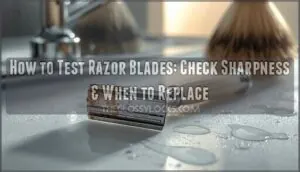
A dull razor doesn’t announce itself—it just makes your morning worse. One day you’re getting a clean, smooth shave. The next, you’re pressing harder, rinsing more, and wondering why your skin looks irritated before you’ve even had coffee.
Most people blame their technique or their skin. The blade is rarely the first suspect. But a worn edge causes more shaving problems than anything else. Knowing how to test razor blades—and read the warning signs early—saves your skin, literally. These methods take seconds and tell you exactly when it’s time to swap.
Table Of Contents
- Key Takeaways
- Signs Your Razor Blade is Dull
- How to Test Razor Blade Sharpness at Home
- Physical Inspection Methods for Razor Blades
- How Shave Quality Reveals Blade Condition
- When to Replace Your Razor Blade
- Frequently Asked Questions (FAQs)
- How to test a razor blade?
- Is razor good for facial hair?
- How can I tell if my razor blade is dull?
- Can dull razors cause ingrown hairs over time?
- Does water hardness affect razor blade performance?
- How do blade coatings impact sharpness and longevity?
- Are expensive razors actually sharper than budget ones?
- Can shaving cream or gel extend blade life?
- Conclusion
Key Takeaways
- A dull blade pulls and tugs instead of cutting cleanly — that sensation alone is your cue to swap it out.
- test sharpness at home in seconds: glide the edge across your thumbnail or slice through printer paper and listen for a clean, crisp sound.
- How skin feels after shaving tells you more than any visual check — irritation, razor burn, and patchy results all point to a worn edge, not bad technique.
- Store your razor in a ventilated spot, pat it dry after every use, and replace it every 5–7 shaves to stay ahead of the dull-blade spiral.
Signs Your Razor Blade is Dull
dull razor doesn’t quit all at once — it sends signals before it completely gives up.
Those warning signs are worth catching early — tips for shaving faster and more efficiently include knowing exactly when a blade is past its prime.
Your skin picks up on the change faster than you’d think.
Here are the clearest signs it’s time to swap out that blade.
Tugging or Pulling Sensation While Shaving
That tugging feeling mid-shave? Your razor blade is telling you something. A dull edge doesn’t slice — it bends and pulls hair upward instead.
Sharpness drops fast, sometimes after just five shaves. Poor lather lubrication, wrong shaving angle, or blade clogging make it worse.
Shave with the grain direction to reduce skin irritation.
Ignoring the tug invites razor burn. Decreased shaving efficiency signals a dull blade.
Uneven or Patchy Shave Results
Pulling hairs is one thing — but patchy results mean the blade’s edge wear has gone too far.
Micro chipping along the cutting surface causes your razor to skip, leaving uneven stubble behind.
Clogged grooves make it worse, blocking up to 30% of cutting paths.
Hair growth direction matters too; multi‑directional neck hair exposes sharpness flaws fast, tanking your overall shave quality.
Ensuring proper skin preparation can reduce patchy results.
Increased Shaving Time for a Clean Shave
Beyond patchy results, there’s another clear sign — your shave is simply taking longer. A sharp razor blade processes 80% of your beard in one pass. A dull one? Maybe 40%.
That glide resistance adds up fast, turning a 4-minute routine into 6 or 7. Track your time. A 20% increase signals it’s time to act on razor maintenance.
Skin Irritation or Razor Burn After Shaving
Razor burn is your skin telling you the blade is done. Dull edges tug instead of cut, scraping the skin barrier with every stroke.
Red patches, stinging, and that tight, hot feeling hit within minutes.
Post‑shave care matters here — a moisturizer with anti‑inflammatory ingredients considerably speeds healing timeframes.
Skin irritation prevention starts with blade replacement, not a cooling treatment after the damage is done.
How to Test Razor Blade Sharpness at Home
You don’t need special tools to know if your blade is still sharp. A few quick checks at home will tell you everything you need to know.
Here are four simple ways to test your razor blade right now.
The Arm Hair Test
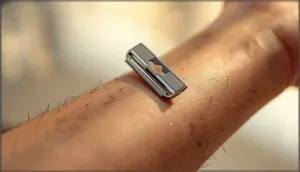
The arm hair test is one of the fastest sharpness tests you can do. No fancy tools needed.
Preparation Steps: pick a spot on your forearm with dense hair. Good lighting conditions matter — you need to see what’s happening.
- Hold the razor blade at a 30-degree angle control
- Glide lightly — zero downward pressure (safety precautions)
- Move with hair growth direction
- Watch for clean, smooth removal
- Result interpretation: hairs pop off instantly = sharp; tugging = dull
A clean hair test confirms shave quality and helps skin irritation prevention.
The Fingernail Trick
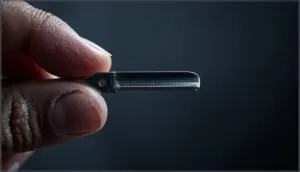
Testing blade sharpness with the Fingernail Trick takes seconds.
Edge placement is everything — rest the razor blade lightly on your thumbnail, no pressure.
Resistance feel tells the story: a razor sharp edge bites and holds. A dull one glides right off.
Safety precautions matter here — never press down. That magnetic grab is your blade sharpness evaluation, done.
The Paper Slice Test
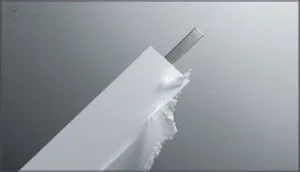
Grab a sheet of printer paper — it’s the go-to for paper type selection because its consistent thickness doesn’t lie. Hold it vertically, then slice down at a cutting angle.
A sharp razor blade glides through with a clean, high-pitched sound cue. Tearing or edge feathering? Your blade’s done.
Test consistency matters, so run the full edge length every time for honest blade sharpness results.
Visual Edge Inspection Under Light
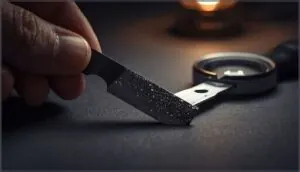
Light doesn’t lie. Hold your razor blade edge-up toward a lamp and rock it gently — that’s your light angle positioning at work. A sharp edge absorbs light completely.
Any shiny white glints mean dull spot localization: those bright reflections map exactly where the blade edge geometry has failed. Wire edge detection works the same way.
Twist the blade slowly — white streaks mean burrs. For magnified edge view, a 10x loupe reveals rounded sections no naked eye catches.
Physical Inspection Methods for Razor Blades

Sometimes the best way to check your blade is just to look at it. A quick physical inspection can reveal damage your skin already felt but your eyes haven’t confirmed yet.
Here’s what to look for.
Checking for Nicks, Dents, or Chips
Even tiny damage wrecks your shave quality. Hold the blade at a 45-degree angle — light angle inspection reveals nicks as small V-shaped gaps instantly. For deeper razor blade care, use a magnifying glass to catch chips under 0.5mm. The fingernail drag test confirms damage that your eyes miss.
- Nicks appear as clean V-shaped gaps along the edge
- Dents feel like subtle dips during a perpendicular fingernail drag test
- Chips show rough, crater-like sections under magnification
- Blade reveal consistency — uneven exposure hints at edge distortion
- Edge profile imaging under backlight highlights shadows where damage hides
Identifying Rust or Discoloration on The Blade
Rust doesn’t lie. Edge rust patterns start subtly — yellowish-brown mineral buildup near the tip, orange tinges along cartridge gaps. These color change indicators tell you moisture is winning.
Check moisture spot locations like the baseplate and between blades.
Material-specific stains vary: stainless shows tea-colored streaking before true corrosion sets in.
Catching visual corrosion levels early is basic razor blade care — and smart skin care.
Feeling for Rough or Jagged Blade Edges
Your fingers are your best diagnostic tool. The Finger Pad Test tells you what your eyes miss. Lightly drag a dry fingertip across the blade at 90 degrees — never along it.
Watch for these during Micro-Chip Detection and Burr Identification:
- Uniform Edge Check: consistent stickiness heel-to-toe means a healthy edge
- Thumb Pad Sensation: a keen blade grips slightly instead of skating freely
- Gritty or catching spots signal damage needing attention
Spotting Visible Corrosion or Wear
Beyond texture, your eyes catch what fingers can’t.
Brown or orange spots are classic Rust Color Indicators — iron oxide forming where moisture pooled.
Watch for Coating Wear Signs too: a dull, matte patch where silver once gleamed means the protective layer is gone.
Pitting Corrosion Features look like tiny craters near the edge.
Any of these? Replace it. That’s just smart Blade Care and Maintenance.
How Shave Quality Reveals Blade Condition
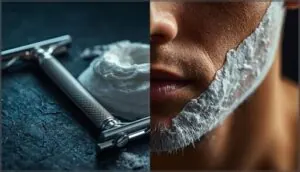
Your razor tells on itself every single time you shave.
The way skin feels — and how close the shave actually gets — reveals more than any visual inspection ever could.
Here’s what to pay attention to.
Evaluating Closeness of The Shave
Rubbing your fingers across your face tells the real story. Tactile smoothness fades fast with a dull blade — stubble return time drops from 13 hours to under 7 hours.
Check stubble length by running against the grain.
A multi-pass strategy helps, but if you’re still seeing visual shadow after three passes, your blade’s done. That’s your clearest signal.
Assessing Skin Condition After Shaving
Your skin tells you everything post‑shave.
Watch for these red flags:
- Redness Levels — red patches appear within minutes; persistent irritation lasts 1–3 days
- Burning Sensation and Dry Tight Skin — burning hits immediately; skin feels stripped within 10 minutes
- Raised Bumps and Nicks/Weepers — ingrown hairs cluster fast; tiny bleeds signal blade drag
Dull blades increase friction‑driven irritation by 50%. That’s not a shaving technique problem — that’s a blade problem.
A dull blade doesn’t just shave poorly — it drives a 50% spike in skin irritation
Tracking Comfort Across Multiple Shaves
Keeping a simple log transforms guesswork into data.
Track your comfort score trends after each shave — most blades drop noticeably around shave 4 or 5.
Watch your glide resistance metrics: smooth on day one, draggy by day four.
Your irritation log patterns reveal the truth faster than memory does.
That’s your shave count visualization working for you.
Recognizing When Performance Starts Declining
Performance doesn’t collapse overnight — it fades in stages.
Watch for these signals: your pass count climbs from one stroke to two or three, friction increase makes each glide feel sticky, and nicks frequency jumps from zero to several per session.
The strip fade confirms edge dullness visually. That combo is your sharpness evaluation telling you it’s time.
When to Replace Your Razor Blade
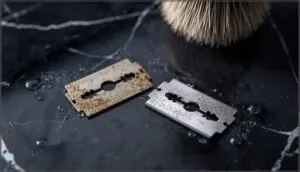
Knowing when to swap out your blade is just as important as knowing how to shave.
Hold on too long and you’re basically dragging dull metal across your skin.
Here’s what you need to know about timing, storage, and keeping your blade sharper for longer.
Replacement Schedule for Safety Razors
Daily shave frequency matters more than the calendar. Here’s a simple baseline for safety razors:
- Daily shavers with coarse hair: replace every 3–5 shaves
- Average daily shavers: swap after 5–7 shaves
- Occasional shavers (2–3x weekly): stretch to 7–14 days
Blade coating effects and blade material longevity also shift these numbers. Coated blades handle hair-type influence better and support shave-quality improvement longer—especially in low-humidity storage.
Cartridge Razor Replacement Guidelines
Cartridge razors follow a different clock than safety razors.
Blade count lifespan varies: five-blade heads last up to 20 shaves, while three-blade cartridges top out around 15.
Watch the lubrication strip fade — once it goes white, swap it.
Hair type impact matters too: coarse hair dulls blades in 3–4 shaves.
Match your usage frequency schedule accordingly, and safe cartridge swapping keeps shave quality improvement consistent.
How Storage Habits Affect Blade Lifespan
Where you store your razor matters more than most people think.
Bathroom humidity is a silent blade killer — steam and moisture corrode the edge fast.
Skip airtight containers; they trap dampness. Instead, use ventilated stands so air circulates freely.
Pat drying after every shave slows oxidation considerably.
Toss silica gel packs in your blade storage for serious blade maintenance and real shave quality improvement.
Tips to Extend Blade Sharpness Between Replacements
Want blades that last twice as long? A few habits make all the difference.
- Light pressure and proper angle technique — let the razor glide at 30–45 degrees; forcing it chips the edges fast.
- Pre-shave exfoliation removes dead skin that clogs blades and kills sharpness early.
- Blade cleaning routine plus denim stropping — rinse after every stroke, then strop 20 times post‑shave.
Small moves, real sharpness gains.
Frequently Asked Questions (FAQs)
How to test a razor blade?
A thousand tiny problems start with one dull blade.
Test sharpness fast: try the fingernail trick, arm hair glide, or paper slice.
Trust texture feel and blade edge angle for real razor safety.
Is razor good for facial hair?
Yes — razor works great for facial hair.
It’s cost‑efficient, delivers a close shave, and fits most grooming routines.
Just keep skin safety in mind: use a sharp blade and shave with the grain.
How can I tell if my razor blade is dull?
Your razor’s dull when it tugs instead of glides.
Watch for patchy results, extra passes, and skin irritation — all signs the blade edge has lost its cutting angle and pressure sensitivity.
Can dull razors cause ingrown hairs over time?
Absolutely.
Dull razors are a top ingrown hair cause. Instead of clean cuts, they tug hairs, leaving jagged tips that curl back into follicles — spiking your ingrown risk by up to 75 percent.
Does water hardness affect razor blade performance?
Hard water quietly wrecks blades. Mineral buildup coats edges, lather degradation reduces glide, and rinse residue clogs cartridges. Corrosion acceleration follows.
Water softening benefits your blade sharpness noticeably — extending shaving performance longer than you’d expect.
How do blade coatings impact sharpness and longevity?
Blade coatings directly affect how long your edge stays sharp.
PTFE friction reduction, Platinum corrosion resistance, Chromium edge hardening, DLC durability, and TiN hardness boost all extend blade edge sharpness across more shaves.
Are expensive razors actually sharper than budget ones?
Sometimes, yes — but not always. Premium blades use better material composition and edge coating, scoring higher on sharpness tests. That said, cost benefit varies. Some budget options genuinely surprise you.
Can shaving cream or gel extend blade life?
Yes — the right lather is practically a blade bodyguard.
Proper lubrication benefits are real: gel vs cream both cut friction reduction by up to 30%, extending sharpness and shaving comfort optimization, noticeably.
Conclusion
Your blade is already deciding how tomorrow’s shave will feel. The question is whether you’ll notice before your skin pays the price.
Now that you know how to test razor blades, you’re not guessing anymore. A quick check—the arm hair, the fingernail, or just honest feedback from your skin—tells you everything.
Don’t wait for irritation to confirm what a sharp blade would have prevented. Swap early. Shave better.