This site is supported by our readers. We may earn a commission, at no cost to you, if you purchase through links. This content is for general informational and educational purposes only and is not a substitute for professional medical, dermatological, or nutritional advice.

Most men pick a razor the same way they pick a Netflix show—grab whatever looks fine and commit without overthinking it. But your face deserves better than a default choice.
The electric shaver vs manual razor differences run deeper than blade count or battery life; they shape how your skin feels every single morning. Switch to the wrong one and you’re looking at razor burn, patchy lines, or a shave that barely qualifies.
The right match depends on your skin, your schedule, and how close you actually want to get. Here’s everything you need to make that call with confidence.
Table Of Contents
- Key Takeaways
- Electric Shaver Vs Manual Razor: Key Differences
- Benefits of Electric Shavers
- Advantages of Manual Razors
- Skin Type Considerations for Shaving
- Cost and Environmental Impact Comparison
- Maintenance and Care Requirements
- Top Electric Shavers and Manual Razors
- Frequently Asked Questions (FAQs)
- Is it better to use a manual or electric shaver?
- What are the downsides of electric shavers?
- Do electric razors prevent folliculitis?
- Can you shave in the shower with electric shavers?
- Which shaver works best for head shaving?
- How do foil and rotary electric shavers differ?
- Does shaving frequency affect which razor to choose?
- Can manual razors help with skin exfoliation?
- Conclusion
Key Takeaways
- Electric shavers are go-to for speed, safety, and sensitive skin — they cut without touching your skin directly, which slashes razor burn and ingrown hairs significantly.
- Manual razors win on closeness and precision every single time — nothing else gives you that surgical edge around sideburns, jawlines, and necklines.
- Your skin type should drive the decision: oily or coarse skin handles manual razors better, while sensitive or acne-prone skin thrives with electric.
- Long-term costs flip the script — electric shavers cost more upfront but save you money over five years compared to cartridge refill habits that quietly drain your wallet.
Electric Shaver Vs Manual Razor: Key Differences
These two tools couldn’t be more different under the hood. From how the blade hits your skin to how your face feels an hour later, the gap is real.
Here’s where they actually part ways.
Shaving Mechanism and Technology

electric shavers are the machinery, manual razors are the craft.
Electric shavers are the safer daily driver—especially if you’re prone to razor burn or ingrown hairs.
Foil vs Rotary defines electric shaving — foil heads cut in straight lines, rotary heads flex around curves. Linear Motor Dynamics keep power steady through thick stubble. Sensor-Driven Power adjusts automatically. Manual shaving relies on Blade Geometry Innovation — that precise 30-degree edge does all the work.
foil shavers reduce irritation and razor burn.
| Feature | Electric Shaver |
|---|---|
| Motion | Oscillating or rotary |
| Power Source | Battery/rechargeable |
| Tech Highlight | Linear motor, sensors |
| Manual Equivalent | Hand-controlled blade angle |
Shave Closeness and Precision
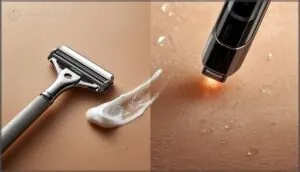
Manual razors win on shave closeness — full stop.
Blade-to-skin contact means zero stubble left behind, while even the best foil shavers leave around 0.05 mm.
That edge sharpness difference is real.
For detailing accuracy around sideburns or necklines, a manual razor’s contour adaptation and skin contact pressure give you surgical control electric shavers simply can’t match.
For convenience, electric razors allow dry or wet use[https://royalexaminer.com/mens-razors-manual-vs-electric/).
| Factor | Manual Razor |
|---|---|
| Stubble Length | 0 mm |
| Detailing Accuracy | Surgical precision |
| Contour Adaptation | Direct skin contact |
| Shave Closeness | Closest possible |
Comfort and Skin Irritation

Closeness matters, but comfort is where the real battle plays out. Electric shavers keep blades behind a foil guard — your skin never touches the cutting edge, making irritation prevention far more reliable.
Manual razors, without proper glide enhancement and pressure control, can torch sensitive skin with razor burn fast.
| Factor | Electric Shaver | Manual Razor |
|---|---|---|
| Razor Burn Risk | Low | High without cream |
| Post‑Shave Soothing Needed | Minimal | Often necessary |
Ease of Use and Convenience

Comfort sorted — now let’s talk convenience. Electric shavers win on Quick Setup: no cream, no brush, no ritual. Just grab and go. A Manual Razor demands water, lather, and patience every single time.
| Feature | Electric Shaver | Manual Razor |
|---|---|---|
| Shower Friendly | Yes (IPX5+) | Yes, with prep |
| Battery Life | ~60 min cordless | No power needed |
| One‑Touch Cleaning | Yes, auto-dock | Manual rinse only |
Portable Design and USB charging make electrics road‑trip ready.
Benefits of Electric Shavers
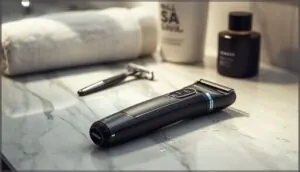
Electric shavers have quietly earned their spot in millions of bathrooms for good reason. They’re not just a backup plan — for many people, they’re the smarter, faster choice. Here’s what makes them worth a second look.
Speed and Time Efficiency
Time is the one thing you can’t get back — and electric shavers know it. While a manual razor demands 15 to 25 minutes each morning, an electric shaver wraps up your shave in under five. That’s not a small gap.
Here’s where shaving technology really wins on convenience:
- Prep Time Savings: Zero to two minutes, no lathering required
- Shave Duration: Full face done in three to four minutes flat
- Motor Speed: Braun’s 40,000 cross-cutting actions per minute means fewer passes
- Battery Runtime: One charge covers nearly two weeks of daily shaves
Safety and Reduced Risk of Cuts
Electric shavers put blade guards between the cutting edge and your skin — that’s the whole ballgame for shaving safety. No exposed steel, no razor burn risk, no panic‑inducing nicks. The foil acts like a goalkeeper, letting hair through while blocking cuts. Pressure control is basically built in, since pivoting heads handle angle safety automatically. Cutting depth stays above skin level, meaning micro‑trauma reduction is real and measurable.
| Safety Factor | Electric Shaver | Manual Razor |
|---|---|---|
| Blade guards | Full foil or rotary screen | Minimal or none |
| Cutting depth | At/above skin surface | At/below skin surface |
| Angle safety | Auto-adjusting pivot head | Requires 30° manual control |
| Sensitive skin suitability | High | Moderate |
| Razor burn likelihood | Low | Higher with dull blades |
For sensitive skin especially, that shallower cut makes a daily difference. Key shaving tips and tricks: replace foils every 12–18 months — damaged heads defeat the whole safety system. Shaver maintenance isn’t optional; it’s what keeps the guard doing its job.
Keeping your electric shaver well-maintained also helps cut down on waste — unlike the 2 billion disposable razors that clog U.S. landfills each year.
Versatility for Multiple Grooming Needs
Swapping grooming tools mid-routine used to mean cluttered counters and a drawer full of single-use gadgets. A modern electric shaver changes that.
With interchangeable attachments, pop-up detail trimmers, and flexible head design, one device covers multi-area coverage — face, head, body — without compromise. Wet-dry capability means shower or sink—your call. No manual razor matches that range.
Suitability for Sensitive Skin
Sensitive skin doesn’t forgive a bad tool choice. That’s where electric shavers pull ahead.
Foil barrier protection keeps blades from ever touching your skin directly — no direct blade contact means no micro-cuts, no razor burn.
Flexible head comfort follows every contour without repeated passes.
Reduced ingrown risk is real, too.
Add wet-dry adaptability, and your skin care routine finally works with you, not against you.
Advantages of Manual Razors

Electric shavers are great, but manual razors have a loyal following for good reason.
There’s something about a fresh blade that just hits different — the control, the closeness, the ritual. Here’s what makes manual razors worth a second look.
Achieving a Close, Smooth Shave
Nothing beats a manual razor when you want that baby-butt-smooth finish.
With the right multi-pass technique — with grain first, then across — you’re removing stubble in layers without punishing your skin.
Add a pre-shave oil, nail your blade angle optimization at 30 degrees, and follow up with post-shave hydration.
Your exfoliation routine beforehand does the heavy lifting.
No electric shaver gets this close.
Precision for Detailing and Shaping
Want Don Draper-level grooming? A manual razor delivers it.
Mastering your angle pressure technique — blade at 30 degrees, skin stretched taut — gives you jawline contour precision no electric can match. Sideburn edge control, neckline edging accuracy, mustache trim detail: all sharper with direct blade contact.
Your shaving techniques define your facial hair styles. That’s real beard care.
Cost-Effectiveness Over Time
Precision is great, but your wallet matters too. Manual razors win the long game. Safety razor blades cost under $15 a year — versus $100–$300 annually for cartridge refills.
Over a five‑year span, a Leaf Razor totals around $118. That’s real Device Lifespan ROI.
- Safety blades: under $15/year
- Cartridge systems: up to $300/year
- Electric shaver heads: $20–$60 annually
Traditional Wet Shaving Experience
Some guys treat wet shaving like Don Draper treats a boardroom — with intention and ritual.
Beyond cost savings, the manual razor offers something electric can never replicate: a craft.
| Wet Shaving Step | Why It Matters |
|---|---|
| Hot Towel Prep | Softens beard hairs up to 30% |
| Brush Selection | Builds richer, cushioning lather |
| Lather Building | Protects skin during razor blade contact |
| Razor Angle | 30 degrees maximizes shaving cream efficiency |
| Alum Aftercare | Closes pores, kills bacteria post-shave |
These shaving methods turn your morning routine into a quiet win.
Skin Type Considerations for Shaving
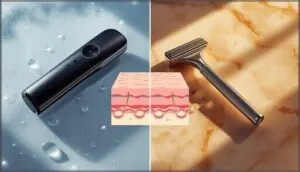
Your skin has opinions — and it’s time to listen to them.
The right shaver for your face depends a lot on what your skin actually handles day to day. Here’s how different skin types stack up regarding choosing your tool.
Sensitive Skin
Sensitive skin has a weaker barrier, meaning every shave is a negotiation. An electric shaver wins here — it floats above the skin, cutting without direct blade contact and dramatically lowering friction.
Skip fragrance-free formulas and you’re asking for trouble.
Post-shave soothing with a ceramide balm manages barrier strengthening fast.
Temperature effects matter too — always rinse with cool water to calm things down.
Oily or Combination Skin
Oily or combination skin plays by different rules.
Excess sebum can clog electric shaver foils fast, so pre-shave cleansing with a salicylic cleanser is non-negotiable for sebum control and pore minimization.
manual razor actually glides better here — natural oils help the blade move smoothly.
non-comedogenic aftercare gel for shine reduction without blocked pores.
Acne-Prone Skin
Acne-prone skin needs the most careful approach of all skin types. Electric shavers win here for daily use — foil heat management keeps blades away from active breakouts, so you’re not dragging metal across inflamed skin.
Stick to gentle pressure technique and non-comedogenic prep beforehand.
Post-shave soothing with a fragrance-free gel helps calm things down.
Acne-friendly cleaning of your shaver after every use is non-negotiable.
Thick or Coarse Facial Hair
Thick, coarse facial hair — the kind that laughs at dull blades — demands a smarter game plan. Rotary shaver advantage shines here, since flexible heads track dense, multi-directional beard growth naturally.
blade sharpness importance can’t be overstated; a sharp edge cuts cleanly instead of tugging.
pre-shave exfoliation to soften wiry strands, then apply a multi-pass technique for hair curl management and a genuinely close shave.
Cost and Environmental Impact Comparison

The price tag is only part of the story when choosing between an electric shaver and a manual razor.
What you spend upfront, how long your gear lasts, and what you toss in the trash all add up over time.
Here’s a closer look at how these two options really compare.
Upfront and Ongoing Costs
The initial purchase price tells only half the story. An electric shaver costs more upfront — $80 to $200 — but replacement head expenses are minimal. A manual razor’s cartridge refill can quietly stack up to $50–$100 yearly. Factoring in electricity usage fees (nearly negligible at under $1 annually), long‑term savings clearly favor electric.
| Cost Factor | Electric Shaver | Manual Razor |
|---|---|---|
| Upfront Cost | $80–$200 | $8–$25 |
| Annual Blades/Heads | $10–$40 | $50–$100 |
| Shaving Cream Needed | No | Yes |
| 5-Year Total | ~$100 | $500+ |
Blade and Device Longevity
Think of blades like car tires — they wear down whether you notice or not.
Electric shaver foil wear rate kicks in around 12–18 months; rotary head durability matches that window.
Razor blades in a manual razor last just 5–7 shaves.
Battery lifespan on quality shavers is three to five years.
| Razor Comparison | Electric Shaver | Manual Razor |
|---|---|---|
| Head Replacement Cycle | 12–18 months | Weekly |
| Device Lifespan | 3–5 years | Indefinite handle |
| Maintenance Frequency | Low | High |
Waste Generation and Sustainability
Americans toss 2 billion disposable razors yearly — that’s a plastic blade waste crisis hiding in plain sight. Your manual razor’s carbon footprint adds up fast, while e-waste recycling for electric shavers remains a real challenge.
Americans discard 2 billion disposable razors yearly, yet electric shavers carry their own environmental burden through e-waste
| Sustainability Factor | Electric Shaver | Manual Razor |
|---|---|---|
| Annual Solid Waste | Low (head replacements) | High (blades weekly) |
| Recyclability | Difficult (e-waste) | Blades: 99% when separated |
| Packaging Reduction | Minimal ongoing | Frequent cartridge waste |
| Circular Economy Support | Take-back programs exist | TerraCycle accepts packaging |
| Plastic Blade Waste | Negligible | 780g non-recyclable yearly |
Grooming choices matter beyond your bathroom.
Power Consumption and Emissions
Your electric shaver sips power — roughly 0.27 kWh yearly for daily use. That’s barely a blip on your energy bill.
But your manual razor quietly racks up 30x more energy through hot water heating. Grid emissions, standby drain, and battery runtime all factor into the real carbon footprint of electric vs manual shaving.
| Power Factor | Electric Shaver | Manual Razor |
|---|---|---|
| Annual Energy Usage | 0.27 kWh | 10.4 kWh (hot water) |
| Carbon Footprint | 272g CO₂/year | Higher via water heating |
| Standby Drain | Under 1 watt | None |
| Battery Runtime | 45–60 min/charge | N/A |
| Grid Emissions Cost | ~$1.53/year | Indirect via utilities |
Maintenance and Care Requirements
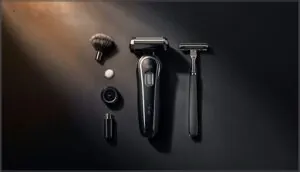
Keeping your shaver in good shape isn’t complicated, but it does make a real difference in how well it performs.
Whether you’re team electric or team manual razor, a little upkeep goes a long way.
Here’s what you need to know to get the most out of your tool.
Cleaning and Storage Practices
Keeping your grooming tools clean isn’t glamorous, but it’s non-negotiable.
For electric shavers, rinse and dry the head under warm water after each use — disinfection methods, such as a quick alcohol soak, handle bacteria buildup.
Manual razors need the same love: moisture prevention starts with proper air drying.
Got a travel case? Make sure it has ventilation.
A soft brush maintenance sweep keeps both tools performing like new.
Blade and Head Replacement Frequency
Blades don’t last forever — and ignoring this is how you end up with razor burn.
Foil Head Lifespan runs 12 to 18 months on most Braun models. Rotary Blade Cycle stretches to two years with Norelco, thanks to thicker cutters. Cartridge Blade Turnover hits every 5 to 10 shaves for Gillette users. Skull Shaver Blade sets need replacing every 3 to 6 months.
Replacement Cost Timing matters — catch it early.
Lubrication and Device Upkeep
Once blade’s fresh, don’t let laziness undo your work.
Oil application frequency matters — twice weekly keeps foil heads cutting clean.
For lubricant types, light mineral oil beats olive oil every time (buildup is real).
Daily shavers using soap? Lube after every rinse.
A quick drop of shaving gel on rotary heads also extends lifespan noticeably.
Small habit, big payoff.
Manufacturer’s Recommendations
Your shaver’s manual isn’t just a pamphlet to ignore — it’s your cheat code.
- Follow the Charging Cycle: Remington needs a full 4-hour first charge
- Stick to the Blade Replacement Interval: Braun heads every 18 months, Gillette ProGlide every 20 shaves
- Match your Cleaning Method to the brand’s specs
- Apply Pre-shave Oil per Skin Prep Guidelines for your electric shaver
- Cross-reference Shaver and Razor Comparisons in Manual Razor Reviews before buying
Top Electric Shavers and Manual Razors
Knowing what to look for is one thing — knowing which products actually deliver is another. Whether team electric or loyal to the blade, a few standouts rise above the noise. Here are five worth your attention.
1. Leaf Razor All Metal Safety Razor
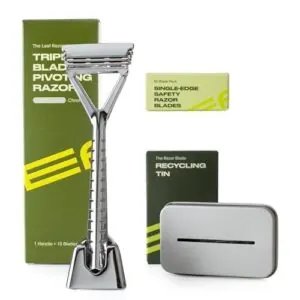
The Leaf Razor is the Don Draper of safety razors — sharp, metal, and built to last.
Its pivoting head adjusts automatically to your contours, so shaving your head or legs doesn’t require awkward hand gymnastics.
You can load one, two, or three blades depending on how close you want to get.
The all-metal, chrome-finished body feels substantial without being clunky.
Plus, it ships with 50 blade refills and a recycling tin, so you’re set for a long time.
| Best For | Anyone who wants a premium, eco-friendly shave — especially people shaving their head or dealing with irritation and ingrown hairs from disposable razors. |
|---|---|
| Shave Type | Manual Razor |
| Wet/Dry Use | Wet Only |
| Skin Irritation | Reduces irritation |
| Close Shave | Yes |
| Easy Maintenance | Blade recycling tin |
| Travel Friendly | Compact with stand |
| Additional Features |
|
- Pivoting head hugs your contours, making it easy to shave tricky areas without much effort
- Load one, two, or three blades so you control how close the shave gets
- Comes with 50 blade refills and a recycling tin — you’re stocked for a long time
- Can get slippery with soapy hands, which makes nicks more likely in tight spots
- The central pin can wear out after heavy use over time
- Costs more upfront than grabbing a pack of disposables
2. Gillette ProGlide Shield 5 Blade Razor

Gillette ProGlide Shield punches above its weight for a cartridge razor. Five ultra-thin blades glide across your skin with dual lubrication strips — one activates before the blades hit, one after. That’s serious irritation defense.
The FlexBall handle pivots with your face, so you’re not fighting every curve.
Flip it over and the precision trimmer manages sideburns and edges cleanly.
Each refill lasts about a month. It’s not cheap long-term, but the comfort payoff is real.
| Best For | Guys with sensitive skin who want a close, comfortable shave without the irritation. |
|---|---|
| Shave Type | Manual Razor |
| Wet/Dry Use | Wet Only |
| Skin Irritation | Reduces irritation |
| Close Shave | Yes |
| Easy Maintenance | Monthly refill cycle |
| Travel Friendly | Lightweight design |
| Additional Features |
|
- Dual lubrication strips (before and after the blades) seriously cut down on razor burn
- FlexBall handle moves with your face — no awkward angles or missed spots
- Built-in precision trimmer makes sideburn and edge cleanup easy
- Replacement cartridges add up fast compared to basic disposables
- Not compatible with GilletteLabs handles, so check before you buy
- May struggle with very thick or coarse hair
3. Pitbull Gold Pro GX5 Head Shaver
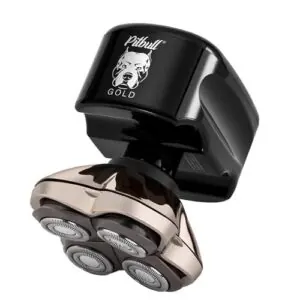
The Pitbull Gold Pro GX5 is built for one job — shaving your head — and it nails it. Four Japanese stainless steel rotary blades flex individually to follow every curve of your scalp.
That spring-loaded design pulls back if you press too hard, so no friction burn.
You get 90 minutes of cordless runtime, a real-time battery display, and wet or dry capability.
The ergonomic handle cups naturally in your palm, making those hard-to-reach spots surprisingly easy to tackle.
| Best For | Anyone who shaves their head regularly and wants a fast, comfortable, no-fuss routine without reaching for a razor every time. |
|---|---|
| Shave Type | Electric Rotary |
| Wet/Dry Use | Wet or Dry |
| Skin Irritation | Nick-free design |
| Close Shave | Yes |
| Easy Maintenance | Easy to clean |
| Travel Friendly | Includes travel case |
| Additional Features |
|
- Four flex blades follow your scalp’s curves, so you get a smooth shave without pressing hard or going over the same spot twice.
- Works wet or dry, and 90 minutes of cordless runtime means you’re not hunting for a charger mid-shave.
- The ergonomic handle makes it easy to reach the back of your head without awkward wrist angles.
- Battery life degrades over time, and some users notice a sudden drop-off around the 50% mark.
- The charge port cover isn’t attached, so it’s easy to misplace and leave your port exposed.
- It won’t get quite as close as a traditional razor blade if that’s the level of smoothness you’re after.
4. Braun Series 9 Pro+ Electric Shaver
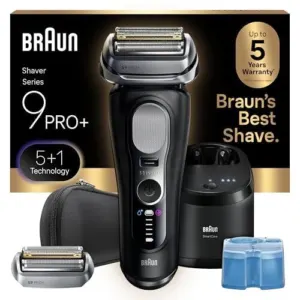
If Don Draper shaved, he’d use the Braun Series 9 Pro+. This is the reference point of foil shavers — and at $349.99, it knows it.
The 5+1 synchronized cutting elements, including a ProLift blade and Direct&Cut foil, manage flat‑lying and multi‑directional hairs without missing a beat. Its Pro SensoAdapt sensor reads your beard density 300 times per second, adjusting power automatically.
Sensitive skin? The SkinGuard bar has you covered. The 6‑in‑1 SmartCare station manages cleaning, drying, and charging — basically a valet for your face.
| Best For | Guys who want a premium, no-compromise shave and don’t mind paying for the best tool in the drawer. |
|---|---|
| Shave Type | Electric Foil |
| Wet/Dry Use | Wet or Dry |
| Skin Irritation | Sensitive skin compatible |
| Close Shave | Yes |
| Easy Maintenance | SmartCare Center |
| Travel Friendly | Portable design |
| Additional Features |
|
- The 51 cutting system handles flat-lying and stubborn hairs in one pass — seriously thorough
- Pro SensoAdapt adjusts power on the fly, so sensitive skin doesn’t take a beating
- The 6-in-1 SmartCare station does all the maintenance for you — clean, dry, charged, done
- At $349.99, it’s a real investment — plenty of solid shavers cost half as much
- The trimmer can be fiddly to switch on and off, which gets old fast
- It runs a bit louder than older Braun models, which might matter in a quiet morning house
5. Remington Balder Pro Rotary Shaver
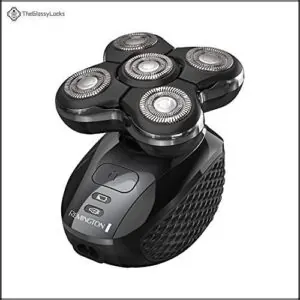
Want a head shaver that just works? The Remington Balder Pro XR7000A is built for exactly that.
Five dual-track rotary heads flex and pivot 360 degrees, covering your skull without awkward wrist contortions. It’s fully waterproof, so you can use it in the shower.
Since “waterproof” can mean anything from splash-resistant to fully submersible, this guide to choosing the best body trimmer explains which IPX rating suits showers.
For a smoother, closer finish on a bald head, it also helps to compare the best razors for men before you buy.
Since gentle, consistent sessions beat intense ones, a few minutes with a quality scalp massager each day delivers more benefit than occasional heavy-duty use.
While this head shaver handles your scalp beautifully, pair it with our guide to razors for sensitive skin if other areas of your body need a gentler touch.
The lithium battery runs 50 minutes per charge — plenty for daily use — and a 5-minute quick charge saves you on rushed mornings. At its price point, it’s hard to beat for no-fuss, everyday head shaving.
| Best For | Anyone who wants a quick, no-fuss shave for their head or face — especially guys with sensitive skin or anyone who loves a shower shave. |
|---|---|
| Shave Type | Electric Rotary |
| Wet/Dry Use | Wet or Dry |
| Skin Irritation | Sensitive skin suitable |
| Close Shave | Yes |
| Easy Maintenance | Hair capture system |
| Travel Friendly | Non-slip grip |
| Additional Features |
|
- Five flexing rotary heads cover your whole head smoothly, no awkward angles needed
- Fully waterproof, so you can shave in the shower without a second thought
- 50-minute battery life handles daily use easily, and a quick charge gets you out the door fast
- Won’t get as close as a traditional blade, so stubble purists may be disappointed
- Can’t be used while plugged in, which is annoying if the battery dies mid-shave
- Needs regular cleaning to stay reliable — skip maintenance and it may start acting up
Frequently Asked Questions (FAQs)
Is it better to use a manual or electric shaver?
Neither is universally better — it depends on your skin, schedule, and style goals. Electric shavers win on speed and safety. Manual razors dominate for closeness and precision.
What are the downsides of electric shavers?
Electric shavers aren’t perfect. They leave 1–5 mm of stubble, cost more upfront, need pricey replacement heads, and can cause skin irritation during a two-to-four-week adjustment period.
Do electric razors prevent folliculitis?
Basically, yes.
Electric razors cut hair at or just above skin level, so sharp ends don’t curl back into follicles. That alone slashes your folliculitis risk substantially — especially if you’ve got curly hair.
Can you shave in the shower with electric shavers?
Yes, but only if your shaver is rated IPX5 or higher. Models like the Braun Series 9 and Philips Norelco 9000 are fully shower-safe. Always go cordless — no exceptions.
Which shaver works best for head shaving?
For head shaving, a rotary electric shaver wins. The Pitbull Gold Pro GX5 cups your whole skull and finishes in two minutes. Manual razors get closer, but require real skill.
How do foil and rotary electric shavers differ?
Foil shavers use fast-oscillating blades under a metal screen — best for sensitive skin and straight strokes.
Rotary heads spin in circles, hugging face contours better.
Got thick, multi-directional growth? Rotary wins.
Does shaving frequency affect which razor to choose?
Shaving frequency absolutely shapes your pick.
Daily shavers thrive with electrics — fast, gentle, done in under five minutes.
Infrequent shavers? A manual razor manages that longer stubble with a closer, cleaner result.
Can manual razors help with skin exfoliation?
Absolutely. Every pass of a manual razor physically lifts away dead skin cells alongside hair. It’s like built-in exfoliation — leaving your face feeling smoother and looking noticeably brighter right after.
Conclusion
Your morning routine is a quiet contract with yourself—honor it wisely.
The electric shaver vs manual razor differences aren’t just about tools; they’re about what your skin, schedule, and standards actually demand.
Go electric for speed and comfort.
Go manual for precision and closeness.
Neither is wrong, but one is right for you.
Stop defaulting.
Make the deliberate call, stick with it, and your face will thank you every single morning.