This site is supported by our readers. We may earn a commission, at no cost to you, if you purchase through links. This content is for general informational and educational purposes only and is not a substitute for professional medical, dermatological, or nutritional advice.
Most people own one trimmer and use it everywhere—nose, ears, whatever needs attention. That’s not laziness; it’s just practical.
But the “can you use the same trimmer for nose and ears?” question actually has a more nuanced answer than a simple yes or no, because your nose and ears aren’t working with the same type of hair, the same skin sensitivity, or the same hygiene stakes.
The good news: plenty of trimmers are built specifically for both jobs. The catch is knowing how to use them safely so you’re not trading a grooming win for a bacterial problem.
Table Of Contents
- Key Takeaways
- Can You Use The Same Trimmer for Nose and Ears?
- Pros and Cons of Dual-Use Trimmers
- Essential Safety and Hygiene Tips
- How to Use a Trimmer for Nose and Ears
- Top Nose and Ear Hair Trimmers
- 1. Philips Norelco Nose Trimmer 3000
- 2. AsonTao Round Tip Grooming Scissors
- 3. Micro Touch MAX Hair Trimmer Built In Light
- 4. Wahl Lithium Pen Trimmer Nose Ear Eyebrow
- 5. ConairMan 360 Nose Ear Trimmer
- 6. Panasonic Ear Nose Hair Trimmer
- 7. Panasonic Nose Ear Hair Trimmer Vacuum
- 8. Motanar Stainless Steel Grooming Scissors
- 9. Manscaped Weed Whacker Pro Trimmer
- Expert Recommendations for Safe Trimming
- Frequently Asked Questions (FAQs)
- Can I use a nose hair trimmer on my ear?
- Should you use a different trimmer for nose and ear hair?
- Is it okay to use the same trimmer for everything?
- What is the best trimmer for nose and ear hair?
- Can nose trimming cause sinus infections or irritation?
- How often should you replace your trimmer blades?
- Are manual scissors safer than electric trimmers?
- What trimmer features work best for sensitive skin?
- Can trimming nose hair affect your breathing or allergies?
- Conclusion
Key Takeaways
- You can safely use one trimmer for both nose and ears, but only if you clean and disinfect it thoroughly between uses — skip that step and you’re just moving bacteria from one place to another.
- Nose hair grows faster, filters air, and tends to be coarser, while ear hair is finer and slower-growing, so your technique and insertion depth should adjust accordingly.
- Bacteria can survive on stainless steel blades for up to 250 hours, making proper cleaning (rinse, soap wash, 70% alcohol) non-optional — especially if you have a weakened immune system or chronic sinus issues.
- Replace your trimmer blades every three to six months, and watch for red flags like tugging, grinding noise, or a battery that dies in under five minutes — dull blades cause micro-cuts that open the door to infection.
Can You Use The Same Trimmer for Nose and Ears?
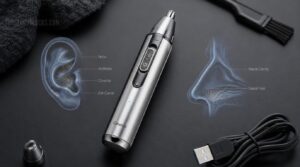
The short answer is yes — but there’s a bit more to it than just swapping from one nostril to your ear.
A few things worth knowing first: how nose and ear hair actually differ, what trimmer designs work best for each, and what manufacturers usually recommend.
Consumer reviews can also cut through the noise, and top-rated nose hair trimmers from consumer testing often reveal which designs hold up in real-world use.
Here’s what you need to think about before going dual-use.
Key Differences Between Nose and Ear Hair
Nose and ear hair aren’t the same beast. Both respond to hormonal influence — especially testosterone — but their growth rate, structural location, and protective function differ in ways that actually matter for grooming.
- Nose hair grows faster (~0.12mm/day) and acts as your primary air filter
- Ear hair grows slower but becomes coarser with age-related changes
- Nasal hairs are thicker and stiffer; ear hairs are finer
- Nose hair traps particles; ear hair mainly helps earwax movement
- Nose and ear hair care isn’t one-size-fits-all
Design Features of Trimmers
anatomical differences shape exactly what trimmer designs you’ll want to look for.
Most electric trimmers today use a rotary head shape with 360-degree coverage, while manual trimmers offer more precision control.
Look for a protective guard system with rounded tips, hypoallergenic blade material innovation, and a waterproof rating like IPX5 for easy rinsing.
battery motor speed — around 6,500–7,000 rpm — keeps things smooth and snag‑free.
Choosing a trimmer with SkinGuard blades stay sharp provides safe, gentle grooming.
Manufacturer Recommendations
Design specs only tell half the story — what the manufacturer actually says matters just as much. Most brands, including Philips Norelco, Wahl Lithium, ConairMan, and Panasonic Ear and Nose Hair Trimmer lines, explicitly approve dual‑use when you follow their rules:
- Respect the Approved Insertion Depth (roughly 5 mm for rotary tips)
- Follow their Cleaning Protocols after every switch
- Use only approved attachments for Accessory Compatibility
- Check Warranty Conditions before modifying its use
- Charge properly per Battery Safety guidelines
Pros and Cons of Dual-Use Trimmers
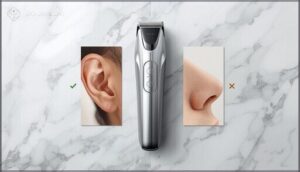
Using one trimmer for both jobs has real appeal — fewer gadgets, less clutter, and a lighter hit on your wallet.
But there are a few trade-offs worth knowing before you commit to going the dual-use route.
Here’s an honest look at the pros and cons.
Convenience and Cost Savings
One trimmer, two jobs — that’s the real appeal here.
A solid dual-use electric trimmer usually runs between $10 and $25, which is far cheaper than buying separate grooming tools.
You also save on battery costs since one rechargeable device powers your full routine.
For travel compactness alone, it’s hard to beat.
The multi-tool value and long-term ROI make dual-use men’s grooming gear a smart call.
You can check the price history details for this trimmer.
Potential Hygiene Risks
But here’s the catch — sharing one trimmer between your nose and ears isn’t just a convenience trade-off, it’s a genuine health risk.
- Biofilm Formation seals bacteria onto blades, shielding them even after rinsing.
- Moisture Retention in bathroom storage boosts bacterial survival by 300%.
- Blade Wear Risks create micro-cuts that invite infection.
- Cross-Device Infection spreads staph and debris between passages.
Performance and Effectiveness
dual-use electric trimmers actually perform well for both jobs. Strong motor power keeps cutting speed consistent whether you’re in the nostril or ear canal, and good blade precision means fewer missed hairs per pass.
Battery longevity matters too — models like the Manscaped Weed Whacker Pro offer around 60 minutes, plenty for weeks of use. Vacuum efficiency is a nice bonus, pulling clippings away cleanly.
Essential Safety and Hygiene Tips
Using the same trimmer for both nose and ears is fine — but only if you’re keeping it clean.
A few simple habits can make a real difference in your health and how long your trimmer actually lasts. Here’s what you need to know.
Cleaning Procedures Between Uses
Cleaning your trimmer between uses isn’t optional — it’s the whole game. Here’s how to do it right:
- Rinse head under running water after every session to flush hair and debris.
- Soap wash with mild dish detergent to lift skin oils and buildup.
- Alcohol disinfect using 70% solution — let it air dry completely, don’t rinse it off.
- Replace blade every 6–12 months, sooner if it starts pulling.
- Store dry in a case to protect clean blades between uses.
Risks of Cross-Contamination
Here’s the uncomfortable truth: bacteria survival on stainless steel can stretch up to 250 hours.
Bacteria can survive on stainless steel for up to 250 hours — cross-contamination isn’t a theory, it’s a timeline
That means cross-site transmission isn’t hypothetical — it’s physics.
Nose hair trimming safety gets complicated fast when the same blade moves from your nostril to your ear canal.
Infection pathways open through microcuts you can’t even see, and biofilm formation on worn blades makes immune vulnerability worse, especially if you’re diabetic or immunocompromised.
Maintenance Best Practices
Think of your trimmer like a kitchen knife — neglect sharpens nothing. Solid hygiene practices make all the difference.
- Deep Cleaning Routine & Drying Methodology: Rinse the detachable head after every use, brush out trapped hairs, then air‑dry completely before storing.
- Blade Lubrication Schedule: Apply one drop of machine oil every six months to keep blades gliding cleanly.
- Replacement Frequency Guidelines & Battery Storage Tips: Swap blade heads every three months, and remove batteries during long storage gaps to prevent corrosion.
How to Use a Trimmer for Nose and Ears
Knowing which trimmer to use is one thing — knowing how to use it is what keeps things clean, comfortable, and nick-free.
Technique matters more than most people think, whether you’re working on your nose or your ears.
Here’s what you need to know to do it right.
Proper Nose Hair Trimming Technique
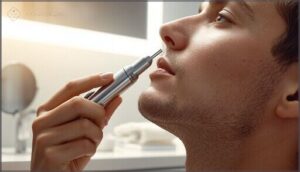
Good nose hair trimming technique starts before you even switch the trimmer on. Pre‑trim preparation matters: blow your nose, get good lighting, and tilt your head back slightly.
Insertion depth control keeps you safe — rotary heads go in about 5 mm, linear heads around 12 mm. Use a circular motion technique with gentle pressure, and do a quick post‑trim inspection after.
| Step | Rotary Trimmer | Linear Trimmer |
|---|---|---|
| Insertion Depth | ~5mm | ~12mm |
| Motion | Circular | In-and-out passes |
| Pressure | Very light | Centered, steady |
Safe Ear Hair Trimming Steps
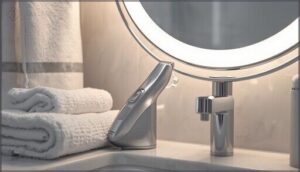
Ears need a different approach than the nose.
Start with lighting positioning — a bright mirror and a slight head tilt so you can actually see what you’re doing. Use your ear hair trimmer with the ear canal guard engaged, and work around the opening with a gentle rotation. Never push inward.
Finish with a post‑trim inspection and dry storage.
Mistakes to Avoid

Even small slip-ups can turn a simple grooming routine into a painful experience. Watch out for these common mistakes:
- Over-deep insertion past 5 mm risks scraping the nasal lining or causing eardrum damage
- Skipping cleaning between nose and ear can spread bacteria and biofilm
- Sharing without disinfecting transfers staph and other pathogens between users
- Ignoring battery warnings weakens blade power, causing dragging and discomfort
Top Nose and Ear Hair Trimmers
Finding the right trimmer makes a bigger difference than most people expect. Some are built for speed and convenience, others for precision or tight budgets.
Here are nine solid options worth considering.
1. Philips Norelco Nose Trimmer 3000
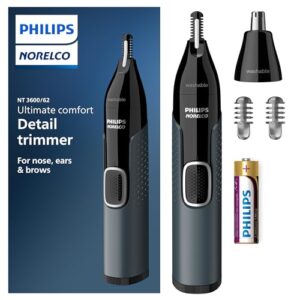
The Philips Norelco Nose Trimmer 3000 (NT3600/62) is a solid pick if you want one trimmer that manages nose, ears, and brows without fuss. Its Protective Guard System keeps blades off your skin, so there’s no nicking or pulling — even on coarser hairs.
It runs on a single AA battery, rinses clean under the tap, and weighs just over six ounces. Compact enough for a travel bag, reliable enough for daily use.
| Best For | Anyone who wants a no-fuss trimmer that handles nose, ear, and brow hair in one compact tool — especially travelers or guys who just want to stay tidy without a whole grooming kit. |
|---|---|
| Power Source | AA Battery |
| Hair Types | Nose, Ear, Brow |
| Blade Material | Dual-sided Steel |
| Portability | Travel-friendly |
| Ease of Cleaning | Water-resistant |
| Skin Safety | Protective Guard System |
| Additional Features |
|
- The Protective Guard System keeps blades off your skin, so no nicking or snagging
- Rinses clean under the tap in seconds — super easy to maintain
- Runs on a single AA battery and small enough to toss in any bag
- Can be louder than expected, which catches some people off guard
- The comb attachment doesn’t always cut evenly — results can be hit or miss
- Takes a little angle-adjusting to get the most out of it, especially around the nose
2. AsonTao Round Tip Grooming Scissors
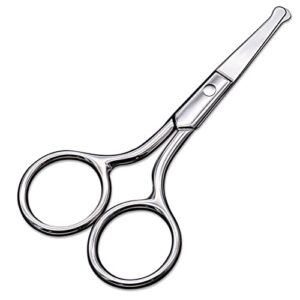
Not everything needs batteries.
The AsonTao Round Tip Grooming Scissors take a different approach — no motor, no charging, just surgical-grade stainless steel and a pair of rounded tips that won’t poke where they shouldn’t.
At 3.75 inches and barely a third of an ounce, they slip into any bag without a thought.
They’re best for detail work: shaping brows, catching a few stray nose hairs, cleaning up edges.
Think of them as your precision backup when a powered trimmer feels like overkill.
| Best For | Anyone who wants a simple, no-fuss grooming tool for quick touch-ups on brows, nose hair, or facial edges — especially travelers or people who prefer manual tools over powered ones. |
|---|---|
| Power Source | Manual |
| Hair Types | Nose, Ear, Brow |
| Blade Material | Surgical Grade Steel |
| Portability | Travel-friendly |
| Ease of Cleaning | Easy to Clean |
| Skin Safety | Round Safety Tip |
| Additional Features |
|
- Surgical-grade stainless steel means they’re built to last and easy to clean
- Rounded tips make them safe to use around sensitive areas like the nose and eyes
- Tiny and lightweight — toss them in a bag and forget they’re there until you need them
- The short blade length makes them a poor fit for anything beyond detail work
- Some users have found the sharpness underwhelming, which means more effort per snip
- They run small, so if you’ve got larger hands, they might feel a little awkward to grip
3. Micro Touch MAX Hair Trimmer Built In Light

Bathroom lighting lies to you — and that’s exactly where the Micro Touch MAX earns its keep. The built‑in LED activates the moment you switch it on, revealing hairs that your mirror would otherwise hide.
At just 1.6 ounces, the pen‑slim handle gives you real control inside tight spots like nostrils and ears. German stainless steel blades do the cutting, and the snap‑on cap protects them between uses. One AA battery powers the whole thing. Simple, sharp, done.
| Best For | Anyone who wants a quick, painless way to clean up nose, ear, and facial hair without squinting under bad bathroom lighting. |
|---|---|
| Power Source | 1 Battery Required |
| Hair Types | Nose, Ear, Face |
| Blade Material | German Stainless Steel |
| Portability | Compact Design |
| Ease of Cleaning | Easy to Clean |
| Skin Safety | Safe to Touch |
| Additional Features |
|
- The built-in LED lights up hard-to-see spots so you don’t miss a hair
- German stainless steel blades cut cleanly and feel smooth against skin
- Tiny and light at 1.6 oz — easy to toss in a bag or travel kit
- Battery life can be hit or miss, with some users reporting it dying within six months
- The blades are sharp enough to do the job well, but you’ll want to handle them carefully
- The light might spook pets if you’re using it for dog grooming
4. Wahl Lithium Pen Trimmer Nose Ear Eyebrow
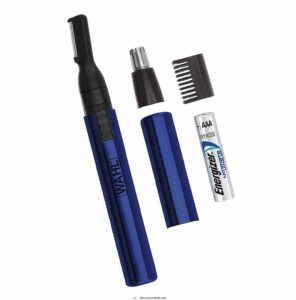
Wahl Lithium Pen Trimmer is built for people who want one tool that actually does several jobs well. At just 2.4 ounces, it fits in your pocket and switches between nose, ear, brow, and neckline work using two interchangeable heads. The rotary head manages nose and ear hair; the detail head shapes everything else.
A single AAA battery powers it for years. Some users report durability concerns after a year or two, so treat it as a solid everyday option rather than a forever tool.
| Best For | Anyone who wants a lightweight, versatile trimmer for quick touch-ups on nose, ears, brows, and neckline without hauling around multiple tools. |
|---|---|
| Power Source | 1 AAA Battery |
| Hair Types | Nose, Ear, Brow |
| Blade Material | Stainless Steel |
| Portability | Portable |
| Ease of Cleaning | Detachable Heads |
| Skin Safety | Patented Blade Tech |
| Additional Features |
|
- Handles nose, ear, brow, and neckline grooming with just two swappable heads
- Tiny and light at 2.4 oz — easy to toss in a bag or travel kit
- Runs on a single AAA battery, so no charging cables to worry about
- Durability can be hit or miss — some users see it give out after a year or two
- The round nose/ear attachment doesn’t always get a close enough trim
- The straight edge attachment runs louder than you’d expect
5. ConairMan 360 Nose Ear Trimmer
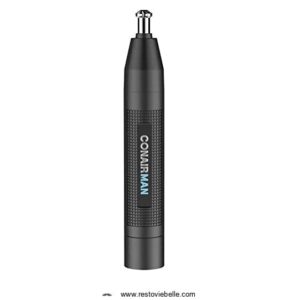
ConairMan 360 Nose Ear Trimmer earns its spot through smart, practical engineering. Its patent-pending 360-degree beveled blade spins inside a protective guard, trimming from every angle without dragging or nicking.
It runs on a single AA lithium battery — no charging cables, no dead battery surprises. The detachable head rinses clean under the tap in seconds.
At under four ounces, it travels well too.
One small note: the plastic housing feels a bit light, so handle the battery cap carefully.
| Best For | Guys who want a no-fuss, travel-friendly trimmer that actually gets the job done without a lot of setup or maintenance. |
|---|---|
| Power Source | 1 AA Lithium |
| Hair Types | Nose, Ear |
| Blade Material | 3-Bevel Blade |
| Portability | Storage Pouch Included |
| Ease of Cleaning | Washable Attachment |
| Skin Safety | Beveled Blade System |
| Additional Features |
|
- The 360-degree blade trims from every angle, so you’re not hunting for the right position
- Runs on a single AA battery — no cables, no waiting for a charge
- Detachable head rinses clean in seconds, keeping things hygienic
- The plastic housing feels a little cheap, especially around the battery door
- It can get noisy, which isn’t great when you’re working close to your ear
- A bit pricier than other basic trimmers in this category
6. Panasonic Ear Nose Hair Trimmer
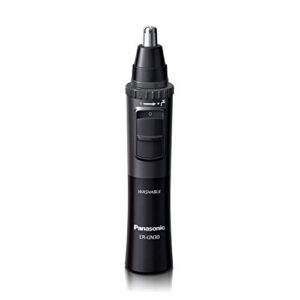
Dual-edge hypoallergenic blades trim nose, ear, and facial hair from both the top and sides at once — down to 0.5 mm — without irritating sensitive skin. The vortex cleaning system lets you rinse the whole unit under running water in seconds, no disassembly needed.
It works wet or dry, so shower grooming is fair game. One AA battery runs it up to 90 minutes. Compact, light, and travel‑ready.
| Best For | Guys who want a no-fuss trimmer for nose, ear, and facial hair — especially those with sensitive skin. |
|---|---|
| Power Source | 1 AA Battery |
| Hair Types | Nose, Ear, Face |
| Blade Material | Stainless Steel |
| Portability | Cordless |
| Ease of Cleaning | Vortex Cleaning System |
| Skin Safety | Hypoallergenic Blades |
| Additional Features |
|
- Hypoallergenic dual-edge blades cut from both sides at once, so you’re done faster with less irritation
- Works wet or dry, meaning you can knock it out right in the shower
- The vortex cleaning system rinses clean in seconds — no taking anything apart
- Not rechargeable, so you’ll need to keep AA batteries on hand
- Some users reported it stopped working after a while, which raises durability concerns
- Might be tricky for older users who have a harder time with small devices
7. Panasonic Nose Ear Hair Trimmer Vacuum
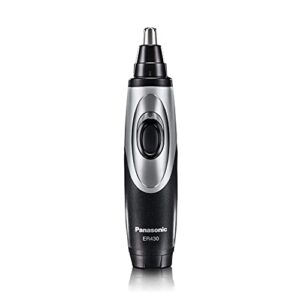
vacuum feature alone sets this one apart. As you trim, a built-in micro vacuum pulls clippings directly into an internal chamber — no stray hairs on your sink, no mess on your face.
The dual-edge hypoallergenic blades cut at a 60-degree angle for clean snips without tugging.
It runs up to 90 minutes on one AA battery, works wet or dry, and rinses clean in seconds.
Compact enough to toss in a toiletry bag without a second thought.
| Best For | Anyone who wants a quick, no-mess way to trim nose and ear hair — especially travelers or people who hate cleaning up stray clippings. |
|---|---|
| Power Source | 1 AA Battery |
| Hair Types | Nose, Ear, Face |
| Blade Material | Hypo-allergenic Blade |
| Portability | Travel Pouch Included |
| Ease of Cleaning | Washable Head |
| Skin Safety | Hypo-allergenic Blades |
| Additional Features |
|
- Built-in vacuum sucks up clippings as you trim, so cleanup is basically nonexistent
- Works wet or dry and rinses clean in seconds — super easy to maintain
- 90 minutes of battery life on a single AA, plus it’s compact enough for any travel bag
- Can cause a tickling sensation during use, which some people find pretty annoying
- A few users reported minor nicks or irritation, so it may not be great for very sensitive skin
- Battery isn’t included, which feels a little cheap at this price point
8. Motanar Stainless Steel Grooming Scissors
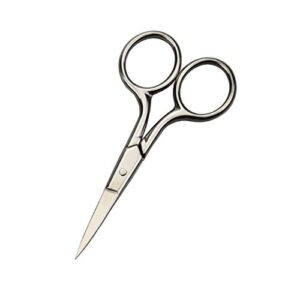
Sometimes the simplest tool is the right one.
The Motanar Stainless Steel Grooming Scissors give you full control — no motor, no batteries, just sharp, precise blades that go exactly where you direct them. At 3.5 inches long and under a gram, they’re easy to handle and travel‑friendly.
The blunt, rounded tips protect sensitive skin inside your nose and ears, while the rust‑proof stainless steel stays sharp over time.
Great for detail work that electric trimmers can’t quite nail.
| Best For | Anyone who wants precise, no-fuss grooming for nose, ear, and eyebrow trimming — or crafters and pet owners who need a reliable pair of small scissors on hand. |
|---|---|
| Power Source | Manual |
| Hair Types | Nose, Ear, Brow |
| Blade Material | Stainless Steel |
| Portability | Portable |
| Ease of Cleaning | Rinse Clean |
| Skin Safety | Pointed with Caution |
| Additional Features |
|
- Sharp, stainless steel blades that stay rust-free and hold up over time
- Compact and lightweight — easy to toss in a travel bag or grooming kit
- Versatile enough for personal grooming, pet care, sewing, and crafts
- Finger holes run small, so they may feel cramped for adults with larger hands
- At 3.5 inches, they’re not the best fit for bigger grooming or cutting jobs
- Pointed tips do the job well, but you’ll want to handle them carefully around sensitive areas
9. Manscaped Weed Whacker Pro Trimmer
If you want more power without sacrificing precision, the Manscaped Weed Whacker Pro is worth a serious look.
It runs a 360-degree rotary blade system that trims from every angle inside the nostril or ear — no tugging, no nicking.
The IPX7 waterproof rating means you can rinse it straight under the tap after use.
With up to 60 minutes of battery life and a built‑in LED spotlight, it manages both nose and ear hair cleanly in one session.
| Best For | Guys who want a clean, no-fuss trim for nose, ear, and eyebrow hair with solid battery life and easy cleanup. |
|---|---|
| Power Source | Rechargeable Li-ion |
| Hair Types | Nose, Ear, Brow |
| Blade Material | Dual-Head Blade |
| Portability | Travel Lock Included |
| Ease of Cleaning | Waterproof IPX7 |
| Skin Safety | SkinSafe Technology |
| Additional Features |
|
- The SkinSafe dual-head system and rotary blade trim from every angle without pulling or nicking
- IPX7 waterproof rating means you just rinse it under the tap — no fuss
- Built-in LED spotlight and 60-minute battery make it easy to get everything done in one go
- It’s on the pricier side, and some users feel the performance isn’t a big step up from cheaper options
- A few attachments don’t always work as smoothly as expected
- Can cause some irritation or discomfort, so it’s not ideal for anyone with sensitive skin
Expert Recommendations for Safe Trimming
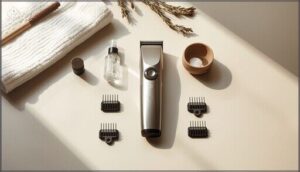
Using the same trimmer for both nose and ears isn’t just about convenience — it’s about doing it smartly.
A few expert-backed habits can protect your skin, extend the life of your tools, and keep things clean between uses. Here’s what the pros actually recommend.
When to Use Separate Tools
If you deal with chronic sinus issues, allergy flare-ups, or immune compromise, separate tools aren’t optional — they’re smart. Cross-contamination is a real risk, especially with household sharing.
| Situation | Nose Hair Trimmer | Ear Hair Trimmer |
|---|---|---|
| Immune Compromise | Dedicated only | Dedicated only |
| Chronic Sinus | Separate required | Shared okay |
| Allergy Flare | Separate required | Separate preferred |
| Household Sharing | Never share | Never share |
| Biofilm Build-up | Replace head | Replace head |
Personal grooming tools are personal. Nose trimmer safety precautions exist for a reason.
Signs Your Trimmer Needs Replacement
Your trimmer won’t last forever — and it’ll tell you when it’s done. A dull blade that tugs instead of cuts, motor noise that’s gone from a quiet hum to a grinding rattle, or hair pulling that makes you flinch? Those are red flags.
Add battery failure under five minutes or overheating within three, and it’s time to replace your personal grooming tool.
Tips for Long-Term Tool Care
Once you’ve replaced the old one, keep the new one going strong.
Stick to a weekly lubrication schedule — a drop of mineral oil on the blades goes a long way for blade rust prevention.
Store it somewhere with low storage humidity, away from your shower’s steam.
Unplug once it’s fully charged for real battery longevity.
Simple habits, serious results.
Frequently Asked Questions (FAQs)
Can I use a nose hair trimmer on my ear?
Yes, you can. Most modern nose hair trimmers are designed to handle ears too.
Just mind the insertion depth limits, keep the blade guard safety intact, and clean it thoroughly between uses.
Should you use a different trimmer for nose and ear hair?
Not always. If you clean it well between uses, one ear and nose trimmer works fine.
But if infection risk is a concern, separate personal grooming tools offer extra peace of mind.
Is it okay to use the same trimmer for everything?
Technically, one nose hair trimmer can handle both jobs — but only if you clean it between uses. Skipping hygiene protocols means cross-contamination risks that could irritate sensitive skin fast.
What is the best trimmer for nose and ear hair?
So what’s the best trimmer out there? Look for strong user reviews, solid blade material, and a good waterproof rating.
The Philips Norelco Nose Trimmer 5000 and Panasonic Ear and Nose Hair Trimmer top the best nose hair trimmer lists.
Can nose trimming cause sinus infections or irritation?
nasal tissue trauma can cause nasal tissue trauma, leaving tiny cuts that invite bacterial entry. That irritation can trigger inflammation, dry out the nasal lining, and—if left unchecked—lead to sinus pressure changes or infection.
How often should you replace your trimmer blades?
Like a kitchen knife that stops cutting cleanly, dull trimmer blades snag instead of slice. Replace them every three to six months, depending on your usage frequency, to keep hygiene and performance sharp.
Are manual scissors safer than electric trimmers?
Both have trade-offs. Electric trimmers win on blade guard effectiveness and beginner safety.
Manual scissors offer better tactile feedback control and stainless steel durability — but demand a steadier hand inside tight spaces.
What trimmer features work best for sensitive skin?
Sensitive skin doesn’t forgive a bad trimmer. Look for hypoallergenic blades, rounded tips, a waterproof design, ergonomic grip, low vibration, and safety guards to avoid skin irritation every single time.
Can trimming nose hair affect your breathing or allergies?
Yes, it can. Over-trimming removes your nasal filtration loss barrier, worsening allergy symptoms and raising respiratory infection risk. Gentle trimming improves airflow without harming your nasal lining or immune defenses.
Choosing rounded-tip scissors or an electric trimmer over plucking or waxing can cut your risk of nasal tissue injury by 70%, according to this safe nose hair trimming guide.
Conclusion
Think of your trimmer like a kitchen knife—adaptable by design, but only safe when you respect the rules. Yes, you can use the same trimmer for nose and ears, and millions of people do it daily without issue.
The difference between smart grooming and a bacteria problem is a quick rinse and a dry blade. Clean it, maintain it, and it will handle both jobs reliably.
One tool, two tasks, zero excuses for skipping hygiene.