This site is supported by our readers. We may earn a commission, at no cost to you, if you purchase through links. This content is for general informational and educational purposes only and is not a substitute for professional medical, dermatological, or nutritional advice.

Most people grab a nose or ear trimmer without a second thought—trim, rinse, done. But for some, that quick grooming routine ends with a tender, irritated bump that lingers for days.
Ingrown hairs in the nose or ear canal aren’t just uncomfortable; they can become infected in areas that sit remarkably close to sensitive tissue.
The good news is that trimmers, when used correctly, carry far less ingrown hair risk than plucking or waxing.
The culprit is usually technique—dull blades, too much pressure, or cutting at the wrong angle.
Understanding what actually triggers ingrown hairs turns a frustrating problem into a preventable one.
Table Of Contents
- Key Takeaways
- Can Nose and Ear Trimmers Cause Ingrown Hairs?
- Common Causes of Ingrown Nose and Ear Hairs
- Comparing Trimming Vs. Other Hair Removal Methods
- Best Practices to Prevent Ingrown Hairs When Trimming
- Signs and Management of Ingrown Nose or Ear Hairs
- Tips for Healthy Nose and Ear Hair Grooming
- Frequently Asked Questions (FAQs)
- What are the disadvantages of nose trimmers?
- Is it safe to use an electric nose Trimmer?
- Can nose hair waxing cause ingrown hairs?
- What happens if you leave your nose hair untrimmed?
- Can nose hair trimmers cause ingrown hairs?
- Is it better to pluck or trim nose hairs?
- Can ingrown hairs lead to nasal infections?
- Are electric trimmers safer than manual scissors?
- Do ingrown ear hairs differ from nose hairs?
- Can allergies worsen ingrown hair symptoms?
- Conclusion
Key Takeaways
- far safer than plucking or waxing because they cut above the skin, preserving the follicle and keeping ingrown hairs rare.
- real culprits behind trimmer-related ingrown hairs—not the tool itself.
- Cleaning blades with isopropyl alcohol after each use and replacing them every 12–18 months cut your infection and ingrown hair risk significantly.
- Trimming every one to two weeks, inserting only about 5 mm, and prepping with a damp cloth keeps your nasal lining healthy and irritation‑free.
Can Nose and Ear Trimmers Cause Ingrown Hairs?
Nose and ear trimmers are handy tools for keeping stray hairs in check, but you might wonder if they can cause ingrown hairs.
If ingrown hairs are a recurring frustration, switching to a safety razor for beard and neckline grooming can give you far more control than a trimmer ever will.
It’s important to know how these devices work and what could lead to problems after trimming.
Let’s look at the main factors that come into play.
How Trimmers Work on Nose and Ear Hair
Understanding how a nose hair trimmer works makes nose hair trimming safety much clearer.
Most nose and ear hair trimmers use either a Rotary Mechanism or an Oscillating Blade, both shielded by a Protective Guard. The electric nose hair trimmer’s Motor Speed ensures quick, gentle cuts.
Many feature a Waterproof Design, making cleaning easy and helping prevent ingrown nose hairs.
Factors Leading to Ingrown Hairs After Trimming
Even with a quality nose hair trimmer, ingrown nose hairs can develop when technique breaks down. Three factors matter most:
- Blade Sharpness — Dull blades leave jagged tips that curl back into skin within 48 hours.
- Trimming Pressure — Pressing too hard cuts below the surface, burying hair stubs.
- Angle Alignment — Tilting beyond 45 degrees creates uneven cuts, raising curl-back risk.
Post‑trim care and hair texture both influence nose hair trimming safety substantially. Understanding ingrown nose hair risk helps you choose safer trimming techniques.
Frequency of Ingrown Hairs From Trimmers
Ingrown nose hairs from a nose hair trimmer are genuinely uncommon. Device guard design keeps blades from cutting too close, which is your biggest protection.
Hair type influence matters too — coarser, curlier hair carries slightly more risk. Trimming schedule impact is real: daily trimming leaves no recovery time. For most people, every one to two weeks is the sweet spot for nose hair trimming safety.
Remember that natural nasal filtration(https://www.marieclaire.com/beauty/how-to-remove-nose-hair/) helps protect your respiratory system.
Common Causes of Ingrown Nose and Ear Hairs
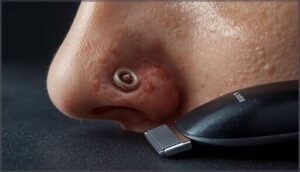
Ingrown nose and ear hairs don’t just happen randomly — there’s usually a specific reason behind them. Most cases trace back to a handful of habits or equipment issues that are easy to fix once you know what to look for.
Here are the most common culprits.
Improper Trimming Techniques
How you use your trimmer matters just as much as which one you buy.
Technique really does make or break the results—proper ingrown beard hair prevention and aftercare starts with understanding how small habits, like trimming angle and pressure, affect how hair regrows.
Excessive pressure forces blades unevenly, nicking delicate nostril skin and trapping cut tips beneath the surface. Incorrect angle snags rather than slices cleanly.
Poor lighting causes imprecise cuts, while skipping preparation — like blowing your nose first — seeds bacteria into fresh cuts.
Deep trimming beyond 2–3 mm removes protective hairs, triggering ingrown nose hairs almost immediately.
Dull or Dirty Trimmer Blades
A dull blade is the hidden culprit behind most trimmer-related ingrown hairs. When blade sharpness fades, your nose hair trimmer bends and snags hairs instead of cutting cleanly, leaving distorted tips that curl back inward.
Bacterial build-up from dried mucus feeds follicle infections. Stick to a replacement schedule every 12–18 months, and prioritize regular cleaning — grooming tool maintenance is genuinely non‑negotiable for hair removal safety precautions.
Over-Trimming and Skin Irritation
Trimming too deep, too often is where most people quietly go wrong. Aggressive blade pressure scrapes the nasal lining, causing moisture loss that leaves skin dry and brittle — exactly the conditions that trap hairs sideways. Watch for these warning signs:
- Burning or soreness after every trim
- Crusty buildup around follicles
- Recurring red bumps inside the nostril
Proper trim depth and adequate healing time between sessions are your best ingrown hairs defense.
Comparing Trimming Vs. Other Hair Removal Methods
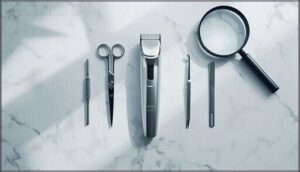
Not all hair removal methods are created equal, especially in the case of sensitive areas like your nose and ears. Some carry a much higher risk of ingrown hairs and skin damage than others.
Here’s how trimming stacks up against the alternatives.
Ingrown Hair Risk With Plucking and Waxing
Pulling or waxing nose hairs might seem thorough, but both methods carry real ingrown hair risks. Plucking technique matters — yanking at sharp angles causes follicle trauma that distorts regrowth. Wax residue clogs follicle openings, trapping new hairs beneath the surface. Healing time is longer too, leaving follicles vulnerable to infection risk from nasal bacteria.
| Factor | Plucking | Waxing |
|---|---|---|
| Follicle Trauma | High — pulls root completely | Very high — multiple follicles at once |
| Infection Risk | Moderate to high | High due to wax residue |
| Ingrown Hair Likelihood | Common with repeated sessions | Common as hairs regrow finer |
| Healing Time | Several days per follicle | Longer, affects wider area |
| Recommended for Nose Hair Care | No | No |
Why Trimming is Generally Safer
Think of trimming as pruning a hedge — you shape it without uprooting it. Unlike plucking or waxing, nose hair trimmers prioritize follicle preservation by cutting above the skin, not below it.
Trimming shapes without uprooting — preserving follicles, preventing ingrowns, and protecting your nasal barrier all at once
That means minimal irritation risk, controlled pressure, and barrier function retention. With easy routine maintenance and clean blades, trimmers protect your nasal health risks while keeping ingrown hairs rare.
| Safety Factor | Trimming |
|---|---|
| Follicle Disruption | None — shaft only |
| Infection Risk | Low |
| Ingrown Hair Likelihood | Uncommon |
| Nasal Barrier Function | Preserved |
| Routine Maintenance | Simple and consistent |
Follicle Trauma and Hair Growth Patterns
Every cut leaves a trace. When you press a trimmer too firmly, microtrauma effects around the follicle cause follicle swelling that narrows the exit channel, disrupting hair directionality. Tip shape influence matters too — blunt cuts increase nasal health risks by snagging tissue during regrowth, triggering growth cycle disruption.
| Factor | Aggressive Removal | Careful Trimming |
|---|---|---|
| Follicle Swelling | Likely | Minimal |
| Hair Directionality | Redirected inward | Preserved outward |
| Tip Shape Influence | Blunt, sharp-edged | Slightly tapered |
| Growth Cycle Disruption | Frequent | Rare |
| Ingrown Hair Risk | Elevated | Low |
Best Practices to Prevent Ingrown Hairs When Trimming
Preventing ingrown hairs comes down to a few straightforward habits you can build into your routine.
The good news is that most problems are easy to avoid once you know what to watch for.
Understanding how purple shampoo neutralizes yellow tones in gray hair makes it much easier to get that fresh, crisp result every time.
Here’s what actually matters.
Choosing The Right Nose and Ear Trimmer
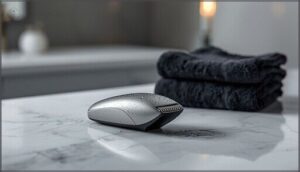
Not all trimmers are created equal — and the right choice genuinely matters for ingrown hair prevention.
Look for hypoallergenic stainless steel blades, a solid waterproof rating like IPX7, and an ergonomic design you can grip comfortably.
Good battery life means consistent motor speed, which cuts cleanly rather than tugging.
Lower noise level also helps you stay relaxed and move gently.
Proper Cleaning and Maintenance of Trimmers

Once you’ve picked a quality trimmer, keeping it clean is what actually protects your skin. Blade sanitation matters more than most people realize — wipe blades with 70% isopropyl alcohol after each use.
Follow a simple lubrication schedule every few months using mineral oil. Use storage caps between sessions, check battery care regularly, and watch replacement timing closely. That’s solid nose hair trimmer safety in practice.
Gentle Trimming Techniques

Clean blades protect your skin — but technique is what keeps ingrown hairs away for good.
- Light Pressure: Let the trimmer glide naturally; don’t push it against the skin.
- Insertion Depth: Insert only about 5 mm — just past the nostril opening.
- Trimmer Angle: Follow your nostril’s curve using short passes.
- Moisture Prep: Wipe the nostrils with a damp cloth first to soften hairs.
Signs and Management of Ingrown Nose or Ear Hairs

Even with good habits, ingrown hairs can still show up — and knowing what to look for makes all the difference.
Catching them early means you can handle most cases right at home without much fuss.
Here’s what to watch for and how to manage it.
For a deeper dive into shade selection, this guide on choosing the best hair color for thin, fine hair breaks down which tones and techniques help create the illusion of fuller, denser strands.
If you’re unsure whether the formula suits your hair type, this breakdown of whether Pantene damages hair over time lays out the ingredients worth paying attention to.
How to Identify Ingrown Hairs
Knowing what to look for makes all the difference. An ingrown hair from nose hair trimming usually shows up a few days after trimming as a small raised bump — its bump appearance ranging from red to purple depending on your skin tone.
You might spot a tiny hair loop just beneath the surface. Pain sensation, tenderness, and skin irritation can follow, and in sensitive nasal areas, this may signal nasal vestibulitis.
Safe At-Home Treatment Options
Once you’ve spotted that telltale bump, act quickly but gently. Most ingrown hairs respond well to simple home care:
- Apply a warm compress for 10–15 minutes, three times daily to soften skin and open pores.
- Follow with a saline rinse to flush irritants and keep the area clean.
- Dab antiseptic ointment to prevent infection.
For gentle hair release, use sterile tweezers only if the hair is visible. An anti‑inflammatory cream like low‑strength hydrocortisone eases redness. These personal grooming tips support nose hair trimmer safety and overall nasal health.
When to Seek Medical Advice
Most ingrown hairs settle down within a week or two, but some don’t.
See a doctor if you notice Persistent Swelling, spreading redness, or an Unresolved Bump that keeps growing.
Fever & Chills, Vision Changes, or Facial Numbness alongside a nasal lesion need urgent care — these can signal rare but serious complications.
Recurring issues may indicate nasal vestibulitis, and an otolaryngologist can help you weigh your nose hair removal risks.
Tips for Healthy Nose and Ear Hair Grooming
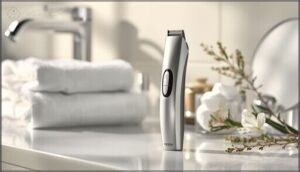
Good grooming habits make a bigger difference than most people realize, especially in areas as sensitive as your nose and ears.
A few simple adjustments to your routine can protect the delicate lining, reduce irritation, and keep things healthy long-term. Here’s what you should keep in mind.
How Often to Trim Safely
Trim frequency guidelines aren’t one-size-fits-all.
Most people do well trimming nose hair every one to two weeks, while ear hair usually needs attention every two to four weeks due to slower growth.
Your personal comfort threshold matters — if hairs feel ticklish or become visible, that’s your cue.
Rushing into daily trimming risks skin irritation and reduces your nose hair’s natural filtering role.
Protecting The Nasal and Ear Lining
Protecting your nasal and ear lining starts before you even switch the trimmer on. Choose a device with hypoallergenic blade materials and protective blade guards — these design features keep blades from scraping delicate mucosa.
Limit gentle insertion depth to about 1–2 cm, and do not skip post‑trim moisturizing with saline spray or petroleum jelly. Clean trimmer hygiene also prevents nasal vestibulitis and reduces ingrown hair risk substantially.
Maintaining Overall Nasal and Ear Health
Good nasal and ear health goes well beyond the trimmer itself.
Indoor humidity around 40–50% keeps mucus fluid and nasal passages comfortable, reducing irritation after grooming. Ear wax management means leaving cerumen alone — it’s naturally self‑cleaning. Regular saline rinse benefits include clearer passages and lower nasal vestibulitis risk.
Air quality impact matters too, so consider:
- Running an air purifier to reduce airborne irritants
- Using distilled water for post‑trim care rinses
- Keeping trimmer safety standards high with regular blade cleaning
Frequently Asked Questions (FAQs)
What are the disadvantages of nose trimmers?
Nose trimmers offer convenience, but they come with real risks:
skin irritation, infection risk from dirty blades, nasal dryness, blade dullness causing ingrown hair, battery limitations, and even nasal vestibulitis from repeated irritation.
Is it safe to use an electric nose Trimmer?
Yes, electric nose trimmers are safe when used correctly.
Rounded blades, proper Trimming Frequency, and regular Trimmer Maintenance minimize Nose Hair Removal Risks, supporting Nasal Health and Hygiene without damaging sensitive tissue.
Can nose hair waxing cause ingrown hairs?
Waxing pulls hairs from the root, leaving follicles exposed in a warm, bacteria-rich environment.
That’s a setup for ingrown hairs, infection potential, and follicle damage — making trimming a far safer choice.
What happens if you leave your nose hair untrimmed?
Leaving your nose hair untrimmed can lead to airflow restriction, mucus buildup, and hygiene concerns. While untrimmed hair offers health protection, balance matters for nasal health and social appearance.
Can nose hair trimmers cause ingrown hairs?
Done right, a nose hair trimmer rarely causes ingrown hairs.
Blade sharpness impact, moisture levels, and skin type sensitivity all matter.
With proper post-trim care and smart frequency guidelines, your risks stay minimal.
Is it better to pluck or trim nose hairs?
Trimming wins, hands down. It preserves follicle health, lowers infection risk, and causes far less pain than plucking.
Plucking pulls hairs from the root, creating tiny wounds that invite bacteria and ingrown hairs.
Can ingrown hairs lead to nasal infections?
Yes, they can. An ingrown nasal hair can trigger nasal vestibulitis or folliculitis. If untreated, infection may spread. Seek antibiotic treatment early and avoid picking to prevent serious complications.
Are electric trimmers safer than manual scissors?
Electric trimmers win on safety. Blade Guard Design shields delicate mucosa, Precision Cutting Control prevents over-trimming, and Handshake Stability eliminates slips.
Scissors can nick tissue. For reliable nose trimmer safety, electric is the smarter choice.
Do ingrown ear hairs differ from nose hairs?
Both can develop ingrown hairs, but they feel quite different.
Nasal mucosa sensitivity means nose ingrowns appear as red, tender bumps, while ear ingrowns more often cause itching or muffled discomfort deep in the canal.
Can allergies worsen ingrown hair symptoms?
Allergies absolutely can.
Histamine inflammation doubles irritation at ingrown hair sites, while pollen‑triggered swelling and allergy‑induced itching intensify discomfort.
Immunologic barrier loss raises seasonal infection risk, making even minor ingrowns harder to heal.
Conclusion
Ironically, the trimmer sitting in your bathroom drawer is one of the safest grooming tools you own—yet poor technique quietly turns it into the problem.
Do nose ear trimmers cause ingrown hairs? Rarely, when used correctly.
Sharp blades, a gentle hand, and consistent cleaning make all the difference.
Your nose and ears filter and protect you every day; giving them a few extra seconds of careful grooming is the least you can offer back.