This site is supported by our readers. We may earn a commission, at no cost to you, if you purchase through links. This content is for general informational and educational purposes only and is not a substitute for professional medical, dermatological, or nutritional advice.

Most people clean their trimmer blades about as often as they read the instruction manual—which is to say, never. But that little device working inside your nose and ears touches some of the most bacteria-rich, infection-prone areas of your body every single time you use it.
Hair clippings, skin cells, and moisture pack into those tiny blades after just one session, creating the perfect environment for bacteria to thrive. A poorly maintained trimmer doesn’t just underperform—it can cause irritation, ingrown hairs, or worse.
Cleaning your nose and ear trimmer properly takes less than five minutes and makes every trim safer, smoother, and sharper.
Table Of Contents
Key Takeaways
- Bacteria cling to trimmer blades after every single use, and skipping regular cleaning turns that invisible buildup into a real infection risk—especially inside your nose.
- A full clean takes under five minutes: brush out debris, wipe blades with 70% isopropyl alcohol, and let everything air dry completely before reassembling.
- Oiling your blades every two to four weeks reduces friction, preserves sharpness, and keeps the motor from wearing out years too soon.
- When your trimmer starts pulling instead of cutting cleanly—or it’s past the three-year mark—no amount of maintenance will fix it, and replacing it is the smarter move.
Why You Should Clean Your Nose and Ear Trimmer
Most people clean their trimmer when it stops working well — but by then, the damage is already done. A little regular care goes a long way, especially with a tool that works so close to sensitive areas.
Staying ahead of buildup is especially important with professional-grade beard trimmers, since higher-powered blades tend to accumulate debris faster.
Here’s why keeping it clean actually matters.
Preventing Bacterial and Germ Buildup
Every time you trim, bacteria cling to the blades and quietly multiply. Without regular trimmer hygiene, that buildup turns into a biofilm — a stubborn layer that basic rinsing barely touches. Proper sanitization methods, like wiping with 70% isopropyl alcohol, cut surface bacteria by roughly 99%.
Every trim leaves bacteria on your blades — and without regular cleaning, that invisible buildup becomes nearly impossible to remove
Skipping cleaning even a few times creates real infection control risks, especially inside your nose. It’s essential to follow proper barber tool disinfection techniques to prevent the spread of infections.
Keeping Your Trimmer Performing at Its Best
Clean blades don’t just stay hygienic — they stay sharp. Hair clippings and debris grind against the cutting edges, quietly killing trimmer efficiency over time. Regular maintenance keeps blade sharpness where it belongs. Proper trimer cleaning guide is essential for peak performance.
Here’s what proper trimmer care does for performance:
- Reduces friction that slows the motor
- Preserves clean, even cuts every session
- Prevents debris buildup that misaligns blades
- Keeps lubricating oil working longer between applications
Extending The Life of Your Trimmer
Your trimmer is a small investment that pays off every day — but only if you treat it right. Consistent trimmer maintenance is what separates a device that lasts two years from one that lasts ten.
Regular cleaning removes debris that strains motor efficiency, while smart storage solutions and proper blade sharpening preserve cutting performance.
Simple maintenance tips and the right cleaning products keep your trimmer running like new.
Reducing Skin Irritation and Infection Risk
Beyond lifespan, there’s a more personal reason to stay on top of trimmer sanitization — your skin. Nose and ear tissue is sensitive, and a blade carrying bacteria can trigger folliculitis or irritation fast.
A quick wipe with 70% isopropyl alcohol cuts infection risk dramatically. Good hygiene practices and consistent infection control aren’t just smart skin care tips — they’re how you protect yourself every single use.
What You Need Before You Start Cleaning

Before you clean your trimmer, it helps to have the right supplies within reach. Nothing slows you down more than stopping mid-clean to hunt for something you forgot.
If you have sensitive skin, it’s also worth checking out nose trimmers designed for sensitive skin before you settle on a cleaning routine that works for your specific tool.
Here’s everything you’ll need to get the job done right.
This buzz cut fade guide breaks down the tools, clipper guards, and step-by-step technique you’ll want on hand before you start.
Soft Cleaning Brush or Cloth
Your first line of defense is a soft brush — and the right cloth makes all the difference too. Most trimmers include a small nylon brush sized perfectly for the trimmer head, letting you sweep hair out of tight grooves without scratching the blades.
Pair it with a flat-weave microfiber cloth for the handle, and your cleaning and maintenance routine stays simple, safe, and effective.
Isopropyl Alcohol for Disinfecting
Disinfection is where real hygiene happens — and the right cleaning solution makes all the difference. For trimmer sanitizing, 70% isopropyl alcohol is your best friend. It hits that sweet spot where blade sterilization actually works, killing over 99.9% of bacteria in about 30 seconds.
Keep these disinfection methods handy:
- 70% isopropyl alcohol spray bottle
- Alcohol-soaked cotton swabs for blade teeth
- Small cloth dampened for the nose hair trimmer head
- A clean surface to air dry on
Lubricating Oil Made for Trimmers
Lubricating oil is the unsung hero of trimmer maintenance. Choose one made specifically for clippers — these use mineral oils or synthetic oils with the right oil viscosity to slip between fast-moving blades without gumming up. Skip coconut or olive oil; they turn sticky fast.
Proper blade lubrication keeps your trimmer running smooth and extends its life considerably.
Cotton Swabs for Detail Cleaning
Cotton swabs are your secret weapon for detail cleaning in nose hair trimmer care. Those tight corners and pivot points? A cloth can’t reach them — but a slim cotton swab can.
Use 100% cotton, lint-free tips with isopropyl alcohol for precise swab cleaning techniques. Always use a fresh one each session to keep your personal grooming tools truly hygienic.
How to Clean Your Nose and Ear Trimmer Step by Step
Cleaning your nose and ear trimmer doesn’t have to feel like a chore. Once you know the right order, the whole process takes just a few minutes.
Here’s exactly what to do, step by step.
Power Off and Remove The Battery First
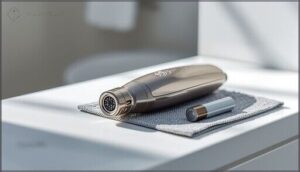
Before you touch anything, switch the trimmer off and remove the battery — this is non-negotiable for safe device maintenance. A live motor can activate unexpectedly, turning a simple cleaning task into an accident.
Open the battery compartment, slide the pack out, and set it aside in a dry spot. Power isolation eliminates electrical risks completely, making every next step of trimmer maintenance safer and easier.
Brush Away Loose Hair and Debris
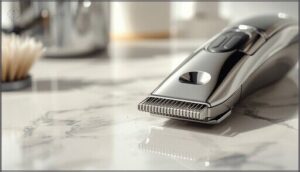
Now that the power’s off, grab your cleaning brush — this is where good trimmer maintenance actually begins. Short, gentle strokes along the blade edges lift trapped hair without damaging the cutting surface. Focus on these key spots:
- Inner and outer blades
- The trimmer head opening
- Comb attachments
- The trimmings collection area
Light brushing keeps your nose hair trimmer’s blade care sharp and your grooming hygiene spotless.
Disinfect The Blades With Isopropyl Alcohol

With the hair brushed away, it’s time to disinfect. Reach for 70% isopropyl alcohol — that sweet spot in alcohol concentration does the real work of blade sanitizing without evaporating too fast.
Apply until blades look visibly wet. That’s your trimmer maintenance working properly.
| Disinfection Methods | Contact Time |
|---|---|
| Cotton swab wipe | 1–2 minutes |
| Direct spray | 1–5 minutes |
| Blade tip dip | 60 seconds |
| Soaking detachable parts | 5–10 minutes |
| Professional-grade cleaning | 10 minutes |
Wipe Down The Head and Handle
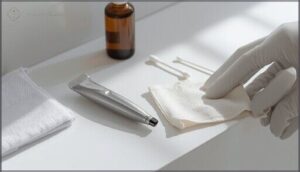
Once the blades are disinfected, wipe down the trimmer head exterior using a lint-free microfiber cloth with light, linear strokes — never circular — to push debris away from the blade gaps.
For handle sanitizing, dampen a cloth with 70% isopropyl alcohol and work along the grip. Use cotton swabs angled into button crevices for thorough crevice removal. Your nose hair trimmer hygiene depends on it.
Air Dry All Parts Before Reassembling
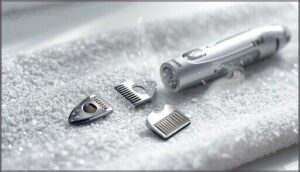
Now that the handle is sanitized, don’t rush to put it back together. Moisture control is the step most people skip — and it’s where trimmers quietly corrode or short-circuit. Give every part a solid 15–30 minutes to air dry completely.
- Set blades on a dry towel, gap-side up
- Leave the battery compartment open and facing down
- Keep parts away from steam or humidity
- Check for cool or damp spots before reassembling
How to Lubricate and Store Your Trimmer Correctly
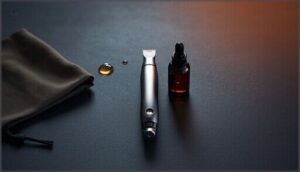
Cleaning your trimmer is only half the job. Once it’s dry, a little oil and smart storage go a long way toward keeping it running like new.
Here’s what to do next.
Apply Lubricating Oil Every Two to Four Weeks
Think of oil as your trimmer’s best friend — skip it, and blade friction quietly wears everything down. Lubricating every two to four weeks keeps cutting edges sharp for light home use. Frequent users should oil after each clean. Match your lubricant types to the job: light-viscosity options like Wahl Clip oil or Andis clipper oil work best.
| Usage Level | Maintenance Schedule | Lubricant Types |
|---|---|---|
| Light home use | Every 2–4 weeks | Mineral oil |
| Moderate use | Biweekly | Andis clipper oil |
| Frequent use | After each clean | Wahl Clip oil |
Consistent Personal Care Maintenance protects oil viscosity performance and promotes real trimmer longevity.
Store in a Cool, Dry Place Away From Moisture
Bathrooms hit 70–90% humidity after a shower — that’s a rust factory for your trimmer. Smart Dry Storage Tips make all the difference for Trimmer Longevity and Hygiene.
The same moisture-trapping trap ruins other bathroom essentials too, so it’s worth checking these tips for keeping shampoo bars dry between uses before your whole routine turns damp and grimy.
Consistent dry placement is your simplest Trimmer Maintenance Tips win.
- Keep it below 50% humidity for Rust Prevention
- Store at 15–25°C to protect batteries
- Avoid bathroom shelves — Moisture Control matters
- Choose a bedroom drawer for Personal Care Maintenance
Keep The Protective Cap on Between Uses
Always snap the protective cap back on after cleaning — it’s one of the simplest Cap Benefits you’ll get from smart Storage Tips. The cap shields the blades from drawer bumps, dust, and bathroom splashes that dull the cutting edge over time.
For Blade Protection and Hygiene Practices, this small habit keeps your nose hair trimmer cleaner, safer, and ready to perform whenever you need it.
When to Replace Blades or The Entire Trimmer
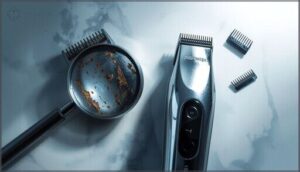
Even the best-maintained trimmer has a shelf life, and knowing when to retire the blades — or the whole unit — saves you from nicks, snags, and frustration.
Cleaning and oiling can only do so much once things start to wear down. Here’s what to watch for.
Signs Your Blades Are Dull or Damaged
Your nose hair trimmer will tell you when it’s done — you just have to listen. Dull edges pull and tug instead of slicing cleanly, often leaving stubble behind even after multiple passes. Unusual trimmer noise, like grinding or harsh buzzing, signals blade wear. Skin stinging after trimming is another red flag.
Most blades need replacing every 6–12 months, especially without regular lubricating and maintenance.
How to Safely Replace Trimmer Blades
Replacing blades on your nose hair trimmer is easier than it sounds. Power off completely and remove the battery before touching anything — trimmer safety starts there. Twist the head counterclockwise, shake out debris, then press the new head in until it clicks.
- Match tab to notch before locking
- Test sharpness by running it 10 seconds
- Apply lubricating oil after first use
Knowing When a Full Replacement Makes More Sense
Sometimes cleaning and blade swaps just aren’t enough. If your trimmer is past the three-year mark, shows weak cutting power despite fresh batteries, or gets unusually warm during charging, those are signs the device lifespan has run its course.
Continued maintenance hits its limits when motor wear or seal failure sets in. At that point, the upgrade benefits and reduced replacement costs make buying new the smarter call.
Frequently Asked Questions (FAQs)
Will isopropyl alcohol fully disinfect a beard trimmer?
Yes — 70% isopropyl alcohol kills most bacteria and viruses on trimmer blades, making it effective for everyday trimmer sanitization. It disinfects well, but won’t achieve full blade sterilization against all spores.
Can I clean my trimmer with water?
It depends on your model’s IPX rating. Waterproof models handle rinsing safely, but non-waterproof trimmers risk motor shorting and blade rust. Always check before introducing any water into your cleaning methods.
How often should I disinfect my trimmer?
For most people, wiping your nose hair trimmer with 70% isopropyl alcohol after every use is the sweet spot. It keeps trimmer hygiene tight without overcomplicating your maintenance intervals.
Is it safe to share a trimmer?
Sharing a trimmer is like lending your toothbrush — nobody actually wants to.
Hygiene risks are real: bacteria, fungi, and viruses transfer instantly, turning personal grooming into a disease transmission shortcut.
Keep it yours.
What oil substitutes work for trimmer lubrication?
Mineral oil, sewing machine oil, and baby oil all work as lubricant alternatives in a pinch. Apply just one drop, run the trimmer briefly, then wipe away any excess before use.
Can I use my trimmer while it charges?
Most trimmers aren’t designed for use while charging. For battery health and electrical safety, always unplug first.
When unsure, check your manual — cordless usage after a full charge is the safest approach.
Conclusion
What happens inside an uncleaned trimmer is something most people never think about—until a nick turns red and stays that way. Now you know how to clean a nose ear trimmer properly, and that knowledge quietly protects you every single time you pick it up.
A brushed blade, a drop of oil, a dry storage spot—these small habits add up to a tool that works harder and a face that stays healthier.