This site is supported by our readers. We may earn a commission, at no cost to you, if you purchase through links. This content is for general informational and educational purposes only and is not a substitute for professional medical, dermatological, or nutritional advice.

Most people don’t choose skincare products—they collect them. A cleanser from a friend’s recommendation, a serum that looked good in an ad, a moisturizer that was on sale.
Before long, the bathroom shelf is full, and the skin still isn’t cooperating.
The problem usually isn’t the products themselves. It’s that nobody stopped to figure out what the skin actually needs first.
Your skin type shapes everything—how it reacts to ingredients, which textures work, and why the same routine that clears up a friend’s complexion might leave yours red and flaky.
Knowing how to choose a skincare set for your skin type starts with one simple step: learning to read what your skin is already telling you.
Table Of Contents
- Key Takeaways
- How to Identify Your Skin Type at Home
- Key Ingredients to Look for by Skin Type
- How to Build Your Routine Step by Step
- Sunscreen Belongs in Every Skincare Set
- How to Compare and Evaluate Skincare Sets
- Choose Products With Caution
- Frequently Asked Questions (FAQs)
- How to choose skincare products for your skin type?
- What is the 1% rule in skincare?
- Why is Gen Z obsessed with skincare?
- Can skincare sets work during pregnancy or breastfeeding?
- How does climate affect your skincare routine choices?
- Should men follow different skincare set guidelines?
- How long before a new set shows results?
- Can diet and sleep impact how products perform?
- Conclusion
Key Takeaways
- Your skin type is the starting point for everything — know whether you’re oily, dry, combination, or sensitive before buying a single product, and the bare-face test is the simplest way to find out.
- Ingredients matter more than brand names or price tags, so match what’s in the formula to what your skin actually needs — like niacinamide for oiliness, ceramides for sensitivity, or hyaluronic acid for dryness.
- Sunscreen isn’t optional — daily broad-spectrum SPF 30 protects your barrier, preserves your results, and prevents damage that no serum can undo after the fact.
- Your skin changes with seasons, hormones, and age, so treat your routine as a living system you adjust over time rather than a fixed set of products you stick with forever.
How to Identify Your Skin Type at Home
Before you buy a single product, you need to know what you’re working with. Your skin type shapes every decision—from the cleanser you reach for to the moisturizer that actually works.
If you’re just starting out, following a step-by-step Korean skincare routine for beginners is a great way to learn how each product layer actually serves your skin.
Getting clear on your skin type is step one—this complete guide to building a facial skincare routine walks you through exactly how to figure it out.
Here are five simple ways to figure out exactly where you stand.
The Bare-Face Test Method

Before reaching for any skincare set, you need an honest look at what your skin actually does on its own. The bare-face test gives you exactly that.
Cleanse gently, then leave your skin completely bare — no toner, no moisturizer.
Over the next 30 minutes, your observation timing matters: watch how sebum production and your skin barrier function reveal your true skin type through zone mapping.
Signs of Oily Skin

After the 30 minutes are up, oily skin makes itself obvious. Persistent shine on your forehead, nose, and chin is the clearest signal.
You might also notice enlarged pores and frequent clogged pores like blackheads.
Fast oiliness returns within hours of washing, and acne breakouts tend to follow.
These signs point to high sebum production — and your routine needs oil control, a clay mask, and a lightweight moisturizer.
Signs of Dry Skin

Dry skin tells a different story after the bare-face test.
- Flaky Texture — Small flakes appear on your cheeks or around your nose
- Tightness After Washing — Skin feels stretched and uncomfortable
- Redness and Irritation — A dull, pinkish tone creeps in
- Itching and Burning — Especially noticeable at night
- Roughness and Dullness — Surface feels uneven, makeup clings
Your skin needs hydration — think moisture-binding ingredients for skin hydration, rich cream formulas, and real dryness relief.
Recognizing Combination Skin
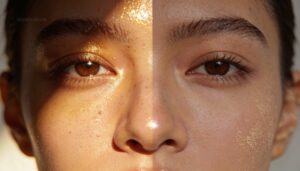
Combination skin plays by its own rules. Your forehead, nose, and chin — the T-zone — show noticeable T-zone shine within hours of washing, while your cheeks deal with tightness or cheek dryness.
You’ll also notice a clear pore size contrast between zones.
This oil-dry balance can shift with seasonal oil changes, making skin type assessment feel tricky. Sound familiar?
Identifying Sensitive and Normal Skin

Sensitive and normal skin sit at opposite ends of the comfort spectrum. Here’s how to tell them apart during your skin type assessment:
- Redness Triggers — Sensitive skin flushes after products, heat, or wind
- Stinging Indicators — Burning after gentle cleansers signals a barrier issue
- Fragrance Reaction — Discomfort with scented products strongly suggests sensitivity
- Temperature Sensitivity — Hot showers worsen sensitive skin’s Barrier Integrity Test
Normal skin simply… doesn’t react.
Key Ingredients to Look for by Skin Type
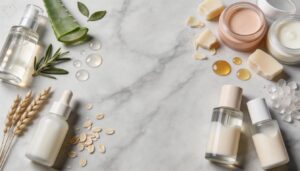
Once you know your skin type, the next step is learning which ingredients actually work for it. Not every formula is built the same, and the right actives can make a real difference in how your skin feels day to day.
what to look for depending on your skin type.
Humectants and Emollients for Dry Skin
Think of humectants and emollients as a two-part team for dry skin. Humectants like glycerin and hyaluronic acid deliver a serious Hydration Boost by pulling water into skin cells. Then a rich emollient moisturizer with shea butter locks that moisture in — that’s your Moisture Lock in action, supporting Skin Barrier Repair over time. For best results, consider balanced ingredient profiles.
| Ingredient | Function |
|---|---|
| Hyaluronic Acid | Draws water into skin |
| Glycerin | Binds moisture to skin cells |
| Shea Butter | Softens and seals the barrier |
| Squalane | Lightweight emollient comfort |
| Ceramides | Strengthens barrier function |
Good Formulation Balance matters here. In winter, prioritize heavier emollients — Seasonal Adjustments keep your routine working year-round.
Finding the right balance gets easier when you start with a skin type specific skincare set built around formulas that actually suit your skin through every season.
Oil-Control Ingredients for Oily Skin
When your skin is prone to stay shiny by midday, the right ingredients make a real difference.
Niacinamide benefits include reducing sebum production over time, while Salicylic acid action clears pores by dissolving buildup from the inside out.
Zinc balancing helps calm excess oil, and clay mattifying ingredients like kaolin and bentonite absorb surface shine.
Look for oilfree, noncomedogenic labels, and consider adding Retinoid regulation at night for long-term pore support.
Soothing Actives for Sensitive Skin
If your skin flares up easily, the wrong ingredient can set it off fast. Fragrance-free formulas are your first line of defense.
Look for ceramides to rebuild your barrier, panthenol hydration to calm reactive skin, and beta glucan to ease irritation.
anti-inflammatory botanical extracts like chamomile extract and aloe vera keep sensitive skin comfortable without overloading it.
Balanced Formulas for Combination Skin
Balancing combination skin is like dressing for two climates at once. You need Zonal Ingredient Balance — lighter, oil-control ingredients for the T-zone and humectants for drier cheeks.
Gel-Cream Hybrids and pH Balanced Formulas do this well. Look for lightweight moisturizers for oily-dry balance, noncomedogenic products, and Dual Action Exfoliation with salicylic acid. Add Targeted Blemish Spots treatments to manage breakouts without disrupting your skin barrier function.
Ingredients to Avoid in Any Skincare Set
Some ingredients can quietly sabotage even the best routine.
Fragrance Additives and perfumes are common culprits — they trigger stinging and redness, especially around your eyes.
Denatured Alcohol strips moisture and worsens dryness.
Sulfates, parabens, and Irritating Preservatives like quaternium-15 are Formaldehyde Releasers worth avoiding.
And don’t rush into High-Strength Acids without building tolerance first — your barrier needs time to adjust.
How to Build Your Routine Step by Step
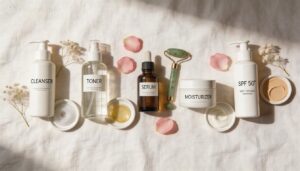
Once you know your skin type and the ingredients that work for it, the next step is putting it all together into a routine you’ll actually stick to. That means choosing each product with intention, not just grabbing whatever looks good on the shelf.
Here’s how to work through it, one step at a time.
Choosing The Right Cleanser for Your Skin
Your cleanser is the foundation of everything else you apply.
For oily skin, a foaming cleanser with solid surfactant strength cuts through excess sebum without leaving residue. Dry skin does better with a barrier-friendly formula using a sulfate-free formula. Sensitive types need fragrance-free options to lower irritation risk.
Whatever your skin type, pH balance keeps your barrier intact after every wash.
Selecting a Toner That Matches Your Needs
Once your cleanser has done its job, a well‑matched toner keeps everything balanced. Think of it as a reset button — but only if you pick the right one for your skin type.
- Oily skin: A toner for oily skin with salicylic acid or niacinamide offers a matte finish without stripping.
- Dry skin: A hydrating toner with glycerin pulls moisture in — always choose an alcohol‑free formula.
- Sensitive skin: Fragrance‑free options with panthenol calm irritation without disrupting your barrier.
- Mature or dull skin: Exfoliating acids like lactic acid brighten gently — just follow with SPF.
pH compatibility and selecting skincare products based on skin type aren’t just buzzwords; they directly affect how well your next steps absorb.
Picking a Moisturizer Based on Skin Type
Your toner sets the stage — now your moisturizer seals the deal.
Texture Matching matters more than most people realize.
Gel formulas absorb quickly and work well as lightweight moisturizers for oily/dry balance, while Moisture Allure Cream-style options with Barrier Support lipids, like ceramides suit drier skin.
Always follow Patch Test Protocol with new products, and remember Seasonal Adjustments keep your routine working year‑round.
| Skin Type | Best Texture | Key Ingredients |
|---|---|---|
| Oily | Gel, oil-free | Niacinamide, Noncomedogenic Formulas |
| Dry | Rich cream | Moisture binding ingredients, shea butter |
| Sensitive | Lightweight lotion | Ceramides, fragrance-free Hydrating serum |
Adding Targeted Serums to Your Set
Once your moisturizer is on, serums are where you get to problem-solve. Think of them as targeted tools — a vitamin C serum for brightness, a hydrating serum for plumpness, or a peptide complex for firmer-feeling skin.
Layering hierarchy keeps things simple: thinnest first, thickest last.
Always follow patch test protocol before adding anything new, especially higher serum potency actives.
Sunscreen Belongs in Every Skincare Set
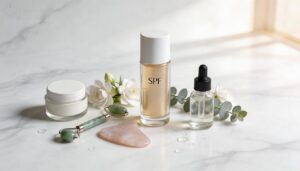
Sunscreen isn’t optional — it’s the step that protects everything else you put on your skin. Without it, even the best serums and moisturizers can only do so much.
Here’s what you need to know to make SPF work for you.
Why SPF is a Non-Negotiable Daily Step
Skipping sunscreen is like leaving the house without locking the door — everything else you’ve done still matters, but you’ve left yourself exposed. Daily UV defense isn’t optional. UV damage prevention happens every single day, not just at the beach.
Sunscreen is not a beach-day luxury — UV damage finds you every single day
Here’s what broad spectrum coverage actually protects you from:
- Hyperpigmentation control — UV exposure darkens existing spots and makes uneven tone harder to treat
- Collagen protection — UVA rays break down the proteins that keep skin firm
- Skin cancer reduction — cumulative UV exposure increases your lifetime risk
- Photoaging prevention — clouds and windows don’t fully block UVA rays
- Treatment support — your serums and actives work better when UV isn’t undoing them daily
Make broad-spectrum SPF 30 your daily sunscreen habit — rain or shine.
Choosing The Right Sunscreen for Your Skin Type
Not all sunscreens are created equal, and your skin type makes all the difference.
Oily or acne-prone skin does best with oil-free, non-comedogenic formulas in a gel texture — matte finish options keep shine in check.
Dry skin needs hydrating sunscreen ingredients like ceramides or hyaluronic acid in a cream base.
Sensitive skin filters should be mineral vs chemical — choose zinc oxide-based mineral sunscreen for broad-spectrum SPF 30 coverage without irritation.
Common Sunscreen Mistakes and How to Fix Them
Even with the right sunscreen in hand, common mistakes in sunscreen application can quietly undermine your protection. Improper Layering Order, Mixing with Moisturizer, and Neglecting UV Index are easy traps to fall into.
Always apply broad-spectrum sunscreen — minimum SPF 30 — as your final morning step on dry skin, with reapplication strategies planned for every two hours outdoors.
Applying Too Little
Most people use far less sunscreen than their skin actually needs — and that thin protective layer simply can’t deliver the SPF on the label. Insufficient coverage means reduced SPF effectiveness, leaving your skin exposed without you realizing it.
Watch for these under-application risks:
- Use two finger-lengths for face and neck — less creates patchy application
- Check for streaky spots around your nose, jaw, and hairline
- Thin layers break down faster, disrupting your skin barrier reinforcement and overall skin care routine
Skipping Reapplication
Your broad-spectrum sunscreen doesn’t last all day — UV exposure accumulation happens quietly, even when you’re busy. After two hours outdoors, photoprotection weakens and a protection gap forms, raising your sunburn risk and accelerating photoaging.
Sweat, oil, and friction all contribute to efficacy loss.
Commit to sunscreen reapplication every two hours to keep your sun protection factor working the way it’s designed to.
Missing Certain Spots
Your face isn’t just what’s directly in front of you. Ear coverage, temple misses, and jawline gaps are surprisingly common — and your neck protection and hand sunscreen matter just as much.
Think of applying sunscreen like washing your face: you wouldn’t skip the sides. Individualized skin type assessment helps you identify a formula that spreads easily, making full coverage feel easy.
Relying Only on SPF in Makeup
Makeup SPF sounds convenient, but it rarely delivers real UV protection. The Insufficient Layer Thickness of a typical foundation application means you’re nowhere near the amount tested for that labeled SPF. Add in the Pigment Dilution Effect from blending, and you’ve got inconsistent coverage.
Dedicated broadspectrum sunscreen — especially mineral sunscreen or tinted mineral sunscreen — gives you reliable Uneven UVB/UVA Balance correction and genuine UV protection that makeup simply can’t match.
Using Expired or Poorly Stored Products
Expired sunscreen is just as unreliable as skipping it altogether.
Heat, humidity, and sunlight break down active ingredients fast — watch for texture separation clues like clumping or oiliness, and ingredient oxidation signs like odd smells or color shifts.
Always check shelf-life labeling basics and your product’s expiry date. Storage temperature guidelines matter too.
When in doubt, do a patch test and replace it.
How to Compare and Evaluate Skincare Sets
Once you know what your skin needs, the next step is figuring out which set actually delivers. Not all products are created equal, and a little comparison goes a long way.
Here’s what to look at before you buy.
Checking Product Compatibility Across Brands
Mixing products from different brands isn’t a problem — as long as you do it thoughtfully. pH Matching matters more than most people realize, because a low-pH toner can throw off your moisturizer‘s effectiveness.
Keep these checks in mind:
- Confirm Ingredient Overlap so actives don’t cancel each other out
- Check Packaging Compatibility to protect shelf life
- Follow Actives Scheduling to avoid layering retinol with strong acids
Evaluating Price Versus Ingredient Quality
Price doesn’t always tell the whole story. A higher price tag sometimes reflects better ingredient source purity or sophisticated delivery system efficacy — but not always. Budget-friendly skincare options can absolutely work when the formulation is stable and ingredients matter most.
| Factor | Budget | Premium |
|---|---|---|
| Active Concentration Transparency | Often vague | Usually clear |
| Delivery System Efficacy | Basic emulsions | Encapsulated actives |
| Formulation Stability Testing | Minimal disclosure | Third-party verified |
| Cost per Milliliter | Lower upfront | Higher, longer-lasting |
| Ingredient Source Purity | Variable | Traceable sourcing |
Compare cost per milliliter, not just the bottle price, to find real value and ingredient benefits for various skin concerns.
Choose Products With Caution
Picking the right skincare set isn’t just about finding what works — it’s also about knowing what to watch out for. Some choices that seem smart on the surface can quietly work against your skin over time.
Here are a few things to keep in mind before you commit to a routine.
Oil weight plays a bigger role than most people expect, so it’s worth checking out how many ounces of oil you actually need for long hair before you settle on an amount.
Avoiding Harmful Ingredients Like Parabens and Sulfates
Not all clean labels tell the full story. When shopping for a skincare set, knowing how to read an ingredient list is your best protection. Watch for these four things:
- Paraben-free labels — confirm no methylparaben or butylparaben appear
- Sulfate-free formulas — avoid sodium lauryl sulfate
- INCI ingredient decoding — match exact chemical names, not marketing terms
- Surfactant sensitivity — gentler alternatives like glucosides work better for reactive skin types
Why Influencer Trends Are Not a Reliable Guide
Just because a post goes viral doesn’t mean the product works for you. Paid Partnerships and Short Trend Lifecycles mean influencers move on before real results show.
Selective Testimonials hide breakouts, and Algorithmic Bias keeps sponsored content front and center.
Limited Sample Size reviews rarely reflect your skin’s reality.
A custom skin type assessment and product recommendation will always outperform beauty influencer impact.
When to Consult a Dermatologist for Personalized Advice
Sometimes, a solid routine simply isn’t enough. If you’re dealing with a persistent rash, mole changes, severe acne, uncontrolled eczema, or unexpected hair loss, it’s time to book a dermatology consultation. A dermatologist goes beyond a skin type quiz — they use skin analysis technology to build a true individualized skincare plan, including a dermatologist recommendation specifically designed for you.
- Rashes lasting over 2–4 weeks
- Moles that change shape or bleed
- Acne unresponsive after 8–12 weeks of treatment
Adjusting Your Set as Skin Changes Over Time
Your skin isn’t static — it shifts with seasons, hormones, age, and stress. Seasonal Hydration needs change when cold air drops humidity, increasing dryness. Hormonal Fluctuations trigger breakouts along the jawline. Age-Related Barrier changes call for richer ceramide creams. Post-Treatment Recovery and Stress & Sleep disruptions demand simpler routines. A Skin Type Solutions quiz or professional skin analysis helps you stay current.
| Life Change | Skin Signal | Routine Shift |
|---|---|---|
| Winter/dry climate | Tightness, flaking | Switch to richer moisturizer for skin hydration |
| Hormonal cycle | Chin/jaw breakouts | Add consistent spot treatment |
| Aging skin | Stinging, dullness | Prioritize skin barrier protection with ceramides |
A customized skin type assessment and product recommendation keeps your set working for you — not against you.
Frequently Asked Questions (FAQs)
How to choose skincare products for your skin type?
Ironically, most people spend more time picking a Netflix show than knowing their own skin. Start with a simple bare-face test, then match products to what your skin actually needs.
What is the 1% rule in skincare?
The 1% rule means ingredients listed after a certain point on the label are present at roughly 1% or less.
It’s a quick label reading tool to gauge active concentration and avoid overpaying for trace amounts.
Why is Gen Z obsessed with skincare?
Gen Z’s obsession with skincare runs deeper than aesthetics.
Social media influence, self-care identity, affordable accessibility, health awareness, and cultural inclusivity all collide — turning a simple routine into something that feels personal, purposeful, and worth sharing.
Can skincare sets work during pregnancy or breastfeeding?
Yes, skincare sets can work during pregnancy or breastfeeding — but you’ll need to check every ingredient carefully. Swap out retinoids and hydroquinone, and choose mineral sunscreen with zinc oxide.
How does climate affect your skincare routine choices?
Climate shapes your routine more than most people realize.
Humidity affects moisture balance, cold air demands stronger barrier protection, heat drives sweat management needs, and pollution calls for antioxidant defense and consistent seasonal SPF adjustments.
Should men follow different skincare set guidelines?
Not really. Skincare set choices hinge on your skin type, not your gender. Hormonal influence, shaving irritation, texture preference, and lifestyle compatibility matter more than any gender-based guideline.
How long before a new set shows results?
Most people notice initial hydration effects within a day, but active ingredient lag is real. Acne control and visible spot reduction often take 6–12 weeks of consistent use.
Can diet and sleep impact how products perform?
Absolutely.
Poor sleep disrupts skin barrier repair, and a diet low in omega-3s or antioxidants can reduce moisture retention. When hydration timing and balanced diet align, your products simply work better.
Conclusion
Imagine your skin as a canvas, waiting for the right brushstrokes to reveal its natural beauty. By understanding your skin type and choosing products that harmonize with its needs, you’re one step closer to a radiant glow.
Learning how to choose a skincare set for your skin type is an investment in your skin’s health. With this knowledge, you’ll navigate the field of skincare with confidence, unlocking a brighter, more balanced complexion that reflects your inner beauty.