This site is supported by our readers. We may earn a commission, at no cost to you, if you purchase through links.
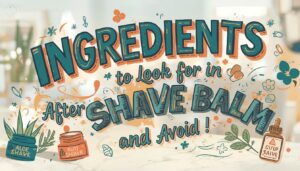
Most men spend more time picking a razor than they do reading an after shave label. That’s a problem, because what goes on your skin right after shaving matters more than most people realize. Freshly shaved skin isn’t just clean—it’s compromised. The blade removes a thin layer of protective cells along with the hair, leaving your skin temporarily more vulnerable to irritation, moisture loss, and inflammation.
The right balm works with your skin’s natural recovery process. The wrong one—loaded with alcohol or heavy fragrance—can undo everything the shave was supposed to accomplish. Knowing which ingredients to look for in after shave balm puts you in control of how your skin feels for the rest of the day.
Table Of Contents
- Key Takeaways
- Soothing Ingredients for Razor Burn
- Hydrating Ingredients After Shaving
- Barrier-Repairing Oils and Butters
- Antioxidants for Post-Shave Recovery
- Ingredients to Avoid After Shaving
- Best Ingredients by Skin Type
- Top 4 After Shave Balms
- Frequently Asked Questions (FAQs)
- What is the key ingredient in aftershave?
- What should I look for in an aftershave?
- How long does after-shave balm stay effective?
- Can after-shave balm replace a daily moisturizer?
- Is patch testing necessary before first use?
- How much balm should you apply each time?
- Are natural after-shave balms safe for all ages?
- Conclusion
Key Takeaways
- Freshly shaved skin is temporarily vulnerable, so ingredients like aloe vera, allantoin, and niacinamide aren’t just nice-to-haves — they actively help your skin recover faster.
- Glycerin, hyaluronic acid, and saccharide isomerate are your best bets for post-shave hydration, with saccharide isomerate outperforming glycerin by nearly 50% on moisture retention.
- Alcohol denat., heavy fragrance, SLS, and undiluted essential oils can quietly make razor burn worse, even in products marketed as soothing — always read the label.
- Your skin type should drive your ingredient choices: dry skin needs shea butter and squalane, oily skin does better with niacinamide gels, and sensitive or acne-prone skin needs fragrance-free, alcohol-free formulas.
Soothing Ingredients for Razor Burn
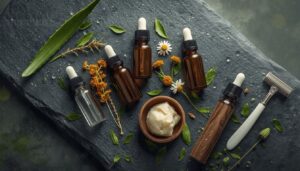
Razor burn doesn’t have to be your post-shave reality. The right ingredients can calm irritated skin fast — before redness even has a chance to settle in.
Knowing which actives to reach for — like aloe, niacinamide, or centella — is half the battle, and these best creams for shaving irritation cover the other half.
five soothing ingredients worth checking for on the label.
Aloe Vera Leaf Extract for Cooling Irritation
When your skin is on fire after a close shave, aloe leaf extract is the ingredient you want first on the label. Its gel-based delivery system spreads quickly over freshly irritated skin, providing an almost instant cooling sensation.
The anti-inflammatory phytochemicals and polysaccharide moisture compounds work together as an irritation soothing mechanism, making this one of the most trusted soothing botanicals for rapid redness relief.
Its high water content creates cooling also helps soothe sunburned skin.
Chamomile Extract for Calming Sensitive Skin
Chamomile extract works through multiple anti-inflammatory pathways, making it a standout among soothing botanicals for sensitive skin. Its bisabolol soothing action calms that tight, reactive feeling after shaving, while apigenin antioxidant compounds protect against daily stress.
This gentle botanical brings real sensory calm without overwhelming your skin.
For a gentle formulation worth trusting, look for chamomile near the top of your aftershave balm’s ingredient list.
Blue Tansy Oil for Reducing Visible Redness
Blue tansy oil earns its place alongside those soothing botanicals for one striking reason: its deep indigo color tells you exactly what’s working.
That blue hue comes from chamazulene, the anti-inflammatory compound responsible for real redness reduction.
For azulene efficacy, concentration guidelines matter — keep it at or below 0.5%.
Proper safety dilution and formulation synergy with emollients deliver genuine inflammation relief without irritation.
Calendula Extract for Post-shave Comfort
Calendula extract — drawn from the marigold flower — brings calming flavonoids and triterpenoid soothing compounds that work quietly to ease post-shave irritation. Think of it as a gentle buffer between your freshly shaved skin and the world. Here’s what makes it worth seeking out:
- Natural irritation reducer — its anti-inflammatory botanicals calm visible redness fast
- Marigold skin barrier support helps cut moisture loss after shaving
- Gentle post-shave relief for sensitive or reactive skin without harsh ingredients
- Herbal extracts with fatty acids layer on a protective, comfortable finish
Allantoin for Soothing Freshly Shaved Skin
Allantoin is a quiet powerhouse for postshave irritation. It delivers real irritation reduction by calming the friction-stressed skin barrier right after your razor passes through.
Its keratolytic action gently loosens dead surface cells, so your skin feels smoother without any harshness.
It also promotes a hydration boost and skin barrier repair — making it a go-to ingredient for genuine skin comfort in any antiinflammatory balm formulation.
Hydrating Ingredients After Shaving
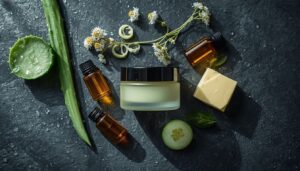
Shaving strips more than just hair — it pulls moisture right out of your skin.
The right hydrating ingredients help your skin bounce back fast and stay comfortable all day.
Here are the ones worth looking for in your after-shave balm.
Glycerin for Drawing Moisture Into Skin
Glycerin is your skin’s built-in moisture magnet. As a humectant, it pulls water toward the outer skin layer — which is exactly what you need after shaving strips away natural moisture.
It works best on slightly damp skin, so apply your balm right after rinsing. Around 3% concentration hits the sweet spot; too much can feel tacky without adding real benefit.
Hyaluronic Acid for Lightweight Hydration
Think of hyaluronic acid as a sponge built into your balm. Its water-binding capacity is impressive — it attracts moisture and locks it close to the skin surface through film-forming hydration, without any grease.
Multi-weight hyaluronic acid targets both surface and deeper layers, making it one of the most effective hydrating agents for skin barrier restoration after shaving.
Gel-base lightness means it absorbs fast.
Saccharide Isomerate for Longer-lasting Moisture
Saccharide isomerate is a carbohydrate humectant that works differently than most hydrating agents. Instead of sitting on your skin’s surface, it uses keratin binding to anchor itself inside the stratum corneum — building a water-resistant reservoir that lasts up to 72 hours.
Saccharide isomerate binds deep into the stratum corneum, building a moisture reservoir that lasts up to 72 hours
Its synergy with glycerin is real: in testing, saccharide isomerate outperformed glycerin by nearly 50% on moisture retention, supporting your skin barrier long after you’ve moved on with your day.
Panthenol for Hydration and Skin Comfort
Panthenol — also known as provitamin B5 — quietly earns its place in any quality aftershave balm. Once applied, it converts to vitamin B5 on your skin, triggering barrier reinforcement and real moisture retention.
It works as a humectant, drawing water in and holding it there. That humectant synergy with glycerin boosts skin hydration noticeably.
You get long-lasting moisture, irritation relief, and a calmer, less reactive feel after every shave.
Aloe Juice for Water-based Soothing Hydration
Aloe juice is one of the most practical ingredients in postshave care. As a water-based gel matrix, it absorbs fast — no greasy wait, no heavy residue.
A proper aloe juice concentration delivers anti-inflammatory relief and steady skin hydration right where you need it.
pH balanced formulation keeps it gentle, while microbial preservation strategies maintain stability.
It’s aloe vera doing exactly what it should.
Barrier-Repairing Oils and Butters
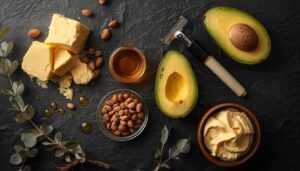
Soothing and hydrating ingredients do a great job calming irritation, but your skin also needs help rebuilding its protective barrier after shaving. That’s where oils and butters come in — they seal in moisture and give your skin something solid to recover with.
five worth looking for on the label.
Jojoba Oil for Balancing Skin Moisture
Jojoba oil is one of those carrier oils that punches above its weight. Technically a liquid wax, it creates a Lightweight Emollient Film that mimics your skin’s own sebum — a true Sebum Mimic Balance that works for dry and oily skin alike.
Here’s what makes it stand out:
- Oil-Based Moisture Lock — helps retain moisture without heavy residue
- Non-Comedogenic Finish — won’t clog pores
- Quick Absorption Rate — sinks in fast, reinforcing your skin barrier immediately
Shea Butter for Rich Post-shave Protection
Where jojoba keeps things light, shea butter goes deeper. It’s rich in oleic acid, softening and stearic acid, cushioning — fatty acids that calm razor burn fast.
Its unsaponifiable triterpenes support triterpene collagen support and help fight inflammation at the skin level.
The result is a rich emollient seal that strengthens your skin barrier and locks moisture in for hours.
Squalane for Non-greasy Barrier Support
If shea butter is the rich protective layer, squalane is its lighter, faster partner. This lightweight emollient absorbs quickly, leaves zero greasy film, and integrates naturally into your skin’s lipid structure — true skin lipid integration.
It’s also noncomedogenic and remarkably shelf-stable thanks to its oxidation-resistant chemistry.
Fast-absorbing and compatible with nearly every skin type, squalane quietly strengthens your skin barrier without the heaviness.
Sunflower Seed Oil for Dry Skin Relief
Sunflower seed oil is another quiet workhorse in a good aftershave balm. It’s rich in linoleic acid — roughly 70 to 80 percent — which directly helps your skin barrier after shaving stress.
Here’s what makes it worth checking the label for:
- Delivers a lightweight protective film that locks in hydration retention without feeling heavy
- Provides a skin softening effect on rough or dry patches
- Reinforces the occlusive moisture layer that slows water loss
- Offers excellent blendability with actives like niacinamide or aloe
- Loaded with vitamin E for added antioxidant support on dry skin
Beeswax for Reducing Moisture Loss
Beeswax might seem old-fashioned, but it earns its place in a natural aftershave balm. It forms an occlusive film on your skin that slows moisture loss without sealing out air completely.
Think of it as a flexible moisture seal — water resistance without the heaviness.
Higher beeswax loading means better film durability and a stronger skin barrier. Paired with protective waxes like shea, it genuinely works.
Antioxidants for Post-Shave Recovery
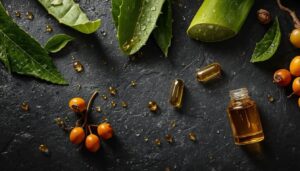
Shaving stresses your skin more than you might think — and antioxidants are what help it bounce back. They neutralize free radicals, support collagen, and keep post-shave inflammation from lingering.
Here are the ones worth looking for in your balm.
Green Tea Extract for Antioxidant Protection
Green tea extract is one of the hardest-working antioxidants you can find in an after-shave balm. Its catechins — especially EGCG — neutralize free radicals triggered by razor friction and UV exposure.
Here’s what makes it stand out for skin barrier restoration after shaving:
- EGCG Scavenging targets free radicals that slow skin repair
- UV Damage Mitigation reduces oxidative stress from sun exposure
- Beta-Cyclodextrin Encapsulation improves catechin stability so the ingredient stays active longer
- Inclusion Complexes help maintain antioxidant protection throughout the day
Rosehip Oil for Vitamin-rich Skin Support
Rosehip oil earns its spot in after-shave balms by delivering real nutrients where your skin needs them most. Its Vitamin A Boost promotes cell turnover for smoother skin, while Vitamin C Brightening helps even out post-shave dullness.
The Omega-3 Barrier from linoleic acid seals moisture in, and its Rosehip Emollient quality softens tightness fast. Think of rosehip extract as antioxidant protection and skin repair rolled into one.
Vitamin E for Protecting The Skin Barrier
Vitamin E is one of those quietly powerful ingredients that does a lot behind the scenes.
It blends into your skin’s lipid barrier, supporting Barrier Lipid Organization and helping with Transepidermal Water Retention after shaving strips away natural oils.
Its Oxidative Stress Mitigation and UVB Absorption Support make it a smart antioxidant for post-shave repair — calming, protective, and non-greasy.
Licorice Root Extract for Reducing Redness
Licorice root extract is one of the most underrated redness-fighters in post-shave care.
Its active compounds work on multiple fronts: Glycyrrhizin calming irritated, reactive skin; Glabridin brightening uneven tone; and Licochalcone anti-inflammatory action quieting redness fast.
Liquiritin pigment control and Tyrosinase inhibition help prevent post-shave discoloration too.
If your skin flares red after shaving, this is worth seeking out.
Niacinamide for Strengthening Stressed Skin
Niacinamide is a quiet powerhouse for skin barrier restoration after shaving. It promotes ceramide production — that’s your Ceramide Boost — which directly aids Barrier Strengthening and cuts water loss.
Inflammation Modulation helps calm visible redness fast.
Add Oxidative Stress Defense and improved Water Retention, and you’ve got serious hydration and moisturization strategies packed into one anti-inflammatory, skin soothing ingredient.
Ingredients to Avoid After Shaving

Not every ingredient on a label is working in your favor. Some common ones can actually make post-shave irritation worse, even when they’re hiding in products marketed as soothing.
Here’s what to watch out for before your next purchase.
Alcohol Denat. In Drying Aftershave Formulas
If your aftershave leaves you with razor burn and the uncomfortable skin tightness, Alcohol Denat. is likely the culprit. Its high evaporation rate pulls moisture away quickly, triggering a sting sensation on freshly shaved, permeable skin.
It provides a real solvent efficiency purpose and even plays a preservative role, but in alcohol-based aftershave formulas, it can disrupt skin barrier restoration after shaving.
An alcohol-free formula protects hydration and moisturization strategies instead.
Heavy Fragrance in Sensitive-skin Balms
Fragrance is a sneaky one. Even "unscented" balms can contain masking scents designed to cover ingredient odors — that’s not fragrance-free.
On sensitive skin, fragrance allergens like linalool, limonene, and citral can trigger real reactions. Some sensitizer oxidation happens in air, increasing irritation beyond the skin itself.
Always choose a certified fragrance-free aftershave balm, especially if essential oil blends have caused issues before.
Sodium Lauryl Sulfate and Harsh Surfactants
Harsh surfactants like Sodium Lauryl Sulfate (SLS) work through a simple but damaging surfactant irritation mechanism — they strip your skin’s natural lipids, weakening the skin barrier right when it needs protection most. On freshly shaved skin, those barrier stripping effects hit harder, turning mild razor burn into real discomfort.
Alcohol-free balms skip SLS entirely for good reason:
- SLS disrupts the skin barrier by removing protective lipids
- Freshly shaved skin absorbs irritants faster, increasing sting risk
- Alternative mild surfactants like cocoyl glucoside cleanse without stripping
- Formulation pH impact matters — SLS raises pH, slowing skin recovery
- Regulatory labeling guidelines require full ingredient disclosure, so check the list
Undiluted Essential Oils That May Irritate
Even good-for-you ingredients can backfire when used undiluted. Essential oil blends are potent — bergamot oil falls into the Phototoxic Citrus category, meaning UV exposure after application can cause burning or blistering. Spicy Phenol Irritants like cinnamon and clove, and Allergenic Contact Oils like sandalwood essential oil, follow similar rules.
| Oil Type | Skin Sensitivity Triggers |
|---|---|
| Phototoxic Citrus (bergamot) | UV-activated burning |
| Spicy Phenol Irritants | Direct skin irritation |
| Allergenic Contact Oils (sandalwood) | Contact dermatitis risk |
| Neroli oil undiluted | Sensitization over time |
Dilution Safety Guidelines exist for a reason — freshly shaved skin absorbs everything faster, turning a "tolerable scent" into real skin irritation.
Menthol Overload in Cooling Formulas
Menthol feels invigorating — until it doesn’t. It activates cold-sensing nerves through volatile evaporation, which hits harder on freshly shaved skin that’s already past its sensory threshold.
When cooling agents stack together, cooling agent synergy can push a formula beyond its formulation limits fast.
Even an alcohol-free formula isn’t safe from irritation risk if menthol is overdone. Keep it subtle.
Best Ingredients by Skin Type
Not every skin type needs the same thing after a shave. What works beautifully for dry skin can feel heavy and clogging on oily skin.
Here’s a quick breakdown of the best ingredients to look for based on your skin type.
Dry Skin: Shea Butter, Squalane, Glycerin
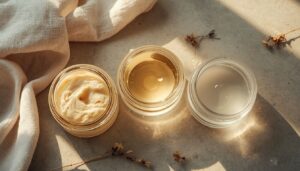
Dry skin needs a three-layer strategy after shaving.
Shea butter delivers rich skin softening and starts barrier restoration right away. Squalane adds emollient balance without a heavy finish — think silky finish, not greasy residue. Glycerin manages the moisture lock, pulling water in for extended hydration.
Together, they cover comfort, protection, and lasting softness in one balm.
Sensitive Skin: Aloe, Allantoin, Fragrance-free Formulas
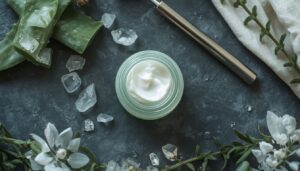
Sensitive skin doesn’t forgive the wrong formula. Look for aloe vera to calm surface irritation fast and allantoin to restore the barrier after every pass of the blade.
A aftershave balm cuts reaction risk substantially.
Bonus points for dermatologist-tested, pH-balanced, and non-comedogenic formula claims — they signal the brand actually built this for sensitive skin care, not just marketed it that way.
Oily Skin: Lightweight Gels, Niacinamide, Non-comedogenic Oils
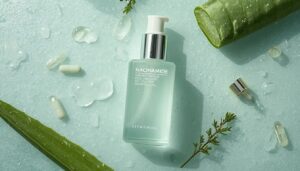
Oily skin needs post-shave care that hydrates without adding shine. A pH balanced gel with oil-free formulation gives you that fast absorption and cooling sensation without clogging pores.
Niacinamide helps sebum regulation and strengthens your barrier. Pair it with lightweight emollients and noncomedogenic aftershave products for oily/acne-prone skin.
The result? Oil control, a matte finish, and skin that actually feels balanced.
Acne-prone Skin: Alcohol-free, Low-fragrance Balms
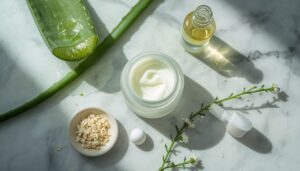
Acne-prone skin is already dealing with inflammation — shaving adds more. That’s why alcohol-free, fragrance-free balms are your safest bet.
Look for a non-comedogenic formulation with a pH-balanced base and silicone-free texture. Anti-inflammatory botanicals like aloe and allantoin calm things down without clogging pores.
Choose preservative-safe options in eco-friendly packaging, and you’ve got noncomedogenic aftershave products for oily/acne-prone skin that actually support oil control.
Mature Skin: Antioxidants, Peptides, Richer Emollients
Mature skin needs a little more after shaving. The barrier is thinner, moisture escapes faster, and redness lingers longer. Choose a balm that works harder for you:
- Collagen-Boosting Peptides and resveratrol benefits firm and protect
- Vitamin C Brightening and vitamin E fight oxidative stress
- Shea butter and squalane deliver non-greasy emollients without heaviness
- Ceramide Enrichment helps skin barrier restoration after shaving for anti-aging benefits
Top 4 After Shave Balms
Knowing ingredients to look for is one thing — finding a balm that actually delivers them is another. These four options stand out for their thoughtful formulations and real-world results.
Each one brings something worth knowing about.
1. NIVEA MEN Real Madrid Sensitive Post Shave Balm
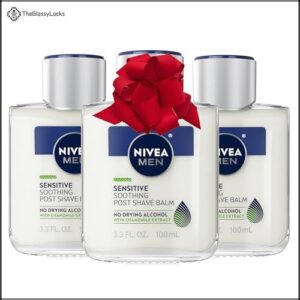
NIVEA MEN’s Real Madrid edition isn’t just a fan item — it’s a genuinely solid post-shave balm for sensitive skin. The VitaminPro Complex pairs Vitamin E and Panthenol to calm irritation and lock in hydration, while chamomile extract keeps redness in check.
It’s alcohol-free and absorbs fast without leaving a greasy film.
Each 3-pack bottle holds 3.3 fl oz, and at $21.91 for three, the value is hard to argue with.
One heads-up: it does contain fragrance, so patch-test first if your skin runs reactive.
If your skin tends to flare, browsing products formulated to reduce skin inflammation can help you find gentler alternatives that pair better with a calming routine.
| Best For | Guys with sensitive skin who want a solid everyday post-shave balm — and bonus points if you’re a Real Madrid fan looking for a practical gift. |
|---|---|
| Alcohol-Free | Yes |
| Volume | 3.3 fl oz |
| Skin Type | Sensitive |
| Greasy Residue | Non-greasy |
| Soothing Agent | Chamomile, Provitamin B5 |
| Fragrance | Mild fragrance |
| Additional Features |
|
- Alcohol-free formula absorbs fast and leaves zero greasy residue — great for daily use
- VitaminPro Complex with Vitamin E, Panthenol, and chamomile tackles irritation, dryness, and redness all at once
- Three bottles for $21.91 is genuinely good value, especially for a name-brand balm
- Contains fragrance, so it’s a skip if your skin is easily irritated by scented products
- Only comes in one size — no travel-friendly option if you need something compact
- Limited-edition branding means availability can be hit or miss depending on when you’re shopping
2. Jack Black After Shave Cooling Gel
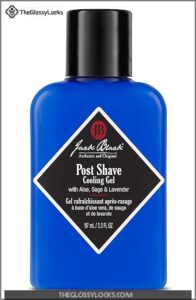
If you want something lighter, Jack Black’s After Shave Cooling Gel is worth a look. It skips alcohol entirely and leans on aloe leaf juice, chamomile, sage, and calendula to calm freshly shaved skin fast.
Glycerin pulls moisture in without leaving any oily residue behind. The gel texture absorbs quickly — a small amount covers your whole face. It’s fragrance-free, dermatologist-tested, and made in the USA.
At around $23 for 3.3 fl oz, it’s a smart pick for sensitive or combination skin.
| Best For | Anyone with sensitive or combination skin who wants a lightweight, alcohol-free after-shave that calms irritation without feeling heavy or greasy. |
|---|---|
| Alcohol-Free | Yes |
| Volume | 3.3 fl oz |
| Skin Type | Sensitive |
| Greasy Residue | Non-greasy |
| Soothing Agent | Allantoin, Glycerin |
| Fragrance | Fragrance-free |
| Additional Features |
|
- Cools and soothes razor burn fast with natural ingredients like sage, rosemary, and allantoin
- Gel formula absorbs quickly and a little goes a long way, so the bottle lasts
- Fragrance-free, dermatologist-tested, and cruelty-free — easy to trust on sensitive skin
- At $23 for 3.3 fl oz, it’s on the pricier side for a post-shave product
- Some users catch a faint lavender scent despite the fragrance-free label
- Can be tricky to find in stores — stock runs out fairly often
3. Baxter of California Men’s After Shave Balm
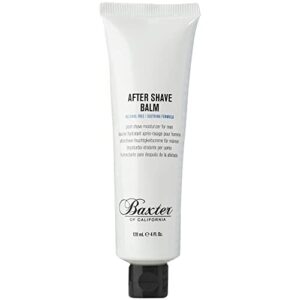
For something with a bit more body, Baxter of California’s After Shave Balm hits a nice middle ground. It’s alcohol-free and combines aloe vera leaf extract with allantoin — two ingredients that genuinely calm post-shave irritation without stinging.
Glycerin draws in moisture while tea tree oil adds a gentle antibacterial edge. The gel-balm texture absorbs fast and leaves a matte finish.
At 4 fl oz, it’s a solid daily option for normal to sensitive skin.
| Best For | Guys with normal to sensitive skin who want a lightweight, no-sting balm that calms irritation and keeps shine in check. |
|---|---|
| Alcohol-Free | Yes |
| Volume | 4 fl oz |
| Skin Type | Sensitive |
| Greasy Residue | Non-greasy |
| Soothing Agent | Aloe Vera, Allantoin |
| Fragrance | Menthol/Lemon |
| Additional Features |
|
- Alcohol-free with aloe and allantoin — actually soothes instead of just stinging and calling it done
- Fast-absorbing gel-balm texture that won’t leave you feeling greasy or heavy
- Versatile enough to double as a primer or use on legs and underarms
- Pricier than most drugstore balms, so it’s a bit of a commitment
- Might not cut it if your skin runs on the drier side — you may still need a moisturizer on top
- That barbershop scent can be a lot at first, even if it does fade pretty quickly
4. The Art of Shaving Lavender Aftershave Balm
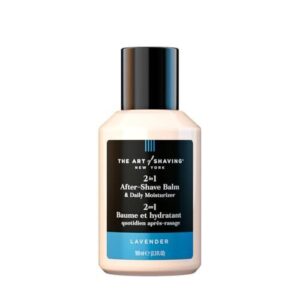
If you want a premium step up, The Art of Shaving Lavender Aftershave Balm delivers. At $42.50 for 3.3 fl oz, it’s an investment — but the formula earns it.
Shea butter and jojoba oil work together to seal moisture and soften skin fast. Glycerin and sodium hyaluronate pull hydration deep into the surface layer. Lavender essential oil soothes while keeping things fragrance-minimal.
It’s best for dry or sensitive skin that needs real nourishment after every shave.
| Best For | Guys with dry or sensitive skin who want a no-irritation, alcohol-free balm that actually hydrates — especially in colder months. |
|---|---|
| Alcohol-Free | Yes |
| Volume | 3.3 fl oz |
| Skin Type | Sensitive/Dry |
| Greasy Residue | Non-greasy |
| Soothing Agent | Shea Butter, Grape Seed |
| Fragrance | Lavender essential oil |
| Additional Features |
|
- Shea butter and grape seed extract leave skin genuinely soft and moisturized, not just coated
- Lavender essential oil soothes razor burn without loading the formula with synthetic fragrance
- No alcohol, no harsh chemicals — safe for daily use even on easily irritated skin
- $42.50 for 3.3 fl oz is a tough sell when budget balms exist
- The formula runs thin, so you’ll burn through it faster than expected (around 5 pumps per use)
- The lavender scent can come across as faint or oddly chemical depending on your nose
Frequently Asked Questions (FAQs)
What is the key ingredient in aftershave?
The real workhorse in most aftershave balms is glycerin. It pulls moisture into your skin and holds it there. Aloe vera and allantoin follow close behind, calming irritation fast.
What should I look for in an aftershave?
The devil’s in the details. Look for soothing agents like aloe vera and allantoin, hydrating humectants like glycerin, and barrier-repairing emollients like jojoba oil — while skipping alcohol and heavy fragrance.
How long does after-shave balm stay effective?
Most balms stay effective for 12 to 24 months after opening. If the smell or texture changes, it’s time to replace it. Always check the expiration date printed on the packaging.
Just like balms, shampoo can quietly go bad too, and using it past its prime may lead to scalp irritation or dandruff, so it’s worth learning how long shampoo stays good before it loses effectiveness.
Can after-shave balm replace a daily moisturizer?
Sometimes, yes — your balm can pull double duty.
If it includes glycerin, jojoba oil, or saccharide isomerate, and your skin feels comfortable all day, you likely don’t need a separate moisturizer.
Is patch testing necessary before first use?
Yes, patch testing is worth it — especially if your skin is prone to react. Apply a small amount behind your ear and wait 24 to 48 hours before going all in.
How much balm should you apply each time?
Think a pea-sized amount sounds too little? It’s actually enough. Start small, warm it between your palms, and spread evenly. If skin still feels tight, add just a touch more.
Are natural after-shave balms safe for all ages?
Not exactly. Natural doesn’t mean safe for every age. Essential oils and botanical extracts can irritate younger, more reactive skin. Always patch test first, especially on children.
Conclusion
You’re what you repeatedly do—and what you repeatedly put on your skin. Choosing the right ingredients to look for in after shave balm isn’t a minor detail.
It’s the difference between skin that recovers and skin that stays irritated. Aloe soothes. Glycerin hydrates. Squalane protects.
Meanwhile, alcohol and heavy fragrance quietly undo your efforts. Read the label like it matters, because it does. Your skin will thank you by lunchtime.
- https://mcpress.mayoclinic.org/women-health/vaginal-hyaluronic-acid-products-how-do-they-help/
- https://www.mayoclinic.org/diseases-conditions/dry-skin/diagnosis-treatment/drc-20353891
- https://www.aad.org/public/everyday-care/skin-care-basics/care/skin-care-for-men
- https://health.clevelandclinic.org/skin-barrier/
- https://www.dermapproach.com/how-regular-shaving-can-damage-mens-skin-and-what-you-can-do-about-it/