This site is supported by our readers. We may earn a commission, at no cost to you, if you purchase through links. This content is for general informational and educational purposes only and is not a substitute for professional medical, dermatological, or nutritional advice.
Aloe vera has been sitting on windowsills and kitchen counters for centuries, yet most people treat it as a sunburn remedy and nothing more. The same gel that soothes irritated skin carries a dense concentration of mucopolysaccharides—natural compounds that pull moisture from the air and lock it directly into your hair fiber.
That’s not a marketing claim; it’s basic biochemistry. What makes aloe particularly useful for hair moisture is the combination of humectant action, a pH that matches your scalp’s natural acidity, and a polysaccharide film that physically seals the cuticle.
The practical tips ahead show you exactly how to put all of that to work.
Table Of Contents
Key Takeaways
- Aloe vera hydrates hair through three distinct mechanisms — drawing in moisture, sealing the cuticle with a polysaccharide film, and matching your scalp’s natural pH between 4.5 and 5.5.
- Pairing aloe with an occlusive like coconut oil locks in moisture more effectively than using aloe alone, since humectants need a sealant to prevent evaporation.
- Application method matters: a pre-shampoo barrier coat protects strands during washing, while a leave-in spray on damp hair delivers lighter, daily hydration without buildup.
- Start with once-a-week use, always patch-test first, and store fresh gel in an airtight container at 4–8°C — daily use can lead to buildup, and spoiled gel can irritate your scalp.
How Aloe Vera Hydrates Hair
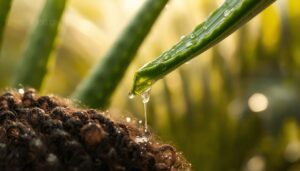
Aloe vera doesn’t just sit on your hair — it actually works in a few distinct ways to bring moisture in and keep it there. Understanding how it does that makes it much easier to use correctly.
Once you understand what aloe actually does, putting it to work is simple — this aloe vera hair mask recipe shows exactly how to apply that knowledge at home.
Here’s what’s happening at each step.
Humectant Properties That Draw in Moisture
Aloe vera gel works like a sponge at the strand level. Its mucopolysaccharides — natural humectants — pull moisture from the air through Relative Humidity Interaction and lock it in via Hydrogen Bond Binding, cutting Evaporation Rate Reduction dramatically.
For ideal hydration, combine aloe vera with an occlusive agent to create a humectant‑occlusive pairing strategy.
- Draws water toward dry, thirsty strands
- Keeps moisture anchored through Mucopolysaccharide Humectancy
- Provides lasting softness between washes
- Works in fresh aloe vera juice and gel form
Polysaccharide Film That Helps Seal The Cuticle
Once moisture is drawn in, your hair needs something to hold it there — that’s where the Film Formation Mechanism kicks in.
The polysaccharides in aloe vera gel coat each strand, creating a Hydrogen Bond Network with keratin. Think of it as shrink-wrap for your cuticle. This barrier limits evaporation and blocks environmental aggressors.
| Property | What It Does | Why It Matters |
|---|---|---|
| Barrier Strength | Shields cuticle surface | Reduces moisture loss |
| Hydrogen Bond Network | Anchors film to keratin | Keeps coating functional |
| Environmental Protection | Blocks humidity and damage | Preserves strand integrity |
| Durability Testing | Film persists after rinsing | Long-lasting cuticle sealing |
| Moisture Retention | Locks hydration in shaft | Softer, smoother hair daily |
Polysaccharides seal the cuticle naturally — no silicones needed.
PH Balance for Smoother, Less Frizzy Strands
polysaccharide film works best when your hair’s pH stays in the right zone.
Aloe vera gel sits naturally between 4.5 and 5.5 — the same acidic pH range healthy hair needs. Those Acidic pH Benefits are real: pH balancing keeps cuticles flat, supporting frizz control and moisture retention.
Alkaline Damage Prevention matters too — skip high-pH products that lift the cuticle and undo everything.
Scalp Hydration for Healthier Roots
Your scalp is the foundation — and keeping it hydrated matters just as much as your strands. Aloe vera gel works as a scalp soothing treatment by supporting Barrier Lipid Reinforcement, which reduces that tight, dry feeling between washes. Its humectant properties pull moisture directly to the surface, encouraging Scalp Microbiome Support and Follicle Nutrient Delivery where it counts.
For a deeper look at how aloe fits into a broader routine, affordable natural hair loss remedies offer practical options that pair well with consistent scalp care.
Three things a hydrated scalp does for you:
- Reduces flaking during styling
- Creates a stable environment for follicle nourishment
- Enhances natural Scalp Oil Regulation without stripping
Its pH balancing and UV Damage Prevention benefits round out a complete root-care routine.
Best Ways to Apply Aloe
Knowing aloe works is one thing — knowing how to actually use it makes all the difference. There are a few solid methods that fit into almost any hair routine, whether your hair is dry, oily, or somewhere in between.
Here’s what usually works best.
Using Fresh Gel Vs Store-bought Gel
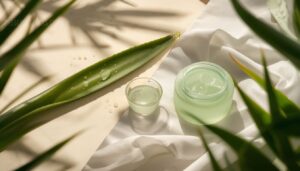
Both options work — but they’re not the same thing.
| Factor | Fresh Gel | Store-Bought Gel |
|---|---|---|
| Microbial Safety | Spoils within 10 days | Preservative impact keeps it stable for months |
| Latex Removal | Requires careful prep | Usually processed out already |
| Texture Consistency | Watery, separates over time | Uniform, easy to spread |
| Cost Comparison | Low upfront, short shelf life | Higher cost, longer usable window |
Fresh gel delivers concentrated aloe vera hair benefits — but store-bought offers reliable texture consistency and safer daily handling.
Pre-shampoo Moisture Treatment
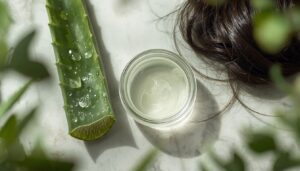
Think of aloe as a barrier pre‑coat — apply it before shampoo, and it works like a shield. This pre‑shampoo deep moisture mask step is one of the best DIY Aloe Vera hair treatments you can add to your routine.
- Fresh aloe vera gel provides cuticle smoothing and moisture retention before cleansing, strips surface oils
- Hair fiber protection reduces breakage from wet handling and friction
- Detangling lubrication lets fingers glide through without snagging
- Natural hair moisturizer properties prevent that post‑wash dryness feeling
Leave-in Aloe Spray for Damp Hair
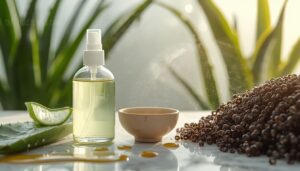
Once your hair is freshly washed and still damp, a DIY aloe vera hair treatments spray is one of the simplest steps you can add.
For even more ways to keep your strands hydrated between washes, explore these best natural hair moisturizers for every hair type that pair perfectly with your aloe spray routine.
Mix 3 tablespoons of fresh aloe gel with one cup of water and a teaspoon of argan oil.
This lightweight conditioning mist works as a leave-in conditioner, frizz tamer, flyaway minimizer, detangling aid, and shine enhancer — all at once.
Scalp Massage for Dryness and Itch
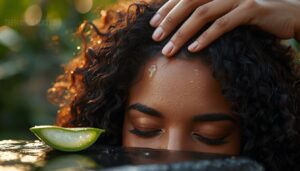
Dry, itchy scalp responds well to gentle fingertip pressure — especially when aloe is already in contact with the skin. Use the circular motion technique for two to three minutes to support blood flow stimulation and loosen flakes without triggering more inflammation.
- Aloe’s inflammatory properties calm irritation while massage works as a soothing nerve distraction
- The flake loosening method works best with slip from aloe vera hair application methods
- Circular strokes improve nutrient delivery without over-stimulating sensitive skin
Aloe Vera Masks for Dry Hair
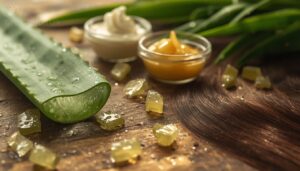
Dry hair needs more than a quick rinse — it needs something that actually soaks in and stays. well-made mask gives aloe the time and support to do its best work.
Here are four simple blends worth trying.
Aloe and Honey for Extra Softness
Honey and aloe make a surprisingly powerful pair. Honey’s antimicrobial layer keeps your scalp clean while its humectant properties pull moisture in — aloe enzyme exfoliation clears the path. Together, they form a moisture-lock barrier that actually holds.
Honey and aloe pair as a powerful duo — one cleans, one hydrates, together they lock moisture in
Mix 1 tablespoon honey with 2 tablespoons gel for your aloe vera hair mask. Apply to damp strands, wait 15 minutes, then rinse. Retention timing matters — don’t rush it.
Aloe and Coconut Oil for Deeper Sealing
Coconut oil is the seal that locks everything in. In aloe vera hair care, layering order matters: apply aloe vera gel first, let it absorb, then follow with coconut oil for cuticle sealing.
This frizz barrier slows moisture loss quickly. Use a 2:1 oil ratio — two parts gel, one part coconut oil.
Incorporate deep masks weekly with 10-minute heat activation for best results.
Aloe and Flaxseed Gel for Curl Definition
coconut oil seals moisture in, flaxseed gel takes curl definition further.
Mix ¼ cup aloe vera gel with 1 teaspoon flaxseed gel — that’s your texture balance sweet spot.
Aloe manages hair hydration and slip; flaxseed provides hold enhancement and curl clumping.
Together, they reduce frizz without stiffness.
Apply section-by-section on damp natural curls, scrunch, and let set completely before touching.
Aloe and Rose Water for Light Hydration
Not every hair day calls for heavy oils. Sometimes you just need a light refresh — and that’s exactly where aloe vera gel and rose water shine together.
Mix using this simple Layered Hydration Technique:
- Combine 3 tablespoons aloe vera gel with ½ cup rose water
- Use Fragrance Free Formulas to avoid irritation
- Follow DIY Mist Ratios: two parts rose water to one part aloe
- Store in a Travel Friendly Spray bottle for easy access
- Mist onto damp hair as a Cooling Summer Spritz
This natural hair care DIY hair mask alternative keeps hydration light and frizz low.
Aloe Vera for Different Hair Types
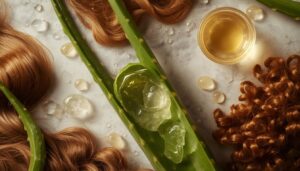
Aloe works well across hair types, but how you use it depends on what your hair actually needs. fine, oily scalp calls for something different than thick, coily strands that are always thirsty for moisture.
Here’s how to match aloe to your specific hair type.
Dry Hair Moisture Routine
Dry hair needs a layered moisture approach — not just one product. Start with a daily leave-in aloe spray on damp strands, then seal with a light oil.
Use a detangling technique with a wide-tooth comb to prevent breakage.
For your nighttime seal, wrap hair with a satin pillowcase to lock in moisture.
Add heat protection before any styling — these aloe vera hair care rituals genuinely work.
Curly and Coily Hair Hydration Support
Curly and coily hair needs lightweight hydration — not heavy products that flatten your curls.
Aloe vera hair care works as a natural hair moisturizer here because it delivers a hydration boost without weighing strands down. Apply it to damp hair for better curl clumping, then seal with a leave-in conditioner.
Its moisture seal enhances scalp comfort and works beautifully across different hair porosity levels.
Oily Scalp and Dandruff Control
Oily scalp and dandruff often feed each other — excess sebum creates the environment where dandruff-causing microbes thrive. Aloe vera for scalp inflammation relief and microbiome balancing works well here, but it’s not enough alone.
Pair it with active antidandruff ingredients like zinc pyrithione or salicylic acid. Follow a consistent shampoo frequency plan, and respect aloe compatibility limits — skip heavy oils when your scalp runs greasy.
Color-treated or Damaged Hair Care
Color-treated hair has already been through a lot — chemical processing lifts the cuticle, leaving strands more vulnerable to breakage and fading. That’s where aloe vera’s cuticle sealing mechanism earns its place.
It provides color lock, UV protection, and breakage prevention without heavy buildup. Use deep masks weekly, and layer aloe under your conditioner for genuine hair damage repair through hair conditioning with plant extracts and protein reinforcement.
Safe Use, Storage, and Frequency

Getting the most from aloe vera isn’t just about how you apply it — it’s also about using it the right way, at the right time. protect both your scalp and your results.
what you need to know before making aloe a regular part of your routine.
How Often to Use Aloe Vera
Start simple — once a week is enough for most people. Deep masks weekly are plenty.
Work aloe vera into your weekly hair regimen on wash day as a post-wash application timing step.
If your hair still feels dry mid-week, a biweekly moisture boost works well.
For curly styles or drier seasons, seasonal frequency adjustments may call for two to three times weekly.
Patch Testing Before Full Application
Before you put aloe anywhere near your scalp, do a quick patch test — it takes one day and can save you a lot of discomfort. Dab a small amount on your inner forearm or behind your ear. That’s your site selection sweet spot.
Wait 24 hours. If you see redness, swelling, or feel itching, that’s your result interpretation: skip it.
Storing Fresh Gel Safely
Fresh aloe gel is basically a living product — it starts breaking down the moment it leaves the leaf. Keep it working for you with these three steps:
- Airtight Refrigeration — Store pure aloe gel in a sealed glass jar at 4–8°C; it stays fresh for up to 10 days.
- Freezing Aloe Cubes — Pour excess fresh aloe gel into an ice cube tray and freeze for up to 6 months.
- Container Cleanliness — Use a clean spoon every time; a contaminated utensil speeds up spoilage fast.
Watch for shelf-life indicators like odd odor, discoloration, or separation — those mean it’s time to discard.
When choosing fresh vs store-bought aloe vera gel, fresh aloe vera leaves always win on potency. Temperature monitoring matters: keep it away from the fridge door where temperatures fluctuate.
Signs Aloe Vera is Irritating Your Scalp
Not everyone’s scalp welcomes aloe vera with open arms.
Watch for these aloe vera side effects and safety red flags: an itching sensation or burning discomfort shortly after application, redness flare at contact sites, flaking scaling that worsens over time, or swelling blistering on the scalp.
Any of these signals skin irritation — stop use immediately, rinse thoroughly, and revisit your patch test results.
Frequently Asked Questions (FAQs)
What happens if I apply aloe vera on my hair daily?
Daily use sounds like a good idea — but more isn’t always better.
Over time, you risk potential buildup, hair weight gain, and moisture saturation that leaves strands feeling heavy and dull.
Can aloe vera help with hair loss?
Aloe vera won’t stop true hair loss, but it promotes scalp health indirectly — reducing scalp inflammation, delivering antioxidant protection, and creating conditions where follicles can function without irritation blocking growth.
Does aloe vera work on heat-damaged hair?
Heat damage is permanent at the structural level — but aloe vera helps reduce dryness and roughness. It won’t rebuild your hair cuticle, yet consistent use genuinely improves softness and slip.
Can children use aloe vera on hair?
Yes, children can use aloe vera on hair — but parental supervision matters.
Stick to fragrance-free formulations, do allergy screening first, and consult a pediatric dermatologist if your child has sensitive skin.
Does aloe vera expire once applied to hair?
Once applied, aloe vera doesn’t instantly expire — but its shelf life shortens fast. Bacterial growth can begin within hours, especially in warm conditions.
Trust spoilage indicators: odd smell, sliminess, or scalp irritation mean stop immediately.
Can aloe vera replace a regular conditioner?
Not quite.
Aloe vera provides moisture and slip for detangling, but it lacks the conditioning strength of traditional formulas.
Think of it as a lightweight supplement — not a full silicone replacement.
Conclusion
Think of aloe vera as a long-term investment in your hair’s health—one that compounds over time with consistent use.
Now you have the science, the methods, and the routines to make aloe vera hair moisture work for your specific hair type.
Start simple: one application, one week, and pay attention to how your strands respond. Small, steady steps build real results.
Your hair doesn’t need a miracle—it needs the right tools, applied consistently.