This site is supported by our readers. We may earn a commission, at no cost to you, if you purchase through links. This content is for general informational and educational purposes only and is not a substitute for professional medical, dermatological, or nutritional advice.
Most people grab whatever’s closest on the bathroom shelf—serum one day, oil the next—and hope for the best. The results can feel random, because without knowing how each product works, you’re basically guessing.
Hair serum and hair oil aren’t interchangeable; they solve different problems at different levels of your hair strand. Serum sits on the surface, smoothing the cuticle and blocking humidity. Oil goes deeper, feeding the fiber from within.
Knowing the difference between hair serum and hair oil means you stop wasting both products and start seeing real results.
Table Of Contents
- Key Takeaways
- Hair Serum Vs Hair Oil
- What is Hair Serum?
- What is Hair Oil?
- Main Benefits of Hair Serum
- Main Benefits of Hair Oil
- When to Use Each Product
- Best Choice by Hair Type
- Using Oil and Serum Together
- Which One Should You Choose?
- Frequently Asked Questions (FAQs)
- Do you put oil or serum in your hair first?
- Can I use hair serum and oil together?
- Can hair serum cause scalp buildup over time?
- How long before results from hair oil appear?
- Does hair serum work on chemically straightened hair?
- Can you use hair oil on a dry scalp?
- Are natural serums as effective as silicone-based ones?
- Conclusion
Key Takeaways
- Hair serum coats the surface to fight frizz and add instant shine, while hair oil penetrates the strands to repair dryness and reduce breakage from within.
- Timing is everything: use oil before shampooing as a deep treatment, and apply serum to damp hair after washing for the best results from both.
- Your hair type should drive your choice — fine or oily hair does better with a lightweight serum, while thick, coarse, or damaged hair absorbs the nourishment oil provides.
- You don’t have to pick one — layering oil before serum gives you deep repair plus a smooth, frizz-free finish without weighing your hair down.
Hair Serum Vs Hair Oil
Hair serum and hair oil are two very different products, even if they sit side by side on the shelf. One works on the surface; the other works from within.
That difference really shows up in results—serums coat and smooth while oils penetrate, which is why choosing right matters, especially if you’re dealing with damage from a hair repair serum for split ends.
Here’s how they compare across the things that matter most to your hair.
Hair Serum as a Surface-smoothing Styling Product
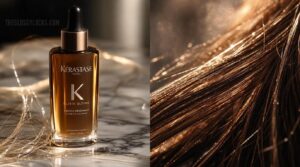
Think of hair serum as your hair’s finishing coat — it doesn’t feed the strand, it perfects the surface. A silicone film wraps each cuticle, creating cuticle reflection that delivers instant shine. These smoothing agents also form a humidity barrier, blocking moisture-driven frizz for hours.
| Feature | How It Works | Result |
|---|---|---|
| Silicone coating | Seals surface irregularities | Smoother texture |
| Application timing | Post-wash, damp or dry | Styling compatibility |
| Surface-level improvement | Reflects light evenly | Instant shine |
Hair Oil as a Nourishing Treatment Product
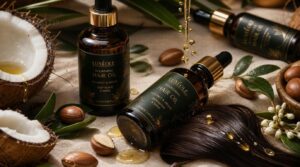
Hair oil penetrates deeper than serum, with plant-based fats like coconut and argan absorbing into the strand itself—delivering deep nourishment. This absorption targets the core of the hair, making prewash oiling particularly effective for dry or brittle hair.
The benefits of hair oil stem from its ability to penetrate the hair shaft through fatty acids, resulting in lasting softness and improved manageability. Its rich, silky texture enhances the sensory experience during application, while sustainable sourcing—often involving cold-pressed, plant-derived oils—ensures a cleaner ingredient profile.
| Feature | How It Works | Result |
|---|---|---|
| Absorption Mechanics | Fatty acids enter the hair shaft | Lasting softness |
| Sensory Experience | Rich, silky feel on application | Improved manageability |
| Sustainable Sourcing | Plant-derived oils, often cold-pressed | Cleaner ingredient profile |
Key Difference in Purpose, Texture, and Results
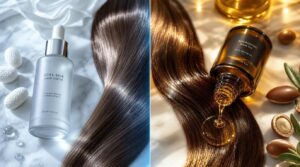
Where oil stops, serum starts. That’s the simplest way to understand the hair serum vs. hair oil divide.
Oil works through lipid penetration — fatty acids sink into the strand for long-term hydration and deep nourishment. Serum relies on film formation — a lightweight silicone serum coats the surface for immediate slip and smoothness enhancement.
| Factor | Hair Serum | Hair Oil |
|---|---|---|
| Texture | Light vs. Heavy | Richer, denser feel |
| Mechanism | Surface film | Shaft absorption |
| Result | Instant polish | Lasting softness |
The differences between hair oil and hair serum come down to where each one works — and when.
Quick Comparison for Frizz, Shine, Dryness, and Damage
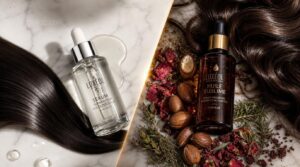
Each product wins at something different. Here’s how they stack up on what matters most:
| Goal | Best Pick |
|---|---|
| Frizz control & shine longevity | Hair serum |
| Dryness mitigation & damage reversal | Hair oil |
For daily frizz and shine improvement, serum delivers instant results. For deeper dryness and hair damage prevention, oil wins. Treatment timing matters too — serum works post-wash, oil works before.
What is Hair Serum?
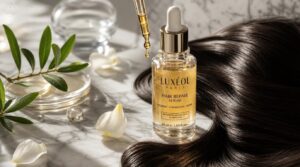
Hair serum is one of those products that works quietly in the background — smoothing, protecting, and adding shine without much fuss. It’s not a treatment you rinse out; instead, it serves as a finishing step that stays on your hair, working throughout the day.
This distinguishes it from other products, as its effects persist rather than wash away. What sets it apart is its ability to deliver results from the inside out, ensuring long-lasting benefits without added effort.
Lightweight Formula Designed to Coat Hair Strands
Hair serum works like a second skin for your strands. Its lightweight formula relies on Film Forming Polymers and Volatile Carriers that spread across each strand, then evaporate fast — leaving a non-greasy, protective coating behind.
The result is a silicone-based serum that delivers Slip Lubrication and Humidity Resistance with a Dry-Touch Finish, without weighing hair down.
Common Ingredients Like Dimethicone and Cyclomethicone
Behind that silky finish are two key silicones — dimethicone and cyclomethicone. Dimethicone comes in viscosity variants that control how thick or light the serum feels. Cyclomethicone has a faster evaporation rate, which reduces greasiness quickly.
Together, these silicone blends define the core differences between hair serum and hair oil. Compatibility testing ensures they work safely, though environmental concerns around cyclic siloxanes have shaped how brands formulate today.
It’s the rapid evaporation of cyclomethicone that creates a weightless feel.
How Serum Smooths The Cuticle and Adds Shine
When silicone coating meets the hair cuticle, something simple happens — it flattens. Serum coating fills uneven gaps along each strand, creating a film formation that allows light to bounce off cleanly. The result? Real shine enhancement through pure light reflection. A humidity shield keeps the cuticle sealed through the day.
- Cuticle sealing locks down raised scales instantly
- Smoother strands reflect light more evenly
- Film formation reduces surface friction between fibers
- Light reflection increases for a polished, glossy finish
- Humidity shield helps maintain shine in changing conditions
Why Serum is Often Used After Washing or Styling
Timing matters more than most people realize. Applying serum to damp hair right after washing releases serious damp slip — the product spreads evenly, the detangling boost kicks in, and film formation locks the cuticle before humidity hits.
| When | Why It Works |
|---|---|
| Damp hair | Even spread, better detangling boost |
| After styling | Serum after styling extends styling longevity |
| Pre-dry | Humidity shield seals before frizz forms |
| Finish step | Film formation locks in shine |
What is Hair Oil?
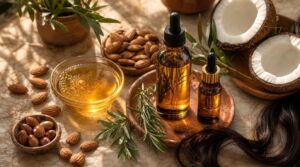
Hair oil works differently from serum — it goes deeper. Instead of sitting on the surface, it feeds your hair from within using plant-based ingredients your strands can actually absorb.
Oils like coconut, argan, and jojoba are especially effective for this — see how they work in practice with these hair oil treatments for damaged hair repair.
Here’s what makes hair oil worth understanding.
Plant-based Oils Rich in Fatty Acids
What actually sets plant oils apart is what’s inside them. Each one carries a unique fatty acid profile — a blend of saturated, monounsaturated, and polyunsaturated fats that determines how it behaves on your hair. Many plant oils also deliver tocopherol antioxidants and omega-3 ALA, which help protect strands from oxidative stress.
Extraction techniques matter also — cold-pressed methods preserve more of these nutrients than heat-based processing.
Common Oils Like Coconut, Argan, Jojoba, and Batana
Not all oils work the same way — and the difference often comes down to composition.
- Coconut oil has a high saturated fat ratio, giving it strong penetration efficiency into the hair shaft
- Argan oil boasts impressive vitamin E levels, making it an antioxidant-forward choice
- Jojoba has a unique liquid wax composition, behaving more like a conditioner
- Raw batana oil offers dense fatty acids for deep restoration
Extraction techniques also determine nutrient quality.
How Oils Nourish Hair and Support Moisture Retention
Each oil builds a fatty acid barrier that locks moisture into the strand. This lipid film sealing effect reduces water escape — keeping hair hydrated for longer. Some oils penetrate deeply into the shaft, delivering real deep nourishment where it counts.
| Oil | Key Action | Moisture Benefit |
|---|---|---|
| Coconut | Oil penetration into shaft | Reduces protein loss |
| Argan | Surface lipid layer coating | Antioxidant hair hydration |
| Jojoba | Emollient slip conditioning | Mimics scalp sebum |
| Batana | Fatty acid barrier support | Restores brittle strands |
| Marula | Lipid film sealing | Softens and smooths cuticle |
That nourishing treatment effect builds gradually — but the results speak for themselves.
Why Oil is Often Used Before Washing
Pre-wash treatment is where oil really earns its place. Applying oil before washing creates a detergent barrier that limits how aggressively shampoo strips your strands.
It also acts as a lubrication boost, reducing friction and helping prevent tangles while you lather.
Think of it as a moisture shield against hygral-stress — your built-in prewash protection.
Main Benefits of Hair Serum
Hair serum does more than just polished your hair look polished. It works fast, fits into any routine, and solves real problems you face every wash day. Here’s what it actually brings to the table.
Instant Frizz Control and Smoother Texture
Frizz doesn’t wait for a good day — and serum doesn’t either. The moment it touches your strands, it forms a protective film that locks out humidity and smooths the cuticle fast. That’s the real power of hair serum vs hair oil for frizz control and texture smoothing.
- Blocks humidity up to 80% relative humidity, stopping strand swelling before it starts
- Delivers instant moisture lock through quick styling compatibility — no waiting, no guessing
- Film longevity testing shows results that hold until your next wash
Environmental humidity response is where serum earns its place.
Added Shine for Dull or Dry-looking Hair
Dull hair isn’t just tired-looking — it’s telling you the cuticle is lifted and rough. That’s where serum’s Silicone Gloss Boost steps in. It smooths those raised edges instantly, delivering real Light‑Bounce Enhancement with a glossy finish you can actually see.
| Shine Factor | Hair Serum | Hair Oil |
|---|---|---|
| Application timing | Post-wash, damp hair | Pre-wash treatment |
| Mechanism | Silicone film coating | Fatty Acid Shine absorption |
| Result speed | Instant glossy finish | Gradual improvement |
| Humidity Defense | Strong | Moderate |
| Best use | Finish‑Line Application | Deep nourishment |
Understanding hair serum vs hair oil means knowing serum adds shine immediately — no waiting required.
Heat Styling Protection for Blow-drying or Flat Ironing
Every pass of a flat iron or blow-dryer is a risk — but a good serum changes that equation. Hair serum vs. hair oil comes down to this: serum forms a thermal barrier film that acts as a silicone heat shield, delivering heat-activated sealing and even heat distribution across each strand.
Key protections serum provides:
- Shields hair up to 450°F
- Minimizes moisture loss during blow-drying
- Reduces concentrated hot spots with even heat distribution
- Aids heat damage prevention without weighing hair down
Reduced Friction Between Hair Strands
When strands rub against each other, the result is breakage, tangling, and frizz. Serum addresses this through surface lipid coating and cuticle alignment — silicones deposit a conditioning layer that lowers the friction coefficient between fibers. Think of it as humidity lubrication for your hair.
This mechanism enables better detangling mechanics, smoother cuticle smoothing, and real frizz reduction, as each strand glides past the next with reduced resistance.
Lightweight Styling Support for Daily Use
For everyday styling, serum earns its place as your go-to daily styling shield. A micro-portion use—just a pea-size amount—delivers a non-greasy, light silky finish that remains humidity-resistant throughout the day. This travel-friendly dosing ensures practicality without compromise.
Lean into leave-in layering or seasonal styling tweaks, and the result remains consistent: a lightweight, polished finishing step. Its versatility adapts to routine adjustments while maintaining effortless elegance.
Main Benefits of Hair Oil
Hair oil works differently than serum — it doesn’t just sit on the surface. Instead, it gets into the hair shaft and nourishes it from within.
Here’s what that actually does for your hair.
Deep Nourishment for Dry and Brittle Hair
Dry, brittle hair isn’t just a texture problem — it’s a sign your strands are starving.
Hair oil works through fatty acid penetration, filling gaps in the cuticle and locking in hydration. Think of it as a layered moisture strategy your hair actually absorbs.
Coconut oil alone can cut protein loss by around 25%, making deep repair treatments with hair oil are a genuine miracle for damaged strands.
Coconut oil alone cuts protein loss by 25%, making it a genuine miracle for damaged strands
Improved Softness, Elasticity, and Manageability
Oil doesn’t just soften hair — it rebuilds how your hair moves. Regular oil treatments deliver real elasticity support, helping strands bend instead of snap.
You’ll notice detangling efficiency improve fast: fewer snags, less breakage, softer ends. Static control kicks in, too, keeping flyaways flat.
For curl manageability and overall hair texture improvement, consistent hair conditioning beats any quick fix.
Support for Scalp Comfort and Moisture Balance
Your scalp is the foundation — and hair oil goes straight to work there. Regular oil treatments support scalp barrier function and acid mantle maintenance, keeping your scalp’s pH in the optimal 4.5–5.5 range.
Benefits of hair oil for long-term scalp health include:
- Sebum regulation that prevents dryness and greasiness
- Moisture retention that counteracts humidity-related moisture loss
- Soothing agents that calm itchiness and redness
- Strengthened barrier lipids for lasting comfort
- Enhanced scalp and strand vitality through consistent oil treatments
Reduced Protein Loss With Oils Like Coconut Oil
Healthy scalp aside, coconut oil reduces protein loss by up to 25% through a straightforward mechanism. Its fatty acid barrier forms a hydrophobic coating, limiting water and surfactant contact during washing. This process drives wash stress reduction at the strand level, preserving hair integrity.
The oil’s benefits extend to practical improvements during rinsing and structural reinforcement. By enhancing slip, it minimizes friction-related damage, while lauric acid stabilizes proteins for a stronger internal hair structure.
| What Coconut Oil Does | Why It Matters |
|---|---|
| Slip improvement during rinsing | Fewer strand breaks from friction |
| Protein stabilization via lauric acid | Stronger internal hair structure |
That’s protein loss reduction with coconut oil, working quietly every wash.
Long-term Care for Damaged or Coarse Strands
Damaged or coarse strands need more than a quick fix — they need a real routine. That’s where weekly oil treatments earn their place, delivering cuticle resealing, protein rebuilding, and scalp barrier support wash after wash.
The benefits of hair oil for deep nourishment go beyond softness:
- Deep repair for brittle, breakage-prone hair
- Protein loss prevention between washes
- Split ends repair when paired with regular trimming
- Nighttime oil mask treatments for overnight recovery
- Steady improvement in elasticity over weeks
When to Use Each Product
Knowing what to use is only half the battle — knowing when to use its benefits. Both products have a specific place in your routine, and using them at the wrong time can undo their benefits.
Here’s exactly when each one works best.
Use Oil Before Shampooing as a Treatment
Applying a pre-wash oil treatment to dry hair 5–30 minutes before shampooing — or even overnight allows strands to absorb the oil fully. This preparation slows the rate of oil absorption during washing, reduces protein loss, and provides the scalp barrier the boost it needs to withstand cleansing without stripping.
By giving the oil time to penetrate before washing, the treatment minimizes protein loss while reinforcing the scalp’s natural defenses. This ensures a balanced cleanse that protects hair integrity.
Use Serum After Washing on Damp or Dry Hair
Once your pre-wash oil has done its job, serum takes over after washing. Towel-dry timing matters here — damp application works best when hair isn’t dripping.
Work a pea-sized amount through sections for even sectional distribution, focusing on ends.
For dry hair touch-up moments, a tiny amount addresses flyaway management fast without rewashing.
Serum for Quick Styling and Shine
Serum is your go-to when time is short. It delivers instant smoothness and shine enhancement without any waiting — just work a pea-sized drop through mid-lengths and ends.
It’s ideal for styling tool layering before flat ironing or blow-drying. Travel-friendly application makes it easy year-round.
Seasonal considerations matter too — humidity spikes call for a quick serum pass to lock frizz out fast.
Oil for Weekly Repair and Nourishment
Think of weekly hair oil as your hair’s reset button. A prewash oil treatment — left on for 30 minutes or overnight for deeper results — allows fatty acid benefits to penetrate each strand before shampooing.
That absorption rate drives real scalp nourishment and deep hydration over time.
Aim for this treatment once or twice weekly for lasting repair.
Why Oil Should Not Be Applied Before Heat Styling
Reaching for oil right before heat styling seems logical — but it works against you. Oil isn’t engineered for heat transfer the way silicone-based protection in a serum is.
Here’s what actually happens:
- Smoke point risk — Oil breaks down under tool heat, increasing cuticle damage.
- Residue buildup — Oil leaves an uneven coating, causing inconsistent results.
- No real heat protection — Unlike heat styling serums, oil doesn’t form a reliable barrier.
Keep oil as a prewash treatment. Use serum for heat styling.
Best Choice by Hair Type
Not every hair type plays by the same rules. What works beautifully for thick, coarse strands might weigh down fine hair completely.
Here’s how to match the right product to your specific hair type.
If you’re working with a tight budget, this guide to the best drugstore shampoo and conditioner for curly hair highlights options that cost just $5 to $8 and are easy to find at any local drugstore.
Fine Hair: Lightweight Serum Over Heavy Oil
Fine hair is a balancing act — volume preservation matters as much as smoothness. Heavy oils weigh strands down and risk root greasiness, while a lightweight serum provides slip efficiency without bulk.
For fine or oily hair, applying serum with application precision — mid-lengths to ends only — keeps roots lifted.
In the Hair Serum Vs Hair Oil debate, lightweight serums win here every time.
Oily Hair: Minimal Serum on Ends Only
Oily hair already contends with excess sebum at the roots, making additional product application there counterproductive. Your scalp’s overproduction of oil exacerbates greasiness, so avoiding product near the roots is essential.
Instead, adopt an ends-only application approach: apply a drop of lightweight serum to midlengths and ends. This technique delivers a shine boost and tames frizz without risking root greasiness.
Keep application minimal to prevent product buildup, ensuring the hair remains balanced and healthy.
Curly Hair: Oil for Moisture, Serum for Definition
Curly or coily textures face a unique challenge: they require moisture and definition simultaneously. To address this, use hair oil for dry or brittle hair as a nighttime oil treatment to build scalp moisture from within.
Finish with a silicone slip serum to enhance curl clumping, control frizz, and provide humidity defense. Layering both delivers instant shine without the weight.
Thick or Coarse Hair: Oil for Deeper Nourishment
Thick or coarse strands are thirsty by nature. Unlike finer textures, they absorb heavy carrier oils — coconut, castor, argan — without going limp. That’s your advantage.
For deep nourishment versus surface protection, oil wins every time here. Massage a rich oil into dry or brittle hair before washing. Ideal oil ratios and consistent scalp nourishment strategies build long-term moisture lock from the inside out.
Color-treated Hair: Serum for Protection and Smoothness
Color-treated hair requires special care, as every wash, hot tool use, or sun exposure can diminish your dye investment. Serum steps in as a vital protector, creating a barrier against these daily threats.
Silicone coatings in serums act like a shield, locking color in while blocking harmful UV rays. Additionally, color-lock polymers reinforce dye longevity by minimizing pigment loss during heat styling.
Serum delivers comprehensive benefits for colored or chemically treated hair:
- UV shielding that slows sun-induced fade resistance
- Pigment retention by limiting cuticle lift during styling
- Fade resistance that extends vibrancy 2–3 weeks longer between salon visits
- Lightweight frizz and shine benefits without dulling your color
- Color protection that keeps each strand looking freshly done
Damaged Hair: Combine Weekly Oil With Serum Finishing
Damaged hair needs both repair and polish — not one or the other. Think of weekly oil as your hair’s spa treatment, targeting breakage from the inside out. Follow with the Serum Sealing Technique post-wash to lock in that work.
| Step | Product & Purpose |
|---|---|
| Pre-wash (Overnight Oil Treatment) | Oil penetrates strands, supporting Moisture Lock Cycle |
| Shampoo & condition | Removes buildup, preps hair |
| Towel-dry | Hair ready for finishing |
| Post-wash (PreWash vs PostWash Product Application) | Serum smooths cuticle, adds shine |
| Heat styling | Serum aids Heat Damage Mitigation |
Using Oil and Serum Together
Good news: you don’t have to choose just one. Oil and serum actually work well together when you use them in the right order and the right amount.
Here’s exactly how to combine them without weighing your hair down.
Recommended Order: Oil Before Serum
Regarding product layering, order matters more than most people realize. Oil goes first — always. This isn’t random; it’s basic layering physics. Oil prepares each strand, boosting absorption and creating slip enhancement so your serum glides on evenly.
- Oil reduces dry spots, improving product compatibility
- Serum spreads more uniformly over pre-coated strands
- This timing strategy maximizes shine and frizz control
Follow this recommended application order: oil before serum, every time.
Pre-wash Oil, Shampoo, Condition, Then Serum
Think of this as your four-step reset: pre-wash oil treatment, shampoo, conditioner, then serum.
Start with a prewash oil treatment and let it sit 30 to 45 minutes — that dwell time optimization protects strands and delivers a slip and detangle boost before cleansing.
Shampoo restores the shampoo-oil balance, while conditioner sealing synergy locks in softness.
How Much Product to Use for Each Step
Less really is more here. Getting your layered product ratios right makes the difference between hair that looks styled and hair that looks soggy.
- Pea-sized serum works for most hair types after washing
- Quarter-sized oil suits longer hair; fine hair requires a smaller amount — nickel-sized
- Hair length dosage matters: short hair needs less, long hair needs more
- Emulsify both between your palms before applying
- Follow the recommended application order: oil before serum, always
Avoiding Buildup, Greasiness, and Limp Hair
Even the best products backfire when you use too much or apply them in the wrong spots. To avoid greasy, limp results, keep these rules in mind:
| Problem | Cause | Fix |
|---|---|---|
| Heavy roots | Oil near scalp | Mid-length product focus only |
| Dull, flat hair | Residue buildup | Thorough rinse technique + clarifying shampoo use |
| Lifeless volume | Product overload | Lightweight volumizing shampoo weekly |
Finish with an upside-down blow-dry for lift. Non-greasy results come from lightweight product choices and smart placement — every time.
Sample Routine for Weekly Oiling and Daily Serum Use
Here’s a simple weekly routine that keeps daily hair maintenance and deep care working together.
- Monday (prewash treatment): Massage oil into lengths, wait 30–60 minutes, shampoo out
- Weekly timing: Oil once, pair with conditioner, then air-dry
- Daily application: Apply a pea-sized serum to damp ends post-wash
- Heat safe pairing: Use serum before styling — never oil directly before heat
Which One Should You Choose?
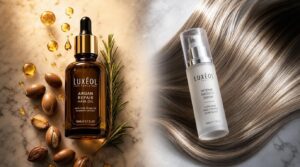
The answer really comes down to what your hair needs most right now. Whether you’re dealing with frizz, dryness, heat damage, or all three, there’s a clear path forward.
Here’s how to figure out which product — or combination is right for you.
Choose Serum for Frizz, Shine, and Heat Protection
Serum is your go-to for frizz, dullness, and heat styling. Its silicone film mechanics create a frizz barrier, scientifically blocking moisture from re-entering.
The heat shield timing matters—apply to damp hair before styling to activate genuine heat-protective properties. You’ll notice an instant shine reflectivity boost immediately after use.
For lightweight application, use a pea-sized amount, focusing on mid-lengths to ends.
Choose Oil for Dryness, Breakage, and Nourishment
If your hair feels dry, brittle, or keeps breaking, oil is the answer. Hair oil works through penetration ability and fatty acid profiles that feed moisture back into the strand.
Oil before washing—whether coconut, argan, or jojoba—reduces breakage and provides long-term hair nourishment.
Oil selection matters; matching scalp compatibility and occlusive strength to your specific dry, brittle, damaged hair needs.
Use Both for Styling Control and Long-term Repair
Why choose when you don’t have to? Oil and serum work better as a team. Use oil first for long-term scalp health and nourishment, then follow with serum for instant shine and frizz control.
This recommended application order—oil before serum—creates complementary synergy through sequential layering.
Weight balance stays on point when you keep oil at the roots and serum at the ends.
Simple Decision Guide Based on Hair Goals
Your hair goals make the decision for you. Think of it as a quick Decision Flowchart — frizz vs moisture, styling vs repair.
- Frizz or dullness? Reach for serum — instant shine and frizz control, done.
- Dryness or breakage? Oil promotes long-term scalp health and moisture retention.
- Both? Run the Hair Goal Matrix: oil weekly, serum daily.
Common Mistakes When Choosing Serum or Oil
Even with the right goals, small errors throw off your results. Ingredient confusion, weight misjudgement, and timing errors are the biggest traps when choosing between hair serum and hair oil.
| Mistake | What Goes Wrong | Fix It |
|---|---|---|
| Label misinterpretation | Buying for scent, not function | Read the ingredient list |
| Overapplication causing greasiness | Too much product, limp hair | Use pea-sized amounts only |
| Timing errors | Oil applied before heat styling | Use serum for heat protection |
Frequently Asked Questions (FAQs)
Do you put oil or serum in your hair first?
Oil goes on first, serum goes on last. Apply oil as your treatment, let it work, then finish with serum to smooth and seal.
Can I use hair serum and oil together?
Yes, you can. Apply oil before washing as a treatment, then use serum on damp hair after. This product layering approach gives you deep nourishment plus smooth, frizz-free finish.
Can hair serum cause scalp buildup over time?
Absolutely, it can. Silicone film buildup is real — keep serum off your scalp, follow a clarifying shampoo schedule, and watch for scalp residue accumulation if you apply daily.
How long before results from hair oil appear?
Most people notice softness and easier combing within the first two weeks. By six weeks, shedding generally slows. Three-month growth and density changes follow with routine consistency.
Does hair serum work on chemically straightened hair?
Hair serum works brilliantly on chemically straightened hair. Its silicone compatibility smooths the cuticle, boosts shine, and controls frizz. It also offers humidity resistance without disturbing your chemical treatment care.
Can you use hair oil on a dry scalp?
Oil creates a moisture barrier on a dry scalp, helps lock in hydration, and soothes tightness.
Massage a few drops in using gentle circular motions.
Are natural serums as effective as silicone-based ones?
Silicone-based serums win on film durability and instant smoothing. Natural oil blends offer better moisture retention and ingredient synergy.
User perception of shine and frizz control generally favors dimethicone-based formulas.
Conclusion
What’s really standing between you and great hair days? Understanding the difference between hair serum and hair oil changes everything.
Oil nourishes from within—use it before washing for real repair. Serum seals the surface, fighting frizz and adding shine after every wash.
They don’t compete; they complement. Match each product to your hair goal, apply them in the right order, and you’ll stop guessing—and start seeing results that actually last.