This site is supported by our readers. We may earn a commission, at no cost to you, if you purchase through links. This content is for general informational and educational purposes only and is not a substitute for professional medical, dermatological, or nutritional advice.

Most men grab whatever razor sits on the bathroom shelf without a second thought—until a nick draws blood before an important meeting, or a month of cartridge replacements quietly drains $40 from the budget. That moment of frustration is usually when the electric shaver vs razor debate finally feels worth having.
Both tools have genuinely evolved: five‑blade cartridges now shave closer than ever, while modern foil shavers handle a full wet shave in the shower. The right choice depends on your skin, your schedule, and what you’re willing to spend over time.
Table Of Contents
- Key Takeaways
- How Manual Razors Actually Work
- How Electric Shavers Are Built
- Shave Closeness: Electric Vs Razor
- Skin Safety and Irritation Compared
- Cost Breakdown: Which One Saves More
- Shaving Wet or Dry: What to Know
- Time and Grooming Routine Efficiency
- Maintenance and Durability Compared
- Travel-Friendly Design and Portability
- Which One is Better for Daily Shaving
- Frequently Asked Questions (FAQs)
- Conclusion
Key Takeaways
- Electric shavers are smarter pick for sensitive skin, cutting above the surface to reduce nicks, ingrown hairs, and the need for irritating creams or gels.
- Manual razors deliver a closer shave, but cartridge costs can quietly stack up past $500 over three years, while electric shavers typically stay under $345 total.
- Double-edge safety razors win the cost-per-shave battle at just $0.05–$0.15 per blade, making them the best long-term value if you don’t mind a small learning curve.
- Your lifestyle is the real deciding factor — electric shavers fit rushed mornings with a full shave in under five minutes, while manual razors reward the extra time with a smoother, more precise finish.
How Manual Razors Actually Work

Manual razors have been around forever, but there’s more variety under that umbrella than most people realize. The type you pick shapes everything from how close your shave feels to how your skin holds up afterward. Here’s a look at the main styles worth knowing about.
Your choice also depends on how long you want a razor to actually last — and finding a durable razor that fits your routine starts with understanding which styles hold up best for your skin type and budget.
Cartridge Razors Explained
Cartridge razors are what most people grab off the shelf without a second thought — and for good reason.
A multi-blade cartridge like the Mach3 cartridge stacks blades so the first lifts the hair, and the next cuts it cleanly. The pivot mechanism follows your jaw’s curve automatically, and the lubrication strip keeps every stroke smooth and comfortable.
The design’s evolution means that five‑blade cartridges provide the closest shave among consumer models.
Double-Edge Safety Razors
If cartridge razors are the easy button, double-edge safety razors are the upgrade for shavers who want real control. A single blade sits in a three-piece or twist-open mechanism, locked at a precise angle for a clean, efficient cut.
- Closed comb shave suits beginners perfectly
- Blade angle setting shapes your shaving comfort
- Handle grip design reduces hand fatigue
- Fewer blades mean less skin irritation
- Blade sharpness lasts far longer per use
Straight Razors Overview
Taking things up another level from the double-edge, the straight razor is the classic razor in its purest form. A blade length of 5 to 7 inches gives you one long, confident stroke across your face.
Pair that with a hollow grind edge, and you’ve got a wet shave razor that cuts with barely any pressure needed.
Blade Materials and Cleanliness
The blade material your razor uses matters more than most people realize. Stainless steel blades resist rust and hold their edge well in wet environments — that’s why most quality razors use surgical-grade stainless steel as their foundation.
- Stainless steel resists corrosion through repeated rinses
- Ceramic edges stay sharper longer but chip under pressure
- Titanium coating reduces friction for a smoother glide
- Multilayer blade design combines materials for cleaner cuts
- Warm water and mild soap prevent bacterial buildup
Skipping your cleaning routine invites blade dullness and skin irritation fast.
How Electric Shavers Are Built
Electric shavers look simple from the outside, but there’s a lot going on under the hood. The type of shaver you pick, how it’s powered, and what it can handle all shape the experience you get every morning. Here’s a closer look at what actually sets them apart.
Foil Shavers Vs Rotary Shavers
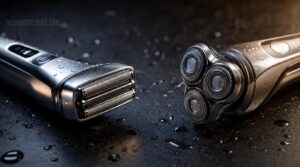
Not all electric shavers work the same way — and the difference between foil and rotary models really does change how your skin feels afterward.
Foil shavers use a thin, perforated metal screen that guides hairs toward fast‑moving blades beneath, making them ideal for flat areas like your cheeks.
Rotary shavers use three or more circular heads that tilt and pivot, following the natural curves of your jaw and neck with ease.
Why Motor Speed Makes a Difference
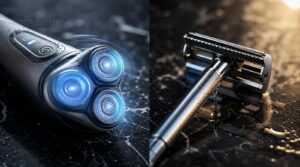
Think of the motor as the engine behind every clean pass — and speed is what separates a smooth glide from an uncomfortable tug. Speed-torque balance is everything here.
Too fast without enough torque, the motor stalls on thick hairs. The right balance keeps blades cutting cleanly, protecting skin health while maximizing shave efficiency from the first stroke to the last.
Why Some Shavers Ditch The Traditional Handle
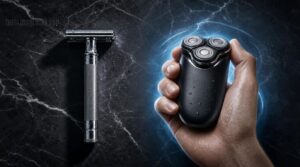
Most shavers follow the same template — long handle, heavy body, one-handed juggle. But a palm-sized design flips that logic entirely.
Here’s what changes when you ditch the traditional handle:
- Ergonomic grip reduces wrist torque, so long shaving sessions feel easy
- Contour adaptation lets the head follow your jaw and chin naturally
- Fewer crevices means better maintenance hygiene between uses
Control improves. Fatigue drops.
Wet and Dry Capability

Not all electric shavers are built for just one environment. IPX7 waterproof rating is your standard — any shaver meeting it can handle full shower use without damage.
Dual mode efficiency means you get flexibility: run it dry for a quick morning pass, or use it wet with gel to cut friction and ease skin sensitivity.
Shave Closeness: Electric Vs Razor

Closeness is usually the first thing people argue about regarding electric shavers versus razors, and honestly, it matters more than most people think. The gap between the two isn’t just about how smooth your face feels — it affects how often you need to shave and how your skin holds up over time.
For sensitive skin especially, the difference is stark — electric shavers tend to cause far less irritation than straight razors, making the choice less about preference and more about what your skin can actually handle.
Here’s what you need to know before picking a side.
Why Manual Razors Cut Closer
If you’ve ever run your hand against a freshly manual-razored jaw and felt nothing but smooth skin, you already know the difference. A sharp blade edge cuts hair exactly at skin level, with precise angle control and minimal pressure — a clean, flush result. That’s blade edge geometry doing its job.
| Factor | Manual Razor |
|---|---|
| Skin Surface Contact | At or below skin level |
| Hair Follicle Severance | Clean, flush cut |
How Foil Shavers Perform
Foil shavers work differently than you might expect. The Foil Mesh Design channels hairs through tiny perforations directly into oscillating blades beneath — no blade-to-skin contact. That’s what makes shave safety genuinely reliable here.
| Feature | Foil Shaver |
|---|---|
| Oscillation Rate | 7,000–14,000 CPM |
| Skin Glide | Smooth with minimal friction |
| Head Flexibility | Pivoting, contour-following |
| Water Resistance | Wet and dry capable |
| Shave Closeness | Near-flush on flat areas |
High Oscillation Rate means fewer passes, less skin irritation, and a cleaner result — especially across flat zones where the foil maintains steady contact.
Why a Smooth Finish is Important
A close shave isn’t just about how smooth your face looks in the mirror — it’s about how your skin feels an hour later. Surface polishing on quality blades and foil heads removes jagged micro-edges that tug and drag, lowering shaving irritation before it starts.
| Finish Quality | Skin Impact |
|---|---|
| Smooth, polished blade | Minimal drag, reduced redness |
| Rough or worn edge | Increased pull, higher irritation risk |
Better shave comfort comes down to that uniform contact. Polished surfaces also dry faster and resist bacterial buildup, so you get real hygiene benefits with every clean pass.
Stubble Regrowth Timelines
How quickly stubble returns has nothing to do with your razor choice — it’s all biology. Hair growth rate averages 0.3 to 0.5 millimeters daily, so visible regrowth appears within one to three days regardless of method.
Electric shavers, cutting above skin level, mean you’ll likely shave every one to two days compared to three to four with a manual razor.
Skin Safety and Irritation Compared

A close shave feels great, but how your skin interacts with the process is a whole different story. Cuts, irritation, and ingrown hairs can turn a daily routine into a frustrating experience real fast. Here’s what you need to know about how each method stacks up regarding skin safety.
Nick and Cut Risk
Regarding nicks and cuts, the difference between electric and manual razors is pretty significant. Here’s what puts you at risk:
- Blade sharpness — dull blades drag and skip
- Pressure control — too much force causes nicking
- Skin preparation — dry skin grips blades unevenly
Electric shavers keep blades behind a protective mesh, making accidental cuts rare. Manual razors demand technique mastery and steady hands, especially near sharp angles like the jaw or nose.
Ingrown Hairs and Electric Shavers
Nicks and cuts are one thing, but ingrown hairs are a slower, sneakier problem. They happen when a shaved hair curls back into the skin instead of growing outward — and your shaving method plays a big role in whether that happens to you.
Electric shavers have a real edge here. Because they cut hair above the skin surface, the hair tip isn’t left sharp or buried near the follicle. That small amount of leftover stubble actually gives the hair room to grow out cleanly. Manual razors, by contrast, lift and slice below the skin line, which increases the chance the tip stays trapped.
That said, electric shavers aren’t foolproof. A clogged or dull shaver head can drag and pull instead of cutting cleanly, which irritates follicles and can still cause bumps. Keeping your head clean and replacing it on schedule matters more than most people realize.
| Factor | Electric Shaver | Manual Razor |
|---|---|---|
| Cutting Angle Technique | Above skin surface | Below skin surface |
| Hair Curl Management | Lower ingrown risk | Higher risk for curly hair |
| Head Cleaning Routine | Critical for bump prevention | Replace blades regularly |
| Stubble Length Control | Leaves small buffer | Cuts flush or below |
| Ingrown Prevention Tips | Exfoliate, keep head clear | Use single-blade, shave with grain |
Your ingrown hair prevention routine matters too. Exfoliating before you shave clears the dead skin buildup that traps hairs near follicles. Shaving with the grain, not against it, and using light pressure — that’s smart shave ergonomics regardless of your tool. If you have coarse or curly hair, electric vs manual shave outcomes can be dramatically different, and the electric option usually wins.
Sensitive Skin Considerations
If your skin leans reactive, your shaving method isn’t just a preference — it’s a health decision. Electric shavers skip the need for fragrance-free creams entirely, cutting the list of potential irritants before your skin even gets involved. Barrier protection starts with fewer products touching your face, and electric shaving naturally delivers that.
For sensitive skin, patch testing any new shave prep product matters. A small reaction on your jaw can turn into a full flare if you skip that step.
Cooling aftercare — think gentle, alcohol-free moisturizers — calms skin after either method. But manual razors raise the stakes with razor burn and micro-nicks that electric shavers largely sidestep.
How Pressure Affects Your Skin
Most people never think about how hard they’re pressing while they shave — but pressure is quietly doing real damage.
Microcirculation reduction starts at surprisingly low thresholds, cutting oxygen to skin tissue and triggering inflammation intensification that leaves your face red and raw.
Too much pressure also disrupts your skin’s barrier, throws off fluid dynamics beneath the surface, and stacks up injury risk factors over time.
Cost Breakdown: Which One Saves More
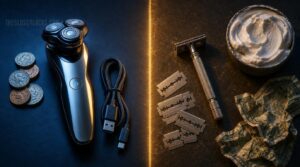
Price is one of those things that looks simple on the surface but gets more interesting the closer you look. Whether you’re eyeing an electric shaver or sticking with a manual razor, what you spend today isn’t the whole story. Here’s a closer look at the real numbers behind each option.
Upfront Purchase Price Compared
Let’s start with the basics: upfront cost varies wildly depending on which path you choose. A manual razor kit can run as little as $10–$15, while a basic electric shaver starts around $50–$100. Premium foil or rotary models push past $300.
If your budget is tight, manual wins on day one — but that gap closes fast once you factor in what comes next.
Blade Replacement and Subscription Costs
Once you move past the sticker price, blade replacement costs become the real story. Cartridge replacements usually run $10–$20 per pack, and if you’re shaving regularly, that adds up to over $200 annually.
Subscription razor services can trim that down to $0.25–$0.60 per shave through bulk discounts — sometimes 15–40% cheaper than buying in-store.
Long-Term Spending Over Three Years
Stretch the lens out to three years, and the total ownership cost gap becomes hard to ignore. Electric shavers usually land between $210 and $345 all-in, while cartridge systems can push past $500 once you factor in replacement razor blades, gels, and inflation-driven price creep of roughly 2–3% annually.
Over three years, cartridge razors can cost you $500 or more — electric shavers rarely exceed $345
Subscription razor services help, but the numbers still favor electric in the long run.
Cheapest Per-Shave Option
If you really want to master your cost per shave, the double-edge safety razor wins, hands down. Blades run just $0.05–$0.15 each, making it the clear leader in lifetime savings over any other method:
- Cartridge razors: $0.30–$0.75 per shave, even with subscription discounts
- Electric foil/rotary: $0.10–$0.40, plus replacement heads
- Straight razors: under $0.25 long-term after the initial investment
- Safety razors: often under $0.20, with no recurring commitments
Shaving Wet or Dry: What to Know

Wet or dry — it’s one of those shaving decisions that actually matters more than most people think. The method you choose affects everything from skin comfort to how your morning flows. Here’s what you need to know about each approach before picking the one that works for you.
Manual Razor Wet Shave Benefits
There’s something almost meditative about a proper wet shave. A shaving brush and soap build a rich, cushioning lather that lifts each hair and lets the manual razor glide with minimal drag.
Warm water softens stubble, reducing irritation, while shaving soap cuts down on synthetic chemicals.
Reusable tools also mean less waste and real eco savings over time.
Electric Dry Shave Advantages
A dry shave flips the script entirely. No water, no foam, no rinse — just grab your electric shaver and you’re done in three to five minutes. That’s a meaningful time cut from a typical morning routine.
Quick cleanup means wiping the head and moving on. For busy days, that kind of efficiency is hard to argue with.
Shaving Cream and Skin Irritation
Shaving cream sounds harmless, but the formula in that tube or can is doing a lot more than just softening stubble. Artificial fragrances and preservatives like parabens, formaldehyde releasers, and methylisothiazolinone are common culprits behind redness, itching, and burning — especially for sensitive skin.
Watch out for these four ingredients worth knowing:
- Synthetic fragrances — a leading trigger for allergic contact dermatitis
- Formaldehyde releasers — preservatives that can spark reactions even in small amounts
- SLS surfactants — strip moisture and weaken your skin barrier over time
- Denatured alcohols — leave skin feeling tight and dry after shaving
That post-shave tightness isn’t just discomfort — it signals moisture loss and skin barrier stress, making your face more vulnerable to irritation with every pass of the blade.
Which Method Suits Your Routine
Your routine is the real deciding factor here.
If your mornings are rushed, an electric shaver fits that fast, low-maintenance lifestyle naturally — no cream, no rinsing, just a quick pass and you’re out the door. But if you have a few extra minutes and want that close, skin-smooth finish, a wet shave rewards the effort every time.
Time and Grooming Routine Efficiency

Regarding your morning routine, every minute counts. Electric shavers and manual razors aren’t just different tools — they ask different things of your time and energy. Here’s how they actually stack up when the clock is ticking.
How Fast is an Electric Shave
Speed is where electric shavers genuinely shine. Most modern models deliver 12,000 to 70,000 cutting actions per minute, meaning you can glide across your jaw in a single clean pass. There’s no lathering, no rinsing mid-shave, no waiting. Key shave speed advantages include:
- Fewer repeat passes needed
- Consistent motor power through thick patches
- Instant dry-use readiness
A full electric shave usually wraps up in under five minutes.
Morning Routine Time Savings
Think about how much time you actually lose in the morning without realizing it. Switching to an electric shaver can save roughly ten minutes every single day — that’s nearly an hour back each week.
Combined with laying out your gear the night before and keeping a dedicated shaving station, your grooming routine stops being a bottleneck and starts running like clockwork.
Steps Required for Wet Shaving
Wet shaving isn’t just a shave — it’s a full process. You’re looking at pre shave prep (warm water or a hot towel), lathering up with a brush, working through your shave technique pass by pass, then rinsing and moisturizing after. Here’s what a complete wet shaving routine actually involves:
- Soften skin with heat
- Wash your face clean
- Build and apply your lather
- Shave with the grain first
- Rinse, pat dry, moisturize
Maintenance and Durability Compared

Every shaving tool has a maintenance rhythm, and knowing yours can save you time, money, and frustration. Whether you’re running an electric shaver or reaching for a manual razor, upkeep makes a real difference in how long your tool lasts and how well it performs.
Here’s what you need to know about keeping each one in good shape.
Electric Shaver Head Replacement Schedule
Your electric shaver heads don’t last forever — and knowing when to replace them can make or break your shave quality. Foil heads usually hold up for 12 to 18 months, while rotary heads can stretch to 24 months.
If you’re noticing tugging, reduced closeness, or visible wear, those are your signals. Don’t wait for discomfort to tell you what the calendar already knows.
Cleaning and Battery Requirements
Keeping your electric shaver clean isn’t optional — it’s what keeps every shave smooth. Foil heads need daily cleaning, while rotary models can get by with a weekly rinse. Most modern shavers have water-resistant housings, so a quick rinse under the tap works fine. Some premium models include a self-cleaning station that washes, dries, and lubricates automatically.
On the battery side, lithium-ion packs usually handle 300 to 500 charge cycles before losing noticeable capacity. Many models also support fast charging, restoring half your battery in under 30 minutes.
How Long Manual Blades Last
Manual blades don’t last forever — and knowing when to swap them saves your skin. For most users, a quality blade lasts 5 to 7 shaves. If you have coarser facial hair, plan to replace it after 3 to 5 shaves.
The clearest sign it’s time? Tugging or dragging instead of gliding. Dry your blade after every shave to slow down wear.
Why Steady Power Matters
Blade wear is easy to track, but with electric shavers, the hidden factor is your power source. When rechargeable batteries start to fade, motor speed drops — and that affects everything.
Here’s what battery power fade quietly damages:
- Voltage consistency impact drops, causing uneven blade oscillation
- Motor performance reliability suffers, leading to tugging sensations
- Battery charge stability weakens, shortening each shave session
Keep your shaver charged fully for consistent results.
Travel-Friendly Design and Portability

Packing for a trip means every item in your bag has to earn its spot. Regarding shaving, your choice of tool can make or break your morning routine on the road. Here’s how electric shavers and manual razors stack up when you’re living out of a suitcase.
Travel-Friendly Design Compared
When you’re packing for a trip, grooming gear is usually an afterthought — until your razor gets crushed or leaks all over your bag. That’s where travel-friendly grooming choices really matter.
| Feature | Electric Shaver | Manual Razor |
|---|---|---|
| Compact Case Design | Hard-shell case included | Basic plastic cap |
| Waterproof Seals | Submersible up to 1 meter | Water-ready, no case needed |
| International Voltage Support | 100–240V on select models | No power required |
A portable shaver with lightweight housing and a hard-shell case protects your investment in crowded luggage. Many cordless electric razor models also support international voltage, so you won’t need a converter abroad. Manual razors win on simplicity — just toss one in and go — but they lack that built-in protection for travel-friendly grooming on longer trips.
Cordless Electric Shaver Runtime
Once your shaver is packed, battery life becomes the real question. Most cordless electric razors run on lithium-ion batteries that deliver 45 to 90 minutes of runtime per charge — enough for weeks of daily shaves.
Many models also offer quick charge, giving you a full shave from just five minutes plugged in. That’s a genuine lifesaver on rushed mornings.
Manual Razor Pack-and-Go Ease
When battery life isn’t a concern, a manual cartridge razor makes packing almost straightforward. It slips into a dopp kit pocket, weighs next to nothing, and needs zero charging.
Quick blade swaps mean you’re never stuck with a dull edge mid-trip.
For pure pack-and-go convenience, nothing beats the simplicity of a razor that just works anywhere.
Noise Levels During Shaving
One thing most people overlook when traveling is noise. Electric shavers run between 50 and 75 decibels, with high-speed foil models spiking higher during thick stubble passes.
A manual razor? Nearly silent.
If you’re sharing a hotel room or shaving before anyone wakes up, that difference matters more than you’d expect.
Which One is Better for Daily Shaving

So you’ve made it to the part that actually matters — picking what works for your face, your mornings, and your wallet. The right choice really comes down to a few key things, and they’re simpler than you might think. Here’s how each option stacks up where it counts most.
Best Choice for Sensitive Skin
If your skin throws a fit after every shave, electric shavers win here. Foil models with gentle foil technology and skin sensor features adjust pressure automatically, so you’re not grinding against sensitive skin. They cut above the surface, reducing ingrown hairs.
For manual shaves, hypoallergenic materials and lubricating strips help — but electric is the safer, lower-irritation choice.
Best Option for Speed and Convenience
When your morning is already a race against the clock, electric shavers win on speed. Most finish a full shave in two to five minutes — no lather, no rinse, no drying time.
Cordless convenience means you grab it, shave, and go. For simple rapid routine grooming, the electric vs manual comparison isn’t even close.
Which One Wins on Cost
Cost is where the real surprise lives. Manual razors cost less upfront — a basic kit runs just 5 to 15 euros — but replacement blades quietly add up to 90–360 euros over three years. Electric shavers carry a higher initial investment, yet lower long-term costs often make them the smarter play for frequent shavers.
- Initial Investment: 40–250+ euros for electric vs. 5–15 euros manual
- Annual Maintenance: blade replacements push manual costs higher each year
- Head Replacement Cost: foil heads run 15–40 euros every one to two years
- Shave Cost Comparison: disposables can exceed 1 euro per shave without bulk buying
Final Recommendation by Skin and Lifestyle
There’s no single winner here — it depends on your skin and how you live. If you have sensitive or reactive skin, go electric: fewer nicks, no harsh creams, and a gentler daily routine.
Prefer the closest shave and don’t mind a few extra steps? A manual razor delivers.
Either way, keep it simple: daily sunscreen, a gentle cleanser, and a moisturizer your skin actually likes.
If you’re unsure whether your toner is helping or hurting, understanding which toner ingredients commonly trigger skin irritation can save you a lot of unnecessary redness and guesswork.
Frequently Asked Questions (FAQs)
Can electric shavers be used on body hair?
Yes, electric shavers work on body hair. Many models include foil or rotary heads, hypoallergenic guards, and waterproof designs for shower use, giving you flexible, battery-powered grooming across legs, chest, and underarms.
Which shaving method is better for the environment?
Safety razors are the clear eco-winner — their recyclable metal blades slash plastic waste dramatically. Electric shavers reduce blade waste but create battery recycling challenges. For sustainable grooming, the humble safety razor still leads.
Are there shavers designed specifically for women?
Absolutely — women-specific shavers exist and are thoughtfully designed. They feature an ergonomic handle, bikini trimmer attachments, and hypoallergenic foil for sensitive skin, making personal grooming more comfortable and precise wherever you need it.
Can you shave without any product or water?
You can shave without water or product, but it’s not ideal. Dry shaving works best with an electric shaver, since it’s built for it. Using a manual razor dry? Expect irritation.
Conclusion
Your skin is unique, your mornings are yours, and your money deserves respect—so the electric shaver vs razor, which is better, question always comes back to you.
Sensitive skin leans electric. Precision chasers reach for blades. Budget-minded shavers run the long‑term numbers first.
Neither tool wins universally, but the right one makes every morning feel smooth rather than rushed. Pick the shaver that fits your life, and your bathroom shelf stops being an afterthought.