This site is supported by our readers. We may earn a commission, at no cost to you, if you purchase through links. This content is for general informational and educational purposes only and is not a substitute for professional medical, dermatological, or nutritional advice.
Most guys trim their beard and swear they barely touched it—then wonder why it looks two inches shorter by the next morning. The problem usually isn’t the scissors or the trimmer. It’s everything that happens before and after the cut.
Beard hair shrinks when it dries, tangles when it’s neglected, and snaps at the tips when it’s not moisturized. Those three things alone can quietly steal weeks of growth without you realizing it.
The best way to maintain beard length isn’t about trimming less—it’s about trimming smarter, from prep to daily upkeep.
Table Of Contents
Key Takeaways
- Trim your beard while it’s slightly damp, not dry, because dry hair springs back shorter and fools you into cutting off more length than you meant to.
- Always start with a higher guard (number 5 or above) and work your way down only if needed, since one careless pass with the wrong guard can wipe out weeks of growth.
- Daily upkeep — oiling, brushing downward, and detangling with a wide-tooth comb — prevents the quiet length loss that comes from breakage and neglect between trims.
- Your tools matter as much as your technique, so keep blades sharp and clean after every use, because dull blades drag and pull instead of cutting, stealing millimeters each session.
Prepare Your Beard Before Trimming

Most guys grab the trimmer way too fast. Your beard needs a little prep work first, or you risk choppy lines and uneven length. Here’s exactly what to do before you make a single cut.
Following a solid beard trimming prep routine makes all the difference between a clean, sharp look and one you’re trying to fix for the next week.
Wash Two to Three Times Weekly
Two to three washes a week keep your skin oil balance intact while still clearing sweat and product buildup.
Use lukewarm water, work a diluted cleanser through with light massage at the roots, and match frequency to your skin type.
Oily skin leans toward three washes; dry skin does better with two.
Towel-Dry Without Rubbing
Once you step out of the shower, skip the towel-rubbing habit. Pat your beard dry with a microfiber towel, pressing gently in short strokes that follow your beard’s natural growth direction.
Rubbing roughens the cuticle, causing breakage and frizz down the line. Also, avoid towels washed with fabric softener, since residue leaves hair slick and harder to manage during trimming.
Detangle From Roots Outward
Once your beard’s damp, grab a wide-tooth comb and start at the roots, working outward in small sections. This loosens tangles before they tighten near the skin.
Use light comb pressure, short strokes near the base, then switch to a smooth detangler comb if knots resist. Section by section keeps breakage low and your beard maintenance routine quick.
Check for Split Ends
With your beard detangled, check for split ends before you trim. Hold a section to good light and watch for frayed, Y-shaped tips, a classic visual splitting pattern.
Rough, dry texture and extra breakage while combing signal damage, and a little extra frizz is another easy tell. This quick split-end management step is core beard maintenance, protecting your beard length. Scheduling regular 6–8 week trims can keep split ends at bay.
Trim When Slightly Damp
Once you finish washing, trim while your damp beard is just barely wet, not soaking wet. Moisture level really changes everything: damp hair lies flat, preventing uneven streaks and keeping beard length even.
Dry beard trimming fools you, since hair rebounds and springs shorter afterward. Damp strands manage tension better too, so your beard maintenance stays steady, consistent, and frizz-free.
Choose Tools That Preserve Length

Your tools make or break every trim — the wrong ones take off more than you planned. Getting the right kit in your hands means you stop second-guessing every pass and start working with actual control. Here’s what belongs on your countertop.
Adjustable Beard Trimmer Guards
Your trimmer is only as good as the guard sitting on it. Adjustable guards let you dial in length — often in 0.5 mm increments — without swapping attachments mid-trim. That’s how you stay consistent.
For fine hair especially, starting with guards 1–3 helps you avoid taking off too much — here’s a solid breakdown of hair clipper blade sizes and what they actually do.
Look for these when choosing:
- Hybrid guard materials for grip and durability
- Locking detents that click firmly into place
- A range spanning at least 3 mm to 20 mm
- Easy-clean designs that dry without rusting
Rounded-Tip Beard Scissors
Scissors are the scalpel of beard grooming — precise where trimmers can’t be. Rounded-tip blades glide safely near lips and nostrils without nicking skin.
Look for high-carbon stainless steel, which stays sharp through hundreds of trims.
Lightweight, ergonomic grips reduce fatigue during detail work.
Wipe the blades dry after every use and add a drop of oil to the pivot monthly.
Wide-Tooth Detangling Comb
A wide-tooth comb is the unsung hero of your beard grooming kit. With teeth spaced 3 to 6 millimeters apart, it glides through thick or curly textures without yanking strands out at the root.
Run it from roots outward on a damp, conditioned beard — that’s when it works best, reducing breakage and keeping beard length consistency intact before you ever pick up a trimmer.
Boar-Bristle Styling Brush
Think of a boar-bristle brush as your beard’s daily conditioner. Natural keratin-rich bristles grip hair gently, pulling sebum from roots to tips for real shine without synthetic coatings.
Here’s what regular brushing delivers:
- Smooths frizz and flyaways naturally
- Distributes beard oil evenly through every layer
- Stimulates circulation beneath the skin
- Trains hairs downward for a cleaner shape
- Helps maintain beard softness long-term
Clean it monthly. Your beard grooming routine just got sharper.
Clean, Sharp Blades
Dull blades are the silent enemy of length preservation. A sharp blade cuts cleanly in one pass — a dull one drags, pulls, and forces you to re-trim the same spot twice, stealing millimeters each time.
A dull blade doesn’t just trim your beard—it steals it, one reluctant pass at a time
After every session, rinse and dry your trimmer blades completely. Add one drop of oil to the cutting rail. Store it capped, away from humidity. Sharp tools, honest results.
Trim Without Losing Beard Length
Most guys lose length not from skipping trims but from trimming wrong. A few small adjustments to how you work the trimmer can make the difference between a clean shape and a shorter beard. Here’s exactly how to do it right.
Start With Longer Guards

Most guys make the mistake of reaching for a short guard first. Don’t do that. Start at guard 5 or higher and work downward only if you need more length removed.
This protects your bulk from accidental over-trimming. Even a single slow pass with a shorter guard can pull more than you expect — especially in dense areas. Test a noncritical patch first, like the sides, before committing.
Trim With The Grain

Once you’ve locked in the right guard, move with the grain. That means following the direction your beard hair naturally grows — not against it.
Run your hand downward across your jaw. Feel how the hair lies flat? That’s your grain. Trim in that same direction.
- Cutting with the grain prevents snagging
- It keeps surface texture even and smooth
- It reduces skin irritation beneath the beard
Remove Flyaways Only
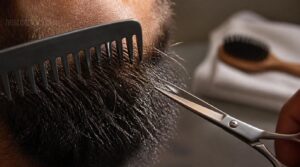
Trimming with the grain gets you close — but flyaways still show up like loose threads on a clean shirt. Don’t reach for the clippers.
Instead, comb upward to lift strays above the beard line, then snip only those protruding hairs with scissors. A few drops of beard oil beforehand helps the hairs lie flat, so you’re cutting what’s truly out of place — nothing more.
Use Scissors for Details
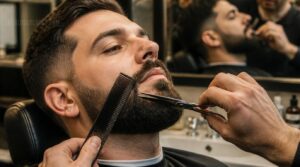
Scissors are where real control lives. While clippers handle bulk, beard scissors handle the details that make or break your shape — the mustache corners, the jawline taper, the stray that sits just wrong.
- Comb hair in the growth direction before cutting so hidden strands don’t get clipped accidentally
- Use scissor tips only near the cheekline for targeted snips without disturbing surrounding length
- Run a finishing comb check in good light to confirm both sides match before calling it done
Avoid Bulk Cutting

Most length is lost in one careless sweep. That’s why start with a higher guard — a number 5 — and only drop down if truly needed. Work one section at a time, check the mirror every few passes, and trim only the visibly uneven spots.
Shaping, not shortening, is the goal. Less is always easier to fix than more.
Maintain Shape Between Trims

Trimming every few weeks keeps the length, but the real work happens in between. A few focused habits are what stop your beard from losing its shape before your next session. Here’s what to stay on top of.
Define The Neckline Carefully
Your neckline is the foundation your whole beard rests on. Place two fingers above your Adam’s apple — that’s your starting reference.
From there, trim a slight U-shape that curves naturally toward each side. Use light, controlled passes and check symmetry straight-on in good lighting.
Taper the density downward so the change looks natural, never abruptly cut off.
Clean Up Cheek Lines
Your cheek line tells people how much control you have over your beard. Comb the area first — detangling exposes the true edge so you’re shaping, not guessing.
- Start with a longer guard to protect length
- Use light, repeatable passes with the grain
- Switch to rounded-tip scissors for single-hair precision
- Keep the beard slightly damp, never soaking
- Wipe debris away to confirm the real line
Manage Mustache Overgrowth
The mustache grows faster than you’d expect. Comb it downward first, then trim only what crosses the lip line — nothing more.
Set your guard one size shorter than your target length so the hair settles correctly after drying. Use short 1–3 mm scissor passes to avoid overcutting.
Finish with a small amount of beard balm or mustache wax to train growth direction and keep everything sitting flat.
Blend Sideburns and Jawline
A choppy jawline can wreck an otherwise sharp beard. Sideburn tapering should match your jaw stubble length, narrowing slightly near the ear.
Use guard gradation, stepping down sizes only where lengths shift. Lift hair with a comb to spot uneven density, then blend with light scissor passes.
Check in natural light. Jawline contouring should look like a gradient, not a line.
Trim Every 7–10 Days
Think of your beard like a lawn. Skip mowing too long, and you lose the clean lines fast.
Ideal trimming frequency is every 7–10 days for shape, stretching to 4 weeks during a growth phase. This keeps consistency vs growth balanced while maintaining beard density.
- Check growth weekly
- Adjust guard size
- Stick to your schedule
Scheduling grooming sessions protects beard shape definition without sacrificing length.
Protect Length With Daily Care

Trimming gets you the shape, but daily care is what keeps it. Length you’ve worked hard to grow can disappear fast if you skip the small stuff. Here’s what your beard needs every single day to stay long, healthy, and breakage-free.
Apply Beard Oil Correctly
Once your beard is damp, not dripping, oil soaks in best. Use 3-4 drops for short beards, 6-8 for thicker ones.
Massaging the oil into your roots first before working toward the tips helps distribute nutrients evenly, and if you’re curious why argan oil in particular works so well for this, this guide on argan oil benefits for beard growth breaks down the science behind it.
Rub oil between your palms first, then massage into roots and skin. Work down to the tips for even distribution throughout your beard care routine.
| Beard Type | Drops Needed |
|---|---|
| Short | 3-4 |
| Long/Thick | 6-8 |
Seal Moisture With Balm
Oil soaks in, but balm locks it down. Right after oiling, smooth a dime-sized amount of beard balm over your skin and beard, working it in until evenly coated.
Balm creates a light occlusive film that traps moisture underneath, supporting your skin’s barrier lipids so less hydration escapes. Pick a fragrance-free, non-comedogenic beard balm to keep pores clear and skin happy.
Brush Downward Each Morning
Once the balm sets, grab your brush. A boar-bristle brush works oils through the beard without snagging hair, and brushing downward each morning resets overnight bedhead while cutting frizz.
Use light pressure, gentle strokes, about one minute total. Stop if your skin stings or turns red.
Daily beard upkeep like this keeps hygiene solid and your shape looking sharp before you walk out the door.
Prevent Knots and Breakage
Knots don’t just look messy — they break hairs off at the shaft, quietly stealing the length you’ve been growing.
Detangle in small sections, working a wide-tooth comb from roots outward while the beard is slightly damp. Moisture softens friction between hairs, so combing stays smooth instead of yanky.
Sleep on satin or silk — rough pillowcase fabric creates overnight friction knots without you noticing.
Keep Grooming Tools Clean
Dirty tools dull faster — and dull blades pull hairs instead of cutting them cleanly, costing you length without warning.
After each use, rinse trimmer blades under lukewarm water, dry them with a microfiber cloth, then add one drop of blade oil. Scrub guards with soapy water and dry completely. Store everything in a clean, dry drawer — never on a steamy countertop.
Frequently Asked Questions (FAQs)
Can diet affect how fast your beard grows?
Yes. What you eat shows up on your face. Protein builds keratin — the stuff your beard is actually made of. Skimp on it and growth slows down fast.
Vitamins like biotin and zinc matter too, and this guide to how diet affects beard health shows which foods keep your beard thick instead of patchy.
How does chronic stress impact beard thickness over time?
Chronic stress raises cortisol, which lowers androgen signaling and pushes follicles into early shedding phases. Over months, that means thinner, patchier beard density — not a quick fix, but a slow, cumulative drop.
For those noticing cumulative thinning from prolonged stress, evidence-based hair restoration treatments for women like minoxidil combined with spironolactone have helped over 85% of patients see real regrowth within six months.
Can genetics limit the maximum length your beard reaches?
Mother Nature deals the cards here. Your genetic growth blueprint sets anagen phase duration, DHT sensitivity, and follicle density. Some beards simply max out shorter, no matter how well you care for them. Genetics decides your ceiling.
Conclusion
Here’s what most guys never figure out: length isn’t lost in one bad trim—it disappears slowly, through dry ends, rough handling, and days of skipped maintenance.
The best way to maintain beard length is to treat every step, from prep through daily protection, as one connected system.
Miss any single piece and the whole thing quietly slips back.
Lock these habits in now, and your beard finally starts growing for you instead of against you.