This site is supported by our readers. We may earn a commission, at no cost to you, if you purchase through links. This content is for general informational and educational purposes only and is not a substitute for professional medical, dermatological, or nutritional advice.

Most guys reach for one tool out of habit, not because it’s the right choice for the job. A razor feels clean and decisive. A trimmer feels safe and forgiving.
But grab the wrong one at the wrong stage of your grooming routine, and you’ll spend twice as long fixing a crooked neckline or an uneven cheek line.
The difference between a sharp, well-shaped beard and a rough outline often comes down to understanding what each tool actually does—and where it stops. Knowing when to swap between a beard trimmer and a razor for shaping is the skill that separates a polished result from a passable one.
Table Of Contents
Key Takeaways
- A trimmer controls length and shape, while a razor defines clean edges — using both together is what actually delivers a polished result.
- Razors cut flush to the skin and cause more irritation, so if you have sensitive skin, lean on your trimmer for daily upkeep and reach for the razor only when precision edging is needed.
- Every beard style has a natural tool pairing — stubble stays consistent with a trimmer at 1–3 mm, while sharp necklines and cheek lines always need a razor to finish cleanly.
- Start your routine with the longest guard setting and work shorter gradually, because overcutting is the easiest mistake to make and the hardest to fix.
Beard Trimmer Vs Razor: Key Differences
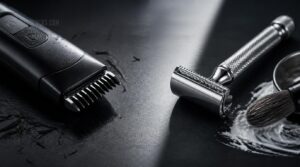
Both tools cut hair, but they don’t work the same way — and that difference matters more than most guys realize. Knowing what sets them apart helps you pick the right one for your face and your routine. Here’s where they actually differ.
Where you store and reach for your tools can shape your whole routine, so it helps to start with affordable hair styling tools built for beginners before committing to anything pricier.
Cutting Closeness
Regarding cutting closeness, the gap between a trimmer and a razor is real. Most trimmers leave 0.4 to 1.5 mm of stubble even at their closest setting. A razor, used with proper skin tension and lubrication, cuts right at skin level.
| Feature | Trimmer vs Razor |
|---|---|
| Closest cut | Razor wins |
| Guard limitation | Trimmer stops short |
| Blade geometry | Razor sits flush to skin |
| Motor power | Helps trimmer handle short stubble |
| Material sharpness | Both need sharp blades |
Hair Length Control
Regarding hair length control, the beard trimmer is the clear winner. Adjustable guards let you dial in lengths from 1 mm to 20 mm with real precision. A razor offers none of that — it just removes everything.
| Tool | Length Control | Precision |
|---|---|---|
| Trimmer | 1–20 mm range | Guard-based settings |
| Razor | Skin level only | None |
| Both combined | Full range | Maximum flexibility |
Skin-level Shaving
Length control separates the trimmer from the razor — but skin-level shaving is where the real difference shows. A razor cuts hair flush with the skin, which sounds ideal until you consider what that contact actually does. Every pass disrupts your skin barrier, triggering a mild inflammatory response that causes redness, tightness, and razor burn. Gillette’s SkinGuard razor utilizes an irritation‑defense bar technology to minimize tugging and skin barrier disruption.
| Factor | Razor | Trimmer |
|---|---|---|
| Cut depth | At skin level | Above skin surface |
| Skin barrier disruption | Higher | Minimal |
| Lubrication needed | Yes — cream or foam | No |
| Irritation risk | Moderate to high | Low |
| Closeness achieved | Smooth, bare finish | Measurable stubble |
That’s why lubrication barrier benefits matter so much when razor shaving. Shaving cream reduces friction between the blade and skin, letting the razor glide rather than drag. Some electric shavers go further — Philips’ Hydro SkinGlide coating uses micro-tech beads to deliver smoother contact. A trimmer skips all that, staying safely above the skin and keeping irritation low.
Speed and Convenience
A trimmer wins on speed, plain and simple. Morning routine efficiency is where it shines — power it up, and you’re grooming within seconds. No water, no cream, no waiting. A razor setup adds 2–3 minutes just for prep.
| Factor | Beard Trimmer | Razor |
|---|---|---|
| Setup time | Under 60 seconds | 2–3 minutes |
| Travel kit portability | Compact, USB charging | Bulky cartridges |
| Quick grooming sessions | 50% faster | Longer cleanup |
Electric trimmer battery life runs 60–90 minutes per charge — plenty for a weekend trip. For time-efficient grooming, that’s hard to beat.
Best Grooming Outcome
Neither tool alone delivers the best result — combining both does. A beard trimmer controls symmetry and density, while a razor defines edges for a professional grooming look. Together, they cover every beard style need. Use the trimmer for length, the razor for precision.
| Goal | Best Tool |
|---|---|
| Uniform length | Beard trimmer |
| Clean edge lines | Razor |
When to Use a Beard Trimmer

A beard trimmer isn’t just for trimming — it’s the right tool for more situations than most guys realize. Knowing when to reach for it saves you time, skin irritation, and a lot of guesswork. Here’s when the trimmer should be your first pick.
Maintaining Beard Length
Consistency is the secret weapon of great beard maintenance. Once you’ve hit your target length, stick to the same guard on your beard trimmer every session — this prevents accidental over‑trimming that slowly shrinks your style.
Trim every few days for short beards, less often for longer ones.
Follow up with a beard conditioning routine to soften hair and reduce flyaways that make even a well‑maintained length look uneven.
Shaping Thicker Beards
Thick beards demand a different strategy. Start by combing your beard upward with a wide-tooth comb — this separates clumped hairs and reveals uneven patches before you cut.
Once you’ve lifted and separated the hair, do a three-angle symmetry check for beard and mustache alignment — front and both sides — before making a single cut.
Use a longer guard first to set a safe baseline length, then blend downward gradually. Keep your strokes consistent and your trimmer flat against the skin for uniform visual density throughout.
Reducing Shaving Irritation
If your skin flares up after every shave, a trimmer might be the fix you didn’t know you needed.
- Lubrication barrier protects skin during razor shaving
- Sharp blades prevent tugging and micro-tears
- Shave with the grain to reduce razor burn
- Light pressure lowers friction and irritation
- Moisturize post-shave to help skin recover faster
Creating Stubble Styles
A trimmer is your best friend for stubble style control.
Whether you’re after a five o’clock shadow at 0.5–1.5 mm or heavy stubble at 4–6 mm, a fixed guard length keeps things consistent. For patchy areas, drop a guard size to even out density.
Always recheck both sides in the mirror — symmetry separates polished stubble from an accidental mess.
Quick Dry Grooming
After trimming, a quick-dry routine keeps your grooming session tight and efficient.
High-velocity drying moves air fast, cutting drying time by up to 50 percent — especially useful before switching from your electric trimmer to a razor for edge work.
Products with moisture-repelling agents reduce frizz and prep the beard perfectly for precise shaving vs trimming decisions.
When to Use a Razor

A razor takes over where a trimmer leaves off. It’s the tool you reach for when precision matters — clean lines, bare skin, no room for error. Here’s exactly when a razor earns its place in your routine.
Clean Cheek Lines
A razor is your go-to tool for clean cheek lines. Start with your beard trimmer and a longer guard to set the baseline, trimming along your natural growth direction.
Then switch to a razor on dry skin for precise edge definition. Use short, feathering strokes to blend the boundary naturally, protecting your skin barrier and keeping the line sharp.
Sharp Neckline Edges
Your neckline is where razor precision truly earns its place. Place it two fingers above your Adam’s apple, then use a straight razor with taut skin for a clean, angular edge.
- Exfoliate 1–2 times weekly to clear dead skin
- Re-edge every 3–5 days as hair regrows
- Match your neckline shape to your face — V for round, U for oval
Smooth Clean Shave
Once your neckline is crisp, a smooth clean shave takes the finish all the way.
Warm water softens the hair, and a pre-shave oil cuts friction on sensitive skin.
Use light, grain-following strokes with a fresh blade for minimal drag.
Rinse with cool water after to calm the skin down.
Goatee Detailing
A goatee demands a razor, not a trimmer. Use your beard trimmer to set the perimeter first, then switch to a razor for goatee detailing.
Symmetry check from three angles — front, left, right. For the mustache connection, align the center vertically with your chin tip.
Feather the edges softly where skin meets hair, then finish with a drop of beard oil along the border.
Removing Stray Hairs
Even after trimmer and razor work, a few hairs always escape. That’s where precision grooming takes over. A microblade tool lets you cut individual strays close to the skin — fast, dry, and targeted. Tweezers pull hairs from the root for longer-lasting results.
- Exfoliate gently beforehand to clear dead skin
- Prep skin before any cleanup tool touches it
- Soothe with moisturizer after removal
Pros and Cons Compared

Both tools have real strengths — and real trade-offs. Knowing where each one falls short helps you pick the right one for your routine. Here’s a straight look at how they stack up.
Trimmer Advantages
A beard trimmer is the workhorse of any solid grooming routine. Guard-guided shaping keeps your length consistent every time, so you’re never guessing. Motorized cutting consistency means the blade does the heavy lifting — no uneven patches.
| Feature | Trimmer | Razor |
|---|---|---|
| Uniform length precision | ✅ Yes | ❌ No |
| Reduced skin abrasion | ✅ Low | ⚠️ Higher |
| Rapid styling efficiency | ✅ Fast | Slower |
| Guard-guided shaping | ✅ Built-in | ❌ Manual |
| Beard maintenance ease | ✅ Simple | ⚠️ Requires prep |
Hypoallergenic blades and rounded tips mean reduced skin abrasion — a real win for sensitive skin. You get rapid styling efficiency without foam, water, or setup. That’s precision grooming working for you.
Trimmer Limitations
Trimmers aren’t perfect, though.
Motor load issues kick in with thick, dense hair — the blade slows, and your cut turns uneven. Battery depletion effects creep up mid-session, reducing power before you’ve finished. Push the trimmer too long, and blade thermal shutoff pauses everything.
Guards also limit your view, making fine detailing harder than a clean razor pass.
Razor Advantages
A razor delivers what trimmers simply can’t — ultra-close finishes right at skin level.
- Precise edge control creates clean cheek and neckline borders
- Sharp blades enable a closest shave with fewer passes
- Pivoting cartridge heads follow jaw curves for even contact
- Skin irritation reduction comes from single-stroke cutting with sharp blades
- Flexible styling options cover goatees, sideburns, and stray hair removal
Razor Drawbacks
Sharp blades are great — until they dull. Dull blade dangers are real: a worn blade tugs on coarse hair, causing skin micro-abrasions and triggering razor burn. Too many passes raise your ingrown hair risks, especially along the jaw. Nicks and cuts happen fast on curved surfaces. Replace blades every 5–7 shaves to stay sharp and safe.
| Drawback | Root Cause | What You’ll Feel |
|---|---|---|
| Razor burn | Repeated aggressive passes | Redness, stinging skin |
| Ingrown hairs | Hair curling back after close cut | Painful under-skin bumps |
| Nicks and cuts | Dull blades on uneven surfaces | Minor cuts, irritation |
Sensitive Skin Concerns
Sensitive skin doesn’t forgive rough tools. Your skin barrier can break down fast from friction, fragrance-loaded creams, or too many razor passes — leaving you red, dry, and stinging.
Trimmers are your safer bet here: no shaving cream needed, no blade-to-skin contact.
If you must shave, use fragrance-free products, warm water prep, and shave with the grain.
Best Tool for Beard Styles

Not every beard style calls for the same tool — and picking the wrong one can throw off your whole look. The right choice depends on what you’re actually trying to build or maintain. Here’s how each major style pairs with the best tool for the job.
Five O’clock Shadow
The five o’clock shadow is one of the most simple beard styles you can wear. A trimmer set between 1–2 mm is your best tool here. It keeps regrowth even and consistent.
- Trim daily to control shadow depth
- Moisturize skin to reduce dryness under stubble
- Exfoliate twice weekly for cleaner hair definition
- Use a razor only to tighten neckline edges
Short Boxed Beard
The short boxed beard steps things up a notch from stubble. It demands precision trimming at 2–4 mm to keep density even across cheeks, jawline, and chin.
Use your trimmer for the body, then a razor to cut clean geometric edges — straight cheek lines, a hard jawline, and a shaved neckline just above the Adam’s apple.
That sharp frame elevates any professional look.
Beardstache Shaping
The beardstache takes the boxed beard’s precision and turns the spotlight entirely on your mustache. Your beard stays trimmed stubbly — roughly 1–3 mm — while your mustache runs one or two guard settings longer, creating deliberate contrast.
- Use a beard trimmer to set the overall stubble baseline first
- Keep mustache edges defined without overhanging the upper lip
- Match your cheek line to your jaw’s angularity — sharper for defined jaws, softer for rounder faces
- Carve the neckline just above the Adam’s apple using a razor for crisp edges
- For a handlebar variation, let mustache ends grow and shape only the boundary hairs
Goatee Maintenance
Where the beardstache leans into contrast, the goatee is all about tight, clean boundaries. Your trimmer manages the bulk — set your guard to a consistent length, then work slowly along the chin and jaw so both sides stay even. Follow up with a razor to define the edges with precision a trimmer simply can’t match.
Full Beard Cleanup
A full beard cleanup calls for both tools working together. Start with your trimmer to handle bulk reduction — work guard-down from your longest setting until length is even across your cheeks, jaw, and chin.
Then switch to a razor for precision line refinement along your neckline and cheeks. Check symmetry straight‑on under bright light, and finish with aftershave to protect exposed skin.
How to Shape Beard Lines
Shaping your beard lines is where the real precision work begins. Done right, it’s what separates a clean, intentional beard from one that just looks grown out. Follow these steps to get sharp, even lines every time.
Set Guard Length First
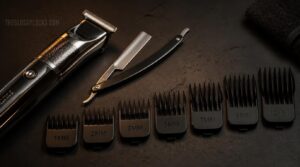
Always start with the longest guard setting. This protects you from taking off too much, too fast. Work your way down gradually — that’s progressive length reduction by definition.
- Lock your guard in before every pass
- Start long, trim shorter only if needed
- Clean guards to prevent buildup and snagging
- Avoid skipping sizes to prevent length jumps
Define The Neckline
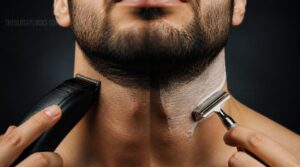
Place two fingers just above your Adam’s apple — that’s your neckline height starting point. From there, trace a gentle U-shape following your jawline contour on both sides.
Dense growth can drag that line lower, so account for your growth density before committing. A beard trimmer sets the boundary; a razor sharpens it.
Clean Below Neckline

Once your neckline is set, everything below it needs to go. Start with your beard trimmer on a low guard — a 1 mm or 2 mm setting — to take down any bulk first.
- Soften skin with warm water before shaving
- Switch to a sharp razor for skin-level removal
- Use short, steady downward strokes with the grain
- Rinse the blade frequently to avoid clogging
- Finish with a fragrance-free balm to calm irritation
A damp cloth removes any stray hairs left behind.
Refine Cheek Lines

Your cheek line frames everything. Apply a pre-shave balm, then align your beard trimmer along the zygomatic arch for even height across both sides. Use 0.5 mm guard increments to tighten gradually without overcutting. Try micro beveling — lift the trimmer head slightly for a softer edge blend. Finish with a razor for clean lines and precise detailing.
| Step | Tool | Tip |
|---|---|---|
| Apply pre-shave balm | Hands | Reduces friction on skin |
| Align zygomatic arch | Beard trimmer | Ensures even symmetry |
| Reduce guard 0.5 mm | Beard trimmer | Avoids overcutting depth |
| Micro bevel the edge | Beard trimmer | Softens the blend |
| Detail stray hairs | Razor | Adds shaving precision |
Check Both Sides

Symmetry is the finishing touch that separates a polished beard from a sloppy one.
Stand in natural light and use a mirror to compare both cheek lines side by side.
If one side sits higher, raise the lower line slightly — never trim the higher side down.
Small, incremental passes with your trimmer prevent overcorrection.
A razor cuts any stray hairs left behind.
Cost, Maintenance, and Convenience

Choosing between a trimmer and a razor isn’t just about the shave — it’s also about what fits your budget, your bathroom shelf, and your schedule. Both tools come with different costs and upkeep habits that add up over time. Here’s what to know before you commit to one or both.
Upfront Tool Cost
Most grooming tools carry hidden purchase fees that catch you off guard. Here’s what shapes your upfront cost:
- Base price of the trimmer or razor
- Taxes, shipping, and import duties
- Bundled guards, docks, and cleaning kits
- Extended warranty registration fees
- Financing plan interest if paying monthly
Trimmers cost more upfront, but that bundled accessory value often justifies it.
Replacement Blade Costs
Once the upfront cost is handled, blade replacement becomes your real ongoing expense. Razor cartridges usually run $8–$20 per blade, while trimmer blades last 3–6 months with proper care.
Buy in bulk to cut costs by up to 50%. Third‑party blades save money but may sacrifice sharpness.
Regular cleaning extends blade life noticeably.
Battery and Charging
Blade costs are one thing — but battery performance shapes your daily routine just as much.
Most cordless trimmers run on Li-Ion or NiMH cells, delivering 60–90 minutes of runtime per charge.
Li-Ion holds up better long-term, retaining around 80% capacity after 500 cycles.
USB-C models charge faster, often hitting 50% in 30 minutes. Store yours at 40–60% charge when not in use.
Cleaning After Grooming
A clean blade isn’t optional — it’s what keeps your trimmer sharp session after session.
After each use, brush out trapped hair from the blade teeth and guard. Then wipe everything down with a dry cloth. Once fully dry, apply a drop of clipper oil to keep blades moving smoothly and cutting clean.
Travel Grooming Needs
Traveling doesn’t mean your grooming routine has to suffer. A compact beard trimmer with adjustable guards and a travel-size razor cover every look — from stubble to sharp necklines.
Most travel trimmers offer portable battery life of three to five full trims per charge, and many support universal voltage from 100 to 240 volts, so adapters aren’t a headache worldwide.
Which Should You Buy?

The right tool really comes down to your specific situation. A few key factors will point you in the right direction faster than any general rule. Here’s what to evaluate before you buy.
Choose by Beard Length
Your beard length is the fastest way to know which tool belongs in your hand. Stubble guard settings of 1–3 mm call for a trimmer — a razor simply removes too much.
Medium growth needs 5–15 mm guards for consistent fullness.
Long beards rely on trimmer stops at 20 mm-plus.
Patchy growth? Stick with a trimmer to mask gaps cleanly.
Choose by Skin Type
Your skin type matters more than most people realize when choosing between a trimmer and a razor. Here’s a quick guide:
- Sensitive skin — Use a trimmer. Razors increase skin irritation and razor burn.
- Oily or blemish-prone — Stick to oil-free aftercare and a gentle shaving technique.
- Dry skin — Follow any razor shave with a hydrating moisturizer to protect your skin barrier.
- Combination skin — A trimmer manages daily upkeep; use a razor only where needed.
Choose by Routine
Your grooming routine is the real deciding factor here. If your mornings are rushed, a trimmer with adjustable guards lets you maintain your look in minutes — no cream, no prep, no cleanup hassle.
Razor use fits better into slower, less frequent sessions. Match the tool to your actual schedule, and consistency will follow naturally.
Consider Both Tools
Here’s the truth: one tool rarely does it all. A trimmer operates daily length control and bulk reduction, while a razor steps in for precision edge refinement — clean necklines, crisp cheek lines, sharp goatee borders.
Together, they form a hybrid grooming workflow that’s far more effective than either alone. Think of them as teammates, not competitors.
A trimmer and razor aren’t rivals — they’re teammates building one flawless grooming routine together
Best Beginner Setup
Starting out doesn’t have to be complicated. A basic electric beard trimmer — budget around $20–$40 — paired with a manual razor and shaving cream covers every base:
- A trimmer with 1–20 mm guards for length control
- A cartridge razor with a lubricating strip for smooth edges
- Fragrance-free shaving gel for sensitive skin
Store both in a dry, ventilated case between uses.
Frequently Asked Questions (FAQs)
Can electric shavers replace both trimmer and razor?
Some multi-function electric shavers can handle both trimming and shaving reasonably well. But single device trade-offs are real — most struggle to match a dedicated trimmer’s precision or a razor’s ultra-close finish.
How often should trimmer blades be oiled?
A sharp tool in good hands beats a dull one any day." Oil trimmer blades after every session. For daily use, oil each day. In humid conditions, oil after each use to prevent rust and friction.
Does beard length affect trimmer guard selection?
Yes, beard length directly shapes your guard choice. Shorter guards (5–3 mm) suit stubble, while medium beards need 6–10 mm. Longer beards call for 12 mm+ to maintain uniform length.
Are ceramic blades better than stainless steel?
Ceramic blades stay sharper longer than stainless steel but chip if dropped. Stainless withstands rough use better. For everyday trimming, ceramic wins on edge retention and hygiene. For durability under pressure, steel holds its own.
What warranty features matter most in trimmers?
When in doubt, warranty duration is your safety net. Look for two to five years of coverage, parts and labor included, and register your trimmer within 30 days to activate full protection.
Conclusion
Think of your grooming kit as a toolbox — every tool has its own lane. The real answer to beard trimmer vs razor for shaping isn’t one or the other; it’s knowing exactly when each earns its place.
Use the trimmer to build and maintain the shape. Use the razor to cut the edges clean.
Master that rhythm, and you won’t just maintain a beard — you’ll sharpen an identity. That’s the difference between grooming and craftsmanship.
- https://livebearded.com/blogs/do-better/mastering-the-beard-neckline-avoid-neckbeard-disasters
- https://wahlusa.com/expert-advice/haircutting/are-you-using-right-grooming-tool-job-knowing-when-use-which-grooming
- https://us.braun.com/en-us/male-grooming-tips/face-shaving/trim-shave-or-both-what-is-the-best-shaving-method-for-your-face