This site is supported by our readers. We may earn a commission, at no cost to you, if you purchase through links. This content is for general informational and educational purposes only and is not a substitute for professional medical, dermatological, or nutritional advice.

Ingrown hairs don’t just look bad—they hurt, they scar, and for many people, they show up like clockwork no matter how carefully you shave or wax. Curly hair types carry the highest burden: the follicle’s natural angle sends the hair curling back into the skin instead of growing outward, and standard hair removal only sharpens that edge.
Tweezers and exfoliation manage the symptoms, but they don’t touch the source. Laser treatment for ingrown hairs works differently—it goes after the follicle itself, progressively weakening hair regrowth so there’s less hair to get trapped in the first place.
Table Of Contents
Key Takeaways
- Laser treatment targets the hair follicle itself—not just the surface hair—which breaks the cycle that keeps ingrown hairs coming back, cutting their occurrence by up to 90% over multiple sessions.
- Your hair type and skin tone determine which laser works best for you: Alexandrite suits lighter skin, Nd:YAG is safer for darker tones, and diode lasers cover the middle ground.
- Most people need 6 to 8 sessions spaced 4 to 8 weeks apart, with results building gradually as follicles are caught during their active growth phase.
- After treatment, protect your skin with SPF 30+ daily, skip exfoliants until fully healed, and watch for spreading redness or signs of infection that need a doctor’s attention.
What is Laser Ingrown Hair Treatment?
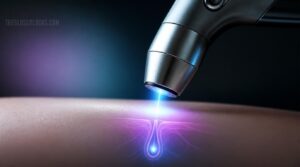
Laser treatment for ingrown hairs does two things at once — it removes the hair and stops new ones from growing back in the same problematic way. Understanding what this treatment actually involves helps you decide whether it’s the right move for you. Here’s what you need to know before your first session.
Results can be impressive — laser treatment cuts ingrown hair occurrence by up to 90%, though it’s worth knowing the potential risks, like minor burns or pigment changes, before committing.
Laser Hair Removal Basics
Laser hair removal is built around one elegant idea: light destroys hair at its root. A device emits concentrated light pulses toward your skin, targeting melanin — the pigment inside each hair follicle. Through selective photothermolysis, that light converts to heat, damaging the follicle without harming surrounding tissue.
Treatment works best during the active growth phase, when follicles are most vulnerable. To prepare for your session, you should shave the target area to guarantee the laser energy reaches the follicle directly.
Ingrown Hair Reduction
When that laser heat reaches the follicle, it does more than remove hair — it breaks the cycle that keeps trapping it. Melanin absorption efficiency determines how well the energy converts to targeted heat, damaging the follicle’s ability to produce hairs that curl back into your skin.
Here’s what consistent treatment actually does:
- Reduces active follicles, so fewer hairs can physically become trapped
- Lowers skin irritation caused by repeated ingrown episodes
- Disrupts recurrence by shrinking regrowth at the source
Permanent Hair Reduction
So what does "permanent" actually mean here? It means long-term reduction — not a guarantee that every hair disappears forever. Laser technology repeatedly damages the hair follicle across multiple sessions, considerably lowering regrowth over time.
Hormonal changes, aging, or medications can still trigger some return. That’s why maintenance frequency matters: occasional touch-ups keep results solid after your main course of laser hair removal.
Medical Versus Cosmetic Treatment
Whether insurance coverage applies often comes down to one question: is this medical or cosmetic?
If recurring ingrown hairs cause inflammation or infection, a physician can document a clinical diagnosis, potentially making laser hair removal billable. Pure appearance goals? That’s self-pay.
Your provider’s risk assessment and documented reasoning draw that line.
Why Ingrown Hairs Develop

Ingrown hairs don’t just happen randomly — your skin type, hair texture, and grooming habits all play a role. Understanding what’s actually driving them helps you make smarter choices about treatment. Here are the main reasons they keep showing up.
Curly or Coarse Hair
If your hair curves, coils, or feels like wire between your fingers, ingrown hairs aren’t just bad luck — they’re practically built into your biology.
Hair curl genetics shapes everything. Your follicle angle variation means curly or coily hair exits the skin at a diagonal rather than straight up, so regrowth naturally bends back toward the skin instead of outward.
| Hair Type | Ingrown Hair Risk |
|---|---|
| Straight, fine hair | Lower risk |
| Wavy or coarse hair | Moderate risk |
| Tightly coiled hair | Highest risk |
Hair shaft diameter matters too. Coarser strands are thicker and stiffer, so when they try to break through skin, they push sideways rather than out. That’s when a hair grows laterally underneath the surface, forming the classic bump you can feel but can’t always see. Moisture distribution issues make this worse — coarse and curly textures struggle to carry natural oils from root to tip, leaving skin drier and follicle openings tougher to penetrate. This is exactly why laser hair removal works so well for curly hair: more melanin in the shaft means the laser locks on efficiently, reducing the follicles that keep causing trouble.
Shaving and Waxing Irritation
Grabbing a razor seems harmless enough — until your skin fights back.
For those with sensitive skin, preventing bikini line bumps after shaving often comes down to technique, prep, and knowing when to consider alternatives like laser.
Shaving and waxing disrupt the hair’s natural exit path by creating sharp, pointed edges that curl inward on regrowth. Dry shaving, heavy blade pressure, and dull razors drag across skin, triggering razor burn and inflammation. Waxing pulls from the root, leaving follicles traumatized and wide open to irritation.
- Skip dry shaving — always prep with warm water first
- Use a sharp blade with generous shave cream
- Apply aloe vera immediately after waxing
- Wear loose clothing to reduce post-treatment friction
- Avoid touching post-wax bumps to prevent secondary inflammation
These habits don’t just soothe irritation — they directly reduce your risk of ingrown hairs developing underneath.
Dead Skin Buildup
Dead skin is a sneaky troublemaker. Your skin constantly sheds through the stratum corneum, its outermost layer — but when that shedding slows down, dead cells pile up, mix with sebum and dirt, and create an oil debris mix that clogs the surface.
That buildup doesn’t just cause rough skin patches — it actively traps emerging hairs underneath, setting the stage for painful ingrowns.
Blocked Hair Follicles
Think of your hair follicle as a tiny tunnel — when it gets clogged, nothing moves. Keratin buildup blocks that tunnel, trapping the hair inside before it ever reaches the surface.
Bacteria fill the space, triggering follicle infection and painful, red bumps. Without treatment, that inflammation can rupture the follicle, risking permanent scarring.
Pseudofolliculitis Barbae
There’s a name for what many men deal with after every shave: pseudofolliculitis barbae. It happens when hair — especially curly or coarse — curves back and pierces the skin instead of growing outward. Your hair follicle’s curved shape is partly to blame, creating the perfect angle for re-entry.
Over time, that triggers inflammatory papule formation, and without intervention, scarring, keloids, and post-inflammatory hyperpigmentation can follow. Laser hair removal breaks this cycle at the root.
How Laser Treatment Works
Laser treatment doesn’t just remove hair—it goes after the root cause of ingrown hairs at the source. The science behind it is surprisingly straightforward once you break it down. Here’s exactly how it works.
Targeting Hair Follicles
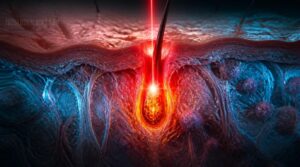
Laser hair removal works by hunting down the very source of ingrown hairs — the hair follicle itself.
The laser targets melanin, the pigment inside the follicle, converting light into heat. That heat travels deep enough to reach the follicle, and at sufficient energy fluence, causes thermal injury to the structures responsible for hair production.
Selective Photothermolysis

The magic behind this process has a name: selective photothermolysis. It sounds complex, but the idea is straightforward — the laser targets specific pigment in the hair follicle without damaging the skin around it.
- The laser wavelength locks onto melanin like a key in a lock
- Pulse duration limits heat to the follicle only
- Fluence energy control ensures enough power to destroy, not just warm
- Built-in cooling shields your surrounding skin throughout
Active Growth Phase

Selective photothermolysis only works when the laser catches hair at the right moment. That moment is the active growth phase — when the hair follicle is actively producing a new strand and melanin concentration is at its peak.
Hit it then, and the laser energy absorbs deeply into the bulb, disrupting the cells responsible for regrowth.
Gradual Hair Thinning
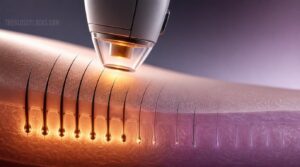
Once the laser disrupts the follicle at peak activity, the changes don’t happen overnight. This is the follicle miniaturization process — each treated follicle gradually loses its ability to produce thick, dense terminal hair. Over repeated sessions of laser hair removal, progressive thinning patterns emerge across the treated area.
Think of it like dimming a light rather than switching it off:
- Hair density reduction begins after the first few sessions, with regrowth appearing finer and sparser.
- Some follicles respond faster than others — treatment response variability is completely normal and depends on hair thickness, skin type, and body area.
- Long-term maintenance strategies, like occasional touch-up sessions, help sustain hair regrowth inhibition over time.
Staying consistent with your hair growth cycle treatment plan is what keeps results building forward.
Fewer Trapped Hairs
As follicles produce thinner, sparser hair over time, something quietly shifts in your skin — reduced ingrown frequency becomes your new normal. Fewer hairs mean fewer chances for strands to curl back and get trapped beneath the surface, so lower inflammation and calmer skin follow naturally.
| What Changes | Why It Matters |
|---|---|
| Follicle activity decline | Fewer hairs attempt to grow through blocked openings |
| Keratin plug reduction | Less mechanical obstruction at follicle exits |
| Smoother regrowth | Individual hairs emerge with more space, less sideways pressure |
| Lower inflammation | Fewer trapped hairs mean fewer irritated, tender bumps |
Consistent laser hair removal doesn’t just reduce hair — it interrupts the cycle that keeps ingrown hairs coming back.
Best Lasers by Skin Type
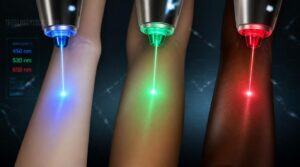
Not every laser works the same way on every skin tone — and that mismatch can make a real difference in your results. The type of laser your provider uses should match your skin type and hair color to both increase effectiveness and minimize side effects.
Here’s a breakdown of the main laser options and what each one is best suited for.
Alexandrite for Lighter Skin
If you have lighter skin and dark hair, the Alexandrite laser is your best ally. Operating at 755 nm, it locks onto melanin in the hair follicle and converts that light into targeted heat — destroying the root without damaging surrounding tissue.
Here’s why it works so well:
- Strong skin contrast lets the laser focus precisely on pigment
- Less epidermal melanin means less competition for the energy
- Contact cooling keeps the surface comfortable during each pulse
- Repeated sessions progressively reduce active follicles driving ingrown hairs
- Fewer returning hairs means fewer hairs curling back under the skin
Nd:YAG for Darker Skin
Darker skin needs a different approach — and the Nd:YAG laser (1064 nm) delivers it. Its deeper penetration bypasses surface melanin, targeting the follicle directly without overheating your skin tone.
That’s why pigmentation risks drop to 2–3% with this system. Cooling during each pulse protects your epidermis, and post-treatment healing usually stays mild — mostly temporary redness — keeping your skin safe while steadily reducing ingrown hairs.
Diode Laser Versatility
Think of the diode laser as the Swiss Army knife of hair removal — it adjusts to nearly any skin type or tone.
Wavelength selection between roughly 800 and 980 nm lets clinicians match the laser precisely to your skin and hair characteristics. Combined with fiber delivery and modulation control, diode systems distribute energy evenly, reducing ingrown hairs effectively across a wide range of patients.
Dual-wavelength Laser Systems
Some patients have skin and hair characteristics that don’t fit neatly into one laser category — and that’s exactly where dual-wavelength platforms shine.
These systems combine Alexandrite (755 nm) and Nd:YAG (1064 nm) wavelengths, giving your clinician real wavelength pair selection flexibility. Through optical switching, both wavelengths share one handpiece, targeting the same area without repositioning.
Energy control per wavelength and a consistent beam spot create a precise safety balance — reducing ingrown hairs across diverse skin tones.
Hair Color Considerations
Your hair color matters more than most people realize when choosing a laser.
Natural melanin gives the laser something to lock onto — it’s what converts light into heat at the follicle. Bleached hair, with its stripped pigment, weakens that signal. Red dye sensitivity and fashion colors behave unpredictably under laser energy, sometimes absorbing differently than melanin entirely.
| Hair Color | Laser Consideration |
|---|---|
| Dark natural | Best absorption, strongest results |
| Bleached/light | Reduced targeting, more sessions likely |
| Red or fashion dye | Unpredictable pigment response |
| Faded dye | Improves with time before treatment |
Patch test results guide your clinician in adjusting energy settings — especially critical if your hair has been recently colored. Nd:YAG lasers and diode lasers handle color fade timing better across varying hair pigmentation levels.
Treatment Sessions and Results
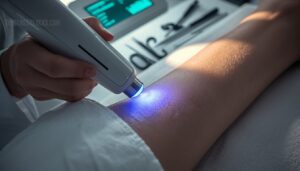
So you’re ready to talk numbers — because that’s usually what people actually want to know. Laser treatment isn’t a one-and-done situation, and the timeline looks a little different for everyone depending on your hair type, skin tone, and how your body responds.
Here’s what the process commonly looks like from your first session to your last touch-up.
Typical Session Count
Most people need 6 to 8 sessions of laser therapy to see meaningful ingrown hair reduction.
That number isn’t arbitrary — it reflects how your follicles cycle through active and dormant growth phases. Since lasers only disable follicles in the active growth stage, multiple treatments are essential to catch each one at the right moment.
Treatment Spacing
Spacing your sessions correctly is just as important as the number of treatments. Most clinics schedule laser hair removal every 4 to 8 weeks, timed around your hair’s natural growth cycle.
- Facial areas often need shorter intervals due to hormonal influence
- Legs and arms usually follow longer spacing
- Underarms and bikini areas respond differently based on follicle depth
This session interval planning ensures the laser catches more follicles in their active phase each visit, gradually reducing ingrown hairs with every round.
Expected Hair Reduction
So what does all that careful scheduling actually earn you? Regarding laser hair removal, results aren’t a coin flip — they follow a pattern. Most people see hair reduction results ranging from roughly 30% to 73% long-term, depending on the device used and area treated. That variation is real, but even the lower end meaningfully reduces ingrown episodes.
Permanent hair reduction doesn’t mean every follicle vanishes. What you get is hair regrowth inhibition — follicles that still fire tend to produce finer, lighter strands that rarely curl back into the skin. Over sessions, long-term density drop compounds: the area grows sparser, patchier, and noticeably smoother. That regrowth pattern shift is what quietly breaks the ingrown cycle for good.
Laser treatment doesn’t erase every follicle — it rewires them to grow finer, softer, and less likely to trap beneath your skin
Still, realistic reduction goals matter. Some follicles survive hair follicle destruction and resurface months later, which is why follow-up session needs are common. Think of it less like flipping a switch and more like turning down the volume — gradually, and on your terms.
Results Timeline
Knowing how much reduction you’ll see is one thing — knowing when you’ll see it’s another.
The early shedding phase kicks in roughly one to three weeks after your first session, as treated hairs loosen and fall out. Don’t mistake that for full results. Your visible improvement timeline stretches across multiple sessions, building quietly each time.
Maintenance Appointments
Results build session by session — but they don’t maintain themselves. That’s where maintenance appointments come in.
Your clinic will track your regrowth patterns and schedule follow-up sessions based on how quickly hair returns. Most patients need touch-ups every few months. Sticking to that session scheduling keeps ingrown hairs from creeping back and your skin care routine working at its best.
Aftercare and Side Effects

The laser session is done—but what you do next matters just as much as the treatment itself. Your skin needs a little time and the right care to heal well and get the most out of what you just invested in. Here’s what to expect and how to handle it.
Redness and Swelling
Redness and swelling are the most common reactions after laser hair removal — almost everyone experiences them. Clinically, that skin flush is called erythema, and the puffiness around follicles is perifollicular edema. Both are just your body’s inflammation response doing its job.
Apply cool compresses to ease discomfort, wear loose clothing to reduce friction, and your skin should calm down within a day or two.
Pigmentation Risks
Pigmentation changes are a real risk with laser hair removal, especially if you have a deeper skin tone. Here’s why: melanin absorption isn’t perfectly selective. Surrounding skin can soak up laser energy alongside the follicle, triggering post-inflammatory hyperpigmentation — dark marks that linger for months.
Nd:YAG lasers reduce this risk to roughly 2–3% in darker skin, versus 19% with shorter-wavelength options. Controlling inflammation after treatment matters just as much as choosing the right device.
Sun Protection
Your skin is genuinely vulnerable after laser hair removal — so sun protection isn’t optional. Treated skin has no defense against UV, making hyperpigmentation and sun damage far more likely.
Use a broad-spectrum SPF 30+ sunscreen daily, reapply after sweating or swimming, and avoid peak sun hours. Loose, protective clothing adds another layer of defense when you’re outdoors.
Gentle Skincare Routine
After laser treatment, your skin is basically starting from scratch — keep it simple.
Use a fragrance-free cleanser with lukewarm water, then pat dry gently with a soft cloth. Layer hydration with aloe vera or a glycerin mist, then seal it with a soothing, fragrance-free moisturizer.
Skip salicylic acid and exfoliants entirely until your skin has fully settled.
When to See a Doctor
Most side effects are mild and fade quickly — but some signals mean it’s time to call a dermatologist.
Redness spreads quickly beyond the treated area, or severe pain occurs without improvement—don’t wait. A fever with infection, swollen lymph nodes, or pus forming nearby also needs medical attention.
And if scarring appears after healing, or recurrent ingrown hairs keep returning, a medical doctor can help you break that cycle.
Frequently Asked Questions (FAQs)
What happens to ingrown hair after laser?
After laser, treated hairs shed gradually over one to three weeks. The follicle weakens, so regrowth comes back finer — far less likely to curl under and cause that familiar trapped-hair bump.
Does laser treatment hurt on sensitive skin areas?
Yes, sensitive areas do hurt more. The sensation feels like a quick snap or warm sting. Topical numbing creams and cooling systems help manage it effectively before and during your session.
How much does a full laser protocol cost?
Prices vary like airline tickets — same destination, wildly different fares. Per-session rates range from $50 to $270, while package discounts on 3-to-8-session bundles can cut that noticeably.
Can laser treatment be done during pregnancy?
Most clinics recommend waiting until after delivery. The evidence is reassuring, but long-term safety data is limited, and most providers won’t take that chance with an elective procedure.
Is laser treatment safe for teenage patients?
Laser hair removal is generally safe for teens when performed by trained professionals using FDA-cleared devices matched to their skin tone, though faster hormonal regrowth may mean more maintenance sessions are needed.
How soon can I exercise after laser sessions?
Wait at least 48 hours before working out. Sweat worsens irritation on treated skin. Skip tight gym clothes — friction inflames sensitive follicles. If redness lingers, hold off until it clears.
Conclusion
The skin you’ve been fighting against can finally become the skin you stop thinking about entirely. Laser treatment for ingrown hairs doesn’t just clear the bumps you currently have—it interrupts the cycle that keeps bringing them back.
After your final session, shaving becomes optional, not obligatory. The razor, the tweezers, the post-wax inflammation—none of it has to define your routine anymore. That kind of freedom isn’t a side effect. It’s the whole point.