This site is supported by our readers. We may earn a commission, at no cost to you, if you purchase through links. This content is for general informational and educational purposes only and is not a substitute for professional medical, dermatological, or nutritional advice.

Most people grab whatever trimmer’s nearby and go—wet, dry, mid‑shave, it doesn’t matter. But choice of timing and moisture actually changes how the blades behave, how your skin feels afterward, and whether you’re fighting the hair or letting it cooperate.
Dry hair stays stiff, giving the blades something to grip. Wet hair softens and lies flat, which cuts down on tugging but trades some precision.
Neither method wins outright—the right one depends on your hair type, your skin sensitivity, and whether you have 30 seconds or a full shower to spare.
Knowing the difference makes every trim faster, cleaner, and a lot more comfortable.
Table Of Contents
- Key Takeaways
- Wet Vs Dry Nose Trimming
- Which Method Trims Better
- Safety and Skin Comfort
- Waterproof Ratings Explained
- Best Technique for Each Method
- Cleaning After Wet or Dry Use
- Top 10 Wet/Dry Trimmers
- 1. Panasonic Nose Ear Hair Trimmer Vacuum
- 2. Professional Waterproof Ear Nose Hair Trimmer
- 3. Manscaped Weed Whacker 2.0 Trimmer
- 4. Philips Norelco 5000 Nose Ear Eyebrow Trimmer
- 5. Wahl Micro Groomsman Battery Trimmer
- 6. Manscaped Shears 3.0 Nail Grooming Kit
- 7. Royal Stainless Manual Nose Hair Trimmer
- 8. Panasonic Dual Edge Nose Ear Trimmer
- 9. Panasonic Vacuum Nose Ear Trimmer
- 10. Remington Dual Edge Nose Ear Trimmer
- Features That Matter Most
- Choosing Your Best Routine
- Frequently Asked Questions (FAQs)
- Conclusion
Key Takeaways
- Dry trimming gives you sharper control and faster sessions, while wet trimming reduces tugging and works better on thick or curly hair—so your hair type, not habit, should drive the choice.
- A waterproof rating of IPX7 means your trimmer can handle a sink drop or shower session, but it won’t survive hot steam or prolonged submersion, so check the label before stepping in.
- Trim only the visible hairs—going too deep strips out the hairs your nose actually needs for filtering dust and pollen, and repeated over-trimming can cause scar tissue buildup over time.
- Blade care is simple but non-negotiable: rinse after every wet use, brush out trapped hairs weekly, and replace blades every 6–12 months to keep cuts clean and avoid the dreaded pulling sensation.
Wet Vs Dry Nose Trimming

Both methods get the job done, but they don’t work the same way—and the difference matters more than you’d think. Whether you trim in the shower or in front of a dry mirror, each approach has its own strengths and trade-offs. Here’s what you need to know before picking your go-to routine.
If you’re starting from scratch, how to shape your beard neckline breaks down exactly why dry hair, good lighting, and two mirrors make all the difference.
Dry Trimming Benefits
Dry trimming is the no‑fuss default for a reason. Without moisture in the mix, you get precision edge control that’s hard to replicate in the shower. Hair stays in place, your blade glides cleanly, and you can actually see what you’re cutting.
The advantage of wet trimming reduces mold risk is especially relevant in humid bathrooms.
| Dry Trimming Benefit | Why It Matters |
|---|---|
| Reduced skin irritation | No moisture means less friction on sensitive nostril tissue |
| Hygiene maintenance | Dry debris is easier to contain and clean up |
| Blade longevity | Less moisture exposure reduces corrosion over time |
| Minimal setup time | Grab it, trim, done — no prep needed |
| Precision trimming | Hair stays firm, giving you cleaner, more consistent results |
Wet Trimming Benefits
Wet trimming has its own quiet advantages. When hair is damp, it softens and lies flat, so the blade glides through with less resistance. That means less tugging on sensitive tissue — a real win if your nostrils run sensitive. A shower-friendly trimmer with an IPX7 waterproof rating makes this easy and safe.
| Benefit | What It Does | Best For |
|---|---|---|
| Moisture retention | Keeps hairs pliable | Thick or coarse hair |
| Reduced mold risk | Limits trapped moisture buildup | Humid environments |
| Anti-irritation design | Softens blade contact | Sensitive nostrils |
Accuracy Differences
Accuracy shifts depending on whether your hair is dry or damp. Dry trim feedback is immediate — stiff hairs stand up straight, so you feel exactly when the blade reaches the right depth. Wet trim precision shines for thick or coarse hair, where moisture reduces resistance and keeps the blade on track. Models with dual-edge blades and alignment indicators improve consistency in both modes.
| Factor | Dry Trim | Wet Trim |
|---|---|---|
| Tactile feedback | High — hair resists blade | Lower — hair lies flat |
| Curly hair control | Harder to manage | Easier glide |
| Depth accuracy | Best for fine hairs | Best for thick hairs |
| Blade drift risk | Low with steady hand | Minimal with wet/dry functionality |
| Sensor vacuum accuracy | Strong in dry conditions | Strong with sealed head |
Comfort Differences
Precision matters, but so does how the whole experience feels. Dry trimming gives you immediate tactile control — hairs stand firm, the blade feels crisp, and quick sessions stay clean without moisture setup. Wet or dry use softens that experience considerably. Wet/dry nose hair trimmers reduce pulling on coarse hairs, dampen vibration, and calm sensitive skin through natural lubrication.
| Comfort Factor | Dry Use |
|---|---|
| Noise level | Slightly louder |
| Skin calm | Less friction buffer |
Best Use Cases
So when does each method actually shine? Dry trimming works best for quick, precise touch-ups — no prep, no mess, done in under a minute. Wet trimming earns its place during a shower or post-bath routine, where warm water softens thick or curly hairs naturally.
| Use Case | Best Method | Why It Works |
|---|---|---|
| Rapid Dry Touch-up | Dry | Fast, clean, no setup needed |
| Shower Softening Trim | Wet | Warm water relaxes coarse hairs |
| Wet Thick Hair | Wet | Reduces pulling and friction |
| Dry Fine Hair | Dry | Sharper control, less over-cut risk |
| Gentle Nostrils Trim | Dry | Minimizes irritation on sensitive skin |
A showerfriendly trimmer with a waterproof rating manages both jobs well, so you’re never locked into one routine.
Which Method Trims Better
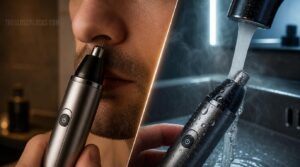
The better method really comes down to your hair type and what you’re trying to accomplish. Fine, thick, curly — each one responds differently to wet or dry trimming, and that difference matters more than most people expect. Here’s how each hair type stacks up.
Fine Nose Hairs
Fine nose hairs are actually doing important work — they filter dust and pollen before it reaches your nasal cavity. Dry trimming is the better call here, since moisture can cause even a sharp dual-edge blade to skip over thin strands.
- Dry hair stays rigid, making fine hairs easier to catch
- Wet/dry functionality helps, but dry mode gives you more control
- Trim only visible hairs to protect your natural filtration role
Thick Nose Hairs
Thick nose hairs are harder to cut cleanly — they’re coarser, longer, and often get thicker with age due to hormonal shifts and genetics.
Wet trimming softens these tough strands, letting a dual-edge blade glide through with less resistance.
For the best result, start dry to catch stiff hairs, then use wet/dry functionality for a cleaner finish.
Curly Nasal Hair
Curly nasal hair has a spiral growth pattern that coils back toward the nostril opening, making it trickier to catch cleanly. That elastic shaft bends rather than cuts if you rush.
Wet/dry functionality helps here — a quick wet pass temporarily softens the curl, letting the blade trim in the right trimming direction without snagging.
Sensitive Nostrils
Sensitive nostrils don’t just react to dust or pollen — even a trimmer vibrating too close to the nasal mucosa can trigger sneezing, itching, or a runny nose. Dry trimming is the safer starting point here, since moisture can increase blade drag and pull at delicate skin.
Here’s what helps most:
- Rinse with saline spray before trimming to moisten and calm the nasal lining without over-wetting it.
- Choose a trimmer with a hypoallergenic steel cone — it reduces friction against sensitive tissue.
- Keep sessions short; over-exposure to vibration aggravates vasomotor rhinitis symptoms fast.
Wet/dry functionality still has a role — but use moisture only for post-trim rinsing, not the primary pass.
Quick Touch-ups
Sometimes a quick touch-up is all you need — and for that, dry trimming wins. It’s faster, leaves no damp residue, and your battery powered trimmer is ready the moment you need it.
Rapid wet trimming works well post-shower when hair is already soft, but quick dry trimming is the smarter pick for on-the-go grooming with minimal fuss.
For deeper dives into how these tools actually work, nose and ear trimmer mechanics explained can help you choose the right blade style for each grooming method.
Safety and Skin Comfort
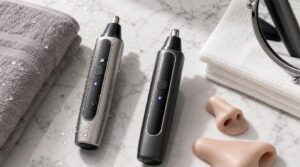
Getting a clean trim is one thing — walking away without irritation or a nick is another. Whether you go dry or wet, a few key factors determine how comfortable and safe the experience feels. Here’s what to keep in mind.
Nick Prevention
Getting a nick inside your nostril is unpleasant.
Guard selection is your first line of defense — choose a trimmer with a rounded tip and a close-fitting guard that keeps the blade from direct skin contact. Move slowly and deliberately; controlled motion prevents sudden slips. Check blade sharpness before each session, since dull blades drag and cut unevenly.
Pulling and Tugging
Beyond avoiding nicks, how you handle the trimmer matters just as much.
Steady pull force beats sharp tugging every time — a slow, controlled draw along the nostril keeps skin tension low and the blade path predictable.
Tugging, by contrast, sends a quick jolt that can pinch delicate skin, especially in wet conditions where grip pressure naturally weakens.
Over-trimming Risks
Tugging isn’t the only thing to watch. Trimming too much at once is a real risk that’s easy to overlook.
- Microcut healing slows when you go too deep — even tiny nicks bleed and crust
- Moisture loss follows over-trimming, leaving your nostrils dry and cracked
- Repeated cuts can trigger nerve irritation or, worse, scar tissue buildup over time
Irritation Control
Once over-trimming leaves skin raw, keeping irritation in check becomes your next priority.
Maintain a gentle blade angle — don’t press the trimmer hard against the nostril lining. A light pass does the job.
After trimming, apply a fragrance-free balm to support moisture barrier care. Give your skin a full 24 hours to recover before your next session.
Hypoallergenic Blades
If you have sensitive skin, the blade material matters more than you’d think. Look for trimmers with nickel-free steel, ceramic coating, or titanium nitride — these reduce friction and lower your risk of redness.
Biocompatible polymer and diamond carbon finishes are gentler still, keeping direct metal contact minimal during wet/dry use.
Waterproof Ratings Explained

Not all trimmers handle water the same way, and that label on the box matters more than you’d think. Understanding what waterproof ratings actually mean helps you pick the right trimmer for how you actually groom. Here’s a breakdown of the key rating categories worth knowing.
Wet/dry Labeling
That "wet/dry" label on the box isn’t just marketing — it tells you exactly how the trimmer manages moisture at the adhesive and material level. Wet Label Adhesion ensures the trimmer’s surface labels won’t peel during shower use, while Dry Label Longevity keeps markings readable in storage.
Here’s what that label actually covers:
- Moisture Compatibility — materials bond to damp surfaces without bubbling
- Label Material Choice — vinyl or polyester face stock resists tearing
- Water-resistant inks prevent fading after repeated rinsing
- Pressure-sensitive adhesives grip even on moist casings
- Quality Inspection confirms no air pockets after application
This matters because your wet/dry grooming device gets handled in steamy, wet conditions constantly.
IPX7 Waterproof Use
Understanding IPX7 submersion limits gives you real confidence when using a wet/dry nose hair trimmer near water. This rating means the device can handle being submerged up to one meter for 30 minutes — enough to survive an accidental sink drop.
However, hot water and steam aren’t covered, so keep that in mind during showers. Also, inspect seals regularly, since worn gaskets quietly compromise your waterproof grooming tool over time.
Shower-safe Trimming
Your shower is basically the perfect place to handle a quick trim — no mirror setup, no cleanup afterward. That’s why shower-safe trimming makes so much sense when your trimmer carries a proper IPX7 standard rating and solid shower sealing.
Just confirm your model explicitly is compatible with shower mode before stepping in; not every wet/dry label guarantees full shower use.
Rinse-only Models
Rinse-only models sit in a middle ground — not fully waterproof, but built for quick cleanup convenience. After each trim, you detach the blade head and rinse it under the tap. That’s the extent of their wet/dry functionality.
These compact trimmers often run 30 to 90 minutes per charge, and some feature hypoallergenic blade coatings for sensitive skin.
Body Protection Limits
Every trimmer has a protection limit — and knowing yours matters.
Even IPX7-rated wet/dry nose hair trimmers only handle brief rinsing or shower exposure, not submersion. The waterproof seal rating shields internal electronics, while BPA-free guards and skin cushion mesh protect sensitive nasal tissue. A guard depth limit of 2.0 mm keeps blades from reaching the mucosal lining, making skin-safe trimming reliable across both wet and dry use.
Best Technique for Each Method
Knowing whether to trim wet or dry is only half the battle — how you actually do it matters just as much. A few small adjustments to your technique can mean the difference between a clean result and an uncomfortable one. Here’s what to do for each method.
Preparing Dry Hair
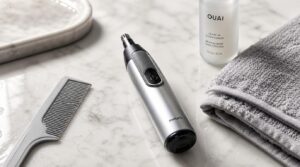
Getting dry trimming right starts before you even pick up the trimmer.
Detangle before trimming by running a gentle comb from ends to roots. Blot any residual moisture with a microfiber towel for about 60 seconds.
A light leave-in conditioner helps control stray hairs without adding slippage, giving you cleaner, more accurate results every time.
Softening Wet Hair
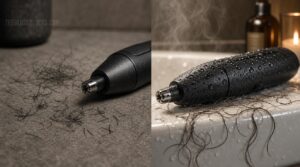
Dry prep gets the job done, but wet trimming has its own advantages — especially if your nose hairs are thick or curly.
Dampening the hair opens the cuticle, letting moisture absorb deeper into each strand. This makes hairs noticeably softer and more pliable. A quick rinse is enough. You don’t need conditioner inside your nostril — water alone does the work.
Proper Trimming Angle
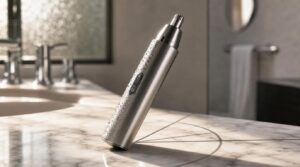
The angle you hold your trimmer at matters more than most people realize.
For most trims, 45-degree angle hits the sweet spot — clean bevel, minimal snagging. If your nostrils are sensitive, try shallow 30 degrees along the rim. Thick or curly hairs? Push toward 60 degrees to cut through without tugging.
Keep a steady wrist motion and maintain a consistent angle each pass.
Avoiding Deep Trimming
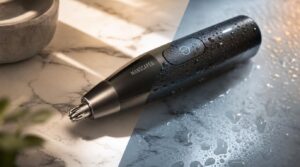
Once you’ve nailed your angle, know when to stop. Depth guard settings exist for a reason — use them. Going too deep doesn’t improve results; it removes hairs your nose actually needs for filtering.
- Set your guard length choice before inserting the trimmer
- Never push past the first knuckle depth
- Let the trimmer do the work — no forcing
- Check over-trim prevention features on your model
- Sensitive nostrils need shorter, lighter passes
Post-trim Inspection

Once the trimmer’s off, take ten seconds to actually look. Check both nostrils for symmetrical, even trimming — one side shouldn’t look fuller than the other.
Run a clean tissue across the area, confirm there’s no redness spreading, and breathe normally to catch any tugging sensation.
No irritation after five minutes? You’re done right.
If five minutes pass without irritation, you trimmed it right
Cleaning After Wet or Dry Use
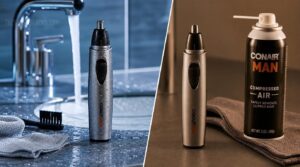
How you clean your trimmer after each session matters more than most people realize. Whether you trim dry or rinse it in the shower, the cleanup steps aren’t quite the same. Here’s what to know for each situation.
Rinsing Blade Heads
After each trim, rinse blade heads under cool running water to flush out clippings fast. For a deeper clean, a gentle soap rinse works well — just make sure you rinse off all residue before reassembling.
- Run a 30–60 second rinse cycle to push trapped hairs out
- Use your trimmer’s reservoir flushing feature if it has one
- Let components air dry completely before storing
Brushing Trapped Hairs
Even after a good rinse, a few hairs always find a way to hide. That’s where a small cleaning brush earns its keep. Work it along the base of each bristle lane in short strokes, lifting clumps rather than yanking.
A toothpick controls tight spots well.
Prevent buildup by brushing out after every single use.
Drying Before Storage
Wet/dry nose hair trimmers need one easy extra step after cleaning — let yours cool for 15 minutes before putting it away. Heat and lingering moisture are a bad combo for seals and blades.
- Check any moisture indicator shows zero
- Slip in a desiccant pack to absorb residual humidity
- Seal it in an airtight case, away from sunlight
Vacuum Chamber Care
If your trimmer has a built-in vacuum system, empty the hair chamber every four months to keep suction strong.
After rinsing, check the seal around the vacuum chamber for cracks or swelling — a worn seal lets suction escape.
Shake out any trapped debris, then let the unit air-dry fully before reassembling.
Preventing Blade Clogging
A clogged blade is a dull blade — and a dull blade pulls instead of cuts.
- Rinse the blade head after each pass to flush loose hairs before they pack in.
- Use fine mesh blades that let debris pass through naturally.
- Dry thoroughly after every wash to stop moisture from bonding hair to the blade.
If your trimmer has a built-in vacuum system, let it do the heavy lifting — it captures hairs before they reach the blade at all.
Top 10 Wet/Dry Trimmers
Finding a trimmer that accommodates both wet and dry use well isn’t as easy as it sounds. These ten models stand out for their performance, build quality, and real-world reliability. Here’s what’s worth your attention.
1. Panasonic Nose Ear Hair Trimmer Vacuum
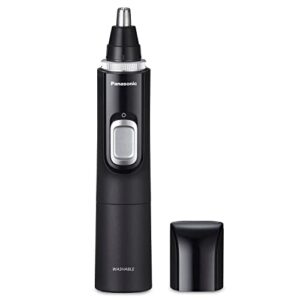
The Panasonic ER‑GN70‑K is one of the most well‑rounded nose hair trimmers you’ll find at this price point. Its 9,400 CPM motor cuts through even thick hairs without tugging, and the built‑in micro‑vacuum captures clippings as you go — no more hairs falling into the sink.
It’s fully washable and IPX7-rated, so shower use is safe.
Battery life runs about 40 minutes on two AAA cells, which is plenty for regular grooming sessions.
| Best For | Anyone who wants a quick, mess-free grooming routine — especially guys tired of hairs ending up all over the sink. |
|---|---|
| Power Source | 2x AAA battery |
| Wet/Dry Use | Yes |
| Blade Material | Hypo-allergenic steel |
| Weight | 2.24 oz |
| Washable Design | Yes |
| Travel Friendly | Yes, compact cordless |
| Additional Features |
|
- The 9,400 CPM motor cuts through thick hair fast and smooth, no tugging or nicking
- Built-in vacuum sucks up clippings as you trim — seriously cuts down on cleanup
- Fully washable and shower-safe, so maintenance takes about five seconds
- No travel case included, so you’ll need to figure out your own solution for the gym bag
- Battery compartment can be a little finicky — sometimes needs a wiggle to make good contact
- It’s on the louder side, which might catch you off guard the first time
2. Professional Waterproof Ear Nose Hair Trimmer
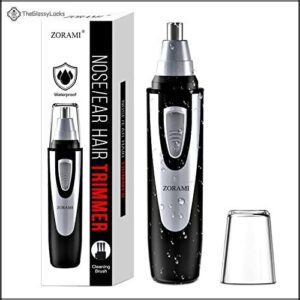
If the Panasonic felt like a premium pick, this one brings solid performance at a friendlier price.
The dual-edge blade system cuts nose and ear hair cleanly, with minimal pulling. It earns an IPX7 waterproof rating, so rinsing it under the tap is completely safe. The motor runs quietly and accommodates most hair types well.
Powered by a single AA battery, it’s simple to use — just note that the battery is sold separately.
| Best For | Anyone who wants a simple, no-fuss nose and ear trimmer that won’t break the bank — especially travelers or people who groom in the shower. |
|---|---|
| Power Source | 1x AA battery |
| Wet/Dry Use | Yes (IPX7) |
| Blade Material | Stainless steel |
| Weight | 2.8 oz |
| Washable Design | Yes |
| Travel Friendly | Yes, compact quiet |
| Additional Features |
|
- Dual-edge blades cut cleanly with little to no pulling
- IPX7 waterproof rating makes it fully safe to rinse or use in the shower
- Whisper-quiet motor keeps things discreet, whether you’re at home or traveling
- AA battery isn’t included, so you’ll need to grab one separately
- May struggle with very thick or coarse hair
- The dust cover needs to be properly sealed — some users have had issues with dust getting in over time
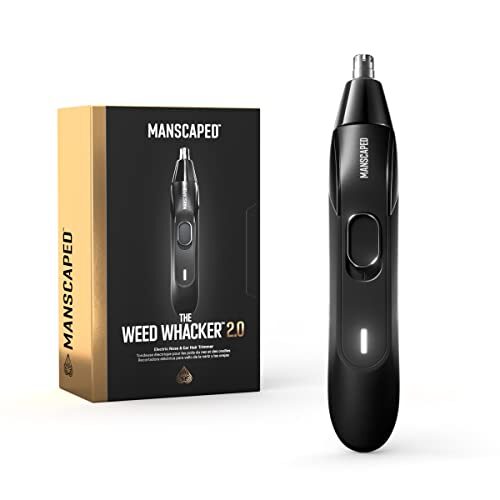
3. Manscaped Weed Whacker 2.0 Trimmer
 View On Amazon
Step up in price and features, and the Manscaped Weed Whacker 2.0 earns its reputation fast. The 360° dual-blade rotary system spins at 7,000 RPM, catching nose and ear hair quickly without pulling.
SkinSafe technology keeps nicks to a minimum, even in awkward angles. It’s fully wet-and-dry capable, charges via USB-C, and delivers around 45 minutes of runtime. The rubberized grip makes control easy in the shower.
One trade-off: the 8-hour charge time requires some planning ahead.
| Best For | Anyone who wants a reliable, no-fuss nose and ear trimmer that works just as well in the shower as out of it. |
|---|---|
| Power Source | USB-C rechargeable |
| Wet/Dry Use | Yes |
| Blade Material | Stainless steel |
| Weight | 9.91 oz |
| Washable Design | Yes |
| Travel Friendly | Yes, toiletry-kit size |
| Additional Features |
|
- The 7,000 RPM dual-blade system cuts fast and clean — no tugging or irritation
- Wet-and-dry capable, so you can use it in the shower and rinse it clean in seconds
- USB-C charging and a compact size make it easy to toss in a travel bag
- The 8-hour charge time is a real commitment — not great if you forget to plug it in the night before
- No battery level indicator, so you won’t know how much juice you have left until it dies
- The power button shape is a bit awkward and can take some getting used to
4. Philips Norelco 5000 Nose Ear Eyebrow Trimmer
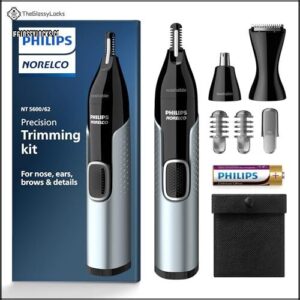
If the Weed Whacker 2.0 felt like a premium upgrade, the Philips Norelco 5000 takes a different approach — broader versatility without the USB-C price tag. Its dual-sided stainless steel blades trim nose, ear, and eyebrow hair in one compact unit, and the self-sharpening design means you’re not replacing heads every few months.
It works with both wet and dry use comfortably. Rinse it under the tap, dry it off, and you’re done. The AA battery keeps things simple.
| Best For | Anyone who wants a no-fuss, all-in-one groomer for nose, ear, and eyebrow hair without spending a lot. |
|---|---|
| Power Source | 1x AA battery |
| Wet/Dry Use | Yes (rinse) |
| Blade Material | Stainless steel |
| Weight | 6.75 oz |
| Washable Design | Yes |
| Travel Friendly | Yes, with travel pouch |
| Additional Features |
|
- Handles nose, ears, and eyebrows in one tool — no swapping devices
- Fully washable, so cleanup is just a quick rinse under the tap
- Compact and lightweight with a travel pouch, easy to toss in a bag
- Runs on AA batteries with no rechargeable option, so you’ll need to keep spares around
- Small attachments are easy to misplace if you’re not careful about storing them
- May need a few extra passes on finer or more stubborn hairs
5. Wahl Micro Groomsman Battery Trimmer
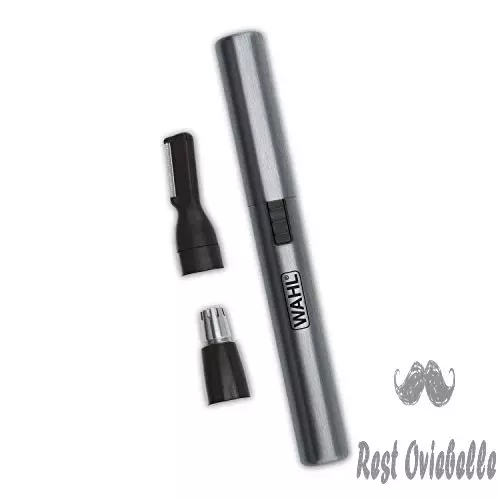
The Wahl Micro Groomsman is a no-fuss pick if you want something lightweight and travel-ready. It runs on a single AAA battery, weighs just 1.8 oz, and comes with interchangeable rotary and detail heads for nose, ear, and eyebrow work. The anodized aluminum housing feels solid for the price.
That said, it’s a dry-trim-only tool. A few users report durability issues after a few months, and zinc batteries tend to outperform alkaline ones here — worth knowing before your first swap.
| Best For | Travelers and light users who need a simple, compact groomer for quick touch-ups on the go. |
|---|---|
| Power Source | 1x AAA battery |
| Wet/Dry Use | Not specified |
| Blade Material | Stainless steel |
| Weight | 1.8 oz |
| Washable Design | Not specified |
| Travel Friendly | Yes, with protective cap |
| Additional Features |
|
- Comes with multiple interchangeable heads so you can handle nose, ear, and eyebrow work with one tool
- Tiny and light at 1.8 oz — easy to toss in a bag without thinking twice
- Anodized aluminum housing feels more solid than you’d expect at this price point
- Some users see it quit after just a few months of regular use
- Alkaline batteries can be hit or miss — zinc cells tend to work better, which is a bit annoying
- Louder and more plastic-feeling than pricier trimmers on the market
6. Manscaped Shears 3.0 Nail Grooming Kit
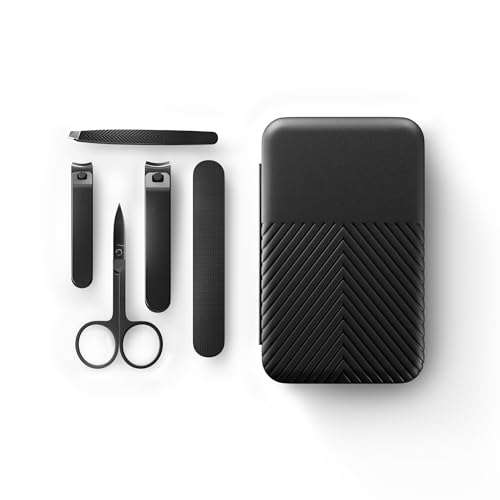
The Manscaped Shears 3.0 isn’t a trimmer — it’s a full nail grooming kit, and it earns its spot here because clean nails are part of any solid grooming routine. You get five stainless steel tools: fingernail and toenail clippers, a medium-grit nail file, slant-tip tweezers, and cuticle scissors, all tucked into a water-resistant travel case with a magnetic closure.
Everything feels solid, precise, and well-weighted in hand.
| Best For | Anyone who wants a polished, all-in-one nail kit that travels well and feels premium without hauling a bunch of separate tools around. |
|---|---|
| Power Source | N/A (manual tools) |
| Wet/Dry Use | Water-resistant case |
| Blade Material | Stainless steel |
| Weight | 12.33 oz |
| Washable Design | Water-resistant only |
| Travel Friendly | Yes, hard travel case |
| Additional Features |
|
- Five solid, well-made tools in one compact case — fingernail and toenail clippers, a nail file, tweezers, and cuticle scissors
- The magnetic travel case is sleek and sturdy, easy to toss in a gym bag or carry-on
- Everything has an ergonomic, comfortable feel — no awkward gripping or hand fatigue
- It costs more than your average drugstore nail kit, so budget shoppers might hesitate
- The clippers can slip on wet fingers, so dry hands work best
- The case is water-resistant but not waterproof — don’t drop it in a sink and call it fine
7. Royal Stainless Manual Nose Hair Trimmer
![ROYAL [Made in Korea] Nose B089GGFBWF](https://theglossylocks.com/wp-content/uploads/2025/12/royal-made-in-korea-nose-b089ggfbwf-300x300.jpg)
If you prefer no batteries, no charging, and no fuss, the Royal Stainless Manual Nose Hair Trimmer makes a compelling case for going old-school.
Its twelve dual-edged rotary blades do the cutting with a simple squeeze-and-release motion, powered by a double-spring return system.
The water-resistant metal housing means rinsing it clean takes seconds.
At just 2.4 oz, it slips into any travel bag easily — though repeated squeezing can feel slower than electric alternatives.
| Best For | Anyone who wants a no-fuss, battery-free grooming tool they can toss in a travel bag and use anywhere. |
|---|---|
| Power Source | Manual (no battery) |
| Wet/Dry Use | Yes (water-resistant) |
| Blade Material | Stainless steel |
| Weight | 2.4 oz |
| Washable Design | Yes |
| Travel Friendly | Yes, no batteries needed |
| Additional Features |
|
- No batteries or charging ever — just pick it up and go
- Water-resistant metal build makes cleanup dead simple, just rinse it off
- Lightweight and compact, easy to pack for trips
- Takes more squeezes than an electric trimmer, so it’s a bit slower
- The spring mechanism can wear out over time with regular use
- Some users still experience occasional hair pulling despite the blade design
8. Panasonic Dual Edge Nose Ear Trimmer
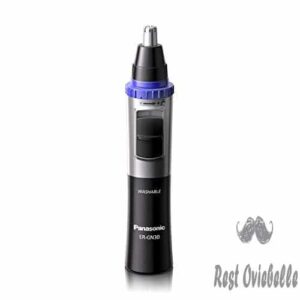
The Panasonic Dual Edge Nose Ear Trimmer keeps things refreshingly simple. Its curved dual-edge blades follow the natural shape of your nostril, trimming hairs from both the top and sides in one pass.
That means fewer awkward angles and less time hovering in front of the mirror. Powered by a single AA battery with up to 90 minutes of runtime, it’s a reliable daily driver.
The hypoallergenic stainless-steel blades also make it a smart pick if you have sensitive skin.
| Best For | Anyone who wants a no-fuss, travel-friendly nose and ear trimmer that works in the shower and won’t irritate sensitive skin. |
|---|---|
| Power Source | 1x AA battery |
| Wet/Dry Use | Yes (waterproof) |
| Blade Material | Hypoallergenic steel |
| Weight | 2.2 oz |
| Washable Design | Yes |
| Travel Friendly | Yes, with protective cap |
| Additional Features |
|
- The curved dual-edge blades hug your nostril shape, so you get a clean trim without poking or pulling.
- Fully waterproof — use it in the shower or rinse it clean in seconds with the Smart Vortex system.
- Lightweight and compact, so it slips easily into a travel bag or gym kit.
- Runs on a AA battery that isn’t rechargeable, so you’ll need to keep spares on hand.
- Some users have reported battery terminal corrosion over time, which can cause spotty power.
- It’s built for nose and ear hair only — don’t expect it to handle heavier grooming jobs.
9. Panasonic Vacuum Nose Ear Trimmer
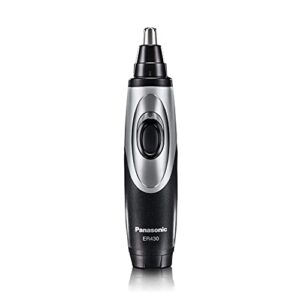
If mess is your biggest enemy, this trimmer is your cleanup crew.
The Panasonic Vacuum Nose Ear Trimmer pairs dual-edge hypoallergenic blades with a built micro vacuum that captures trimmed hairs before they hit your sink.
It works wet or dry, so shower trimming is fair game. It runs on a single AA battery for up to 90 minutes — plenty for daily use.
The removable chamber is easy to rinse, keeping maintenance quick and painless.
| Best For | Anyone who hates the post-trim mess — especially guys who want a clean, low-effort grooming routine at home or while traveling. |
|---|---|
| Power Source | 1x AA battery |
| Wet/Dry Use | Yes |
| Blade Material | Hypo-allergenic steel |
| Weight | 3.81 oz |
| Washable Design | Yes |
| Travel Friendly | Yes, with travel pouch |
| Additional Features |
|
- The built-in vacuum actually catches most hairs before they scatter, so your sink stays clean
- Works wet or dry, which means you can knock it out in the shower and move on
- Compact and light enough to toss in any toiletry bag without a second thought
- AA battery isn’t included, and you’ll need to swap it out eventually
- Thick or coarse hair can sneak past the vacuum, so it’s not completely mess-free for everyone
- A few users have noticed the motor losing steam or needing a battery re-seat to keep it running right
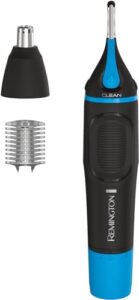
10. Remington Dual Edge Nose Ear Trimmer
Not every trimmer needs fancy tech to get the job done.
The Remington Dual Edge keeps things simple — dual-angled blades, a rotary nose head, and an anti-microbial silver housing that fights bacteria buildup. It runs on one AA battery and manages both wet and dry trimming with ease.
The CLEANBoost button opens the blades for quick rinsing, so cleanup takes seconds. Compact and travel-ready, it’s a reliable everyday option without the premium price tag.
| Best For | Anyone who wants a no-fuss, affordable trimmer for nose, ear, and eyebrow grooming — especially travelers or guys who just need something simple that works. |
|---|---|
| Power Source | 1x AA battery |
| Wet/Dry Use | Yes (waterproof) |
| Blade Material | Comfort Trim blades |
| Weight | 4.64 oz |
| Washable Design | Yes |
| Travel Friendly | Yes, compact cordless |
| Additional Features |
|
- Wet/dry design means you can use it in the shower or at the sink — no hassle either way
- The CLEANBoost button makes rinsing the blades quick and easy, so maintenance is minimal
- Compact and battery-powered, so it’s great to toss in a bag for travel
- Plastic build feels a bit cheap, especially compared to pricier trimmers in the same space
- Runs on a AA battery with no rechargeable option, so you’ll need to keep spares handy
- Doesn’t always cut as close as you’d like, and some users have had issues with the eyebrow comb not being included
Features That Matter Most
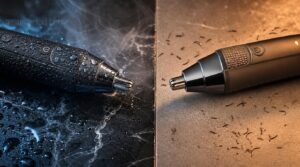
Not all trimmers are built the same, and a few key features separate the ones worth your money from the ones that’ll frustrate you within a week. Whether you’re trimming wet or dry, these specs directly affect how comfortable, convenient, and mess-free the experience actually is. Here’s what to look for before you buy.
Rotary Versus Linear Heads
The head design on your wet/dry trimmer shapes everything.
Rotary heads spin in a circular arc, giving you faster coverage inside the nasal cavity — great for curly or fine hairs.
Linear heads move back and forth like tiny scissors, delivering cleaner cuts on straight hair.
For tight spaces, rotary wins. For precision along edges, linear takes the lead.
Built-in Vacuum Systems
Head design gets the precision right — but a built-in vacuum system manages the mess. Trimmers like the Panasonic ER‑GN70‑K capture 100% of trimmed hairs directly into an internal chamber, so nothing falls into the sink.
Under regular use, you’ll only need to empty it roughly every four months. Clean trim, clean counter — that’s a solid trade-off.
Battery Runtime
A vacuum captures the mess — but a dead battery stops the whole operation. Runtime matters more than most people expect.
Aim for at least 30 minutes per charge; USB‑C rechargeable models like the Manscaped Weed Whacker 2.0 offer around 45 minutes per charge — enough for a full grooming session without cutting out mid‑trim.
Rechargeable Versus Replaceable
Runtime gets you started — but the battery type determines how long the trimmer stays in your life.
Rechargeable models handle wet/dry sessions without buying AA batteries. Replaceable battery trimmers like the Panasonic ER‑GN30‑H let you swap cells instantly — no waiting for a charge. Eco-conscious? Rechargeable wins on waste. Always traveling? Replaceable wins on convenience. Both last years; pick what fits your routine.
Travel-friendly Design
Packing a trimmer shouldn’t feel like a puzzle. A compact lightweight design — slim case, under 120 grams — slips into any toiletry kit without drama.
The detachable battery module swaps in under 60 seconds, and USB-C charging works worldwide with a universal adapter.
Add a sealed all-weather cap and cleaning dock, and your portable nose hair trimmer is fully travel-ready.
Choosing Your Best Routine
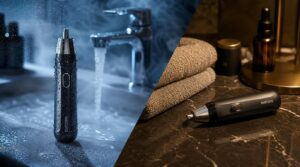
Finding a routine that actually sticks comes down to knowing your own habits. Whether you’re a quick daily touch-up person or a once-a-week trimmer, your schedule shapes everything — from which method you pick to how you maintain your trimmer. Here’s what to keep in mind when building a routine that works for you.
Daily Grooming Needs
Most people don’t need a rigid system — just a few reliable habits. A quick morning prep check in the mirror takes less than a minute.
Run your trimmer over visible hairs before they become obvious. Keep your wet/dry nose hair trimmer handy near your sink, and moisturize after washing your face to keep your skin comfortable.
Weekly Trimming Schedule
Pick the same day each week — Sunday evening, Monday morning, whatever sticks — and make it non-negotiable.
- A 60–90 second check per nostril keeps overgrowth at bay
- Dry trimming first gives you the cleanest, most controlled pass
- Note your trim date to track growth patterns over time
- Gentle passes prevent irritation and support long-term blade durability
Wet Trim Preference
If your grooming happens mostly in the shower, wet trim preference makes a lot of sense. Moisture softens hairs and helps blades glide cleanly, reducing tugging on sensitive skin.
A waterproof wet/dry grooming device rated IPX7 manages this effortlessly. Rinse the blade head right after — quick cleanup, less bacteria buildup, and your trimmer stays fresher longer.
Dry Trim Preference
Some people just prefer the clean, controlled feel of a dry trim — and honestly, it’s hard to argue with results. Dry trimming gives you tactile feedback that moisture simply washes away, helping you avoid over-cutting fine hairs.
- Consistent length across every nostril hair
- Better blade longevity from reduced moisture exposure
- Precise removal without slippage or surprise nicks
Maintenance Commitment
Wet or dry, your trimmer only stays sharp if you treat it right. Rinse blade heads after every wet use, brush out trapped hairs weekly, and dry thoroughly before storing. Replace blades every 6–12 months and inspect waterproof seals annually.
Empty the vacuum chamber monthly to keep suction strong. A little consistency here means reliable, long-term performance every time.
Frequently Asked Questions (FAQs)
How often should trimmer blades be replaced?
Replace trimmer blades every 6 to 12 months for light use, or every 3 to 6 months with daily heavy trimming. Pulling or uneven cuts mean it’s time.
Are budget trimmers as effective as premium models?
Budget trimmers handle light maintenance just fine. But if you have thick or dense nose hair, premium motor power and sharper blades make a noticeable difference — fewer passes, less tugging.
Do nose hair trimmers work on eyebrows too?
Yes, but with limits. A nose hair trimmer can snag stray brow hairs quickly, but the wide head makes precise shaping nearly impossible. For clean brows, a dedicated eyebrow trimmer gives you far better control.
What warranty coverage do leading trimmer brands offer?
Most leading brands like Philips Norelco, Wahl, and Panasonic offer 1–2 year limited warranties covering motor and blade defects, excluding normal wear. Batteries have separate terms. Extended plans add up to three more years.
Conclusion
Like choosing the right tool for a job, picking between nose hair trimmer wet vs. dry use comes down to what your skin and hair actually need—not habit.
Dry trimming gives you control and speed. Wet trimming gives you comfort and smoother results.
Neither is wrong; both can work well with the right technique.
Once you know which method fits your routine, every trim takes less effort and leaves you looking clean without the guesswork.