This site is supported by our readers. We may earn a commission, at no cost to you, if you purchase through links. This content is for general informational and educational purposes only and is not a substitute for professional medical, dermatological, or nutritional advice.
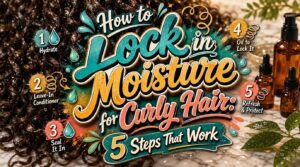
Curly hair loses moisture faster than any other hair type—its spiral shape makes it nearly impossible for scalp oils to travel down the strand. That’s not a flaw in your hair; it’s just physics. Without the right routine, those coils stay thirsty no matter how much conditioner you throw at them.
The real fix isn’t more product—it’s the right sequence. Washing habits, ingredient choices, and how you layer moisture all determine whether your curls stay defined and soft or crunch into dryness by day two. Five specific steps change that pattern for good.
Table Of Contents
Key Takeaways
- Washing your curls only 2–3 times a week — with a sulfate-free shampoo — keeps your natural oils intact and sets the foundation for lasting moisture.
- The LOC method (liquid, oil, cream) applied to damp hair, locks in hydration in layers, so your curls stay soft and defined well past wash day.
- A weekly deep conditioning mask with shea butter and avocado oil repairs dryness from the inside out — leave it on for 15–30 minutes under a shower cap for real results.
- Overnight protection matters: sleeping on satin or silk, and using the pineapple method stops friction and crush damage that quietly wrecks your curls while you sleep.
Start With Water-Rich Cleansing

Cleansing is where moisture either wins or loses — and most people are already starting on the wrong foot. The way you wash your curls sets the tone for everything that comes after. Here’s what to do differently from the start.
Before you even turn on the tap, following a curly hair care routine that starts with proper pre-wash prep can mean the difference between hydrated, defined curls and a tangled, stripped mess.
Wash Only Two to Three Times
Washing your curls two to three times per week is one of the simplest ways to protect your natural oils. Every wash strips sebum from your scalp — and that sebum is free moisture your curls desperately need.
- Scalp oil balance stays more stable with fewer wash days
- Longer gaps mean conditioners and leave-ins keep working longer
- Moisture retention improves when natural oils coat the hair shaft
- Less frequent washing reduces dryness, brittleness, and detangle frequency
For ideal curl health, many experts recommend washing every three to four days.
Choose Sulfate-free Curl Shampoo
Once you’ve cut back on wash days, the next move is picking the right shampoo.
Sulfate-free curl shampoo is non-negotiable. Traditional formulas strip your curls bare — sulfate-free options use gentle surfactants like decyl glucoside and sodium cocoyl isethionate to clean without robbing your hair of moisture.
- Preserves natural oils between washes
- Reduces scalp irritation and redness
- Promotes moisture retention from root to end
Massage The Scalp Gently
Your shampoo is already doing the heavy lifting — now let your fingers do the rest.
Fingertip circular pressure applied directly to the scalp stimulates oil production and promotes scalp moisture regulation.
Work from the hairline toward the neck, covering the crown and sides.
Keep it gentle, smooth, and steady for a few minutes — no nails, no deep pressing.
Rinse With Lukewarm Water
After all that gentle scalp work, the rinse step matters more than most people think.
Lukewarm water — around 37°C — is your sweet spot. Hot water lifts the cuticle too aggressively, stripping the natural oils your curls desperately need. Too cold, and residue lingers.
Here’s what lukewarm does for your curls:
- Loosens product buildup without harsh stripping
- Keeps your scalp comfort intact during rinsing
- Maintains moisture lock by not over-opening the cuticle
- Sets the stage for better hair hydration and curl definition
Co-wash Between Shampoo Days
Between shampoo days, co-washing keeps curls fresh without stripping your natural oils. Use a cleansing conditioner — not your regular moisturizing one — to gently lift sweat and residue while keeping moisture lock intact.
If you follow up with conditioner and a heat protectant before diffusing, you can actually cut your curl drying time by up to 15% while locking in that freshness even longer.
| Co-wash Factor | What to Do |
|---|---|
| Hair type | Fine hair: once weekly |
| Frequency | 2–3 times per week |
| Product choice | Sulfate-free cleansing conditioner |
| Rinse technique | Rinse thoroughly to avoid buildup |
Condition Curls for Slip

Conditioning is where curly hair gets its slip — that soft, glide-through feel that makes detangling actually bearable. Your conditioner does more than soften; it smooths the cuticle and preps your curls to hold moisture longer. Here’s how to get the most out of every drop.
Use Curl-specific Conditioner
Not all conditioners are built the same — and your curls know the difference.
Curl-specific conditioners pack emollients like shea butter and coconut oil to seal moisture directly into the shaft. They deliver hydration that lasts up to 24 hours, support your natural curl pattern without collapsing coils, and include soothing botanicals that keep your scalp comfortable wash after wash.
Focus on Mid-lengths and Ends
From roots to ends, product placement makes or breaks your hydration game.
Keep conditioner off your scalp — roots get oily fast, and buildup blocks healthy growth.
Start at your mid-lengths, where curls lose definition quickest, then pile on extra at the ends.
Ends are the oldest, driest part of your strand, and split end prevention starts here.
Detangle With Fingers
Your fingers are the best detangling tool you own — no bristles, no breakage risk.
- Divide hair into sections before you start
- Work bottom-up, ends first, then toward roots
- Feel for knots before pulling — loosen gradually
- Re-wet or add conditioner if slip fades
- Finish each section with a final check pass
Let Conditioner Sit Briefly
Give the conditioner 2 to 5 minutes to do its job. That short dwell time lets the formula coat each strand, smooth the cuticle, and build real slip — the kind that makes moisture preservation possible.
Fine hair hits its sweet spot closer to 2 minutes. Thick or coarse curls can push toward 5.
Rinse Lightly for Softness
Don’t rinse like you’re in a rush. Use gentle water flow — lukewarm, never hot — and let your fingers guide the water through your strands.
This finger rinsing method removes excess product without stripping the slip you just built. Stop when water runs clearer, not squeaky clean.
That small amount of residue left behind? That’s your curl moisture retention working.
Seal Moisture With LOC Method
The LOC method is one of the best ways to seal moisture into curly hair — and it works because the layers build on each other. You apply each product in a specific order so your curls hold onto hydration longer. Here’s exactly how to do it.
Apply Products on Damp Hair
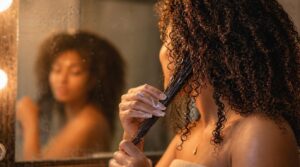
Timing matters more than most people think. Apply products to damp hair — not soaking wet, not fully dry. That in-between state is your sweet spot.
Damp strands stay flexible, so products spread evenly and moisture actually absorbs into the shaft before everything dries down.
Work in sections, use small amounts, and let your hair do the rest.
Liquid: Water or Leave-in
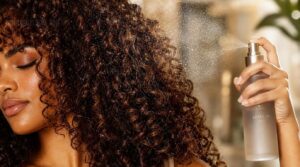
The L in LOC stands for liquid — and it’s where hydration actually starts. Use a water mist or leave-in conditioner here.
A fine spray coats strands evenly, helping curls clump without soaking them. Water-based leave-ins go on just as lightly but add slip and softness. Either way, apply to damp hair so moisture absorbs before your next layer seals it in.
Oil: Seal With Lightweight Oil

Once the liquid layer is on, seal it in with oil — this is where moisture actually stays put.
- Work in 4–8 sections for even coverage
- Use only a pea-to-dime-sized amount total
- Focus on mid-lengths and ends, not roots
A lightweight oil spreads thin, smooths the cuticle, and creates a protective barrier without weighing curls down.
Cream: Add Curl Butter
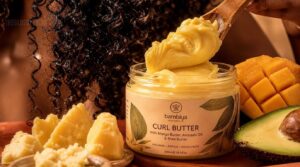
Now comes the cream — the final layer that holds everything together.
Curl butter goes on last, locking the liquid and oil underneath it. Apply a small amount to damp hair in sections, scrunching it in from ends upward. The blend of shea butter, mango seed butter, and avocado oil coats each strand, reducing frizz and giving curls soft, lasting definition.
Scrunch for Curl Definition

Now seal everything in. Cup small sections from ends to scalp, squeezing gently upward — that’s scrunching.
It groups your strands into defined curl clumps instead of stringy pieces. Do it on damp hair right after your curl butter, so the LOC layers lock in together as curls dry.
No heat needed, and frizz doesn’t stand a chance.
Deep Treat Dry Curls Weekly

Your curls need more than a quick rinse to bounce back from dryness — they need a real reset. Once a week, a deep treatment can rebuild moisture from the inside out. Here’s exactly what to do to make it count.
Use an Intense Hydrating Mask
Once a week, your curls need more than a rinse-and-go.
An intense hydrating mask goes deeper than daily conditioner, flooding dry strands with humectants like glycerin and aloe vera that actively pull moisture into the hair shaft. The Moisture Lock Ultra-Nourishing Intense Hydrating Mask is built for this — its creamy, emollient texture spreads easily on damp hair, delivering ceramide-like barrier support and leaving curls noticeably softer after rinsing.
Look for Shea Butter
Not all mask ingredients are equal — shea butter stands apart. It’s packed with stearic and oleic acids, which make up nearly 85–90% of its fatty acid content, plus cetyl esters that condition and lock in moisture at the strand level.
That combo seals your cuticle, reduces water evaporation, and keeps curls hydrated long after you rinse.
Add Avocado Oil Benefits
Avocado oil is the ingredient your mask needs to actually deliver. Rich in vitamin E and monounsaturated fats, it coats each strand with a lightweight emollient layer that slows moisture loss and improves slip.
It works with shea butter — not against it — sealing the hydration deeper into your curl pattern for softer, less frizzy results that last.
Cover With a Shower Cap
Once your mask is loaded with shea butter and avocado oil, trap that moisture in with a shower cap. A snug fit is everything — it creates a condensation-rich barrier that keeps warmth close to your strands, helping the treatment absorb deeper.
- Full coverage locks product against roots through ends
- Trapped heat makes curls more pliable
- Reusable caps are easy to rinse and keep clean
Leave for 15–30 Minutes
Thirty minutes changes everything. Deep Conditioning Time is what separates a quick rinse from real repair. Keep your shower cap on and let the Ultra‑Nourishing Intense Hydrating Mask do its job — no peeking.
| Timing | What Happens | Best For |
|---|---|---|
| 15 minutes | Surface hydration | Normal porosity |
| 20–25 minutes | Mid-shaft absorption | Dry, coarse curls |
| 30 minutes | Deep moisture lock | High-porosity curls |
Preserve Moisture Between Washes

Wash day is just one piece of the puzzle — what you do in between is where the real magic happens. Your curls need daily attention to stay hydrated, defined, and frizz-free. Here’s how to keep that moisture sealed in from one wash to the next.
Refresh With Water Spray
A quick curl refresher spray can save your style between wash days. Fill a mist bottle with water, a light oil, and a touch of leave‑in.
Hold it farther away and use short bursts — fine mist only, no soaking.
Scrunch gently afterward to reset clumps. Your curls bounce back faster, and moisture locks in without the wait.
Sleep on Satin or Silk
Your pillowcase is quietly wrecking your curls. Cotton grabs hair as you shift at night, pulling moisture out and flattening ringlets by morning.
Your cotton pillowcase is quietly draining your curls of moisture every single night
Switch to a silk or satin pillowcase and that changes fast. Less friction means curls hold their shape, stay hydrated, and need less detangling.
Wash your pillowcase regularly to keep the slip working.
Try The Pineapple Method
The satin pillowcase keeps moisture in — the pineapple method keeps your curls intact.
Before bed, gather your hair loosely at the crown and secure it with a soft scrunchie or satin tie. That lifted shape stops curls from getting crushed overnight. In the morning, release carefully, scrunch lightly, and you’re ready.
Avoid Daily Heat Styling
Your curls need curl recovery days — breaks from heat that let moisture rebuild naturally.
- Swap straighteners for protective styling like buns or braids
- Try air-drying to skip heat entirely
- Apply leave-in conditioner and an oil sealer on no-heat days
- Watch for heat damage signs: dullness, brittleness, and frizz
Limit heat tools to two or three times a week max.
Use Heat Protectant When Diffusing
Diffusing without a heat protectant is like driving without a seatbelt — it works until it doesn’t.
- Apply a heat styling spray to damp hair before diffusing so the coating spreads evenly
- Scalp protection matters too — cover roots and crown
- Diffuser temperature settings on low or medium reduce damage while the protectant controls frizz reduction
| Step | Action | Benefit |
|---|---|---|
| 1 | Spray on damp hair | Even damp hair coating |
| 2 | Set diffuser to low heat | Provides moisture lock |
| 3 | Cover roots and ends | Full scalp protection |
Deep moisture lock starts before the heat even touches your strands.
Frequently Asked Questions (FAQs)
Can diet affect moisture levels in curly hair?
Yes — what you eat shows up in your hair. Protein, omega-3s, and key micronutrients like zinc and vitamin D directly support scalp health, strand strength, and how well your curls hold moisture.
Does hard water dry out curly hair faster?
Hard water leaves mineral buildup on strands, blocking moisture absorption and reducing curl elasticity. It dries curls faster — yes.
Packing a chelating shampoo can make a real difference — find it on our list of curl-saving travel essentials for healthy, hydrated hair.
How does humidity affect curl hydration differently?
Funny enough, the same air making your curls look lush can turn against you fast. Humidity-induced swelling opens cuticles, causing curl definition loss and frizz — especially in high-porosity hair.
Are protein treatments necessary for moisturizing curly hair?
Protein treatments aren’t required for moisture. Moisture-protein balance matters most — too much protein causes stiffness. Focus on deep conditioning and the LOC method first, adding protein only when curls show breakage.
Conclusion
The ball’s in your court now.
Every step in this routine works together—skip one, and your curls feel the difference by the next morning. Cleanse gently, condition deeply, seal with the LOC method, treat weekly, and protect overnight.
That’s how you lock in moisture for curly hair without fighting your strands every single day. Stay consistent for two weeks, and your coils will tell you everything you need to know.