This site is supported by our readers. We may earn a commission, at no cost to you, if you purchase through links. This content is for general informational and educational purposes only and is not a substitute for professional medical, dermatological, or nutritional advice.
Porous hair drinks up every drop of water you give it—then loses it almost as fast.
That’s not a styling problem; it’s a structural one.
When your cuticle layers sit open and uneven, moisture slips right back out before it can do any good, leaving your strands dry, frizzy, and prone to breakage no matter how many products you layer on.
Deep conditioning for porous hair isn’t about slathering on any rich conditioner and hoping for the best.
It’s about choosing the right ingredients, applying them correctly, and sealing everything in before your hair undoes your work.
Table Of Contents
- Key Takeaways
- Check Your Hair Porosity First
- Choose Moisture-Rich Ingredients
- Balance Protein and Moisture
- Deep Condition Porous Hair Correctly
- Top 10 Deep Conditioners for Porous Hair
- 1. The Mane Choice Ancient Egyptian Hair Mask
- 2. Obia Naturals Babassu Deep Conditioner
- 3. Mielle Organics Babassu Mint Deep Conditioner
- 4. Camille Rose Algae Renew Conditioner
- 5. I AM Hydration Elation Conditioner
- 6. Maui Moisture Shea Butter Hair Mask
- 7. Natural Phytotherapy Hair Growth Conditioner
- 8. SheaMoisture Intensive Hydration Hair Masque
- 9. Arvazallia Hydrating Argan Hair Mask
- 10. High Porosity Shea Butter Leave In Conditioner
- Build a Weekly Conditioning Routine
- Frequently Asked Questions (FAQs)
- Conclusion
Key Takeaways
- Porous hair loses moisture as fast as it absorbs it, so sealing ingredients like shea butter, argan oil, and babassu oil aren’t optional—they’re the whole point.
- Balancing protein and moisture is the real skill: too much protein leaves hair stiff and brittle, while too much moisture causes weak, limp strands that snap under light tension.
- Technique matters as much as product—apply mid‑shaft to ends, cap it for 15–30 minutes, and always rinse with cool water to close the cuticle and lock everything in.
- Consistency wins: deep condition once a week for maintenance, twice a week if your hair is chemically damaged, and always seal with a leave‑in plus a light oil right after rinsing.
If you’re not sure where your hair falls on that spectrum, this guide to choosing products for medium porosity hair can help you zero in on the right balance before you start swapping out your routine.
Check Your Hair Porosity First
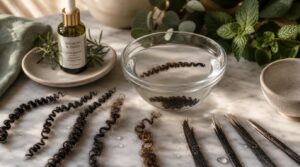
Before you grab any conditioner, it helps to know what you’re actually working with. High porosity hair has some tell-tale signs, and once you spot them, the right treatment becomes a lot clearer. Here’s what to look for.
If you’re unsure where to start, these high porosity hair signs and characteristics can help you quickly identify your hair type before choosing a treatment.
Fast Water Absorption
If you drop a strand of high porosity hair into water, it sinks fast — that’s capillary uptake speed at work. Lifted cuticle scales act like open doors, letting water rush into the shaft almost instantly.
This rapid hydrophilic surface interaction means your hair soaks up deep conditioner quickly, which sounds great, but there’s a catch coming next.
Quick Moisture Loss
Here’s the frustrating flip side: that fast absorption works against you just as quickly. High porosity hair doesn’t hold onto moisture — it releases it almost as fast as it takes it in.
Open cuticles create escape routes, so your deep conditioner’s benefits evaporate within hours, especially in low humidity or warm, moving air. Similar to skin, high porosity hair suffers from excessive trans-epidermal water loss.
Frizz and Rough Cuticles
Moisture loss and frizz go hand in hand. When your cuticle scales lift, strands can’t reflect light evenly, leaving hair looking dull and rough.
Humidity sneaks into those open gaps, swelling the fiber unevenly — that’s what causes the puffed-up frizz.
Friction between rough cuticles makes things worse, snagging strands together.
A good deep conditioner helps with cuticle sealing and frizz control.
Breakage and Split Ends
Rough cuticles aren’t just a frizz problem — they’re a breakage problem. Lifted cuticle scales leave your strands structurally weak, snapping under everyday tension.
- Mechanical friction from towels or rough pillowcases tears already-fragile ends
- Heat damage progressively dries and frays tips over time
- Chemical weakening makes strands more vulnerable along the entire shaft
- Protective styling tension concentrates stress at the same points repeatedly
Regular trims and a good deep conditioner are your first line of defense.
Color or Bleach Damage
If you’ve ever bleached or colored your hair, you already know the aftermath — dullness, dryness, and strands that feel almost hollow. Bleaching triggers bleach-induced porosity by forcing cuticle scales open, which disrupts the hair’s internal structure through oxidation.
| Damage Type | What Happens | Deep Conditioner Fix |
|---|---|---|
| Chemical penetration effects | Dye alters internal hair chemistry | Hydrolyzed proteins rebuild structure |
| Oxidation damage | Protein bonds weaken and break | Protein-rich masks restore strength |
| Moisture loss | Cuticles can’t seal properly | Humectants attract and hold water |
| Bleach damage repair | Cortex develops internal holes | Penetrating oils fill and seal gaps |
| Color fade | Cuticle roughness scatters light | Color fade prevention smoothers restore shine |
High porosity hair from bleaching needs targeted cuticle restoration — specifically hydrolyzed proteins and oxidation mitigation ingredients — to rebuild what chemicals stripped away.
Choose Moisture-Rich Ingredients
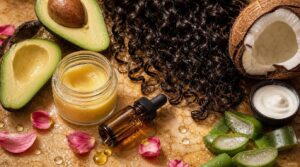
Not all deep conditioners are created equal, and for porous hair, the ingredients list is everything. Your open cuticles will absorb whatever you put on them fast, so what you choose actually matters. Here are the moisture-rich ingredients worth looking for.
Glycerin and Aloe Vera
Glycerin and aloe vera are a humectant blend that works like a magnet for water — pulling moisture from the air directly into each strand. For high porosity hair, that matters enormously.
- Glycerin reduces moisture loss by keeping the hair shaft hydrated
- Aloe vera delivers immediate surface hydration with a lightweight, soothing feel
- Together, they create a moisture retention boost without heaviness
- This aloe glycerin formula also offers a gentle scalp soothing effect
Look for both in your deep conditioner for real moisture and nourishment.
Honey and Sorbitol
Honey and sorbitol are two humectants that take moisture retention seriously.
Honey binds water molecules to the strand, slows evaporation, and lays down a thin coating that shields the cuticle. Sorbitol adds slip, making wet detangling far easier.
Both are water-soluble, so your deep conditioner rinses out cleanly without leaving buildup on already-open cuticles.
Shea and Mango Butter
Butters work differently from humectants — they don’t attract water, they lock it in. Shea and mango butter form an occlusive barrier on the hair shaft, slowing the rapid moisture loss that plagues high porosity hair.
Here’s what makes each one useful:
- Shea butter delivers oleic and linoleic fatty acids that soften and protect.
- Mango butter spreads more easily, absorbing faster without feeling heavy.
- Together, they balance deep nourishment with a lighter, more manageable finish.
Use them in your deep conditioner sparingly — a little goes a long way on fine strands.
Argan and Avocado Oils
Oils are where things get interesting for porous hair. Argan and avocado oils penetrate the lifted cuticle instead of just sitting on top.
Argan’s oleic and linoleic acids — around 42–55% and 30–38% respectively — soften strands and slow moisture loss. Avocado adds emollient conditioning that reduces roughness. Both support barrier protection, helping your hair actually hold onto the hydration that deep conditioning delivers.
Babassu and Olive Oils
Two more oils worth adding to your deep conditioner are babassu and olive — a quiet but effective pair.
Babassu brings roughly 48% lauric acid, which penetrates the shaft and fights dryness without weighing hair down. Olive oil’s oleic acid profile seals cuticles and reduces frizz.
Together, they deliver balanced moisture and nourishment that high porosity hair genuinely needs.
Balance Protein and Moisture

Getting this balance right is honestly the difference between hair that thrives and hair that just survives. Too much protein makes strands stiff and brittle, while too much moisture leaves them weak and limp. Here’s what you need to know to walk that line.
Too much protein makes strands stiff and brittle; too much moisture leaves them weak and limp
Hydrolyzed Keratin Benefits
Hydrolyzed keratin is the MVP ingredient for porous hair. It fills in the gaps left by lifted cuticles, restoring strength and flexibility from within.
This means better moisture retention, less frizz, and noticeably more shine. It also improves hair elasticity, so your strands stretch instead of snap under pressure.
Much of this benefit comes from traditional Chad chebe powder, a time-honored blend that’s been nourishing hair for generations.
Silk, Wheat, Rice Proteins
Keratin gets the glory, but silk, wheat, and rice proteins each bring something different to the table.
Hydrolyzed silk forms a thin smoothing film on the hair shaft, reducing roughness and improving combability.
Wheat protein gives strand strength, making hair less fragile during styling.
Rice protein helps coat the cuticle, lowering porosity’s rough texture so your high porosity hair finally behaves.
Signs of Protein Overload
Proteins can work against you if you use too much. Scalp itch right after conditioning, stiff strands that feel wiry, and a squeaky texture that won’t soften are clear warnings.
Your curls may lose bounce, and tangle resistance makes detangling a battle.
If your hair feels less elastic when wet, protein overload is likely the culprit.
Limp Over-moisturized Hair
Too much moisture causes its own problems. If protein overload makes hair stiff, moisture overload goes the other way — leaving strands limp, mushy, and shapeless. This is hygral fatigue: repeated cuticle swelling and contracting that weakens the fiber over time.
Your curls lose definition, elasticity drops, and even gentle detangling snaps strands. Cut back on humectant-heavy products immediately.
Weekly Alternating Treatments
Think of your treatments like a two-week rotation. Moisture Day Schedule one wash, Protein Day Rotation the next — never stacking both back-to-back.
- Alternate weekly between a humectant-rich and a protein-free deep conditioner
- Watch for mushiness (too much moisture) or stiffness (too much protein)
- Adjust Treatment Cycle Planning based on how your hair actually feels
- Log softness, frizz, and breakage for smarter Hair Response Tracking
Deep Condition Porous Hair Correctly
Getting the method right matters just as much as picking the right product. Even the best deep conditioner won’t do much if you’re applying it wrong or skipping key steps. Here’s exactly how to do it correctly, from start to finish.
Shampoo Before Treatment
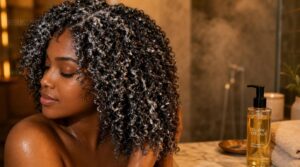
Start with a pre-shampoo treatment on dry hair before you do anything else. This barrier coating shields each strand, limiting water absorption so your high porosity hair doesn’t swell and weaken during washing. It also adds detangling slip, reducing friction and breakage.
Then cleanse with a sulfate-free shampoo, focusing on your scalp, so hair stays ready for deep conditioning.
Apply Mid-shaft to Ends
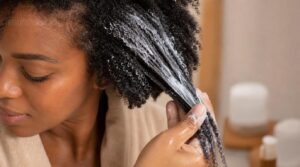
Skip your roots entirely — apply deep conditioner mid-shaft to ends, where high porosity hair loses moisture fastest.
Finger-comb the product through small sections, working downward so moisturizing ingredients reach every lifted cuticle. Use gentle detangling slip to work through knots without snapping fragile ends.
Make sure ends stay fully coated — that’s where damage lives.
Use a Plastic Cap

Once your conditioner is applied, reach for a plastic cap — it does more than keep things tidy.
- Seals in warmth from your scalp, improving ingredient absorption
- Blocks airflow so moisture doesn’t escape before your timer goes off
- Reduces drips and keeps conditioner off your clothes
- Preserves curl shape by keeping strands evenly coated
A well-fitted cap is your best friend here.
Leave Fifteen to Thirty Minutes
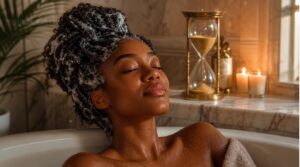
Set your timer for fifteen to thirty minutes and don’t rush it. That window is when your deep conditioning mask does its real work — humectants sink in, emollients coat the shaft, and your hair reaches full saturation.
Check a mid-shaft section: if it feels slick when finger-combed, you’re on track. This is heatless conditioning at its most effective.
Rinse With Cool Water
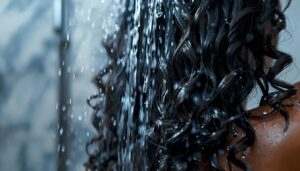
The final step is simple but powerful: rinse with cool water below 30°C.
Cool temperatures contract your lifted cuticles, locking in every bit of moisture you just worked in. Your hair gets smoother, shinier, and less frizzy — instantly.
For color-treated strands, it also helps preserve vibrancy longer.
Finish cool, and don’t skip it.
Top 10 Deep Conditioners for Porous Hair
Finding the right deep conditioner for porous hair doesn’t have to feel like a guessing game. Each pick below delivers the moisture, protein, and sealing power your strands actually need. Here are ten products worth keeping in your rotation.
1. The Mane Choice Ancient Egyptian Hair Mask
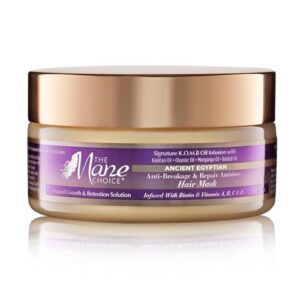
The Mane Choice Ancient Egyptian Hair Mask is a solid pick for high-porosity hair. Its KOMB oil blend — Kalahari, Oleaster, Mongongo, and Baobab — delivers omega fatty acids that seal lifted cuticles without heavy buildup. Biotin and vitamins A, B, C, and E add extra nourishment where your strands need it most.
At $15.98 for 8 oz, it’s affordable, though you’ll likely get only three to four uses per jar.
| Best For | Anyone with coily, curly, or chemically treated hair — especially high-porosity 4C hair that needs cuticle repair and moisture without the weight. |
|---|---|
| Price | $15.98 |
| Net Weight | 8 fl oz |
| Paraben-Free | Yes |
| Sulfate-Free | Yes |
| Hair Type Suitability | Coily, curly, wavy, fine, thick, color-treated |
| Key Oil Ingredient | Kalahari, Mongongo, Baobab, Oleaster oils |
| Additional Features |
|
- The KOMB oil blend (Kalahari, Oleaster, Mongongo, Baobab) seals lifted cuticles and delivers omega-3, 6, and 9 fatty acids without leaving hair feeling greasy or heavy.
- Packed with biotin and vitamins A, B, C, and E — a solid nutrient lineup that supports stronger, softer strands over time.
- Clean formula with no mineral oil, parabens, sulfates, or formaldehydes, and it’s cruelty-free.
- At only 3–4 uses per jar, the $15.98 price tag adds up faster than you’d expect.
- Some users find it less hydrating than the brand’s regular conditioner, and it can get tricky when layered with protein treatments.
- Packaging quality is hit or miss — missing seals and a strong fragrance have been common complaints.
2. Obia Naturals Babassu Deep Conditioner
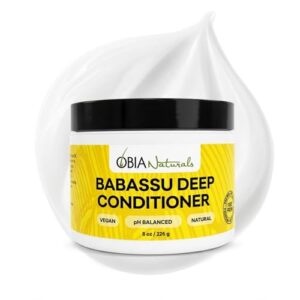
If you loved The Mane Choice’s omega-rich blend, Obia Naturals Babassu Deep Conditioner takes a different route — protein-free moisture that your porous strands can actually hold onto. The babassu and avocado oil combo penetrates lifted cuticles fast, while panthenol and aloe lock hydration in without weighing fine hair down.
At $15.99 for 8 oz, it’s fairly priced and silicone-free, making it a smart pick for protein-sensitive or color-treated hair.
| Best For | Anyone with dry, curly, or protein-sensitive hair who needs deep moisture without the buildup. |
|---|---|
| Price | $15.99 |
| Net Weight | 8 oz |
| Paraben-Free | Yes |
| Sulfate-Free | Yes |
| Hair Type Suitability | Dry, damaged, textured, curly, low-porosity |
| Key Oil Ingredient | Babassu, Avocado oil |
| Additional Features |
|
- Babassu and avocado oils sink in fast and leave hair feeling genuinely soft, not coated
- Completely protein-free, so no worries about buildup or sensitivity reactions
- Clean formula — no sulfates, silicones, parabens, or artificial dyes, great for curly-girl routines
- At $15.99 for just 8 oz, it runs out quickly if you’re deep conditioning regularly
- The scent is barely there, which might feel underwhelming if you like a sensory experience in the shower
- Not the best fit for very porous or high-damage hair that actually needs protein to rebuild structure
3. Mielle Organics Babassu Mint Deep Conditioner
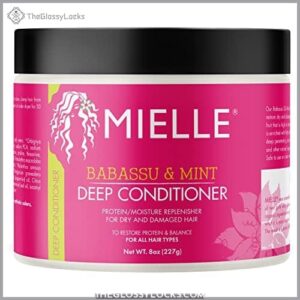
Where Obia leans purely into moisture, Mielle Organics Babassu Mint brings protein and hydration together in one lightweight formula. That dual action is exactly what porous hair needs — strength and softness without the stiffness. Babassu oil seals lifted cuticles, glycerin pulls in ambient moisture, and hydrolyzed proteins quietly rebuild weakened strands.
At $12.29 for 8 oz, it’s genuinely affordable. Apply mid-shaft to ends, cap it for 15–30 minutes, and rinse cool. Your curls will thank you.
| Best For | Curly and wavy hair that needs both protein and moisture — especially porous, color-treated, or damage-prone hair types. |
|---|---|
| Price | $12.29 |
| Net Weight | 8 oz |
| Paraben-Free | Yes |
| Sulfate-Free | Yes |
| Hair Type Suitability | Curly, wavy, high/low porosity, color-treated, relaxed |
| Key Oil Ingredient | Babassu oil |
| Additional Features |
|
- Combines protein and hydration in one step, so your hair gets stronger and softer without feeling stiff or weighed down.
- Babassu oil and mint make a great team — one seals the cuticle, the other leaves your scalp feeling refreshed and tingly.
- At $12.29, it’s easy on the wallet and works across a wide range of hair types, including relaxed, natural, and high-porosity hair.
- The mint scent is strong — if you’re sensitive to bold fragrances, it might be a bit much.
- Eight ounces goes fast if you have long or thick hair, so the value per use isn’t as great as it looks on the shelf.
- Scalp tingling can cross into uncomfortable territory for sensitive users, and it won’t do much if you’re dealing with serious scalp issues or hair loss.
4. Camille Rose Algae Renew Conditioner
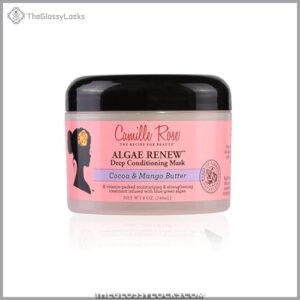
Mielle’s lightweight formula is great, but if your hair is screaming for serious moisture, Camille Rose Algae Renew Conditioner steps things up. Blue-green algae and mango butter work together to hydrate and seal lifted cuticles, while shea butter, coconut oil, and hemp seed oil reinforce each strand. Glycerin pulls in ambient moisture, and green tea antioxidants protect color-treated hair.
At $15.99 for 8 oz, it’s a solid pick for 4A–4C hair types needing intensive hydration after every wash.
| Best For | Anyone with 4A–4C high-porosity hair that needs serious, deep moisture — especially if your hair is dry, damaged, or chemically treated. |
|---|---|
| Price | $15.99 |
| Net Weight | 8 oz |
| Paraben-Free | Yes |
| Sulfate-Free | Not listed |
| Hair Type Suitability | High-porosity, tightly coiled 4A-4C |
| Key Oil Ingredient | Mango butter, hemp oil, jojoba oil |
| Additional Features |
|
- Blue-green algae and mango butter is a strong combo for sealing lifted cuticles and locking in hydration
- Loaded with nourishing oils (shea, coconut, hemp) that soften and strengthen without weighing hair down
- Free from parabens and phthalates, so it checks the clean beauty box
- Eight ounces goes fast, especially if you’re deep conditioning every wash — and there’s no larger size available
- The dual-layer plastic jar isn’t great if you’re trying to cut down on packaging waste
- High protein content can throw off the moisture-protein balance for low-porosity hair, leaving it feeling stiff over time
5. I AM Hydration Elation Conditioner
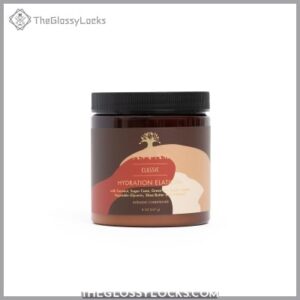
Switch gears from Camille Rose, and As I’m Hydration Elation earns its spot here.
Coconut oil, glycerin, and shea butter work together to pull moisture into lifted cuticles and seal it there.
If your strands soak up product and still feel thirsty, pairing these oils with conditioners formulated for porous hair can make the hydration actually stick.
It’s especially effective for 4C and coarse hair types struggling with chronic dryness.
The 8 oz jar runs slightly higher in price, but the formula is silicone‑free and delivers real softness without weighing your strands down.
| Best For | Anyone with 4C, coarse, or high-porosity hair dealing with chronic dryness, brittleness, or post-treatment damage who wants a rich, silicone-free deep conditioner that actually delivers softness. |
|---|---|
| Price | Not listed |
| Net Weight | 8 fl oz |
| Paraben-Free | Yes |
| Sulfate-Free | Not listed |
| Hair Type Suitability | High-porosity 4C, coarse, curly, kinky |
| Key Oil Ingredient | Herbal extracts (unspecified) |
| Additional Features |
|
- Deeply moisturizes high-porosity and coarse hair types, leaving strands soft and manageable
- Herbal ingredients stimulate the scalp while smoothing the cuticle layer without silicones
- Works well after color or chemical treatments to restore moisture and reduce brittleness
- The 8 oz jar is pricier than most comparable deep conditioners and runs out fast for thick or long hair
- Low slip makes detangling trickier, especially for thick, kinky styles
- Can feel too heavy for fine or low-density hair, and some users have reported packaging issues like broken seals or leakage
6. Maui Moisture Shea Butter Hair Mask
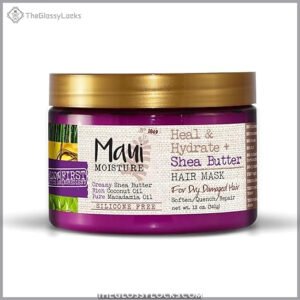
At just $9.99 for 12 oz, the Maui Moisture Shea Butter Hair Mask punches well above its price point. Aloe vera leads the formula, followed closely by shea butter, coconut oil, and macadamia oil — a lineup your high porosity strands will actually hold onto.
Apply it mid-shaft to ends, cover with a cap, and wait 15–30 minutes. Rinse cool. Fine hair types should use a lighter hand; this mask is rich and means business.
| Best For | People with wavy to tight curls, high-porosity hair, or color-treated and heat-damaged strands that need serious moisture. |
|---|---|
| Price | $9.99 |
| Net Weight | 12 oz |
| Paraben-Free | Yes |
| Sulfate-Free | Yes |
| Hair Type Suitability | Wavy to tight curls, medium-to-dry, color-treated |
| Key Oil Ingredient | Coconut, macadamia oil |
| Additional Features |
|
- Aloe vera, shea butter, coconut oil, and macadamia oil make a genuinely nourishing combo that hydrates for days
- Works two ways — deep mask in the shower or leave-in conditioner — so you get more flexibility for the price
- Clean formula with no silicones, sulfates, parabens, or synthetic dyes, and it’s vegan
- The rich, buttery texture can weigh down fine or low-porosity hair pretty quickly
- The tropical scent is strong — great for some, a dealbreaker for others
- Slip isn’t the best, so detangling thick or very curly hair can take more effort than you’d expect
7. Natural Phytotherapy Hair Growth Conditioner
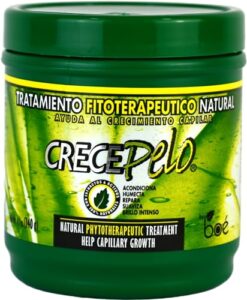
At $7.84 for 8.5 oz, the Natural Phytotherapy Hair Growth Conditioner brings a herbal twist to deep conditioning. Its blend of neem, burdock root, horsetail, and rosemary targets both scalp health and moisture retention — a smart combo for porous strands that lose hydration fast. Glycerin and avocado oil round out the formula, helping seal open cuticles.
Apply after shampooing, leave for 15 minutes, then rinse. One heads-up: the scent runs strong, so if you’re fragrance-sensitive, smell before committing.
| Best For | Anyone dealing with dry, thinning, or chemically treated hair who wants a natural, plant-based conditioner that tackles frizz and scalp health at the same time. |
|---|---|
| Price | $7.84 |
| Net Weight | 8.5 oz |
| Paraben-Free | Yes |
| Sulfate-Free | Not listed |
| Hair Type Suitability | All hair types, curly, chemically treated |
| Key Oil Ingredient | Natural plant extracts |
| Additional Features |
|
- Deep moisture and frizz control in one step — great for curly or porous hair that drinks up hydration fast.
- Plant-based formula with no harsh chemicals or artificial dyes, so it’s gentle enough for sensitive scalps.
- At $7.84, it’s an affordable entry point for herbal hair care without a big commitment.
- The jar is small — 8.5 oz goes quickly if you have thick or long hair and condition every wash.
- The scent is strong and chemical-like, which is surprising for a "natural" product and a dealbreaker for some.
- No full ingredient list is published, so if you have allergies, you’ll have to dig for that info before buying.
8. SheaMoisture Intensive Hydration Hair Masque
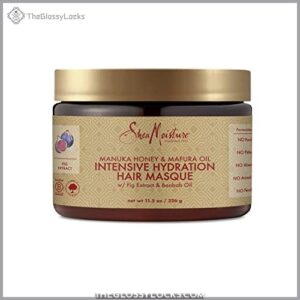
At $12.97 for 11.5 oz, the SheaMoisture Manuka Honey & Mafura Oil Intensive Hydration Hair Masque punches well above its price point. Manuka honey draws moisture into the shaft while Mafura and Baobab oils seal those lifted cuticles shut — exactly what porous hair needs.
Apply from mid-shaft to ends, cap it, and leave 15–30 minutes. The texture spreads easily and rinses clean. One caution: fine hair should use less, as the rich shea butter base can weigh strands down.
| Best For | Anyone with dry, curly, wavy, or color-treated hair who wants serious moisture without spending serious money. |
|---|---|
| Price | $12.97 |
| Net Weight | 11.5 oz |
| Paraben-Free | Yes |
| Sulfate-Free | Yes |
| Hair Type Suitability | Curly, wavy, color-treated, dry, brittle |
| Key Oil Ingredient | Mafura, Baobab oil, Shea Butter |
| Additional Features |
|
- Packed with real, quality ingredients — Manuka honey, Mafura oil, Baobab oil — at a price that doesn’t hurt
- Rinses out clean with no greasy residue, even on thick or long hair
- Free of sulfates, parabens, and mineral oil, so it’s gentle enough for regular use
- The fragrance is strong — not great if you’re sensitive to scent
- Can weigh fine or low-porosity hair down, so you’d need to go light on the amount
- No real protein boost, so if your hair is seriously damaged or breaking, you’ll need something extra alongside this
9. Arvazallia Hydrating Argan Hair Mask

At $14.99 for 8.45 oz, the Arvazallia Hydrating Argan Hair Mask is a budget-friendly pick that delivers real moisture without the premium price tag. Argan oil, glycerin, and aloe vera work together to hydrate and smooth lifted cuticles, while panthenol boosts elasticity.
One honest heads-up: it contains silicones like dimethicone, which can build up on porous hair over time. Clarify monthly to keep your strands clean and receptive.
| Best For | Anyone with dry, damaged, or curly hair who wants a solid deep-conditioning treatment without spending a lot. |
|---|---|
| Price | $14.99 |
| Net Weight | 8.45 oz |
| Paraben-Free | Yes |
| Sulfate-Free | Yes |
| Hair Type Suitability | All hair types, permed, natural, curly, fine |
| Key Oil Ingredient | Argan oil |
| Additional Features |
|
- Genuinely hydrating — argan oil, glycerin, and panthenol work together to soften and smooth without feeling heavy
- Safe for a wide range of hair types, including fine, curly, and chemically treated hair
- Great value at $14.99 for 8.45 oz — you get a lot of product for the price
- Silicones like dimethicone can build up over time, especially on porous hair — monthly clarifying is a must
- Color-treated hair may find the moisture doesn’t last long; dryness can creep back within a few days
- The scent is strong, and some users have flagged packaging issues like broken seals on arrival
10. High Porosity Shea Butter Leave In Conditioner
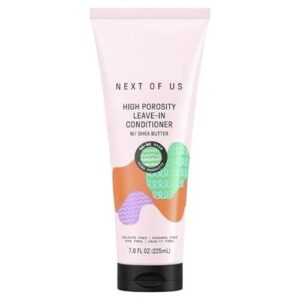
If your curls are constantly thirsty, this one’s worth a look. The High Porosity Shea Butter Leave-In Conditioner is built specifically for open, porous strands — Shea butter seals the cuticle, locks in moisture, and smooths frizz without heavy residue. It’s paraben-free, sulfate-free, and safe for color‑treated hair.
Apply it mid‑shaft to ends on damp hair and skip the rinse.
Fine‑haired folks should use a light hand — Shea butter can weigh down thinner curls.
| Best For | Anyone with dry, high-porosity, or coily hair that struggles to hold onto moisture between wash days. |
|---|---|
| Price | Not listed |
| Net Weight | 7.6 fl oz |
| Paraben-Free | Yes |
| Sulfate-Free | Yes |
| Hair Type Suitability | Coily, high-porosity, dry, damaged |
| Key Oil Ingredient | Shea butter |
| Additional Features |
|
- Shea butter helps seal the cuticle and lock in moisture, so curls stay hydrated longer
- Works as a rinse-out or leave-in, which gives you flexibility depending on how much moisture your hair needs
- Free from parabens, sulfates, and dyes — good pick if you’re keeping your routine clean
- Can feel heavy on fine or low-porosity hair and may cause buildup over time
- The ingredient list isn’t very transparent — shea butter gets the spotlight, but the rest is vague
- Lower category ranking suggests it hasn’t built much of a following yet, so reviews are limited
Build a Weekly Conditioning Routine
Consistency is what separates struggling hair from thriving hair. Once you know which products work for you, building a simple weekly routine locks in those results. Here’s how to structure it.
Once Weekly for Maintenance
Once a week is usually all your hair needs to stay ahead of dryness. For most people with high porosity hair, a consistent weekly deep conditioning routine keeps moisture levels stable without overdoing it. You’ll know it’s working when your hair stays soft, manageable, and frizz-free for most of the week.
If you’re after that rippled, wave-pattern look, pairing weekly deep conditioning with the brushing techniques in this 180 waves hair guide can help waves form more evenly.
- Sustained hydration between washes reduces daily breakage
- Consistent frequency strengthens your moisture-protein balance over time
- Skipping weeks breaks the routine and resets progress
Twice Weekly for Damage
If once a week keeps healthy, porous hair stable, twice-weekly deep conditioning is what damaged hair actually needs.
Chemical stress, bleaching, and heavy breakage drain moisture faster than a single session can restore. Hitting your hair with a deep conditioner twice a week replenishes humectants and emollients consistently, helping strands stay soft and reducing hair breakage prevention issues over time.
Limit Excessive Heat Use
Twice-weekly deep conditioning builds a strong foundation, but heat can undo that work fast. High porosity hair loses moisture quickly under hot tools, so limit heat styling to two or three times weekly.
Use lower heat settings, apply a heat protectant to damp strands before any tool touches your hair, and let hair air dry whenever possible.
Seal Moisture After Rinsing
Protecting your deep conditioning work starts the moment you rinse.
Blot hair gently with a microfiber towel — never rub — then apply a water-based leave-in immediately while strands are still damp.
Follow with a sealant oil like argan or babassu, focusing on the ends. This post-rinse seal traps moisture before humidity or dry air pulls it back out.
Track Softness and Breakage
Tracking your progress turns guesswork into real data.
Use the Softness Feel Test on damp strands — note how easily hair stretches between your fingers. Run a Breakage Count Log each detangling session, separating short broken hairs from full-length shed strands. Check the Elasticity Bounce Check by stretching a wet strand; healthy hair snaps back.
Consistent tracking reveals whether your moisture‑protein balance is actually working.
Frequently Asked Questions (FAQs)
Can diet affect high porosity hair health?
You are what you eat" isn’t just an old saying — it applies to your strands too. Dietary protein impact on high porosity hair is real: amino acids fuel keratin repair, while iron, zinc, omega-3s, and vitamin D keep follicles strong.
Does water quality impact porous hair moisture?
Yes, water quality directly affects porous hair moisture. Hard water minerals like calcium and magnesium deposit on already-open cuticles, disrupting hydration and leaving strands drier and rougher after every wash.
How does sleep position affect hair porosity?
Your sleep position affects hair porosity more than most people realize. Stomach sleeping mashes strands against fabric for hours, while side sleeping causes localized overnight moisture loss on one side — making hair feel rougher and act more porous by morning.
Can deep conditioning reverse chemically damaged porosity?
Deep conditioning can’t fully reverse chemical damage. Bleach breaks internal bonds permanently. Treatments improve hydration and surface texture, but porosity itself won’t reset. Think of it as managing the condition, not curing it.
Are DIY deep conditioners effective for porous hair?
DIY deep conditioners absolutely can work for porous hair — if you build them right. Pack in glycerin, aloe, and a sealing oil like argan, and you’ve got a solid, porosity-friendly blend.
Conclusion
porous hair gets blamed for being "difficult" when it’s just doing exactly what damaged cuticles do—refusing to hold onto anything good.
Deep conditioning for porous hair isn’t a luxury routine for the overly devoted; it’s basic structural repair.
Pick the right ingredients, seal moisture in, and stay consistent.
Your hair isn’t broken—it’s just been waiting for someone to finally stop guessing and start treating it with actual intention.