This site is supported by our readers. We may earn a commission, at no cost to you, if you purchase through links. This content is for general informational and educational purposes only and is not a substitute for professional medical, dermatological, or nutritional advice.
In Chad, mothers braid two rows down the center of a married woman’s head, one row for a single woman. That code has lived in hair for generations, held together by a paste ground from seeds most of us have never heard of.
Chebe powder comes from the Basara women, who’ve used it for over 1,000 years to grow hair past their waists in one of Africa’s driest regions. No sulfates, no lab-made polymers, just crushed seeds and resin.
Here’s what’s actually happening under that coating, and whether it deserves the hype.
Table Of Contents
- Key Takeaways
- What is Chebe Powder?
- What Chebe Powder is Made Of
- How Chebe Powder Works
- Chebe Powder Hair Benefits
- Does Chebe Powder Grow Hair?
- Best Hair Types for Chebe
- How to Use Chebe Powder
- How Often to Apply Chebe
- Chebe Powder Safety and Buying
- Frequently Asked Questions (FAQs)
- What does Chebe powder do to the hair?
- How long does it take to see results from Chebe powder?
- How do you mix Chebe powder for hair growth?
- What is Chebe powder made of?
- How do you use Chebe powder?
- Where does Chebe powder come from?
- What is Chebe powder used for in hair care?
- Does Chebe powder help hair growth?
- What does Chebe Powder do for hair?
- How long do you keep Chebe in your hair?
- Conclusion
Key Takeaways
- Chebe powder doesn’t grow hair from the follicle—it protects the length you’ve already got by coating strands and cutting down on breakage.
- The paste, made from ground Croton zambesicus seeds, Mahllaba soubiane, cloves, and resin, seals moisture into your hair shaft instead of soaking in like a treatment.
- Apply it mid-shaft to ends only, never on your scalp, using about 4 tablespoons of powder mixed with 2 tablespoons of carrier oil.
- Real results take time and consistency—expect softer strands within weeks, but noticeable length retention usually shows up around month two or three.
What is Chebe Powder?
Chebe powder has a real story behind it, and it’s worth knowing before you put it in your hair. It comes from Chad, carries deep cultural roots, and has a look and smell all its own. Here’s what makes it what it is.
Traditional Chadian Hair Remedy
Long before it hit your feed, chebe powder was a cultural hair ritual passed hand to hand in Chad. Basara women tradition ties this treatment to hair length tradition, communal hair bonding, and generational hair care.
- Elders teaching daughters patience
- Braids holding family history
- Hours spent together, not alone
- Waist-length hair earned, not bought
Chadian women trusted the traditional method for real hair growth support. The cultural significance of Chebe powder is deeply rooted in community bonding rituals among Basara women. community bonding rituals
Chebe Seed Origins
Every batch starts in the Sahel, where Chad seed harvest turns wild seeds into treasure. Croton zambesicus brings the lavender scent; Mahllaba Soubiane adds nutrients. Chadian women learned this from Basara women tradition, guarding cultural hair heritage like a family recipe.
Once infused, these seed oils pair beautifully with other traditional conditioning boosters, much like the moisture-locking magic behind mixing yogurt into henna for deeper hair conditioning.
| Seed | Role | Source |
|---|---|---|
| Croton zambesicus | Aroma, fatty coat | Chad |
| Mahllaba soubiane | Texture, nutrients | Chad |
| Both | African hair care traditions | Sahel |
Cultural Hair Care Use
That family recipe isn’t just about scent. It’s a full cultural practice.
Grandmothers teach granddaughters the traditional method, starting around age 12. Chadian women gather to apply chebe together, swapping stories while braiding. Two center braids mean married; one means single. These protective styles double as status symbols, honoring over 1,000 years of African hair traditions built for Chad’s harsh, dry climate.
Powder Texture and Scent
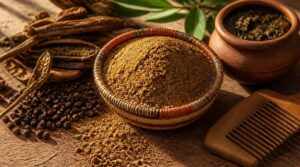
Open a jar of chebe and you’ll notice it right away: fine, talcum-like grains with a warm, clove-and-resin scent. Grain size affects glide, moisture shifts texture toward paste, oils boost pliability.
What that scent and feel tell you:
- Freshness confirms potency
- Uniform grain means even coating
- Oils extend scent longevity
- Grit signals coarse milling
- Warmth releases deeper aroma
What Chebe Powder is Made Of
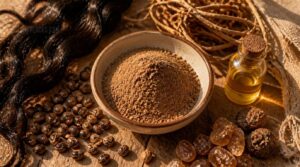
Chebe powder isn’t just one ingredient. It’s actually a mix, with each piece pulling its own weight. Here’s what goes into the mix.
Croton Zambesicus Seeds
Everything starts with a small, dark seed. Croton Zambesicus grows on a shrub across African savannas, and its seeds carry flavonoids, tannins, and alkaloids.
Roasted and ground, they form chebe powder’s base. Studies show antimicrobial activity and antioxidant power, plus decent iron and potassium.
That’s real botanical substance behind the tradition, not just folklore.
Mahllaba Soubiane Seeds
Small, dark, and nutty, Mahllaba Soubiane seeds bring warm aroma to chebe powder. Hand-harvested by regional communities, they’re dried to lock in scent.
Their oils help bind the paste together, while fatty acids and polyphenols support shelf life. That stickiness matters for protective styles, keeping chebe pastes smooth, sticking together well, and easy to work through your hair.
Cloves and Samour Resin
Ever wonder why chebe powder smells so warm and spicy? Thank cloves. They bring eugenol, an antioxidant-rich oil that fights damage and boosts shelf life.
Samour resin, pulled from acacia gum, adds a balsamic sweetness and helps bind the paste. Together, they create resin mix stability, locking in scent while supporting moisture retention strand by strand.
Missic Stone Fragrance
Picture rain hitting a dry stone path. That’s the note Missic stone brings to chebe powder.
- Mineral, woody scent with warm amber
- Cool, dry contrast to warm spices
- Steady diffusion lasting hours
- Blends smoothly with clove and samour
- Gender-neutral, grounded aroma
It adds a stone accord without masking traditional scent, boosting the sensory experience during your protective style routine.
Common Ingredient Variations
No two batches of chebe powder smell or feel exactly alike, and that’s normal.
Those slight variations in scent or texture won’t affect results, so just work it through your strands during your weekly deep conditioning routine for porous hair and let it do its job.
Seed origin changes color and aroma. Swapped resins shift scent notes, while oil ratio impact (karkar oil versus shea butter) changes finish and moisture seal. Processing methods alter shelf life and aroma strength. Texture substitutions affect spreadability. Always check carrier oils and essential oils listed before buying.
How Chebe Powder Works
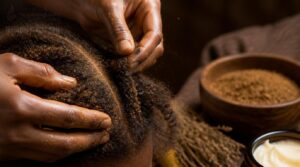
So how does chebe actually work on your hair? It’s not magic, it’s mechanics. Here’s what’s happening every time you apply it.
Hair Shaft Coating
Think of chebe powder like a raincoat for each strand. Once mixed into paste and worked through hair, it doesn’t soak in deep—it sits on top, forming a cuticle protection layer.
That coating smooths rough edges, cuts down friction reduction effect between strands, and adds natural shine. It’s hair shaft lubrication, plain and simple, not absorption.
Moisture Sealing Effect
That coating does more than smooth things over. It seals moisture in, working like a passive moisture moderator that limits water loss from the cortex.
Perks worth knowing:
- Fights humidity-driven frizz
- Preserves curl definition
- Steadies scalp moisture
- Resists rain-induced shrinkage
- Keeps protective styles fresher longer
That’s hair moisture retention in action, no heat required.
Reduced Strand Friction
Ever notice how tangled hair fights you at every turn? That’s friction. Chebe smooths the hair shaft, giving strands real slip so they glide instead of grip.
| Effect | What Happens | Why It Matters |
|---|---|---|
| Cuticle smoothing | Fills rough spots | Less snagging |
| Slip boost | Strands glide | Easier detangling |
| Barrier formation | Coats shaft | Locks moisture |
Great news for low manipulation styling and protective styles.
Breakage Protection
That slip you just gained does double duty: less friction means less breakage. Snags and rough patches are what cause snapping, so smoothing them out is real breakage protection.
Chebe’s proteins and fatty acids strengthen the shaft from the outside in. Some users see hair breakage drop by 60% in the first month, plus fewer split ends along the way.
Length Retention Support
Here’s the thing: hair growth and length retention aren’t the same game. Your hair is already growing from the scalp. The real battle is keeping those ends from snapping off before they reach waist-length.
Chebe powder wins that battle through cumulative protection:
- Strengthens the shaft with each application
- Seals moisture in for days at a time
- Reduces breakage from protective styles
- Builds results over months, not days
Chebe Powder Hair Benefits
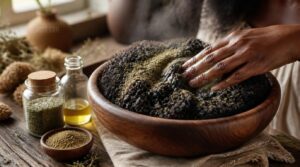
So what does chebe powder actually do for your hair, day to day? The perks add up fast once you start using it regularly. Here’s what you can expect.
Stronger Hair Strands
Weak strands snap. Strong ones bend and bounce back.
Chebe powder acts like a protein hair treatment, coating each strand with nutrients that fortify the hair shaft from root to tip. This boosts tensile strength and improves hair elasticity, so hair stretches under tension instead of breaking.
The payoff? A real strand strength boost, plus better hydration that keeps hair resilient day after day.
Less Hair Breakage
Snags and single-strand yanks cause most breakage during combing. Chebe coats the hair shaft, cutting friction so detangling stops feeling like a fight.
Four friction reduction techniques that pair well with chebe:
- Detangle before washing, not after
- Use wide-tooth combs only
- Blot, don’t rub, when drying
- Keep protective styles snug, not tight
Less rubbing means fewer weak spots turning into real breaks.
Better Moisture Retention
Dry hair cracks; sealed hair bends. Chebe forms an occlusive barrier on the hair shaft, locking hydration in for 3-5 days, even in dry climates. Shea butter and carrier oils add fatty acids for deeper nourishment, while balanced pH keeps cuticles closed.
| Factor | Moisture Benefit |
|---|---|
| Occlusive coating | Seals in hydration |
| Shea butter | Deep nourishment |
| pH balance | Closed cuticle |
Softer Coily Hair
Run your fingers through treated coils and feel the difference: less friction, more give. Chebe smooths rough cuticle edges along the hair shaft, so strands glide instead of grabbing each other. That reduces frizz and helps curl definition hold longer.
Pair it with gentle cleansing and silk pillowcases at night, and softness sticks around between wash days.
Improved Protective Styling
Braids and twists work better when chebe’s already in your hair. The paste tucks ends, cuts friction, and helps low tension styling so protective braid techniques actually protect.
Add a satin bonnet at night, and moisture stays sealed in. That’s real length retention: styles lasting 2-8 weeks, minus the breakage.
Does Chebe Powder Grow Hair?
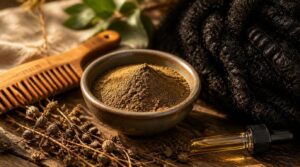
It’s the question everyone asks before they buy the jar. The honest answer isn’t a simple yes or no. Here’s what’s actually going on, broken down piece by piece.
Growth Versus Length Retention
Here’s the truth: chebe doesn’t grow hair, it protects it. Your follicles set growth speed, not powder.
Chebe powder doesn’t grow hair—it protects it, while your follicles alone set the pace of growth
Length retention is the real magic. Less breakage means fewer inches lost, so hair looks like it’s growing faster. Users report 1.5 inches retained monthly with consistent use.
That’s the hair growth illusion: damage prevention, not follicle boost, delivers those long-hair results.
Scalp Growth Misconceptions
So where does the growth myth come from? People see thicker, longer-looking hair and assume follicle stimulation happened. It didn’t.
Chebe never touches the scalp, remember. No scalp contact means no scalp health boost, no new hair loss prevention at the root. It’s purely a hair shaft strategy, working outside-in, not inside-out.
Realistic Result Timeline
So what can you actually expect, and when? Give it a few weeks before judging results.
- Softer, shinier strands within days
- Fewer broken hairs by week four
- Visible length retention around month three
- Up to 3 inches saved by month six
Moisture retention builds gradually too. Your growth cycle genetics still set the ceiling, so results vary person to person.
Consistency Matters Most
Here’s the honest part: chebe rewards a consistent application routine, not one lucky session. A uniform paste texture, applied on a regular treatment schedule, builds predictable moisture retention over time.
| Habit | Payoff |
|---|---|
| Same oil ratio | Steady coating |
| Repeatable braiding | Even protection |
| Weekly rhythm | Breakage prevention |
| Fresh batches | Reliable results |
Skip weeks, and hair shaft coating weakens.
When Results May Vary
Even with a solid routine, results shift person to person. Hair type impact plays a big role, along with product authenticity and daily habits.
- Coarse or low-porosity hair needs more time
- Counterfeit powder skips key ratios
- Poor diet or dehydration slows progress
- Humidity affects coating adherence
- Hormonal shifts can increase shedding
Best Hair Types for Chebe
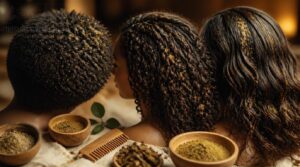
Chebe isn’t one-size-fits-all. Some hair types soak up its benefits fast, while others need a little extra caution. Here’s how to tell where you fall.
Curly Hair Types
Type 3 curls, from loose 3A loops to tight 3C corkscrews, deal with real friction and breakage between coils. Chebe powder coats each strand, sealing moisture and cutting tangling.
For 3A’s fine texture or 3C’s coarser strands, apply mid-shaft to ends. Result: softer detangling, less breakage, curls that hold their shape without losing definition.
Coily Hair Types
Coils get a raw deal. 4A, 4B, and 4C all shrink hard (up to 75%) and snap fast when dry.
Chebe’s oil-paste coats each strand, sealing cuticles shut:
- Cuts breakage during detangling
- Boosts elasticity and stretch
- Locks in moisture longer
- Helps with length retention
- Preps hair for protective styles
Consistent use, real results.
Dry Brittle Hair
Dry hair snaps before it ever gets the chance to grow past your shoulders. Blame low humidity, hard water, or skipping moisture altogether.
Chebe powder works like a moisturizing treatment, coating the hair shaft to slow water loss. Pair it with silk pillowcases and you’ll cut friction damage too.
Protein deficiency makes strands brittle no matter what you apply, so balance is key.
High-Porosity Hair
Drop a strand in water and watch it sink fast? That’s high porosity hair, and those raised cuticle gaps mean quick absorption but even quicker moisture loss.
Chebe powder helps by sealing cuticle gaps, slowing evaporation. Mix it with oils, apply mid-shaft to ends, and you’ll interrupt the breakage cycle while cutting frizz and locking in real hydration.
Fine Hair Cautions
Fine hair and chebe powder? Tricky combo. The fine hair weight risk is real—those seed particles flatten strands fast.
Adjust smart:
- Cut application time to 2-3 hours
- Use a pea-sized powder quantity
- Try alternative application methods like mixing into shampoo
Skipping proper rinsing protocol invites limpness. Protect scalp health and hair strength without sacrificing volume.
How to Use Chebe Powder
Now for the part you actually came for. Using chebe powder isn’t complicated, but a few small details make a real difference. Here’s exactly how to mix it, apply it, and work it into your routine.
Simple Chebe Recipe
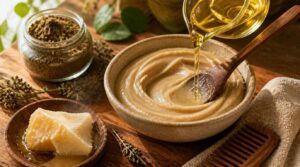
Ready to mix your own batch? Start with 4 tablespoons Chebe powder and 2 tablespoons carrier oil. Stir until smooth, no white specks left.
Want it thicker for longer hair? Add 1–2 tablespoons melted shea butter. Aim for a mayonnaise-like consistency. Too thick, add water. Too thin, add powder.
Section hair first, then apply mid-shaft to ends, avoiding your scalp entirely.
Best Oils to Mix
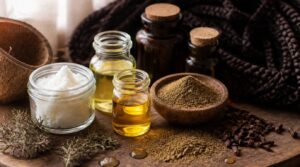
That "2 tablespoons carrier oil" line? Your oil choice matters. Coconut oil deep-moisturizes with a light scent. Jojoba oil mimics scalp sebum for smooth paste. Want more slip for braids? Try karkar oil or castor.
- Lightweight oils: grapeseed, almond, sunflower
- Nourishing blends: avocado, coconut, olive
- Fragrance oils: clove, vanilla, capped at 0.5%
Store blends in dark jars—shelf life runs six to twelve months.
Mid-Lengths to Ends
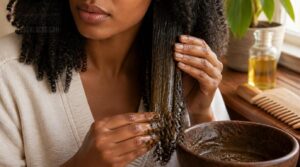
Once your oil’s picked, where you apply it matters just as much. Chebe powder goes from mid-lengths to ends only, never the scalp.
This targets end protection where breakage starts. You get moisture sealing, less friction while detangling, and real length retention support over time—all without weighing down your roots.
Braiding After Application
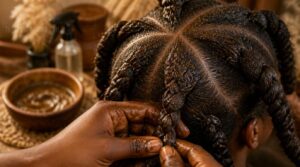
Once the paste is on, braid it in. This is braid preservation at its best—sections stay coated, moisture stays locked.
Chadian women braid for 3-5 days, moisturizing strands with water between. Use 6-8 sections for coily hair. The compression seals paste against each strand, protecting length retention while you go about your week.
Short Hair Application Tips
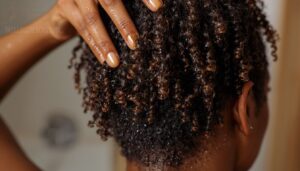
Got short hair? Braiding six sections isn’t always possible, but the method still works.
Section evenly into 4-8 parts. Apply chebe paste mid-shaft to ends, skipping the scalp entirely to avoid irritation. Can’t braid it? Just distribute evenly with your fingers and cover with a shower cap. This protective styling step still locks moisture in, cutting breakage even without traditional braids.
How Often to Apply Chebe

So how often should you actually reach for chebe? It depends on your hair type and your schedule, not some strict rule. Here are the main ways people work it into their routine.
Weekly Treatment Routine
Once a week, on clean hair, is the sweet spot for most people.
Wash, detangle, then prep your paste: 4 tbsp chebe powder, 2 tbsp oil. Work it from mid-shaft to ends, braid, and protect overnight. Why this rhythm?
- Prevents product buildup
- Helps steady length retention
- Reduces hair breakage over time
- Builds visible results in 4-8 weeks
Stick with it. Consistency beats intensity here.
Biweekly Use Option
Sometimes once a week just isn’t enough, especially if your hair leans dry or damaged. That’s where biweekly application comes in.
Twice a week during your chebe cycle can boost moisture, but watch for buildup. Low porosity hair? Stick to once every two weeks, with a clarifying shampoo between sessions to keep strands breathing.
Overnight Chebe Treatment
While you sleep, chebe gets to work. Mix 4 tbsp chebe powder with 2 tbsp Jamaican black castor oil, apply to damp mid-lengths, then braid and cover with a plastic cap, satin bonnet, and pillowcase for friction-free protection.
- Coconut oil for fine hair
- Castor oil for shine
- Shea butter for thickness
- Olive oil for sensitive scalps
Rinse each morning with lukewarm water.
Traditional Multi-Day Method
This is chebe in its original form: three to seven days, braids in, no washing.
The oil base mix (4 tbsp powder, 2 tbsp oil or tallow) coats each strand, and protective braiding keeps it sealed while you live your life. Re-braid as new growth appears. Once you rinse, repeat the multi-day schedule every three to five days. Finer hair? Cap it at three to four days.
Washing and Clarifying Tips
Getting chebe out is half the battle. Use lukewarm water, work section by section, and don’t rush it.
Follow with two rounds of clarifying shampoo on mid-lengths and ends, then deep condition for 15-20 minutes. Skipping this step risks product buildup, dull strands, and clogged pores. Repeat this rinse-and-clarify routine after every treatment to keep hair clean and manageable.
Chebe Powder Safety and Buying
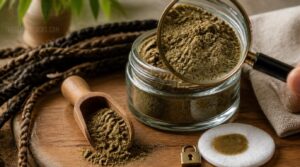
Chebe powder is generally gentle, but that doesn’t mean you should skip the basics. A little caution up front saves you from irritation and wasted money later. Here’s what to check before it touches your hair and where to actually buy the real thing.
Patch Test First
New to chebe? Test it before it touches your whole head.
Mix a small amount with your carrier oil, dab it on your inner arm or behind your ear, then leave it alone for 24 hours. Watch for redness, itching, or bumps.
No reaction means green light. Any irritation means skip it. This quick allergic reaction test protects your scalp health and keeps your hair care routine irritation-free from day one.
Avoid Scalp Application
Passing the patch test doesn’t mean your scalp is fair game. Keep chebe on the hair shaft only, working mid-lengths to ends.
Ground seeds can clog pores and trigger buildup risk near the roots. Always dilute with oil first, then braid right after application. Braids act as a physical barrier, locking the paste away from skin until rinse time.
Irritation Warning Signs
Even with a clean patch test, keep watching your scalp after full application. Mild itching is normal, but itching that escalates fast is a red flag.
Watch for redness progression, flaking, burning, or small bumps forming. If irritation shows up, rinse immediately with a clarifying shampoo to stop buildup and calm your scalp before continuing use.
If flakes keep returning even after rinsing, this guide on how to get dandruff flakes out of dreadlocks walks through gentle ways to clear buildup without disturbing your locs.
Spotting Genuine Chebe
Calmed skin doesn’t mean clear skies yet. Before you reorder, check what’s actually in the jar.
Genuine Chebe looks dark brown with tiny white flecks, feels grainy (never smooth), and smells earthy with a spicy edge — not chemical. Scan the label for Croton zambesicus seeds and natural resins. And if the price seems too good? That’s usually your first counterfeit clue.
Buying Authentic Products
Knowing what genuine Chebe looks like only helps if you’re buying from the right place.
Stick to the brand’s official site or listed retailers — authorized seller verification matters most. Check packaging for batch numbers, ingredient lists, and country of origin. Keep receipts as documentation proof. Skip suspiciously cheap listings; price consistency signals authenticity, protecting you from counterfeit hair products masquerading as traditional African remedies.
Frequently Asked Questions (FAQs)
What does Chebe powder do to the hair?
Coily hair can lose moisture up to 30% faster than straight hair. That’s why hair shaft protection matters so much: it coats strands, locks in moisture retention, cuts friction, and helps with real breakage prevention and length retention over time.
How long does it take to see results from Chebe powder?
Give it 2-4 weeks for softer, less breakage-prone strands. Full length retention shows up around 2-3 months. Real hair care consistency, applied 2-3 times weekly, speeds things up—results vary by hair type and genetics.
How do you mix Chebe powder for hair growth?
Funny enough, the mixing ratio matters as much as the seeds themselves. Mix 4 tbsp powder with 2 tbsp carrier oil (olive or coconut), aiming for a smooth, spreadable paste. Apply mid-shaft to ends for real hair hydration and strength.
What is Chebe powder made of?
The base mix combines Croton zambesicus seeds, Mahllaba soubiane, cloves, and samour resin. Missic stone adds musky fragrance.
This mix, rooted in traditional Chad hair care, coats strands with nourishing oils for authentic African Chebe Powder results.
How do you use Chebe powder?
Mix with an oil like jojoba or coconut, apply mid-shaft to ends, then braid for protective styling. Leave 2-3 hours or overnight, rinse with lukewarm water, and always patch test first.
Where does Chebe powder come from?
Straight from Chad, in Central Africa. Chébé seeds have been roasted and ground by Basara Arab women for generations, using a traditional method passed down as cultural heritage — one of Africa’s oldest hair-care secrets, still practiced today.
What is Chebe powder used for in hair care?
Think of it as armor for each strand. It’s used for length retention, coating hair to seal in moisture, cut friction and breakage, and support protective styling for stronger, more resilient natural hair.
Does Chebe powder help hair growth?
Not directly. It’s about breakage prevention, not follicle stimulation. By coating strands and locking in moisture, chebe powder helps length retention—you keep more of what grows naturally, which over months looks like faster growth.
What does Chebe Powder do for hair?
Your strands get real work done here: moisture retention, breakage prevention, and hair strengthening all at once. It seals in hydration, balances scalp pH, smooths porosity issues, and slowly builds length by cutting breakage rather than sparking new growth.
How long do you keep Chebe in your hair?
Like a floppy disk holding just enough data, timing is everything here. Go with a quick boost (2-3 hours), overnight repair with a satin bonnet, or the traditional week for deep results.
Conclusion
Picture a woman in N’Djamena, braiding her daughter’s hair every week for a decade, never once expecting overnight miracles. That patience is the whole story.
Chebe powder won’t rewrite your scalp’s genetics, but it will protect every inch you’ve already grown. Mix it, seal it, braid it in, and let time do what rushing never could.
Real length comes from consistent care, not shortcuts. Trust the process your hair’s been waiting for.