This site is supported by our readers. We may earn a commission, at no cost to you, if you purchase through links. This content is for general informational and educational purposes only and is not a substitute for professional medical, dermatological, or nutritional advice.
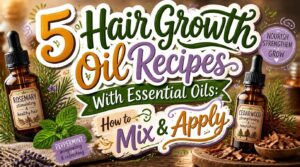
A six-month trial found rosemary oil going toe-to-toe with 2% minoxidil for regrowth — no prescription, no hormone disruption, just consistent scalp massage. That’s the kind of stat that makes you rethink what’s sitting in your kitchen cabinet.
Your follicles respond to more than genetics. Blood flow, inflammation, even yeast overgrowth on the scalp all play a role, and specific plant oils target each one differently. Peppermint kicks circulation into gear; cedarwood calms the immune response behind alopecia areata.
Below, you’ll find five hair growth oil recipes with essential oils, built around real dilution ratios and application steps — the kind of detail that separates results from irritated skin and wasted product.
Table Of Contents
- Key Takeaways
- How Essential Oils May Support Hair Growth
- Choose Carrier Oils by Hair Type
- Top 10 Essential Oils for Hair Growth Recipes
- 1. Plant Therapy Carrot Seed Essential Oil
- 2. Plant Therapy Organic Atlas Cedarwood Oil
- 3. Plant Therapy Clary Sage Essential Oil
- 4. Plant Therapy Organic Lavender Essential Oil
- 5. Plant Therapy Organic Lemongrass Essential Oil
- 6. Plant Therapy Organic Peppermint Essential Oil
- 7. Plant Therapy Organic Rosemary Essential Oil
- 8. Plant Therapy Spearmint Essential Oil
- 9. Plant Therapy Organic Tea Tree Oil
- 10. Ylang Ylang Organic Essential Oil
- 5 DIY Hair Growth Oil Recipes
- How to Mix and Apply Hair Growth Oil Safely
- Frequently Asked Questions (FAQs)
- What essential oils can I mix for hair growth?
- What is the Chinese secret to hair growth?
- What is the best homemade hair growth oil recipe?
- What is the best oil mixture for hair growth and thickness?
- What essential oils should I mix for hair growth?
- How to make homemade hair oil for hair growth?
- What to mix with oil for hair growth?
- How to make hair growth serum with essential oils?
- What essential oils help hair growth?
- How to make a hair growth oil?
- Conclusion
Key Takeaways
- Rosemary oil matched 2% minoxidil for regrowth in a six-month trial without disrupting hormones, making it a solid hormone-free alternative worth trying.
- Different oils target different scalp issues, so peppermint boosts circulation, cedarwood calms alopecia-related inflammation, and tea tree fights the yeast behind dandruff.
- Your carrier oil matters as much as your essential oil, so pick jojoba for balance, argan for fine hair, grapeseed for oily scalps, castor for coarse hair, or coconut for dryness.
- Safety comes down to sticking to a 1-3% dilution, patch testing for 48 hours, and giving any routine a full twelve weeks before judging results.
How Essential Oils May Support Hair Growth
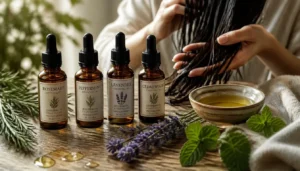
Essential oils aren’t magic, but the research on a few of them is genuinely promising. Some are backed by real human trials, others by early lab work, and knowing the difference matters for your expectations. Here’s what the science actually says about each one.
If you’re curious how these findings apply beyond skincare, this breakdown of essential oils for beard thickness digs into which ones show real potential for hair growth.
Rosemary Oil and Androgenetic Alopecia
Rosemary tops this list for good reason. In a six-month trial, rosemary essential oil rivaled 2% minoxidil for androgenetic alopecia — boosting scalp blood flow and follicle activity without touching hormone levels. That’s huge if you’re hormone-cautious. Bonus: adherence beat minoxidil’s, since daily oil application feels gentler. Combination therapy with minoxidil? Even better results. Just respect your dilution ratios during scalp massage.
Rosemary oil rivaled 2% minoxidil for hair regrowth in a six-month trial, without touching hormone levels
Peppermint and Lavender Preclinical Evidence
Peppermint and lavender don’t have rosemary’s human trial data yet, but the lab work is compelling. Peppermint boosts scalp blood flow 23% within 30 minutes and speeds anagen phase activity. Lavender drives hair follicle proliferation, extending growth phase by 12 days.
Together, they’re stronger:
- 45% growth rate increase (mixture) vs. 20% peppermint alone
- 30% greater oxidative stress reduction
- Regrowth visible in 14 days, not 21
- Dermal papilla migration up 31%
Cedarwood Blends and Alopecia Areata
Autoimmune hair loss plays by different rules, and that’s where cedarwood essential oil earns its stripes. A 2022 trial saw 68% regrowth in alopecia areata patients after 12 weeks. Paired with minoxidil, results jumped 22% higher.
Cedrol calms inflammatory cytokines driving follicle attacks. Dilute to 2% — 10 drops per ounce jojoba — and patch test first; cedar-allergic scalps should skip it entirely.
Tea Tree Oil for Dandruff
Flaky scalp, though? That’s a yeast problem, not a follicle problem — and tea tree oil controls it well.
- 5% concentration cut flaking scores 41% vs. 11% placebo
- Targets Pityrosporum ovale, the dandruff-driving yeast
- Antifungal, antimicrobial action reduces buildup
- Zero adverse effects reported in trials
Dilute properly; undiluted tea tree irritates skin fast.
Adding a few drops to shampoo enhances its antifungal dandruff treatment properties.
Evidence Limits and Growth Timelines
So how long until you see results? Longer than most trials even test. Studies run about 12 weeks, but hair follicles cycle over 6-12 months — meaning short trials catch early shedding, not real growth.
Add small sample sizes (median 28 people), inconsistent metrics, and zero long-term data, and you get real evidence limits. Response varies by genetics, scalp health, and consistency.
Choose Carrier Oils by Hair Type
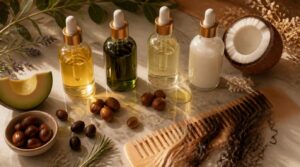
Essential oils are only half the equation — your carrier oil matters just as much. Pick the wrong one and you’re either weighing down fine strands or leaving coarse hair thirsty for moisture. Here’s how to match your scalp and hair type to the right base oil.
If you’re torn between two popular choices, this almond oil vs coconut oil for hair comparison shows which suits fine, oily, or dry strands best.
Jojoba Oil for Balanced Scalps
Your scalp already knows jojoba oil — chemically, anyway. Its esters mirror sebum’s structure almost exactly, so skin drinks it in rather than sitting on top.
That molecular compatibility means:
- Balances oil production (~30% less excess)
- Matches natural scalp pH (6.0–6.5)
- Rated non-comedogenic (0/5)
- Resists oxidation for years
Basically the Goldilocks carrier oil. Works whether you’re oily, dry, or somewhere in between.
Argan Oil for Fine Hair
If jojoba mimics sebum, argan oil is the silk scarf of carrier oils — pure lightweight moisture without the drag.
Its oleic acid runs 80% of the fatty profile, so fine strands drink it in fast. Studies show 87% of users felt less weighed down within two weeks.
Vitamin E adds breakage prevention and shine, cutting split ends by 22% over eight weeks — pure gloss, zero grease.
Grapeseed Oil for Oily Scalps
Excess sebum doesn’t mean you skip oil — it means you pick smarter. Grapeseed oil absorbs in 2–3 minutes, leaving zero residue.
For an extra boost without weighing hair down, try blending it with sweet orange oil for scalp health at that same gentle 0.5–1% dilution.
At roughly 70% linoleic acid, it regulates sebum production while calming clogged follicles (comedogenic rating: 2/5). Mix 5–7 drops into your carrier mix, massage 3–5 minutes, 2–3 times weekly — balanced, breathable, buildup-free.
Castor Oil for Coarse Hair
Thick, wiry, or curl-resistant strands need weight, and castor oil delivers — about 90% ricinoleic acid forms a protective barrier that locks moisture in for hours.
Massage it in for five minutes; you’ll boost scalp circulation by up to 15%, feeding follicles while softening stubborn cuticles. Mix 12–18 drops essential oils per ounce for coarse-hair compatibility that actually sinks in.
Coconut Oil for Dry Hair
Ever notice how parched hair just looks tired? That’s dehydration talking, and coconut oil answers with real moisture retention benefits — its lauric acid content also curbs protein loss, keeping keratin intact.
- Coats strands, sealing in hydration
- Softens brittle, dull texture
- Reduces frizz from dehydration
- Soothes dry scalp flaking
- Works as pre-wash protection
Apply 15–30 minutes pre-wash, or mix into your hair growth serum with other carrier oils.
Top 10 Essential Oils for Hair Growth Recipes
Now that you know which carrier oil suits your hair, it’s time to pick your active ingredients. Not all essential oils are created equal, and quality matters just as much as which ones you choose. Here are ten worth keeping in your hair care arsenal.
1. Plant Therapy Carrot Seed Essential Oil
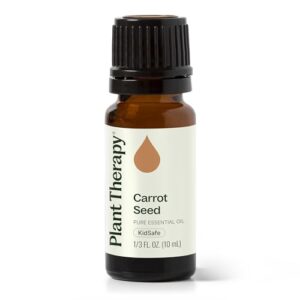
That earthy root in your salad has a secret side gig: scalp support. Plant Therapy steam-distills this oil from French-grown Daucus carota seeds, and alpha-pinene dominates the profile at 30–35%, with carotol adding another 15–20% for that signature musky depth.
Here’s the mechanism that matters — this oil triggers vasodilation, boosting blood flow so follicles actually get the nutrients they need. Its antioxidant load fights free-radical damage to follicle cells, while mild antimicrobial action keeps bacterial overgrowth in check. Some clinical observations even report a 12% density increase after eight weeks of consistent use.
Cap dilution at 2%, or 12 drops per ounce of carrier oil. Try 6 drops in a tablespoon of jojoba, massaged in twice weekly. Patch test first — always.
| Best For | People looking for a therapeutic-grade, third-party tested carrot seed essential oil to support mature or dry skin and create a calming atmosphere through diffusion. |
|---|---|
| Extraction Method | Steam Distilled |
| Lab Testing | Third-Party GC-MS |
| Requires Dilution | Yes |
| Brand | Plant Therapy |
| Primary Scalp Benefit | Circulation Support |
| Source Origin | France |
| Additional Features |
|
- Steam distilled from wild carrot seeds for therapeutic-grade purity
- Verified through third-party organoleptic and GC-MS testing for quality assurance
- Versatile use for skin support, topical massage, and diffusion
- Strong, earthy scent that some users find musty or unpleasant
- Requires dilution in carrier oil before topical use to avoid skin irritation
- Very small bottle size (0.3 mL) may require frequent repurchasing
2. Plant Therapy Organic Atlas Cedarwood Oil
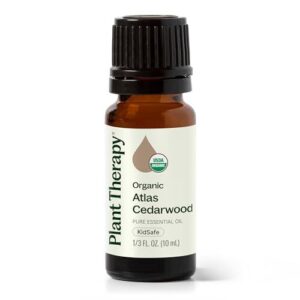
If carrot seed is the quiet root worker, Atlas Cedarwood is the grounding note your mixture didn’t know it needed. Plant Therapy steam-distills this one from Cedrus atlantica wood grown in Morocco, and the dry, smoky aroma alone makes a scalp routine feel less clinical, more spa night.
The real draw for your follicles is circulation support, paired with a scent that layers beautifully into mixtures without smelling medicinal.
Dilute between 2% and 4% in your carrier oil — so roughly 12 to 24 drops per ounce, depending on strength.
Bonus: it carries a KidSafe label, so parents mixing scalp oils for the whole family can breathe easy here. Just remember, this one’s for topical use only, always diluted first.
| Best For | Anyone building a scalp or hair-care routine who wants a grounding, spa-like scent along with support for circulation and a healthy-feeling scalp. |
|---|---|
| Extraction Method | Steam Distilled |
| Lab Testing | Batch-Specific GC-MS |
| Requires Dilution | Yes |
| Brand | Plant Therapy |
| Primary Scalp Benefit | Circulation Support |
| Source Origin | Morocco |
| Additional Features |
|
- Steam-distilled from real Cedrus atlantica wood grown in Morocco, with batch-specific GC-MS lab reports for purity
- Dry, smoky aroma blends well into mixtures without smelling overly medicinal
- Carries a KidSafe label, making it easier for parents to use in family-friendly scalp blends
- Must always be diluted before topical use (2–4%, roughly 12–24 drops per ounce), which adds an extra step
- Some users find the dropper design awkward for dispensing
- Scent perception varies widely — a few reviewers describe certain batches as musty or off-putting
3. Plant Therapy Clary Sage Essential Oil
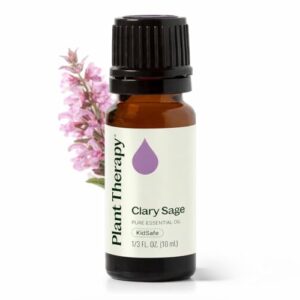
Cedarwood grounds a mixture; clary sage rounds it out. Plant Therapy’s version is steam-distilled from Salvia sclarea grown in France, and its dominant compound, linalyl acetate, sits around 60-70% of the profile — with linalool backing it up for that musky, winelike aroma people either love or find a little strong.
Neither compound is a proven hair-growth driver on its own, but a calmer, less irritated scalp is a better environment for follicles to do their job. That’s the real value here.
Dilute at 1-3% in your carrier oil of choice. It plays well with rosemary and lavender without stealing the show. One caveat: skip this one during pregnancy unless your provider says otherwise, since clary sage carries that caution on most safety sheets.
| Best For | Anyone building a hair-care routine who wants a calming, herbaceous oil to blend with rosemary or lavender for a soothing scalp environment. |
|---|---|
| Extraction Method | Steam Distilled |
| Lab Testing | Batch-Specific GC-MS |
| Requires Dilution | Yes |
| Brand | Plant Therapy |
| Primary Scalp Benefit | Calming Scalp |
| Source Origin | France |
| Additional Features |
|
- Steam-distilled in France with batch-specific GC-MS testing for purity verification
- Versatile use cases, from topical dilution for menstrual comfort to diffusing for a calming atmosphere
- Blends well with other oils like rosemary and lavender without overpowering them
- Strong, winelike aroma may be too intense for those who prefer subtler scents
- Must be diluted (1-3%) before topical use, adding an extra prep step
- Not recommended during pregnancy without a healthcare provider’s approval
4. Plant Therapy Organic Lavender Essential Oil
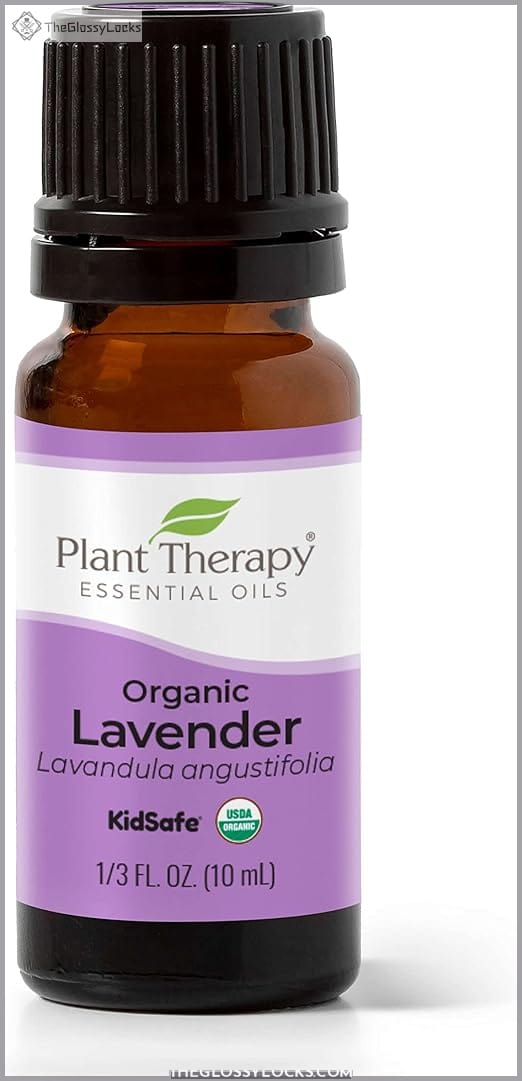
If clary sage is the quiet co-star, lavender’s the one everybody already trusts — and for once, the reputation holds up scientifically. Mouse studies using 2–5% concentrations showed 90–95% hair regrowth with zero toxic effects. That’s a real number, not marketing fluff.
Plant Therapy steam-distills this batch from Lavandula angustifolia grown in France or Spain, with third-party GC-MS testing confirming what’s actually in the bottle. USDA organic certification adds another layer of accountability most drugstore blends skip entirely.
Beyond growth support, lavender’s antimicrobial properties calm irritated, dandruff-prone scalps — which matters, since inflammation is enemy number one for follicle health. Dilute at 2–5% in your carrier oil, and it blends beautifully with rosemary or cedarwood. At $11.99 for 10 mL, it’s an easy staple to keep stocked.
| Best For | Anyone who wants a trusted, high-quality lavender oil for calming nighttime diffusion, gentle skin care, or scalp support. |
|---|---|
| Extraction Method | Steam Distilled |
| Lab Testing | Third-Party GC-MS |
| Requires Dilution | Yes |
| Brand | Plant Therapy |
| Primary Scalp Benefit | Hair Regrowth |
| Source Origin | France/Spain |
| Additional Features |
|
- USDA certified organic with batch-specific third-party GC-MS lab reports for verified purity
- Versatile use — great for diffusing, diluted skin application, or scalp/hair care
- Blends easily with oils like bergamot, cedarwood, and clary sage
- Some batches may have a strong "green" or herbaceous scent that needs airing out
- Not suitable for internal use or undiluted application on skin
- Individual results can vary depending on sensitivity and how it’s used
5. Plant Therapy Organic Lemongrass Essential Oil
Your kitchen spice rack has a secret twin working overtime in this bottle. Steam-distilled from Cymbopogon flexuosus grown on certified organic farms in Indonesia, this oil skips synthetic additives entirely — just plant, steam, and a 30 mL amber bottle.
The real draw for your scalp? Antifungal activity against Malassezia, the yeast species behind most dandruff flare-ups. Pair that with its circulation-boosting effect during massage, and you’ve got a solid pick for oily, dandruff-prone scalps specifically.
Dilution matters here more than with most oils. Stick to 2 drops per tablespoon of carrier oil, or roughly 3 drops per ounce for standard blends — this isn’t one to eyeball. A five-minute scalp massage is enough to get blood flowing without overdoing exposure. Bright, citrusy, and functional: lemongrass earns its spot.
| Best For | People looking for a natural, organic way to freshen indoor spaces, ease muscle tension through massage, and keep insects like ants and mosquitoes at bay. |
|---|---|
| Extraction Method | Steam Distilled |
| Lab Testing | Not Specified |
| Requires Dilution | Yes |
| Brand | Not Specified |
| Primary Scalp Benefit | Antifungal Action |
| Source Origin | Indonesia |
| Additional Features |
|
- USDA Certified Organic with no synthetic additives or chemicals
- Versatile use in diffusers, massage blends, and skincare (when diluted)
- Doubles as a natural insect repellent against sugar ants and mosquitoes
- Must be diluted with a carrier oil before topical use to avoid skin irritation
- Phototoxic — treated skin should avoid sun exposure for up to 12 hours
- Not safe for internal use and must be kept away from children and pets
6. Plant Therapy Organic Peppermint Essential Oil
That tingle hitting your scalp mid-massage? That’s menthol at work, and it’s doing more than waking you up. Plant Therapy’s version is steam-distilled from organic Mentha piperita leaves, packaged pure with no synthetic fillers.
Here’s the science bit: menthol triggers vasodilation, widening blood vessels so more oxygen and nutrients reach hair follicles. A 3% preparation even promoted the anagen (growth) phase in preclinical trials, putting peppermint in serious contender territory.
Don’t get cocky with concentration, though. Stick to 1–3% dilution for scalp use — this oil is potent, and your skin will let you know if you’ve overdone it. Packaged in an amber dropper bottle for freshness, it’s an easy, precise add to any growth-focused mixture.
| Best For | People looking for a versatile, high-quality organic peppermint oil to support scalp and hair care, ease muscle and head tension, or freshen up their home naturally. |
|---|---|
| Extraction Method | Steam Distilled |
| Lab Testing | Not Specified |
| Requires Dilution | Yes |
| Brand | Plant Therapy |
| Primary Scalp Benefit | Vasodilation |
| Source Origin | Not Specified |
| Additional Features |
|
- Certified organic and steam-distilled with no synthetic fillers, so you know exactly what you’re getting
- Multi-purpose use, from topical relief and aromatherapy to natural cleaning and pest control
- Comes in an amber glass bottle with a built-in dropper for freshness and easy, precise application
- Must be diluted before use, so it’s not as grab-and-go as pre-diluted products
- Strong scent can be overwhelming in small or poorly ventilated rooms
- Requires careful storage and handling since it’s toxic if ingested undiluted and unsafe near eyes or mucous membranes
7. Plant Therapy Organic Rosemary Essential Oil
Credibility matters when you’re trusting an oil to actually change your scalp, and this one brings the receipts. Plant Therapy’s rosemary is USDA Certified Organic, steam-distilled, and comes with batch-specific GC-MS reports so you can verify purity yourself.
It’s a CT 1,8-Cineole chemotype, meaning cineole content runs 30–45%, with alpha-pinene rounding out that sharp, herbaceous scent. In a six-month human trial, rosemary oil matched 2% minoxidil for hair count improvement — a genuinely impressive result for a plant extract.
Pairing rosemary with peppermint may amplify these results, since peppermint oil’s effect on scalp circulation and follicle stimulation adds a complementary mechanism to rosemary’s proven regrowth benefits.
Keep dilution at 3% max for scalp use (that’s 6 drops per ounce of carrier). Patch test first, store in dark glass, and you’ve got a serious growth-support tool on your hands.
| Best For | People seeking a certified organic, lab-verified rosemary essential oil to support hair and scalp health or to diffuse for mental clarity and focus. |
|---|---|
| Extraction Method | Steam Distilled |
| Lab Testing | Batch-Specific GC-MS |
| Requires Dilution | Yes |
| Brand | Plant Therapy |
| Primary Scalp Benefit | Growth Support |
| Source Origin | Not Specified |
| Additional Features |
|
- USDA Certified Organic and steam distilled, with batch-specific GC-MS reports for verified purity and potency
- Versatile for scalp care, aromatherapy diffusion, and relieving muscle tension or respiratory discomfort
- Convenient 10 mL amber glass bottle that protects the oil from light degradation
- Not safe for undiluted skin application; topical use on the head and face should stay at a maximum 1% dilution
- Its CT 1,8-Cineole chemotype gives it a more eucalyptus-like scent than traditional rosemary oil
- Small 10 mL volume may mean frequent repurchasing for regular users
8. Plant Therapy Spearmint Essential Oil
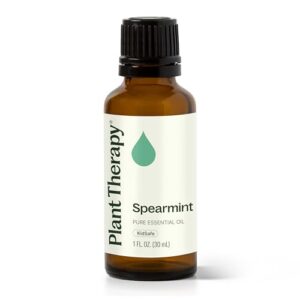
Think of spearmint as rosemary’s laid-back cousin — same minty family, way gentler energy. This oil is steam-distilled from Mentha spicata, third-party tested, and certified KidSafe for ages 2 and up, which makes it a smart pick if you’ve got little ones underfoot.
Carvone is the star compound here, and it’s what gives spearmint that cooling, anti-inflammatory feel on the scalp. Got some redness or irritation slowing your progress? This helps calm things down without the intensity of peppermint.
Stick to 1.7% dilution or lower — your scalp will thank you. Mix it with lavender or bergamot for a well-rounded, circulation-friendly mix. At $15.99 for 30 mL, it’s an easy, budget-friendly addition to your routine.
| Best For | Parents and anyone with young kids at home who wants a gentle, kid-safe minty oil for easing tension, calming an upset stomach, or freshening up DIY cleaners. |
|---|---|
| Extraction Method | Steam Distilled |
| Lab Testing | Third-Party Tested |
| Requires Dilution | Yes |
| Brand | Plant Therapy |
| Primary Scalp Benefit | Anti-Inflammatory |
| Source Origin | Not Specified |
| Additional Features |
|
- KidSafe certified for ages 2 and up when properly diluted, so it’s family-friendly
- Versatile uses, from easing headaches and stomach discomfort to boosting focus and refreshing household cleaners
- 100% pure steam-distilled from Mentha spicata, offering a gentle cooling effect without the intensity of peppermint
- Must be diluted before applying to skin, so it’s not a grab-and-go solution
- The bottle can occasionally be tricky to dispense from
- Needs proper storage to hold onto its potency and shelf life over time
9. Plant Therapy Organic Tea Tree Oil
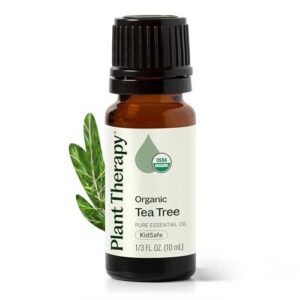
Some scalps need a deep clean, not just calm — and that’s where tea tree steps in.
Plant Therapy’s Organic Tea Tree Oil is steam-distilled from Melaleuca alternifolia leaves in Australia, USDA certified organic, and backed by batch-specific GC-MS reports. Its antimicrobial compounds go after fungal overgrowth directly, which matters if flaky buildup is clogging follicles and stalling growth. Less debris on the scalp means better conditions for new hair to come through.
Dilute between 2% and 5% in your carrier oil of choice — don’t skip this step, since tea tree can irritate skin at full strength. It’s also KidSafe, a nice perk for a family bathroom. At $11.99 for 10 mL, it’s an affordable staple for anyone managing dandruff or scalp buildup.
| Best For | People dealing with dandruff, scalp buildup, or minor skin irritations who want a pure, organic essential oil they can dilute into their own routine. |
|---|---|
| Extraction Method | Steam Distilled |
| Lab Testing | Batch-Specific GC-MS |
| Requires Dilution | Yes |
| Brand | Plant Therapy |
| Primary Scalp Benefit | Antimicrobial Cleanse |
| Source Origin | Australia |
| Additional Features |
|
- USDA Certified Organic and GMO-free, with batch-specific GC-MS reports for quality assurance
- Versatile for cleaning, deodorizing, and soothing skin irritations or blemishes when diluted
- Helps support a healthier scalp and hair by reducing dryness
- Must be diluted before topical use, so it’s not ready to apply straight from the bottle
- For external use only, with a caution to consult a physician if pregnant or under medical care
- Discontinue use if skin irritation or sensitivity develops
10. Ylang Ylang Organic Essential Oil
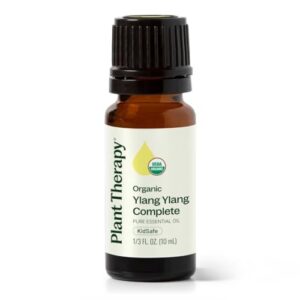
Every hair oil recipe needs a finishing note, and ylang ylang is it — sweet, floral, and steam-distilled from Cananga odorata flowers in Madagascar.
What makes it useful beyond the scent? Its linalool and geraniol content, roughly 30-40% and 10-15% respectively, help balance sebum production. That matters because oily follicles get clogged and stall growth, while dry ones turn brittle — ylang ylang works the middle ground.
Dilute to 2-5% in a carrier oil; jojoba and argan pair especially well, absorbing without residue. GC-MS testing on this organic batch confirms 98.5% purity, USDA Organic and ISO 9001 certified.
At 10 mL for $19.99, it’s not cheap, but a few drops go far in massage oils, roll-ons, or your nightly scalp mix.
| Best For | Anyone building their own hair or scalp oil blends who wants a natural, sweet-floral finishing note that also helps balance sebum production. |
|---|---|
| Extraction Method | Steam Distilled |
| Lab Testing | Third-Party GC-MS |
| Requires Dilution | Yes |
| Brand | Not Specified |
| Primary Scalp Benefit | Diffusion Calm |
| Source Origin | Not Specified |
| Additional Features |
|
- Balances sebum production thanks to its linalool and geraniol content, helping both oily and dry scalp types
- Verified 98.5% purity with USDA Organic and ISO 9001 certification, backed by GC-MS testing
- Blends beautifully with jojoba or argan oil for massage oils, roll-ons, or nightly scalp treatments
- Priced at $19.99 for just 10 mL, so it’s an investment compared to more common oils
- Strong floral aroma may be overpowering or too feminine-leaning for some users
- Requires careful dilution (2-5%) in a carrier oil, so it’s not as simple as a grab-and-go product
5 DIY Hair Growth Oil Recipes
Alright, you know the science and you know your oils — now let’s actually put them to work. These five recipes cover every scalp scenario, from dandruff-prone to bone-dry to just plain sluggish growth. Grab your dropper bottle, because here’s exactly what to mix.
Rosemary-Lavender One-Ounce Scalp Serum
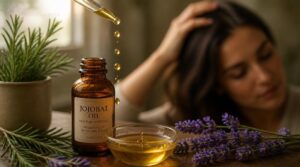
If rosemary’s your hair-growth workhorse, lavender’s the calm-down partner. Mix 0.6ml rosemary essential oil and 0.3ml lavender into 30ml jojoba base — that’s a solid 2-3% dilution. Massage 5 drops into your scalp nightly. Jojoba absorbs fast, no residue.
| Ingredient | Amount |
|---|---|
| Jojoba oil | 29.1ml |
| Rosemary/Lavender | 0.9ml |
Peppermint-Grapeseed Scalp Massage Oil
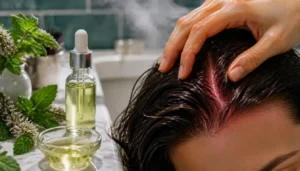
That tingle isn’t just for show. Peppermint’s menthol content (roughly 40%) triggers real vasodilation, boosting scalp blood flow up to 15%. Pair 6 drops peppermint with grapeseed oil’s featherlight, non-greasy viscosity — perfect for oily scalps.
Mix at 1:20 (1% dilution). Massage 2–3 minutes, fingertip circles only. Patch test 48 hours first — menthol bites if skin’s sensitive.
Cedarwood-Lavender Jojoba Scalp Blend
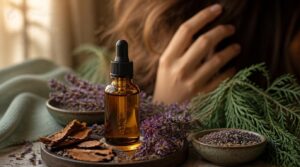
If menthol’s a bit much, ease into cedarwood instead. Mix 2ml cedarwood essential oil with 1.5ml lavender essential oil into 30ml jojoba oil — a 3% mix, still safe.
Cedrol content helps antimicrobial scalp balance; linalool calms irritation. Massage 5 drops in for two to three minutes, 2–3x weekly. Store amber, dark, cool.
Tea Tree Dandruff Scalp Oil
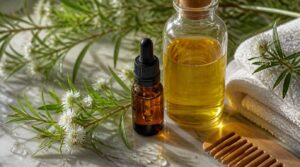
Flaky, itchy scalp? Skip cedarwood’s calm and go antimicrobial instead.
Mix 1.5ml tea tree oil into 30ml jojoba (5%) for shampoo-style strength, or 1ml into 30ml for gentler scalp-only use.
Terpinen-4-ol fights flaking; massage in, leave 10 minutes, rinse thoroughly — never leave tea tree on overnight. Patch test 48 hours first. Store amber and cool.
Castor-Coconut Overnight Hair Treatment
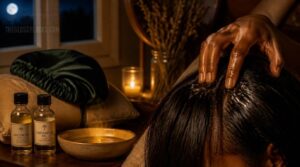
When your ends feel dry and stubborn, thick oils win. Mix 2 teaspoons castor with 2 teaspoons coconut, warm slightly, massage into scalp 3–5 minutes to boost circulation.
Wrap hair in a silk bonnet, sleep 6–8 hours. This moisture-locking duo seals hydration, cuts breakage, and leaves strands noticeably softer by morning.
How to Mix and Apply Hair Growth Oil Safely
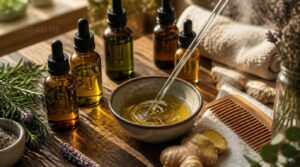
Picking the right oils is only half the job — how you mix and use them matters just as much. A little precision here keeps your scalp happy and your results on track. Here’s exactly how to get the ratios, timing, and safety steps right.
Measure a One-Ounce Carrier Base
One ounce equals roughly 30 mL — so grab a graduated syringe or liquid-measuring cup, not a kitchen scale, since oils vary in density.
Measure jojoba or your chosen carrier first, at eye level. Twenty drops per mL roughly translates to 600 drops of essential oil per ounce.
Pick a container that actually holds 30 mL, and stay consistent for reliable batches.
Follow One-to-Three Percent Dilutions
Math matters here more than mood. For scalp use, stick between 1-3% dilution — that’s 3 to 9 drops essential oil per ounce of carrier oil, max 9 drops for stronger ratios.
Beginners start at 1%. Pregnant readers or kids under 12 need far lower concentrations — think 0.5% or less, always with guidance first.
Patch Test for 48 Hours
Skip this step and you’re gambling with your scalp. Swab a dime-size dab onto your inner forearm, leave it uncovered 15 minutes, then bandage loosely.
Check again at 24 hours, then finalize at 48. Log the date, oil, and any redness or itching. Faint redness alone means dilute further before scalp use; blistering means don’t use that oil at all.
Apply, Massage, and Set Frequency
Passed your patch test? Good. Now get precise: 1–2 teaspoons on dry scalp, fingertip circles (no nails) for 30 seconds per zone, tapping the last 30 seconds to boost circulation.
Sessions run 5–7 minutes, 2–3 times weekly on non-consecutive days. Apply 30 minutes before shampooing.
- Dry scalp
- 1–2 tsp oil
- 5–7 min massage
- 2–3x weekly
Storage, Irritation, and Contraindications
Amber glass, airtight cap, cool dark cabinet — that’s your mixture’s best insurance against oxidation.
Watch for redness or burning within minutes; that’s your cue to dilute further, not push through.
Citrus oils bring phototoxicity — skip sun exposure for 12 hours after use.
Skip rosemary on blood thinners, peppermint with epilepsy. Pregnant or on medication? Ask your doctor first.
Frequently Asked Questions (FAQs)
What essential oils can I mix for hair growth?
Think of your scalp as soil, and essential oils as seeds worth choosing wisely.
If you’re curious how a heavier oil behaves on textured strands, this guide to castor oil’s effects on 4C hair shows why patch testing and realistic expectations matter.
Try a Rosemary Peppermint Mix, Lavender Cedarwood Mix, Tea Tree Carrier, Castor Coconut Treatment, or Ylang Ylang Rosemary — thoughtful essential oil blending, not random dabbing.
What is the Chinese secret to hair growth?
No single secret — it’s TCM hair nutrition: daily scalp massage for circulation, herbal tonics like He Shou Wu, and organ balance (kidneys, blood). Pair with rosemary or peppermint oil in jojoba; results build gradually over months, not overnight.
What is the best homemade hair growth oil recipe?
Picture a garden tended with the right water for each bloom — that’s your scalp. The Rosemary Lavender Serum wins: 10–12 drops rosemary, 6–10 lavender per ounce jojoba, massaged nightly for real results.
What is the best oil mixture for hair growth and thickness?
A rosemary peppermint mix in jojoba, at 2–3% dilution, tops the list for growth and thickness — rosemary rivals minoxidil in trials, while peppermint’s circulation boost via scalp massage helps follicles thrive together.
What essential oils should I mix for hair growth?
Your scalp’s a garden, and every drop counts. Go with a rosemary lavender mix for circulation, add peppermint tea tree for a fungal-fighting scalp reset, or try a cedarwood rosemary mix at proper dilution ratios in your favorite carrier oils.
How to make homemade hair oil for hair growth?
Combine jojoba or coconut oil with 2–3% rosemary or peppermint essential oil, patch test for 48 hours, then massage into your scalp in circular motions for 3–5 minutes, twice weekly.
What to mix with oil for hair growth?
Think carrier oil pairing plus purpose-built additives: jojoba or argan as your base, then aloe vera gel, green tea extract, biotin powder, and vitamin E — a proper hair growth serum, not just plain oil.
How to make hair growth serum with essential oils?
Good things come in small bottles: fill a dropper bottle with 1 tbsp jojoba oil, 4 drops rosemary, 2 drops peppermint. Shake well, massage into scalp for 2–3 minutes, leave on 20 minutes, then rinse thoroughly.
What essential oils help hair growth?
Rosemary, peppermint, lavender, tea tree, and cedarwood lead the pack. Rosemary rivals minoxidil in trials, peppermint stimulates growth phases, lavender soothes without toxicity, tea tree experiences dandruff, and cedarwood blends ease alopecia areata — all diluted properly, of course.
How to make a hair growth oil?
Think of it as building a smoothie, not baking a soufflé — no exact science required. Pick your carrier oil, mix in essential oils at a 1–3% dilution, patch test 48 hours, then massage into your scalp.
Conclusion
Picture a client six months into nightly rosemary-lavender massages, patch test done, dilution dialed to 2%—her part line finally closing in the mirror. That’s not luck. That’s chemistry meeting consistency.
The best hair growth oil recipes with essential oils won’t work overnight, and they won’t work if you skip the patch test or eyeball your dilution. Respect the ratios, give it twelve weeks, and let your follicles do what they’re built to do: grow.