This site is supported by our readers. We may earn a commission, at no cost to you, if you purchase through links. This content is for general informational and educational purposes only and is not a substitute for professional medical, dermatological, or nutritional advice.
Your scalp produces its own oil — sebum — designed to coat and protect every strand from root to tip. But heat styling, harsh shampoos, and seasonal air strip that layer faster than your skin can replace it, leaving behind the tight, itchy dryness that no amount of conditioner seems to fix.
Jojoba oil sits in an unusual position among plant oils: it’s technically a liquid wax, not an oil at all, and its molecular structure mirrors sebum closely enough that your scalp absorbs it without resistance. That chemistry matters more than most people realize, as far as lasting jojoba oil scalp moisture — and it changes how you should be using it.
Table Of Contents
- Key Takeaways
- Why Jojoba Oil Locks in Moisture
- How It Balances Scalp Oil
- Best Ways to Apply Jojoba Oil
- What Jojoba Oil Can’t Fix
- Safe Use to Prevent Buildup
- Frequently Asked Questions (FAQs)
- Can you mix jojoba oil with frankincense?
- Can I use jojoba oil to moisturize a bald head?
- Can jojoba oil expire or go rancid?
- Is jojoba oil safe during pregnancy or breastfeeding?
- Does jojoba oil work on color-treated hair?
- Can children use jojoba oil on their scalp?
- Does climate or humidity affect jojoba oils performance?
- Conclusion
Key Takeaways
- Jojoba oil is a liquid wax, not a true oil, and its molecular structure so closely mirrors your scalp’s own sebum that it absorbs without resistance and helps regulate oil production naturally.
- It creates breathable, moisture-locking barrier through its wax esters — keeping hydration in without sealing your scalp off or leaving greasy buildup.
- A little goes a long way: a pea-sized amount massaged into dry areas before shampooing, or a few drops mixed into conditioner, is enough to see real results without clogging pores.
- Jojoba oil supports scalp health and comfort, but it can’t treat active dandruff, stimulate hair regrowth, or replace medical care for conditions like alopecia — know its limits before expecting miracles.
Why Jojoba Oil Locks in Moisture
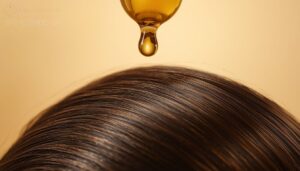
Jojoba oil doesn’t just sit on your hair — it works at a structural level to hold moisture where it matters most. That’s not an accident; it comes down to a few specific properties that set it apart from most other oils.
Its unique wax ester structure closely mimics your scalp’s natural sebum, which is why it works especially well for low porosity hair types that struggle to absorb most oils.
Here’s what’s actually happening when jojoba oil locks in moisture.
Wax Ester Structure That Mimics Sebum
What makes jojoba oil genuinely special is its chemistry. Unlike typical plant oils built from triglycerides, jojoba is composed almost entirely of wax esters — the same molecular family your scalp naturally produces. This sebum mimicry works because of three matching qualities:
Other sebum‑like options such as meadowfoam seed oil also feature long‑chain wax esters.
- Chain Length Matching — jojoba’s carbon chains align closely with your own sebum
- Unsaturation Kinks — shared double bonds create similar spreadability across the scalp
- Hydrophobic Film Formation — both resist water, staying concentrated where your skin needs lubrication most
That structural compatibility — down to the ester bond stability and mono vs diester balance — is why jojoba integrates so seamlessly into your scalp’s existing lipid layer, supporting scalp hydration without disruption.
Breathable Barrier Against Water Loss
Once jojoba’s wax esters integrate into your scalp’s lipid layer, they create something impressive — a noncomedogenic barrier that works like a microporous architecture, allowing vapor transmission while practicing liquid water rejection. This breathability-waterproof tradeoff means moisture stays locked in through selective wettability, not sealed off.
Jojoba’s wax esters form a breathable barrier that locks moisture in without sealing your scalp off
Your scalp breathes, hydration holds, and protective hair barrier function stays intact without greasiness.
Vitamin E Support for Scalp Skin
Beyond the barrier itself, vitamin E — which makes up nearly 80% of jojoba oil’s vitamin content — quietly does the heavy lifting for scalp moisturization techniques.
Its antioxidant properties target three real concerns:
- Free Radical Defense shields follicles from UV damage prevention
- Anti-Inflammatory Relief calms itch and redness
- Lipid Stabilization enhances skin barrier function and cellular repair
Your scalp stays protected, not just moisturized.
Lightweight Feel Without Greasy Buildup
Vitamin E shields your follicles — but what about the texture sitting on your scalp all day?
Unlike heavier oils, jojoba’s Light Emollient Texture allows Rapid Scalp Absorption through its wax-ester structure, leaving a Balanced Moisture Film rather than a slick coat. It’s a noncomedogenic oil that helps balance scalp oil production without the greasy aftermath.
| What You Apply | What You Feel |
|---|---|
| Too much oil | Heavy, slick roots |
| Small amount, massaged in | Minimal Residue Finish |
| Blended into conditioner | Lightweight finish, even spread |
| Applied to damp hair | Better oil absorption, less buildup |
| Thin Film Formation | Soft scalp, no greasy residue |
How It Balances Scalp Oil

Your scalp is always trying to find its balance — not too oily, not too dry.
Ingredients like tea tree and jojoba oil work with your scalp’s chemistry — and you’ll find a helpful breakdown of skin-soothing natural oils for scalp balance that covers exactly how they do it.
Jojoba oil works with that process rather than against it, and the way it helps looks different depending on what your scalp actually needs.
Here’s how it plays out across four common situations.
Calming an Overactive Scalp
An overactive scalp is basically your skin overreacting — pumping out too much sebum and triggering inflammation in the process. Jojoba oil’s wax-ester structure helps sebum regulation by signaling oil sufficiency, so your scalp gradually eases off.
Pairing that oil-balancing routine with nutrient-dense choices gives hair the full support it needs, and this guide to natural home remedies for hair growth breaks down how diet and scalp care work together.
Its anti-inflammatory properties, combined with gentle soothing massage, work to calm that reactive cycle.
Here’s how it helps:
- Balancing scalp oil by mimicking natural sebum signals
- Scalp pH balance restoration through anti-inflammatory botanicals
- Soothes scalp irritation without disrupting microbiome balance
- Heat protection synergy when applied before styling tools
Helping Dry, Flaky, Itchy Scalps
When your scalp feels tight, itchy, and flaky, it’s usually crying out for moisture — not more stripping. Jojoba oil’s anti-inflammatory phytochemicals soothe scalp irritation quickly, while its wax esters restore scalp moisture balance without heaviness.
Scalp pH stabilization happens naturally as the oil conditions. For nighttime moisturization, apply a few drops before bed.
Ingredient synergy with vitamin E deepens dry scalp relief.
Supporting Dandruff-prone Scalp Comfort
Dandruff often signals a scalp that’s lost its natural balance — not just a hygiene issue.
Jojoba oil’s antimicrobial properties work against Malassezia yeast, and when paired with tea tree oil, that antifungal synergy becomes noticeably stronger. anti-inflammatory properties ease itch, while pH stabilization and microbiome balance support a healthier environment.
Layer it gently before a gentle cleansing routine to support scalp moisture without displacing your dandruff shampoo’s active ingredients.
When Oily Roots and Dry Patches Overlap
Some scalps play by two sets of rules at once — oily roots by day two, dry patches that pull tight near the temples. That’s a combination scalp, and it needs zone-specific hydration rather than one blanket approach.
Apply jojoba oil only to dry areas for targeted oil control and scalp pH balancing, keeping it away from already-greasy roots to maintain sebum balance without overloading them.
Best Ways to Apply Jojoba Oil
Knowing jojoba oil works is one thing — using it right is another. How you apply it makes a real difference in what you get out of it.
Here are four simple methods worth trying.
Pre-shampoo Scalp Massage

A prewash treatment changes everything about how jojoba oil performs.
Warm up one tablespoon between your palms, then work through scalp sectioning — hairline, crown, temples — using fingertip pressure and a steady circular motion technique.
This is how to apply jojoba oil to the scalp correctly: massage duration of five to seven minutes, followed by warm water prep before shampooing.
Your scalp moisture balance improves noticeably.
Leave-in Spot Treatment for Dry Areas
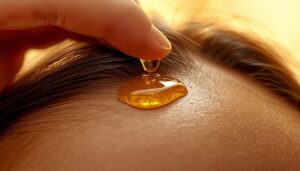
Not every part of your scalp needs the same attention. A leave-in treatment lets you focus jojoba oil exactly where tightness or flaking shows up, using a Targeted Application Technique — just 1–2 drops massaged into dry patches.
This Non-Comedogenic Formula promotes Scalp pH Stabilization without clogging pores. What you get:
- Immediate comfort on tight, irritated spots
- Lighter feel than a full scalp soak
- scalp moisture balance between wash days
- Ingredient Synergy with your existing routine
- greasy roots, just targeted relief
Mixing Into Shampoo or Conditioner
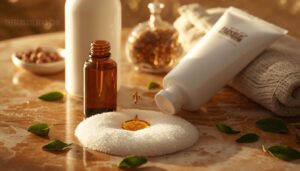
Mixing jojoba oil into your shampoo or conditioner is a simple upgrade — just 3–5 drops per use.
Surfactant Compatibility matters here: too much oil disrupts lathering and leaves a residue. pH Impact is real too; adding oil shifts the formula’s feel. For Shelf Stability, mix per wash rather than storing a blended bottle.
| What to Mix | Dosage Guidelines |
|---|---|
| Shampoo | 3–4 drops |
| Conditioner | 4–5 drops |
Short Hot-oil Treatment Routine
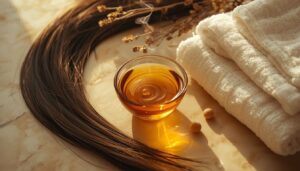
Want more than a quick scalp massage? A short hot-oil treatment takes things a step further.
Warm oil prep is simple — heat jojoba using warm (never boiling) water until it feels comfortable on your wrist.
Use Scalp Sectioning Technique to distribute evenly, massage in circular motions, then apply Cap Timing Tips: cover for 20 minutes.
Follow with a thorough Shampoo Rinsing Strategy — two passes clear everything cleanly.
What Jojoba Oil Can’t Fix

Jojoba oil does a lot of good things for your scalp, but it has real limits worth knowing. It’s not a cure-all, and treating it like one can lead to missed care when your scalp actually needs something stronger.
Here’s what jojoba oil simply can’t do.
No Proven Hair Growth Boost
Here’s the honest truth: jojoba oil is a standout for scalp moisture retention and balancing scalp oil production, but the clinical evidence gap around hair regrowth is real. No human studies confirm that it activates follicles or extends the growth phase — that’s a mechanism mismatch.
Follicle activation myth and regrowth claim limit matter here.
Use it for scalp health, not as a growth therapy.
Not a Replacement for Dandruff Treatment
Jojoba oil plays a solid adjunctive treatment role — but it can’t do what a medicated shampoo does. Here’s why that distinction matters for dandruff:
- Its antifungal absence means Malassezia yeast keeps thriving unchecked.
- Moisturizing alone won’t stop rapid skin shedding.
- Symptom severity screening helps identify when inflammation needs real medicine.
- Clinical diagnosis importance rises when flakes return persistently.
- Medicated shampoo requirement stays non‑negotiable for active dandruff.
When Alopecia Needs Medical Care
Some hair loss calls for more than a good oil. If you notice sudden hair loss — patches appearing overnight or shedding that worsens within days — that’s your body asking for a dermatology referral, not a home remedy.
| Warning Sign | What It May Mean | Next Step |
|---|---|---|
| Scalp pain indicators | Inflammatory alopecia areata | See a clinician promptly |
| Systemic symptoms present | Non-dermatologic cause possible | Urgent medical evaluation |
| Diagnostic blood tests needed | Deficiency or autoimmune trigger | In-person scalp assessment |
Androgenic alopecia and autoimmune conditions require clinical diagnosis — the benefits of jojoba oil for scalp health simply don’t extend there.
Avoiding Overpromising on Results
Even the best oils have limits — and scalp moisture balance is where jojoba genuinely earns its place, not everywhere else. Qualified language matters here. Realistic expectations keep you safe.
- Evidence-based claims show it conditions, not cures
- Consumer transparency means no guaranteed outcomes
- Benefits of jojoba oil for scalp health stay cosmetic
- Regulatory compliance bars overstating scientific evidence
Safe Use to Prevent Buildup
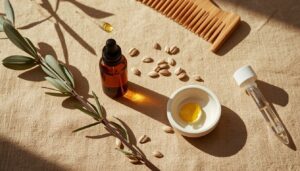
Jojoba oil works best when you use it the right way — a little goes a long way, and more isn’t always better. Getting your routine right from the start saves you from greasy roots and pore congestion down the road.
Here’s what you need to know before making it a regular part of your hair care.
Patch Testing Before First Use
Before you apply anything new to your scalp, a patch test is worth doing. Apply a small, diluted amount behind your ear — that’s your test area selection.
Leave it for 48 hours, then check again at 96 hours, since allergic reactions often show up late. Redness or itch signals a problem.
This simple timing protocol catches most skin sensitivity and allergic reaction risk before it spreads.
Choosing Cold-pressed, Pure Oil
Not all jojoba oils are equal — label reading matters. Choosing pure cold-pressed jojoba oil means you’re getting the real thing: extracted below 120°F with no chemical solvents, so natural vitamin E and antioxidants stay intact.
Look for these quality markers:
- Cold-pressed, solvent-free — no hexane residues
- Single-ingredient label — filtration clarity confirms no blended oils
- Dark glass packaging — enhances shelf-life stability up to two years
How Much to Use for Your Hair Type
Getting the amount right depends on two things: hair length dosage and your hair density amount.
Fine hair needs just a pea-sized drop — fine strands build up fast.
Curly hair frequency and scalp dryness scaling work differently; coily types can start with a nickel-sized amount, focusing on ends.
Think of jojoba as a sealant for hair moisture, not a soak.
Avoiding Clogged Pores and Greasy Roots
Too much of a good thing clogs pores fast. Stick to controlled oil application — a few drops, massaged evenly, not pooled in one spot. Rinse thoroughly after styling to avoid post-styling buildup.
Pair jojoba with non-comedogenic, lightweight styling products to support oil balance without suffocating follicles. Regular scalp cleansing frequency keeps sebum production steady, helping you maintain that sweet spot between balancing oily and dry scalp needs.
Frequently Asked Questions (FAQs)
Can you mix jojoba oil with frankincense?
Yes, you can. Frankincense essential oil blends well with jojoba thanks to strong carrier compatibility.
Always dilute properly and do a patch test first to screen for sensitivity before applying to your scalp.
Can I use jojoba oil to moisturize a bald head?
Absolutely. A bald head still has skin that needs care.
Jojoba oil works as a noncomedogenic sealant and moisture barrier, keeping your scalp hydrated without clogging pores or leaving greasy residue behind.
Can jojoba oil expire or go rancid?
Jojoba oil doesn’t spoil as fast as most oils, but it’s not invincible. antioxidant properties slow oxidative stress, yet heat, light, and air still shorten its shelf life over time.
Is jojoba oil safe during pregnancy or breastfeeding?
For topical scalp use, it’s generally considered safe. No significant transdermal absorption or hormonal interaction has been documented.
Still, a dermatologist’s recommendation is wise, especially regarding infant exposure through skin contact while breastfeeding.
Does jojoba oil work on color-treated hair?
It works well on color-treated hair. The wax esters seal lifted cuticles, supporting cuticle sealing and fade mitigation, while vitamin E acts as a UV shield to help maintain color retention and vibrancy boost.
Can children use jojoba oil on their scalp?
Yes, children can use jojoba oil on their scalp.
Always patch test first to check for allergy risk, use tiny amounts, and keep parental supervision close — especially for kids with pediatric skin sensitivity.
Does climate or humidity affect jojoba oils performance?
Climate does play a role.
Cold air thickens its texture slightly, while heat thins it for faster absorption.
Humidity slows evaporation loss, and dry seasons demand more frequent application to maintain scalp moisture balance.
Conclusion
It’s worth noting that your scalp already knows what it needs — it’s been producing its own version of jojoba all along. The coincidence that a desert shrub makes a wax so close to human sebum isn’t a marketing angle; it’s chemistry working in your favor.
Used correctly, jojoba oil scalp moisture isn’t a trend to chase, but a simple gap to fill. Patch test, use sparingly, and let the biology do the work.