This site is supported by our readers. We may earn a commission, at no cost to you, if you purchase through links. This content is for general informational and educational purposes only and is not a substitute for professional medical, dermatological, or nutritional advice.
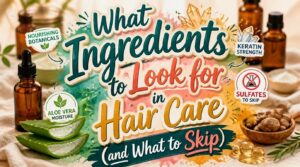
If you’ve ever scanned a hair care label and wondered whether “hydrolyzed keratin” means anything, you’re not alone. Ingredient lists are a battlefield—packed with scientific names, marketing spin, and claims that rarely match reality. In the last decade, manufacturers have swapped sulfates for gentler surfactants, and clinical studies have exposed which compounds actually repair, hydrate, or protect.
The real question: which ingredients in hair care deliver measurable results, and which ones just pad the bottle? With clinical research behind every claim, you can cut through the noise and spot what your hair truly needs—whether it’s structural repair, scalp health, or moisture that lasts.
Table Of Contents
Key Takeaways
- Ingredients like hydrolyzed keratin, ceramides, and panthenol have measurable clinical evidence behind them — most others on the label are padding.
- Molecular weight determines how deeply an ingredient actually works: high-MW hyaluronic acid coats the surface, while low-MW variants penetrate the strand for deeper hydration.
- Your scalp needs its own targeted actives — zinc pyrithione disrupts fungal cell function at the membrane level, while niacinamide at 2–5% regulates sebum and reinforces the lipid barrier without stripping it.
- Reading an ingredient label by weight order reveals what a formula actually delivers — if your "hero" active appears near the bottom, it’s likely present in a cosmetically insignificant concentration.
Look for These Hair Care Ingredients
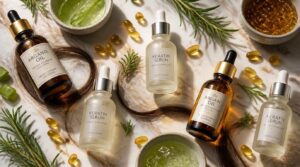
Not every ingredient on a label earns its place — some genuinely work, and some are just marketing filler. A handful of compounds have real science behind them, and knowing which ones to look for gives you a real advantage. These five are worth your attention.
For a deeper dive into which ingredients actually promote hair growth, check out this guide to scientifically proven hair growth compounds.
Hydrolyzed Keratin
Hydrolyzed keratin deposits peptide fragments directly onto damaged cuticles, filling microscopic gaps and smoothing the fiber surface. Molecular weight matters: 2–10 kDa is the cosmetic sweet spot.
- Fills cuticle microgaps
- Forms a friction-reducing film
- Eases combing after washing
- Resists humidity to cut frizz
- Pairs well with silicones and panthenol
Sourcing and hydrolysis method directly affect performance across brands. High-quality products often use low-molecular-weight peptides to improve hair volume and internal feel.
Panthenol
Where keratin patches the structure, panthenol takes care of hydration. As a provitamin B5, it converts to pantothenic acid once absorbed, reinforcing the cuticle while locking moisture into the strand. That dual action — humectant plus film-former — reduces frizz without heaviness.
Consistent use improves elasticity and softens texture. On the scalp, it helps barrier function, calming dryness-related irritation.
Hyaluronic Acid
Panthenol controls moisture from within, but hyaluronic acid works differently — it draws water toward the strand from the outside in. As a hygroscopic polymer, it can bind up to 1,000 times its weight in water, making it one of the most efficient humectants in hair care.
Molecular weight matters here. High-MW HA coats the cuticle surface; low-MW variants penetrate more readily.
Ceramides
Where hyaluronic acid pulls moisture in, ceramides keep it there. These lipid barrier molecules make up roughly 40–50% of the lipid matrix in the stratum corneum, filling the spaces between cells to block transepidermal water loss.
In hair, ceramides line the cuticle’s lipid envelope, preserving structural integrity and reducing frizz. Plant-derived ceramide species work just as effectively as animal-sourced ones.
Jojoba Oil
Few natural ingredients match the scalp’s own chemistry as closely as jojoba oil. Technically a liquid wax, it mirrors human sebum closely enough to condition without clogging pores — a rare combination.
Its antioxidant vitamin E content protects the scalp from oxidative stress, while its moisture-sealing wax esters reduce water loss without the heaviness of traditional emollients. Lightweight, non-comedogenic, and shelf-stable.
Ingredients for Hair Repair
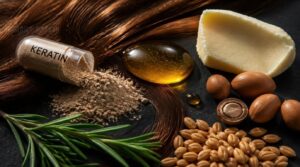
When hair is damaged — whether from heat, chemicals, or just daily wear — the right ingredients can actually rebuild what’s been lost, not just mask it. Some compounds work by filling structural gaps in the cuticle; others strengthen the fiber from the inside out. Here are five worth knowing.
Damaged hair isn’t just covered up—certain ingredients can truly rebuild lost structure and strength from the inside out
Vegan Keratin Alternatives
If you’re avoiding animal-derived ingredients, bioengineered amino acid sequences can replicate keratin’s main function without the ethical compromise.
For more plant-based options that complement these bioengineered solutions, check out safe, natural ingredients for skin protection and hydration.
- Plant protein films coat the hair shaft for up to 4–6 weeks
- Tamarind seed derivatives act as lightweight vegan film-formers
- Encapsulated protein technology extends smoothing across multiple washes
- Amino acid combination with conditioning oils improves elasticity
- Hydrolyzed proteins reduce frizz and surface roughness
These ingredients support hair shaft integrity — surface repair, not internal bond reformation.
Wheat and Rice Proteins
Wheat and rice proteins work through protein solubility differences — wheat’s glutenin and gliadin fractions bond tightly to the hair shaft, reinforcing structural integrity, while rice protein’s hypoallergenic amino acid profile makes it the safer pick for sensitive scalps.
Rice protein’s high digestibility translates to strong cuticle absorption. Hydrolyzed versions penetrate deeper, smoothing surface roughness and rebuilding compromised hair shaft integrity without allergenic risk.
Argan Oil
Argan oil’s fatty acid composition — 47% oleic, 33% linoleic — makes it one of the most trusted hair care ingredients for repair. It works as a natural emollient, supporting lipid layer maintenance and sealing cuticles.
- Antioxidant hair protection via vitamin E
- Scalp microbiome balance via phenolics
- Sustained hair hydration, no added residue
Choose cold pressed quality for intact nourishing and moisturizing ingredients.
Biotin
Vitamin B7 earns its place in repair formulas — but not by growing hair directly. Biotin functions as a coenzyme supporting fatty acid metabolism and cellular energy, processes that sustain healthy follicle activity. Deficiency visibly produces brittle, thinning hair.
That said, if you’re not deficient, extra biotin won’t accelerate growth. It works best alongside other actives, not solo.
Coconut Oil
Coconut oil earns its repair credentials through chemistry. Its lauric acid content — roughly 47% of total fatty acids — gives it a low molecular weight that lets it penetrate the hair shaft rather than just coat the surface, actively reducing protein loss during washing.
Choose virgin over refined. Processing strips coconut oil’s natural compounds, and that distinction matters on a label.
Ingredients for Moisture and Shine
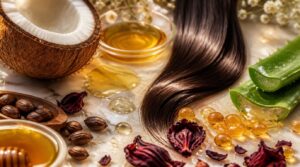
Moisture and shine come down to chemistry — specifically, how well an ingredient attracts water, holds it in, and keeps the surface smooth.
Some of the best options for this work on multiple levels, whether that’s drawing humidity into the strand, sealing the cuticle, or reducing the friction that makes hair look dull. Here’s what’s actually worth looking for.
Glycerin
Glycerin pulls moisture from the air directly into your hair shaft — a hygroscopic effect that keeps strands soft for hours.
Pair it with an occlusive like ceramides, though. Without one, it draws moisture back out in dry conditions.
Five things to know:
- Concentration of 2–10% is standard in leave-on products
- Listed as glycerin or glycerol on labels
- Works best paired with ceramides or fatty alcohols
- Derived from vegetable origin for cleaner formulations
- Compatible with most surfactants and polymers
Polyglutamic Acid
Where glycerin borrows moisture from the air, polyglutamic acid holds it there even longer — produced through microbial fermentation and broken down safely into amino acids.
Its PGA moisture film wraps each strand, cutting moisture loss without grease. For heat-damaged hair, it pairs well with hyaluronic acid, boosting hydration levels much more effectively. On labels, look for "polyglutamic acid" among active treatment ingredients.
| Property | Detail | Hair Benefit |
|---|---|---|
| Source | Microbial fermentation | Biodegradable, clean label |
| Function | Humectant + film-former | Moisture retention, lightweight frizz control |
| Best Paired With | Hyaluronic acid | Enhanced hydration boost |
Shea Butter
Where polyglutamic acid holds moisture in, shea butter seals it there — physically. Its fatty acid profile (oleic, stearic, palmitic, linoleic) forms a protective film on the hair shaft that resists moisture loss over time.
Vitamins A, E, and F support follicular health while antioxidants buffer against UV and environmental damage. Low comedogenic rating means scalp-safe use. It melts on contact — a little goes far.
Fatty Alcohols
Shea butter locks the door — fatty alcohols build the walls around it.
Despite the name, these waxy, long-chain compounds (cetyl at C16, stearyl at C18) don’t dry hair out. They soften cuticles, thicken conditioner texture, and stabilize emulsions so formulas don’t separate on the shelf. Chain length determines weight: behenyl (C22) gives rich slip; lauryl (C12) keeps things lighter.
Dimethicone
Dimethicone earns its place on hair care product labels. This silicone polymer coats each strand with a non-water-soluble barrier, flattening cuticle scales and cutting friction between strands.
- Shields hair from heat tool damage
- Smooths cuticle for visible shine
- Cuts static and frizz
- Locks in moisture between washes
- Improves slip and hair texture
Watch for product buildup in hair care products — clarify periodically.
Ingredients for Scalp Health
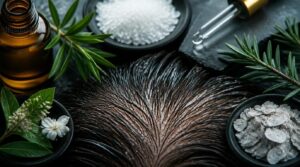
Your scalp is the foundation everything else depends on, and neglecting it shows up fast — in flakes, irritation, excess oil, or hair that just won’t grow right. The right actives can reset that balance without disrupting the microbiome your scalp already works hard to maintain. Here’s what’s actually worth looking for.
Salicylic Acid
Think of it as a sweep crew for your scalp. Salicylic acid is a BHA exfoliant that loosens dead skin cells and clears scalp buildup at the follicle level — not just on the surface.
| Aspect | Detail |
|---|---|
| Mechanism | Keratolytic exfoliation of outer skin layer |
| Best for | Dandruff, seborrheic dermatitis, clogged follicles |
| Product formats | Shampoos, scalp serums, leave-on treatments |
| Irritation risk | Increases with higher concentrations and frequency |
| Label name | Listed as "Salicylic Acid" |
Sensitive scalps should limit use. Burning or redness means reduce frequency immediately.
Niacinamide
Niacinamide works harder than its gentle reputation suggests. A water-soluble B3 derivative, it regulates sebum production, strengthens the scalp barrier via ceramide synthesis, and reduces inflammation — usually formulated at 2–5%.
Five reasons it belongs in your routine:
- Balances sebum without stripping
- Reinforces the scalp’s lipid barrier
- Reduces inflammatory cytokines quickly
- Helps hair follicle health
- Blends cleanly with most scalp actives
Tea Tree Oil
Steam-distilled from the leaves of Melaleuca alternifolia, tea tree oil earns its place through chemistry, not marketing. Its primary active, terpinen-4-ol — usually 35–48% of the whole oil — disrupts microbial cell membranes, triggering ion leakage that effectively shuts down fungal respiration.
That’s why it reduces scalp itching and irritation at the source. Always dilute before applying; neat essential oil irritates skin.
Zinc Pyrithione
Zinc pyrithione works as a metal ionophore — it floods fungal cells with copper ions, dismantling the iron-sulfur proteins that keep Malassezia alive.
- Disrupts membrane transport pumps
- Collapses ATP synthesis
- Reduces scalp fungal load
That triple mechanism makes it one of the most clinically reliable antifungal agents in dandruff treatment — not a cosmetic patch, but a targeted scalp microbiome intervention.
Scalp Barrier Ceramides
Your scalp’s lipid layer isn’t passive — it’s a structured barrier built largely from ceramide sphingolipids. Dandruff-affected scalps show measurable sphingolipid profile shifts, with shorter-chain ceramides replacing longer ones, loosening lipid packing and driving transepidermal water loss. That gap invites irritants in. Ceramide-containing formulas target lipid barrier restoration by replenishing what dysfunction strips away.
| Ceramide Factor | Scalp Impact |
|---|---|
| Short-chain ceramide dominance | Weakened barrier integrity |
| Reduced phytosphingosine levels | Increased scalp permeability |
| Restored lipid homeostasis | Lower transepidermal water loss |
Ingredients to Check on Labels
Reading an ingredient label isn’t guesswork once you know what to look for. A few key things — surfactant type, preservative choice, and ingredient order — tell you more about a product’s actual performance than any marketing claim on the front of the bottle. Here’s what to pay attention to before you buy.
Gentle Surfactants
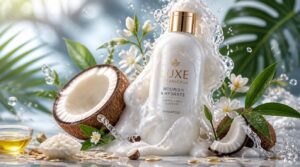
Flip any shampoo bottle and surfactants appear near the top. These are your cleansing agents — and the type matters.
Sulfate-free formulas built on amphoteric surfactants like cocamidopropyl betaine or sodium cocoyl isethionate cleanse without stripping the scalp’s lipid barrier. They’re plant-derived, biodegradable, and maintain a pH close to 5.0 — stable even in hard water, where harsher sulfates often underperform.
Preservatives
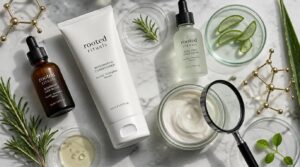
Surfactants aren’t the only chemistry worth scrutinizing. Preservatives prevent microbial growth — without them, your conditioner becomes a bacterial culture within weeks.
Phenoxyethanol and ethylhexylglycerin are widely used, low-irritation options. Potassium sorbate works well in acidic formulas. Parabens remain controversial despite regulatory approval in many regions. Check INCI labels: transparency here signals a brand that takes formulation seriously.
Ingredient Order
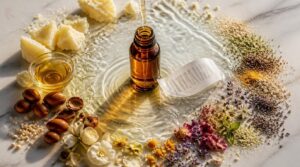
Labels list ingredients by weight, descending — the first five to seven entries reveal what actually dominates a formula. Water appearing first signals a high-water base; that’s not a flaw, just chemistry.
- Heaviest ingredient listed first
- Sub-2% ingredients listed last, in any order
- Active "hero" ingredients may appear lower than marketing implies
- Fragrance is grouped at the end regardless of concentration
Marketing Claims
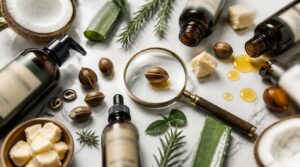
When you see express claims like “98% natural origin,” demand supporting lab data. Implied benefits (“gentle,” “nourishing”) rely on your interpretation—don’t assume more than the evidence shows.
Comparative claims (“better cleansing”) require published proof. For health claims (“promotes hair growth”), check for clinical backing. Sustainability claim transparency (“cruelty free”) needs third-party certification—never just marketing spin.
Ingredients to Limit
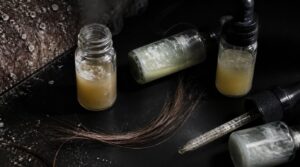
Frequently, fragrances and synthetic musks trigger allergies or raise endocrine disruptor concerns, especially for sensitive scalps. Harsh sulfates (like SLS) may strip sebum and worsen dryness. Silicones—dimethicone, cyclopentasiloxane—accumulate, weighing hair down. Short-chain alcohols dry out the scalp.
- Fragrances
- Sulfates
- Silicones
- Drying alcohols
Frequently Asked Questions (FAQs)
Are fragrance ingredients safe for sensitive scalps?
Imagine your scalp as a vinyl record: every scratch leaves a mark.
Fragrance ingredients, including natural essential oils, pose allergy risks for sensitive scalps—especially with repeated exposure. Patch testing and choosing fragrance-free products offer safer control.
Do hair care products contain allergens or irritants?
Yes — many do. Common culprits include PPD in dyes, sulfates, fragrance mixes, and formaldehyde-releasing preservatives. Reactions range from mild irritation to full contact dermatitis. Patch testing before use isn’t optional — it’s essential.
How do preservatives affect hair and scalp health?
Preservatives keep your shampoo from becoming a microbial breeding ground — but some can irritate sensitive scalps, trigger contact dermatitis, or disrupt the scalp barrier, so patch testing first is worth the extra step.
Can natural oils cause buildup on fine hair?
Yes — and fine hair is especially vulnerable. Occlusive oils applied near the roots combine with sebum, trapping residue and accelerating buildup. Keep oils on mid-lengths and ends only.
What ingredients help protect color-treated hair?
Antioxidants, UV filters, and sulfate-free cleansers form the main defense for color-treated hair. pH-balanced formulas keep the cuticle sealed, while polymeric color binders lock pigment into the cortex between wash cycles.
Conclusion
The irony is rich: the hair care aisle overflows with hundreds of products, yet knowing what ingredients to look for in hair care narrows your entire decision down to a handful of compounds. Hydrolyzed proteins, ceramides, panthenol—these aren’t premium-tier secrets. They’re basic science hiding in plain sight.
Skip the marketing theater. Read the label like a clinician, not a consumer. Your hair doesn’t care about the packaging. It reacts to chemistry—and now, so do you.