This site is supported by our readers. We may earn a commission, at no cost to you, if you purchase through links. This content is for general informational and educational purposes only and is not a substitute for professional medical, dermatological, or nutritional advice.
Dry, brittle hair doesn’t just look damaged—it is damaged, at the structural level. When hair snaps instead of bends, when it drinks up product but stays parched, the cortex is compromised: disulfide bonds broken, the cuticle layer lifted and fraying like weathered wood grain.
Most people reach for a deep conditioner and call it a plan. That helps, but it’s not repair—it’s temporary relief.
Knowing how to repair dry and brittle hair means understanding what broke it first. Heat, bleach, UV exposure, overwashing—each damages hair through a different mechanism, and each needs a different fix. The right sequence of steps, the right ingredients, makes the difference between hair that recovers and hair that keeps breaking.
Table Of Contents
- Key Takeaways
- Identify What Damaged Your Hair
- Repair Dry Hair Step by Step
- Choose The Right Hair Products
- Restore Moisture With Smart Ingredients
- Prevent Future Breakage and Dryness
- Frequently Asked Questions (FAQs)
- What vitamin am I lacking if my hair is dry and brittle?
- Can hormonal changes cause dry, brittle hair?
- Does water quality affect hair moisture and texture?
- How does stress contribute to hair breakage?
- Are natural remedies effective for repairing damaged hair?
- Can certain medications make hair dry and brittle?
- Conclusion
Key Takeaways
- Identifying the specific cause of your hair damage—whether heat, bleach, UV exposure, or nutrient deficiency—is essential because each mechanism requires a different targeted repair approach.
- Surface conditioning and deep conditioners provide temporary relief, but only bond-repair treatments containing actives like cysteamine or cysteine can rebuild the broken disulfide bonds that bleach and chemical processing destroy at the cortex level.
- A consistent, sequenced routine—trimming split ends first, switching to sulfate-free cleansing, deep conditioning weekly, and layering leave-in moisture—produces measurable structural recovery within four to six weeks.
- Long-term hair health depends as much on internal nutrition (protein, iron, biotin, omega-3s) and daily protective habits (heat protectant, satin pillowcase, gentle detangling) as it does on any topical treatment.
Identify What Damaged Your Hair

Before you can fix the damage, you need to know what caused it. The source matters because different stressors attack your hair in fundamentally different ways — heat works differently than bleach, and chlorine does something entirely distinct from nutritional deficiency. Here are the most common culprits to look out for.
If tangles are part of the mix, this guide to detangling severely matted hair walks you through loosening knots without ripping out more strands.
Environmental factors like chlorine, UV rays, and mineral deposits can quietly compound existing damage, making it worth understanding how heat damage layers with other stressors before settling on a repair plan.
Heat Styling Damage
Every time you reach for a flat iron or curling wand, you’re gambling with your hair’s structure. Tools regularly exceed 300°F, the threshold where proteins begin to degrade and hydrogen bonds snap.
That breakage lets moisture escape fast, leaving strands brittle and prone to snapping. The cuticle ruffles, frizz takes over, and shine disappears — damage you can see and feel. High temperatures can also weaken the protective outer layer of your hair.
Bleach and Chemical Treatments
Heat fries the surface, but bleach goes deeper. As an oxidizing agent, it breaks the bonds that hold your hair’s color and structure together — disrupting disulfide bonds and compromising the cuticle from within. Stronger developers make that destruction even worse.
Skipping proper rinsing lets oxidation continue long after processing. Your hair is left brittle, porous, and desperately in need of bond-repair treatment.
Sun, Pollution, and Chlorine
Bleach attacks from within, but the environment hits differently.
UV radiation breaks keratin bonds and oxidizes the cuticle, leaving hair dull and brittle. Airborne particles raise surface friction; chlorine strips oils.
- UV weakens protein bonds
- Pollution particles increase breakage
- Chlorine lifts the cuticle
- Combined oxidative stress accelerates dryness
- Pre-swim rinsing reduces chlorine damage
Environmental protection isn’t optional — it’s damage prevention.
Overwashing and Harsh Shampoos
Your shampoo might be doing more harm than good. Harsh formulas strip natural sebum from the scalp, leaving strands dry, rough, and prone to breakage. Worse, your scalp responds by overproducing oil — so you wash again, and the cycle tightens.
Repeated cleansing weakens the scalp’s barrier, irritates follicles, and roughens the cuticle. Switch to a sulfate-free, moisturizing shampoo and limit washing to two or three times weekly.
Once your scalp feels balanced again, this guide to dyeing roots darker than the rest of your hair can help you touch up color without stressing those fragile strands.
Nutrient Deficiencies
What you eat shows up in your hair. Iron deficiency limits oxygen delivery to follicles, while low zinc disrupts growth and repair cycles. Vitamin B12 affects scalp circulation, and inadequate protein directly reduces keratin synthesis.
Key deficiencies that quietly damage hair:
- Biotin and vitamin D weaken structural integrity
- Omega-3 fatty acids reduce scalp inflammation
- Vitamin A compromises your moisture barrier
Internal nourishment drives everything external treatments can’t fix.
Pairing a nourishing diet with targeted topical care—like the humectant-sealing method explained in this argan oil routine for locking in moisture on dry hair—gives your strands the best of both worlds.
Repair Dry Hair Step by Step
Repairing dry, brittle hair isn’t about one big fix — it’s a sequence of deliberate steps that work together to rebuild structure and restore moisture. Your hair’s condition will improve noticeably within four to six weeks when you follow the right order consistently. Here’s exactly what to do.
Trim Split Ends First
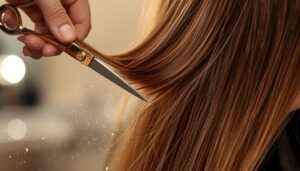
Every repair strategy fails if split ends are still present — damage travels up the shaft, compounding breakage faster than any treatment can reverse it.
| Method | Tool | Amount Removed |
|---|---|---|
| Dusting | Sharp hairdressing scissors | ~0.13 inches |
| Classic Trim | Sharp hairdressing scissors | 0.25–0.5 inches |
| Search & Destroy | Vertical snips, no teeth | Frayed tips only |
Twist small sections of dry hair; frayed ends protrude visibly, making targeted cuts precise. Work in clipped sections to avoid missing strands.
Switch to Gentle Cleansing
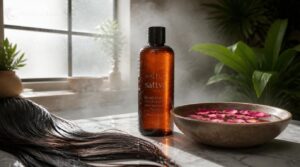
Your shampoo could be undoing every repair effort you make. Sulfate-free, pH-balanced formulas cleanse without stripping the natural oils your brittle strands desperately need. Concentrate product at the scalp, not the lengths.
Rinse with lukewarm water — hot water lifts the cuticle and accelerates moisture loss. Limit washing to 2–3 times weekly, and detangle only once conditioner provides slip.
Deep Condition Weekly
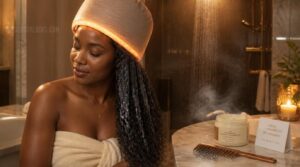
Weekly deep conditioning is non-negotiable for brittle hair. Apply a rich mask from mid-lengths to ends, saturating every strand, then sit with it for 15–30 minutes. A heated cap amplifies penetration.
Detangle gently while the product is in — hair with slip breaks far less. Rinse thoroughly, because residue leaves strands rough, not restored.
Add Leave-in Moisture
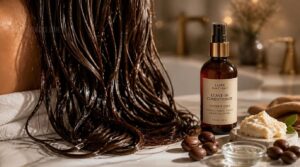
After rinsing out your deep conditioner, your hair is primed — don’t waste that window. Apply a leave-in conditioner to damp hair before any styling begins; humectants like glycerin and sodium hyaluronate pull moisture into the shaft, while emollients like jojoba oil and shea butter seal it there.
Look for formulas that include frizz-controlling polymers such as polyquaternium-37 — they smooth the cuticle without heaviness.
Protect Hair Daily

Daily protection is where repair becomes permanent. Before any heat tool touches your hair, apply a heat protectant rated to 450°F — skipping it negates everything else.
Outdoors, UV exposure strips keratin bonds, so wear a hat or use a UV-shield spray. After swimming, rinse immediately with fresh water.
At night, swap cotton for silk or satin to eliminate friction while you sleep.
Choose The Right Hair Products
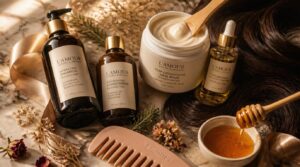
The products you choose can either accelerate your hair’s recovery or quietly work against it. Getting this right comes down to knowing which formulas actually address structural damage, not just coat the surface. Here are the five product categories worth adding to your routine.
Moisturizing Shampoos
Your shampoo sets the tone for everything that follows. Choosing a sulfate-free, pH-balanced formula prevents the stripping of natural sebum your scalp works hard to produce.
Look for gentle surfactants like sodium cocoyl isethionate or decyl glucoside — they cleanse effectively without dismantling your moisture barrier. Humectants like glycerin and panthenol pull water into the shaft, giving dry hair genuine hydration from the first rinse.
If you’re shopping for one, this roundup of the best shampoo for color-treated hair breaks down which formulas actually protect your color while delivering that hydration boost.
Rich Conditioners
Once your shampoo has cleansed, a rich rinse-out conditioner picks up where it left off. Cationic polymers like polyquaternium derivatives bind directly to damaged sites, reducing static and improving combability. Silicones such as amodimethicone cushion the cuticle, adding slip without buildup.
Leave it on for 1–3 minutes — that contact time is what allows lipid-protein ingredients like panthenol and behentrimonium chloride to genuinely deposit.
Leave-in Conditioners
Where a rinse-out conditioner stops, a leave-in keeps working. Humectants like glycerin attract ambient moisture continuously, while emollients — argan oil, cetyl alcohol — seal the cuticle against evaporation.
Cationic slip agents reduce friction between strands, cutting combing breakage significantly. For damaged hair, choose a formula balancing protein and moisture; too much protein without hydration leaves strands feeling stiff.
Hair Masks and Serums
Think of masks and serums as a two-part system.
Deep conditioning masks left on for 5–20 minutes push moisture, oils, and proteins deep into the shaft — avocado and coconut oil doing the heavy lifting.
Hair serums, applied to towel-dried mid-lengths and ends, coat the cuticle with silicones that flatten frizz and lock in shine without rinsing.
Bond Repair Treatments
When bleach or color breaks disulfide bonds inside the cortex, surface conditioning can’t fix it.
Bond repair treatments — using actives like cysteamine and cysteine — penetrate the shaft to reconnect fractured keratin chains, restoring elasticity from within. Products like K18 rebuild internal structural integrity at the molecular level. Use them post-chemical service for measurable strength recovery.
Restore Moisture With Smart Ingredients
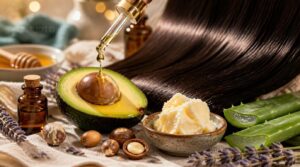
Not all moisturizing ingredients work the same way — some pull water into the strand, others seal it in, and a few rebuild the structure that holds moisture in the first place.
Knowing which ingredients actually deliver results helps you stop guessing and start seeing real change. Here are the ones worth adding to your routine.
Hyaluronic Acid
Hyaluronic acid doesn’t just sit on your hair — it actively pulls water from the air and locks it in. As a humectant, it holds up to 1,000 times its weight in water, reducing porosity and stiffness.
Lower molecular weight forms penetrate deeper, while higher molecular weight varieties form a moisture-retaining surface film, improving elasticity, slip, and overall shaft flexibility.
Ceramides
Ceramides are lipid cement — they fill microscopic gaps between cuticle cells, locking in moisture and restoring your hair’s barrier architecture.
Five reasons ceramides matter:
- Prevent moisture evaporation across the shaft
- Strengthen the lipid matrix structure
- Support hair cuticle protection
- Improve moisture retention after damage
- Reduce fiber fragility over time
Different ceramide types address different damage layers, so choose products listing multiple ceramide variants on the label.
Coconut Oil
Coconut oil earns its place in hair care because of its unique molecular structure. Its dominant fatty acid, lauric acid — roughly 47% of the oil — has a low molecular weight that lets it penetrate the hair shaft rather than just coat it, actively restoring protein loss from within.
Coconut oil penetrates the hair shaft at a molecular level, restoring protein loss from within rather than simply coating the surface
That shaft-level absorption is what separates it from most botanical oils. The medium-chain triglycerides also deliver antioxidant protection, shielding keratin bonds from oxidative stress.
Avocado Oil
Avocado oil works as a surface emollient, coating your strands with oleic acid to smooth the cuticle and lock in moisture. Unlike penetrating oils, it conditions from the outside in. Its phytosterols support scalp health when massaged in.
- Oleic acid softens dry strands
- Vitamin E slows oxidative damage
- Phytosterols nourish scalp surface
- Mix as a carrier oil
- Store away from light
Protein Treatments
Think of protein treatments as scaffolding for compromised strands — temporary reinforcement while your hair rebuilds. Keratin film formation coats damaged cuticle gaps, restoring smoothness and reducing breakage by up to 77%.
Match treatment strength to your porosity level: high-porosity hair absorbs keratin readily; low-porosity strands risk stiffness. Always follow with moisture.
Silk proteins condition lightly; wheat proteins strengthen more aggressively. Alternate weekly, never daily.
Prevent Future Breakage and Dryness

Repairing your hair is only half the battle — keeping it healthy is where the real work begins. The habits you build around heat, sleep, detangling, washing, and nutrition will determine whether your progress lasts or unravels. Here’s what to add to your routine from now on.
Use Heat Protectant
Every pass of a flat iron without protection is a gamble. Heat protectants form a thermal film on the hair shaft that slows heat transfer and distributes thermal energy more evenly, reducing cuticle shock.
Match your product’s rated limit to your tool — protection up to 450°F matters. Apply through mid-lengths to ends thoroughly, and reapply before touch-up passes.
Sleep on Satin
Protecting your hair doesn’t stop when you put down the flat iron. While you sleep, cotton pillowcases create constant friction that lifts the cuticle layer, worsening dryness and morning frizz. Satin and silk surfaces let hair glide rather than snag, retaining more moisture overnight.
For dry, brittle strands, pairing a satin pillowcase with a satin bonnet offers even stronger protection against mechanical stress and tangling.
Detangle Hair Gently
Mornings still bring tangles. Detangle damp hair only — dry strands lose elasticity and snap under pressure before you’ve even started styling.
Work in sections with conditioner for slip and lubrication, using a wide-tooth comb from ends to roots.
- Hold hair near the scalp to control tension at the roots
- Start at the ends, then move upward gradually
- Use fingers first on stubborn knots before combing through
Wash Less Often
How often you shampoo matters more than most people realize. Washing daily strips sebum before it can travel down the shaft, leaving ends dry and brittle.
Aim for 2–3 times per week, adjusting based on scalp feel — greasy, itchy, or odor — not habit. Between washes, a lightweight rinse refreshes without stripping. During the adjustment period, expect temporary oiliness; your scalp needs time to recalibrate.
Support Hair With Nutrition
What you eat is scaffolding for every strand you grow. Keratin synthesis depends on protein, iron, zinc, and biotin working in concert — not one alone. Eggs, salmon, lentils, and pumpkin seeds cover most of those bases.
Omega-3 fatty acids nourish the scalp itself, keeping follicles in a growth-friendly environment. Pair iron-rich foods with vitamin C to sharpen absorption where it counts.
Frequently Asked Questions (FAQs)
What vitamin am I lacking if my hair is dry and brittle?
Dry, brittle strands often signal a nutritional gap. Biotin, vitamin D, iron, and zinc are the most common culprits — each essential to keratin synthesis, follicle cycling, and the structural strength your hair depends on.
Can hormonal changes cause dry, brittle hair?
Yes — hormonal shifts can absolutely reshape your hair’s texture and moisture levels. Lower estrogen reduces scalp sebum, thyroid imbalances disrupt growth cycles, and chronic cortisol spikes compound dryness, leaving strands brittle and rough.
Does water quality affect hair moisture and texture?
Water quality directly shapes how your hair feels and behaves. Hard water minerals deposit on strands, blocking moisture absorption and leaving hair rough, while alkaline pH lifts the cuticle, increasing frizz and reducing hydration retention.
How does stress contribute to hair breakage?
Chronic stress floods your body with cortisol, which disrupts follicle stem cell regeneration, pushes hair into telogen effluvium, triggers perifollicular inflammation, depletes iron and biotin, and ultimately leaves strands weaker and far more prone to breakage.
Are natural remedies effective for repairing damaged hair?
Natural remedies genuinely help with surface conditioning — softening texture, reducing frizz, and improving slip — but they can’t rebuild broken disulfide bonds or restore pre-bleach strength. Think of them as maintenance, not reconstruction.
Can certain medications make hair dry and brittle?
Some medications genuinely do. Systemic retinoids, blood thinners, anti-seizure drugs, antidepressants, and chemotherapy can all trigger dryness, shedding, or brittle regrowth — so if your hair changed after starting a new prescription, that’s worth discussing with your doctor.
Conclusion
Hair doesn’t lie about the life you’ve put it through. Learning how to repair dry and brittle hair isn’t about chasing an ideal look—it’s about giving your strands back what stress, heat, and chemistry quietly took. The right ingredients restore what’s structurally compromised.
Consistent habits stop the cycle before it restarts. Your hair has a wonderful capacity for renewal. Give it the right conditions, and it will meet you halfway.