This site is supported by our readers. We may earn a commission, at no cost to you, if you purchase through links.
You grab whatever bottle sits closest in the shower and hope for the best. Sound familiar? Most people treat hair care like a guessing game, switching products every time an ad promises shinier strands, but your hair keeps giving the same tired signals: frizz, flatness, or breakage that won’t quit.
Here’s the truth I tell every client in my chair: your hair isn’t broken, your routine just doesn’t match its actual needs. Curly hair panics under a straight-hair schedule. Fine strands drown in rich, heavy creams made for coily textures.
Learning how to build a hair care routine starts with understanding your hair, not chasing trends. Get that part right, and everything else clicks into place.
Table Of Contents
Key Takeaways
- Your hair care routine should match your specific hair type, texture, porosity, and density rather than following generic trends or one-size-fits-all advice.
- Wash frequency varies dramatically by hair type, ranging from every 2-3 days for straight hair to just once or twice weekly for coily hair, since over-washing strips natural oils curls and coils need.
- Proper technique matters as much as products: shampoo your scalp directly, condition mid-lengths to ends only, and rinse with lukewarm water to avoid stripping your hair.
- Protecting your hair daily through heat protectant, UV defense, loose hairstyles, and satin pillowcases prevents damage that undoes the benefits of your washing and moisturizing routine.
Start With Your Hair Type
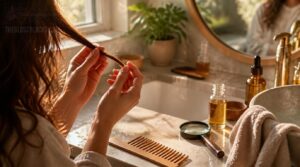
Before you start building your hair care routine, it’s important to understand what makes your hair unique. Your hair’s texture, thickness, and how your scalp behaves all play a role in what it needs. Let’s look at what to check so you can set yourself up for healthier hair.
For example, exploring how often different hair textures need washing can help you figure out a cleansing schedule that actually suits your strands.
Straight, Wavy, Curly, Coily
You’ll find hair types fall into four main categories: straight, wavy, curly, and coily. Straight hair reflects light and usually looks shiny, while wavy hair forms S-shapes. Curly hair creates ringlets or spirals, and coily hair has very tight, dense coils.
Each type behaves differently—think about moisture, shrinkage, and how easily your hair tangles or breaks. Your unique hair follicle shape primarily determines your specific curl pattern.
Fine, Medium, Coarse Strands
When you look at your strands, pay attention to their thickness and feel. Fine hair is less than 50 microns wide, hard to see against a white background, and usually lacks a medulla, making it fragile. Medium strands are about 60–80 microns, while coarse hair is over 80 microns, feels wiry, dries slower, and holds styles well.
- Fine: wispy, fragile, dries fast
- Medium: resilient, balanced, visible
- Coarse: strong, thick, slower to dry
- Mixed textures: common, needs suited care
Low or High Porosity
Porosity is all about how your hair takes in and keeps moisture.
Low porosity hair acts like a raincoat—water sits on top and takes longer to soak in, so heavy products can cause buildup. High porosity hair is more like a sponge—soaks up moisture fast, but loses it just as quickly, leading to dryness and frizz.
Hair Density Check
Hair density tells you how much hair covers your scalp, which shapes your whole hair care routine. Part your hair in bright light—if you see a wide part or lots of scalp, that means lower density; a narrow part means medium or high density. Try the ponytail test: under 2 inches is low, 2–3 inches is medium, and 4 inches or more is high.
- Check your part line in several spots.
- Measure your ponytail circumference for a clear number.
- Inspect scalp visibility at your crown.
- For extra precision, ask a dermatologist about trichoscopy.
Scalp Oil and Flakes
Ever wonder why your scalp flakes or feels greasy? Dandruff means fast skin shedding, while dry flakes look powdery. Too much oil traps dead skin, leading to visible flakes and even feeding scalp yeast.
For a healthy scalp, massage oil gently—use only a small amount, rinse well, and shampoo after. If flakes stick around, focus your wash on the scalp, not just the hair.
Set Your Wash Schedule

Now that you know your hair type, it’s time to figure out how often you should wash it. Every texture and scalp needs a different schedule to stay healthy and fresh. Let’s break down how to match your routine to what your hair really needs.
Straight Hair Timing
Think your straight hair gets oily fast? Wash every 2–3 days to keep it fresh, but don’t overdo it.
For a gentler touch, try air-dry straightening with a brush, or use overnight wrapping for smoother strands. When you reach for a flat iron, wait until hair’s totally dry, and limit heat styling to 2–3 times per week.
Wavy Hair Timing
Waves are tricky, since they lose their bounce faster than curls do. That’s why daily refresh strategies matter so much for wavy hair care routine success.
A quick spritz of water mixed with a lightweight leave-in can revive limp waves overnight, but pairing that habit with sulfate-free moisturizing and conditioning techniques keeps your strands hydrated between wash days.
Base washing on your scalp: oily roots need washing every 1–2 days, dry lengths do better with 2–3 times weekly. Watch humidity impact timing too, since moisture in the air can tighten or loosen your pattern throughout the day.
Curly Hair Timing
Curls thrive on patience, not routine scrubbing. Best wash intervals for curly hair land around every 2 to 3 weeks, since over-washing strips moisture your coils need.
Focus shampoo on your scalp, not your lengths—that’s the scalp vs lengths balance curly hair care routine demands.
Handle damp curls gently to avoid preventing wet breakage, and let your post-wash curl setting happen undisturbed for real hair hydration.
Coily Hair Timing
Coily hair is the driest of all curl types, so less washing means healthier hair. Aim for once or twice a week to protect natural oils.
- Softer coils
- Fewer breaks
- Real moisture retention
Between washes, use leave-ins to keep hydration up. This wash frequency balance works with your whole hair care routine.
Clarifying Shampoo Frequency
Ever notice your hair feeling waxy no matter how much you shampoo? That’s buildup talking, and it’s your cue to clarify.
Most people need it every one to four weeks, depending on scalp oil levels, hard water buildup, or styling product residue. Oily scalps lean toward weekly; color-treated hair should stretch it out to avoid fading risks. Always follow with conditioner to prevent overuse dryness in your routine.
Wash and Condition Correctly
You’ve got your schedule down, but how you wash matters just as much as when. A few small tweaks to your technique can mean the difference between limp, stripped hair and strands that actually feel healthy. Here’s what to focus on every time you step in the shower.
Shampoo The Scalp

Grab your shampoo and go straight for the scalp—that’s where oil and buildup actually live. Look for the right pH balance and active ingredients like zinc pyrithione or selenium sulfide if flakes bother you.
- Choose formulas suited to your scalp type
- Watch for oil control on greasy days
- Try clarifying shampoo every few weeks
- Check for soothing, non-irritating ingredients
- Support your scalp microbiome naturally
Massage With Fingertips

Once shampoo’s on your scalp, don’t just scrub and rinse. Use your fingertip pads in small circular motions, sliding gently instead of staying put. Keep pressure moderate, never pulling the skin, and slow down over tight spots.
This helps hair follicle health and blood flow. If your scalp feels sensitive, shorten the session—your scalp routine should adjust to how it responds.
Condition Mid-Lengths to Ends
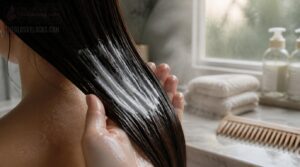
Your scalp already makes plenty of oil, so save conditioner for mid-lengths to ends, where dryness hits hardest. This spot prevents root greasiness while restoring moisture retention where hair’s oldest and most damaged.
While it sits, use a wide-tooth comb for effective detangling, working from ends upward. That slip makes knots slide apart instead of snapping strands.
Leave Conditioner Longer

Three to five minutes is your sweet spot, and setting a timer beats guessing. Go longer and you risk residue buildup near the scalp, leading to limp roots and film-induced dullness instead of true shine.
- Weighed-down roots
- Faded style hold
- Dull, coated strands
- Wasted moisture masks
Need more? Switch to a leave-in conditioner instead of overdoing rinse-off formulas.
Rinse Without Stripping

Turn the water down before you rinse — lukewarm water keeps cuticles smooth instead of lifted and rough. Rinse from roots to ends, so residue moves away, not deeper in.
Squeaky hair means you stripped too much; leave a hint of softness behind. Blot with a towel instead of rubbing, and skip harsh sulfates that overdo cleansing.
Add Moisture and Repair Steps
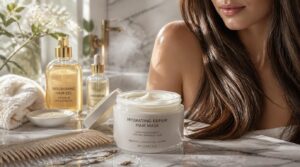
Washing and conditioning only get you so far. Your hair also needs deeper care to stay strong and healthy. Here are the moisture and repair steps that make the real difference.
Weekly Deep Conditioning
Weekly deep conditioning is your hair’s reset button. Apply the mask to clean, damp hair, focusing on mid-lengths and ends, then let heat—a cap or warm towel—help it penetrate for 10 to 20 minutes.
Adjust frequency by porosity: low porosity needs 10-14 days, high porosity thrives weekly or twice. Rinse thoroughly with lukewarm water to prevent buildup and keep hair bouncy.
Protein for Stretchy Hair
Ever stretch a hair strand and it just… doesn’t bounce back? That’s your cue for protein.
Protein repairs weak spots using amino acids like keratin, rebuilding structure so hair snaps back instead of snapping off. Hydrolyzed proteins absorb fastest.
Try this:
- Test hair when wet
- Apply protein treatment if mushy
- Follow with moisture
Balance matters—too much protein causes stiffness, not strength.
Oils for Dry Ends
Split ends catch light like tiny frizzy flags, and oil is your flag-smoother. A few drops of argan, coconut, or jojoba oil coats the cuticle, sealing in moisture and cutting frizz instantly.
Match the oil to your hair type: lighter jojoba for fine strands, richer coconut for coarse, damaged ends. Apply sparingly to dry tips only, never roots, to avoid greasy buildup.
Masks for Damaged Hair
Think of a mask as your hair’s emergency room visit. Hydrolyzed protein rebuilds weak strands, while ceramides seal the cuticle for smoothness. Bond builder formulas target internal damage from bleach or heat.
- Apply to clean, damp hair
- Leave on 10-15 minutes
- Use weekly for damaged hair
Humectants like glycerin lock in hydration, leaving hair stronger and shinier.
Trim Split Ends Regularly
Here’s the truth: those frayed tips don’t stay put, they creep up the shaft until breakage wins.
Frayed tips never stay put—left alone, they creep up the shaft until breakage wins
Trim every 6-8 weeks to stop damage before it spreads. Curly hair? Try dusting every 3-4 months.
| Method | Best For |
|---|---|
| Professional trim | Extensive splits |
| At-home dusting | Minor wispy ends |
Check tips under good light. Catching splits early means better length retention.
Protect Hair From Daily Damage

You’ve got the moisture and repair steps down, so now let’s protect that hard work. Your hair faces heat, sun, friction, and tension every single day, whether you notice it or not. Here are five simple habits that keep daily damage from undoing your progress.
Heat Protectant Before Styling
Grab that heat protectant spray before your iron even warms up—it’s your hair’s armor. Silicone-rich formulas can shield strands up to 450°F, sealing moisture in and stopping cuticle damage before it starts.
Quick spray checklist:
- Section hair into parts
- Spray 6-8 inches away
- Comb through evenly
This one step prevents breakage, protects color, and keeps hair looking healthy, not fried.
Lower Heat Settings
Heat protectant works even better paired with lower heat settings. Dryers and irons transfer heat faster at high temps, so dialing down slows that transfer and eases thermal stress on strands.
Yes, it takes longer. But keeping airflow steady and the tool moving prevents breakage, especially on fine or damaged hair. Coarse strands can usually handle a bit more heat than fine ones.
UV Hair Protection
Sun does damage too, not just heat tools. Wide-brim hats or scarves block direct rays, especially during peak hours.
Try a UV leave-in spray for days you’re outside often—it shields strands with protective filters. Don’t forget your scalp part, where skin peeks through; a dab of sunscreen there helps.
Afterward, rehydrate with a mask. Post-sun hair care keeps hair soft, not brittle.
Avoid Tight Hairstyles
That high, tight ponytail might look sleek, but it’s quietly stressing your follicles. Constant pulling causes traction alopecia, thinning near your hairline over time.
Loosen up! Skip tight braids and slicked-back styles daily. Tension creates scalp soreness, breakage, and weaker strands.
Switch it up—wear hair down or use loose styles. Your follicles need stability, not a tug-of-war, to stay strong and healthy.
Satin or Silk Sleep
Sleeping on cotton is like dragging your hair across sandpaper all night. Cotton grabs onto strands, causing friction that leads to breakage and frizz by morning.
Switch to satin or silk pillowcases instead. They reduce tangling, retain moisture better, and keep hair smoother till sunrise.
- Less frizz
- Fewer tangles
- Softer strands
- Better moisture retention
- Longer-lasting styles
Choose Products That Match Needs

By now, you know your hair type inside and out, so it’s time to shop smarter, not harder. The right products work with your hair, not against it, and picking based on price alone just won’t cut it. Here’s what to look for, no matter what your strands are working with.
Lightweight Fine-Hair Products
Fine hair is a balancing act: too little product and it goes flat, too much and it’s greasy by noon.
Plant-based surfactants in gentle shampoos cleanse without stripping. Look for silicone-free hydration in conditioners, plus root lift polymers in mousse. Texturizing sprays use nano-droplet application for grip without weight.
Dry shampoo? Choose ones with oil-absorbing starches for quick refreshes between washes.
Rich Curly-Hair Formulas
Curly hair craves richness, plain and simple. Look for humectant moisture retention ingredients like glycerin, plus aloe vera or sodium PCA to lock in hydration.
Keeping your curls properly hydrated also helps them bounce back faster when styling tools — or even headphone bands that dent and flatten your hair — leave their mark.
Shea butter and avocado bring emollient softness benefits, while ceramides offer real bond building strength for fragile ends. Choose lightweight silicones over heavy ones — you want shine, not buildup.
The payoff? Better natural curl hold, less frizz, happier coils.
Volumizers for Flat Roots
Flat roots don’t stand a chance once you know the right tools. Volumizer sprays work best applied at the scalp, not mid-lengths. Mousse adds lift when combed through evenly; thickening spray coats roots lightly. Dry shampoo builds texture and grip for second-day volume.
Blow-dry upward for maximum effect, but don’t overdo product—over-application flattens hair instead of lifting it.
Purple Care for Blondes
Ever wonder why your blonde turns brassy so fast? Blame warm undertones creeping back in. Purple care uses violet pigment technology to cancel out yellow, keeping color-treated or natural blondes looking cool and bright.
- Use 1–2 times weekly based on brassiness
- Leave on 1–3 minutes to avoid violet cast
- Follow with hydrating conditioner
This simple habit extends salon color and keeps your routine on point.
Emollients for Dry Hair
Think of emollients as a raincoat for each strand. Coconut, olive, and argan oils sink in fast, while shea butter benefits come from sealing moisture behind a rich barrier. Silicones add slip and shine.
For real hair moisture retention, pair emollients with humectants like glycerin. Try a weekly deep conditioner or leave-in conditioners daily—your dry hair will thank you.
Frequently Asked Questions (FAQs)
How can I build a complete hair care routine?
Building a custom hair care routine starts with knowing your hair type, then layering in scalp health maintenance, nutritional hair support, and buildup removal.
Add natural oil treatments and environmental damage prevention, and you’ve got a real healthy hair routine, not guesswork.
Should my routine change with the seasons or climate?
Yes—your hair bends with the weather, like a leaf changing with the seasons.
Adjust for humidity frizz control in summer, winter dryness management indoors, UV fading on sunny days, and hard water buildup from seasonal washing changes. A truly custom hair care routine flexes with climate.
How do I know if Im over-washing my hair?
Watch for scalp oil rebound, tightness, or itching between washes. Brittle strands, extra frizz, and fading color signal over-cleansing too. If your scalp feels irritated or hair looks dull, stretch your wash days out.
What ingredients should I actively avoid in products?
Ever check a label and feel lost in chemical names? Skip fragrance, parabens, and PEGs—they trigger sensitivity and dryness.
Choose sulfate-free, formaldehyde-free hair care products with hydrating ingredients instead, protecting your scalp while avoiding hidden damage from microplastic exfoliants and preservative reactions.
Conclusion
Split ends, don’t split your focus—your hair deserves one clear plan, not five random bottles. Once you know how to build a hair care routine, you stop guessing and start growing.
Your curls, waves, or straight strands aren’t asking for perfect looks, just consistency. Wash smart, moisturize often, protect daily. That’s the whole game.
Healthy hair isn’t luck, it’s habit. Give your routine time, give your strands attention, and watch years of frizz finally settle down for good.
- https://www.salontrusted.com/blog/2025/01/16/salon-trusteds-guide-how-to-build-a-hair-care-routine
- https://www.dyson.com.au/newsroom/how-to-build-a-hair-care-routine
- https://www.forhers.com/blog/hair-care-routine
- https://www.blondefaithsalon.com/blog/the-ultimate-hair-care-guide-tailored-routines-for-every-hair-type
- https://www.vogue.com/article/hair-care-routine-basics