This site is supported by our readers. We may earn a commission, at no cost to you, if you purchase through links. This content is for general informational and educational purposes only and is not a substitute for professional medical, dermatological, or nutritional advice.
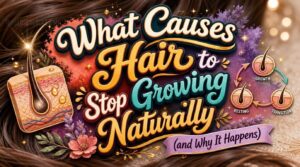
Most people assume hair stops growing because the follicle gives up. The truth is more nuanced—and often more fixable. Your hair grows in cycles, and what looks like a growth plateau is frequently something else entirely: breakage keeping pace with new growth, a shortened active phase, or a follicle quietly miniaturizing under hormonal pressure.
Scalp hair grows roughly half an inch per month, but genetics, nutrition, hormones, and daily habits all influence whether that growth actually shows up as length.
Understanding what causes hair to stop growing naturally starts with knowing the difference between a follicle slowing down and one disrupted.
Table Of Contents
Key Takeaways
- What looks like hair that has stopped growing is often just breakage keeping pace with new growth, not a dormant follicle.
- Your anagen phase — the active growth window — is largely set by genetics and hormones, and a shorter one means your hair hits a length ceiling no product can override.
- Hormonal shifts, thyroid issues, iron deficiency, and chronic stress can all quietly push follicles into a resting state, but many of these causes are treatable once identified.
- Damage from heat, bleaching, and tight hairstyles mimics stalled growth by snapping strands before length can accumulate, making gentler handling just as important as any supplement or treatment.
Hair Stops Growing When Follicles Slow Down
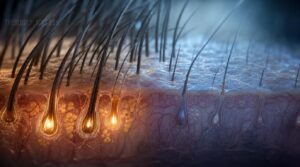
Hair not growing isn’t always what it looks like. Sometimes it’s slowing down, sometimes it’s breaking off, and sometimes your body is quietly resetting, behind the scenes.
Once you figure out which one you’re dealing with, recovering hair growth after breakage becomes a lot more straightforward than most people expect.
Understanding the difference starts with these four things.
The Difference Between Stopped Growth and Slow Growth
When hair has truly stopped growing, anagen signaling has shut down — the follicle isn’t producing new shaft at all. Slow growth means follicle miniaturization is quietly reducing output, so your hair growth rate just crawls.
Meanwhile, shaft fragility and breakage is often mistaken for no growth entirely.
Why Hair May Seem Stuck at One Length
Your hair is actually growing — it just doesn’t look that way. When breakage matches your growth rate, length stays frozen. Scalp inflammation, regional growth variance, and hair shaft porosity all quietly work against you. Short anagen syndrome, hormonal imbalances, and nutritional deficiencies can also slow visible progress. A shortened anagen phase length limits how long hair can grow naturally.
Watch for these hidden culprits:
- Scalp inflammation disrupting follicle cycles
- High hair shaft porosity causing brittleness
- Regional growth variance across your scalp
- Environmental pollutant impact weakening strands
- Seasonal shedding cycles resetting apparent length
Hair Shedding Versus True Growth Stoppage
Shedding and growth stoppage aren’t the same thing — and that distinction matters. Normal exogen frequency means losing 50–100 hairs daily, your body’s natural shedding rhythm. True stoppage occurs when the anagen phase shortens or follicles miniaturize.
Stress and nutritional deficiencies can trigger telogen effluvium, pushing follicles into the telogen phase early — causing perceived density loss that’s actually transient shedding indicators, not growth phase desynchronization.
Normal Monthly and Yearly Hair Growth Rates
On average, scalp hair grows about half an inch per month — roughly 6 inches per year. However, this represents the middle of the range, as hair growth rates vary significantly based on factors like age, genetics, and ethnicity.
Since genetics largely dictate your personal growth ceiling, understanding how fast hair grows in men can help set realistic expectations for your own timeline.
The anagen phase length is the primary driver of total hair growth. This phase determines how much hair can grow before entering the resting or shedding stages.
Measuring from root to tip monthly remains the most reliable method to establish your personal baseline growth rate.
The Hair Growth Cycle Can Shorten
Your hair doesn’t just grow and stop randomly — it moves through a set cycle, and that cycle has a timeline. When something shortens that timeline, your hair never gets the chance to reach its full length.
Here’s how each phase works and why it matters.
Anagen Phase: The Active Growth Stage
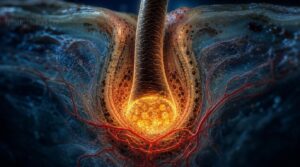
Anagen functions as your follicle’s construction window. During this active growth phase, matrix cell proliferation at the follicle bulb drives keratin synthesis speed, steadily building each strand. Follicle vascularization and growth factor signaling ensure cells remain fueled, while hair pigment maintenance occurs concurrently.
Anagen duration variation—lasting 2 to 8 years—determines your hair’s maximum length. This timeframe hinges on genetic determinants and hormonal influences, which collectively establish your personal growth ceiling.
Catagen Phase: The Transition Stage

Once anagen ends, your follicle hits a hair growth checkpoint called catagen — a brief intermediate stage lasting just one to three weeks.
During this transition, your follicle shrinks and detaches from its blood supply, which is part of why the science behind faster hair growth comes down to how quickly a follicle cycles back into anagen.
During this phase, follicle regression begins: cell production shuts down, and blood supply reduction cuts off nourishment to the strand. Club hair formation follows, leaving a detached, non-growing shaft. Only about one to three percent of your hairs go through catagen at any given time.
Telogen Phase: The Resting Stage

After catagen, your hair enters the telogen phase — a resting stage lasting two to four months. About 10–15% of your scalp hairs sit here at any moment, held as club hair morphology while the follicle shifts into follicle energy conservation mode. This growth cycle reset has two sub-stages: early refractory telogen, then late competent telogen, when regrowth can restart.
Telogen effluvium, triggered by stress-induced telogen effluvium, hormonal imbalance, or nutritional deficiencies, floods too many follicles into this resting state simultaneously.
Exogen Phase: Normal Daily Shedding

After telogen, your hair enters the exogen phase — where the scalp actually releases shed strands. Losing 50–100 hairs daily is completely normal. Exogen duration usually spans two to five months, and shaft morphology shifts as old hairs loosen during grooming, causing release.
If you’re also dealing with protective styles during this shedding phase, it’s worth knowing that cornrows and natural hair growth come with real trade-offs — especially if styles are too tight or worn too long.
Seasonal shedding can temporarily spike this number. Stress-induced exogen or telogen effluvium may push shedding higher, but these represent separate triggers requiring attention.
How a Shorter Anagen Phase Limits Length
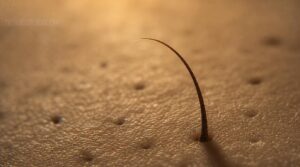
Think of the anagen phase as a runway — once it ends, the plane can’t keep climbing. A shorter anagen phase means your hair hits a length ceiling before reaching its maximum shaft potential.
Age, genetics, and hormonal influences all drive this growth window reduction. If your runway is genetically short, no amount of care fully overrides that phase duration tradeoff.
Genetics Can Limit Natural Hair Growth

Your hair’s growth ceiling is largely set before you’re born. Here’s what your DNA is actually controlling.
Genetics shape how long your anagen phase lasts, how sensitive your follicles are to hormones, and whether thinning runs in your family.
Inherited Hair Growth Patterns
Your hair’s behavior is largely written into your DNA. Genetics fundamentally shape baseline density traits, anagen timing inheritance, and shaft diameter genetics — all predetermined before external products influence your scalp.
Regional follicle sensitivity creates localized variability, meaning different areas of the scalp may respond uniquely, even within the same individual.
Age-linked pattern progression intensifies these inherited tendencies over time, making genetic determinants of hair length increasingly resistant to mitigation.
Androgenetic Alopecia and Follicle Miniaturization
Genetics don’t just set your baseline — they can quietly sabotage your follicles through androgenetic alopecia. When dihydrotestosterone (DHT) binds to genetically sensitive follicles, it triggers follicle miniaturization, a process where androgens effectively shrink your hair factories over time.
DHT silently binds to genetically vulnerable follicles, shrinking your hair factories one cycle at a time
Here’s what that looks like internally:
- Vellus conversion — thick terminal hairs are gradually replaced by thin, barely visible ones
- Miniaturization histology — under a microscope, follicles appear progressively smaller with each growth cycle
- Follicular stem loss and bulge fibrosis — the follicle’s repair center scars over, making recovery unlikely
- Finasteride action — this medication works by blocking DHT production, slowing the damage
Why Some People Reach Shorter Maximum Lengths
Your maximum length isn’t just about how fast your hair grows — it’s about how long each follicle stays active. Genetic factors influencing hair growth control the Follicle Switch Mechanism, determining when anagen phase ends. Shorter follicle lifespan means less length retained per cycle.
| Factor | Shorter Length | Longer Length |
|---|---|---|
| Anagen Duration | 2–3 years | 6–8 years |
| Follicle Miniaturization | Present | Absent |
| Environmental Oxidative Load | High | Low |
Family History of Thinning or Slow Growth
If your mother’s hair thinned early, or your father’s hairline crept back before 40, that’s your genetics speaking. Androgenetic alopecia draws from both sides — maternal lineage risk and paternal allele impact together shape your follicle health.
Watch for these family pattern clues:
- Shared thinning zones like the crown or temples
- Similar generational onset timing across siblings
- Sibling pattern comparison showing matching density loss
- Consistent hair follicle health decline across relatives
- Lifestyle cues that overlap but don’t fully explain the loss
Genetic factors in hair thinning rarely skip generations quietly.
Age-related Changes in Hair Density and Growth
Age doesn’t just slow you down — it does the same to your follicles. As you get older, dermal sheath remodeling and shifts in the follicle microenvironment alter follicle function. These age-related changes in hair growth cycles explain why senescent alopecia often feels genetic — because it partly is.
Extracellular matrix aging, MMP1 upregulation, and hyaluronic acid decline collectively drive hair thinning and density reduction. These processes underscore the biological mechanisms behind aging-related hair loss.
Hormones and Health Conditions Matter
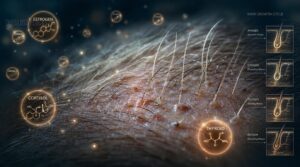
Your hormones do more for your hair than most people realize. When they shift — whether from a health condition, a life stage, or a medication — your follicles often feel it first.
Several specific hormonal and medical factors can slow or stop hair growth entirely.
DHT and Pattern Hair Loss
DHT, or dihydrotestosterone, is the primary hormonal driver behind pattern baldness in both men and women. It binds to follicles with high DHT receptor sensitivity, shrinking them over time.
Androgen receptor polymorphisms determine how aggressively this happens.
Treatments like 5-alpha-reductase inhibitors — finasteride vs dutasteride differ in how broadly they block DHT — and topical anti-DHT options help slow this hormonal influence on hair loss considerably.
Thyroid Disorders and Slowed Hair Growth
Your thyroid has more influence over your hair than most people realize. Thyroid hormone balance keeps follicles cycling properly — when it’s off, things unravel fast.
Hypothyroidism shedding is usually diffuse and gradual, while hyperthyroidism brittleness makes strands snap before they can grow.
An autoimmune thyroid link to alopecia areata is also well-documented.
Thyroid hormone testing is a smart first step, since thyroid medication impact on regrowth can be significant once levels stabilize.
Post-menopausal Hormonal Changes
After menopause, estrogen decline reshapes the hormonal landscape in ways that directly affect your hair. As estrogen shifts downward, SHBG decrease allows more androgen hormones to circulate freely — a quiet form of androgen dominance. Gonadotropin elevation adds another layer of disruption, creating further imbalance.
For postmenopausal females assigned at birth, hormonal imbalances and hair loss often go hand in hand. Hormone replacement may help restore balance, addressing these interconnected issues.
PCOS and Excess Androgens
PCOS creates a hormonal environment where ovarian androgen excess drives actual damage to your follicles. LH hypersecretion pushes androgen production higher, while insulin resistance further compounds the problem.
Your follicles respond to rising dihydrotestosterone (DHT) by miniaturizing, producing finer, shorter strands over time. Hirsutism often appears alongside scalp thinning.
Anti-androgen treatment and hormone therapy can meaningfully slow this hormonal influence on hair loss.
Alopecia Areata and Autoimmune Hair Loss
Sometimes your own immune system becomes the problem. In alopecia areata, immune privilege loss inside the follicle exposes it to attack. CD8 NKG2D cells target melanocyte antigens, driving patchy hair loss without permanent scarring.
Common autoimmune trigger factors include:
- Viral infections
- Psychological stress
- Other autoimmune disorders
- Immune checkpoint medications
Follicles survive — but inflammation stalls regrowth.
Scarring Alopecia and Permanent Follicle Damage
Scarring alopecia is fundamentally different from other forms of hair loss — once a follicle is destroyed, it can’t reset. In primary cicatricial alopecia, inflammatory infiltrates damage the stem cell niche, replacing healthy follicle tissue with fibrotic scarring.
Because inflammation is what drives the damage, it helps to understand how scalp inflammation contributes to hair shedding before the scarring becomes permanent.
Conditions like lichen planopilaris illustrate this process clearly: scalp inflammation attacks the active lesion edge, permanently shutting down hair follicle biology. That lost follicle never returns.
Medication-related Hair Shedding
Medication-related hair loss is often reversible, unlike scarring alopecia. Drug-induced telogen effluvium typically manifests two to three months after starting a new medication, as follicles do not react immediately. This delayed response contrasts with anagen effluvium, which disrupts actively growing hairs more rapidly.
The relationship between dosage and shedding risk is critical: higher doses carry higher risk, a principle known as dose-response shedding.
Stopping or switching the medication generally enables recovery, though regrowth takes time.
Stress, Diet, and Lifestyle Affect Growth

Your hair follicles are surprisingly sensitive to what’s happening inside your body. Stress, what you eat, and how you live your day-to-day life can all quietly push your hair into a resting state before it’s ready.
Here’s a closer look at the most common ways these factors get in the way of healthy hair growth.
Telogen Effluvium After Stress or Illness
When your body undergoes serious stress—whether from illness, surgery, or emotional upheaval—it can force a large number of hair follicles into the resting phase simultaneously. This condition is known as telogen effluvium. Notably, the impact of stress on hair shedding isn’t immediate; due to shedding latency, noticeable hair loss typically occurs 2–3 months later.
Watch for these signs:
- Club hair (rounded-root strands) in the shower drain
- A positive pull test (more than 6 hairs releasing easily)
- Trichoscopic patterns showing empty follicles across the scalp
Cortisol, often referred to as the stress hormone, is the primary driver of this process. Once the triggering stressor resolves, the recovery timeline generally spans 3–6 months.
Rapid Weight Loss and Hair Shedding
Rapid calorie restriction puts your body in triage mode — it protects essential organs first, and hair follicles get cut off. This metabolic stress is a recognized telogen effluvium trigger, with shedding usually appearing 2–3 months after sudden weight loss begins.
Lean mass loss, hormonal shifts in leptin and estrogen, and nutrient deficiency all compound the problem. Your shedding timeline can stretch for months, but recovery nutrition usually restores balance.
Low Protein Intake and Weak Keratin Production
Hair is mostly keratin protein, so your body needs a steady supply of amino acids to build each strand. Amino acid deficiency slows keratin synthesis, making new fibers weaker and more prone to breakage.
Focusing on a protein-rich diet for stronger, healthier hair ensures your body has the amino acids it needs to keep keratin production consistent.
Protein quality matters too — plant-based protein gaps are common if meals aren’t planned carefully. Consistent dietary protein for hair support works better than occasional high-protein days.
Iron Deficiency and Reduced Follicle Support
Iron deficiency is one of the most overlooked nutritional deficiencies affecting hair growth. When ferritin biomarkers drop too low, stored iron cannot adequately support follicular cell mitosis—the rapid cell division essential for hair strand lengthening.
Low hemoglobin levels further compound the issue by reducing oxygen transport to scalp tissue. Without a steady oxygen supply, follicles prematurely shift into a resting mode, accelerating excessive shedding.
Iron-rich foods and targeted supplementation can effectively reverse these effects, restoring follicular function and promoting healthier hair growth.
Vitamin D Deficiency and Thinning Hair
Vitamin D deficiency is one of the nutritional deficiencies affecting hair growth that often gets missed. Through Vitamin D signaling, your follicles regulate cell cycling — and without enough of it, anagen shortens prematurely.
Here’s what low vitamin D can trigger:
- Disrupted follicle cycling from impaired immune regulation
- Diffuse hair thinning across the scalp
- Seasonal deficiency due to reduced sun exposure in winter
- Slower regrowth thickness after shedding episodes
- Increased risk of alopecia areata through autoimmune pathways
Zinc Deficiency and Excessive Shedding
Zinc is another one of those nutritional deficiencies affecting hair growth that quietly builds up over time. Poor zinc absorption shifts follicles into the resting phase early, triggering telogen effluvium. Without enough zinc, keratin synthesis slows, leaving strands brittle and prone to shedding.
A blood zinc test can confirm deficiency. Watch your supplement dosage, though — excess zinc causes copper imbalance, creating new problems.
Poor Scalp Circulation and Follicle Health
Think of your scalp’s capillaries as a delivery network — when blood flow to scalp tissue slows, follicles get cut off from oxygen, iron, and amino acids they need to stay in the growth phase. Poor scalp circulation silently shortens anagen.
Support it through:
- Daily scalp massage for microcirculation boost
- Regular aerobic exercise
- Vasodilating nutrients like iron and zinc
- Topical blood flow treatments like rosemary oil
Damage Can Make Hair Look Stalled

Sometimes hair isn’t actually stuck — it’s breaking off almost as fast as it grows. Damage works quietly, making it look like your hair has given up when it’s really just snapping at the ends.
Here’s where that damage usually comes from.
Breakage Versus Lack of Growth
Hair that "won’t grow" is often still growing — it’s just breaking as fast as it gains length. Shaft brittleness from heat, chemicals, or poor detangling technique causes mechanical stress that snaps strands mid-shaft.
The result looks identical to a hair growth cycle stuck in the resting phase.
Protective styling reduces daily breakage, letting length actually accumulate. Scalp massage impact aside, the real fix starts with handling damaged hair more gently.
Split Ends and Length Retention Problems
Split ends don’t just look ragged — they steal your length. Once the cuticle cracks at the tip, that fracture travels upward, creating new breakage points along the shaft.
A consistent Trim Schedule stops splits before they migrate higher. Pair that with Moisture Sealing, Friction Management, and Porosity Balance in your hair care routine, and hair breakage from split ends drops considerably.
Heat Styling and Cuticle Damage
Flat irons and curling wands above 180°C trigger cuticle lift — those protective outer scales pry open, accelerating moisture loss and leaving strands brittle. Repeated sessions cause cumulative heat damage that compounds quietly over weeks.
Watch for these warning signs:
- Protein denaturation weakens keratin bonds
- Clamp temperature effects worsen on already-dry hair
- Heat styling without a heat protectant increases breakage risk
- Hair growth cycle disruption follows chronic shaft damage
Bleaching, Coloring, and Chemical Weakening
Bleaching does more than strip color — it breaks disulfide bonds, the structural links holding keratin together. Peroxide cortex penetration drives oxidative porousness deep into each strand, weakening it from the inside out.
Melanin depletion leaves hair chemically vulnerable. This loss of natural protection compounds the damage from repeated treatments.
Frequent hair dyeing and bleaching compound this chemical stress over time, causing breakage that makes growth seem stalled when it’s actually just snapping off.
Tight Hairstyles and Traction Alopecia
Chemical damage weakens strands, but physical tension can quietly damage the roots themselves. Tight ponytails, braids, cornrows, and extensions create uneven tension distribution across your scalp, inflaming follicle sheaths over time.
That scalp discomfort you feel after a tight style? It’s a warning sign. Traction alopecia starts as reversible shedding — but prolonged pulling can cause permanent scarring.
Switching to low-tension alternatives promotes follicle recovery before that window closes.
Aggressive Brushing and Mechanical Breakage
Bristle stiffness and wet-hair brushing are a damaging combination. Wet strands stretch and snap more easily, and knot-tension detangling concentrates force at the weakest shaft points. Cuticle friction wear accumulates quietly with each pass, driving cumulative shaft stress that ultimately triggers breakage.
This breakage mimics stalled growth, though your hair continues to grow. It’s breaking off before you see it.
When to See a Dermatologist for Hair Loss
Don’t wait if you notice patchy bald spots, scalp irritation that won’t settle, or rapid hairline recession. These symptoms demand urgent attention.
Systemic symptoms like fatigue or weight changes alongside shedding signal something deeper. Pediatric hair loss always warrants prompt evaluation, as children’s cases require specialized care.
Early diagnosis opens the door to prescription treatments and identifying hormonal influences or medical conditions driving the loss. This proactive approach ensures timely, targeted intervention.
Frequently Asked Questions (FAQs)
Does sleep quality influence the hair growth cycle?
Yes, sleep quality directly affects your hair growth cycle.
Poor sleep raises cortisol levels, disrupts melatonin deficiency patterns, and reduces deep sleep hormone release — all of which can slow follicle activity and increase shedding.
How does hydration level impact follicle function?
Your follicle cells require intracellular water to sustain essential metabolic functions.
When dehydration impairs follicle function, osmotic gradients shift, triggering a cascade of disruptions: follicular fluid dynamics deteriorate, electrolyte homeostasis falters, keratin plasticity diminishes, scalp circulation weakens, and nutrient absorption declines. These interconnected failures ultimately stall healthy hair growth.
Can over-washing hair disrupt natural oil production?
Over-washing strips sebum faster than glands can restore it, disrupting microbiome balance and triggering shampoo surfactant impact on the scalp barrier. Hot water worsens this.
Smart Conditioner Frequency helps maintain scalp health without promoting excess sebum blocking follicles.
Does hair grow faster in warmer climates or seasons?
Seasonal signals subtly shape your strands. Warmth-boosted circulation delivers more oxygen to follicles, and sunlight-driven vitamin D promotes growth cycles. A spring anagen surge is real, but heat-related breakage can offset gains.
Conclusion
Some causes of what causes hair to stop growing naturally aren’t reversible—but most are. That distinction matters more than people realize. Understanding the cause is the first step toward giving your hair a real chance to thrive.
A shortened anagen phase can be addressed. Nutritional gaps can be corrected. Breakage can be managed. Even some hormonal triggers respond to treatment.
Your follicles aren’t simply giving up—they’re responding to conditions, many of which you can change.