This site is supported by our readers. We may earn a commission, at no cost to you, if you purchase through links.

Your grandfather shaved with one every single day for 40 years, and his blade cost less than a dime. That’s the quiet secret behind safety razors for men: old-school tech that still outperforms the five-blade cartridges lining drugstore shelves.
Modern versions kept the classic design but added better metals, smarter grip textures, and blade gaps tuned for everything from tender necks to stubborn stubble. Switching saves cash, cuts plastic waste, and delivers a closer shave once you learn the angle.
Below, you’ll find ten standouts worth your money, plus the details that separate a great razor from a mediocre one.
Table Of Contents
- Key Takeaways
- 10 Best Safety Razors for Men
- 1. Merkur Mk34c Heavy Duty Razor
- 2. Weishi Butterfly Open Double Edge Razor
- 3. Merkur 23C Long Handle Safety Razor
- 4. Edwin Jagger DE86 Double Edge Razor
- 5. Vikings Blade Chieftain Safety Razor
- 6. Baili Butterfly Safety Razor Kit
- 7. Merkur 38C Double Edge Razor
- 8. Parker 87R Compact Butterfly Razor
- 9. Merkur Open Comb Safety Razor
- 10. Parker Variant Adjustable Open Comb Razor
- Best Safety Razors by Shaving Need
- Safety Razor Types Explained
- How to Choose The Right Razor
- Safety Razors Vs Cartridge Razors
- Blade Choice and Shaving Technique
- Cleaning and Maintenance Tips
- Frequently Asked Questions (FAQs)
- Conclusion
Key Takeaways
- Safety razors deliver a closer, single-blade shave with less irritation than cartridges, but require learning the right angle and light pressure over several shaves.
- Choosing the right razor depends on matching head design (closed-comb, open-comb, adjustable, or butterfly) and blade gap to your skin sensitivity, beard coarseness, and experience level.
- Switching from cartridges to safety razors cuts long-term costs dramatically, since blades cost pennies each despite a higher upfront price of $30-120.
- Proper maintenance—rinsing after each shave, drying metal parts, replacing blades weekly, and removing soap buildup—keeps a safety razor performing well and prevents rust.
10 Best Safety Razors for Men
I’ve tested and researched dozens of safety razors to find the ones actually worth your money. From heavy-duty classics to beginner-friendly butterfly designs, these picks cover every shave style and budget. Here are the 10 best safety razors you can buy in 2026.
If your skin tends to react to close shaves, it’s worth checking out our guide to the best safety razors for sensitive skin before you commit to a pick.
1. Merkur Mk34c Heavy Duty Razor

Solingen, Germany has been perfecting blades since 1920, and the Mk34c proves it. This brass and chrome classic weighs 77-80 grams, giving you steady, fatigue-free control.
Its closed-comb head and 0.71mm blade gap make it forgiving for beginners, yet precise enough for veterans. The two-piece design means quick blade swaps and easy cleaning.
If you want one razor that just works, shave after shave, this is it.
| Best For | This razor is best for both beginners and experienced wet-shavers who want a precise, comfortable shave while keeping long-term blade costs low. |
|---|---|
| Blade Type | Standard DE |
| Construction | Two-piece brass |
| Head Type | Closed comb |
| Weight | 2.08 oz |
| Handle Length | 4 in |
| Blades Included | None |
| Additional Features |
|
- Closed-comb head design helps reduce skin irritation for a smoother shave
- Twist-to-open, two-piece construction makes blade changes quick and simple
- Durable brass and chrome build offers long-lasting performance with minimal upkeep
- The heavier build may lead to hand fatigue during longer shaving sessions
- Only works with standard double-edge blades, not cartridge-style refills
- Needs regular cleaning to keep the blade gap and comb area free of buildup
2. Weishi Butterfly Open Double Edge Razor
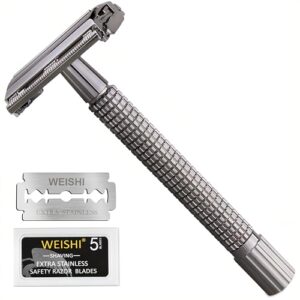
Not every razor needs to cost a fortune to feel great. The Weishi Butterfly earns its spot with a twist-knob opening that pops the head open for fast blade changes, no fumbling required.
At 74 grams with a 4.3-inch handle, it’s lighter than the Mk34c but still steady in hand. The heavy brass build resists corrosion, and the adjustable blade gap lets you dial in mild or closer shaves.
Skip the included starter blades, though. Upgrade to premium DE blades for the shave this razor’s really capable of.
| Best For | budget-conscious shavers who want an eco-friendly, cost-effective alternative to disposable cartridge razors and are willing to upgrade the blades for best results. |
|---|---|
| Blade Type | Standard DE |
| Construction | Twist-knob brass |
| Head Type | Closed comb |
| Weight | 2.54 oz |
| Handle Length | 4.3 in |
| Blades Included | 5 blades |
| Additional Features |
|
- Twist-knob butterfly opening makes blade changes quick and fuss-free
- Heavy brass construction offers a steady, pressure-free shave without feeling flimsy
- Eco-friendly design cuts down on plastic waste while saving money over cartridge razors long-term
- Included starter blades are lower quality and hold the razor back until you swap them out
- Less aggressive than premium safety razors, so coarse hair may need multiple passes
- Modest build quality means possible rattling or handle wear over time
3. Merkur 23C Long Handle Safety Razor
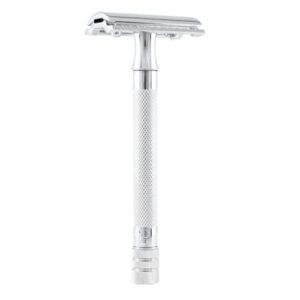
If control is what you’re after, this one delivers. The long 98-105mm knurled handle gives you serious control for mapping tricky jaw and neck contours.
At 60 grams with a closed comb, it’s mild to medium in aggressiveness, great for sensitive skin. The chrome-plated brass resists corrosion, and that secure knurled grip holds firm even with wet hands.
Blade changes are simple, too, thanks to the three-piece screw design.
| Best For | shavers with sensitive skin who want precise control for navigating tricky jaw and neck contours. |
|---|---|
| Blade Type | Standard DE |
| Construction | Three-piece chrome |
| Head Type | Closed comb |
| Weight | 0.3 oz |
| Handle Length | 4.2 in |
| Blades Included | None |
| Additional Features |
|
- Extended chrome-finished handle offers excellent control and comfort, even for larger hands
- Mild, low-irritation shave that’s gentle on sensitive skin
- Simple three-piece screw design makes blade changes quick and easy
- Fixed blade gap means less aggressive cutting, so shaves may take longer
- Requires practice to master the right angle and pressure, risking nicks early on
- No blade adjustment feature, so results depend heavily on blade choice and technique
4. Edwin Jagger DE86 Double Edge Razor
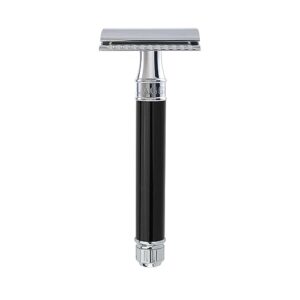
If you loved the 23C’s precision but want something friendlier for daily use, meet your new go-to. This three-piece closed comb design keeps blade exposure mild, so first-time DE users can shave with confidence.
At 93mm long and just 68g, its chrome-plated finish over a polycarbonate handle gives you sturdy control without weight fatigue. Edwin Jagger, based in Sheffield, England, often ships this with a Feather sample blade, letting you test premium sharpness right out of the box.
| Best For | First-time double-edge shavers and anyone with sensitive skin who wants a milder, low-irritation daily shave without the learning curve of an aggressive razor. |
|---|---|
| Blade Type | Standard DE |
| Construction | Three-piece chrome |
| Head Type | Closed comb |
| Weight | 2.4 oz |
| Handle Length | 3.3 in |
| Blades Included | None |
| Additional Features |
|
- Closed-comb head design keeps blade exposure mild, making it forgiving for DE beginners
- Chrome-plated three-piece construction feels sturdy and substantial without being heavy
- Works with any standard DE blade, plus shaving cream, soap, or gel, so it fits easily into most routines
- Blades are sold separately, meaning an extra purchase before you can start shaving
- The smooth handle can get slippery when wet, so you’ll need a firm grip or dry hands
- Fixed, non-adjustable blade exposure won’t satisfy shavers who want a more aggressive cut or easy adjustability
5. Vikings Blade Chieftain Safety Razor
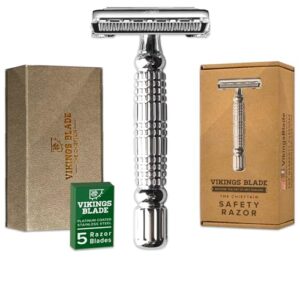
Named after tribal leaders, the Chieftain earns its title with a brass bronze alloy center wrapped in chrome, built for years of daily use.
Its butterfly head swaps blades in about five seconds, one-handed, while a microcomb guard shields your skin as you shave. Reviewers call it neutrally to moderately aggressive, close enough for coarse beards without the harsh bite.
The weighted, long handle cuts wrist fatigue on longer sessions, and it ships with a premium travel case for safekeeping.
| Best For | This razor suits both beginners and experienced wet shavers who want a durable, close shave with an eco-friendly, plastic-free tool. |
|---|---|
| Blade Type | Standard DE |
| Construction | Butterfly metal |
| Head Type | Butterfly open |
| Weight | 4.96 oz |
| Handle Length | 3.75 in |
| Blades Included | 5 blades |
| Additional Features |
|
- Solid metal construction with a heavy, balanced feel for a smoother, more controlled shave
- Quick, one-handed butterfly mechanism makes blade changes fast and easy
- Blade costs run 15-20x cheaper than cartridge refills, saving money long-term
- Starter blades are mild, so those with coarse hair may need to buy more aggressive ones separately
- The butterfly opening is trickier to clean than a simple two-piece design
- The polished handle can feel slippery when wet, which may require a grip aid
6. Baili Butterfly Safety Razor Kit
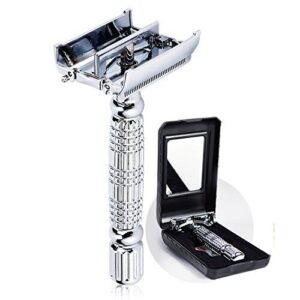
Budget doesn’t have to mean flimsy, and the Baili proves it with a twist-to-open butterfly head that swaps blades in seconds.
Switching to a reusable design like this one also slashes plastic waste by over 90 percent, and if you’re weighing performance too, this guide to sharp vs. mild razor blades breaks down which edge suits your skin best.
Zinc alloy construction with chrome plating keeps rust away, while the mirrored travel case makes it trip-ready. The mild-to-moderate shave suits daily use without punishing your skin.
At this price, you’re getting real value: a complete kit, not just a handle. It’s a smart pick if you want traditional shaving without the splurge.
| Best For | Beginners and budget-conscious shavers who want a traditional wet-shave experience without a big upfront investment. |
|---|---|
| Blade Type | Standard DE |
| Construction | Butterfly zinc-alloy |
| Head Type | Butterfly medium |
| Weight | 2.5 oz |
| Handle Length | 3.7 in |
| Blades Included | 1 blade |
| Additional Features |
|
- Easy, safe blade changes thanks to the butterfly twist-to-open mechanism
- Durable, rust-resistant zinc-alloy build with a polished chrome finish
- Complete kit with mirrored travel case makes it convenient for shaving on the go
- Medium aggression edge may not be enough for those with coarse or thick hair
- Requires careful handling and safe storage since the blade is very sharp
- Best results depend on proper wet-shave technique plus extra accessories like cream and a brush
7. Merkur 38C Double Edge Razor
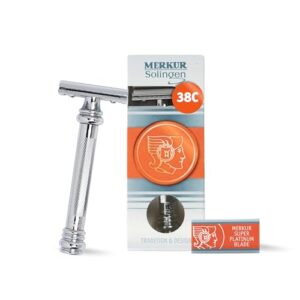
Barbershops earned their swirling pole for a reason, and Merkur borrowed that legacy for the 38C, nicknamed the Barber Pole for its ribbed brass handle.
That texture isn’t just for looks, either. It gives you real grip when your hands get soapy, solving the slip problem some heavier razors suffer from.
At 110-120 grams with a closed-comb head, it delivers a forgiving, everyday shave. The long handle helps with reach, making tricky angles along your jawline far easier to manage.
| Best For | This razor is best for shavers who want a plastic-free, everyday tool that delivers a smooth, low-irritation shave on the face, legs, or underarms. |
|---|---|
| Blade Type | Standard DE |
| Construction | Two-piece brass |
| Head Type | Closed comb |
| Weight | 4 oz |
| Handle Length | 4 in |
| Blades Included | None |
| Additional Features |
|
- Closed-comb safety head that helps minimize nicks and skin irritation
- Heavy, well-balanced brass handle lets the razor’s weight do the work, so you don’t need to press hard
- Tool-free two-piece design makes swapping blades quick and easy
- Smooth brass handle has no knurling, so it can get slippery once wet or soapy
- Some users report an internal metal part may crack or fracture after about two years of use
- Shave is fairly mild, so those wanting an aggressive shave may need sharper blades or extra passes
8. Parker 87R Compact Butterfly Razor
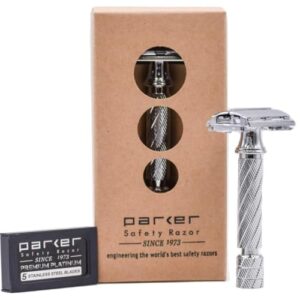
Twist the handle and the blade doors pop open — no fumbling with three separate parts here.
At just 3 inches, the short handle gives you tight control around the jaw and neck. The chrome-plated brass frame weighs a solid 3 ounces, so it feels substantial without dragging.
The knurled grip stays secure even when soap gets everywhere. It’s a smart pick if you want barbershop precision with tool-free convenience.
| Best For | Wet-shaving enthusiasts and experienced shavers who want barbershop-style precision and quick, tool-free blade changes for travel or tight grooming areas. |
|---|---|
| Blade Type | Standard DE |
| Construction | TTO brass |
| Head Type | Butterfly medium |
| Weight | 3 oz |
| Handle Length | 3 in |
| Blades Included | 5 blades |
| Additional Features |
|
- Twist-to-open butterfly head makes blade swaps fast and tool-free
- Short 3-inch handle offers excellent control around the jawline and neck
- Solid chrome-plated brass frame with a textured grip that stays secure even when wet
- Medium-aggressive shaving angle may be too harsh for beginners or sensitive skin
- Some units show quality control issues, like loose doors or misaligned closing
- Larger blade gap raises the risk of nicks if too much pressure is applied
9. Merkur Open Comb Safety Razor
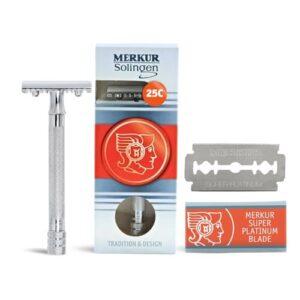
Thick beard hairs don’t stand a chance against this one’s exposed teeth.
The open-comb head guides hair and lather straight to the blade, cutting clogging on longer growth. You get a 4-inch knurled brass handle with chrome finish — no plastic anywhere.
Three-piece, screw-together construction (Model MK25C) makes blade swaps painless. At 2.4 oz, it’s light, so let the blade do the work instead of pressing down. Perfect for coarse, stubborn beards that leave milder razors struggling.
| Best For | People with thick, coarse, or dense facial hair (or leg shavers) who want a close shave and have enough experience to handle a more aggressive open-comb design. |
|---|---|
| Blade Type | Standard DE |
| Construction | Three-piece brass |
| Head Type | Open comb |
| Weight | 2.4 oz |
| Handle Length | 4 in |
| Blades Included | None |
| Additional Features |
|
- Open-comb head cuts through longer, denser hair with fewer passes and less clogging
- Solid brass handle with knurled chrome finish gives a secure, plastic-free grip
- Three-piece screw-together design makes cleaning and blade changes quick and easy
- More aggressive angle means beginners risk nicks without careful technique
- Lightweight build means you can’t rely on the razor’s weight — you have to let the blade do the work
- Performance depends heavily on blade choice, so very sharp blades may irritate sensitive skin
10. Parker Variant Adjustable Open Comb Razor
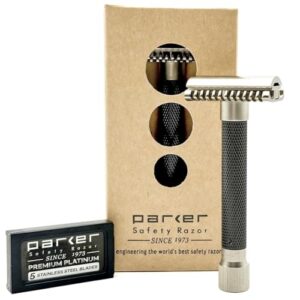
One dial, five settings, endless flexibility — that’s the Variant’s whole pitch.
Turn the bottom knob and you shift blade exposure from mild to aggressive without touching the blade itself. The open comb head stretches skin slightly for a closer glide, while channeling thick lather and hair away from clogging.
At 110g with a knurled brass handle, it’s got real heft for control. Beginners get a clear numeric dial; veterans get a razor that grows with their technique.
| Best For | shavers who want an adjustable, budget-friendly DE razor that can handle everything from daily maintenance shaves to a few days’ worth of growth, including those tackling head-shaving or other hard-to-reach spots. |
|---|---|
| Blade Type | Standard DE |
| Construction | Adjustable steel |
| Head Type | Open comb adjustable |
| Weight | 4 oz |
| Handle Length | 4 in |
| Blades Included | 5 blades |
| Additional Features |
|
- Five-position dial lets you dial exposure up or down instead of switching razors
- Heavy stainless-steel handle adds control and helps cut down on pressure-related irritation
- Open comb design fights clogging and reduces the chance of ingrown hairs
- The setting indicator can be tough to see against the dark handle
- Even on its highest setting, it won’t match the aggressiveness of razors like the R41
- Thicker or denser hair may still clog the comb, calling for more frequent rinsing
Best Safety Razors by Shaving Need

Not every face has the same needs, and your razor should match yours. Whether you’re just starting out, battling a thick beard, or shaving a sensitive scalp, there’s a better fit waiting for you. Here’s how to match your situation to the right razor.
Best for Beginners
New to wet shaving? Look for an entry-level safety razor with a mild head, blade gap near 0.6–0.8mm, and knurled grip for wet-hand control.
A lighter, ergonomic handle helps you learn proper angle without heavy pressure, minimizing irritation while you master technique.
Best for Coarse Beards
Wiry, thick facial hair needs more bite. Go with an adjustable safety razor set to a wider blade gap—it reduces tugging and delivers an aggressive shave without wrecking your skin.
- Wide gap cuts tugging
- Open comb channels whiskers
- Heavy handle steadies strokes
- Coated blades glide smoother
Prep with an exfoliating scrub, then finish with a beard oil for softer, easier-to-cut strands next time. Consider using an award‑winning beard oil for extra softness.
Best for Sensitive Skin
Reactive skin wants gentleness, not aggression. Grab a closed-comb safety razor with a mild blade gap—this beginner safety razor style shields your face from nicks.
| Feature | Why It Helps |
|---|---|
| Fragrance-free formula | Cuts irritation risk |
| Aloe or chamomile prep | Soothes and calms redness |
Pair it with non-comedogenic pre-shave oil for smooth skin, barrier-friendly and irritation-free.
Best for Head Shaving
Your scalp has no landmarks like your jawline does, so Scalp Contour Control matters more here than almost anywhere else.
Go with a long-handle razor for extra reach and reduced torque on the wrist. Open-comb heads clear stubble easily, while a corrosion-resistant finish shrugs off shower steam. That combo makes for genuinely precise shaving, even on your first head shave.
Best Budget Pick
The Weishi Butterfly Open Double Edge Razor proves you don’t need to spend big for a solid shave. Its butterfly mechanism reliability makes blade swaps quick, and the chrome finish resists rust for years.
- Under $20 price tag
- Affordable blade compatibility
- Stainless steel body
- Threaded handle for stability
For a budget-friendly, entry-level safety razor with real cost-effective shaving power, this one delivers.
Safety Razor Types Explained

Not all safety razors shave the same way, and the difference comes down to head design. Some styles keep things gentle and forgiving, while others are built for a closer, more aggressive cut. Here’s a quick rundown of the main types you’ll run into, so you know exactly what you’re choosing.
Closed-comb Razors
Closed-comb razors put a solid safety bar between you and the blade, guiding hairs while stretching skin for a milder cutting action.
Great for beginners, they resist clogging and keep pressure even. Scalloped bars improve lather distribution, cutting friction hotspots.
That gentle control is why most double-edge razor fans start here—it’s the safest way into wet shaving.
Open-comb Razors
Opencomb safety razors trade del icacy for speed, exposing more blade for aggressive cutting efficiency on thick hair.
- Open teeth improve debris clearance
- Wider tooth spacing lifts coarse stubble
- Less clogging during longer wet shaving sessions
- Rewards experienced user technique
- Delivers close results in fewer passes
If your beard fights back, this design fights harder—just respect the increased blade exposure and stay sharp with your angle control.
Adjustable Razors
Adjustable razors let you dial in blade exposure instead of committing to one setting forever. A rotating dial or plate controls blade gap, so you customize your shave profile from mild to aggressive on the same razor. Scales usually run 1–6.
Keep the dial clean and dry—buildup around the mechanism can throw off your adjustable shave setting over time.
Butterfly Razors
Twist the wing nuts, and the whole head swings open like a locket—that’s butterfly loading at its simplest. No screws to lose, just quick blade swaps with solid blade alignment precision.
You’ll find open or closed comb configurations depending on beard toughness. Bonus: weight sits toward the handle, so control stays steady even during fast blade changes.
Long-handle Razors
Extra reach isn’t just for show—that longer handle gives you real lever arm control, especially on tricky angles like under your nose. Ranging 95-110mm, these razors suit bigger hands beautifully.
Weight distribution leans toward the head, cutting wrist fatigue during long sessions. For precision shaving, a long handle safety razor remains the mens grooming go-to.
How to Choose The Right Razor
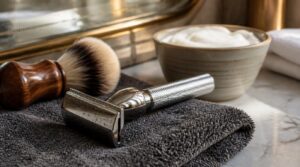
Picking the right safety razor isn’t just about looks, it’s about how it fits your hand and your face. A few key details make the difference between a smooth shave and a frustrating one. Here’s what to check before you buy.
Handle Weight and Balance
Pick a razor up before you buy it, if you can. Weight and balance shape every stroke you take.
Heavier grips add inertia, steadying longer passes, but tire your wrist faster on big areas like your chest or head. Lighter grips fight fatigue but need more hand tension. Center of gravity near your grip means natural control—forward-biased balance suits your lip and chin, tail-heavy helps your nose.
Grip Texture
Weight gets you started, but grip texture keeps that razor steady once soap and water enter the picture. Knurled patterns offer secure retention across wet conditions, while diamond or crosshatch textures channel moisture away entirely.
Contoured shoulders give your index finger a natural rest, and tactile feedback helps you judge pressure without looking. Textured belly zones stop slippage mid-stroke, making handle ergonomics feel easy rather than forced.
Blade Gap
Grip gets you steady, but blade gap decides how sharp that shave actually feels. It’s the space between the safety bar and blade edge, measured in fractions of a millimeter, and it drives blade aggressiveness directly.
Beginners should stick near 0.6-0.8mm. Coarse beards want wider gaps; sensitive skin prefers narrower ones. An adjustable blade gap lets you dial in comfort. Gap works alongside blade exposure adjustment, so soap buildup in wider gaps needs regular cleaning.
Material and Finish
Once you’ve nailed your blade gap, the metal underneath matters just as much. A stainless steel razor or brass handle with chrome finish resists corrosion and holds up to daily rinses far better than plastic ever could.
Handle weight affects control, while grip textures stop slips. Metal vs plastic razors isn’t close—premium coatings boost surface durability, and quality blade material metallurgy keeps edges sharp longer.
Ease of Blade Loading
If you shave in a rush, loading style matters more than you’d think. A butterfly safety razor with reliable twist-to-open hinges beats fumbling with screws every morning.
Look for ergonomic handle contours and blade alignment notches for true one-handed loading efficiency. Two-piece designs and magnetic loading assistance also speed things up, cutting fumbling to seconds.
Safety Razors Vs Cartridge Razors

So how does a safety razor actually stack up against the cartridge you’ve probably used for years? The truth is, they win in some areas and ask more of you in others. Let’s break down the five things that matter most before you switch.
Shave Closeness
Blade gap impact decides everything here: cartridges float multiple blades over skin, while a safety razor gives one sharp edge with precise angle precision mastery. That means a truly close shave, especially with an adjustable safety razor dialing in blade exposure.
| Factor | Cartridge | Safety Razor |
|---|---|---|
| Blade Gap | Fixed | Adjustable |
| Closeness | Moderate | Better |
| Technique Needed | Low | Moderate |
Razor Burn Risk
Cartridge razors pack multiple blades that scrape over skin repeatedly, dragging on the same patch and spiking razor burn risk. A single-blade safety razor cuts once per pass with pressure control and proper grain direction, causing far less irritation.
| Risk Factor | Cartridge Razor |
|---|---|
| Blade Passes | 3-5 per stroke |
| Skin Contact | High friction |
| Irritation Risk | Elevated |
Long-term Cost
Here’s the real math: initial investment in a safety razor runs higher, but blade replacement cost drops fast. Bulk blade savings kick in around 100-packs, landing you near $0.08-$0.20 per shave.
| Cost Factor | Impact |
|---|---|
| Upfront Price | Higher |
| Cost Per Shave | Lower |
| Blade Longevity | 3-7 shaves |
| Maintenance Expense | Minimal |
That’s cost-effective shaving over years, not months.
Plastic Waste
Every disposable cartridge you toss adds to a growing pile that outlives you by centuries. Landfill accumulation and ocean pollution are real costs of convenience.
Every disposable cartridge you toss becomes landfill waste that will outlive you by centuries
| Waste Type | Cartridge Razors | Safety Razors |
|---|---|---|
| Plastic grips | Yearly | Never |
| Microplastics | High | Minimal |
| Recyclability | Poor | Full metal |
Switching cuts plastic waste up to 90%, supporting a circular economy and truly sustainable grooming.
Learning Curve
Yes, safety razors take practice — cartridges don’t. Expect 3 to 10 shaves for motor memory to click and blade angles to feel natural.
| Skill Stage | Cartridge Razor | Safety Razor |
|---|---|---|
| Learning time | Minutes | Several shaves |
| Margin for error | Wide | Narrow |
| Irritation risk | Low | Higher early on |
Light pressure and patience turn early nicks into confident, safe technique fast.
Blade Choice and Shaving Technique
A great razor only performs as well as the blade inside it and the hand holding it. Your results depend just as much on technique as on hardware, from picking the right blade to your angle and pressure. Let’s break down what actually makes a shave smooth, safe, and close.
Double-edge Blade Sharpness
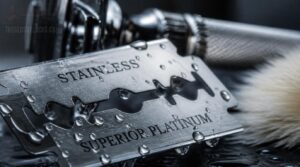
Two edges, one sharp secret: rhombic geometry gives standard double edge blades a wider angle than single-edge designs, boosting initial sharpness while distributing force across both sides.
- Steel hardness scales predict edge stability
- Honing angle precision determines keenness
- Micro-chipping prevention extends blade durability
Quality safety razor blade refills, honed right, deliver noticeably smoother, longer-lasting shaves.
Blade Coatings

Sharpness gets you started, but coatings decide how long that edge lasts. Teflon glide cuts friction for a smoother pass, while platinum edge retention fights dulling. Tungsten adds serious durability, and ceramic coatings handle heat without breaking down.
When comparing blade brands, check the coating first — it’s often the real difference between a five-shave blade and a seven-shave one.
Proper Shaving Angle

Best angle degrees sit between 30 and 40 for most faces. Keep the blade nearly flat, letting it kiss the skin instead of digging in — that’s your shave angle control right there.
Around curves, adjust as you go: contour navigation tips matter most on the jawline. Skin tension control and muscle memory training help you avoid blade drag, keeping the blade angle of attack consistent for smoother blade exposure control.
Light Pressure

Getting your angle right only helps if you skip the muscle behind it. Let the razor weight do the work—that’s the whole trick to light touch.
Think optical trapping precision: gentle, controlled force, not brute strength. Pressing hard invites burn and nicks; easing up delivers real shave comfort, especially for anyone running a beginner safety razor.
Grain Direction

Before your razor even touches skin, know which way your beard grows—that’s your grain. Your shaving sequence should follow it: first pass with the grain, then across, and only against it if you want extra closeness.
Going against grain too soon irritates follicles fast. Master blade path optimization by respecting hair direction first, aggression later. Your skin will thank you.
Cleaning and Maintenance Tips

A great safety razor deserves a little upkeep to keep it working like new. Good habits now mean fewer nicks and a sharper shave down the road. Here’s exactly what you should be doing after each use, and how often.
Rinse After Every Shave
Think of rinsing as the reset button on your wet shaving routine.
A cool splash removes leftover lather, hair clippings, and bacteria from the blade, preventing pore clogging and folliculitis. It also tightens skin, locks in hydration, and preps your face for aftershave.
Skip it, and even the best safety razor can’t save irritated skin.
Dry Metal Parts
Water left sitting on steel invites rust, so pat every piece dry before storage.
Use a soft towel to remove moisture from the cap, handle, and safety bar, then let parts air-dry fully. Trapped moisture in hollow grips causes hidden corrosion over time. This simple habit protects your safety razor’s finish and keeps even a premium safety razor performing like new for years.
Replace Blades Weekly
A dull blade tugs instead of gliding, and that’s your cue to swap it out.
Replace blades weekly if you shave daily—this keeps sharpness consistent and prevents skin irritation from building passes. Shave less often? Stretch it to 9-10 uses, but watch for tugging.
Fresh blades also mean better hygiene, since old ones collect bacteria and residue. Even the best safety razor needs this simple habit to perform right.
Remove Soap Buildup
That cloudy film on your razor isn’t just ugly—it’s hard water minerals bonding with soap residue, and it dulls performance fast.
Vinegar cleaning solutions cut through mineral buildup easily. For stubborn spots, try:
- Baking soda paste, scrubbed gently
- Vinegar-water soak, ten minutes
- Soft toothbrush for tight grooves
Open comb designs trap more residue, so preventing buildup matters most there.
Store Blades Safely
A loose blade in a drawer is an accident waiting to happen.
Keep spares in a secure container with a lid, edges facing down to limit moisture buildup. Use foam dividers or sleeves for edge protection, and label compartments by blade type so fresh and used never mix.
Wash hands before handling, and always use tweezers for safe loading.
Frequently Asked Questions (FAQs)
How often should I replace my safety razor blade?
Most blades last 5 to 7 shaves, but hair coarseness, water minerals, and shaving frequency shift that window. Watch for tugging or irritation—those are your dullness warning signs. Daily shavers usually land on a weekly cadence for blade replacement.
Are safety razors worth the higher upfront cost?
Yes. That initial investment of $30–120 pays off fast—blades cost pennies each. Over time, you’ll see real long-term savings versus cartridges. It’s a smart cost-benefit analysis: premium quality, eco-friendly shaving, and genuine value over time.
How many shaves does one blade typically last?
Most blades give you 5 to 8 shaves, depending on beard density and technique. Coarse hair, hard water, and daily shaving frequency shorten that window, while gentle pressure, proper blade maintenance, and quality coatings help sharpness last longer between blade replacement.
If you’re dealing with especially wiry or dense hair, it’s worth exploring the best razor blades for coarse hair to get more consistent shaves without the drag.
What causes safety razor blades to rust quickly?
Funny how a tool meant to fight stubble ends up fighting itself: water mineral content, residual soap buildup, and improper drying habits invite oxidation.
Weaker blade coatings speed rust further, so a solid razor maintenance routine, drying, wiping, and oxidation prevention methods keep blade longevity intact.
Conclusion
Old habits die hard, and once you feel that first clean pass, you’ll understand why. The right safety razors for men aren’t about nostalgia; they’re about control, precision over your own face, blade by blade.
Pick one that matches your grip, your beard, and your patience for learning the angle. Master the tilt, keep light pressure, and your skin will thank you.
This isn’t a trend. It’s a better shave, built to last decades.