This site is supported by our readers. We may earn a commission, at no cost to you, if you purchase through links.
Drop a strand of your hair in a glass of water. Sink or float? That one move tells you more about your hair’s health than half the products on your bathroom shelf.
Porosity, how well your cuticle absorbs and holds moisture, decides whether your deep conditioner actually works or just sits on top of your strands. Get it wrong, and you’re stuck with product buildup, unpredictable color results, or hair that snaps when you brush it. Get it right, and every product you buy starts earning its keep.
Grab a glass of water, because how to test hair porosity at home starts with five simple tests you can run today, no salon visit required.
Table Of Contents
- Key Takeaways
- Why Test Hair Porosity at Home?
- Step-by-Step DIY Porosity Tests
- Interpreting Your Porosity Results
- Tailoring Hair Care to Porosity Level
- Frequently Asked Questions (FAQs)
- What are signs of low porosity hair?
- Is frizzy hair low or high porosity?
- Is it better to have low or high porosity hair?
- What are signs of high porosity hair?
- How often should you retest your hairs porosity?
- Does hair porosity change after coloring or bleaching treatments?
- Whats the difference between porosity and hair density?
- Conclusion
Key Takeaways
- Five simple at-home tests—float, slip ‘n’ slide, spray bottle, wet stretch, and watershed—let you determine your hair’s porosity using just water and household items, no salon needed.
- Porosity determines how well your cuticle absorbs and retains moisture, directly affecting how well conditioners, colors, and other products actually work on your hair.
- Testing strands from your roots, mid-lengths, and ends (weighting mid-lengths most heavily) reveals whether you have mixed porosity, since damage often varies across different zones of the same head.
- Your porosity type should shape your entire routine, from using lightweight water-based products and frequent protein treatments for high porosity to more structured, less frequent protein care for medium porosity hair.
Why Test Hair Porosity at Home?

Your hair’s porosity controls how it drinks in moisture, holds onto it, and reacts to every product you put on it. Knowing your type takes the guesswork out of your routine and puts you back in control. Here’s why it matters, and what to look for before you test.
If your strands soak up water fast but stay dry within minutes, these tips for growing low porosity 4C hair can help you lock moisture in for good.
Benefits of Knowing Porosity
Mastery over your hair starts with one simple truth: knowledge beats guesswork every time.
Knowing your hair beats guessing at it, every single time
Running a quick hair porosity test unlocks real benefits:
- Optimizing product selection
- Preventing product buildup
- Enhancing color predictability
- Reducing hair breakage
- Improving styling efficiency
This hair health assessment tells you exactly how your strands handle moisture retention, so your hair care routine actually works with your hair, not against it. Understanding your hair structural composition is essential for managing how well your cuticles seal in moisture.
Impact on Hair Care Routine
Here’s where that knowledge actually pays off: every choice you make afterward, from Product Selection to Layering Methods, gets built on your porosity results.
| Porosity | Routine Focus |
|---|---|
| Low | Lightweight, water-based, less frequent protein |
| High | Rich sealants, frequent moisture, regular protein |
Application Techniques, Treatment Frequency, and Ingredient Prioritization all shift once you know your hair texture analysis and moisture retention needs.
Signs of Different Porosity Levels
Before you even grab a glass of water, your hair’s already showing you clues. Run your fingers along a dry strand: low porosity hair feels smooth and sleek, high porosity feels rough and bumpy, medium sits somewhere in between.
For a more definitive read, try the classic float-and-spritz method outlined in this guide to hair porosity and wave pattern formation before picking your products.
Drying time talks too. Low porosity can take an hour to air dry, while high porosity dries in minutes but frizzes fast in humidity, since it can’t hold onto moisture retention.
Step-by-Step DIY Porosity Tests
Now that you know why porosity matters, it’s time to find out where your hair actually stands. You don’t need a salon visit or fancy equipment, just a few household items and five minutes. Grab a glass of water, and let’s walk through five simple tests you can do right now.
The Float Test
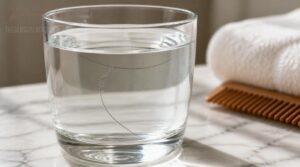
The Float Test tells you a lot in just a few minutes with nothing but a glass of water. Fill it with room-temperature water, drop in a clean strand, and watch. Low porosity hair floats; high porosity hair sinks fast.
Watch for natural oils or surface tension causing false floating—wash strands first for accurate water absorption results.
The Slip ‘n’ Slide Test
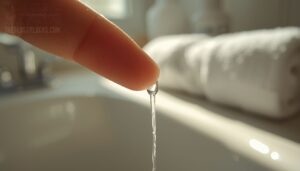
Ever run your fingers down a strand and feel tiny bumps instead of smooth silk? That’s your cuticle texture talking.
Grab a clean, dry strand and slide upward, tip to scalp, using steady finger pressure the whole way.
- Smooth = low porosity
- Slightly rough = medium
- Bumpy ridges = high, and uneven bumps hint at mixed porosity
The Spray Bottle Method
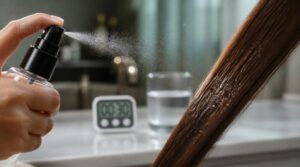
Grab a fine-mist spray bottle and hold it six inches from your hair section, then press once to release a single, controlled mist.
Start your timer the instant droplets land. Beading past 30 seconds signals low porosity; sinking within 10-20 seconds means medium; instant absorption points to high.
Use room-temperature water and clean, product-free hair, since buildup skews your cuticle layer reading.
The Wet Stretch Test
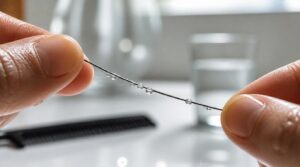
Pull one strand from your comb and saturate it fully with room-temperature water—this test reveals hair elasticity, not just porosity.
Hold the strand 3-4 centimeters apart between both thumbs and forefingers. Apply gentle, steady tension while stretching horizontally, then release slowly.
Healthy hair stretches 30% and snaps back fast. Excessive stretch with no bounce signals protein deficiency; immediate breakage means severe damage.
The Watershed Test
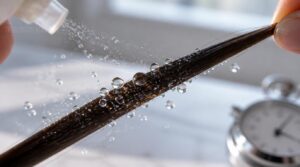
Water tells you what your hair shaft already knows. This hair porosity test uses a spray bottle for a controlled watershed test—six inches from a clean, one-inch section, one pump.
Start your timer the second droplets land. Absorption under 10 seconds means high porosity; beading past 30 means low. Use distilled water to avoid mineral buildup skewing results, especially with hard water.
Interpreting Your Porosity Results

Once your tests are done, it’s time to make sense of what you saw. Your results tell a story about how your cuticle behaves, but only if you know what to look for. Here’s how to read the signs and turn them into real answers.
Identifying Low, Medium, and High Porosity
Your float test tells the real story: strands that float are low porosity, ones that hover mid-glass are medium, and quick sinkers are high porosity.
Low porosity hair resists water, dries slowly, and feels smooth. High porosity hair absorbs fast, dries quickly, then feels dry again. Medium porosity sits between—balanced absorption, moderate drying, steady product uptake. Match what you see to these patterns, and you’ll know exactly where your hair stands.
Common Signs and Characteristics
Your hair cuticle layer gives away more than any glass of water ever could.
High porosity hair shows visible frizz, dries fast, and absorbs color within minutes—but fades just as quick.
Low porosity hair feels slick, stays humidity-resistant, and takes longer to dry or process color.
Medium porosity hair holds a natural shine, moderate drying times, and steady texture—smooth, not slippery, not rough.
Averaging Results From Different Hair Zones
Grab strands from your roots, mid-lengths, and ends before you trust any single reading.
Roots tend to test lower porosity since they’ve dodged the sun and styling tools. Ends usually match mid-lengths in damage.
Weight your mid-length results heaviest—that’s your hair’s true baseline. This zone mapping approach catches mixed porosity patterns roots miss, guiding smarter product choices across your whole head.
Tailoring Hair Care to Porosity Level

Now that you know your porosity, it’s time to put that knowledge to work. Your hair type determines exactly which products and techniques will actually help, not just add extra steps. Here’s how to build a routine that matches what your strands really need.
Moisture Strategies for High Porosity
Once your hair porosity test confirms raised, gappy cuticles, focus on layering. Use the LOC method: water-based leave-in, lightweight oil like jojoba, then a shea butter cream to seal.
- Weekly protein treatment for strength
- Sealing with butters on ends
- Water-based hydration daily
- Balanced moisture-protein balance
- Regular deep conditioning
This builds real moisture retention capacity.
Routine Tips for Medium Porosity
Lucky you if your hair porosity test landed in the middle zone. Medium porosity hair forgives more, but your haircare routine still needs structure.
| Care Area | Frequency |
|---|---|
| Protein treatment | Every 4-6 weeks |
| Clarifying wash | Every 4-5 washes |
| Protective style | Max 4-6 weeks |
| Heat styling | Under 350°F |
| Product layers | 2-3 max |
That moisture-protein balance keeps strands strong without stiffness.
Adjusting Care for Mixed Porosity
Not everyone gets a clean answer from hair porosity testing, and that’s fine. Mixed porosity means your roots and ends need different treatment entirely.
Try zonal product application: lightweight leave-in on roots, heavy butter on ends.
- Section hair before washing
- Layer moisture root-to-tip
- Protein-treat ends only
- Seal with oil
- Adjust seasonally
Sectional moisture layering keeps your moisture-protein balance steady across every zone.
Frequently Asked Questions (FAQs)
What are signs of low porosity hair?
Think of low porosity hair like a raincoat: water beads and rolls off instead of soaking in. You’ll notice water absorption delays, surface product buildup, a glassy hair texture, extended drying times, and chemical treatment resistance during coloring or perming.
While your genetics set the baseline, bleaching and heat styling wear down the cuticle further, which is why picking the right moisturizer for low porosity hair makes such a difference.
Is frizzy hair low or high porosity?
Frizzy hair usually means high porosity—raised, gapped cuticles absorb moisture fast and let it escape just as quick.
Genetics, heat damage, and chemical treatments widen those gaps, causing rapid humidity absorption and that telltale swelling, uneven frizz your hair porosity test will confirm.
Is it better to have low or high porosity hair?
Neither wins outright — one holds moisture like a locked door, the other lets it rush in and out. Low porosity hair resists frizz and buildup, while high porosity hair processes color faster but needs constant rehydration to stay strong.
What are signs of high porosity hair?
Watch for rapid drying times, rough texture, and quick moisture absorption — water and products vanish in seconds.
You’ll also notice excessive tangling, dull strands, fast color fading, and a damaged hair cuticle that leaves hair fragile, dry, and prone to snapping.
How often should you retest your hairs porosity?
Your hair’s a living record, and its story changes chapters over time.
Retest every six to twelve months, or sooner after chemical processing, seasonal humidity shifts, or aging—whenever your routine stops delivering the results it used to.
Does hair porosity change after coloring or bleaching treatments?
Yes—chemical processing damage lifts the cuticle structure, causing bleach damage effects like protein loss and cuticle swelling. Each session pushes hair toward high porosity, while color retention issues and regional porosity shifts mean ends need different care than roots.
Whats the difference between porosity and hair density?
Two totally different stories, really. Porosity is about absorption—how fast your cuticle lets moisture in and out. Density is about scalp visibility and fullness—strand count, not shaft structure. One test won’t tell you the other; you need both to build a real routine.
Conclusion
Your hair keeps a diary written in cuticles, and now you know how to read it.
Knowing how to test hair porosity at home hands you the answers your bathroom shelf never could. Low, medium, or high, that single word reshapes every product choice you make.
Stop guessing. Test it, trust it, and build routines around real evidence, not marketing promises. Your strands will thank you, one properly absorbed drop at a time.
- https://spoletisalon.com/blog/hair-porosity-guide-2025-how-to-choose-the-right-products-for-your-hair-type
- https://www.clevercurl.com.au/how-to-determine-hair-porosity-and-what-it-means-for-your-hair
- https://palmers.com/blogs/blog/how-to-determine-your-hair-s-porosity
- https://campus.edu/blog/cosmetology/hair-porosity
- https://kinkytresses.com/blogs/news/hair-porosity-what-is-it-and-which-type-do-you-have