This site is supported by our readers. We may earn a commission, at no cost to you, if you purchase through links. This content is for general informational and educational purposes only and is not a substitute for professional medical, dermatological, or nutritional advice.

That $200 balayage doesn’t stand a chance against your shower. Chlorine molecules attack dye pigment the moment hot water opens your cuticle, and hard water minerals coat each strand with a gritty film that blocks moisture right behind them. Within weeks, that rich brunette or vivid red starts leaning brassy, and it’s not the salon’s fault.
Your water is doing this, shower after shower, whether you notice it or not.
The fix isn’t more expensive toner or fewer washes. Shower filters for color-treated hair strip out the chlorine, chloramine, and mineral buildup before they ever touch your strands, and picking the right one comes down to understanding what’s actually in your water and which filter media experiences it best.
Table Of Contents
- Key Takeaways
- How Shower Water Damages Color-Treated Hair
- How Shower Filters Protect Color-Treated Hair
- Filter Media Types Explained
- Top Shower Filters for Color-Treated Hair
- 1. Afina Filtered Shower Head High Pressure Rainfall
- 2. Yodel 25 Stage Shower Filter for Hard Water
- 3. AquaHomeGroup Filtered Handheld Shower Head
- 4. Eskiin Filtered Shower Head Black
- 5. Aquabliss SF500 Chrome Shower Filter
- 6. MyHalos Filtered Shower Head Chrome
- 7. Feels Like Om 20 Stage Filtered Shower Head
- Choosing The Right Shower Filter
- Installing Your Shower Filter Correctly
- Maintaining and Replacing Filter Cartridges
- Shower Filters and Hard Water Mitigation
- Building a Filtered Hair Care Routine
- Shower Filters: Cost and Environmental Impact
- Frequently Asked Questions (FAQs)
- How to protect colored hair in the shower?
- Do shower filters work for hair?
- What is the best shower filter for blonde hair?
- What are the disadvantages of shower filters?
- Do shower filters work with tankless water heaters?
- Can shower filters reduce fluoride from tap water?
- Will a shower filter lower water pressure noticeably?
- Are shower filter cartridges recyclable or eco-friendly?
- Conclusion
Key Takeaways
- Chlorine and hard water minerals attack your hair color every time you shower, breaking down dye molecules and coating strands with a gritty film that blocks moisture, so the fading isn’t your salon’s fault.
- Shower filters fight back with different media types—like KDF for heavy metals, catalytic carbon for chloramine, and Vitamin C for smoothing cuticles—so picking the right one depends on what’s actually in your water.
- Beyond just protecting color, filtered water calms scalp irritation, reduces frizz, and helps conditioner absorb better, making it a routine upgrade rather than a one-time fix.
- Filtering your water pays off financially too, since it can stretch your salon visits by weeks and cut down on the toners and treatments you’d otherwise need to buy.
How Shower Water Damages Color-Treated Hair

Every time you rinse your hair, that ordinary shower water is quietly working against your color, and most people never make the connection.
Mineral buildup from hard water gradually dulls vibrancy and strips moisture, which is why learning how to wash hair in hard water can make such a noticeable difference in keeping color fresh.
Every shower quietly works against your hair color, and most people never notice the connection
From chlorine breaking down dye molecules to minerals coating your strands, the damage builds up in ways you can actually see and feel.
Here’s exactly what’s happening to your hair every time you shower, and why it matters more than you think.
Chlorine’s Effect on Dye Molecules
Ever wonder why vibrant color turns dull after weeks of showering? Chlorine triggers chromophore oxidation, breaking apart the bonds that give hair dye its color. Azo dyes suffer bond cleavage entirely. Hypochlorite reactivity attacks electron-rich dyes fastest, meaning your boldest reds and richest brunettes fade quickest, stripping color treated hair of vibrancy shower after shower.
Understanding how water chemistry affects dye stability can inform better hair care routines, as shown in studies on chlorinated water exposure.
Hard Water Mineral Buildup
Chlorine isn’t the only troublemaker in your pipes. Hard water carries calcium and magnesium that precipitate as limescale once heated, coating strands with gritty buildup that blocks moisture and dulls color.
This mineral buildup strips natural oils, leaving color treated hair drier and stiffer, while reducing hair moisture retention and accelerating hair color fading shower after shower.
Brassiness and Color Fading Causes
Beyond limescale, oxidation is quietly shifting your color warm. Air, light, and heat break down dye molecules, unmasking hidden pigment. Culprits include:
- UV light exposure
- Chlorine oxidation
- Mineral deposits
- Product buildup
- Uneven pigment fade
That’s why brassiness prevention starts with filtered, hard water-free rinses, protecting color treated hair’s tone before it turns yellow or orange.
How Shower Filters Protect Color-Treated Hair
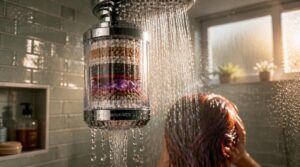
Once you know what’s damaging your color, the fix becomes a lot less mysterious, and shower filters tackle that damage on several fronts at once.
You’ll find they don’t just block one culprit, they work through a mix of chemistry and clever media to keep your strands protected.
Here’s a closer look at exactly how these filters earn their keep.
Chlorine and Chloramine Reduction
Not all chlorine reduction is equal, and chloramine’s the tougher customer. Standard carbon adsorbs chlorine fast, but chloramine needs catalytic carbon to break its ammonia bond through decomposition.
Contact time matters too: slower flow means better chlorine and chloramine reduction, protecting your color longer.
Watch for pressure drops, a saturation sign it’s time for a new cartridge.
Heavy Metal and Sediment Removal
Rust, copper, and lead don’t just sit in your water, they cling to hair shafts and dull color fast. KDF heavy metal removal uses copper-zinc media to convert these into harmless particles, while sediment filtration traps grit before it scratches cuticles.
Three things this stops:
- Mineral buildup that causes brittleness
- Metal deposits that dull vibrancy
- Rough particles that snag color-treated strands
Cuticle-Compressing Vitamin C Media
Think of Vitamin C as a smoothing agent, not just a chlorine neutralizer. Through oxidative residue removal, it strips away rough buildup that lifts your cuticle, then works toward cuticle sealing for real hair shine enhancement.
That compression also drives frizz reduction, giving color-treated hair a smoother finish and better color vibrancy preservation with every shower.
Preventing Greenish Cast on Blondes
If you’ve ever left the pool with a strange olive tint, blame copper binding to your hair’s proteins. KDF media offers heavy metal filtration that stops this before it starts.
Three things help most:
- Copper binding prevention
- Chlorine oxidation control
- Toning shampoo balance for brassiness prevention
Pair filtered, chlorine removal-focused showers with Vitamin C treatments for hard water resistance.
Filter Media Types Explained
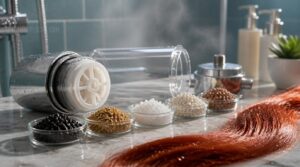
Not all shower filters work the same way, and the media inside the cartridge makes all the difference for your color. Some rely on chemical reactions, others on physical adsorption, and knowing which is which helps you pick a filter that actually suits your water and your hair goals.
Here’s a breakdown of the five main media types you’ll run into while shopping.
KDF Copper-Zinc Technology
Picture tiny copper and zinc grains locked together, quietly trading electrons every time water passes through. That’s KDF filtration technology at work: a redox reaction that converts chlorine into harmless chloride while catalytically reducing heavy metals like copper and lead.
| Feature | Benefit |
|---|---|
| Copper-zinc alloy | Electron transfer |
| Redox reaction | Chlorine reduction |
| Heavy metal capture | Prevents buildup |
| Self-regenerating | No chemicals needed |
Activated Carbon Filtration
That charcoal-black material in your filter isn’t just soaking up chlorine, it’s riddled with microscopic pores creating massive surface area for adsorption.
Flow rate matters: slower water means better contact time, so don’t rush your shower.
Carbon experiences organics well but competes with other contaminants, and cartridges usually need replacing every 3-6 months once saturated.
Calcium Sulfite Reaction
Here’s the chemistry flex: calcium sulfite doesn’t linger, it reacts instantly.
Sulfite ion release triggers a redox reaction pathway that neutralizes chlorine on contact, unlike carbon’s slow absorption.
This process backs oxidative cycle sustainability, meaning consistent protection for color-treated hair even under hard water conditions, while chlorine gets scavenged before it ever touches your strands, extending your cartridge lifespan noticeably.
Vitamin C Infused Media
While calcium sulfite works fast, Vitamin C infused media plays the long game, releasing antioxidants gradually to shield color-treated strands.
This gradual release mechanism pairs well with carbon or KDF, offering:
- Antioxidant hair protection against oxidative fading
- Vitamin C stability across shower temps
- Smoother texture and light fresh scent
- Better hair color longevity overall
Ceramic Bead Benefits
Where vitamin C fights chlorine, ceramic beads work on balance, using ion exchange to cut dissolved metals while stabilizing pH and easing mineral scale on your strands.
Their porous surface offers gentle abrasion, smoothing cuticles without scratching, plus slow release of minerals that support moisture retention and steadier color-treated hair protection over time.
Top Shower Filters for Color-Treated Hair
Now that you understand what these filters actually do, let’s look at seven models worth your money and your shower space. Each one takes a different approach to media, pressure, and design, so what works for your best friend’s hard water mightn’t suit yours.
Here’s the rundown, starting with a rainfall option that doesn’t skimp on pressure.
1. Afina Filtered Shower Head High Pressure Rainfall
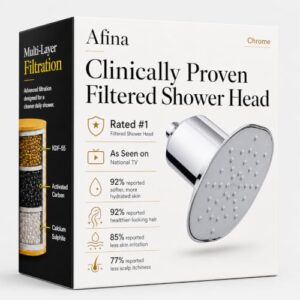
Picture a rain shower that actually earns its name: that’s the pitch behind Afina’s design, with a 7×7-inch spray footprint delivering full coverage while its multi-stage filtration works underneath.
KDF-55, activated carbon, and calcium sulfite team up to strip chlorine and reduce heavy metals, protecting dye molecules from oxidation. Installation takes under two minutes, no plumber needed.
Do expect some tradeoffs, though. It won’t tackle fluoride or complex contaminants, and a few users note spray inconsistency over time.
| Best For | Anyone dealing with dry skin, itchy scalp, or dull hair from chlorinated or hard water who wants an easy, tool-free upgrade to their daily shower. |
|---|---|
| Filtration Type | Multi-stage KDF/maifanstone/VC |
| Installation | Tool-free universal fit |
| Connection Type | G1/2″ threaded inlet |
| Housing Material | Lead-free ABS plastic |
| Water Pressure | High-pressure boost |
| Skin/Hair Benefit | Improves skin and hair |
| Additional Features |
|
- Multi-stage filtration (KDF-55, activated carbon, calcium sulfite) cuts down chlorine exposure
- Tool-free install in under two minutes with universal threading for standard US shower arms
- Strong rainfall spray keeps water pressure consistent while filtering
- Doesn’t remove heavy metals or fluoride like specialized filtration systems
- Filters need periodic replacement, adding an ongoing cost
- Some users report spray patterns growing inconsistent over long-term use
2. Yodel 25 Stage Shower Filter for Hard Water
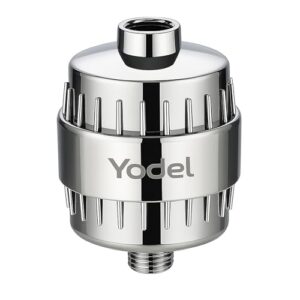
If hard water is your main enemy, the Yodel earns its spot on this list. Its 25-stage filtration combines KDF-55, calcium sulfite, and activated carbon, tackling chlorine, sediment, and heavy metals without sacrificing pressure.
Two cartridges come included, each rated for six months or 8,000 gallons. One tradeoff: mineral release can bump up TDS levels, and the ABS housing feels more functional than fancy—but for color protection on a budget, it delivers.
| Best For | Households with hard water who want noticeably softer skin and hair without giving up shower pressure. |
|---|---|
| Filtration Type | KDF-55/carbon/calcium sulfite |
| Installation | Tool-free under 2 min |
| Connection Type | Universal US shower arm |
| Housing Material | ABS plastic |
| Water Pressure | High-pressure rainfall spray |
| Skin/Hair Benefit | Softer skin, healthier hair |
| Additional Features |
|
- 25-stage filtration removes chlorine, heavy metals, sediment, and odors effectively
- Maintains strong water pressure even with hard water buildup
- Includes two long-lasting cartridges (6 months or 8,000 gallons each)
- Mineral release can increase TDS levels in the water
- ABS plastic housing feels less premium than metal alternatives
- Leakage may occur if the rubber washer isn’t seated properly
3. AquaHomeGroup Filtered Handheld Shower Head
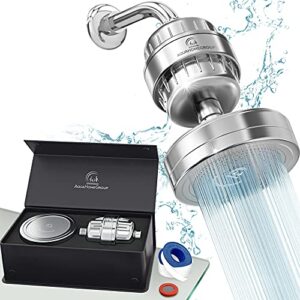
For clients who wash their own hair between salon visits, the AquaHomeGroup handheld model offers control the fixed showerheads can’t match. Its 20+3 stage cartridge pairs KDF media with activated carbon and calcium sulfite, cutting chlorine while vitamins C, E, and A support moisture retention.
The reinforced brass holder keeps pressure steady, and universal ½" connections mean tool-free setup. With a 59-inch stainless hose, you get precise rinsing control—genuinely useful when protecting fragile, color-treated strands from direct blasts of chlorinated water.
| Best For | Salon clients who wash and rinse their own color-treated or chemically processed hair at home and want a gentler, controlled alternative to direct chlorinated water blasts. |
|---|---|
| Filtration Type | Redox/calcium sulfite/carbon/ceramic |
| Installation | Tool-free universal fit |
| Connection Type | Standard 1/2″ shower arm |
| Housing Material | Plastic housing |
| Water Pressure | Maintains high pressure |
| Skin/Hair Benefit | Improves skin, hair, nails |
| Additional Features |
|
- 203 stage filtration with KDF media removes 90% of chlorine, heavy metals, and sediment for noticeably softer water
- Vitamin C, E, and A infusion helps protect moisture balance in color-treated or sensitive hair and skin
- Reinforced brass holder and universal ½" connections allow tool-free setup with steady, consistent pressure
- Filter cartridges need replacing every 6 months (or sooner in areas with poor water quality)
- Doesn’t address water hardness, so limescale buildup can still be an issue
- Requires an initial 5-10 minute flush to clear carbon dust before first use
4. Eskiin Filtered Shower Head Black
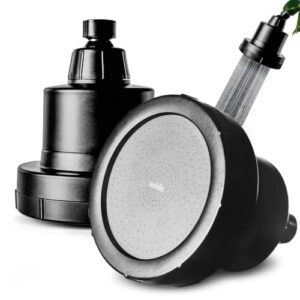
If a spa-like rainfall shower matters more to you than a minimalist look, the Eskiin Black delivers both style and substance. Its wall-mounted head, roughly 5.5 by 4.5 inches, spreads water wide while the built-in cartridge blends KDF, calcium sulfite, and coconut activated carbon to strip chlorine and heavy metals.
Eskiin markets it as high-pressure filtered flow, which matters since some filters sacrifice pressure for purity. Installation is simple too, fitting standard ½-inch shower arms with that sleek black chrome finish.
| Best For | People with dry skin, dull hair, or hard water issues who want a spa-like rainfall shower experience without sacrificing water pressure. |
|---|---|
| Filtration Type | 25-stage KDF-55/carbon |
| Installation | Fits standard 1/2 in arms |
| Connection Type | Standard 1/2 in NPT |
| Housing Material | ABS plastic |
| Water Pressure | Maintains high pressure |
| Skin/Hair Benefit | Softer hair, smoother skin |
| Additional Features |
|
- Effectively filters out chlorine and heavy metals for healthier skin and hair
- Wide 118mm rainfall spray pattern maintains strong pressure despite filtration
- Simple installation with standard 1/2 inch NPT threading, fitting most shower arms
- Higher upfront cost compared to standard, non-filtered shower heads
- Filter needs replacing roughly every 90 days, adding to long-term upkeep
- Filtration performance can vary depending on local water quality and usage habits
5. Aquabliss SF500 Chrome Shower Filter
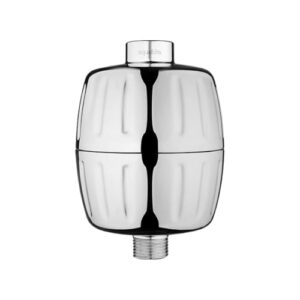
When your color-treated clients want proven chlorine reduction without a fancy showerhead swap, the AquaBliss SF500 is a workhorse worth recommending.
Its heavy-duty housing holds 25-30% more filter media than standard cartridges, giving contaminants longer contact time during every shower cycle. That multi-stage mix of calcium sulfite and coconut shell carbon grips chlorine effectively, though chloramine removal is weaker.
Just know it lacks NSF/ANSI 177 certification, and cartridges sell separately from the chrome housing.
| Best For | Salon professionals recommending at-home care for color-treated clients dealing with chlorine, hard water, or scalp irritation. |
|---|---|
| Filtration Type | 20+3 stage KDF media |
| Installation | Tool-free universal fit |
| Connection Type | Universal 1/2″ NPT |
| Housing Material | Metal construction |
| Water Pressure | Strong pressure via brass holder |
| Skin/Hair Benefit | Softer, more manageable hair |
| Additional Features |
|
- Heavy-duty housing holds more filter media for longer contaminant contact time
- Blend of calcium sulfite and coconut shell carbon effectively reduces chlorine, dirt, and odors
- Tool-free setup in under 2 minutes with standard ½" shower arm fit
- Not NSF/ANSI 177 certified for verified chlorine reduction performance
- Replacement cartridges are sold separately from the housing
- Some users report minor dripping or seal issues that may require plumber’s tape
6. MyHalos Filtered Shower Head Chrome
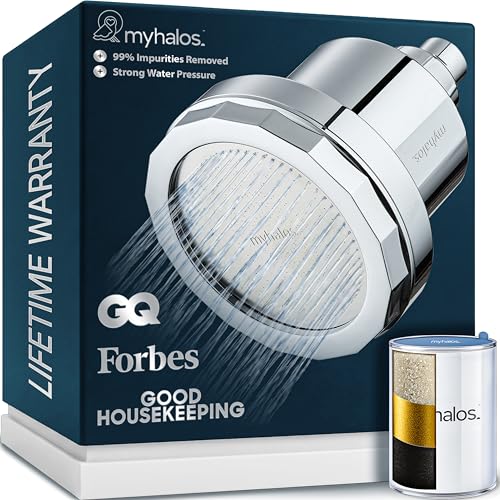
Budget-friendly and renter-approved, the MyHalos Chrome pairs calcium sulfite, KDF-55, and activated charcoal in a three-stage cartridge that grips chlorine without fussing over installation.
It screws onto standard arms in minutes, comes with plumber’s tape included, and holds a lifetime head guarantee—though the filter itself needs swapping roughly every 90 days for a household of three.
Expect steady pressure and a spa-like spray, with some users noting minor leaks until they add extra tape around the threads.
| Best For | Renters and budget-conscious buyers who want an easy, no-plumber-needed upgrade to soften water and protect skin and hair from harsh chlorine. |
|---|---|
| Filtration Type | Chlorine/heavy metal filter |
| Installation | Standard 1/2 in NPT |
| Connection Type | 1/2 in NPT threading |
| Housing Material | ABS plastic |
| Water Pressure | Maintains high pressure |
| Skin/Hair Benefit | Softer hair, hydrated skin |
| Additional Features |
|
- Three-stage filtration (calcium sulfite, KDF-55, activated charcoal) noticeably reduces chlorine for softer skin and healthier hair
- Tool-free, universal installation fits standard shower arms in minutes, with plumber’s tape included
- Maintains strong water pressure with a spa-like spray, backed by a lifetime head guarantee
- Filter cartridge needs replacing about every 90 days for a family of three, adding ongoing upkeep
- Some users report minor leaking at the threads, often requiring extra plumber’s tape
- Flow restrictor inserts aren’t clearly explained in the included instructions
7. Feels Like Om 20 Stage Filtered Shower Head
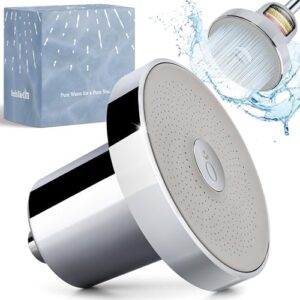
Twenty stages sounds excessive until you realize each one just adds a thin layer of media, not twenty separate cartridges to replace. This head layers KDF copper-zinc, activated carbon, vitamin C, ceramic beads, and calcium sulfite for genuinely thorough chlorine removal—claims sit near 99%.
Plastic housing keeps costs down, though some users notice pressure dips as media saturates faster than expected. Cartridges last six months, tool-free installation takes minutes, and if you’re managing color-treated hair on a budget, it’s a reasonable starting point worth testing.
| Best For | Anyone with color-treated hair or sensitive skin and scalp who wants an easy, budget-friendly way to filter out chlorine and hard water minerals without a complicated install. |
|---|---|
| Filtration Type | Redox/calcium sulfite/carbon |
| Installation | Tool-free under 2 min |
| Connection Type | 1/2″ NPT inlet/outlet |
| Housing Material | Chrome finish housing |
| Water Pressure | Not specified |
| Skin/Hair Benefit | Softer, silkier hair |
| Additional Features |
|
- Removes up to 99% of chlorine and toxic chemicals through its 20-stage filtration system
- Tool-free, universal installation fits standard shower arms in minutes
- Softens hard water while helping prevent mineral buildup on glass and surfaces
- Plastic construction may feel less durable than metal alternatives
- Some users report a dip in water quality or pressure after installation
- Flow adjustment can be tricky for certain users to get right
Choosing The Right Shower Filter

Picking a shower filter isn’t just about grabbing the first one with good reviews, since your water conditions and budget play a bigger role than most people realize. You’ll want to weigh certifications, hardness levels, and how your bathroom setup actually works before committing to one. Here’s what to check before you buy.
Certifications to Look For
Marketing claims are cheap, so let the label do the talking: look for NSF certified results (Standards 42 and 53), WQA Certification, or EPA WaterSense backing.
Green Label and RoHS Compliance confirm safer materials, while third-party tested filtration proves chlorine removal and heavy metal reduction actually hold up in lab tested filtration, not just packaging promises.
Matching Filter to Water Hardness
Certifications only tell half the story, since a filter’s real performance depends on your water hardness.
Grab hardness test kits first; hard water needs media with strong scaling resistance, like calcium sulfite or catalytic carbon, plus shorter cartridge replacement cycles, prefilters for sediment capture, and optimized flow rate to protect both water pressure and filter lifespan.
Budget and Renter-Friendly Options
Not everyone owns their bathroom, and that’s fine, protecting your color doesn’t require a permanent upgrade.
Cost-effective rentals favor basic models with refillable cartridge savings, universal fitting compatibility, and tool-free installation that skips deposit risk entirely.
For renters chasing a budget hair care solution, lease-safe mounting and easy installation mean full color protection now, full deposit back later.
Compatibility With Showerhead Types
Saving money means nothing if the filter won’t fit. Most shower arms use 1/2 inch NPT threaded connectors, but rain heads, handheld hoses, and massage-style showerheads sometimes need adapters.
- Check thread type before buying
- Confirm GPM matches your pressure needs
- Look for quick connect swivel elbows
- Verify hose length for handheld setups
Universal fitting solutions solve most mismatches, so don’t let spray pattern preferences limit your color-safe options.
Installing Your Shower Filter Correctly
Good news: you don’t need a plumber or a toolbox full of gadgets to get your new filter up and running correctly.
The setup process changes slightly depending on whether you’re working with a fixed showerhead, a wall-mounted unit, or a handheld sprayer.
Let’s walk through exactly what that looks like for each type.
Screw-on Vs Wall-Mounted Setup
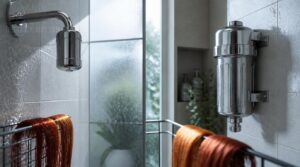
Screw-on units bolt straight to your shower arm for a rigid, permanent hold; wall-mounted setups use brackets anchored into studs.
| Setup | Best For |
|---|---|
| Screw-on | Renters, quick swaps |
| Wall-mounted | Heavier filters, stability |
| Screw-on | Minimal wall prep |
| Wall-mounted | Needs stud anchors |
Choose based on mounting stability and access for future maintenance.
Handheld Adapter Installation
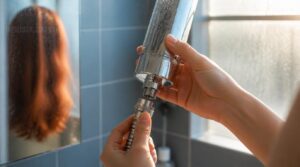
If you love the flexibility of a handheld sprayer for rinsing color, don’t worry, filters still fit. Before install:
- Inspect threads for damage
- Hand-tighten, then snug with a wrench
- Attach the hose securely
- Run water briefly to leak-test
Most handheld adapters offer tool-free installation, fitting standard connections without disrupting showerhead compatibility or future cartridge replacement.
Using Teflon Tape on Threads
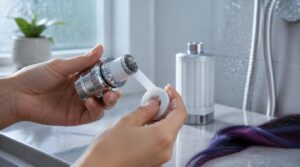
Because most leaks happen right at the threads, wrapping Teflon tape correctly matters more than people expect. Clean and dry the threads first, then wrap clockwise, 3-4 times, so tightening seals rather than unwinds it.
| Step | Why It Matters |
|---|---|
| Clean, dry threads | Prevents debris from blocking a proper seal |
| Wrap clockwise, 3-4 times | Tightens the connection instead of loosening it |
| Press tape flat | Reduces bunching that causes drips |
Flushing New Cartridges First
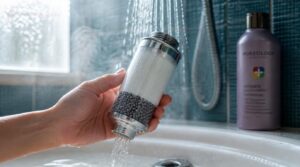
Before that first shower, run water through the cartridge for 2 to 5 minutes to clear loose carbon dust.
- Flush directly into a waste container or tub drain
- Watch water run clear before stopping
- Check threads for leaks
- Note the date for your filter maintenance schedule
- Confirm steady pressure before regular use
Skipping this step risks gritty water and shortens your filter cartridge’s effective life.
Maintaining and Replacing Filter Cartridges
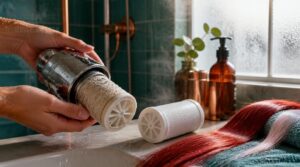
Getting your filter installed is only half the job, since even the best media loses its punch over time and needs a little upkeep to keep protecting your color.
Your cartridge won’t send you a text when it’s worn out, but your water (and your hair) will drop plenty of hints if you know what to watch for.
Here’s what actually determines when to swap it out, and how to spot the signs before your color pays the price.
Average Cartridge Lifespan
Most cartridges last 3 to 6 months, but your real-world timeline depends on water hardness, chlorine levels, and how often you shower.
Frequent, high-flow showers can shorten lifespan by 25 to 40 percent, while hard water areas often push replacement closer to the 3-month mark as mineral loading accelerates media saturation.
Signs of Filter Exhaustion
Your shower will actually tell you when the cartridge’s worn out, if you know what to watch for.
- Water flow rate drops noticeably
- Taste changes, often metallic or flat
- Visual sediment appears in the showerhead
- Pressure fluctuations or temperature inconsistency during rinsing
Catching these early keeps filter replacement simple and prevents leak-prone housings from straining under saturated media.
Hard Water Replacement Frequency
Hard water changes everything about your replacement schedule. High mineral content saturates media faster, so cartridges rated for 6-12 months might only last 3-4 in mineral-heavy areas.
Watch for mineral buildup signs—chalky residue or reduced lather. Adjust seasonally, since hardness spikes fluctuate.
For color-treated hair, replacing early protects vibrancy; saturated media stops working before it looks obviously exhausted.
Monitoring With Transparent Housings
Guessing when a mineral-heavy climate has worn out your cartridge gets old fast. That’s where clear cartridge viewing earns its keep, letting you check media color and buildup mid-shower instead of waiting for symptoms.
Watch the flow chamber, too. Flow rate monitoring through the transparent design catches exhaustion before it compromises hair color protection, so color-treated hair stays vibrant and color fading prevention stays automatic, not accidental.
Shower Filters and Hard Water Mitigation

Hard water does more than dull your color; it coats every strand in mineral deposits that make color-treated hair feel rough and look tired. A good shower filter experiences this problem at the source, changing how your hair feels long before it affects how your color looks.
Here’s what that mineral reduction actually does for your strands, day in and day out.
Reducing Calcium and Magnesium Buildup
Calcium and magnesium are the minerals behind that chalky scale coating your shower walls, and they’re just as harsh on color-treated strands.
Calcium sulfite media chemically reacts with these minerals, while KDF media exchanges ions to pull them out before water hits your hair.
Less mineral buildup means smoother cuticles, better pigment reflection, and scale that won’t fight you during cleaning.
Softer Water for Less Frizz
Once minerals stop clinging to each strand, you’ll notice frizz control shows up fast, especially in humid bathrooms.
Cuticles lie flatter, so hair resists puffing even on sticky days, with better static reduction and easier detangling too.
- Smoother cuticle surface for less roughness
- Better humidity resistance during styling
- Easier detangling on color-treated, fragile hair
That’s manageability you’ll actually feel.
Improved Conditioner Absorption
That flatter cuticle doesn’t just tame frizz, it opens the door for conditioner absorption to actually work. Less mineral film means better wet slip, so conditioner spreads evenly instead of sitting on top.
The payoff: deeper hair surface adsorption, real fiber hydration, and stronger moisture retention, especially on porous, color-treated strands craving color retention and shaft protection.
Building a Filtered Hair Care Routine
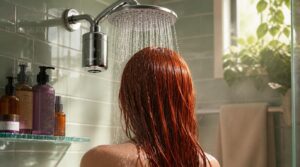
Installing a filter is only half the job, since the real payoff shows up in how your scalp feels and how long your color holds.
A filtered showerhead works best as part of a routine, not a one-and-done fix you forget about.
Here’s what that routine actually does for you, starting with your scalp and stretching all the way to those vivid tones you worked hard to get.
Scalp Irritation Reduction Benefits
Ever notice your scalp feels tight and itchy after coloring? Chlorine and chloramine irritate skin directly, while heavy metals and hard water minerals compound the problem.
Filtered water changes that:
- Calms chlorine-triggered itching
- Neutralizes chloramine byproducts
- Relieves heavy metal buildup
- Stabilizes pH near neutral
- Filters sediment causing grit
Vitamin C’s antioxidant power soothes irritation, protecting color-treated hair and giving your scalp genuine relief.
Extending Vivid and Pastel Tones
Because chlorine and minerals attack dye molecules with every rinse, filtered water can add two to four extra weeks of vivid color longevity, especially for pastels and reds. That’s real payoff for fade-resistant hair care.
Pair your filter with sulfate-free shampoo and color-safe shampoo, and you’re stacking odds in favor of pastel tone preservation on color-treated and fragile hair.
Shower Filters: Cost and Environmental Impact

A good shower filter isn’t just a beauty tool, it’s a budget decision, and one that pays you back in ways you mightn’t expect.
Beyond protecting your color, you’re looking at savings, less waste, and a smaller footprint on the water you use every day.
Let’s break down exactly where those benefits show up.
Long-Term Savings on Color Treatments
Here’s the math that matters: filtered water can extend salon visits by 4–8 weeks, which adds up fast when touch-ups run $100 or more each.
Less mineral-driven fading means fewer color correction appointments, too, so your annual maintenance budget shrinks even as your color stays richer, longer, and genuinely more cost-effective.
Reduced Product Waste Over Time
Fewer touch-ups mean fewer bottles bought, period. Longer color life naturally leads to less product use — less toner, less purple shampoo, less clarifying serum.
- Fewer empty bottles in landfills
- Less plastic packaging waste
- Longer filter cartridge lifespan
- Reduced cartridge replacement frequency
This is eco-friendly hair care in action: sustainable shower filters trim consumption at the source, curbing product buildup before it starts.
Sustainable Water Filtration Choices
Not every eco-friendly filter media works the same, so choose wisely. Ceramic cores and coconut-shell carbon come from renewable carbon sources, and reusable cartridge systems cut landfill waste dramatically.
Look for recyclable housing materials, cartridge recycling programs, and low-waste filtration builds. This low-maintenance solution doubles as a genuine water softener alternative, protecting your color while keeping your routine’s footprint refreshingly light.
Frequently Asked Questions (FAQs)
How to protect colored hair in the shower?
The water meant to clean your hair is quietly stripping its color. Protect it with a Vitamin C filter, cool rinses, sulfate-free shampoo, gentle drying, and a shower cap on off-days to guard your cuticle layer.
Do shower filters work for hair?
Yes, real evidence backs them up. By reducing chlorine and mineral buildup that strip dye and dull shine, filters deliver genuine color protection results, hair softness improvement, and fewer complaints of brittleness or breakage over time.
What is the best shower filter for blonde hair?
Look for Vitamin C or KDF media, which tackle chlorine neutralization and pull copper deposits before they cause green tint. This combo delivers real brassiness reduction, blonde hair protection, and a hard water filter effect that keeps color longevity intact.
What are the disadvantages of shower filters?
Nothing worth having comes easy: expect water pressure reduction, loose carbon dust at first flush, hard water inefficiency, plus regular filter cartridge replacement and installation complexity that add ongoing maintenance requirements to your routine.
Do shower filters work with tankless water heaters?
Most do, but flow rate impact matters most: tankless heaters need steady minimum gpm to ignite.
Choose filters with low pressure drop, proper NSF compatibility standards, correct installation, and regular cartridge maintenance to protect both your water heater and color-treated hair.
Can shower filters reduce fluoride from tap water?
Fluoride slips through most filters like sand through fingers — barely caught at all.
Fluoride media types like activated alumina work best, but shower flow rates and hot water limit contact time, so results stay inconsistent for genuine hair color preservation.
Will a shower filter lower water pressure noticeably?
Usually just a 1-2 psi dip, not a dramatic drop. Choose a filter with a GPM rating matching your showerhead’s flow rate, avoid stacked media layers, and flush cartridges properly, real-world pressure perception stays strong once installed correctly.
Are shower filter cartridges recyclable or eco-friendly?
Think of it like sorting laundry: plastic housing is often curbside recyclable once separated, but the media inside usually isn’t. Many brands offer manufacturer take-back options, making eco-friendly disposal genuinely achievable with a little effort.
Conclusion
Your shower is a slow leak in your color budget, drop by drop, wash by wash. Stop it at the source.
The right shower filters for color-treated hair aren’t a luxury add-on; they’re the difference between color that lasts eight weeks and color that fades in three. Screw one on, flush the cartridge, and let your strands finally keep the tone your colorist intended. Your water, tamed. Your color, protected.