This site is supported by our readers. We may earn a commission, at no cost to you, if you purchase through links. This content is for general informational and educational purposes only and is not a substitute for professional medical, dermatological, or nutritional advice.
Pour oil on low porosity strands and watch it sit there like rain on a freshly waxed car. That’s not your hair rejecting moisture. It’s tight, shingle-like cuticles refusing to let anything heavy soak in, no matter how "nourishing" the label claims.
Here’s the fix nobody mentions at the beauty supply store: go lighter, not richer. Lightweight oils for low porosity hair slip past that stubborn barrier instead of sitting on top causing buildup and dullness.
Grab your favorite tea, because you’re about to meet ten oils that actually absorb, plus the exact drop counts and application tricks that turn frustrated strands into soft, manageable hair.
Table Of Contents
- Key Takeaways
- Top 10 Lightweight Oils for Low Porosity Hair
- 1. Cliganic Organic Jojoba Oil 4oz Pure
- 2. NOW Solutions Grapeseed Oil 4 fl oz
- 3. Cliganic Organic Argan Oil Pure Carrier
- 4. NOW Foods Sweet Almond Oil 16 oz
- 5. Cliganic Organic Sunflower Oil 8oz
- 6. Pure Safflower Oil Cold Pressed 4 Fl Oz
- 7. Handcraft Blends Apricot Kernel Oil 16 Fl Oz
- 8. Cliganic Organic Baobab Oil Pure
- 9. Pomegranate Seed Oil 4oz Pure Cold Pressed
- 10. Life-Flo Fractionated Coconut Oil 16oz
- Why Lightweight Oils Suit Low Porosity Hair
- Confirm Your Hair Has Low Porosity
- Choose Oils by Hair Needs
- Apply Lightweight Oils Without Buildup
- Use Heat and DIY Oil Blends
- Build Your Low Porosity Oil Routine
- Prevent and Fix Oil Buildup
- Oils to Avoid or Dilute
- Frequently Asked Questions (FAQs)
- What is the best lightweight oil for low porosity hair?
- Is light oil better for low porosity hair?
- What are the worst oils for low porosity hair?
- Can low porosity hair use silicones safely?
- How often should I deep condition low porosity hair?
- Do lightweight oils work on color-treated hair?
- Can low porosity hair be transitioned to normal porosity?
- Whats the shelf life of lightweight carrier oils?
- Conclusion
Key Takeaways
- Low porosity hair has tightly packed cuticles that block heavy oils, so lightweight options like jojoba, grapeseed, sweet almond, and fractionated coconut oil work better because they absorb instead of sitting on top.
- Applying oil to damp hair right after a water-based leave-in (the LCO method), using just 2-5 drops focused on your ends, gives you the best moisture-sealing results without buildup.
- Warming your oil first and adding heat with a warm towel or plastic cap helps lift your cuticles so the oil can actually soak in rather than just coat your strands.
- Skip heavier oils like regular coconut, castor, olive, and flaxseed oil since their larger molecules can’t penetrate low porosity cuticles and end up causing greasy buildup instead of real hydration.
Top 10 Lightweight Oils for Low Porosity Hair
Not all oils play nice with low porosity hair, but these ten actually earn their spot in your routine. Each one’s light enough to absorb instead of just sitting on top like an unwanted houseguest. Here’s your lineup, ranked and ready.
If you’re wondering how to work these into your wash day or styling routine, this guide on using hair oils for low-porosity hair breaks down the timing and technique that make all the difference.
1. Cliganic Organic Jojoba Oil 4oz Pure
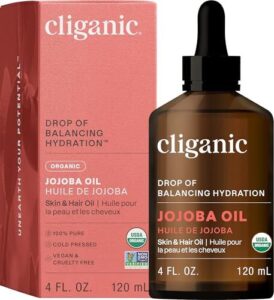
If your low porosity hair could pick one oil to marry, jojoba would be it. Cliganic’s version is USDA organic, cold pressed, and 100% pure with zero additives hiding in the bottle.
Its molecular structure mimics your scalp’s own sebum, so it soaks in instead of sitting on top. The dark amber glass isn’t just pretty, it blocks light that would otherwise turn your oil rancid. Basically, it’s the low-maintenance friend your hair actually needs.
| Best For | Anyone with low porosity hair or sensitive, acne-prone skin looking for a lightweight, single-ingredient oil that hydrates without clogging pores or leaving residue. |
|---|---|
| Non-Comedogenic | Yes |
| Cruelty-Free | Yes |
| Suitable For | Face, hair, skin, nails |
| Greasy Residue | No |
| Scent | Mild |
| Storage Needs | Dark, dry place |
| Additional Features |
|
- USDA organic certified and 100% pure with no additives, fillers, or synthetic ingredients
- Absorbs quickly since it mimics your skin’s natural sebum, so it moisturizes without feeling greasy
- Packaged in dark amber glass to protect against light degradation and rancidity
- Must be stored in a dark, dry spot, since light or moisture exposure can cause mold or fungal growth
- Some users find the pump dispenses too much product or that it feels a bit greasy
- The scent is very mild, which may disappoint anyone who prefers a fragranced oil
2. NOW Solutions Grapeseed Oil 4 fl oz
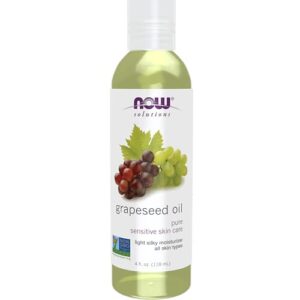
Grapeseed oil is the thin, no-nonsense cousin in this oil family. NOW Solutions keeps it 100% pure, hexane free, and fragrance free in a UV-blocking bottle that guards against rancidity.
With a comedogenic rating of 1, it barely registers on your pores’ radar. Its claim to fame? Heat tolerance up to 420°F, so it survives your blow dryer without frying. Rich in linoleic acid, it seals moisture in without the greasy handshake some oils leave behind.
| Best For | This oil is best for people with normal to sensitive skin looking for a light, non-greasy moisturizer that also doubles as a makeup remover, hair conditioner, or DIY base for lotions and serums. |
|---|---|
| Non-Comedogenic | Yes |
| Cruelty-Free | Not specified |
| Suitable For | Skin and hair |
| Greasy Residue | No |
| Scent | Slight natural odor |
| Storage Needs | Not specified |
| Additional Features |
|
- Lightweight, odorless texture that absorbs without leaving a greasy residue
- Non-comedogenic formula gentle enough for sensitive skin
- Versatile use as a moisturizer, makeup remover, hair conditioner, or DIY blending base
- May not deliver enough moisture on its own for very dry areas like arms and legs
- Some users notice a mild natural scent they find off-putting
- Needs to be diluted with essential oils (around 1.1%) for safe facial use on sensitive skin
3. Cliganic Organic Argan Oil Pure Carrier
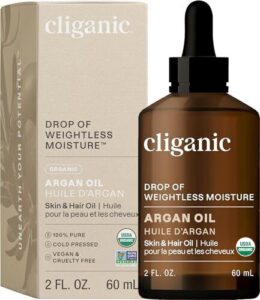
If grapeseed is the no-nonsense cousin, argan oil is the glamorous one everyone name-drops. Cliganic’s version is USDA organic certified, cold pressed from Moroccan kernels, and skips the additives entirely.
With a 0 comedogenic rating, it won’t clog a single pore. Rich in oleic acid and vitamin E, it smooths frizz and adds shine without weighing hair down. Use 2 to 4 drops on damp ends. Vegan, cruelty-free, non-GMO verified. Basically the oil equivalent of a well-tailored blazer: understated, effective, never overdressed.
| Best For | Anyone with dry, frizzy hair or sensitive skin who wants a lightweight, all-natural oil that absorbs fast without clogging pores. |
|---|---|
| Non-Comedogenic | Yes |
| Cruelty-Free | Yes |
| Suitable For | Hair, face, skin |
| Greasy Residue | Can if overapplied |
| Scent | Nutty |
| Storage Needs | Not specified |
| Additional Features |
|
- USDA organic certified and cold pressed with no additives
- Non-GMO verified, vegan, and cruelty-free
- Lightweight formula that absorbs quickly and works on hair, face, and skin
- Can feel greasy if you use too much, especially on fine hair
- Some people notice a natural nutty smell they may not love
- Needs sparing use to avoid buildup or a weighed-down feel
4. NOW Foods Sweet Almond Oil 16 oz
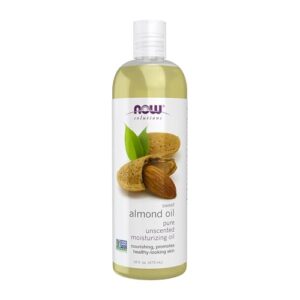
After argan’s fancy reputation, sweet almond oil feels like the reliable friend who shows up without making a fuss. NOW Foods presses this one 100% pure with zero additives, packed in a 16oz dropper bottle for precise dispensing.
It’s rich in vitamin E, gives serious slip for detangling or protective styles, and absorbs fast without grease. Warm 2-3 drops between your palms first. Your ends will thank you, quietly.
| Best For | This oil is best for anyone with sensitive skin or a baby who needs a gentle, unscented moisturizer, as well as people looking for a natural carrier oil to dilute essential oils or condition fine, low-porosity hair. |
|---|---|
| Non-Comedogenic | Yes |
| Cruelty-Free | Not specified |
| Suitable For | Face, body, hands, feet, hair |
| Greasy Residue | No |
| Scent | Unscented |
| Storage Needs | Not specified |
| Additional Features |
|
- 100% pure, non-GMO sweet almond oil with no added fragrances, so it won’t irritate sensitive skin
- Absorbs quickly into skin and hair without leaving a greasy residue
- Comes in a bottle made from 100% post-consumer recycled resin, made in the USA with GMP and NPA A-rated quality assurance
- No fragrance means it lacks the natural almond scent some users might expect
- The bottle doesn’t have a pump dispenser, which can make controlled application a bit less convenient
- The PCR resin bottle can appear darker than typical bottles, which might cause some initial concern even though it’s normal
5. Cliganic Organic Sunflower Oil 8oz
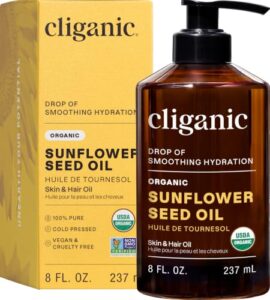
Sunflowers aren’t just pretty in a vase, this oil earns its spot too. Cliganic’s version is USDA Organic certified, cold pressed, and 100% pure with no synthetic fillers hiding in the bottle.
It’s lightweight, non-greasy, and won’t clog pores, so it plays nice on both skin and strands. For hair, it hydrates without weight, seals cuticles lightly, and adds shine minus the residue. Basically, it’s a two-for-one bottle sitting pretty in your bathroom cabinet.
| Best For | People with dry skin or curly/frizzy hair who want a lightweight, non-greasy, single-ingredient oil for daily moisturizing or as a gentle makeup remover. |
|---|---|
| Non-Comedogenic | Yes |
| Cruelty-Free | Yes |
| Suitable For | Face, body, hands, hair |
| Greasy Residue | Can if overapplied |
| Scent | Fragrance-free |
| Storage Needs | Cool, dark place |
| Additional Features |
|
- USDA Organic certified, 100% pure sunflower oil with no synthetic additives, vegan, and cruelty-free
- Multi-purpose use for face, body, hands, and hair, plus effective makeup removal, even waterproof formulas
- Non-comedogenic and fragrance-free, so it won’t clog pores or irritate sensitive skin
- Can feel greasy if over-applied, especially on oily skin types
- Natural oil can degrade over time and needs cool, dark storage to stay fresh
- Pump dispenser has been reported to leak or get damaged during shipping
6. Pure Safflower Oil Cold Pressed 4 Fl Oz
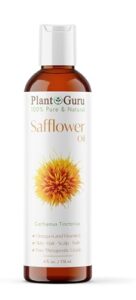
If sunflower oil is the friendly two-in-one, safflower oil is its high-heat cousin with a 450°F smoke point, mild enough for cooking, light enough for your hair.
Cold pressed and hexane-free, it’s rich in linoleic acid, which means thin, fast-absorbing coverage instead of a greasy coat. Use it sparingly since heavy application can leave residue on fine strands. Store your amber bottle away from sunlight, and it’ll stay fresh for months without turning rancid on you.
| Best For | People with dry, sensitive, or acne-prone skin who also want a light, non-greasy oil for hair care and high-heat cooking. |
|---|---|
| Non-Comedogenic | Yes |
| Cruelty-Free | Not specified |
| Suitable For | Skin and hair |
| Greasy Residue | No |
| Scent | Fragrance-free |
| Storage Needs | Cool, dark place |
| Additional Features |
|
- Cold-pressed and hexane-free with a high 450°F smoke point, great for sautéing and frying
- Lightweight, fast-absorbing texture that moisturizes skin without clogging pores or leaving hair greasy
- Comes in a light-protective amber glass bottle to help preserve freshness
- Shorter shelf life than refined oils, best used within 6–12 months of opening
- Low in omega-3s, so it’s not a well-rounded source of essential fatty acids
- Glass packaging is breakable and not the most travel-friendly option
7. Handcraft Blends Apricot Kernel Oil 16 Fl Oz
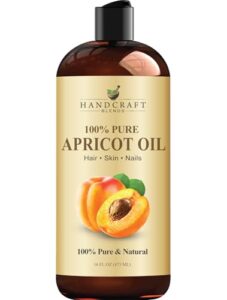
Sixteen ounces is a big commitment, but apricot kernel oil earns it. Cold pressed, hexane-free, and quick to absorb, it softens dry ends without any greasy residue.
Rich in oleic and linoleic acids plus vitamin E, it doubles as a carrier oil for scalp treatments. Just store it in a cool, dark spot since that much oil needs time to work through before rancidity becomes a problem.
Whether your strands are just past the shoulders or brushing your waist, checking a hair length chart can help you figure out how often this oil treatment fits into your routine.
| Best For | Anyone who goes through hair or skin oil regularly and wants a pure, unscented option for daily moisturizing, massage, or diluting essential oils. |
|---|---|
| Non-Comedogenic | Yes |
| Cruelty-Free | Not specified |
| Suitable For | Skin and hair |
| Greasy Residue | No |
| Scent | Unscented |
| Storage Needs | Cool, dark place |
| Additional Features |
|
- Cold-pressed and hexane-free, so there’s no chemical residue to worry about
- Absorbs quickly and moisturizes without leaving a greasy feel
- Works well as a carrier oil for scalp treatments or aromatherapy blends
- The 16 oz size may go rancid before you can use it all, especially with light use
- Needs a cool, dark storage spot to stay fresh over time
- No added scent, which won’t appeal if you prefer a fragranced oil
8. Cliganic Organic Baobab Oil Pure
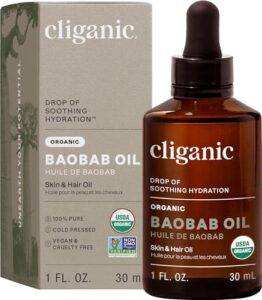
Ever heard of a tree that stores water for centuries? Baobab oil comes from that same tough, drought-proof seed, and it brings serious strength to dry hair too.
This one’s USDA Organic certified, single-ingredient, and cold pressed to keep its oleic and linoleic acids intact. It’s milky and thin, absorbs fast, and skips the greasy aftermath.
Just dab a few drops on your ends. Frizz calms down, breakage backs off, and your hair gets a quiet confidence boost.
| Best For | People with dry, frizz-prone hair and skin who want a lightweight, single-ingredient organic oil that absorbs quickly without leaving a greasy residue. |
|---|---|
| Non-Comedogenic | Yes |
| Cruelty-Free | Yes |
| Suitable For | Skin and hair |
| Greasy Residue | No |
| Scent | Mild nutty |
| Storage Needs | Not specified |
| Additional Features |
|
- USDA Organic certified and third-party lab tested for purity in every batch
- Absorbs quickly into skin and hair without a greasy feel
- Helps soothe dry skin and reduce frizz and breakage on hair ends
- Milky, thin consistency may require wiping off excess after use
- Mild natural nut scent might not appeal to everyone
- Packaging can vary slightly from batch to batch
9. Pomegranate Seed Oil 4oz Pure Cold Pressed
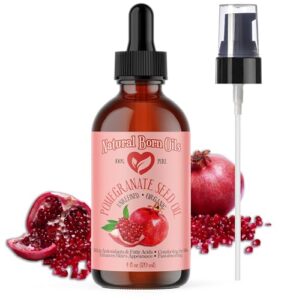
Golden, a little jammy in scent, and packed with punicic acid, pomegranate seed oil punches way above its weight. That fatty acid makes up nearly 70-75% of the oil, giving it antioxidant power that regular oils just can’t match.
It’s thicker than grapeseed but still spreads evenly without sitting greasy on strands. A few drops on damp ends fights dryness and adds shine fast.
Bonus: it plays nice with other lightweight oils in DIY blends.
| Best For | Anyone dealing with dry skin or dull, brittle hair who wants a rich, all-natural oil for daily moisture or DIY beauty treatments. |
|---|---|
| Non-Comedogenic | Yes |
| Cruelty-Free | Yes |
| Suitable For | Skin and hair |
| Greasy Residue | Absorbs into oily skin |
| Scent | Light fruit scent |
| Storage Needs | Not specified |
| Additional Features |
|
- Loaded with punicic acid and essential fatty acids that deeply nourish skin and hair
- Pure, cold-pressed, and free from parabens, sulfates, and other additives
- Versatile enough for face creams, hair masks, and aromatherapy blends
- Subtle scent may disappoint those expecting a strong pomegranate aroma
- Thicker texture than lighter oils like almond or grapeseed
- Patch testing is still recommended despite its gentle formula
10. Life-Flo Fractionated Coconut Oil 16oz
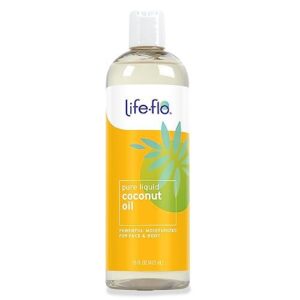
Here’s the plot twist: regular coconut oil clogs low porosity strands, but strip out the long-chain fatty acids and you get something totally different. That’s fractionated coconut oil, and Life-Flo’s version stays liquid and lightweight year round.
No waxy residue, no buildup, just fast absorption that actually reaches your cortex. It’s odorless too, so it won’t clash with your leave-in.
Sixteen ounces means you won’t run out anytime soon. Great for hair, skin, even as a carrier for essential oils.
| Best For | People with low porosity hair or sensitive, acne-prone skin who want a lightweight, odorless oil that absorbs fast without clogging pores. |
|---|---|
| Non-Comedogenic | Yes |
| Cruelty-Free | Yes |
| Suitable For | Skin, hair, nails |
| Greasy Residue | No |
| Scent | Odorless, some report fishy |
| Storage Needs | Room temperature stable |
| Additional Features |
|
- Stays liquid at room temperature and absorbs quickly without greasy residue
- Fragrance-free, hypoallergenic formula that works for skin, hair, and nails
- Generous 16oz size doubles as a versatile carrier oil for DIY blends
- Very dry skin may still need a heavier moisturizer layered on top
- Plastic packaging offers less protection from light than glass bottles
- A few users notice a faint fishy smell when using it on hair
Why Lightweight Oils Suit Low Porosity Hair
Your cuticles aren’t lazy, they’re just picky about who gets in. That’s exactly why heavy oils flop and light ones win. Here’s the science behind why thinner is better for hair like yours.
Tightly Packed Hair Cuticles
Picture roof shingles stacked flat and neat. That’s your tightly packed cuticles, basically. This scale structure keeps edges aligned, boosting shine and smoothness while blocking moisture from sneaking in. Great for shine, tricky for hydration. Low porosity hair basically guards its cortex like a bouncer at an exclusive club, so lightweight oils need real finesse to get past the door. The cuticle’s overlapping keratin scales form a hydrophobic layer that regulates moisture.
Moisture Retention Without Heaviness
So how do you hydrate a bouncer who won’t budge? Lightweight oils sneak past with non-occlusive sealing, locking moisture in without smothering strands. Think jojoba or grapeseed, not shea butter.
They coat thin, staying fast-absorbing and non-greasy while your next wash-day products still soak through. That’s real moisture retention, minus the weighed-down, greasy mess heavier oils leave behind.
Faster Absorption and Distribution
Size matters here. Grapeseed oil clocks in around 280 g/mol, small enough to slip through cuticles in under 10 minutes flat.
Jojoba’s not far behind, mimicking sebum so well it skips barrier formation entirely. Low viscosity means faster flow, less pooling, quicker oil penetration into low porosity strands craving real moisture retention.
Softer Hair With Less Residue
Fast absorption means less oil sitting on top, waiting to grease things up. That’s the real secret to softness: strand smoothness without the weight.
Palmitic and linoleic acids slide into the shaft, softening cuticles from the inside. No coating, no film, just a nongreasy formula that seals moisture in and leaves hair touchably soft.
Is Low Porosity Always Dry?
Here’s the twist: dry-looking hair isn’t always dry hair. Low porosity hair often shows surface residue instead of true dryness, since the sealed cuticle layer slows absorption, not moisture retention.
Dry-looking hair isn’t always dry hair, it’s often just surface residue trapped by a sealed cuticle layer
Three culprits fake "dryness":
- Product sitting on strands, unabsorbed
- Water beading instead of soaking in
- Incomplete rinsing during wash day
Shine and smoothness can mask what’s really a water absorption timing issue.
Confirm Your Hair Has Low Porosity
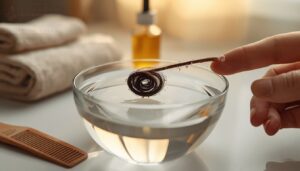
Before you buy a single oil, let’s make sure you’re actually dealing with low porosity hair. Guessing wastes money and leaves you frustrated with products that just sit there. Here’s how to tell for sure, no lab coat required.
Common Low Porosity Signs
Your shower already told you the truth. Water beading on strands instead of soaking in? Classic sign. Add slow wetting, product sitting on top like a raincoat, that dry feel despite a shiny look, plus smooth texture that makes hair feel slippery. Add it up: tight cuticle layer, sluggish moisture absorption, stubborn product residue. That’s low porosity hair waving hello.
The At-Home Spray Test
Grab a spray bottle, room-temp water, and clean, air-dried strands, this test needs zero guesswork. Mist one section for 2-3 seconds from 6-8 inches away, then watch closely.
- Time the first 30 seconds carefully
- Note if water beads or absorbs
- Test strands from multiple head areas
- Jot down your absorption timeline
Water lingering past 60 seconds? That’s low porosity talking.
Water Beading on Strands
Ever watch water just sit on your strands like it’s too good to soak in? That’s cuticle water resistance in action. Tight, shingle-like cuticles create surface droplet formation instead of absorption, delaying moisture penetration.
Hard water minerals, product buildup, even chlorine can worsen this. Warm water helps trigger heat-induced cuticle shift, but cold water? Beading city.
Slow Product Absorption
Your leave-in sits on top instead of soaking in, that white residue lingering is the tell. This is product surface residue from a stubborn cuticle barrier, not a bad formula.
Low porosity strands need heat-enhanced penetration to lift that barrier open. Apply lightweight oils to damp hair, warm them first, and you’ll dodge the sluggish absorption that leaves your ends dry despite all that "moisturizing.
Hair Porosity Test Limitations
That float test isn’t gospel, it’s a rough guide. Water temperature, strand thickness, even where hair sits in the glass all skew results. Damaged hair sinks fast too, mimicking high porosity when it’s really just wear and tear. Test accuracy varies person to person since "middle of the glass" isn’t standardized.
Trust patterns over one dunk: how lightweight oils absorb tells you more than a single strand ever could.
Choose Oils by Hair Needs
Low porosity hair isn’t one-size-fits-all, and neither is your oil pick. Fine strands, thick coils, and everything under a protective style all play by different rules. Here’s how to match the right oil to what your hair’s actually asking for.
Fine Hair That Flattens Easily
Fine, low porosity strands are a tricky combo: fragile and moisture-resistant at once. Skip heavy oils entirely.
Grapeseed oil and jojoba oil absorb fast without weighing roots down. Apply 2-3 drops after your leave-in, focusing mid-shaft to ends only. For lift, do a quick scalp massage, then use a lightweight mousse. Humidity? Fractionated coconut oil seals strands without flattening that precious volume.
Thick Low Porosity Hair
Now flip the script: thick strands need more oil, not less, but still lightweight ones. Sweet almond oil adds slip for detangling without grease. Warm 4-5 drops between palms, work through damp sections after your leave-in.
For stubborn dryness, try a deep conditioning session with heat first. Fractionated coconut oil seals it all in.
Low Porosity 4C Hair
4C hair brings its own twist: shrinkage, tight curls, and low elasticity that snaps strands during detangling. Steam beats plastic caps here, opening the cuticle moisture barrier so jojoba or grapeseed oil actually sinks in in.
Sweet almond oil eases detangling tension. Skip heavy layering though, buildup shows fast on 4C strands. A little fractionated coconut oil after steaming seals moisture without weighing curls down.
Dry Ends, Oily Scalp
Curly texture blocks natural sebum distribution, so oil pools at roots while ends starve. Skip heavy conditioner up top.
Instead, balance scalp pH with occasional apple cider vinegar rinses, then apply jojoba or sweet almond oil only to ends.
Heat styling worsens the split, so keep tools away from oily roots and let lightweight oils do the real work.
Hair Under Protective Styles
Braids and wigs trap moisture in, but they trap neglect in too. Feed your scalp nightly with jojoba or grapeseed oil, tuck edges under satin, and refresh with an aloe spray.
Weekly routine:
- Moisturize scalp with fractionated coconut oil
- Seal edges with sweet almond oil
- Aloe-spray cornrows midweek
- Bonnet nightly
- Limit style to 6-8 weeks
Apply Lightweight Oils Without Buildup
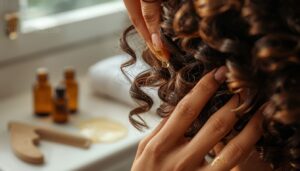
Owning the right oils is only half the battle. How you put them on your hair decides if you get soft, moisturized strands or a greasy mess stuck to your scalp. Here’s exactly how to apply lightweight oils the smart way, step by step.
Oil After Water-Based Leave-In
Timing is everything here. Apply your oil right after a water-based leave-in, while hair’s still damp, so the oil seals in that moisture instead of blocking it out.
Jojoba, grapeseed, sweet almond, apricot kernel, even fractionated coconut oil work great for this. They cut frizz, smooth the shaft, and add shine without any greasy buildup weighing your strands down.
LCO Versus LOC Method
Alphabet soup, but it matters. LCO means cream before oil, softening cuticles so moisture actually sinks in, perfect for low porosity hair. LOC flips that, sealing with oil first, which suits higher porosity strands better.
For your tightly-packed cuticles, LCO wins nearly every time.
- Cream first softens
- Oil seals moisture
- Sequence changes everything
Use Two to Five Drops
More isn’t better here, it’s just greasier. Your drop count should shrink or grow with hair length.
| Length | Drops |
|---|---|
| Short | 2 |
| Shoulder-length | 3-4 |
| Long/thick | 5 |
Start low, damp hair only, using jojoba, grapeseed, sweet almond, fractionated coconut, or apricot kernel oil. Buildup sneaks up fast otherwise.
Concentrate Oil on Ends
Your ends are the oldest, thirstiest part of your hair, so that’s where oil belongs. Sebum rarely makes it that far down the shaft.
- Focus 2-3 inches from the bottom
- Apply on damp, warm hair for better penetration
- Seal in moisture to prevent splitting
This end sealing technique fights breakage weekly, without weighing down roots or scalp.
Massage Scalp With Minimal Oil
Your scalp deserves love too, not just your ends. Warm 2-3 drops of jojoba or grapeseed between your palms first, then work into damp hair using fingertip circular motions, never nails.
Focus on your crown and edges for 3-5 minutes. Leave it 20-30 minutes before rinsing. Your scalp will thank you, quietly.
Use Heat and DIY Oil Blends
Sometimes low porosity hair needs a little extra push to actually drink up what you’re giving it. That’s where heat and a few smart DIY tricks come in handy. Here’s how to work with your cuticles instead of against them.
Warm Oils Before Application
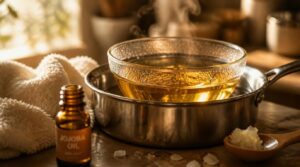
Think of cold oil as a locked door and warmth as the key. Since low porosity cuticles lie tight, warming oils before application helps them absorb instead of sitting on top.
Microwave 3-6 tablespoons of jojoba oil for 10 seconds, or try a gentle double-boiler for fractionated coconut oil. Test on your wrist first. Warm, never hot, wins every time.
Plastic Cap and Warm Towel

Warming your oil is step one. Step two is trapping that heat so it actually works.
A warm towel wrapped for 10-15 minutes lifts cuticles fast, then a plastic cap seals in steam for 15-30 minutes total. That combo works jojoba, grapeseed, argan, sweet almond, or fractionated coconut deep into strands instead of leaving them sitting on top like a bad houseguest.
Jojoba and Grapeseed Blend
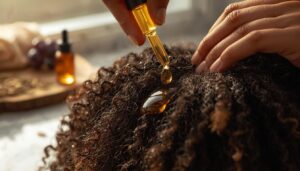
Once your towel-and-cap session is done, mix things up with a jojoba and grapeseed mix. Jojoba mimics sebum, grapeseed adds featherlight moisture sealing. Two to five drops, mid-lengths to ends, gently massaged in. Both absorb fast without weighing hair down, a solid pairing for low porosity strands. Patch test first if you’re new to grapeseed.
Aloe and Oil Refresh Spray
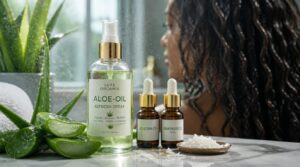
Got a spray bottle? Good, because this DIY beats store-bought fuss. Mix aloe vera juice, jojoba, and grapeseed with a splash of fractionated coconut oil for a hair refresh spray that hydrates without weight.
- Cools and soothes scalp on contact
- Detangles damp or dry strands fast
- Alcohol-free, safe for daily use
- Layers under leave-ins without buildup
Honey Pre-Treatment Before Oiling
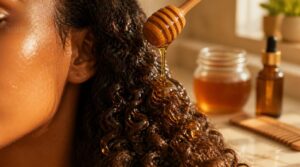
Honestly, honey might be the sneakiest prep step you’re skipping. As a natural humectant, it draws water into strands and softens the cuticle, so oil actually gets in instead of sitting on top.
Apply to damp hair, wait 15-30 minutes, then follow with jojoba, grapeseed, or sweet almond oil within five minutes for max absorption on low porosity hair.
Build Your Low Porosity Oil Routine
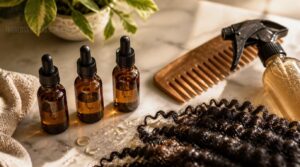
Knowing which oils to use is only half the battle. The real magic happens when you turn that knowledge into an actual routine you’ll stick with. Let’s break down what that looks like for your hair type and lifestyle.
Simple Weekly Oil Schedule
Once or twice a week is the sweet spot for low porosity hair. Start with one application, watch how your strands respond, then add a second if things still feel thirsty.
Rotate jojoba, grapeseed, sweet almond, or fractionated coconut oil so hair doesn’t get bored. Skip more than twice weekly though, buildup sneaks up fast. Consistency beats frequency every single time.
Fine Hair Oil Routine
Fine strands need a light hand, less is truly more here.
- a whisper of oil on your palms
- fingertips grazing only the ends
- no product anywhere near your roots
Dab grapeseed or jojoba oil, 2 drops max. Skip the scalp entirely, it flattens fast. Warm oil first for better absorption, then layer over your leave-in for lightweight consistency without weighing hair down.
Thick Hair Oil Routine
Thick strands are thirsty, and they need more than a quick swipe of oil to feel it.
Section hair into 4-6 parts, warm your oil, then work jojoba, grapeseed, or fractionated coconut oil through mid-lengths to ends.
| Step | Action |
|---|---|
| Warm | Rub oil in palms |
| Section | Divide into parts |
| Apply | Mid-lengths to ends |
| Heat | Cap 20-30 min |
Once weekly keeps thick low porosity hair nourished, not greasy.
Seasonal Oil Routine Adjustments
Your hair doesn’t want the same oil in July that it needs in January, so stop treating your routine like a set-it-and-forget-it deal.
Winter calls for richer oils like argan, applied twice weekly to fight dry air.
Summer? Ease off. Reduce to once weekly with something like grapeseed since humidity already controls moisture retention.
Fine hair stays balanced with fewer drops; thick hair simply spaces out summer sessions to dodge buildup.
Protective Style Oil Preparation
Skipping oil before braids or twists is basically asking for six weeks of dry, brittle regret.
Wash with clarifying shampoo, deep condition for pre-style hydration, then trim ends first.
Warm your oil, apply to damp hair with fingertips, focus on ends, and massage the scalp gently. Grapeseed or jojoba works great since their lightweight consistency mimics sebum without buildup under tension.
Prevent and Fix Oil Buildup
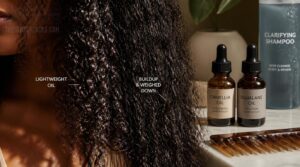
Even lightweight oils can turn on you if you get heavy-handed. Buildup sneaks up slow, then suddenly your hair feels coated and flat for no clear reason. Here’s how to spot it, clean it up, and get your routine back on track.
Signs of Oil Buildup
Notice your strands feeling weirdly heavy a day after washing? That’s oil buildup talking, not your low porosity hair being difficult.
- Greasy post wash feeling that won’t rinse out
- Limp, weighed down strands losing all bounce
- Sticky tacky texture clumping hair together
- Visible residue coating hairline and ends
- Products suddenly showing product ineffectiveness
Common Product Layering Problems
Buildup rarely comes from one bad product. It’s the order.
Oil Before Water seals cuticles shut before moisture gets in. Heavy Butter First does the same trick, just greasier.
| Mistake | Why It Fails | Fix |
|---|---|---|
| Oil first | Blocks water absorption | Water, then oil |
| Butter first layer | Coats strand | Use as sealant only |
| Stacking products | Buildup | Keep it to 2-3 |
Clarify Coated Hair Safely
So layering went sideways and now your strands feel coated in cement. Time for a clarifying shampoo, not your daily one.
Look for disodium or tetrasodium EDTA, or citrate ingredients. These chelators grab mineral deposits and oil buildup, then rinse them clean.
Rinse fully. Follow with a hydrating conditioner so low porosity hair doesn’t feel stripped.
Reset Your Oil Routine
Fresh from clarifying, hair is basically hitting a reset button. Rebuild the routine with weekly oiling, warmed jojoba or grapeseed on damp strands.
Try this:
- Clarify every 7-12 days
- Warm oil 5-10 minutes, apply 2-5 drops
- Add heat cap 20-30 minutes weekly
Track results for a month. Your cuticles will thank you.
Refresh Without Adding Heaviness
Between washes, your goal is a refresh, not a reload. Skip the full oiling session and reach for the spritz and seal method instead: a light mist of water, then 1-2 drops of jojoba or fractionated coconut oil on ends only.
Every 2-3 days keeps fine strands happy. Apply to clean, dry hair, and that lightweight consistency stays put, no grease, no guilt.
Oils to Avoid or Dilute
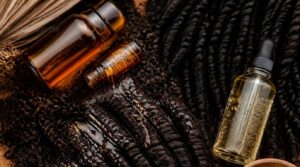
Not every oil deserves a spot in your low porosity routine. Some are too heavy, some sit on your strands instead of soaking in, and a few just cause more headaches than they fix. Here’s your list of the ones to skip or seriously water down.
Regular Coconut Oil
That jar of solid white coconut oil on your shelf? Gorgeous for cooking, rough on low porosity strands.
With 91-92% saturated fat, mostly lauric acid, it’s too heavy for tightly packed cuticles to absorb.
- Melts around 76°F
- Comedogenic rating of 4
- Feels waxy on strands
- Sits on hair, not in it
- Skip it, try fractionated coconut oil instead for lightweight, fast-absorbing moisture retention
Castor Oil
Thick and syrupy, castor oil sounds like a moisture powerhouse thanks to ricinoleic acid, but low porosity hair just can’t drink it in fast enough.
| Trait | Castor Oil |
|---|---|
| Consistency | Thick, syrupy |
| Absorption | Slow |
| Buildup risk | High |
| Best use | Diluted only |
Dilute it with a lighter oil, or your strands end up coated, not conditioned.
Olive Oil
Grandma’s kitchen staple isn’t your hair’s best friend. Olive oil comes from ground, ripe olives, and extra-virgin grades keep more phenolic antioxidants, but that richness works against low porosity hair.
- Weighs strands down within days
- Leaves hair looking greasy, not glossy
- Demands washing more often
- Blocks moisture instead of feeding it
Its heavier fatty acid profile resists cuticle penetration, so skip daily use.
Flaxseed Oil
Flaxseed oil sounds healthy (it’s basically linseed oil from Linum usitatissimum), but it forms a film that blocks cuticle penetration.
| Trait | Detail | Impact |
|---|---|---|
| Stability | 1.3 hrs oxidative | Turns rancid fast |
| PUFA content | 75% | Feels greasy |
| Storage | Refrigerate, dark bottle | Slows oxidation |
| Dilution | Mix with jojoba | Lightweight consistency restored |
| Absorption | Slow | Blocks moisture |
Store it cold or skip it.
Shea Butter and Heavy Blends
Rich and buttery, sure, but shea butter is not built for a lightweight consistency. Roughly 40% stearic and 40% oleic acid make it heavy occlusion, great for sealing, terrible for daily low porosity use.
- Dab a pea-size amount on ends only
- Warm between palms first
- Skip the scalp entirely
Used sparingly it fights frizz. Overdo it and you’re basically wearing a candle.
Frequently Asked Questions (FAQs)
What is the best lightweight oil for low porosity hair?
Jojoba oil takes the crown here. It mimics your scalp’s natural sebum, absorbs fast, and skips the greasy residue. Grapeseed oil absorption runs a close second for fine strands craving lightweight shine without weight.
If your strands still resist hydration, mafura oil’s benefits for low porosity hair offer another lightweight option worth adding to your routine.
Is light oil better for low porosity hair?
Like a key that finally fits the lock: yes. Light oils win on molecular absorption efficiency, slipping past tight cuticles for real moisture retention balance instead of sitting stuck on top, causing dullness or buildup.
What are the worst oils for low porosity hair?
Coconut, castor, and olive oil top the list. Their large molecules can’t get past tight cuticles, so they sit on top, causing greasy residue, scalp pore clogging, and stubborn product buildup instead of real moisture.
Can low porosity hair use silicones safely?
Yes, but pick wisely. Stick to water soluble options applied on damp hair, since the smooth cuticle layer traps heavy silicones fast. Prevent buildup with lightweight formulations and clarify every few weeks for real silicone safety.
How often should I deep condition low porosity hair?
Once a week is a solid starting point, though low porosity hair often craves more consistency. Pair sessions with heat for real moisture absorption, and if strands feel coated, run a product buildup reset before your next deep condition.
Do lightweight oils work on color-treated hair?
Absolutely, and your color will thank you. Argan and jojoba give color-safe oil benefits, sealing cuticles and locking in moisture retention without buildup. A few drops on dyed ends keeps shine intact and heat styling smooth.
Can low porosity hair be transitioned to normal porosity?
Not genetically, but you can absolutely shift the behavior. Heat-assisted routines, buildup removal, and consistent moisture layering train the cuticle layer to accept better absorption, moving you along the porosity spectrum even though your strand structure stays the same.
Whats the shelf life of lightweight carrier oils?
Most last 6 to 18 months stored properly. Jojoba stays stable longest, grapeseed oxidizes fastest. Keep bottles capped in amber glass, somewhere cool and dark, and watch for darkening color or a rancid, crayon-like smell.
Conclusion
Rain slides off a waxed car. Oil once slid off your strands the same way, until you flipped the script. That coincidence isn’t luck, it’s chemistry finally cooperating with your cuticles instead of fighting them.
Lightweight oils for low porosity hair work with your strands, not against them. Two drops, warm hands, patient application. That’s the whole secret. Your hair was never stubborn. It just needed something light enough to actually listen.